Leaderboard
.thumb.png.ce58cea22940c255f5b0a735d5abee36.png)


Popular Content
Showing content with the highest reputation on 2021-03-03 in Posts
-
You need to move it out of the bottom panel object, i.e. replace: <!-- START of BOTTOM PANEL --> <!-- Limit to the minimal supported width of 1024 pixels. --> <object size="50%-512 0 50%+512 100%"> <object size="50%-512 100%-200 50%-312 100%"> <include directory="gui/session/minimap/"/> </object> <!-- Supplemental Details Panel (left). --> with: <object size="0 100%-200 200 100%"> <include directory="gui/session/minimap/"/> </object> <!-- START of BOTTOM PANEL --> <!-- Limit to the minimal supported width of 1024 pixels. --> <object size="50%-512 0 50%+512 100%"> <!-- Supplemental Details Panel (left). --> (Or whatever the size is you're using: it's size="left top right bottom".)3 points
-
First version released for download https://www.moddb.com/mods/mayas-0-ad/downloads/maya-preclassic-0ad3 points
-
We can now have regenerative resources or decaying resources. A few plausible use case for A25: Corral animal fattening over time Meat decaying (like in Age of Empires) I'm not a fan of having regenerative berries, fish or trees -> IMO it'll end up being micro heavy for no real reason.2 points
-
not exactly in 0 A.D article, but if you use an image capture of our game as an preview for his video about history of Spain and I follow this freelance journalist who is also a historian. Last year after reading his two books a world that changes and Jesus more than a rabbi. That César Vidal put in the preview, although in reality who does this is his editor Isaac, but that in his YT podcast and on his channel he has an image of our video game 0 a.d. to explain the Iberian culture.2 points
-
Flood2 points
-
Fixed in SVN (so for A25). (For fun: it was commit r25000.)2 points
-
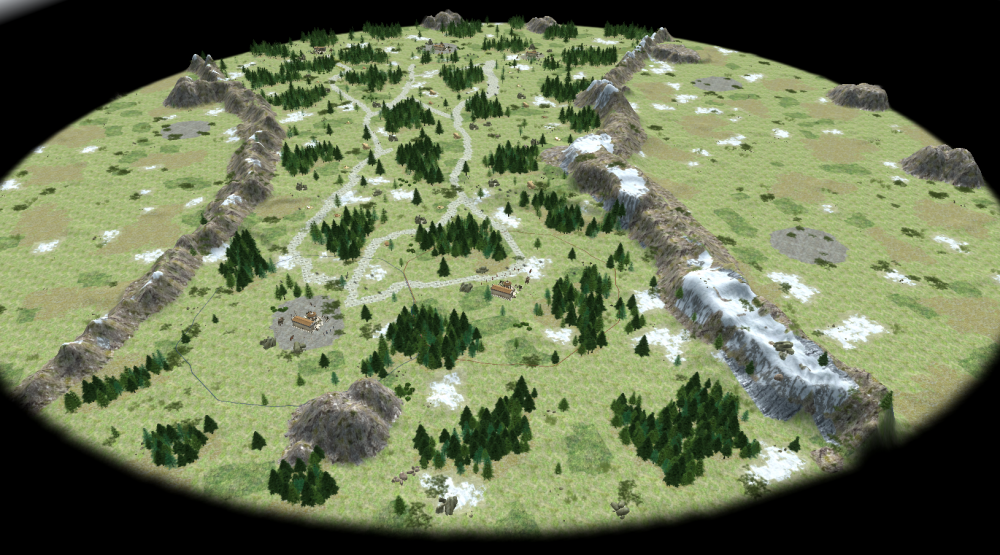
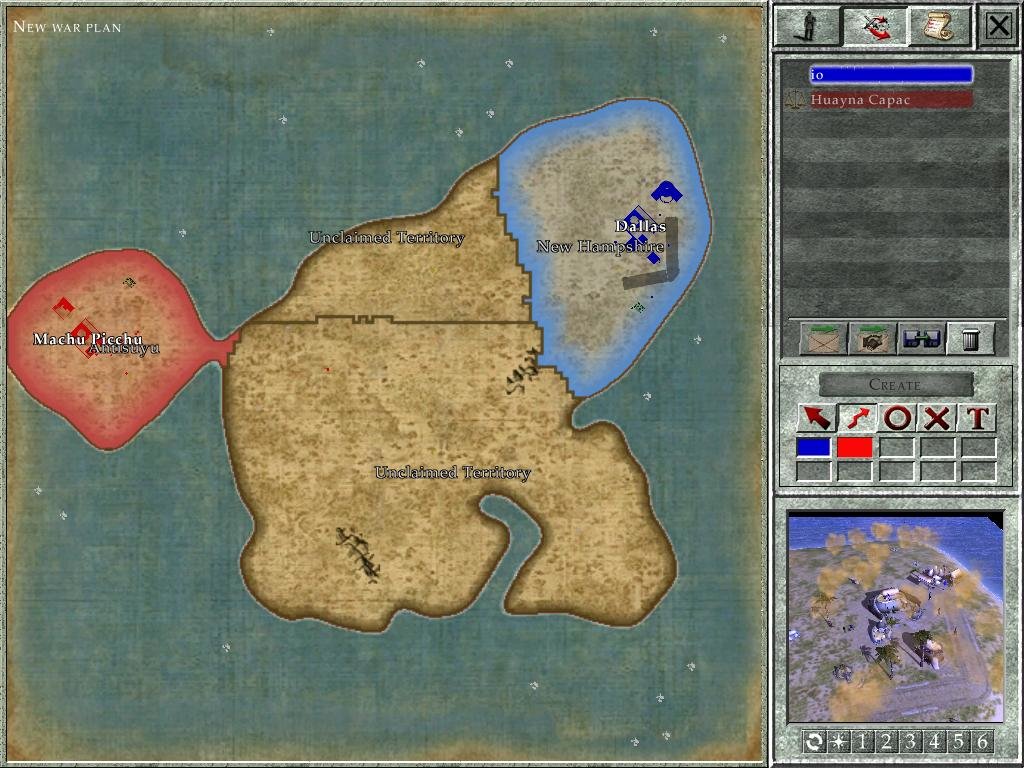
A 2v3 map, intended for 2 human players versus the AI. The 2 human players bases are very close together. Updates and other maps can be downloaded from my 0ad Maps GitHub repo. aa2020-1_0.0.1.7z
 2 points
 -
You still benefit more if you use the extra effort to use control groups and separate formations of troops and positioning them and all that. I myself have been experimenting a lot with the right-click drag positioning feature (funneling enemy attackers to the center, arraying ranged troops to the rear, properly spacing cavalry flanking maneuvers so that they spread their attacks more efficiently across the desired target units, etc.).2 points
-
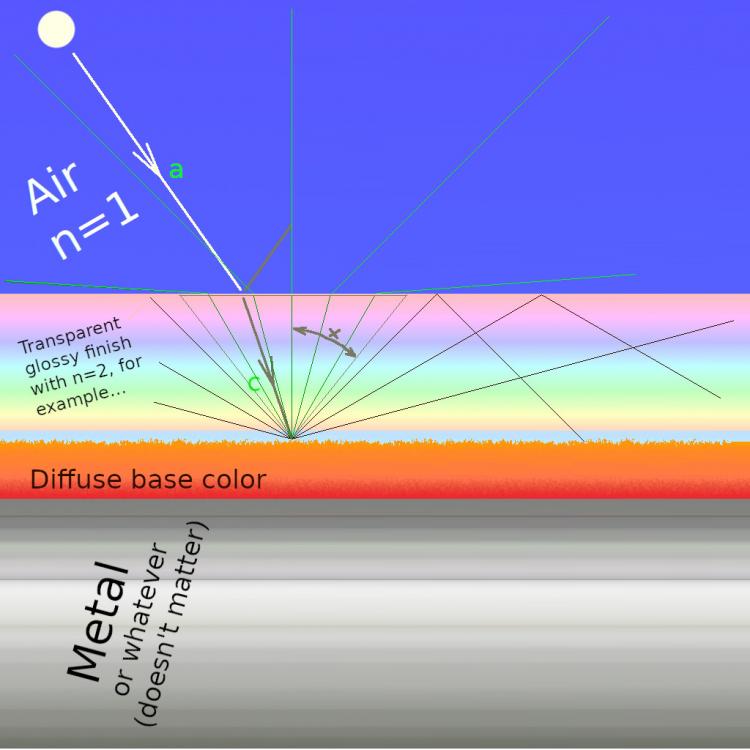
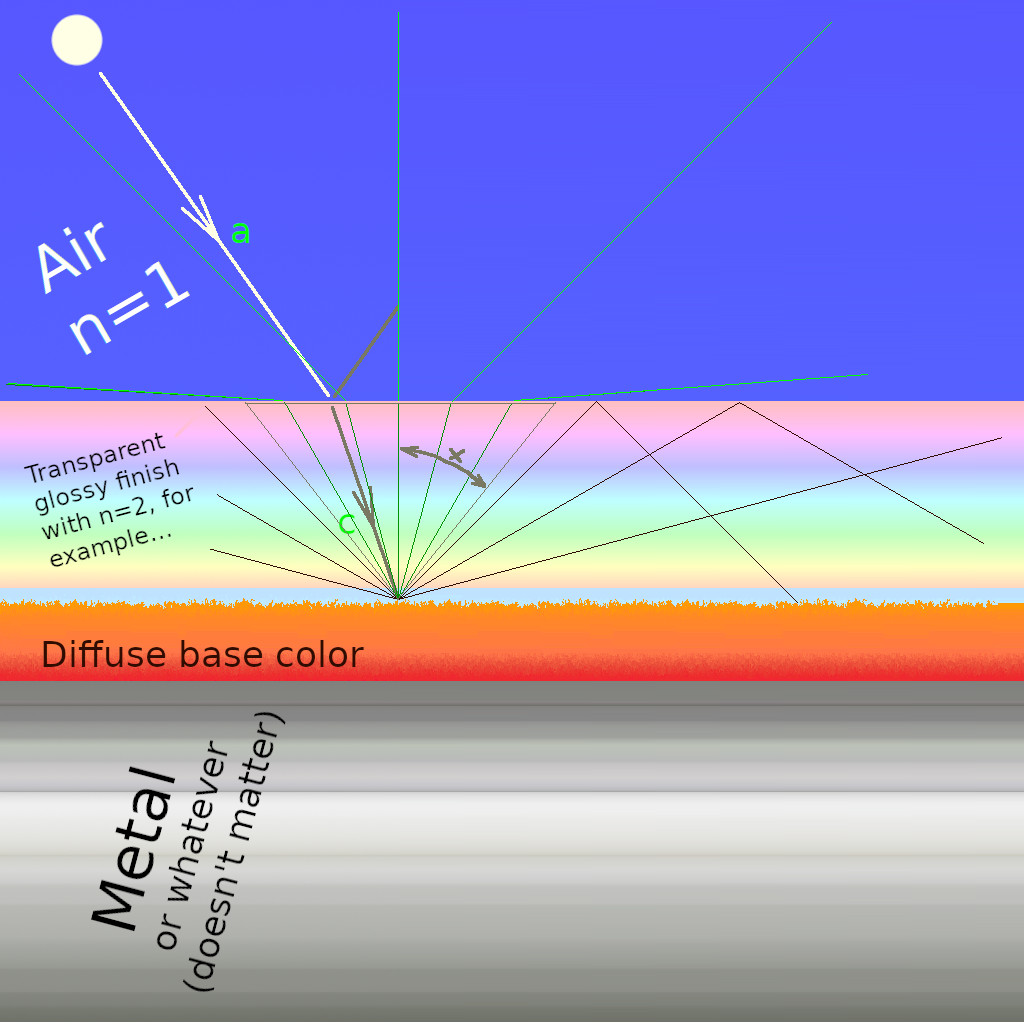
Okay, so, the case for a dielectric, transparent, glossy layer over a diffuse base begins similarly to the case of dielectric over specular metal. We have a sunray coming in, 'a', that hits our dielectric and splits into a reflected ray, 'b' (the name of which got cut off in the pic), and a refracted ray 'c'. We already have the math for all that, except for one detail: My calculation of reflected light by the diffuse base was based on ndotl (normal dot lightray vector, or, the cosine of the angle), but light refracts and changes angle, so I should consider the refracted lightray, versus the original lightray. The good news is that the new Fresnel function gives me the cosine of the refracted angle already, as it needs to compute it internally anyways; so I don't need a special calculation; I just need to use that output of the function. So, our concern here is what happens from the moment 'c' is about to hit the diffuse layer. When 'c' hits the diffuse base, it explodes in all directions evenly. At least that is the simplified model of diffuse optics. Rays shoot out in a semi-sphere of even distribution. Some of the rays, shown in green, make it out of the dielectric layer; and some of them, shown in dark red, reflect off the dielectric interface, heading downwards again. This is simplified because the rays escaping are actually split, with a portion reflecting; however the portion is miniscule and can be ignored here. I put gray lines between the green and red, forming a triangle. This is the escape cone, whose half-angle (radius), which I marked in the drawing as 'x', and therefore solid angle, are a function of the material's refractive index alone. The higher the RI, the narrower the escape cone gets. THIS is what the function in the previous posts was all about. But note, as an aside, that the distribution of rays coming out of the dielectric and into the air is not limited to the cone of escape, because they refract, expanding again to a semi-spherical distribution. With this we can calculate how much light will refract out, and how much light will reflect back in to produce yet another diffuse spherical distribution, and so on and so forth. So, given a 'c' ray, let's follow the saga in pseudo-code: void saga_of_a_photon( vec3 ray_c, vec3 normal, vec3 MatDiffuseRGB, vec3 RefractiveIndex vec3 RefractingOutRGBlight, vec3 ReflectingBackInRGBlight ) { vec3 ExplodingRGBlight = dot(ray_c,normal) * MatDiffuseRGB; //diffuse explosion RefractingOutRGBlight = ExplodingRGBlight * RefractiveEscapeFunction( RefractiveIndex ); ReflectingBackInRGBlight = ExplodingRGBlight - RefractingOutRGBlight; } Before you jump horrified that RefractiveIndex is a vec3 instead of a float, there's a reason for it: most materials' refractive index changes with wavelength, so it is not the same for R, G or B. In the latest water shader I have the index of refraction for water as a vec3, not that I'm going to boast of noticing the difference in the results, but every little bit helps. And you might ask, how am I going to specify these "anisochromatic" refractive indices with only one texture channel, the definitive answer is I don't know yet. But seriously, chromium oxide, whose properties are what causes iridescence in chrome-plated Harley exhaust pipes, has steeply changing refractive indexes. To model iridescence I will need to model them correctly. There is one problem that arises from the picture and the pseudocode. I was going to grab the middle of the 'c' ray as my starting point to define the repeating cycle to then solve as standard geometric series. But now I realize I cannot do that, because the angle that 'c' is coming at is input light vector-dependent, whereas the reflecting-back-in rays are not. In fact, I would say that the average angle of light reflecting back in is (90 degrees - x) / 2. Don't forget we need to compute dot(ray,normal) at each diffuse bounce. So, my repeating cycle really begins AFTER the first diffuse explosion. Time for a break; I'll work on the other shaders for a bit.
 2 points
 -
Hi, this topic is not used to explain a problem, but a big congratulations to Wildfire Team for the Amazing new Alpha 24! Keep it going! Don't give up!1 point
-
On most skirmish maps in DE, there are capturable structures and units that affect gameplay and add strategy. All of these objects are invulnerable (cannot be killed or destroyed). Probably the most consequential capturable map object, the Mercenary Camp allows the player to train a number of Mercenary Soldiers, which only cost coin and no population. These camps are map-specific and allow the training of dozens of ethnic mercenaries specific to that map location (Gaul, as opposed to North Africa, or India, for example). The occasional Shrine allows nearby units to heal and can train Elite Healers specific to the culture of that Shrine. Another common capturable object is the Trading Post. This allows the player to have long and profitable trade routes. They train Traders specific to the culture of the Trading Post and the Slave Trade tech allows Slave units to be trained twice as fast. Horses, Ponies, and Donkeys are similar to Catafalques, in that capturing them gives the player a bonus in the form of a global aura. Capturing Horses and Ponies gives extra health (+2% each) and faster train time (-5%) to cavalry units, while capturing Donkeys gives extra gathering speed to Citizens (+2% per donkey). Captured animals can be garrisoned in the Corral building for safe keeping.1 point
-
Live coverage here:1 point
-
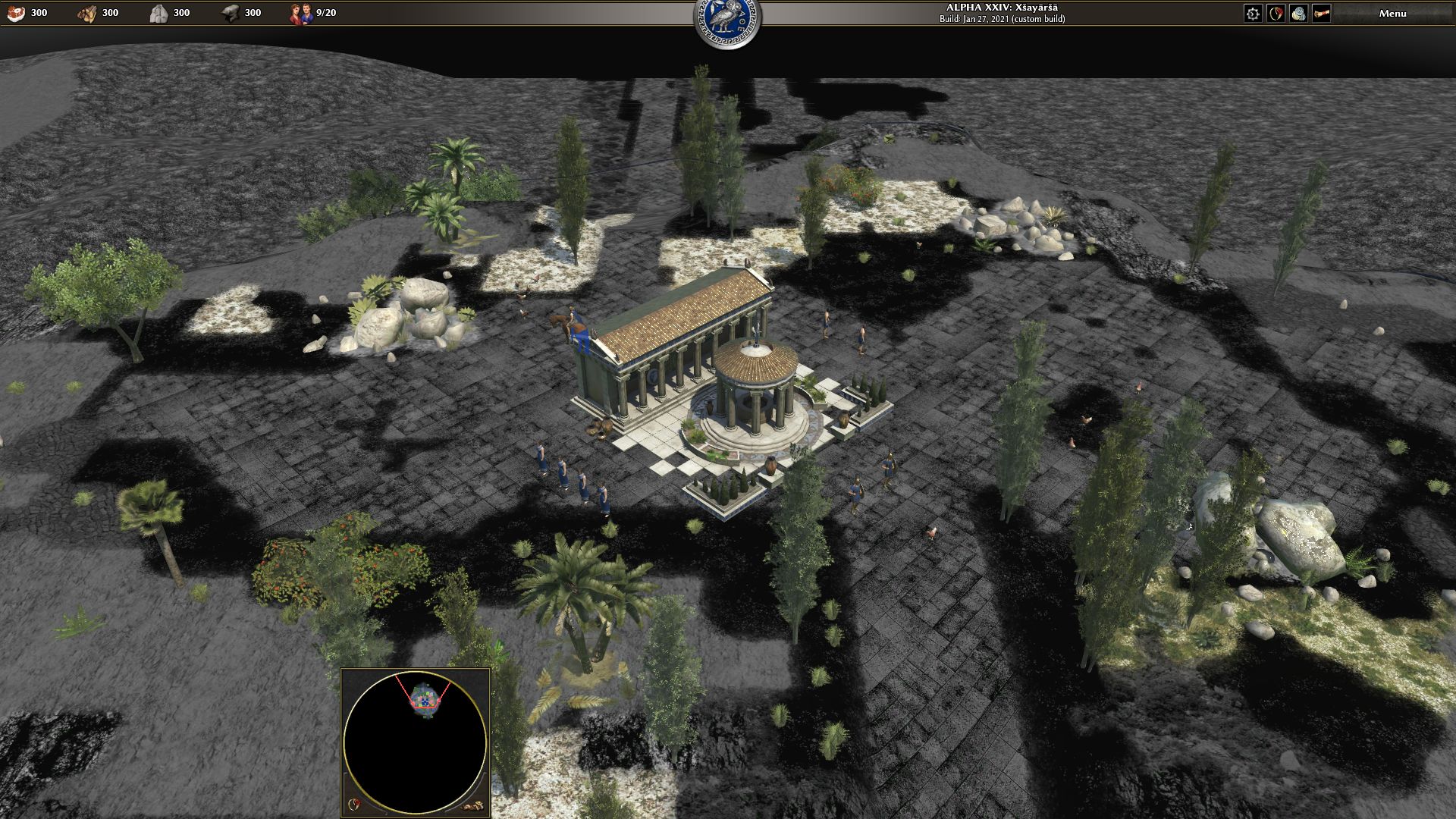
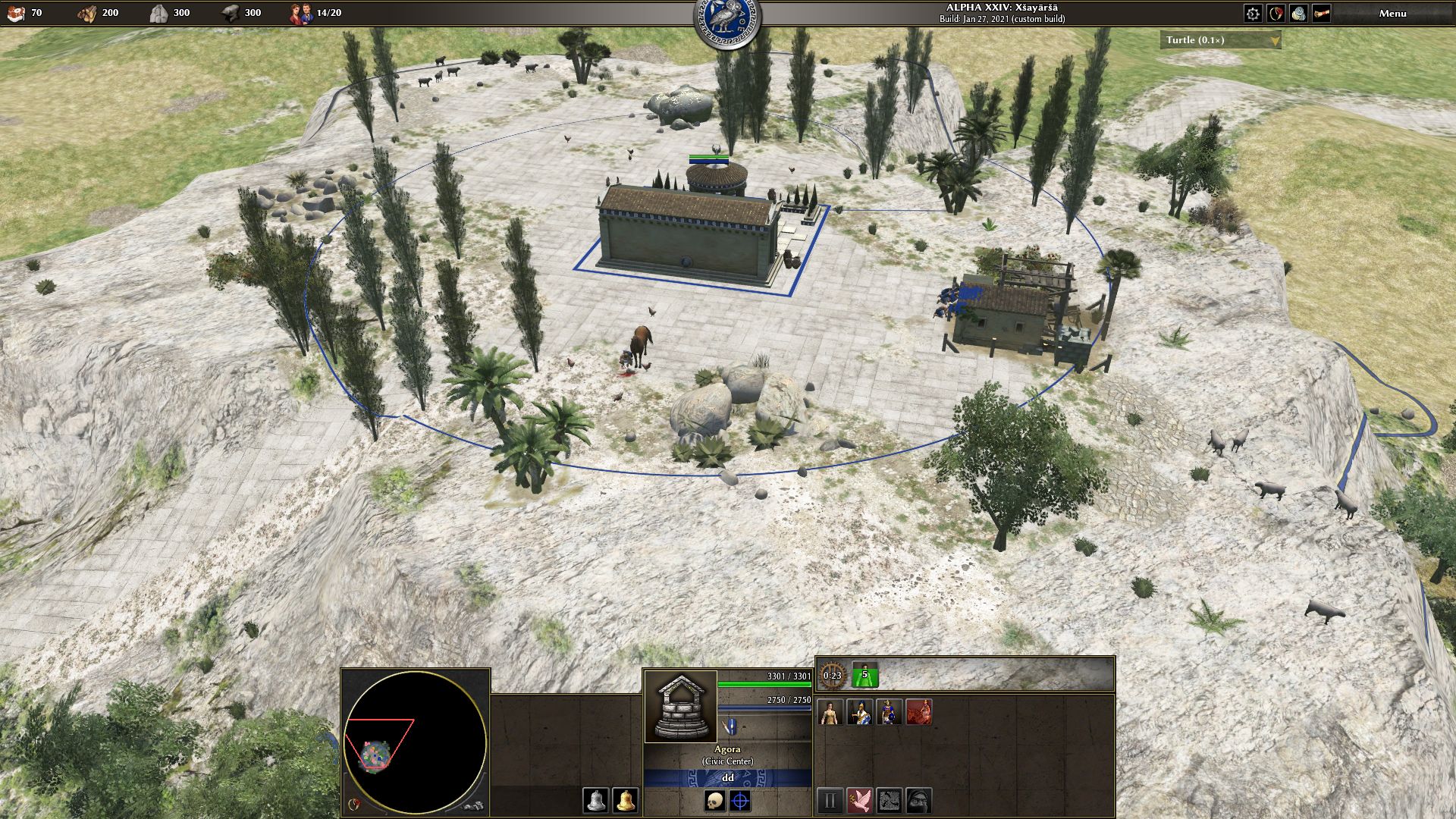
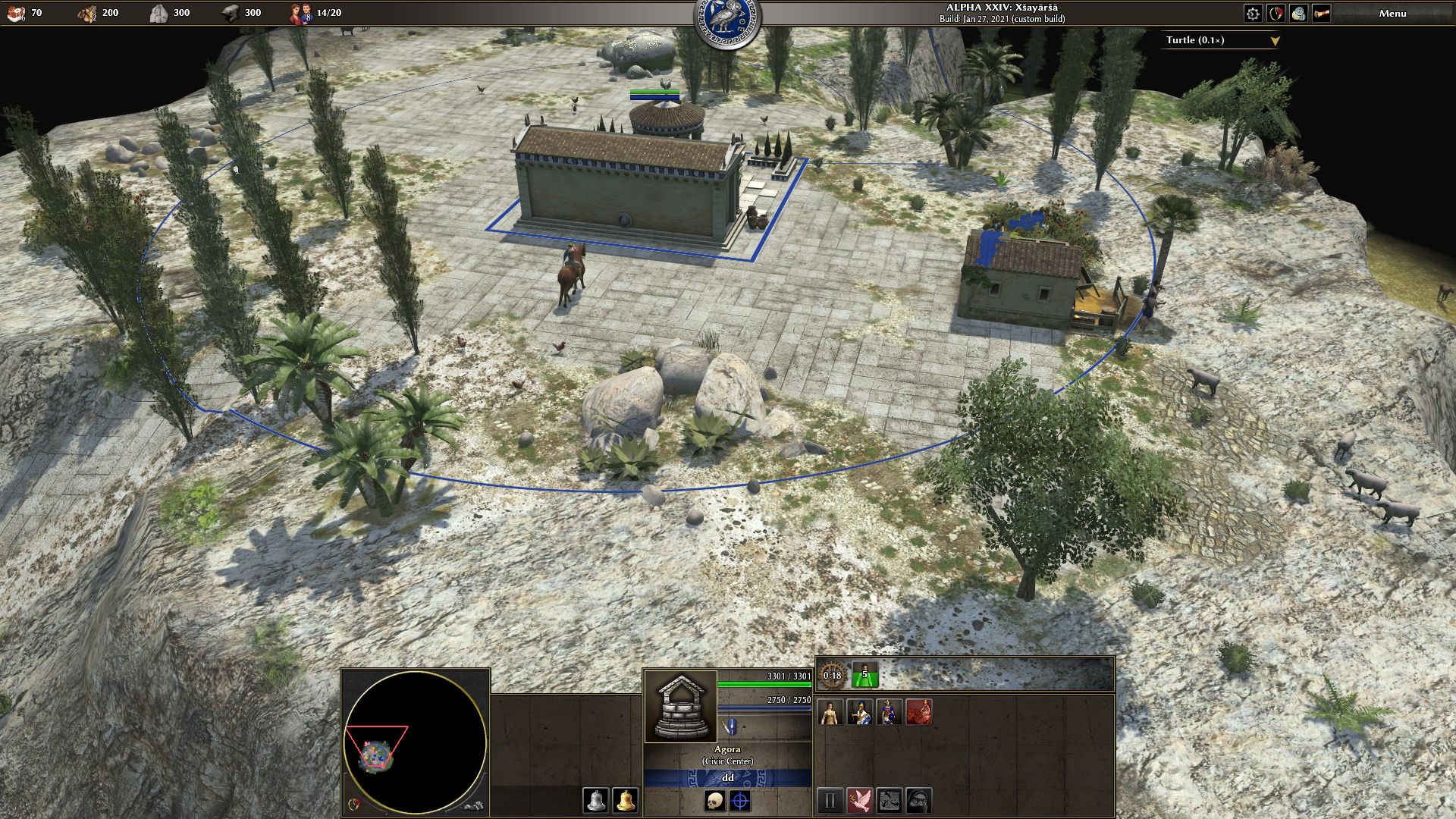
@Panther A *.pyromod is a renamed *.zip; you can rename it back to *.zip if needed. I'm having a hard time with bringing back specularity to terrains. Initially I tried testing with my favorite terrain, the Belgian Bog, but nothing I was doing had any effect; then discovered that Belgian Bog has specularity turned off via xml settings. Maybe that's one of the reasons it's so nice So then I turned to my pet-peeve map, which I knew had specularity, the Acropolis Bay. So, first I wanted to know what exactly am I dealing with, so I made the shader output raw specular color to the screen, and this is what I found: I have no idea why some patches have almost full specularity. It seems totally random. There's nothing particularly different about those areas to tell in the diffuse texture. I mean, if the diffuse intensity went down as the specular intensity went up, those areas would turn metallic; but the diffuse intensity is rather uniformely too high; too close to white, in fact. And there is no material that could possibly be white in diffuse AND in specular; this is complete trash. But then, as I brought back specular code that I had erradicated from the terrain shader with full prejudice, I noticed something peculiar: The alpha channel in the specular texture is used to alpha-blend specular color with diffuse color AFTER lighting, which I'm still trying to wrap my head around... Why not just pre-multiply this alpha channel by the specular RGB, and use the alpha channel for a more valuable purpose? I decided to try and see what this alpha channel contains, so I converted it to grayscale and put it on the screen: As you can see, we find no relief from specular absurdity in the alpha channel. I was hoping that maybe those bright patches had low alpha to compensate, but the alpha channel is not only conceptually wasteful, it is wasted in actual fact by making it 255 all across. How is a poor shader supposed to deal with garbage at the input? One map can be beautifully well done; another can be totally absurd. But I'm not sure who exactly I'm pointing a finger to, though I certainly am. Is this the map-maker's fault?, or is it the materials?, or the engine? One thing I know is that I looked at the textures in the materials library a week ago or so, and I found the texture that makes up the tiles (that we barely see in the second picture above, so bright they are). That texture, as I said to Stan, is way too white, and on top of that has content in the specular channel. What my so hated terrain shader has done is inject beauty into this acropolis bay absurdity by toning down those whites, removing specularity altogether, and increasing contrast at the high end, thus making the tiles noticeable AND good looking *** for the first time *** ... ... but what do I get for it if not hate? How is it even possible? Or is this just the case of one little tyrant's opinion that everybody else is afraid to confront? @wowgetoffyourcellphone Can you please tell me which map is so badly affected by my terrain shader, so that I know what is it exactly that I need to fix?
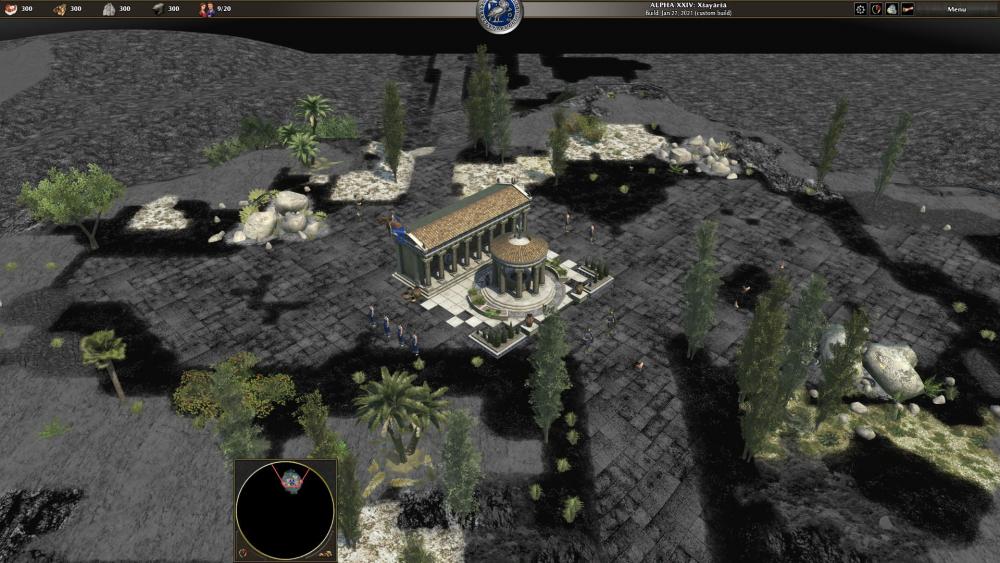
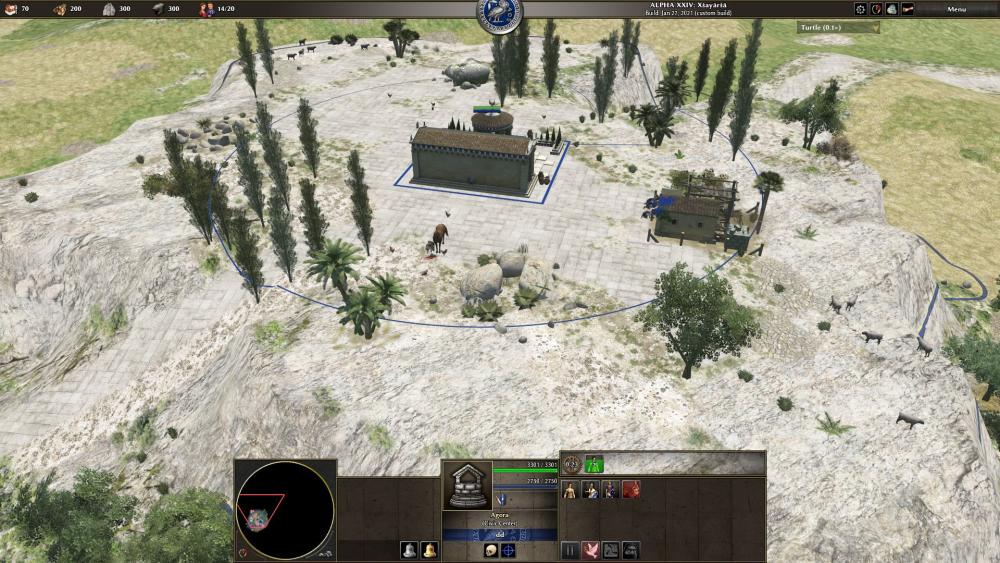
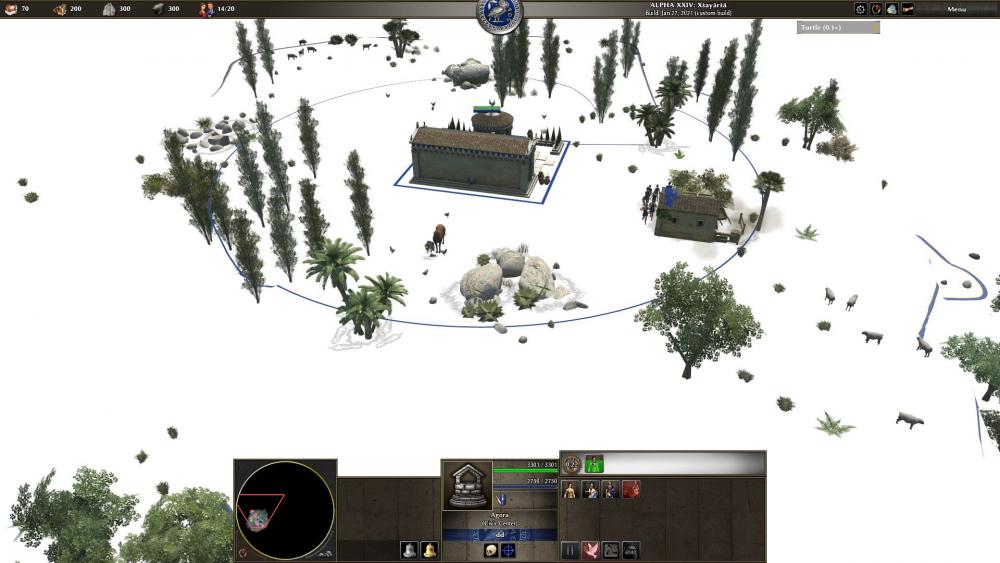
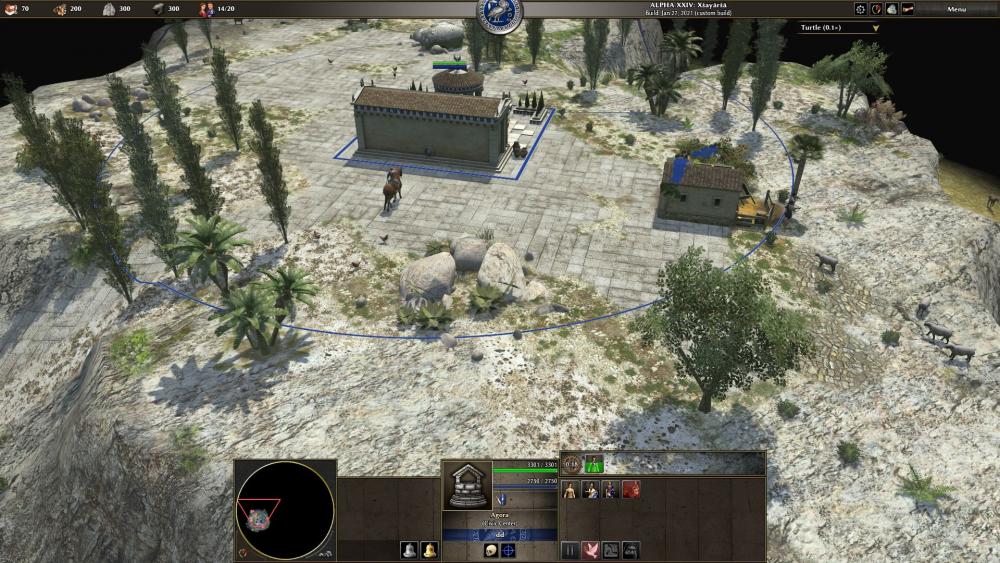 1 point
 -
My opinion is that the very early game in 0 A.D. is easy and boring at the moment - I think we could do with a little more challenge, and microing animals sounds like an option. That being said, I don't believe it'd be a huge problem for 'cavalry gathering chicken', since that goes so fast. It's just an additional debuff for hunting further away animals. AFAIK, corral remains unviable for now I believe in the early game.1 point
-
I think if you put something like "0% 100%-256 256 100%" it'll do what you want1 point
-
you were certainly born to design video games. I had thought of one, but the other about buy hero time...1 point
-
So, DE has a feature called Groves, which are collections of trees which are 1 large selectable and gatherable object. There's a few interesting things you can do with this, like make an "underbrush" aura which makes units move slower through them, have less accuracy while shooting in them, etc. Also, as one selectable object you have fewer things to keep track of and also conceptually they make sense in that forests were valuable sources of resources, not just individual trees. There are still individual trees (stragglers), but they aren't the sole source or primary source of wood, the groves are your primary source of wood. Now, also in DE you can build Storehouses and Farmsteads outside your territory. This creates a soft concept of "weak countryside; strong city", where a lot of raiding happens outside of the home territories of the players. But instead of suggesting EA adopt DE's features, I've come up with something specifically unique that the core game could adopt. It takes the DE concepts and pushes them forward a bit. So, imagine the map has these Forests and Farmland areas. Forests would be a collection of large wood-bearing objects similar to DE's groves with a Gaia Lumber Camp nearby, while Farmlands would be large open areas of furrowed land terrain with a Gaia Farmstead nearby or centralized to it. The basic game still doesn't let you build Storehouses or Farmsteads (I would rename the player-built object to Granary to distinguish) outside your territory, but it does let you capture these Lumber Camps and Farmsteads which are outside your territory. (the overall concept is similar to the capturing Stone Quarries and Metal Mines idea, which are resource bearing objects outside your home territory). So, instead of the old "slotting" concept, you just capture these Lumber Camps and Farmsteads which are already there. Forests become "renewable" sources of wood (it regenerates wood over time if not reduced to 0), but slower to gather than individual straggler trees (which don't renew) that you find inside your home territory. You can still build farms in your home territory, but those on the Farmlands are much more productive. Lumber Camp mockup: Capture the Lumber Camp dropsite (Yellow) and now you can gather wood outside your territory. Forests are made up of Groves (Red-cartouche footprint; Blue-circle footprint) and can be depleted, but they regenerate wood over time, faster if left alone. Groves have other attributes, such as they can be "garrisoned" by some civs' soldiers for an ambush effect, and they also have auras that cause units to have lower vision and movement speeds within their footprints. Straggler Trees (Green) are gatherable, but do not regenerate and can be built over by player structures (the tree disappears).1 point
-
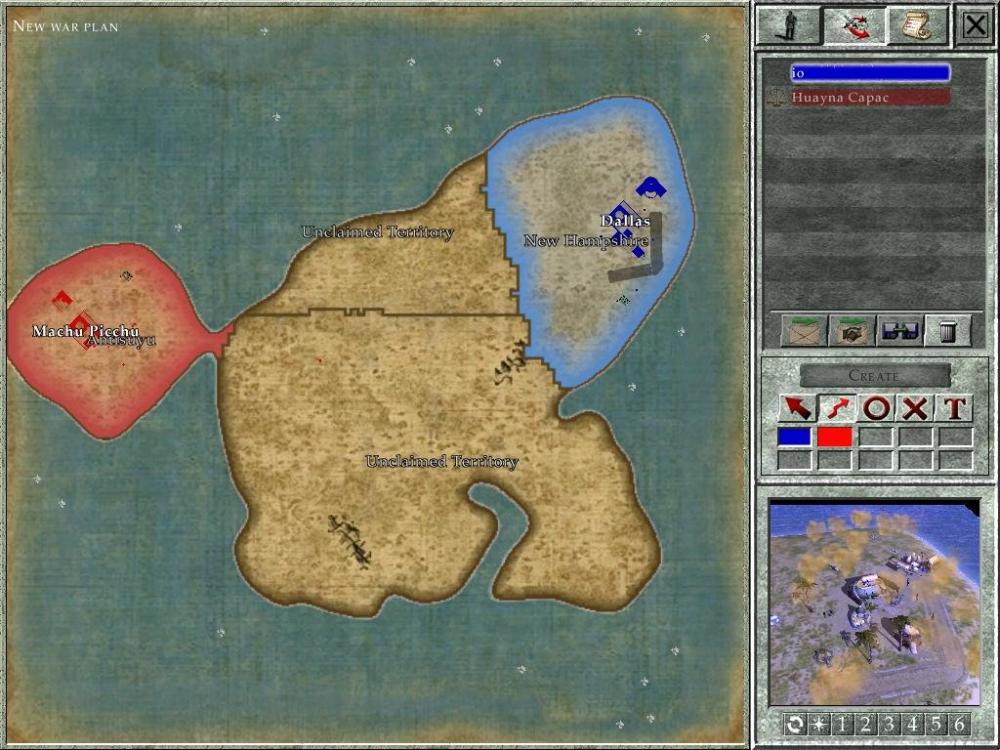
I'm in favor can work with Tactical Minimap
 1 point
 -
1 point
-
A rather old RTS and not so easy to run these days, but Nemesis of the Roman Empire, also known as Celtic Kings: The Punic Wars ("TPW"), by Haemimont Games (still around) was one of my favorite games growing up! It's not the most historically accurate in retrospect (mixing Imperial and Republican Roman eras), but still a lot of fun. Came out around 2004 I believe, or around 0 A.D.'s early days. I put together a rather mediocre playthrough with commentary (haven't played in nearly a decade so excuse my rust and poor placement on map!): Interestingly it has both a time period overlap and several core mechanic overlaps with 0 A.D.: Capture of structures is prioritized over destruction (in TPW/NRE, buildings cannot be destroyed at all anyway; gates can be broken down though). Units have levels and gain experience through combat or stationing in a building which gives them experience trickle. Each unit has its own strength, xp, and armor ratings. Units garrisoned in a settlement/structure will fire from its defenses. Each civilization is supposed to feel totally unique, and it definitely does this very well in TPW. Wild animals roam around, including hostiles. But TPW also goes off careening in a totally different direction sometimes: Resources are localized, not unified. Each settlement or structure has its own resource levels, which are sent around the map using mules which carry up to 1000 food or gold each. You can easily set up repeating routes which will run whenever the value reaches over a threshold (100 units of resource). Two-resource economy: food and gold. Food is produced in the rural villages, gold in settlements. The number of population in each controls the rate of production. When you train units, you take pop out of the settlement, meaning gold production drops. You can add more population by sending it from villages, which reduces food production. There is no troop limit, but you can reach a point where you cannot support your army's food consumption, if you do not have enough villages or they are captured. Likewise, if you run too low in population, you will not generate enough gold to train more troops or have enough pop to raise them. Units require food to live and carry a small supply, care must be taken to supply food or an army will starve and become easy prey. You can manually train mules to carry food and attach them to the army. Rather than just armor and damage, units also have a bonus ability, such as dodging the first strike, reflecting damage back to their attacker, each subsequent hit gives more experience or ignores a greater portion of the enemies' armor, and causing a % of the enemy health as bonus damage. This sets up complex relationships much deeper than Rock-Paper-Scissors of traditional RTS, where certain combined-arms relationships are extremely effective (archers knock off more health on full-health, high-health enemies, making them perfect to strike an enemy first so infantry can finish off). The actual damage of a unit is a range (e.g. 18-48), the exact value being determined by the difference in level between the combatant and their enemy. Thus, even heavy units can be overcome by a highly-trained weaker unit. There are no mobile siege units in the game. Instead, 1-10 units can build a stationary siege weapon (ballista, catapult, siege tower) on the map in any location. The weapon then attempts to fire at the target, at a rate set by how many units are stationed inside. Such weapons are very vulnerable to a sally-out, but not vulnerable to fire from towers. Only archers and siege weapons can directly damage buildings. Damage is not used to destroy the building, but rather harm and eventually kill the enemies stationed inside. Once the units inside have been pacified - or they have fled - the army will then attempt to capture the structure. Rather than units being freely formed into formations, they must be 'bonded' to a Hero who will lead them and enforce their formation. The Hero also gives bonus levels and can apply modifiers in battle. Without bonding to a hero, units will fight okay, but they will just sort of wander around without any formation. Heroes are limited to 50 units. Around the map are various special ruins and structures which give benefits. E.g. Ruins contain powerful artifacts which only high level heroes can pick up and use, which can cause damage or heal allies or grant bonus damage/health. Healing wells will heal passing or nearby units regardless of side. Capturable forts, trade outposts, stone outposts, and training outposts each provide benefits and lots of LOS to their owner. Forts slowly convert stationed villagers into macemen, trade outposts convert food into gold, stone outposts gain 8 gold/s interest when at least 2000 gold is placed inside of it, and training outposts behave like barracks in 0 A.D. and give experience trickle to units stationed inside. The cheesiest voice acting ever recorded. Some stuff I really like from TPW I wish was in more RTS: Spacebar brings up FULL SCREEN "mini"-map from which you can issue orders even. Makes the logistics and overview of the battlefield much easier. When entering combat, formations will sort of 'merge' into a battle, finding enemies to fight like in a real melee, and try to push beyond just the closest enemy. Iberian priestesses don't heal but instead gift units experience up to a certain level when a tech is researched. Units in other cultures gain experience by having mock-combat with their buddies. Priests help them to heal while this goes on, though if an enemy attacks it can be disastrous!1 point
-
at least the Romans in that series were authentic, I didn't see it but in its entirety, the Romans look authentic. Germans look viking Series (bunch of LARPs). i never expect anything from Netflix.1 point
-
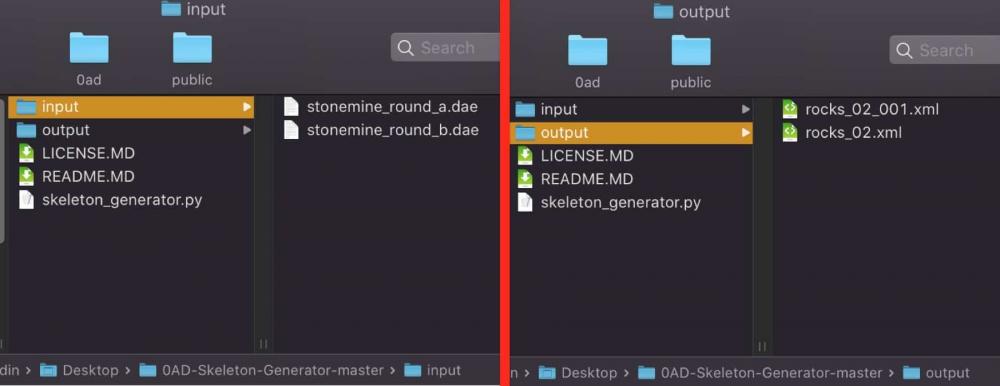
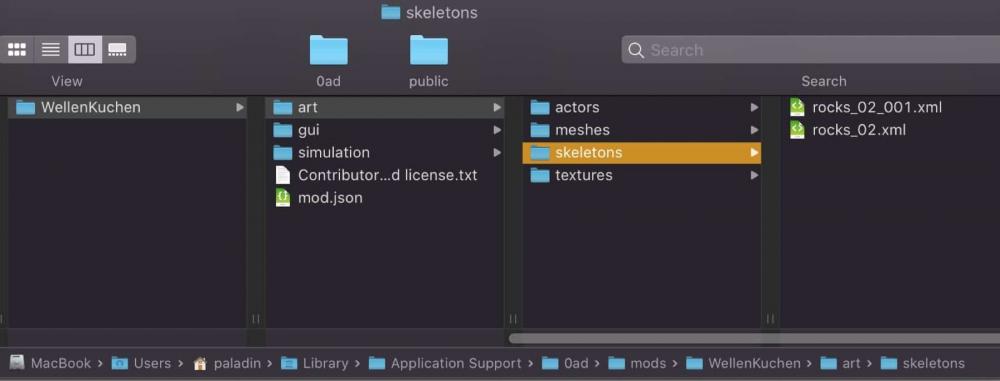
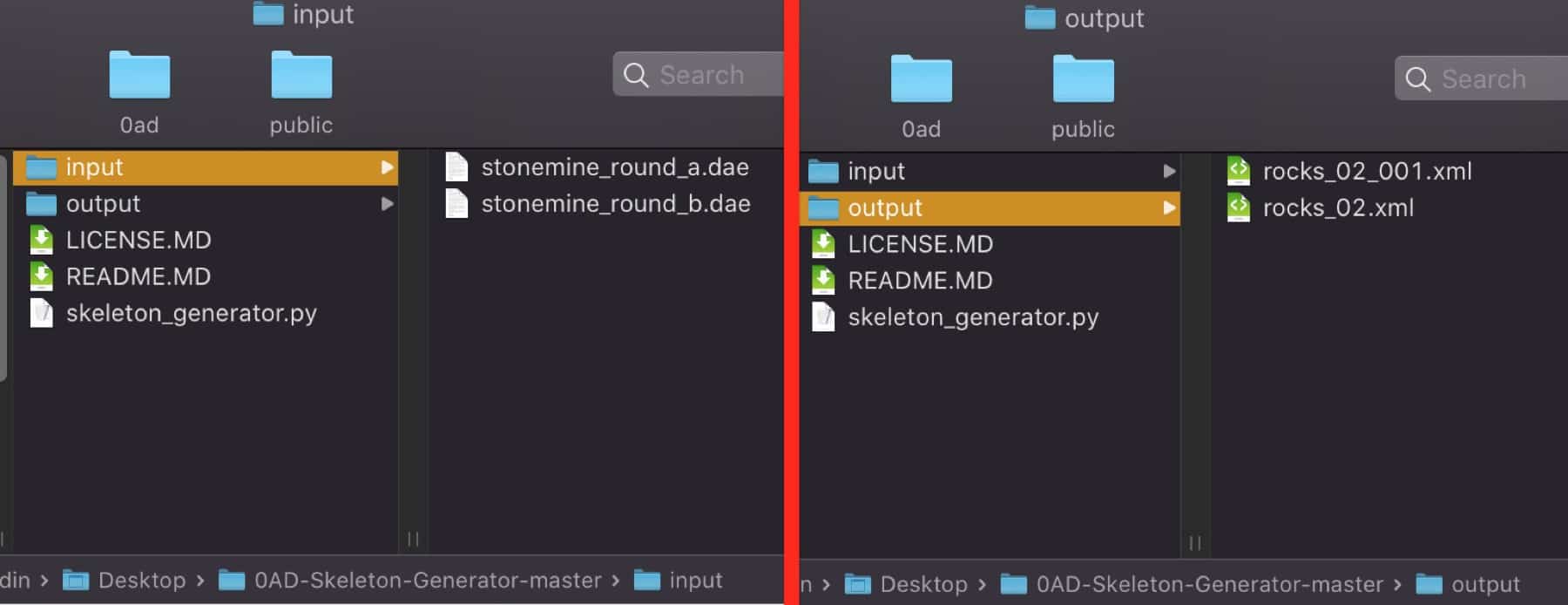
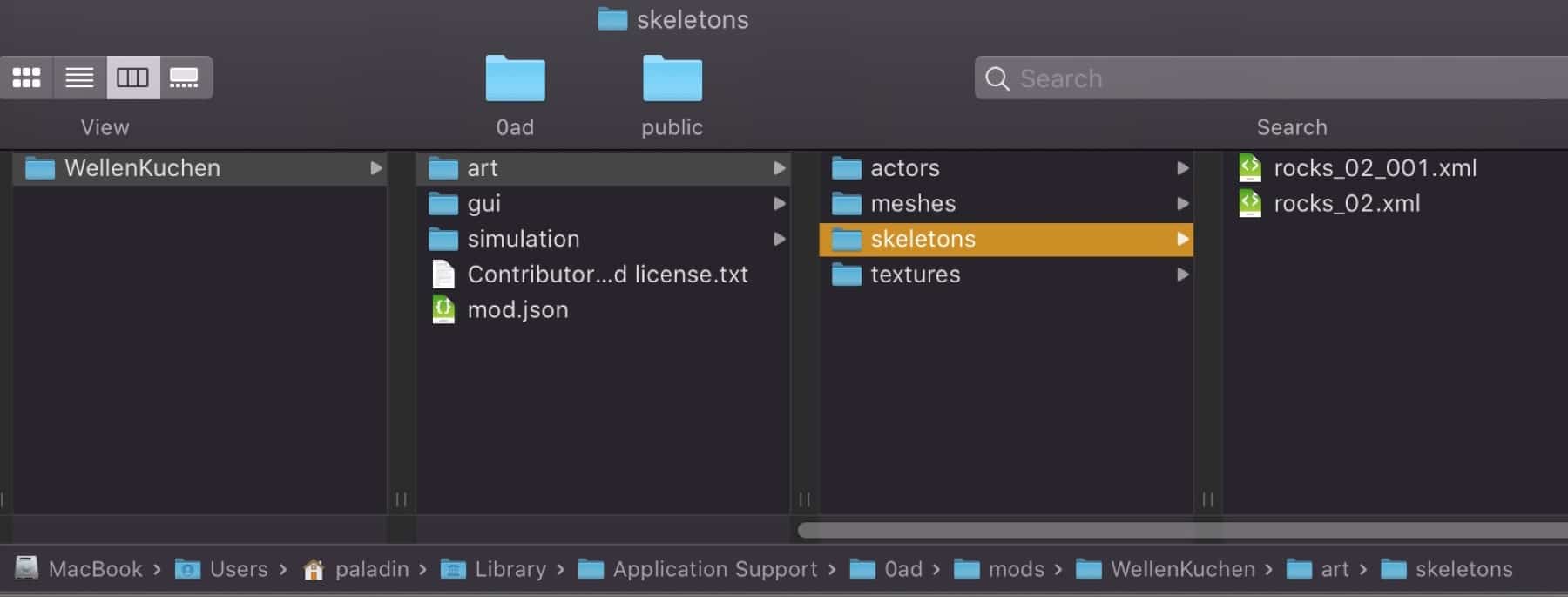
@IntellectProbably the problem is solved by now, but I had a similar problem and would like to share my solution with you. I want to use two mesh files (stonemine_round_a.dae and stonemine_round_b.dae) that I copied from the Delenda Est mod into my mod. Every time I run the "pyromod command" to make it "deployable", the mesh file was not included. (it was in the working folder, but not in the .pyromod file) pyromod command: binaries/system/pyrogenesis -mod=mod -archivebuild=binaries/data/mods/mymod -archivebuild-output=mymod.pyromod -archivebuild-compress "ERROR: Failed to load any skeleton definitions" (for stonemine_round_a.dae and stonemine_round_b.dae) Searching for a solution to my problem led me to this thread and this one "Importing custom models & animation" from May 26, 2018 The wiki/ArtDesignDocument also says: I solved it by using this GitHub tool called "0AD skeleton generator" (made by Stan). Add your mesh files in your input folder and run the following command, the .xml files can be found in the output folder. python3 skeleton_generator.py All I had to do was add the .xml files to my mod. Problem solved.
 1 point
 -
@Panther you can just open the pyromod and get the files. This way it's even easier to drop them1 point
-
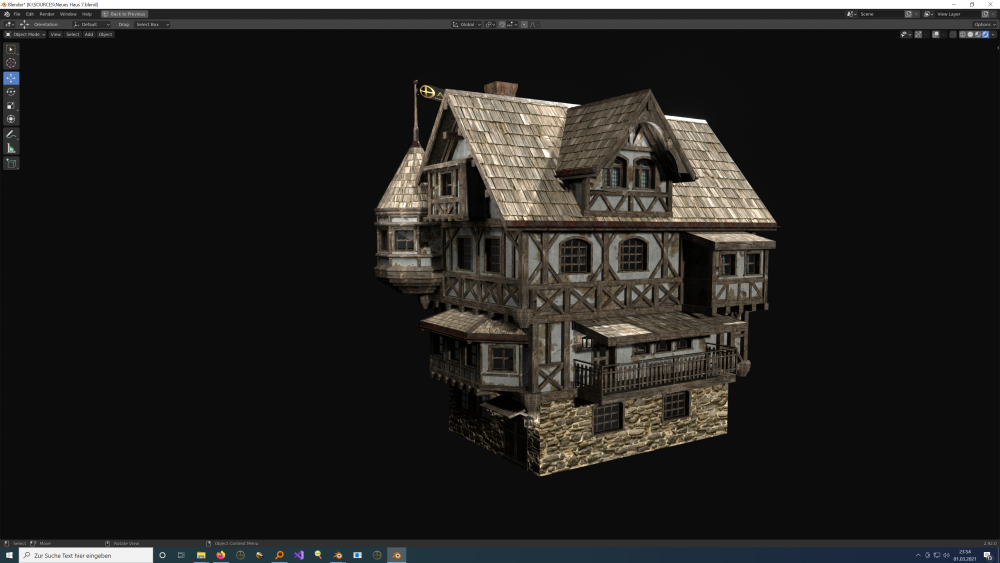
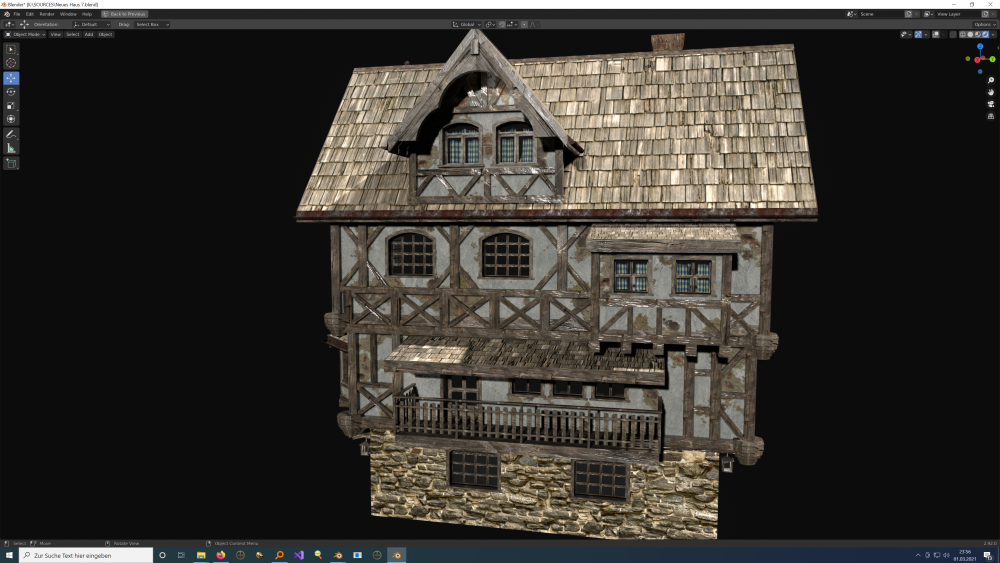
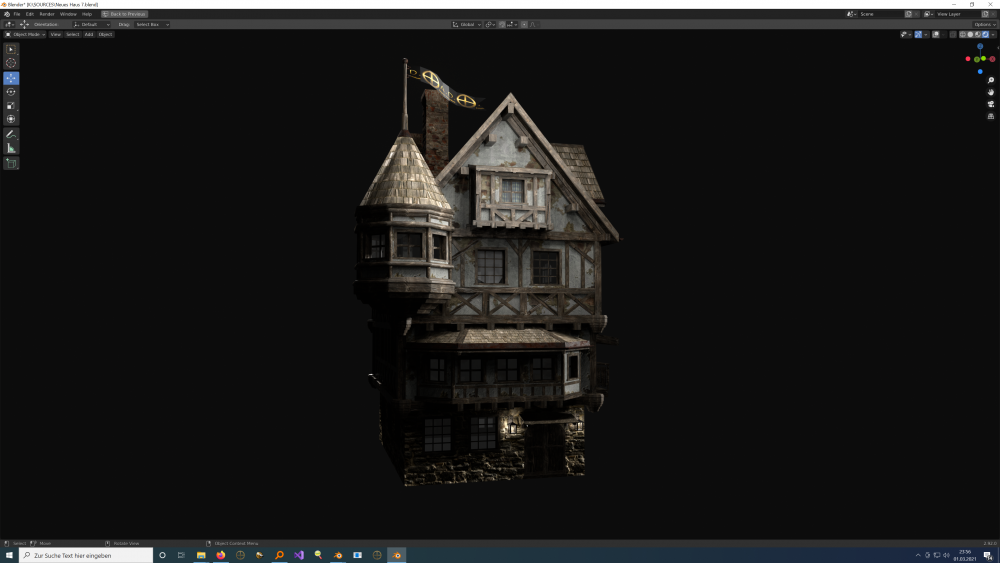
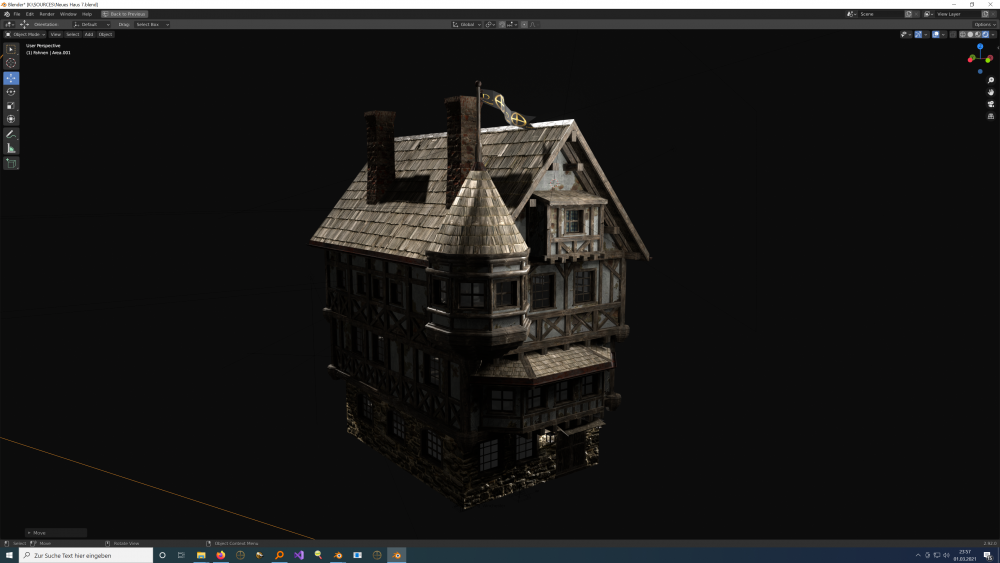
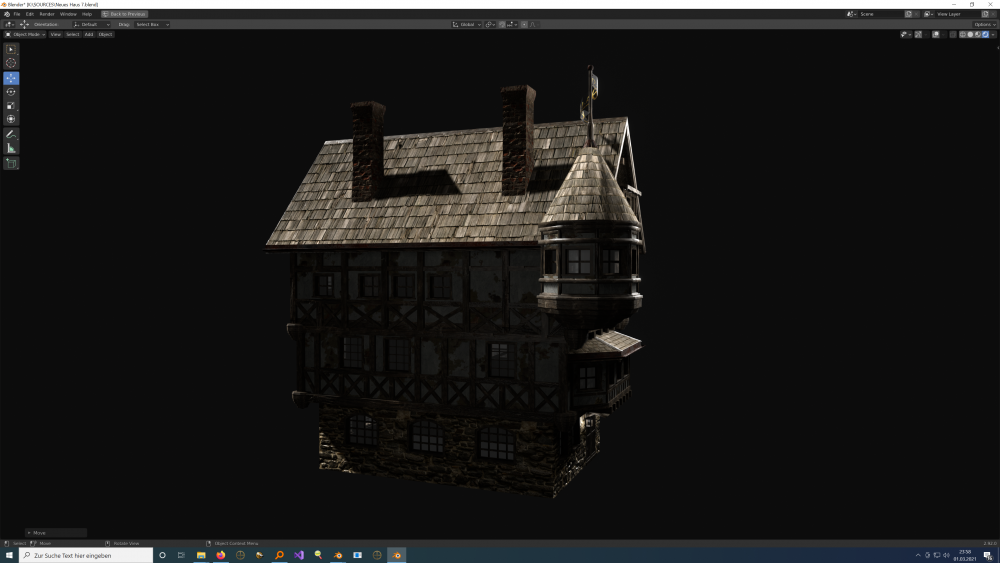
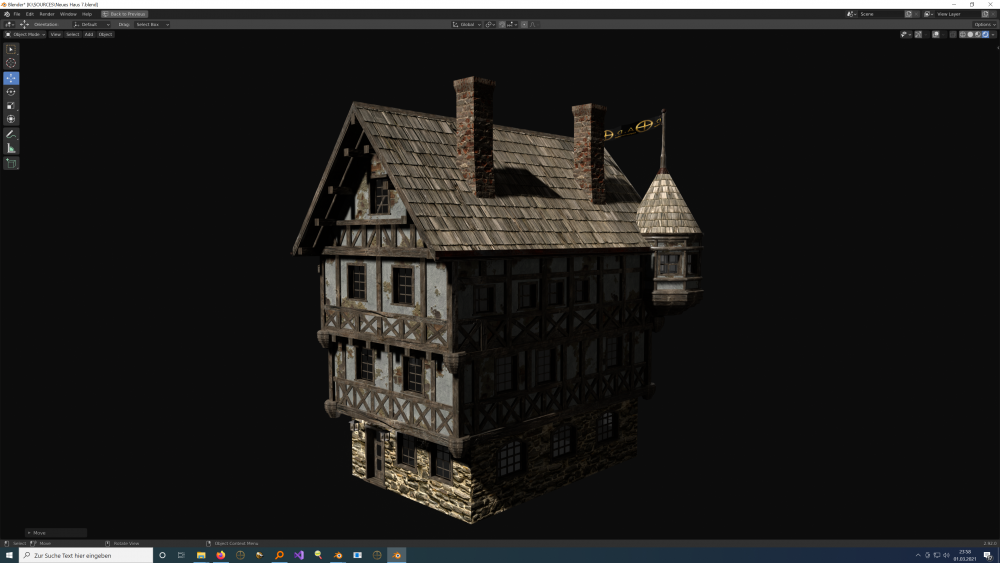
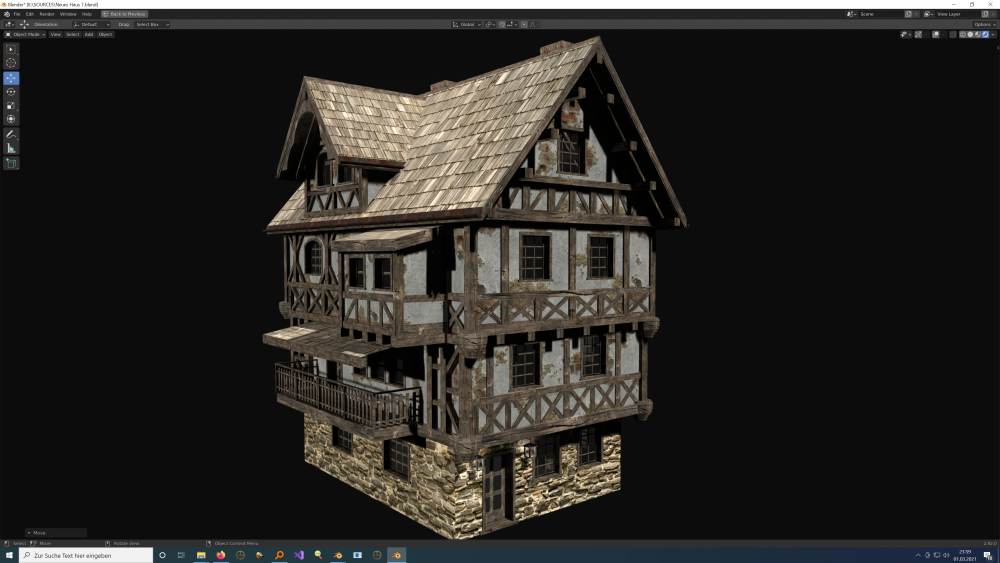
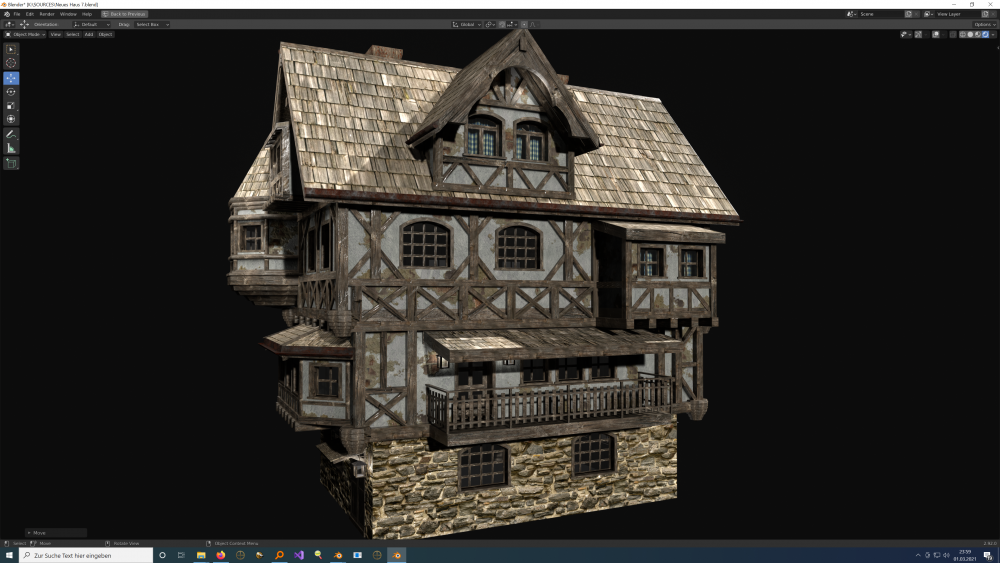
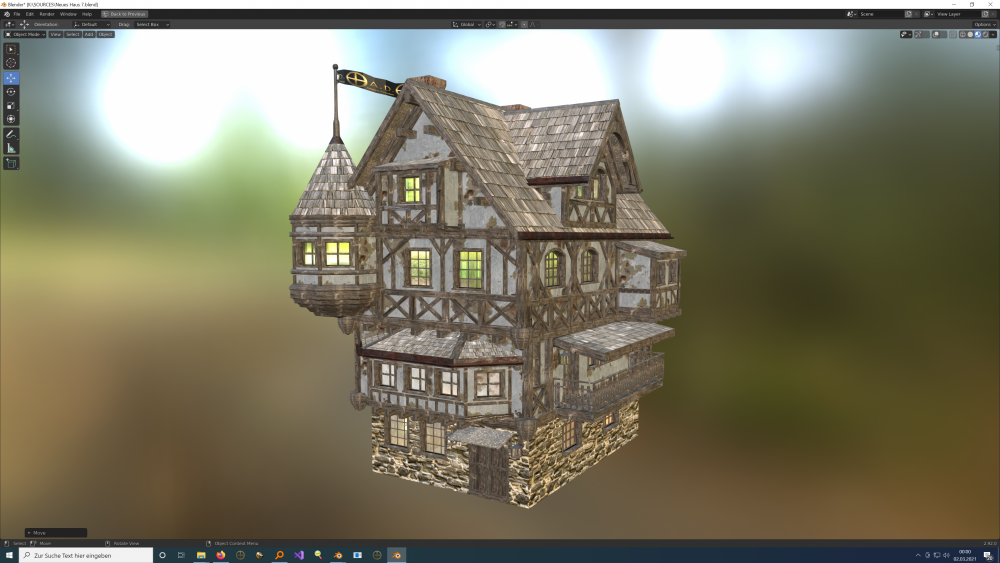
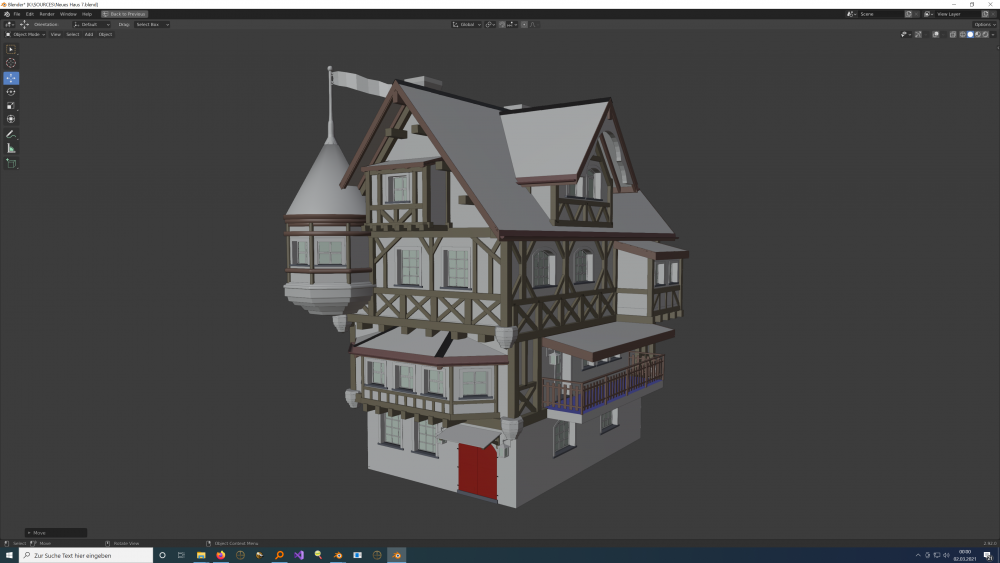
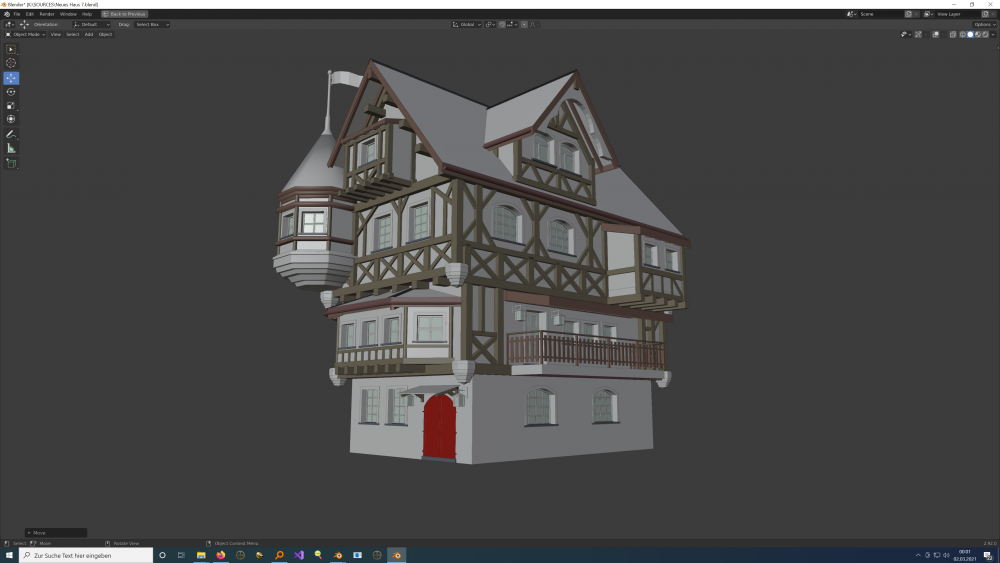
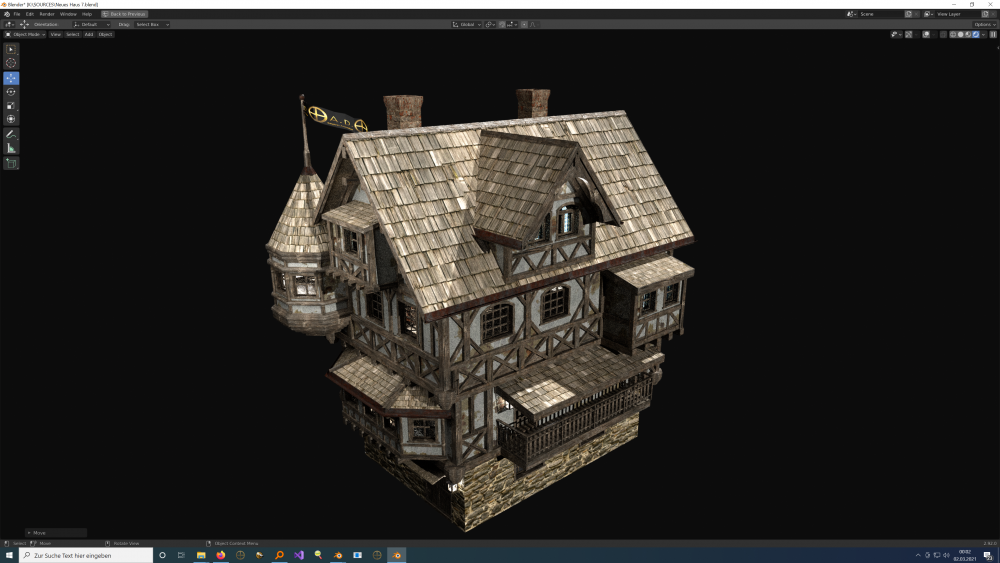
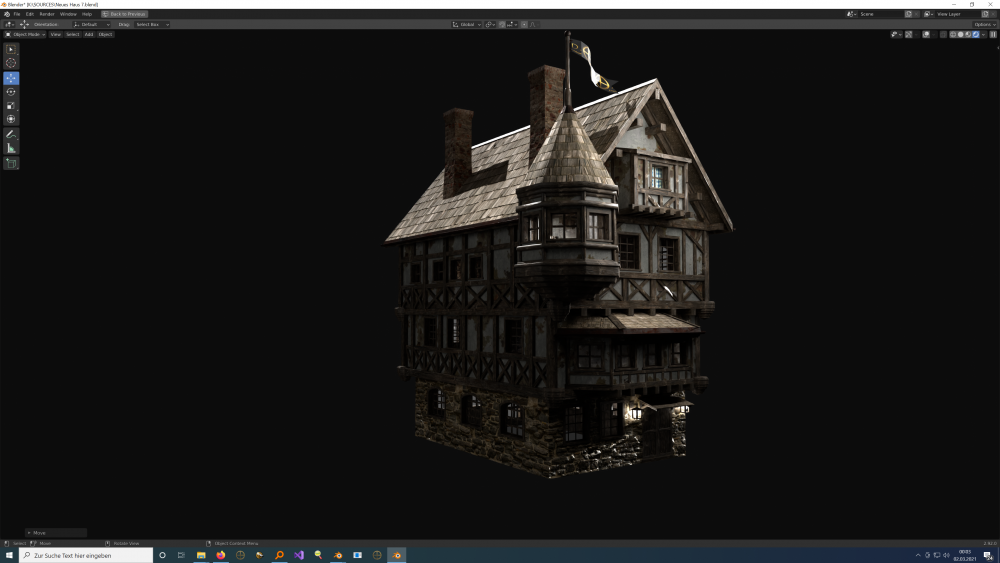
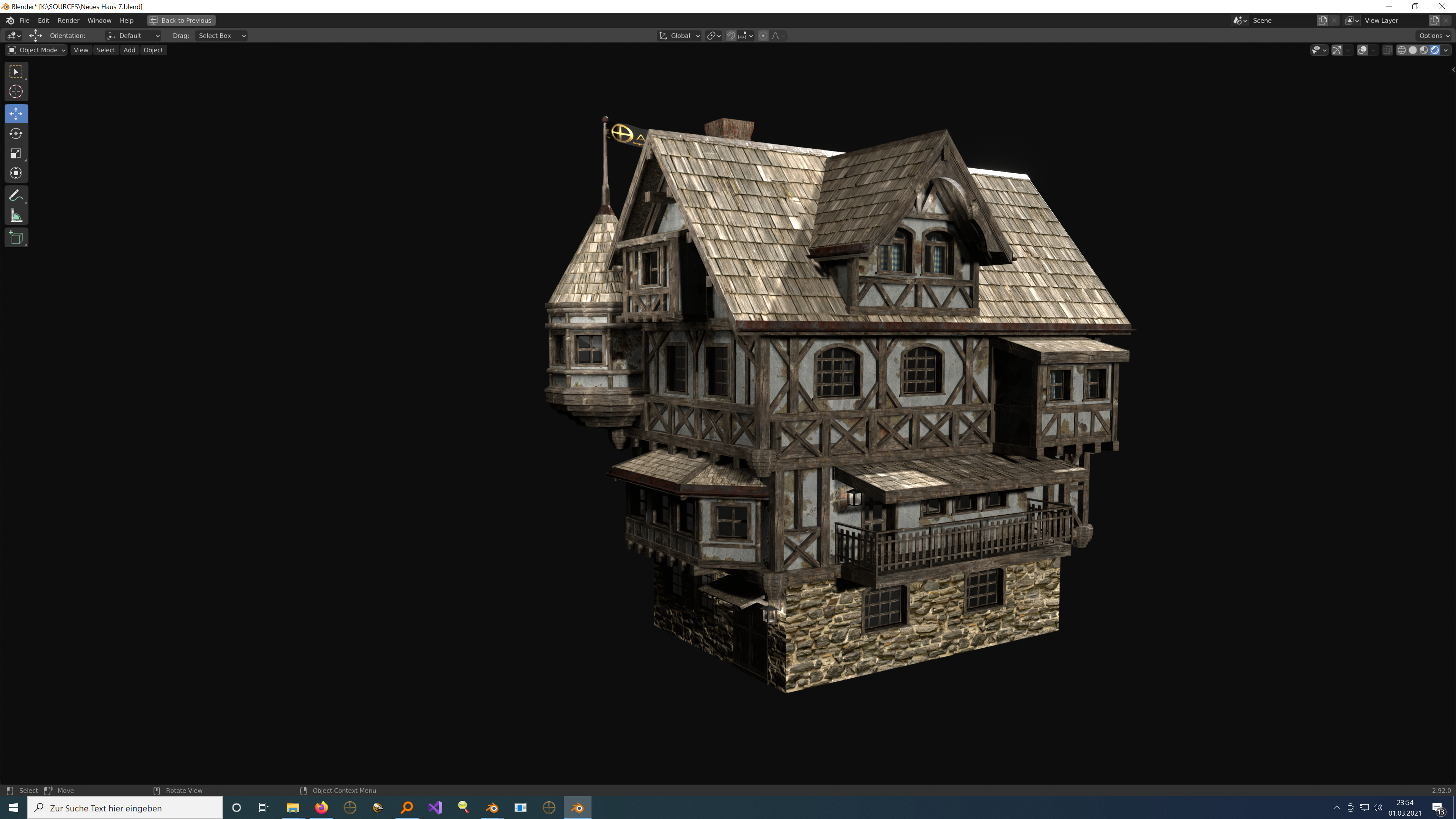
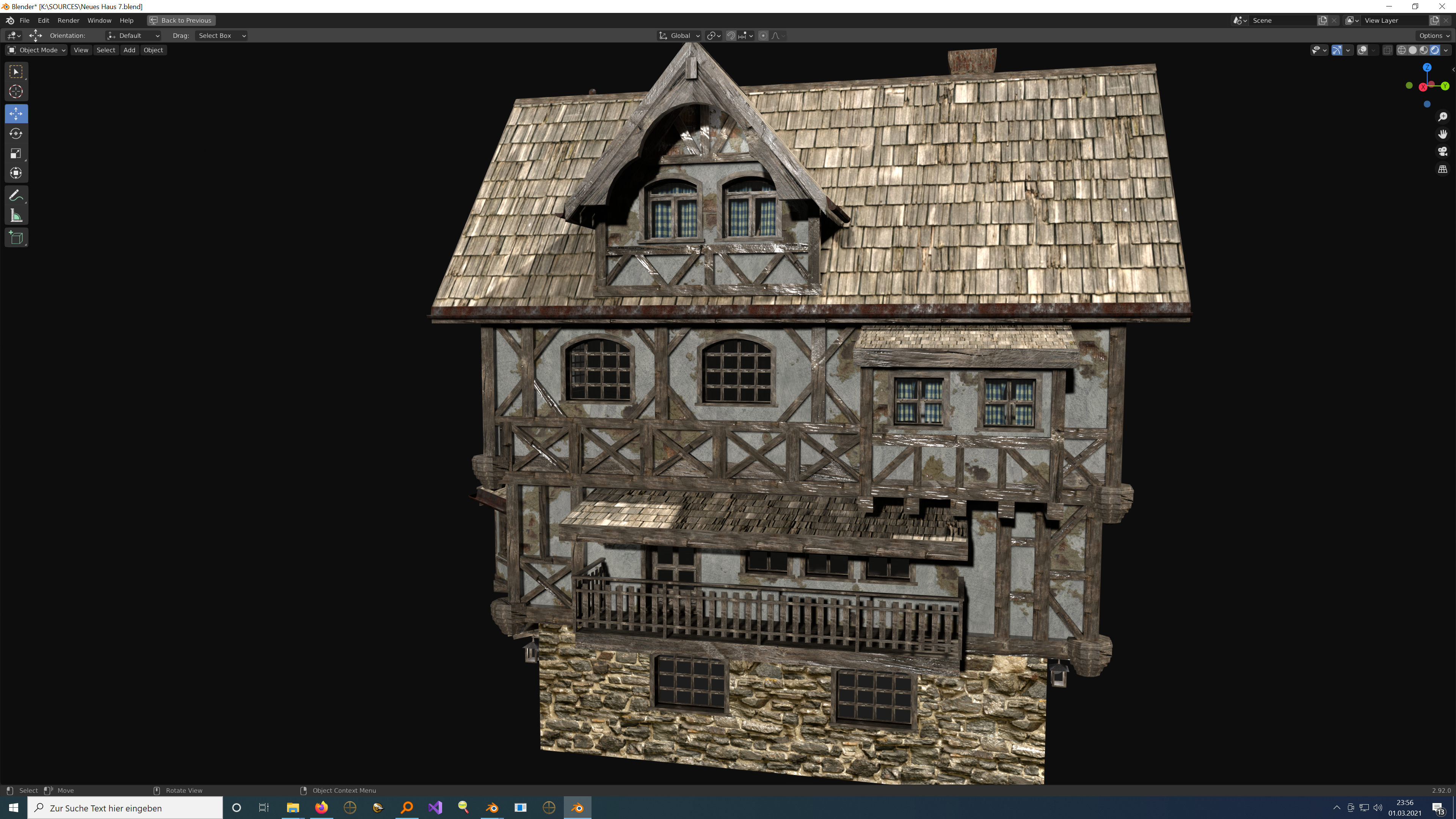
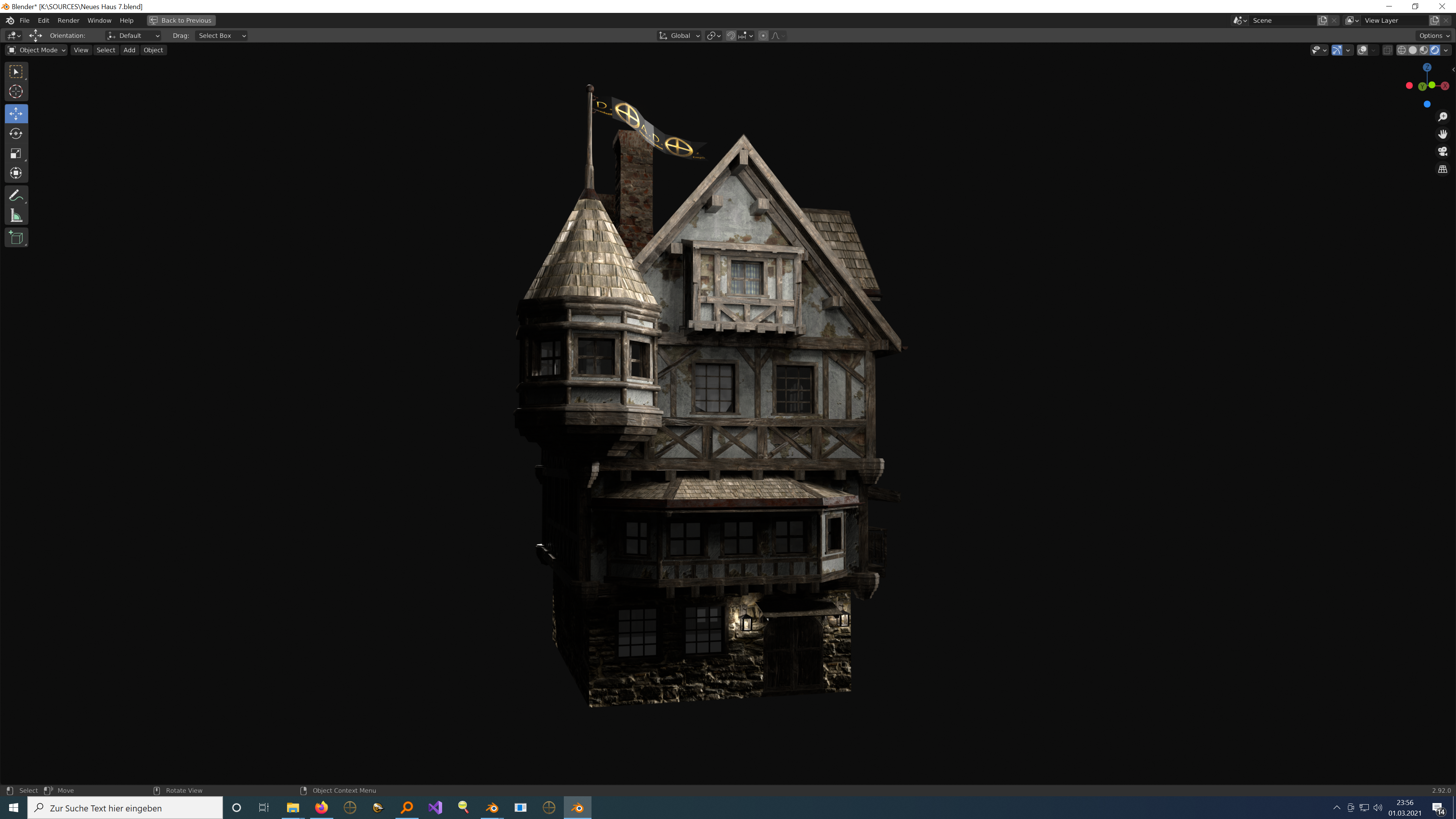
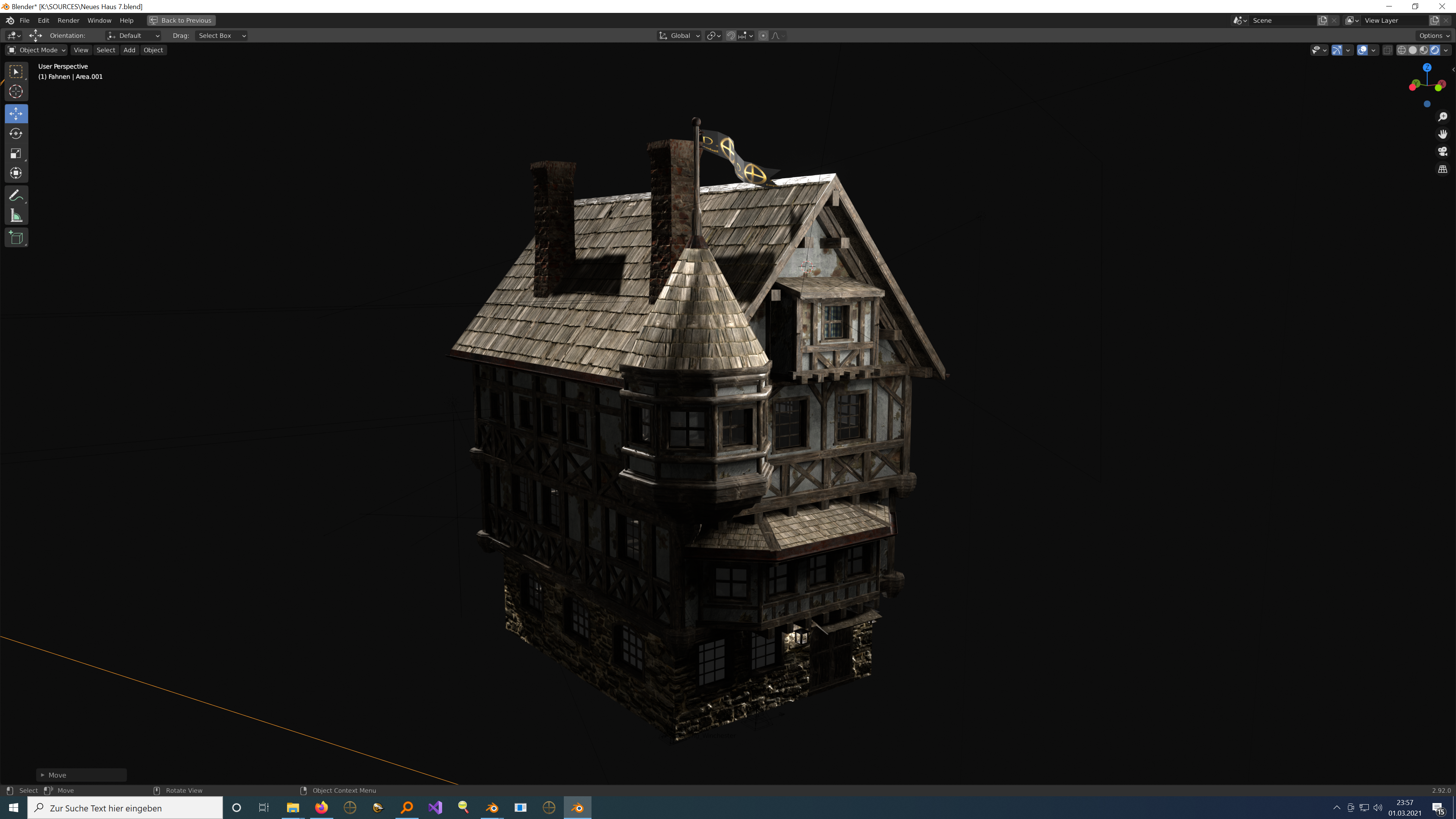
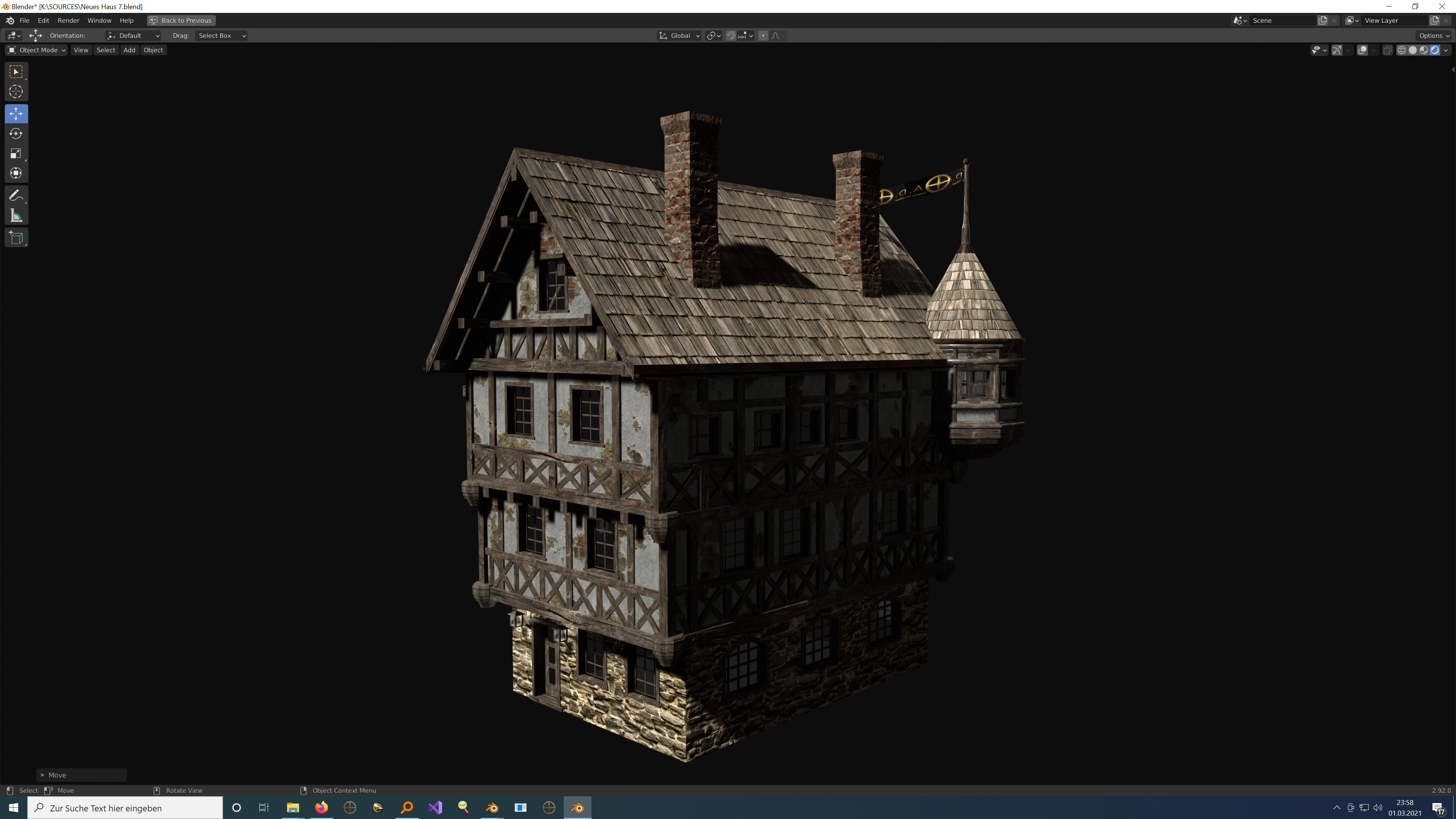
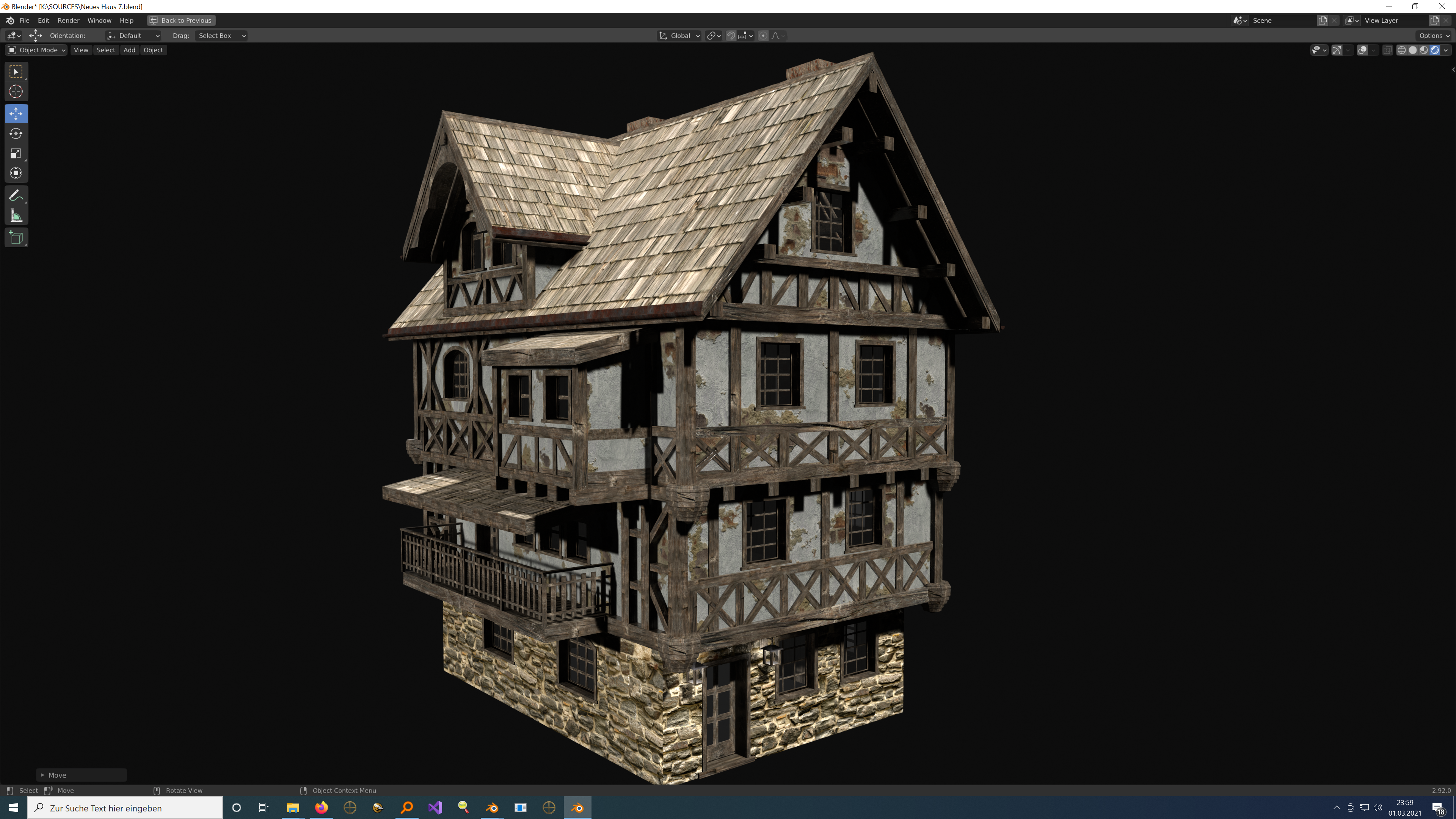
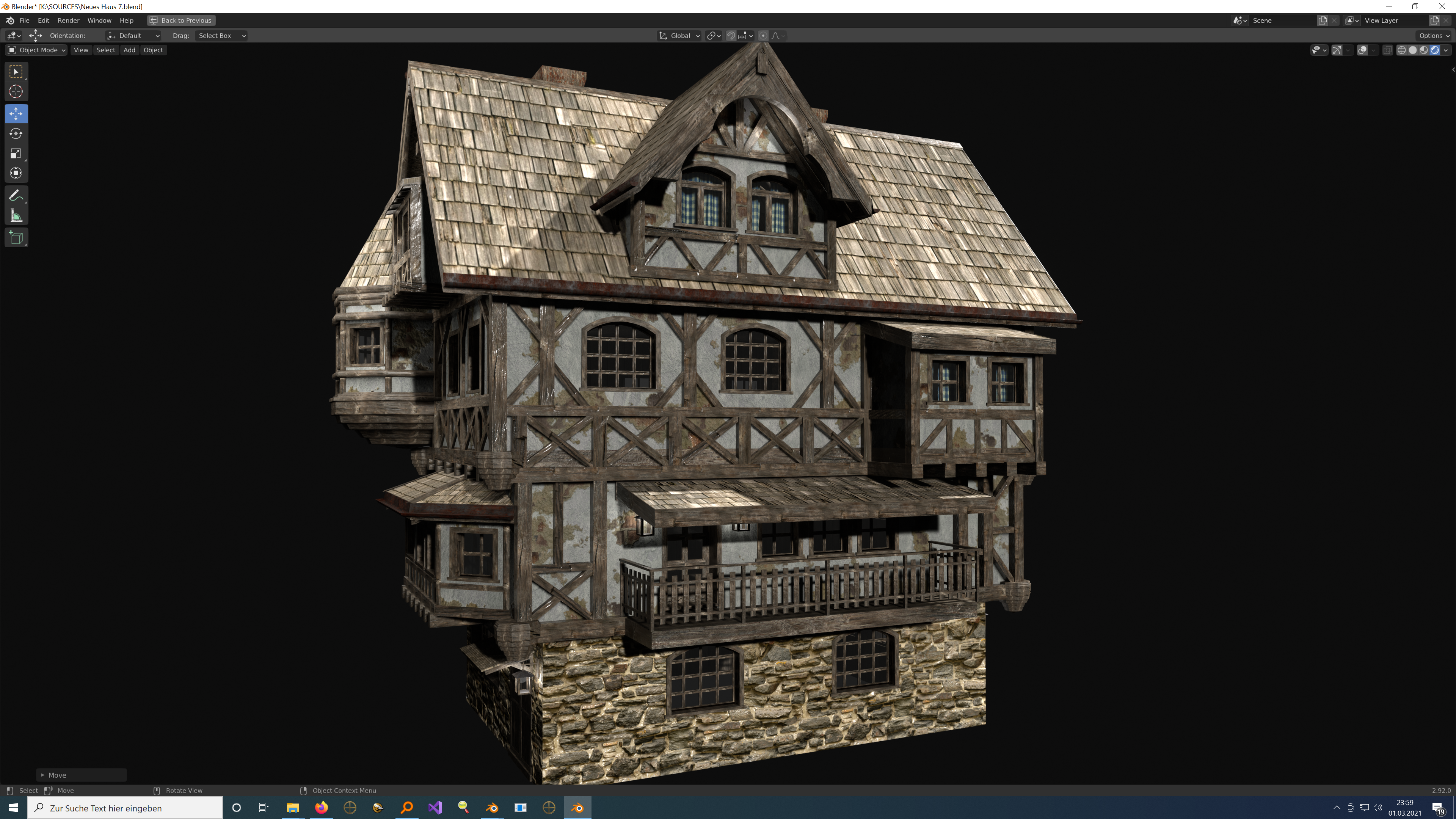
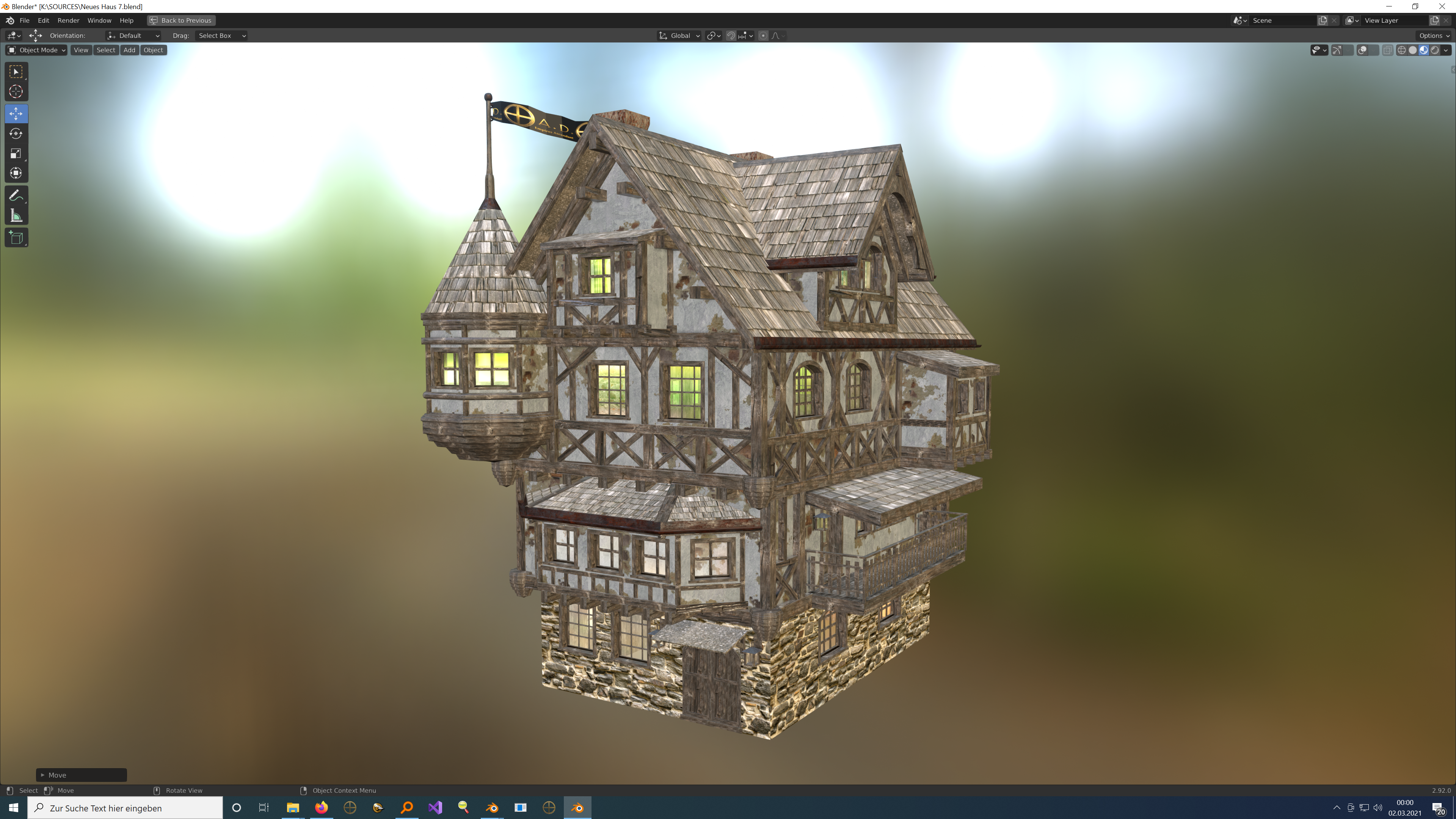
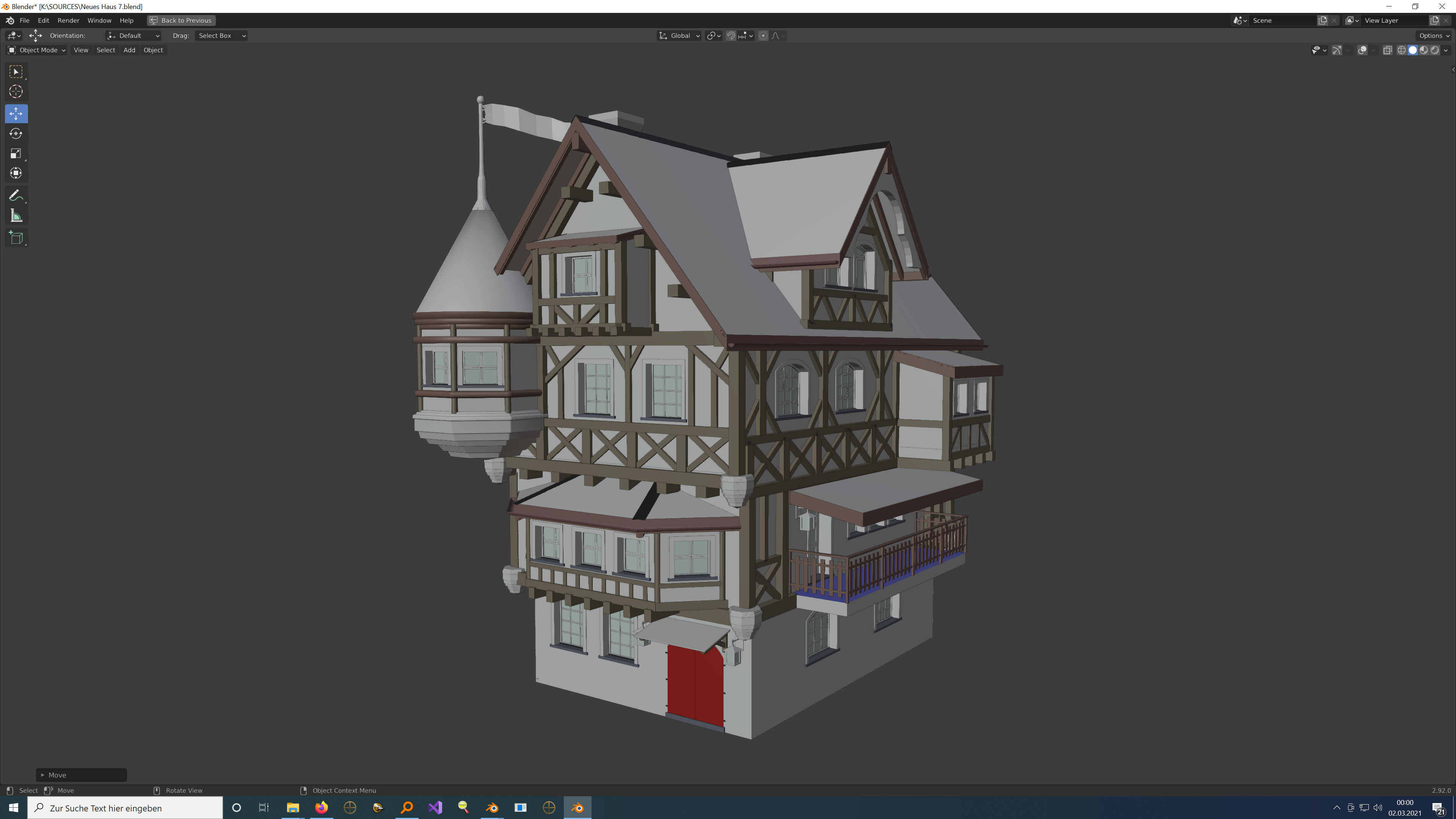
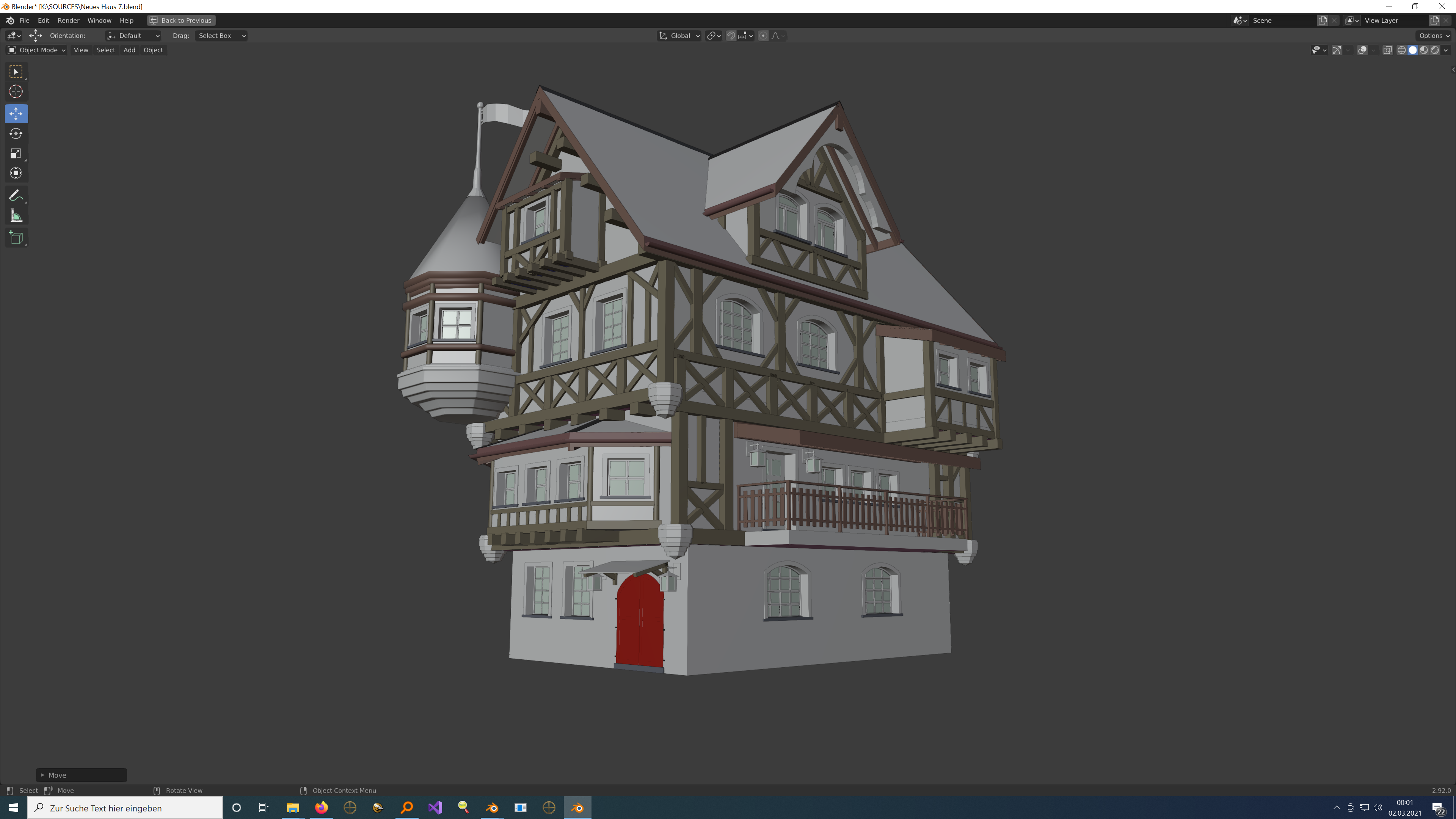
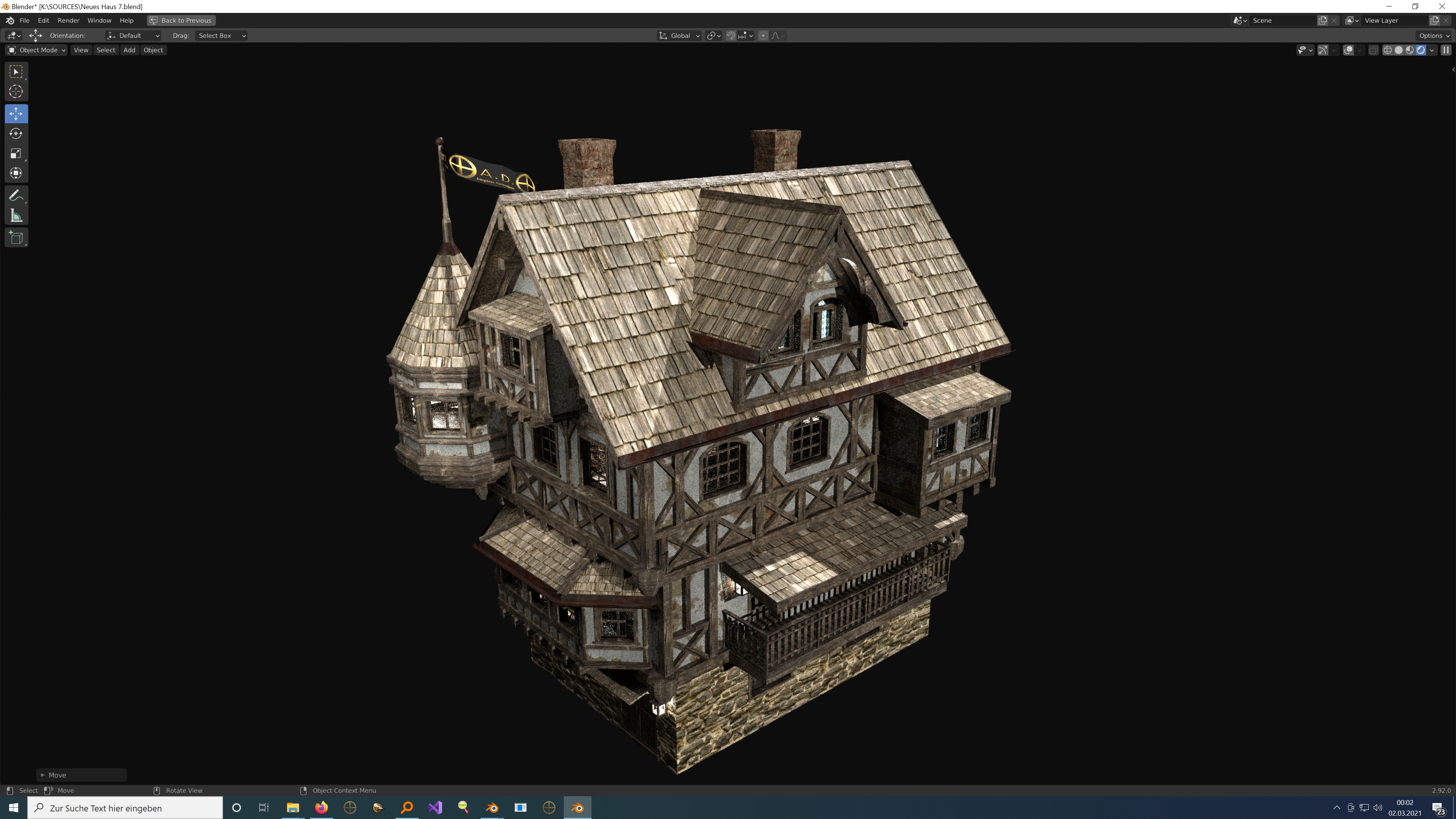
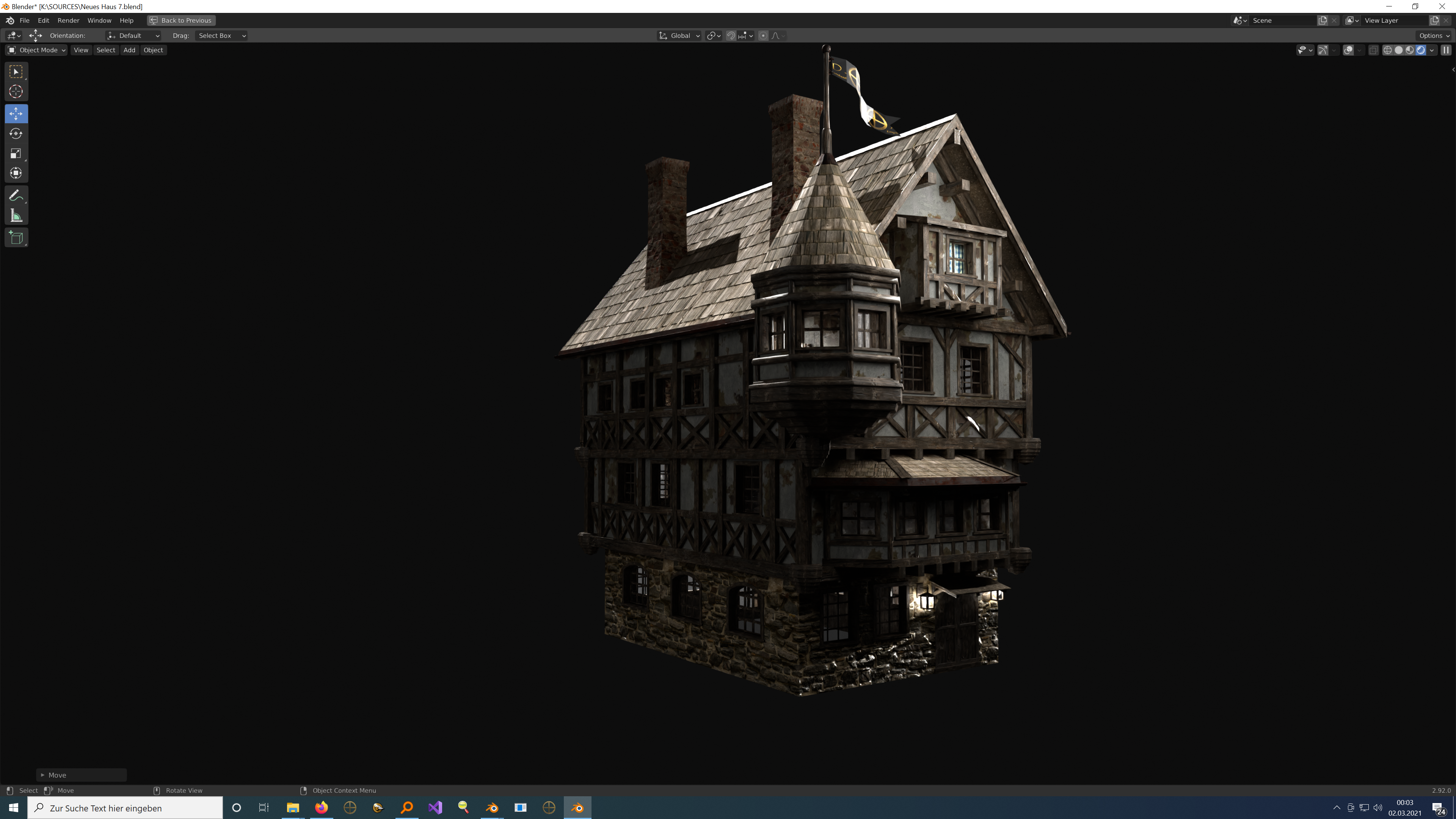
The "Rathaus" oder "Bürgerhaus" ...
 1 point
 -
They are boolean expressions that every unit must pass (result in true) to be selected when the hotkey is pressed | means OR & means AND ! means NEGATE value ! has precedence over & and & has precedence over | You can use parenthesis Example: imagine you want a hotkey to select only the cavalry units and your dogs units, then hotkey.autociv.session.entity.by.class.select.Cavalry|Dog = "your preferred key" Example: imagine you want a hotkey to select only units that are cavalry and dog at the same time, then hotkey.autociv.session.entity.by.class.select.Cavalry&Dog = "your preferred key" Example: imagine you want a hotkey to select all units except cavalry units and dogs units, then hotkey.autociv.session.entity.by.class.select.!(Cavalry|Dog) = "your preferred key"1 point
-
It's already possible, look for selectors by class feature of autociv buried somewhere in this thread, dogs have the class 'Dog'.1 point
-
1 point
-
1 point
-
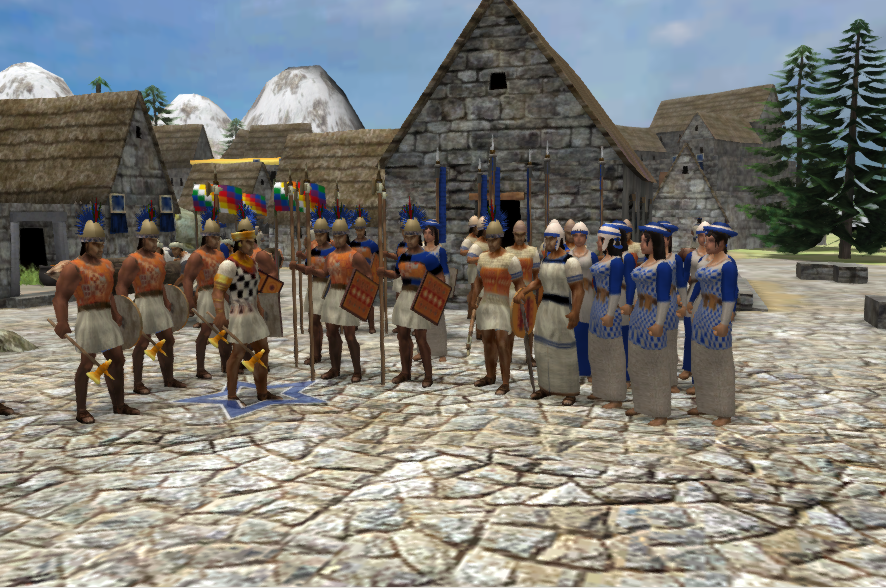
I'm publishing on mod.db the first launch of the mod with the Incas, this mod will be with no gameplay changes, in the future the pre colonial will be launched in which the Incas will be included with the gameplay changes proposed by @Trinketos https://www.moddb.com/mods/incas-0ad
 1 point
 -
I see the a24 server full now. It is normal, every alpha has adaptation complaints. Anyway this is not a dispute between a23 and a24, you can continue playing a23 without problems if you didn't like a24. But in no way will we stop the development of the gameplay and stop in time with a23, as I said before, this is in constant development and some descriptions had to be taken to fix many things that were wrong.1 point
-
Heros1. "Touman"; ---------------------------- ----- (Tūmān)2. "Modu”; ------------------------------------ (Mòdún)3. "Laoshang"; -------------------------------- (Jiyu) This information about the Xiongnu (Duileoga) could be applied to this next release. I am willing to help. Alem has ideas about that.1 point
-
I would really like to change this for A25. EA should really adopt DE's forest groves. You don't even have to adopt DE's grove auras and traversability in case you're too scared of changing gameplay.1 point
-
They do search for resources near the rally point (that hasn't changed). Really it's only annoying for trees on scarce maps, because units kinda move semi-randomly, but I wouldn't say it was great in a23 either - IMO 0 A.D. has annoyingly small forests on most maps.1 point
-
In "real life", slingers would have large ammo capacity, longer ranges, and much deadlier ammo against un-armoured troops, but I think they'd be far less efficient against shields. Pilum and javelins are few, short-ranged, but you don't stop one. Yeah that's my bad, UI isn't great there. I think players will find out via osmosis. --- Overall I think archers & can archers remain definitely a bit OP. Elephants are strong if left unchecked, particularly since unlike rams they can't be killed by women, so you need real units. ---- No idea about the house hotkey.1 point
-
I agree with this one. A bad change. Maybe give back outpost vision and just make outpost cost 1 pop.1 point
-
I can see this1 point
-
By the way, randomly saw this movie on tv a while back... Probably shouldn't be used as a reference... But it was kind of an enjoyable watch nonetheless...1 point
-
Your mod is the first thing I want to try out when testing 0 A.D. in practice again. Unfortunately if I try something new, I do it thoroughly, and right now I see too many conflicts with my time allocation. I think if you can upgrade only 2 champs, they should receive a special bonus besides plain stats and visuals. E.g. inspiration or fear auras etc. Otherwise they will just survive with the hero and fight a bit longer than the rest in case of a lost battle (similar to Agis who is quite useless). These Olympic champions / bodyguards would be tier III champions in my systems, tier I being Spartiate and tier II being Hippeis. I agree with impactful choices. Probably have one choice for every phase advance (and a bonus choice when finishing a wonder) which potentially affects multiple units and/or technologies.1 point
-
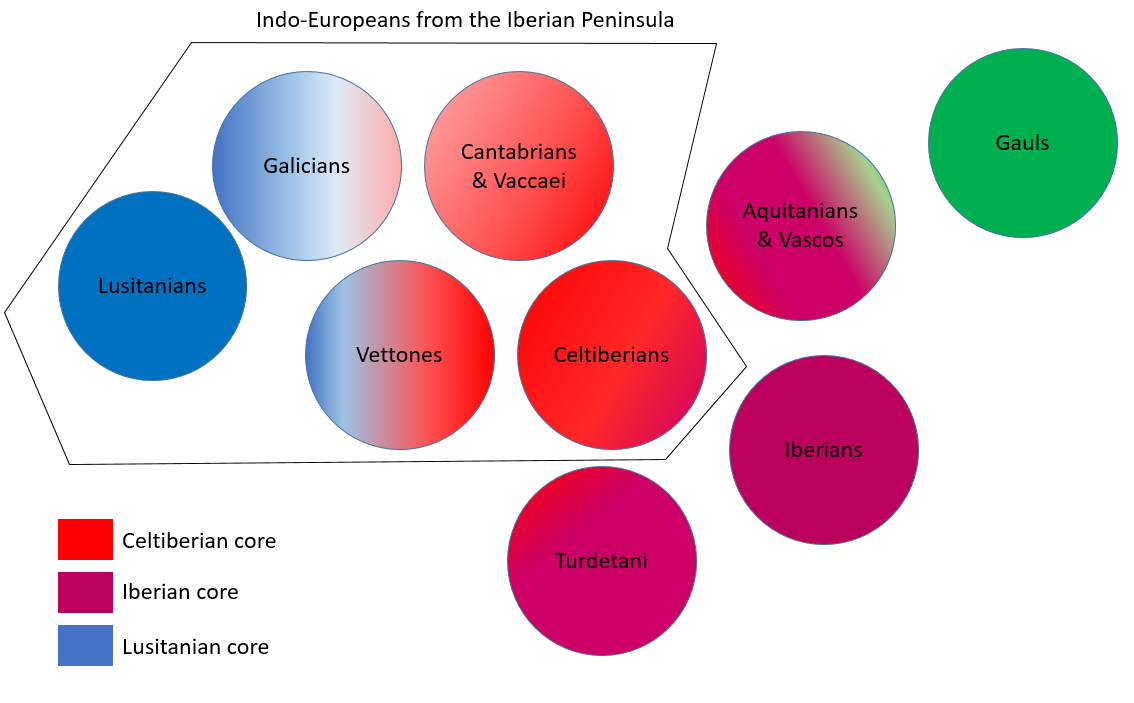
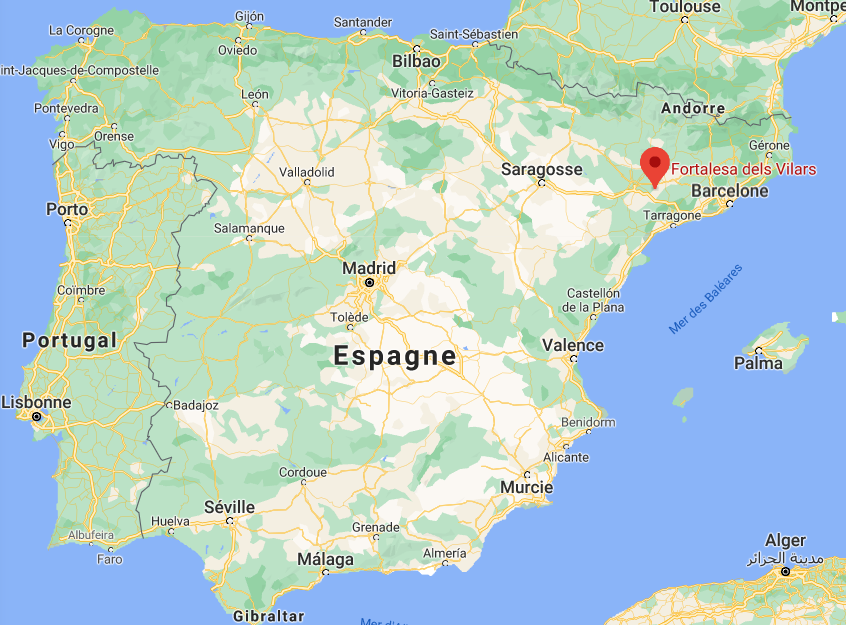
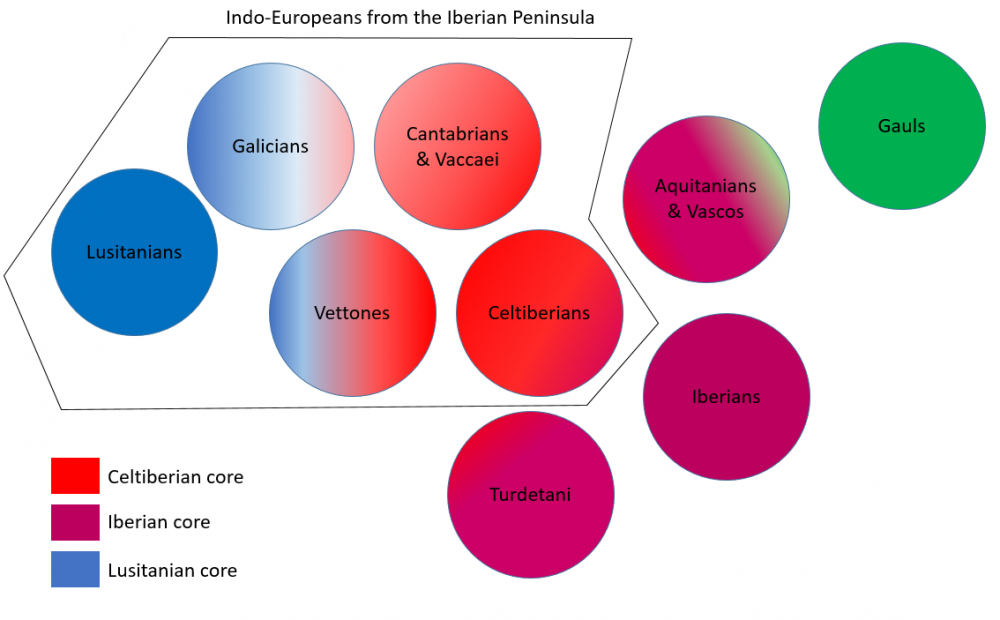
A small schema of the cultural situation of Iberian Iron Age (I put Iberian as a general meaning for native non-indo-european in the peninsula)
 1 point
 -
You might better notice the flaws with this strategy when you play against good human players.1 point
-
I like the original DE concept better, farmstead and storehouses outside of territory does not seem bad. Having territory allows you to protect it better, so it's still encouraged for taking map control. At the same time allows for players using heavy mineral dependent civilizations to not be too far behind if the map gen is not generous, encourages players to constantly scout or make outposts on resource dense spots which is a plus in my opinion. Capturing a stray farmstead or storehouse could make some sense but it feel out of place in my opinion. Farmlands + forests would be awesome1 point
-
1 point
-
minrange is easy, however "tell them to switch" is more complicated. See #252. We don't have a ammunition system (yet) so this might be more work.1 point
-
Eso sería genial para cierto mapa!1 point
-
1 point
-
Edit: We need Battle for Middle Earth 2 battalions.1 point
-
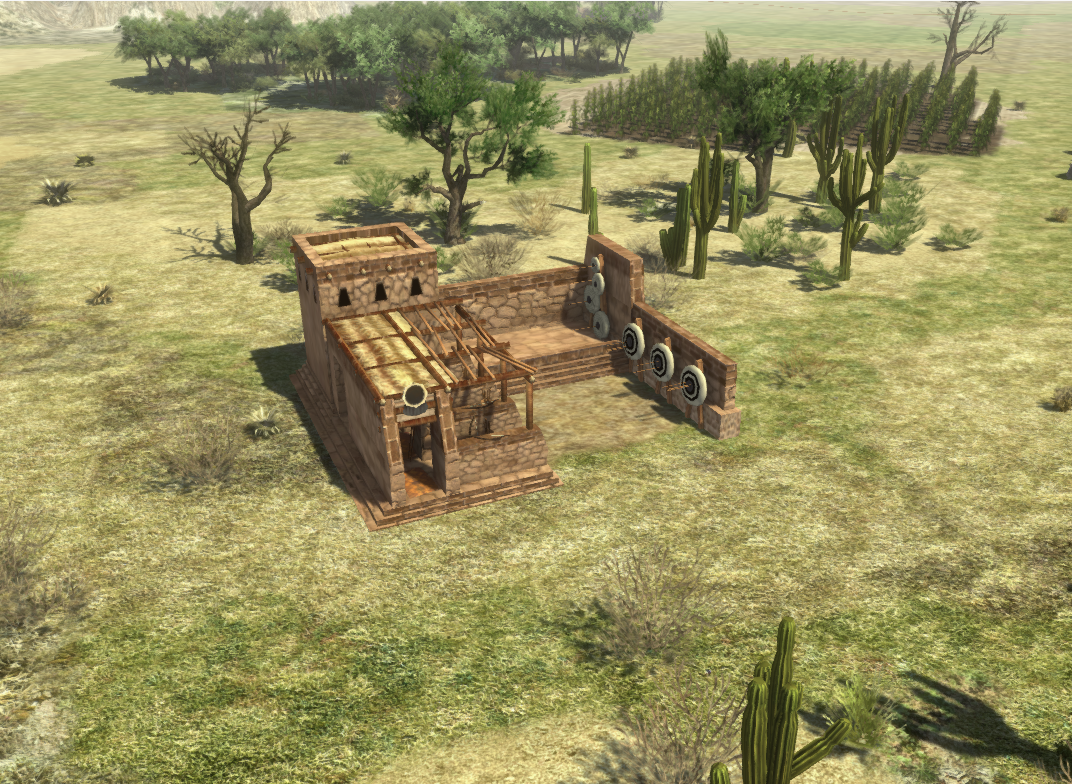
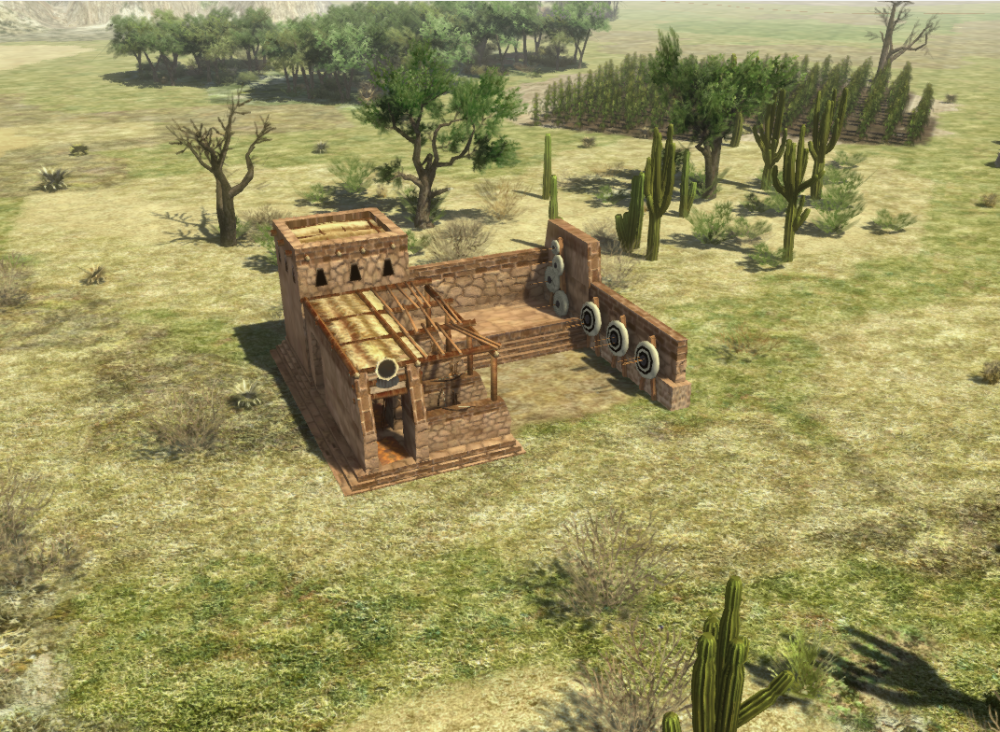
My attempt to model a "range" for Zapotecas.
 1 point
 -
Do we really have to wait for A25 ?1 point
-
That's exactly what I was thinking when I read your first post. Instead of striving for perfect balance, let weaker civs serve as a built-in handcap. I'm not sure how I feel about this, but I don't think it is automatically bad. It does mean that top tier players would have fewer civ options, but that's almost a certainty anyway considering the quantity of civs we have. Historical accuracy could definitely be a basis.1 point













.thumb.jpg.b85f1db9873287a0d10cd2c7e88579c0.jpg)

(1).thumb.gif.b5909d3df98a8ec15dc452423f219bc5.gif)


.thumb.jpg.b21ca1d0c15fb56b42c39b25a0a40815.jpg)