.jpg.4d575d1d330147616620e755ddb4c44a.jpg)
Genava55
-
Posts
2.560 -
Joined
-
Last visited
-
Days Won
96
Everything posted by Genava55
-
.thumb.jpg.b21ca1d0c15fb56b42c39b25a0a40815.jpg) https://europabarbarorum.fandom.com/wiki/Category:Saba https://europabarbarorum.fandom.com/wiki/Category:Nabatu https://europabarbarorum.fandom.com/wiki/Reglaya_Mehrebay_(North_Arabian_Shortswordsmen) https://europabarbarorum.fandom.com/wiki/Fayah_'Alatin_(South_Arabian_Tribal_Highlanders) https://europabarbarorum.fandom.com/wiki/Erínamesh_ana-Arabim_(East_Coast_Levies)#EB2 https://europabarbarorum.fandom.com/wiki/Aba'al_(Sabean_Citizen_Militia)
https://europabarbarorum.fandom.com/wiki/Category:Saba https://europabarbarorum.fandom.com/wiki/Category:Nabatu https://europabarbarorum.fandom.com/wiki/Reglaya_Mehrebay_(North_Arabian_Shortswordsmen) https://europabarbarorum.fandom.com/wiki/Fayah_'Alatin_(South_Arabian_Tribal_Highlanders) https://europabarbarorum.fandom.com/wiki/Erínamesh_ana-Arabim_(East_Coast_Levies)#EB2 https://europabarbarorum.fandom.com/wiki/Aba'al_(Sabean_Citizen_Militia) -
Google translate: Este artículo explora los orígenes de los juegos de caballos (hippika gymnasia) del ejército imperial romano. Sostiene que las exhibiciones ecuestres descritas extensamente por Arrian en su tratado táctico fueron tomadas prestadas de los celtas galeses e ibéricos, que formaron la parte más importante de la caballería auxiliar romana al final de la República y al comienzo del Principado. Los jinetes más famosos usaron cascos de máscara durante estos juegos. Los primeros ejemplos de tales máscaras en el contexto romano se pueden encontrar en representaciones triunfales que celebran victorias sobre enemigos celtíberos o galeses. La evidencia sugiere que inicialmente estaban hechos de materiales orgánicos, como las máscaras de cráneo sobremoldeadas o enlucidas que podrían adornar monumentos públicos en la Galia prerromana. Desde finales del siglo I a. C. en adelante, comenzaron a adoptar la forma de cascos de metal y se adaptaron progresivamente al gusto grecorromano. La idea de que la hippika gymnasia se tomó prestada del desfile ecuestre romano llamado lusus Troiae y que los cascos de máscara eran parte de una antigua tradición itálica debería, por lo tanto, ser abandonada.
-
There is one possible suggestion for the use of the mask by cavalrymen but generally among Celtiberians / Celts, not only the Lusitanians. Although I cannot access this article, even from my university (if someone can get access, tell me): https://brill.com/view/journals/ijmh/aop/article-10.1163-24683302-20190004/article-10.1163-24683302-20190004.xml?language=en
-
Ok. But what is the reference? I saw everywhere this thing about Lusitanians, twcenter, here etc. but nobody explains what is the source. If it is one of these Augustean coins, then it is really problematic.
-
-
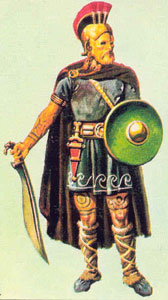
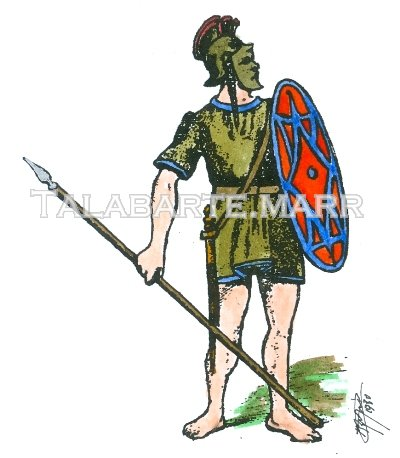
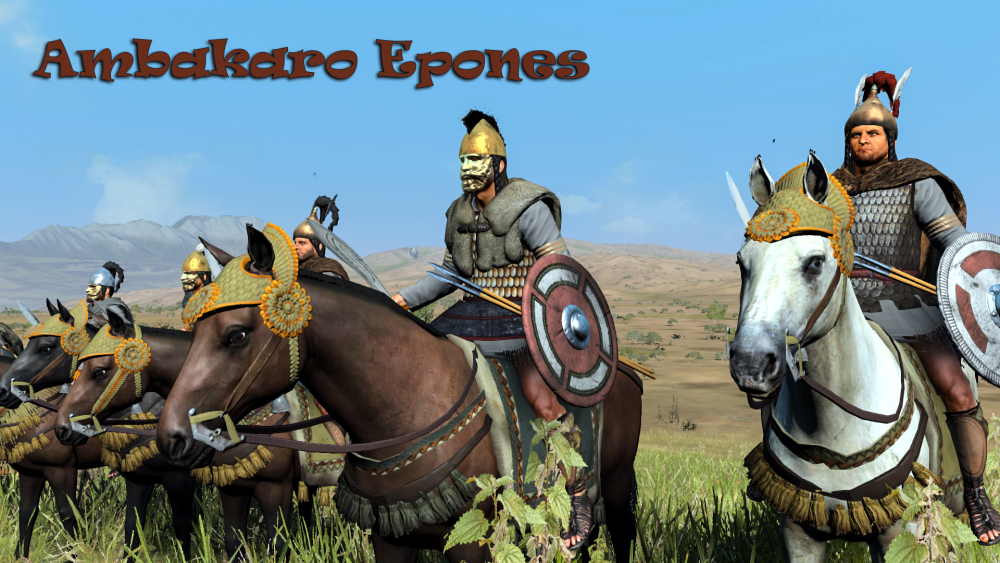
Siempre me he preguntado: de dónde viene este casco con máscara entre los lusitanos? Cuál es la evidencia de esto?
-
===[COMMITTED]=== Iberian Unit Textures
Genava55 replied to wackyserious's topic in Completed Art Tasks
Los pueblos prerromanos de la península Ibérica (pdf), descargar aqui. -
Specific Name Review: Units
Genava55 replied to Doktoreus's topic in Game Development & Technical Discussion
Checked what Delamarre says about the druid and he suggests druis as singular nominative while Savignac suggests druid as singular nominative. Delamarre starts from the case of a "druias", a female druid reported by Ælius Lampridus. Personnally I find the druid and druides more probable. @wackyserious do you want to do a female version of the druid? You will wait a long time if you are hoping to find someone specialized in the Iberian language. It is still not decipherable. The only solution I see is to assume a connection with proto-Basque. Which is probably the less wrong solution. -
Specific Name Review: Units
Genava55 replied to Doktoreus's topic in Game Development & Technical Discussion
Sacred grove, shrines, heroic statue are possible as well. -
Specific Name Review: Units
Genava55 replied to Doktoreus's topic in Game Development & Technical Discussion
It is assumed that the word druid comes from Proto-Celtic *druwits / *druwid. As reported by the Romans, Druid is the use in gaulish. If we assume singular Druid, then it is Druides in plural form. In Scottish Gaelic, singular form is draoidh and plural is draoidhean. In Old Irish, the singular forms are either drui or druid. So I would say Druid and Druides are correct for both Gauls and Britons. Nick is fine. -
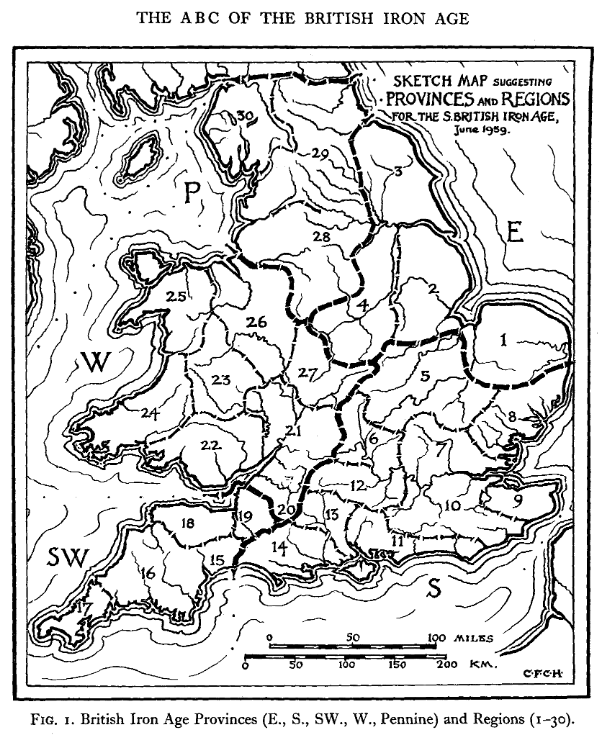
I know this is weird but the old historians choose to use the label "British" to designate the southern Iron Age. Cannot change history. Now, British archeology moved during the last decades to a paranoid state, refusing to generalize anything properly, questioning even the use of the term "Celtic" to the Britons. So, there is no widespread terminology for the Iron Age in Scotland.
-
Until the first half of the 1st century AD, I don't think the rectangular scutum has been popular among the legions.
-
Generally Druids are considered practicing medical intervention. Although there are debates about the wide term and its limits. Druid could be a generic term applied to a wide range of intellectual practitioners with specialists. Or a very specific term for high-ranking member of the priest class. Anyway, I think it is safe to use the Druid terminology for the healer but if you want several kind of "priests", you can use for the healer another name known from the Celtic society: the Uatis, which is the counterpart of the Roman Vates. But in my opinion, Druid is ok currently. I agree, furthermore it gives a difference with the Britons. For me, the Gallic cavalryman is probably the most important figure of the Gallic warfare and probably the most reputed tactical unit in the view of other cultures. However, I do not want to make them overpowered with regular foot swordsmen AND cavalry swordsmen if the current gameplay favors the sword that much. Swords and longswords are a kind of topos (cliché) for the Gauls at their time and clearly from the material evidences, the sword is really an important item of the warrior class, following as well the evolution of the warfare century after century with adapting features. Without any doubt, Gauls did used chariots in battles. There are depictions, classical accounts and material evidences for these. However, the use of war chariot started to fade during the 3rd century BC and we find no material evidences and no accounts for the 2nd and 1st century BC for the Gauls. So, I would suggest to keep it for the Britons. But if you guys prefer to give it to both, no problem with that. I agree. I agree. I agree. Different temples can be done for them. I agree and I liked the prototypes made by Stan. I agree and I can suggest new helmets to differentiate them. We can even give weapons. To discuss if needed. Edit: Britons are a harder topic even for me. Lower area (only England and Wales), lower density of warfare related material evidences, fewer classical accounts, fewer interest for decades (for various reasons), very restrictive practice of publication, tendency in the past from British historians to apply blindly what have been found on the continent to Britons to fill the gap etc. However, I want to highlight that the current faction of the Britons is mixing Scottish and British Iron Age (Broch for example). Which I don't think is a problem since most of the time, the Romans weren't able to differentiate them. And it could be a good opportunity to give unique features to the Britons through inclusion of Scottish and Irish Iron Age (although complex topics).
-
Iberians Culture / Cultura Íberia
Genava55 replied to Keinmy's topic in Tutorials, references and art help
-
===[COMMITTED]=== Roman Infantry (New texture)
Genava55 replied to wackyserious's topic in Completed Art Tasks
A call for a Konnik feature and a dismounted function ? -
===[COMMITTED]=== Roman Infantry (New texture)
Genava55 replied to wackyserious's topic in Completed Art Tasks
Unshielded cavalrymen are often Italics "returning homes" or carrying their textile standard in the other hand, so maybe an artistic canon. -
Yep. Both cultures emphasize horse and horsemanship in addition. Several element of the La Tene art are inspired by nomadic animal art. Silk has been found in a Hallstatt tomb, probably from trading with the Scythians.
- 264 replies
-
- 2
-

-
- britons
- east celtic
- (and 2 more)
-
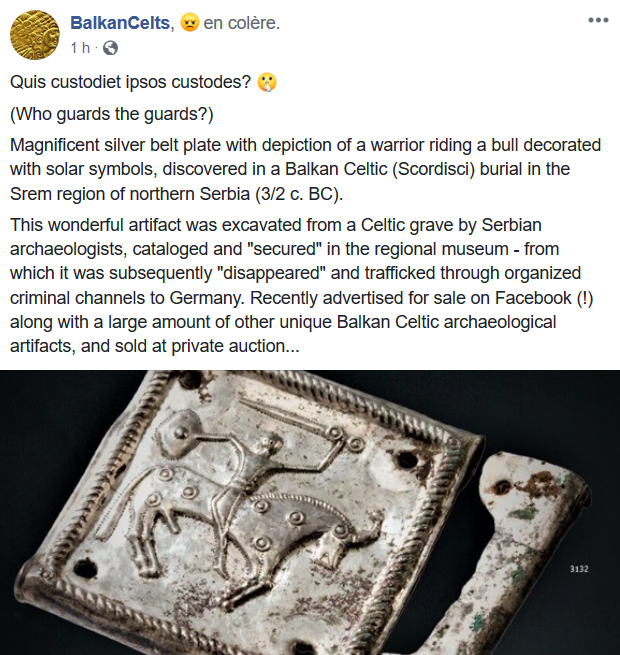
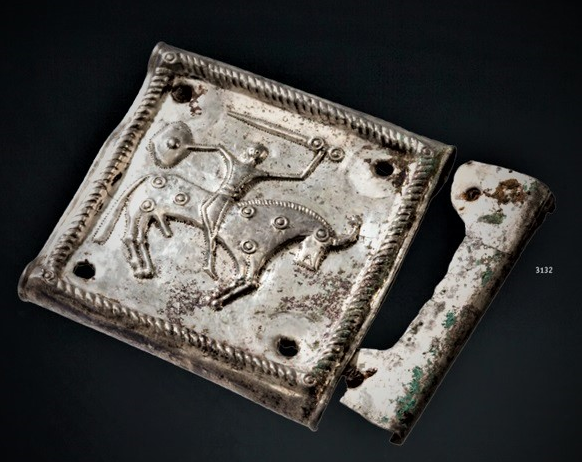
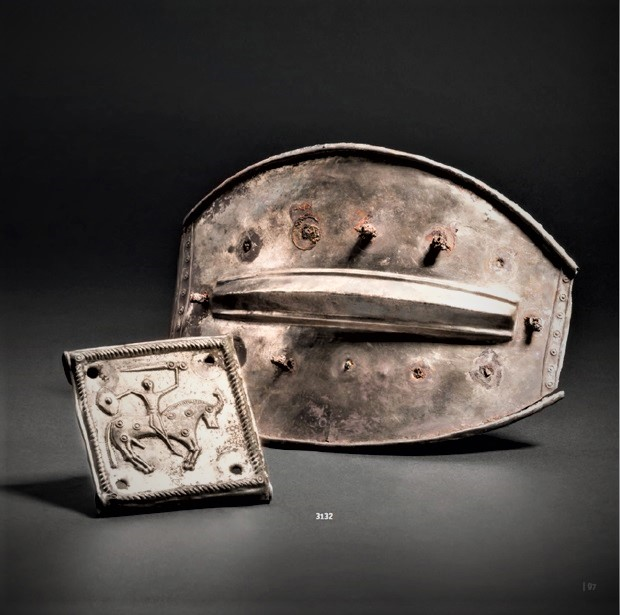
Actually I think it is a horse. I wouldn't take the page words too seriously, he did say wrong things sometimes. It could be this kind of practice: https://en.m.wikipedia.org/wiki/Torrs_Pony-cap_and_Horns
- 264 replies
-
- 1
-
-
- britons
- east celtic
- (and 2 more)
-
- 264 replies
-
- 3
-
-
- britons
- east celtic
- (and 2 more)
-
The Role of Women in 0 A.D.
Genava55 replied to Thorfinn the Shallow Minded's topic in General Discussion
I totally know this and I am not contesting these because there are plenty of material evidences for nomad women warriors. I am contesting the idea solely based on tales and myths. -
The Role of Women in 0 A.D.
Genava55 replied to Thorfinn the Shallow Minded's topic in General Discussion
I remain unconvinced about women warriors based only on mythological figures and folkloric tales. This is like arguing for Greek women warriors because of Artemis, Atalanta and Athena. -
===[TASK]=== Eunus (First Servile War)
Genava55 replied to wackyserious's topic in Eyecandy, custom projects and misc.
I think the idea is to make historical campaigns one day, another big piece waiting. So clearly your work will be appreciated. And I like the idea of the unit. -
Seleucids used them as well but as mounted archers. That is probably the question of Alexandermb, to know which civ could have used them as a melee cavalry. Arabs probably (Saba, Nabata etc.) and Persians because of Arabs mercenaries.
-
The Delusion reinforced by Strategy Games
Genava55 replied to wowgetoffyourcellphone's topic in General Discussion
I know Vice has a bad reputation but this article is far from being horrible. Video games, especially strategic games, have huge effect on how the average person thinks about other civilizations distant in time and space. A lot of persons discovered the Hellenistic kingdoms and dynasties thanks to video game like the Total War series. So it is quite an important matter for history nerds to understand and to question these things. The article rises interesting questions about the common (mis)conception of progress as linearly growing to more and more civilization. The problem is the same with human evolution and the common view of The March of Progress which has affected how we view prehistoric men. Actually, most of the games with a linear progress has represented Medieval times as far superior than Ancient ones, like Empire Earth and Civilization, which is actually something bothering on some aspects. It is true that the Medieval times are not the dark age often depicted, true that some areas have progressed, but overall Medieval times suggest smaller armies with less training in average and poorer logistics. Which in strategic games should be an important factor but interestingly it is not the case. That's only an example but it illustrates how video games struggles with exception in the framework. However the article make a fallacious argument saying the goal of these kinds of games (like Civ) is to remove diversity. Actually this is simply due to what happened in history. These kinds of game are kinda deterministic and have literally zero imagination to develop any kind of civilizational anachronism. You can become the world ruling Aztec Empire from the early game but somehow you will still end with a Western legacy of civilization in the modern period. But I think it is quite a difficult task, rebutting most of the developers to make a game permitting true anachronisms. Another good point of the article is the common view of primitive and simplicity increasing together the more we look in the past. Simply to enable a bit of introspection and retrospection, I will ask a question about something we talked a few weeks ago about civilization with population bonus in 0 AD. Where did the idea come from that the Celts should have a population bonus? This is an interesting question because it puts the finger on different things we have inherited from the ancients about "barbarians". The same for the idea to put a tavern as representative of a civilization. This is not a critic and I put the guilt of all this in the failure of the academic system to share knowledge outside its own sphere and of the media to have almost zero interest to promote knowledge. Actually the author doesn't seem to criticize the principle of subdividing history since he choose the example of humankind as something better. And Hegel's philosophy is quite more subtle because he focuses on the march of freedom as the main factor of progress, which is attacked in the article. The author should have mentioned Hegel indeed. But the subdivision and the view of history as a succession of stages are not something Hegel invented. Hesiod, Rousseau, Dugal Stewart viewed the history of mankind with the same idea before Hegel. -
===[COMMITTED]=== Roman Infantry (New texture)
Genava55 replied to wackyserious's topic in Completed Art Tasks
Helmets with transverse crest are normally known to be something related to the centurions during the late Roman Republic and most of the Roman Empire.