Leaderboard



Popular Content
Showing content with the highest reputation on 2026-04-22 in all areas
-
Noted! tomorrow i will have a new monitor from warranty so i will do more adjustments tomorrow my eyes burning since im using a 32 inch tv as secondary monitor while i wait. For the rest of the decal's any advice? if no objection so far i will start with the sandstone for persian empire and for the mauryas i have in mind some mossy/mud spart like decal.3 points
-
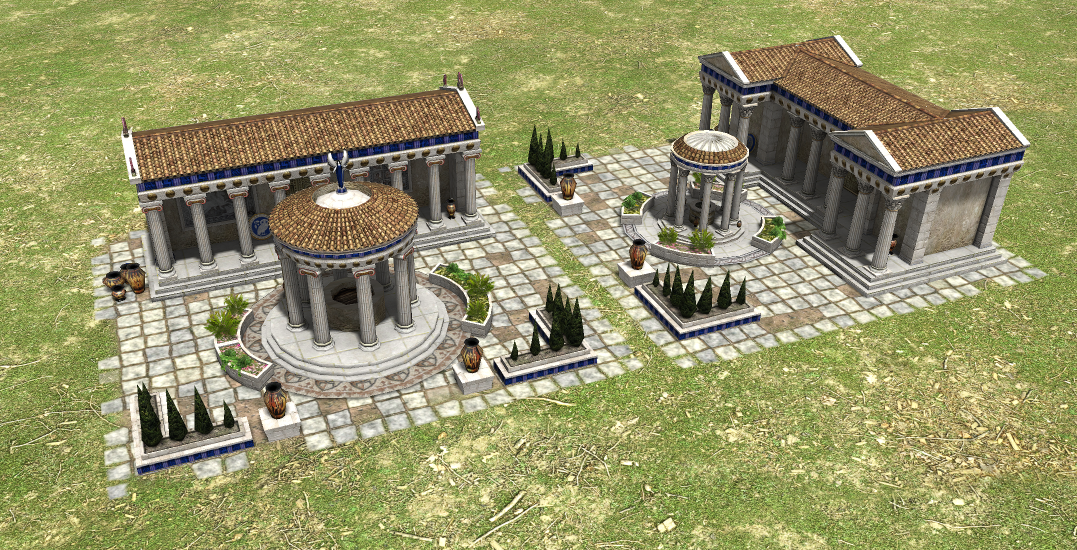
Civil centre:
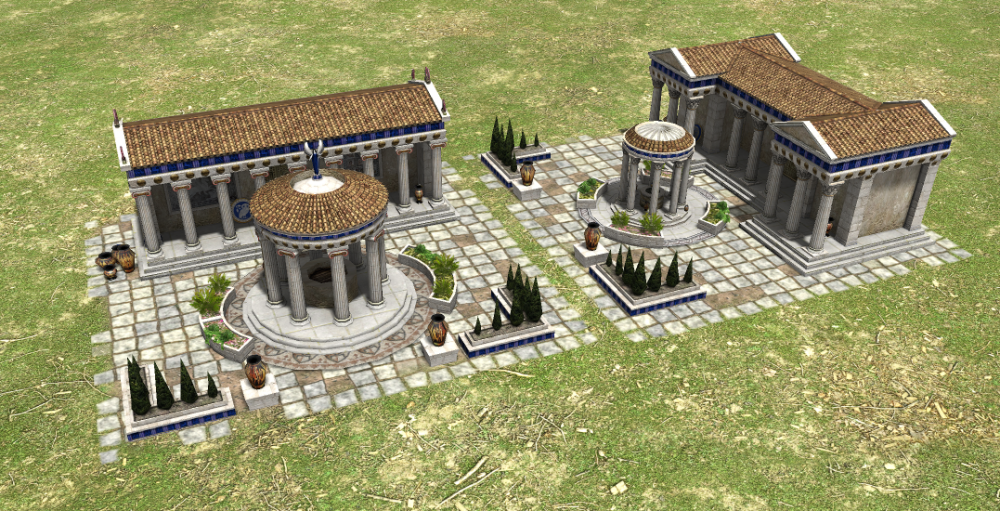 3 points
 -
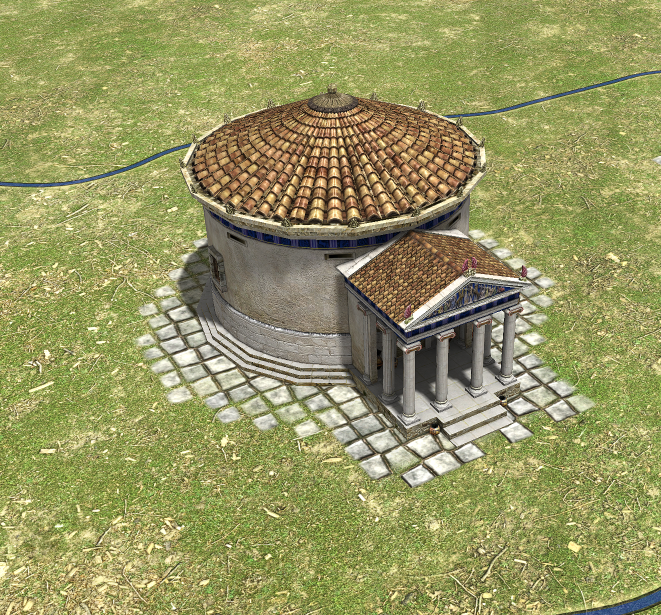
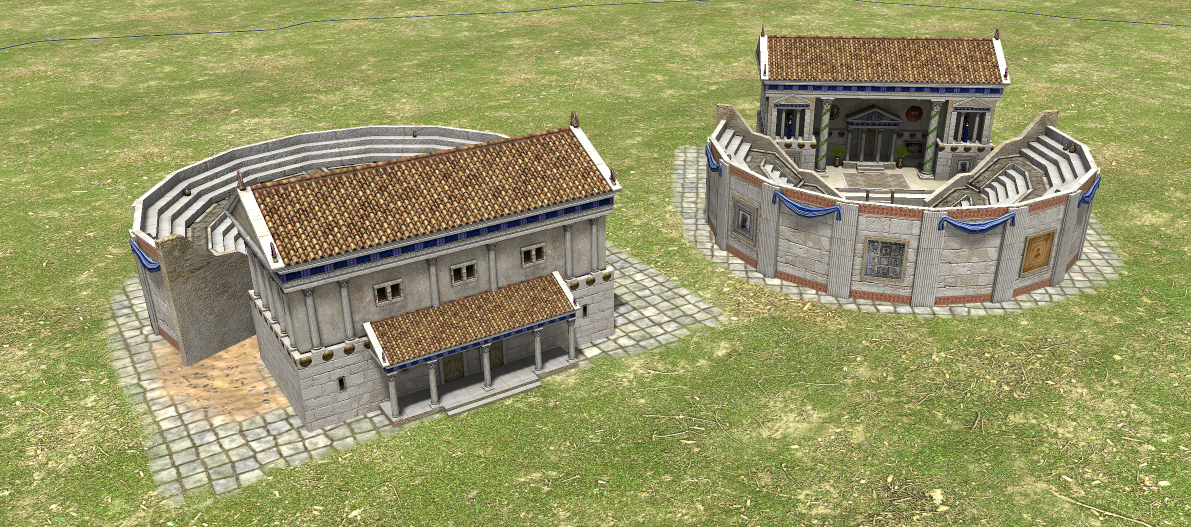
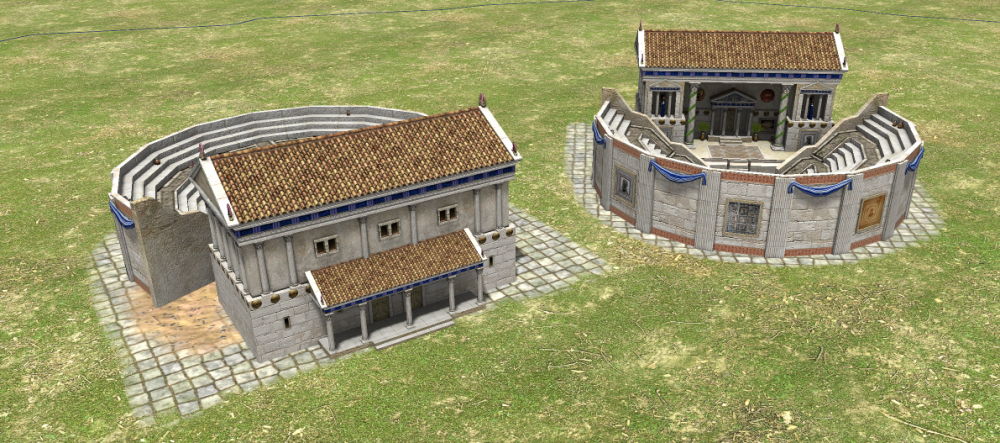
Theater also fixed:
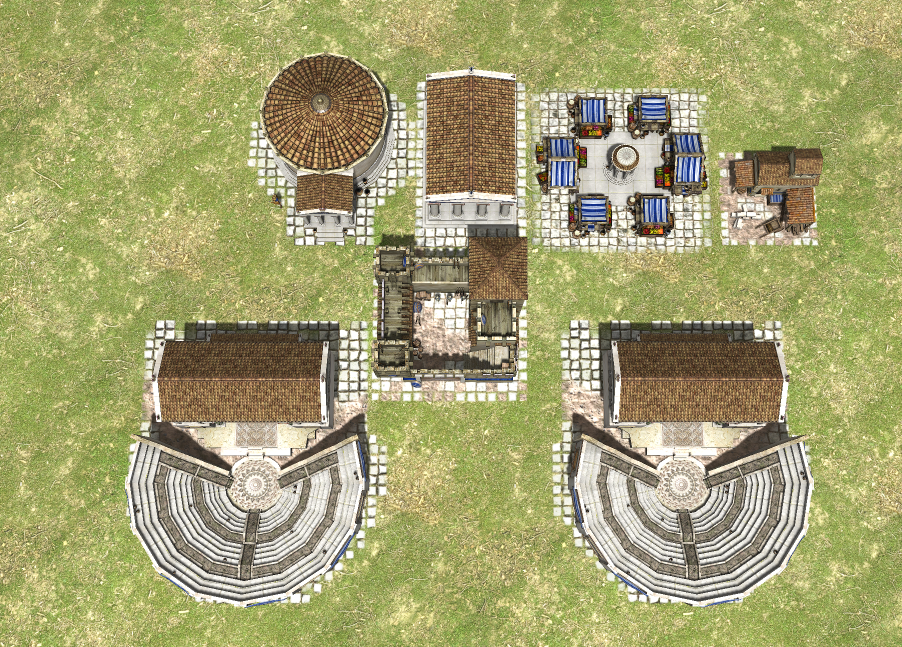 2 points
 -
2 points
-
Should the construction of fields right next to the civic center be reconsidered? I know it's intended to utilize the civic center as storage, but it looks rather unsightly. Also, what if the storage actually contains resources - the amount workers collect and load into it—and it could be looted?1 point
-
Nice game by the way. I enjoy this more than Age of Empires crap 4 lol.1 point
-
@CheckTester, I'm quite confused about your proposal. Let's imagine the case where a ship with a garrison of 30 boards an ungarrisoned ship. According to what I understand, successful boarding happens in 5 seconds, the captured ship suffers HP loss, and the attacker loses just 2-4 units? Always? What if the defender ship also had a garrison of 30? What does “almost over” mean? What does “soften” mean? That the garrison is vulnerable to ranged attacks? If the defender has more defenders, damage doubles where? On the attacker ship? Where is the fight even happening? It is unclear to me what happens with garrisons depending on which ship sinks. Seems like complicated ship combat where the parameters are the garrisons. I don’t think it’s realistic for ships to take this much damage from boarding, this is mixing a couple of different things: either you ram a ship to sink it, or you ram (shear) the oars, to slow it down for boarding (and hurt the rowers, decreasing the number of defenders). You don’t want to ram a ship, breach its hull, and then board it, because the boarders risk going down with the ship (although this is controversial, some claim they didn't completely sink, and the risk was being boarded themselves). In fact, after breaching, the ramming ship has to move backward, to avoid getting stuck. That’s why ships getting so much damage that sink during boarding would have been quite rare, many measures were taken to avoid such suicide. What did happen is that ramming ships could get damaged (something simple that could actually be added to the game, considering they do a lot of damage anyway), but not really during boarding. I would rework your mechanism like this: if attacker ship has N garrisoned units, defender ship has M garrisoned units, defender base HP is H and present HP X, then final surviving units that get split on both ships are F=N-(M+k)(X/H), where k is a parameter to set, and is how many attackers are killed if the defender ship has no garrison and full HP (just doing the trivial math, F=N-(0+k)(H/H)=N-k => k=N-F, attackers minus final survivors, that is, killed attackers). So k can be any coherent formula, from 2 to 4 as you said (the formula would give more survivors if the defending ship is damaged), or preferably something depending on the number of attackers and with how many the defending crew can handle, C, thus a simple formula could be C(C/N) (with this, crew resistance becomes inefficient when overwhelmed), that is, with C=5, 5 attackers get all killed (5(5/5)=5), and then goes down until from 17 attackers only one gets killed (5(5/17)=1.47), rounding up, and not taking yet into account defending garrison and ship HP, the final formula is of course F=N-(M+C^2/N)(X/H), which as a complete example, N=20 attackers against a ship with 100% HP that can handle C=10 attackers would mean F=15 survivors, that must be split in 2 ships, but if the defending ship is damaged first down to 50%, then there will be 18 survivors, and if the defending ship had a garrison of M=5, then these numbers would have been 10 and 15 survivors, respectively. If M=15 there are 0 survivors. If M=20, F=-5, which could mean 5 survived from the defender’s garrison (one has to be careful with extreme numbers, N=1 gives F=-24, when it should cap at -20, but I made the formula intuitively and fast). Furthermore, if it’s deemed that the defending garrison should have even more advantage, a defense factor D greater than 1 can be added, and if it’s deemed that ship damage should have a greater softening effect, a softening factor S greater than 1 can be added, resulting in F=N-(DM+C^2/N)(X/H)^S. In any case, both this and what you propose (or at least what you said) have a big problem anyway: blindness on how strong units actually are. That’s why I think “virtual combat” is necessary. Now, I think you misunderstand the “base garrison” idea. It does take into account boarding not being no-risk, high-reward. To do ship damage is recommended to reduce it (I’m mixing ramming and shearing because the game doesn’t differentiate them, but it’s not the same as truly mixing them during boarding, that’s why it’s more realistic). It precisely avoids being able to “capture an enemy trireme for free just by having 10 hoplites”, since the hoplites have to fight the base garrison first, and then both their survivors and the attackers base garrison has to be split, greatly preventing snowballing. Garrisons should be vulnerable to ranged fire. If the existing system doesn’t include some form of virtual combat, then nothing reasonable can be done, because having a garrison of 30 workers would be the same as 30 champions. If it’s included, then base garrison is a trivial thing to add, and the same mechanism could be used for capturing buildings. The only worry would be that the AI would need to be taught all this stuff, which is something that has come to my attention a couple of times lately, and it’s indeed not a minor issue.1 point
-
@Genava55 I opened a PR with the following names as AI usernames for Germanic civ based on writings by Livy, Plurach, Cassius Dio and Tacitus Arminius - Cheruscan leader mentioned by Cassius Dio & Tacitus Maroboduus - King of the Marcomanni mentioned by Plutarch Thusnelda - sister of Arminius mentioned by Tacitus Veleda - priestess of the Bructi tribe mentioned by Tacitus Segestes - Cherusci leader , father of Arminius mentioned by Tacitus Catti - Chatti leader, mentioned by Livy Cunnius - Suebi leader mentioned by Tacitus Vannius - Suebi leader mentioned by Tacitus Cniva - Suebi leader mentioned by Tacitus Could I get your feedback on historical appropriateness for each of these & spelling ?1 point
-
when you host the game in the browser for play from office? thanks1 point
-
The idea of reusing building capture logic for ships is excellent, but I believe it needs one critical addition: both ships should take hull damage during the boarding process. Otherwise, boarding becomes a no-risk, high-reward action that undermines naval warfare. Why it's important Historically, boarding was a brutal melee that damaged the ships themselves (broken oars, rails, rigging). In gameplay terms: if you can capture an enemy trireme for free just by having 10 hoplites on a transport, why bother building warships? Proposed mechanics (simple and implementable) Ongoing damage: During boarding, both ships lose a small percentage of HP per second. Damage rate depends on: Ratio of garrison military strength (fiercer fighting = more damage). Ship type (warships are tougher, transports are fragile). Technologies (e.g., "Grappling Hooks" could reduce damage for the attacker). Final penalty for captured ship: After a successful boarding, the captured ship suffers an additional HP loss (e.g., 15–20% of its current HP), representing the final deck struggle. Attacker also pays a price: The attacker's ship takes damage over time and loses some of its garrison (e.g., 2–4 units killed). Half of the surviving attacker's garrison (rounded up) transfers to the captured ship; the rest remain on the original ship. This is in addition to the unit transfer already discussed. Defender's garrison is entirely eliminated (killed or captured). Risk of sinking: If a ship's HP reaches zero during boarding, it sinks and the boarding is interrupted (or the surviving ship wins if the fight was almost over). Why this improves the game Balance: Boarding becomes a costly operation, not a free alternative to destruction. Tactical depth: You can soften a ship with ranged attacks, then board to capture it with fewer losses. Realism: Reflects ancient naval tactics (ram, then board). Interesting choices: Do you risk your transport full of elite infantry to capture an enemy flagship? Prevents snowballing: The captured ship starts with very low HP and requires repairs, making it vulnerable to immediate counter-attack. Example numbers for testing Base damage: 2% of max HP per second to each ship. Damage multiplier: (defender_strength + 1) / (attacker_strength + 1), clamped to [0.5, 2.0]. (If defender has twice as many soldiers, damage doubles.) Captured ship extra damage: –15% of its current HP after capture. Minimum boarding time: 5 seconds (prevents instant capture). Attacker garrison losses on success: 2–4 random units + half of the survivors move to the captured ship. Visual feedback Initially, simple effects would suffice: sounds of fighting, smoke/blood particles. Later, ship entanglement visuals (ropes or a boarding ramp) would be great. It would be nice if the ship's texture became more damaged. Regarding the "base garrison" idea from @Thalatta – I see its value for reducing micro, but my proposal works with the existing garrison system. Perhaps both could be combined in the future. I encourage everyone interested to share their thoughts. If there is support, I can help with testing and refining the numbers. Thanks for considering!1 point
-
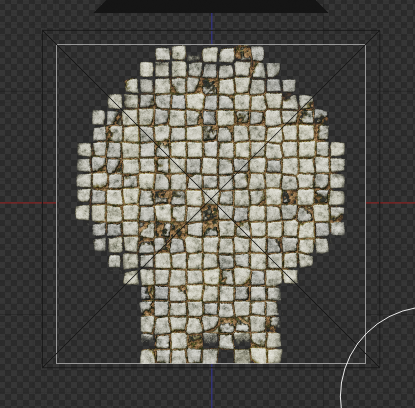
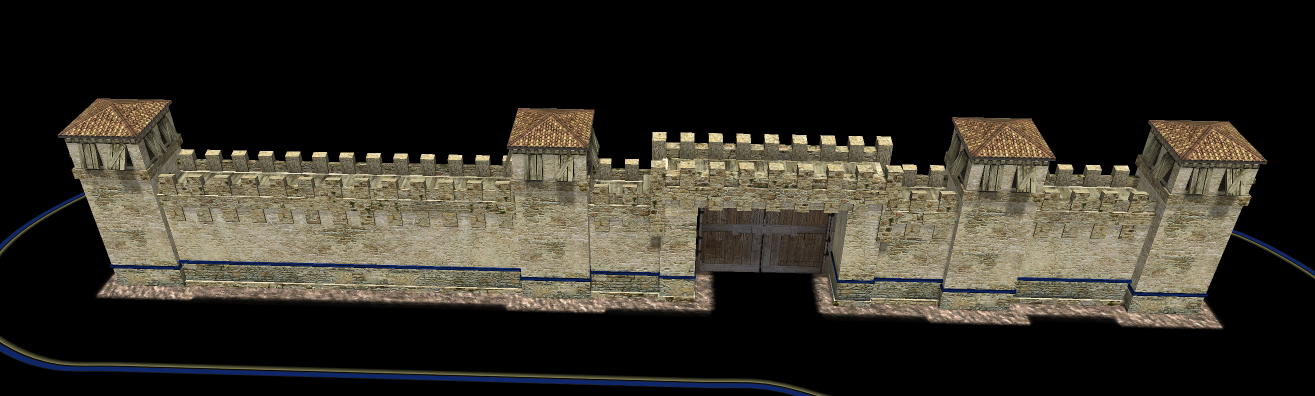
Dirt decal to different wallset:
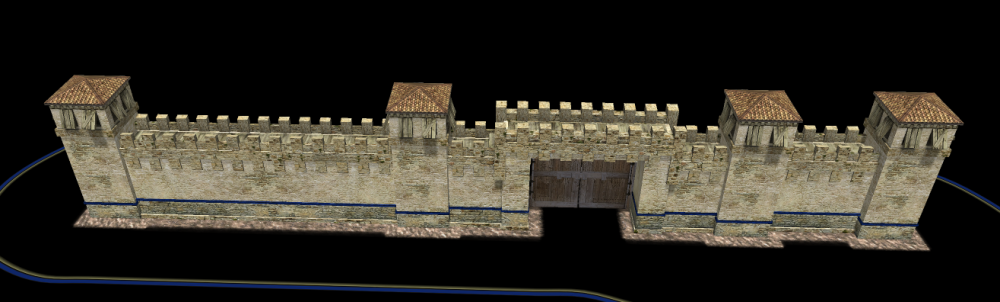 1 point
 -
Each iteration looks so much better1 point
-
Maybe make it a bit more granular (some stones are fully opaque on the radius and some fully transparent) to mask the pure circular alpha mask?1 point
-
Well, but the number of units will be arbitrary. I think it's ok for people to decide if they want to chase units, or to do it with last CC standing. I thought about an intermediate possibility: if all CCs are taken, units lose HP, unless they are close to a Hero or garrisoned (maybe just on certain buildings).1 point
-
Do you mean to say,
 1 point
 -
Sounds lovely!1 point
-
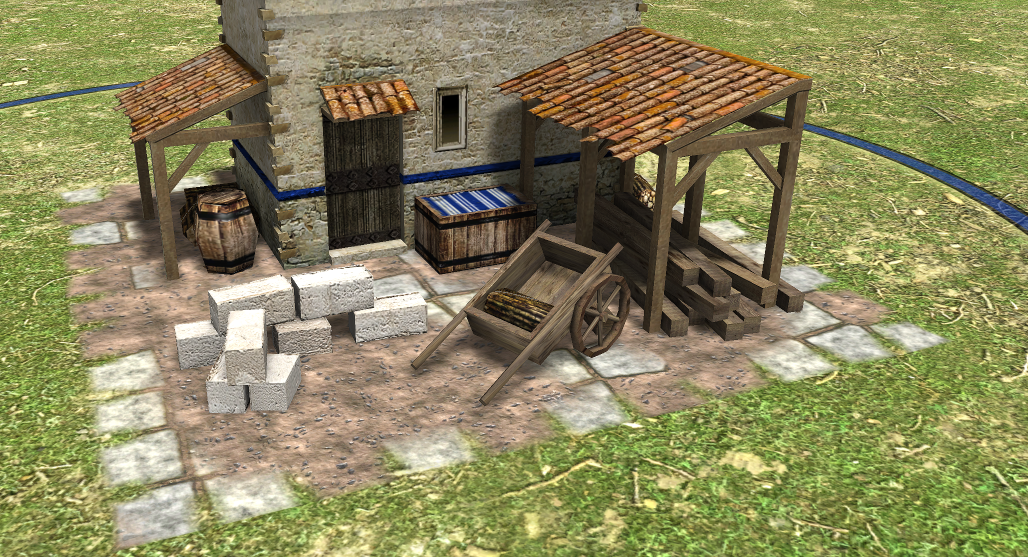
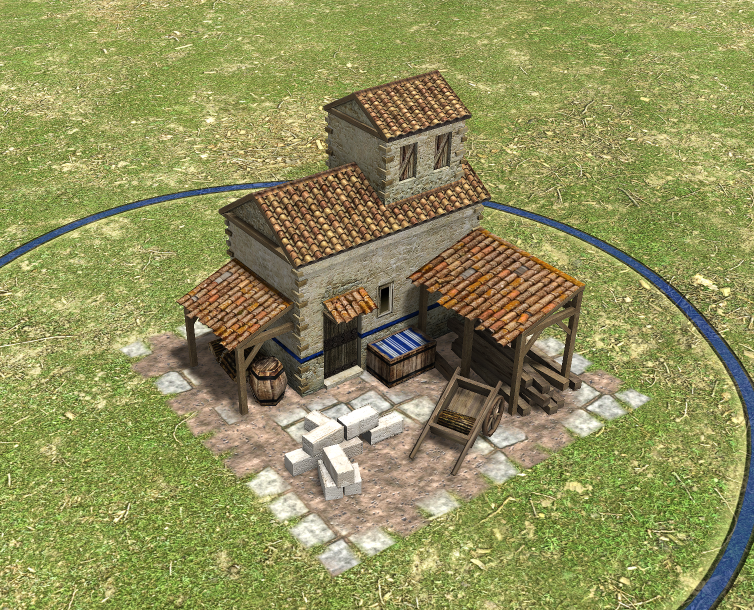
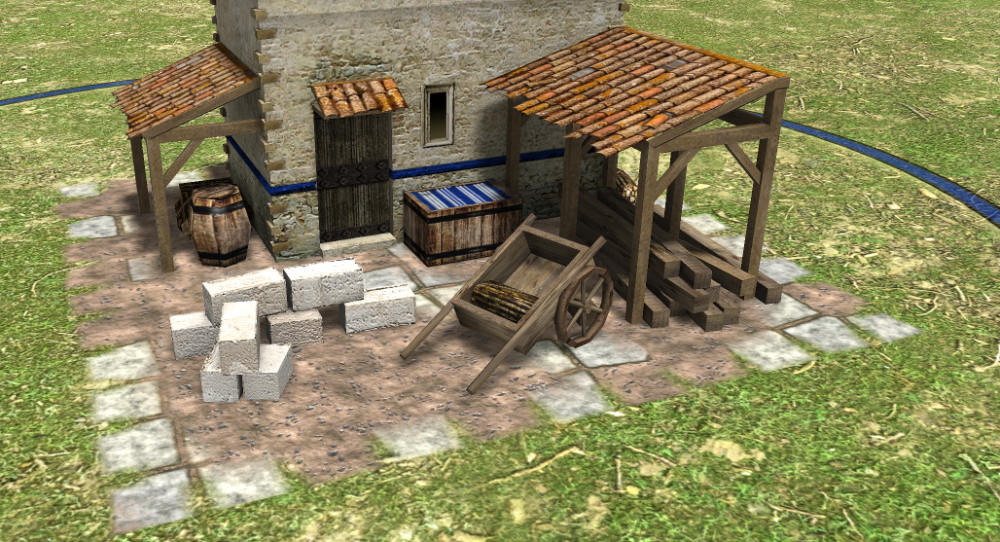
Changed storehouse, since now i can add the dirt above the tiles: Color is just a matter of bake again so as long as the design is okay, i won't mind baking it again with another tone.
 1 point
 -
I suggested something like this a few months ago, where there is a resource storage cap (similar to pop cap), and the player needs to build more storage buildings and farmsteads in order to continue to store gathered resources, much like how you need to build more houses to train more units. ATM storehouses are kind of ignored in combat, which is actually very inaccurate to history (a very common tactic of raids was to burn storehouses and fields to cut off supplies to a settlement, both of which tend to be overlooked in 0ad.) While I think giving the attacker the amount of resources stored in the storehouse is maybe too much, giving them a quarter of the resources or figuring out some sort of looting mechanic to destroyed buildings might be useful.1 point
-
So what do you think about the idea that trader and trading ships would actually carry resources and could also be robbed?1 point
-
The idea is to turn storage buildings into actual resource containers, so the economy becomes spatial, resources are stored locally, not globally. If you deposit 500 wood into a specific storage, that storage literally holds those 500 wood. If that storage is attacked, up to that exact amount can be looted.1 point
-
I'd be happy to start working on a template and spin up a demo on my server.1 point
-
The fact that when selecting only one player the game automatically declares victory seems almost a bug to me. In that situation, victory conditions implying having an enemy in the first place should not be taken into account.1 point
-
I think the play0ad website could really use a modern update. Last time we redesigned it was like 10+ years ago.1 point
-
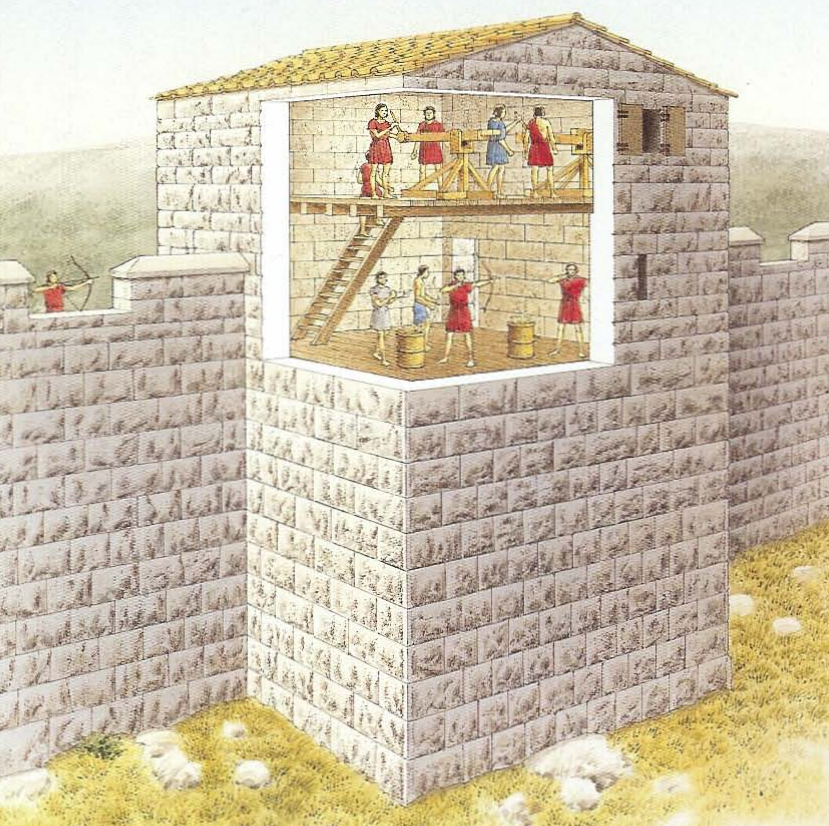
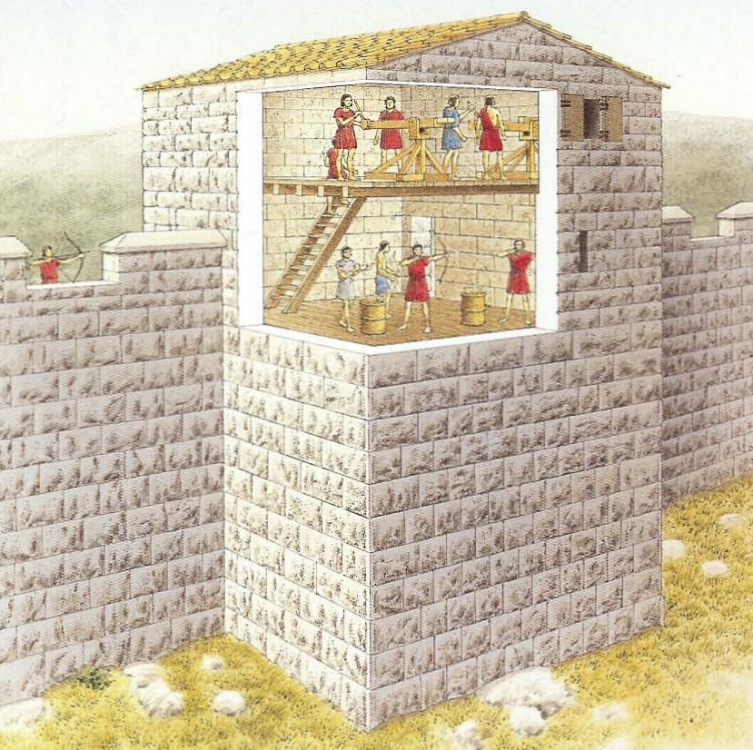
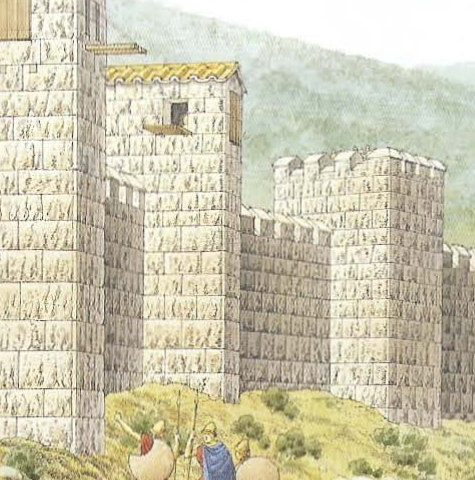
Towers in general I mean (on the images they appear as part of the wall since that's the most common way to use them), there are reasons for everything mentioned: first they started with the parapet on the roof (you want to put people there also), and when catapults were used, the slits were wider, thus the shutters needed for protection, and the gabled roof to protect the machines from water. Meaning, you used the roof of a tower with catapults on the upper chamber, but the slits there are for archers.1 point
-
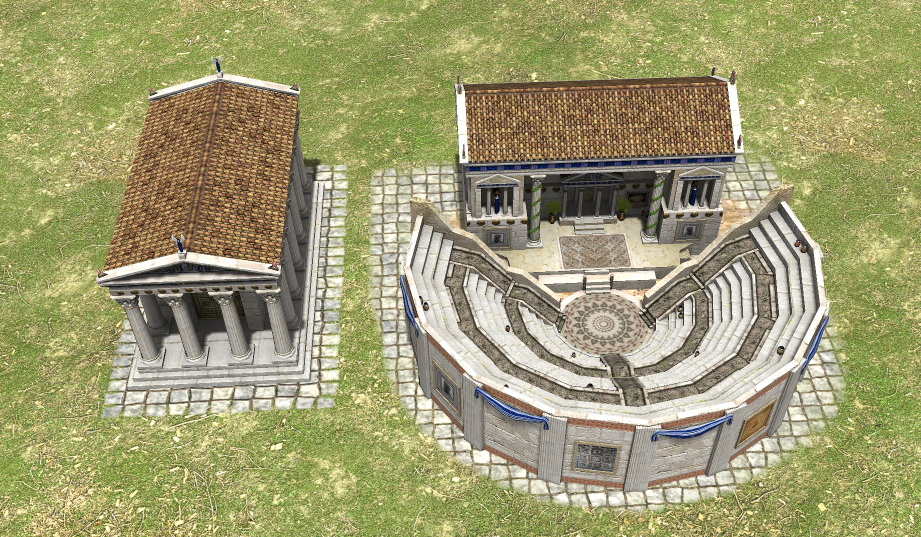
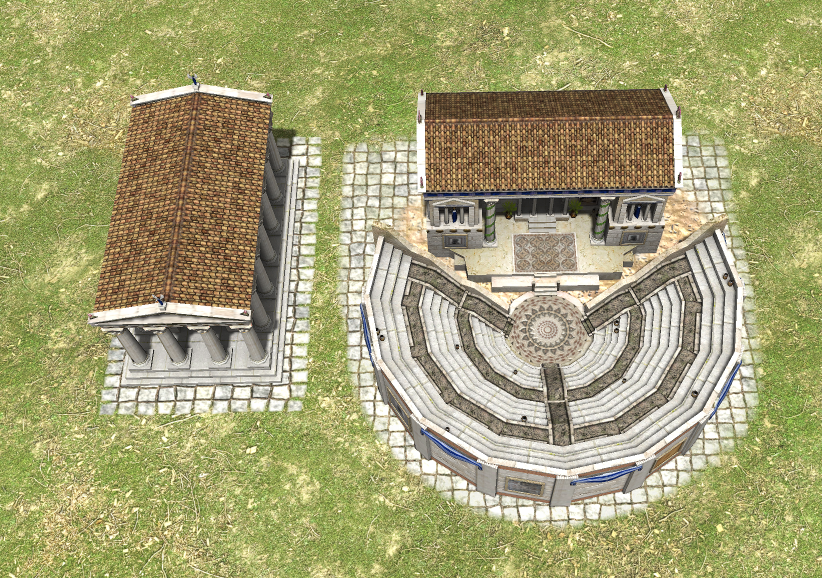
Hello! thanks for your reference, i belive you are talking about Wall's tower's this one is the defense or the scout tower wich is more gameplay-wise oriented. Theather:
 1 point
 -
Hey, I don't know how realistic would you like Ancient Greek towers to be, or how many variants could be done, but here I described how they were according to their function: And here a couple of images from the book I mentioned: Basically, if the upper chamber had catapults, the roof was gabled, and the slits wider, with double-leafed outward-opening side-swinging shutters attached to the outside. Otherwise, if it also had archers, then it had an open fighting platform protected by a parapet at roof level, similar to the right tower of the lower picture. Cilindrical versions were harder to build but more resistant.
 1 point
 -
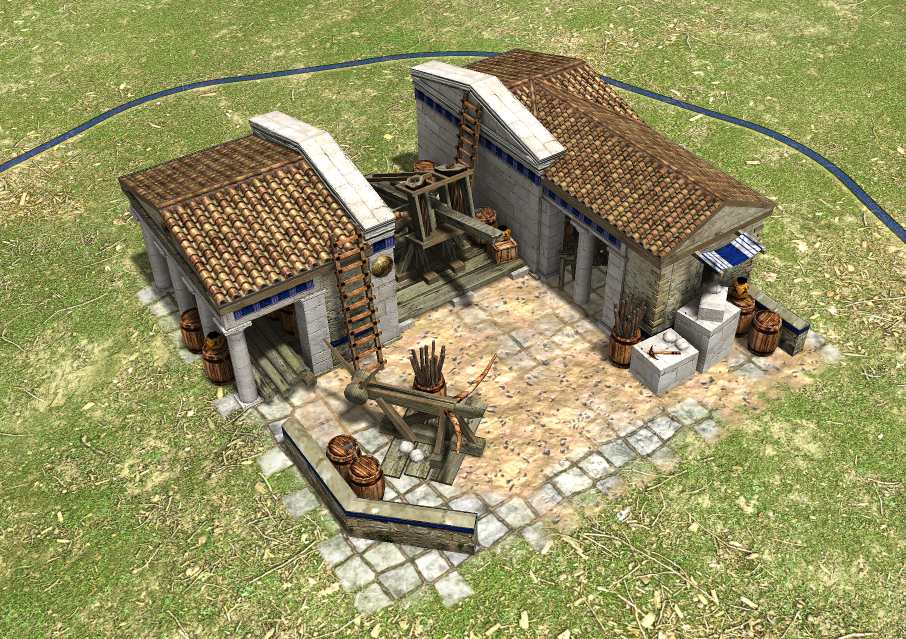
New variant:
 1 point
 -
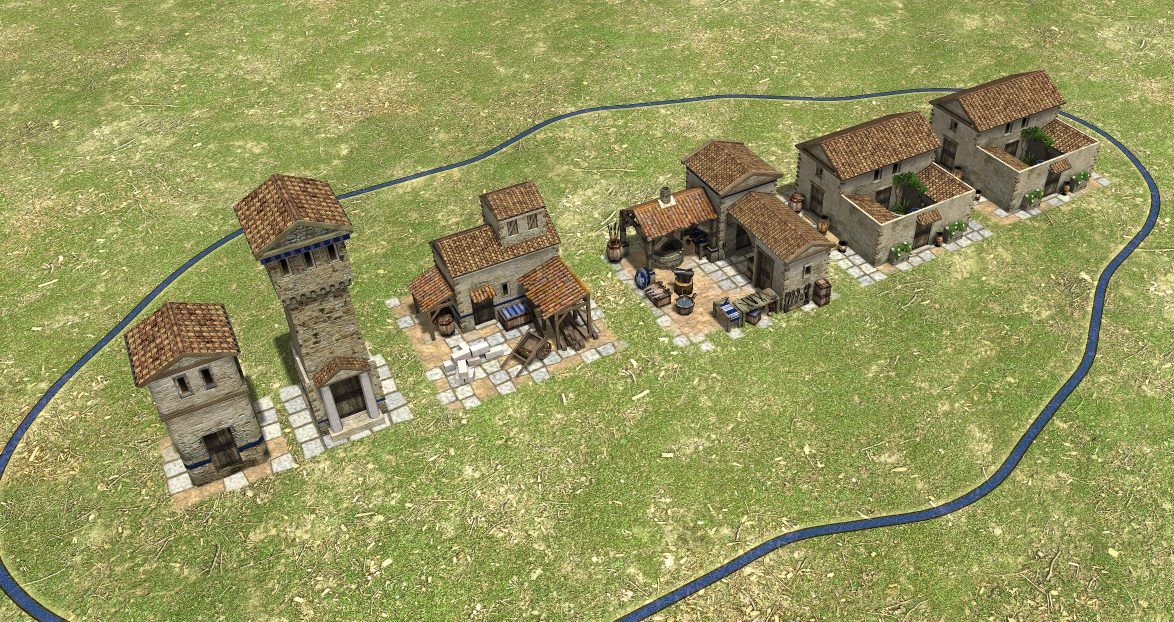
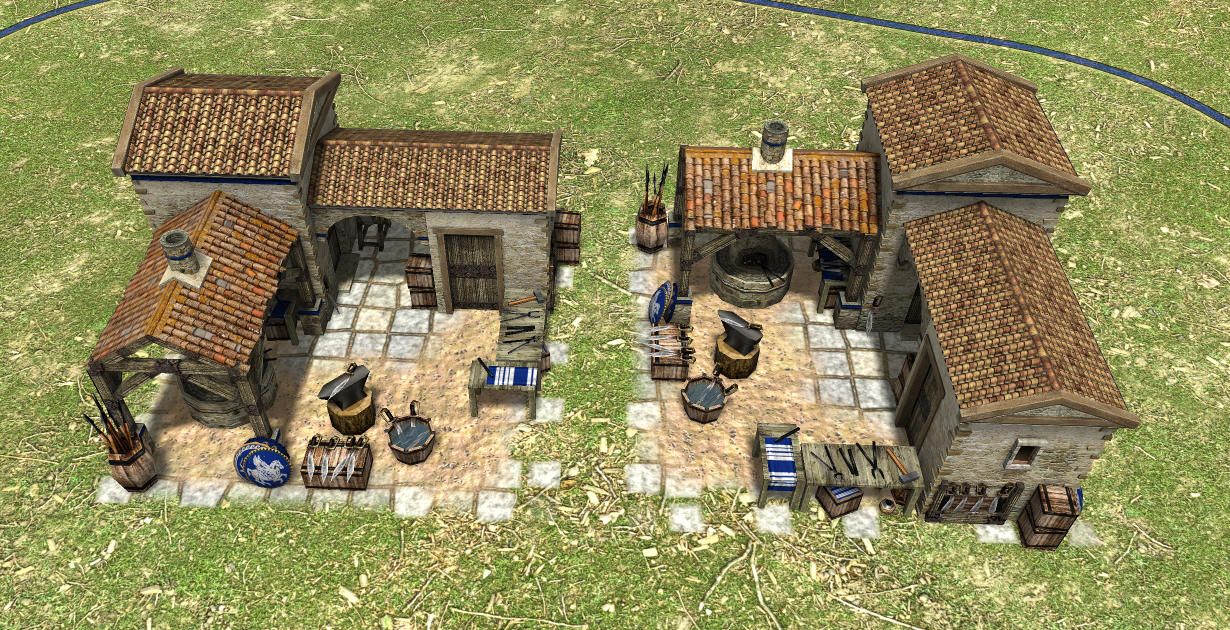
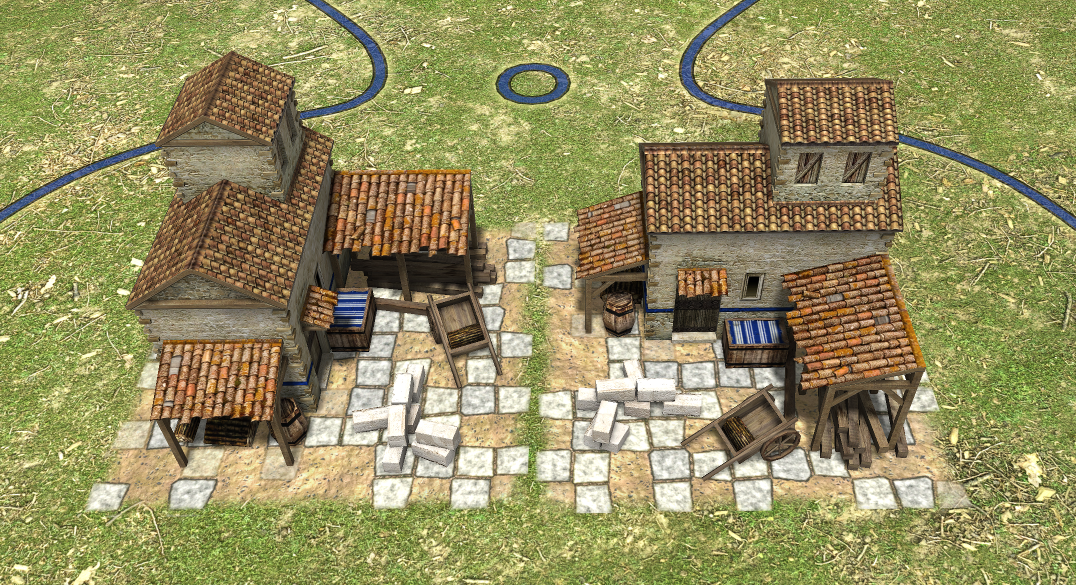
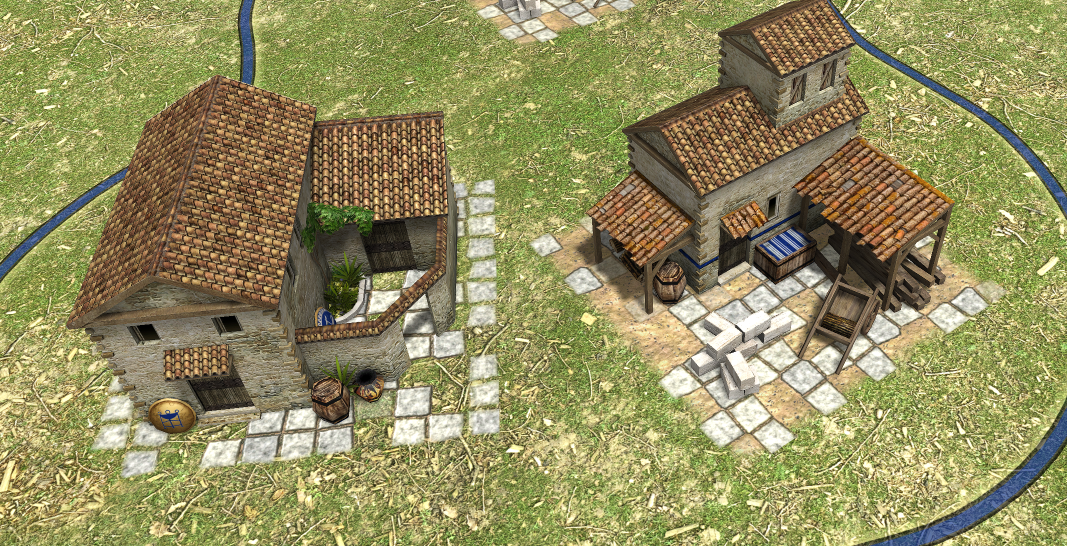
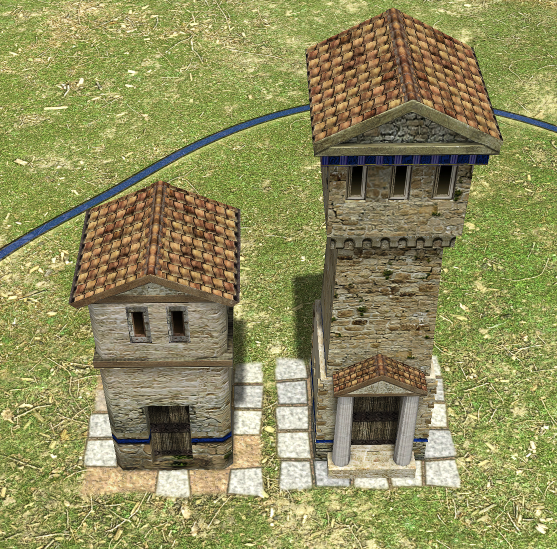
Update: Added dirtier version of houses, storehouse, sentry, defense and forge: House: Storehouse: Forge: Sentry and Defense:
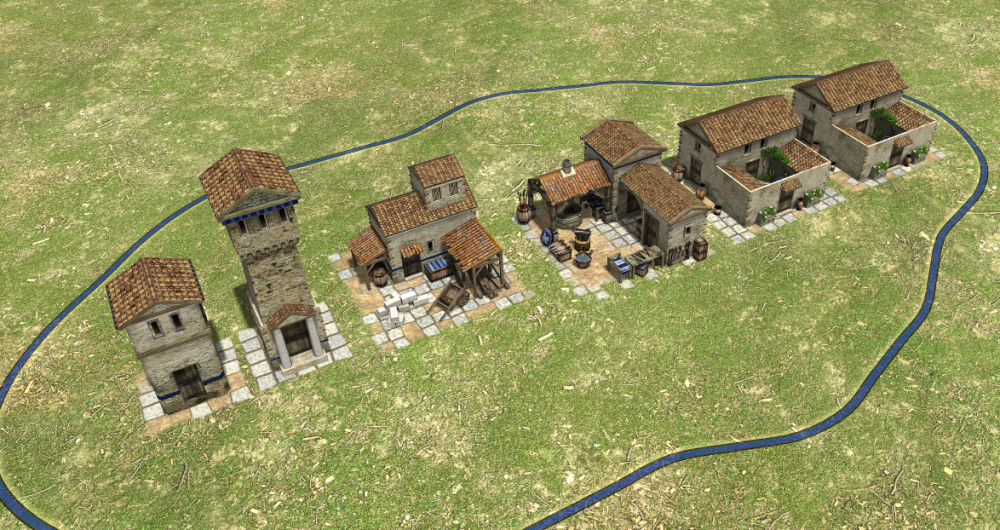
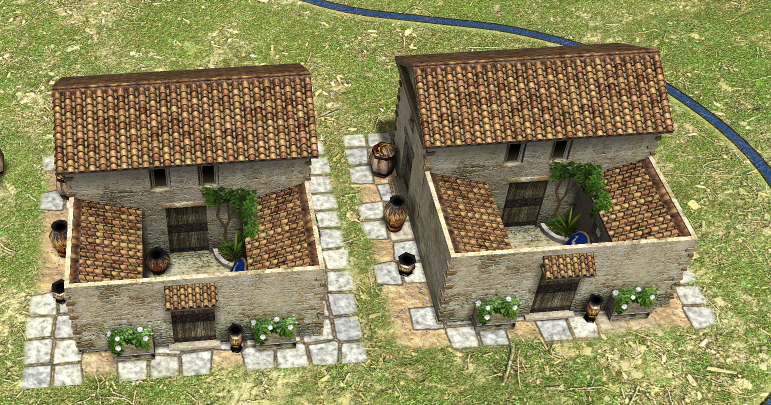
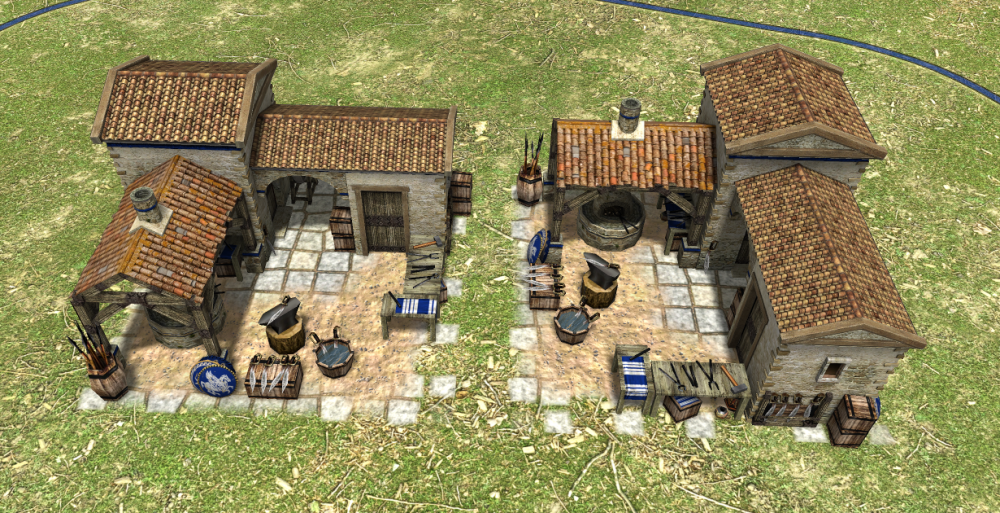
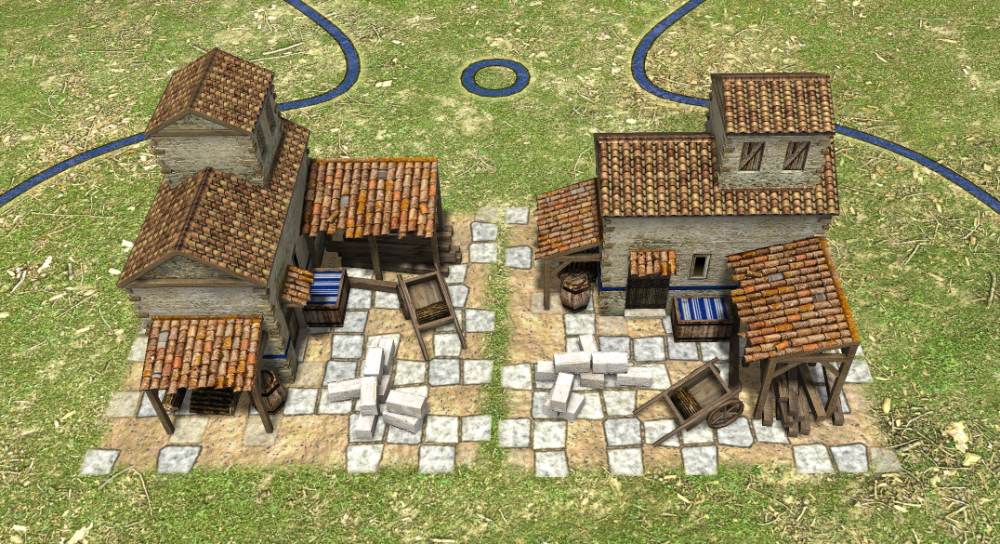
 1 point
 -
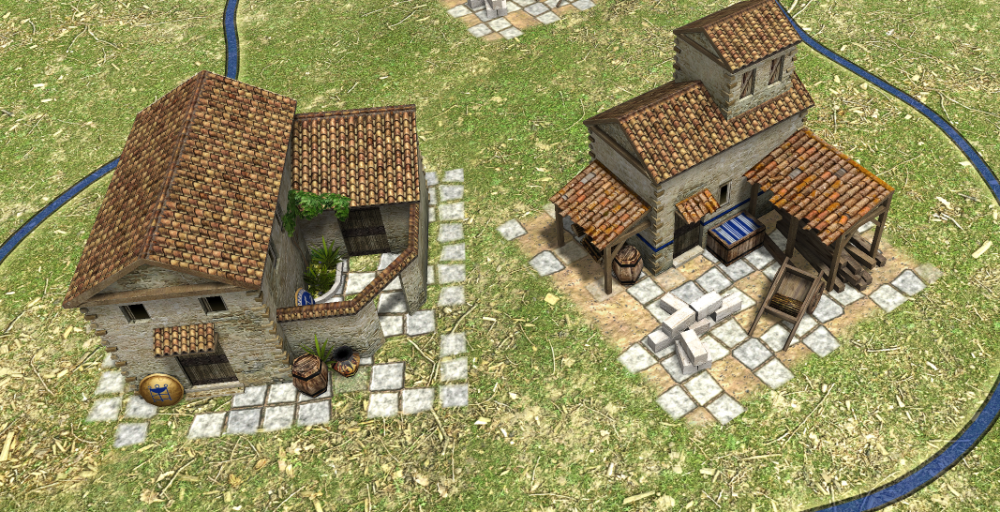
Like this?
 1 point
 -
I think the whole courtyard for the barracks could be cobblestone, but still, nice direction.1 point
-
Instead of sharing the Excel, I put the data into a small web I found outdated so it’s easier to explore https://units-stats-0ad.web.app1 point
-
I think only ramming ships should be able to board, and should have a harder time with faster ships, needing to ram them a bit beforehand. Then, a defending “base garrison” would need to also be overcome in “virtual combat”. This base garrison could be depleted by ramming, making the target ship incur a speed (and maybe attack) penalty. After capture, the base garrison from the attacking ship (never involved in boarding actions) should be automatically distributed among both ships. Base garrisons could slowly replenish at sea, fast at ports. All this easily removes the necessity of having to garrison everything, while making things realistic by keeping boarding fairly common (as it was) but preventing snowballing from opportunistically hoarding ships. Better explained: It would be annoying to have good ships get captured by hit and run tactics from slower ships with a small crew and when not even engaged in combat (which happened mostly with sails lowered, but I guess the game simplifies this and that’s why the ramming ship has them like that). This is the Fortress capture problem at sea (which these ideas also try to solve). Boarding should then be done only by ramming ships, the one representing close combat. They should have a “Grappling Hooks” button that would work when really close, but the target ship should have a chance to get away depending on its speed relative to the attacker’s ship. Ramming was done not just to sink ships, but also to slow or stop them by shearing their oars (which would injure or kill the oarsmen). Only then using grappling hooks for boarding would be feasible. The corvus could prevent the target ship from getting away, but it wasn’t just “way more efficient at boarding”, it was necessary because the first Roman ships were slow compared to the Carthaginians’, after a couple of battles their ships improved and they ditched the corvus (which apparently made ships unstable), so it shouldn't be seen as a technology that improved things from then on but as a short lived early necessity. I’d change needing “4 or more garrisoned troops” and instead give every ship a “base garrison”, taken into account for the defenders when in virtual combat. This would be just a few parameters regarding how many they are, their attack, and defense (and loot, which I’d reserve for a successful boarding, but maybe that’s extra code and not how the game works). The number of troops needed to take an ungarrisoned ship would then depend on the ship itself (would be annoying having to garrison the biggest ships because of small ships with 4 archers lurking about). I feel units like cavalry or elephants shouldn’t count in any of this. An attacker can choose to disengage the grappling hooks if things are going south, which would also automatically happen if the defenders repel the attack (leaving the attacking ship only with its untouched base garrison). Most oarsmen were skilled armed free men, who were killed or taken prisoner, not generally made row a captured ship (which is very complicated, they had to be willing and motivated). This is why I disagree with “the first ship will receive part of the second ship's garrison”, it's not rooted in reality, and it's too snowbally. If the boarding is successful, the base garrison from the defending ship could be considered killed (or sold to slavery considering loot, etc), and the one from the attacking ship would need to be split (maybe in proportion to capacity). A depleted base garrison should give speed penalties to the ship. After all, captured ships had to be scuttled or were slow after battles for being poorly manned. The base garrison could replenish slowly, fast if close to a port. All this makes keeping ships harder than just boarding and capturing, allowing for more strategic decisions and preventing disproportionate gains. When everyone is killed in the target ship, one would take control of it and, while still hooked, one should be able to choose if to keep it or scuttle it (and maybe if just abandon it). For now I'm not proposing any base garrison manual redistribution not to complicate things. I’d make ships suffer damage mostly from ramming only, I feel ships are too weak to arrows in this game, they should be more like rams, while arrows should mostly affect their garrisoned troops, and the base garrison should be affected mostly by ramming (oar shearing and hull breaching). I would add this mechanism on everything, siege engines and buildings. Fortresses would have a decent base garrison with a bigger defense bonus than on a ship. They wouldn’t count as population, they’re just a “resistance to be taken” parameter (which is going to be implemented one way or another anyway, better to rename things realistically for immersion and intuition, all this is a bunch of parameters only), and a “speed (and maybe base arrow rate) penalty” if depleted, for things to work nicely on ships to take faster ones. Big ships is one of the things that are good about this game, no need to try to be just another RTS clone. A few words about realism: what I said before greatly simplifies reality, even when much was written. The only difference from the original proposal is the few parameters to characterise a base garrison, whose quantity would influence the speed of ships and be reduced by being rammed (if just being damaged can be considered for now that’s ok), and that faster ships could get away from the grappling hooks (Edit: and removing the arbitrary troop quantity requirement to be able to board, one might try capturing a small ship with 4 soldiers, but a big one would be suicide). If one would want more realism, ramming should be done on the sides (made difficult when ships are formed side by side), and shearing should be done with an angle from the front (diekplous), or back after going around (periplous), but I know this is too much detail for a game like this (although the more is taken into account the better for tactics).1 point