

CheckTester
-
Posts
35 -
Joined
-
Last visited
-
Days Won
1
1 Follower

CheckTester's Achievements

Discens (2/14)
25
Reputation
-
If we want selling not to be too simple and rewarding, let's imagine and make the process slower — say, twice the build time — as if you're "searching for buyers". And of course it means that each ship should be manually garrisoned at a shipyard (siege at a workshop) and player needs to press specific button. Anyway it would be cool and intriguing in my opinion.
-
Sometimes a commander realizes that some equipment is just redundant and no longer needed. So it was a waste of money (iron and wood), and it would be better to return it. For example, on a map with a river or sea, ships might turn out to be useless — because everything happens on land, there's nothing to transport by water, and no one to fight. My idea: what if we could return every ship to the shipyard, garrison it there, and sell it, even for half price? The same for siege equipment. Why not ? This will provide some more possibility to get resources and change the strategy of future battles during the match. Your thoughts ? Good ideas ?
-
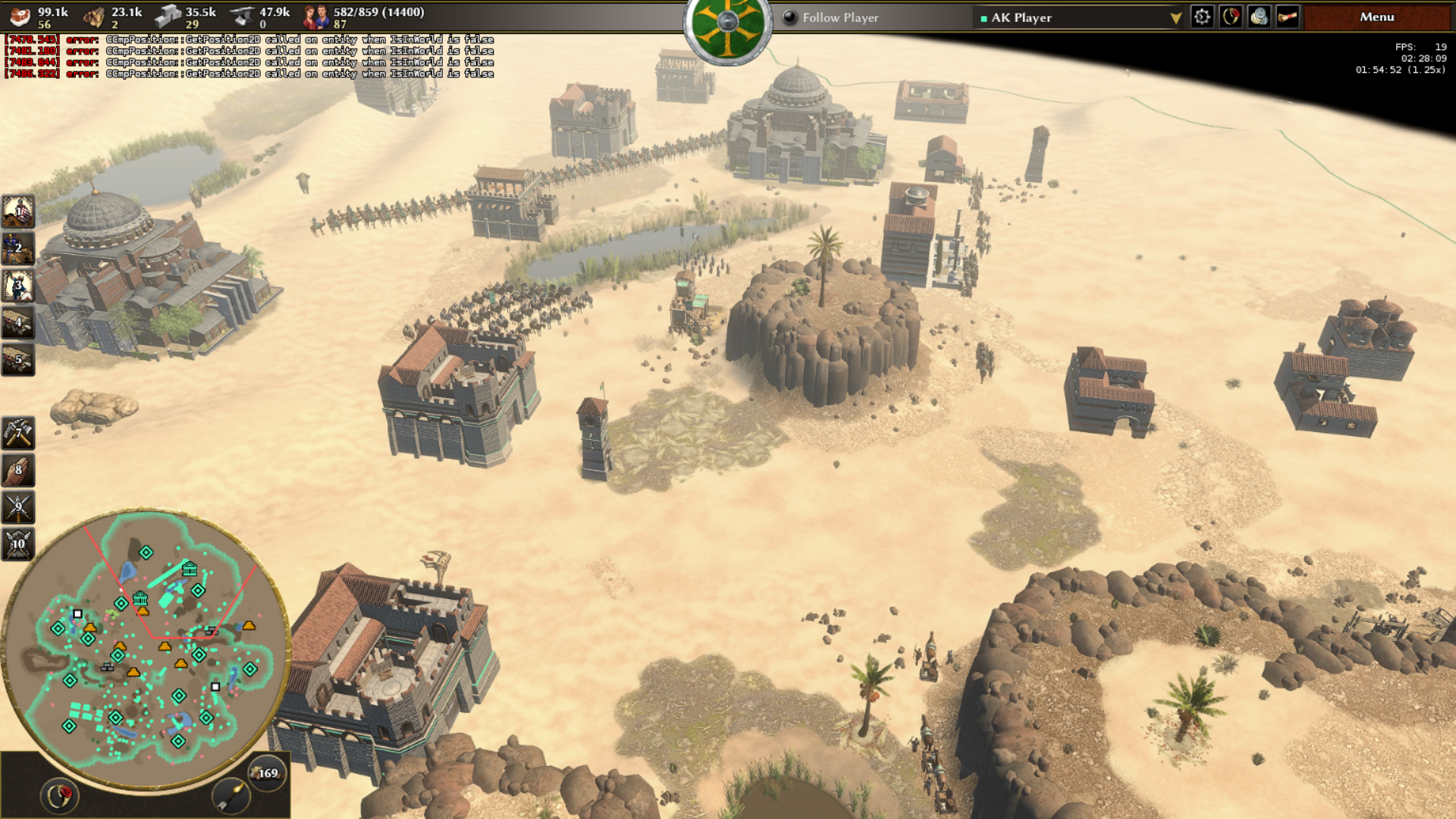
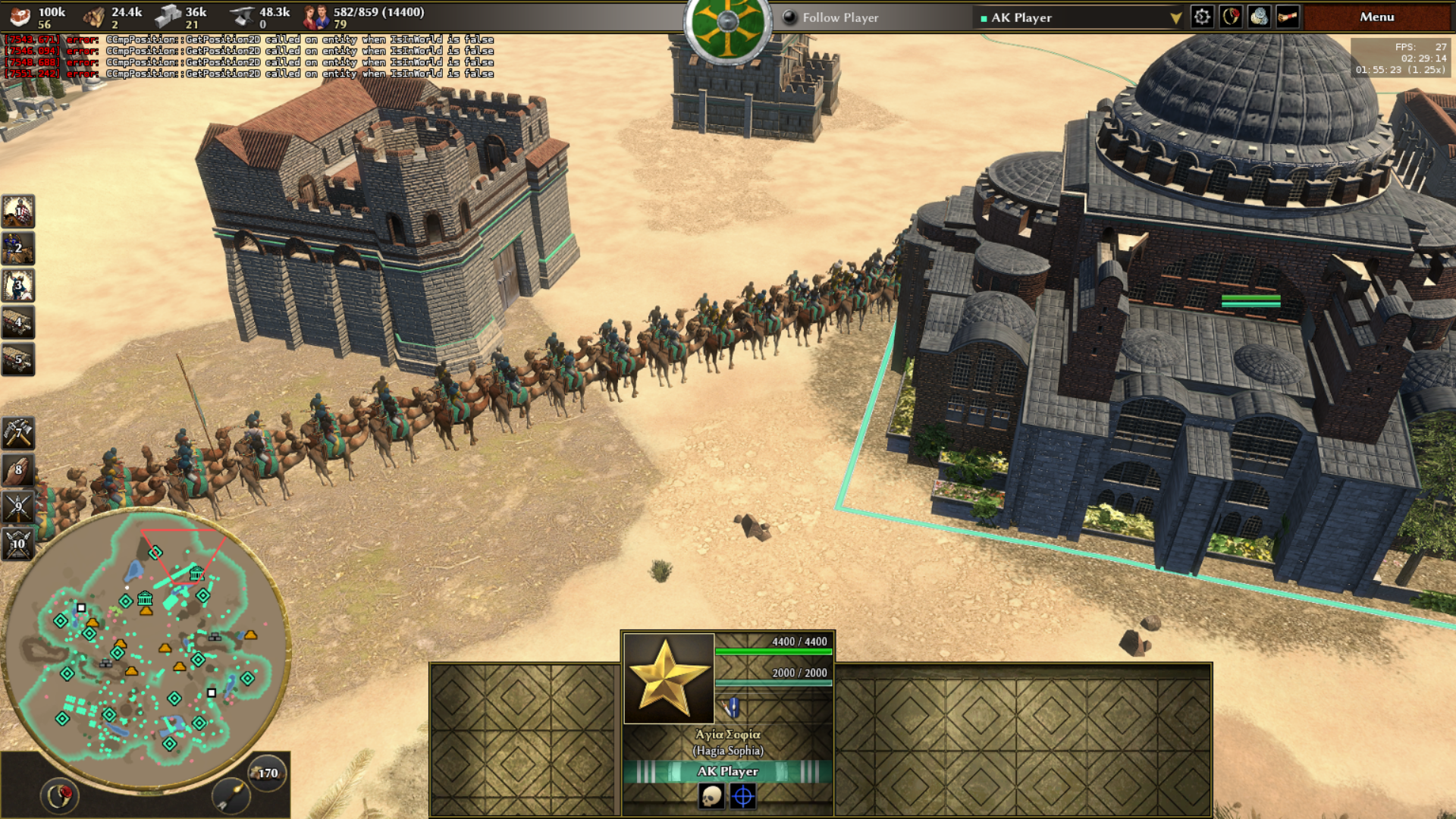
I get why you'd think that — a lot of mods are just reskins. But XIII Century AD mod really does change things: steppe civs have no farms (only livestock), and all their buildings can be packed up and moved. For Western civs, the Guild House gives +25% trade gain, and the Guildsman produced there boosts nearby units/buildings: +10% gather speed and +10% build speed within a 20m radius — and he can be garrisoned inside a building to further boost its efficiency. Eastern civs get the City Shop, which generates population and passive profit. Millennium A.D. adds completely new civs (Anglo-Saxons, Byzantines, Carolingians, Norse, Rus, Ummayads) with their own units, heroes, and even music. You can arrange battles between the Umayyad Turks and the Byzantines, from either side. Or ensure that the Norman Varangians befriend the Rus', or, conversely, completely enslave them. Look at this, the Turks captured TWO Hagia Sophia cathedrals in the Sahara! What impudence! And this is Millennium A.D.! Delenda Est is a full overhaul and rework of 0 A.D. with sub-nationalities (in line with human history), new mechanics, heroes, units and models and so on. And Aristeia Bronziron adds ancient civs (Egyptians, Assyrians, Jews, Greeks) with unique mechanics: slaves/Conscript Laborers that gather resources faster but can't build; officers that boost nearby infantry; Egyptian statues that expand territory and obelisks that buff attack; Assyrian Royal Apartments that produce both citizens and guards. Even if some buildings are visually similar, the gameplay differences are real. And the best part — Aristeia and XIII Century are fully compatible. You can actually fight ancient Egyptians against medieval Europeans in the same match — I've tested it. All of these are very interesting. As for the empty civ overviews — that's probably a text cache bug. Try reinstalling the mod or verifying the files; the mods themselves work fine on 0.28.0. Yes, it's still the same RTS engine and based on 0 A.D., but these mods genuinely offer a different experience. Give them a proper try — you might be surprised! And if you love dynamic RTS with a historical setting, you'll get many pleasant hours out of these.
-
@redshawks523, the Mod Selection page in the game provide a lot of mods with new civilizations and epochs. Tower Defence game Aristea Bronziron - Ancient World with Egyptians, Assiryans, Jews and so on. Milllenium A.D. - European civs (Anglo Saxons, Byzantines, Carolingians, Norse, Rus, Ummayads) XIII Century AD - Middle Ages: Eastern and Western Europeans, and Steppe people (something like Mongols). Delenda Est - overhaul mod with many different nations and new game mechanics. Recently I have checked it sucessfully on last 0.28.0 release. You can enjoyed it.
-
See also Capturing a Civic Center should enable training of Citizens #9104
-
I have installed the latest bug fix mod available in the game and can say that civilians are still unavailable in the Ptolemaic Military Colony...
-
ships Naval Boarding - seizure of ships
CheckTester replied to CheckTester's topic in Gameplay Discussion
The idea of reusing building capture logic for ships is excellent, but I believe it needs one critical addition: both ships should take hull damage during the boarding process. Otherwise, boarding becomes a no-risk, high-reward action that undermines naval warfare. Why it's important Historically, boarding was a brutal melee that damaged the ships themselves (broken oars, rails, rigging). In gameplay terms: if you can capture an enemy trireme for free just by having 10 hoplites on a transport, why bother building warships? Proposed mechanics (simple and implementable) Ongoing damage: During boarding, both ships lose a small percentage of HP per second. Damage rate depends on: Ratio of garrison military strength (fiercer fighting = more damage). Ship type (warships are tougher, transports are fragile). Technologies (e.g., "Grappling Hooks" could reduce damage for the attacker). Final penalty for captured ship: After a successful boarding, the captured ship suffers an additional HP loss (e.g., 15–20% of its current HP), representing the final deck struggle. Attacker also pays a price: The attacker's ship takes damage over time and loses some of its garrison (e.g., 2–4 units killed). Half of the surviving attacker's garrison (rounded up) transfers to the captured ship; the rest remain on the original ship. This is in addition to the unit transfer already discussed. Defender's garrison is entirely eliminated (killed or captured). Risk of sinking: If a ship's HP reaches zero during boarding, it sinks and the boarding is interrupted (or the surviving ship wins if the fight was almost over). Why this improves the game Balance: Boarding becomes a costly operation, not a free alternative to destruction. Tactical depth: You can soften a ship with ranged attacks, then board to capture it with fewer losses. Realism: Reflects ancient naval tactics (ram, then board). Interesting choices: Do you risk your transport full of elite infantry to capture an enemy flagship? Prevents snowballing: The captured ship starts with very low HP and requires repairs, making it vulnerable to immediate counter-attack. Example numbers for testing Base damage: 2% of max HP per second to each ship. Damage multiplier: (defender_strength + 1) / (attacker_strength + 1), clamped to [0.5, 2.0]. (If defender has twice as many soldiers, damage doubles.) Captured ship extra damage: –15% of its current HP after capture. Minimum boarding time: 5 seconds (prevents instant capture). Attacker garrison losses on success: 2–4 random units + half of the survivors move to the captured ship. Visual feedback Initially, simple effects would suffice: sounds of fighting, smoke/blood particles. Later, ship entanglement visuals (ropes or a boarding ramp) would be great. It would be nice if the ship's texture became more damaged. Regarding the "base garrison" idea from @Thalatta – I see its value for reducing micro, but my proposal works with the existing garrison system. Perhaps both could be combined in the future. I encourage everyone interested to share their thoughts. If there is support, I can help with testing and refining the numbers. Thanks for considering! -
Suggestion: Quick tips guide for newbies?
CheckTester replied to CheckTester's topic in Gameplay Discussion
My idea is to integrate this directly into the game, so that after 10 minutes of reading, anyone can understand what to do and how to succeed. This will lower the entry barrier for new users and immediately reveal the game's full beauty and diversity. I think this is something that's sorely lacking! And I truly believe this will help 0 A.D. grow its community. -
Suggestion: Quick tips guide for newbies?
CheckTester replied to CheckTester's topic in Gameplay Discussion
https://gitea.wildfiregames.com/0ad/0ad/issues/8849 -
There is another idea for using infarty units on ships - Naval Boarding (capturing the ships). l
-
Suggestion: Quick tips guide for newbies?
CheckTester replied to CheckTester's topic in Gameplay Discussion
My suggestion is to separate the beginner-friendly strategy advice from the technical reference. What if clicking on the "Manual" button opened two distinct sections: "Beginner Tips" – A concise guide focused on what to do in the first few minutes, basic economy, simple unit counters, and overall strategy. "Game Controls" – The detailed reference for hotkeys, camera movement, and interface explanations that we already have. This way, a completely new player can quickly get the essential tips without being overwhelmed by a wall of text, while veterans can still easily find the specific control they're looking for. -
The in-game manual is very detailed about hotkeys and manual control, which is great, but maybe it could be complemented with a very short 'quick-start' section for absolute beginners? Something like: 'First steps: gather food, build houses, train workers. Unit roles: Spearmen vs Cavalry, etc.' I think it would make the game much more approachable. Thoughts? Something like that ----------------- A Beginner's Guide to 0 A.D. Welcome to 0 A.D.! This open-source historical Real-Time Strategy (RTS) game can seem deep at first, but by understanding its core principles, you'll quickly learn to build thriving empires and crush your enemies. The key is to not be afraid to experiment and learn from each match. 0. Optimal Settings for the Best Experience Before jumping in, it's worth checking the game options to ensure a smooth and comfortable experience. Graphics: If the game feels sluggish, navigate to Options > Graphics and disable "High-quality water effects" and "Shadows". This will provide the most noticeable performance boost on older or less powerful hardware . Camera Controls: By default, you can pan the camera with the WASD keys or arrow keys. Rotate the view with Ctrl + Arrow Keys or Shift + Mouse Wheel . All of these can be customized to your liking in the settings menu. Essential Hotkeys: I highly recommend familiarizing yourself with these key shortcuts right away. You can also view and customize them in Options > Hotkeys . H — Stop the currently selected units. . (period) — Select the next idle worker. , (comma) — Select the next idle soldier. Shift + Left Click on a unit's icon in a production building — Train a batch of 5 units . This is a huge time-saver! Please note, that batch size can be adjusted in settings. 1. Starting a Match and Choosing the Difficulty From the main menu, click Single-player to begin. Map Type: Skirmish map : The best choice for beginners. These maps are pre-designed and balanced, but you are free to choose your own civilization. Random map : The map layout and resources are procedurally generated. This is great for variety but can sometimes lead to unbalanced starting positions. Adding Opponents: Add one or more computer players (AI). For your first game, it's best to start with just one opponent. AI Difficulty Level: The AI in 0 A.D. is named Petra . For a new player, the choice is simple: Sandbox : This difficulty level is designed for learning. The AI opponent will not attack or expand its territory . Very Easy : Once you're ready for a bit of a challenge, this is the next logical step. Be aware that on higher difficulties, the Petra AI receives economic bonuses to its resource gathering and trade efficiency . 2. Choosing a Civilization, Match Settings, and Matchups Your choice of civilization largely dictates your strategic options. There are several unique ancient cultures from Europe, Africa, the Middle East, and Asia to choose from. Recommended Civilizations for Beginners: Athenians: A well-rounded civilization with a strong navy and an economic bonus to metal mining. They also have a unique ability to build long walls in neutral territory . Romans: Focused on a powerful and disciplined infantry. They can construct army camps in enemy territory and have access to some of the best siege weapons in the game . Some civilizations have special mobile units that can act as rally points or resource dropsites to increasing the speed of resource collection without building storehouse in the neighborhood end fast economic development. The Mauryas have the Worker Elephant, which can collect resources anywhere on the map and act as builder. The Germanic Tribes have the Supply Wagon, which acts as a mobile dropsite and increase population cap (as a house) and on the further stages can even be upgraded to train workers . The Persians excel at long-term economic gain. Their unique Ice House and the upgraded Winter Palace function as passive income generators, periodically granting you a free trickle of resources without any additional effort. Try out different factions and find the one whose playstyle interests you most! Match Settings: Population Cap: The default limit is usually 300. You can leave it as is or lower it for faster, more intense matches. Victory Condition: The most common and straightforward is Conquest . To win, you must eliminate all enemy units and buildings. Other options include building and holding a Wonder for a set amount of time . Civilization Matchups: There's no strict "rock-paper-scissors" rule for entire civilizations. Instead, the counter system is based on unit types. For example, cavalry archers are strong against slow-moving infantry, while heavily armored spearmen (like those of Sparta) excel against enemy cavalry . 3. Controlling Your Units The entire game is built on a simple principle: "Select – Command" . Left Mouse Button (LMB) — Select a unit or building. Right Mouse Button (RMB) — Issue a command (move, attack, gather resources) . Advanced Control Tips: Double-click LMB on a unit to select all units of the same type currently visible on your screen. Ctrl + Double-click to select all units of the same type on the entire map . Hold Shift while issuing commands (e.g., Shift+RMB on a tree, then Shift+RMB on a guard post) creates an action queue. Your units will perform the tasks in sequence. 4. Developing Your Economy A strong economy is the foundation of a powerful army. Here's a simple 5-minute plan to get started: Scout the Map: Send your starting cavalry scout in a spiral pattern around your base to locate resources (berry bushes, animals, forests, mines) and your enemy. Start Gathering: Send all your Civilians to the nearest berry bushes (RMB). They are the fastest gatherers of fruit . Send all your Infantry Citizen-Soldiers to chop down the nearest trees (RMB). They are the best lumberjacks . Send your Cavalry Citizen-Soldier to hunt nearby animals (RMB). They are the only unit type that can effectively hunt for meat . Set a Rally Point: Select your Civic Center and then right-click on a tree. All newly trained units will automatically begin gathering wood. Train More Workers: Hold Shift and left-click on the Civilian icon in the Civic Center's production panel. Train a batch of 5. Build a House: Once you have 100 wood, select a couple of free workers, click the House icon in the bottom panel, and place it near your Civic Center. Houses increase your population limit . Build a Storehouse: When you have several workers on wood, select them and build a Storehouse right next to the forest. This drastically reduces their travel time and speeds up gathering. Key Economic Principles: Build Storehouses near resources. This is the single most important rule for efficient gathering. Don't forget food. When berry bushes run out, build a Farmstead and then place Fields on the open land nearby . Keep an eye on your population limit. The counter in the top panel (e.g., 15/30) shows how many more units you can train. If you can't train more, you need more Houses. 5. Developing Your Military Once your economy is stable, it's time to think about defense and conquest. Build a Military Structure: Your first military building is usually the Barracks. It allows you to train basic infantry. Learn Unit Counters: Spearmen are strong against cavalry. Swordsmen are strong against other infantry. Slingers and Archers are strong against slow, heavily armored units but are vulnerable in melee combat . Don't Neglect Defenses: Walls and Towers are crucial for holding off early enemy raids. Garrisoning soldiers inside towers will significantly increase the number of arrows they fire . 6. Essential Technologies to Research Researching technologies is a long-term investment. Early game technologies in the Farmstead and Storehouse that improve gathering rates should be researched as soon as you have the spare resources. Top Priority Technologies for Beginners: Conscription in the Barracks. This reduces the batch training time for infantry . Wheelbarrow and Horse-drawn Carts in the Storehouse. These increase the amount of resources a worker can carry, which is a massive boost to gathering efficiency. Advancing to the next phase ( Town Phase , City Phase ) in the Civic Center. This unlocks more powerful units, buildings, and technologies. 7. Basic Tactics and Strategies Scouting: Always know what your enemy is doing. Use fast units to probe their base and keep an eye on their army's movement. Use the Terrain: Forests can block or slow down enemy movement. Hills and high ground can provide range bonuses for your archers. Don't Forget Your Heroes: In the later phases of the game, you can recruit unique Heroes—legendary figures like Alexander the Great or Julius Caesar, Ashoka, Boiorix or King Darius (unique for selected civilization). They possess powerful auras that significantly boost the stats of nearby allied units . Hit-and-Run: Gather a small, fast force (like cavalry archers) and use them to raid enemy workers and undefended resource-gathering operations, disrupting their economy. 8. Navy Don't ignore the fleet, as it provides a strategic advantage if there is a large body of water nearby — a sea, gulf, lake, or major river. Dock — shipyard, dropsite (accepts fish from fishing boats and all resources from citizens), and a trading hub for both sea and land traders. Technologies for ships are researched here. Fishing Boat — gathers food from the sea. Train it to speed up food production. Scout Ship — fast, with a large vision range. Good for coastal reconnaissance and raiding lone enemy units on water or shore Merchant Ship — generates profit by trading between your own or allied docks (or markets on land). The longer the route, the higher the profit. Available from the Town Phase. Arrow Ship — basic warship. Good against ramming ships. Available from the Town Phase. Ramming Ship — powerful melee attack. Effective against siege ships. Vulnerable to arrow ships. Available from the City Phase for some civilizations (mostly Mediterranean). Fire Ship — deals fire damage in melee combat. Available to Britons, Gauls, and Iberians from the City Phase. Siege Ship — long-range combat. Destroys buildings on the shore. Available from the City Phase for a limited number of civilizations. Unique technologies: Athenians ("Iphicratean Reforms" on Town Phase) — docks and triremes can train marines (Epibates) and Cretan mercenary archers. Persians ("Equine Transports" on City Phase) — Phoenician triremes can train cavalry. 9. Strategic Playstyles: Rush, Boom, and More RTS games have a few classic strategic archetypes that work perfectly in 0 A.D. Rush: An aggressive, early-game strategy. You prioritize military production over economic development to launch a swift attack, hoping to cripple or defeat your enemy before they can build up their defenses. Best on small maps. Boom: An economic-focused strategy. You aim to grow your economy as fast as possible, securing multiple resources and building a strong economic base before switching to full-scale military production to overwhelm your opponent with sheer numbers. Turtle: A defensive strategy. You focus on building strong defenses like walls and towers, protecting your economy while you advance through the phases and build up a powerful, unstoppable army for a single, decisive strike. The Romans, with their army camps, are particularly good at this . Remember, 0 A.D. is a game where mastery comes with practice. Don't be afraid to lose, experiment with different civilizations and strategies, and discover your own unique playstyle. Good luck on the battlefield!
-
Localization text file on specific language
CheckTester replied to CheckTester's topic in Help & Feedback
Thank you for the information. How to download the strings text file the transifex site ? I couldn't find ant corresponded button or link in the interface... @Stan`Could you please help ? Do you mean "Edit source" button ? As I understand this feature is available as only payable option in transifex account. I didn't found anything else. -
Localization text file on specific language
CheckTester replied to CheckTester's topic in Help & Feedback
I periodically encounter grammatical errors (sometimes even serious ones) or translation inaccuracies in the interface, unit and building names, and hints, and I'd like to quickly spot them and all similar places in strings. For example, I recently discovered that the term "Nabatean camel archer" (which should be translated as "camel-riding archer") was translated in one language as "Nabatean archer of camel" (belonging to a camel or descended from a camel). Or another example: First, in one sentence, a unit is mentioned in the singular, then in the next, in the plural. And so on... -
Hello everyone. Is there any detailed instruction how to get full text strings with English and someone another language ? It will be good to get the table or CSV file or something like that with english string and the translated string by specific another language. The purpose - to see all of this directly on the PC, to better search and overview. Using local text editor and so on... It's better to get it from localization portal, but I haven't found how to download it from transifex... May be it is possible direct from installed packages / folders on my PC (Windows) ? And of course I understand that the edition should be done only on transifex durring the specific period (before string freeze). Thank you in advance for any advice.