

Thalatta
-
Posts
604 -
Joined
-
Last visited
-
Days Won
15
Everything posted by Thalatta
-
Ahh, I've never used that . Still when pressed, Atlas opens (I guess it should be said that's its actual name, since the "Scenario Editor" part seems just descriptive). Unrelated: you (and others) have told me to create PRs, but my New Pull Request button is disabled. I created Issues instead (for now).
-
Yes, through re-arm aura:
-
Closing Old Issues
Thalatta replied to ShadowOfHassen's topic in Game Development & Technical Discussion
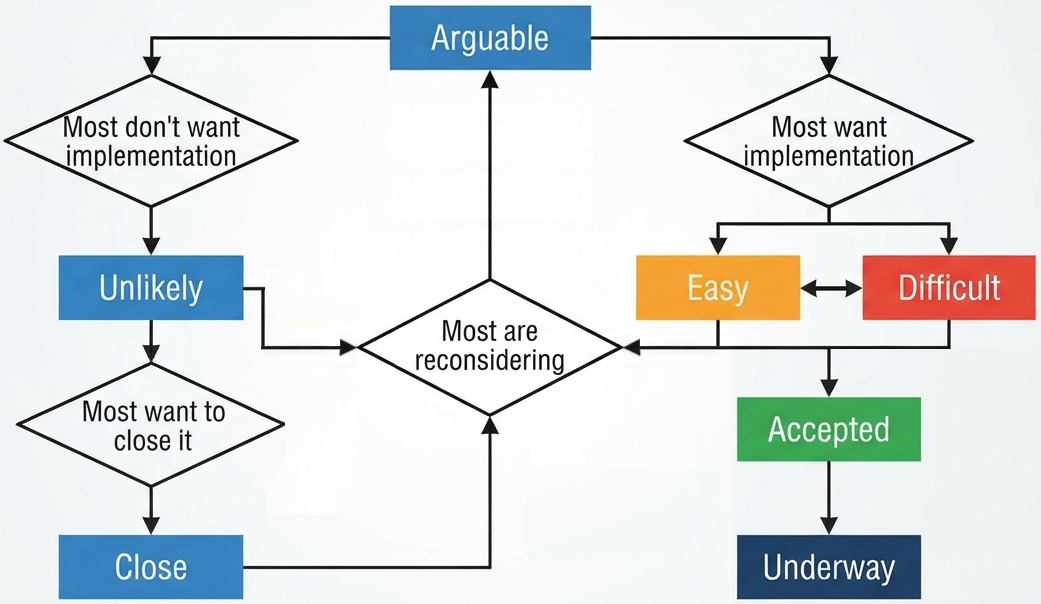
@ShadowOfHassen your concerns are quite relevant. There's a lot to be closed from those 1.6k issues, and for the rest, to be discussed. I'd start from the older ones and start either closing them (they can be reopened if really needed, this is how things are done in my experience in other fields) or classifying them, but we would need to agree on categories and have discussions for where to move them around. We could have a thread with the first post containing the gitea links among these categories being constantly edited, along a decision tree explaining the process. In the example below, most things would go to "Arguable", if it doesn't have much support or it's too game-breaking, goes to "Unlikely", and if most disagree to implement it, it's closed, while if people agree it should be eventually implemented, it would go to either "Easy" or "Difficult", depending on the work it would take to do so (then there could be sub categories regarding "Animation", "Engine", whatever, for those interested, to find things more easily). Maybe "Accepted" and "Underway" could also be useful.
-
It's called Atlas Scenario Editor (hover over the Scenario Editor button and read the tooltip on the upper right). The opened window is titled "Atlas - Scenario Editor". That's weird... I'm on Win 11, game is 0.28.0 a2cae.
-
Voice Actor: NiRa Muso
Thalatta replied to NiRa Muso MIOZOTO's topic in Introductions & Off-Topic Discussion
I think @Vantha was onto this, @lilypoppy's campaign goes straight away to business. -
Three away (from Spartans, Athenians, and other general stuff): Text improvement proposals: https://gitea.wildfiregames.com/0ad/0ad/issues/9308. Arguable text improvement proposals: https://gitea.wildfiregames.com/0ad/0ad/issues/9309. Icon improvement proposals: https://gitea.wildfiregames.com/0ad/0ad/issues/9310.
-
And also still... what about this issue? Has someone built from main recently?
-
I think this is the correct approach. The game doesn't give everyone everything they actually used, but a limited set consisting of the most representative units for a given civ. A large roster only implies most units will be constantly ignored, while those included have to be just sufficient to somewhat reproduce the most known tactics used by said civ.
-
I think he means the reality of war, one of the main reasons not to have pregnant women or children in the game and be content with the present level of abstraction in that sense. Although none of this justifies pikes through walls
-
Something similar could be implemented in vanilla as optional (it's a mod, @Nicolaus_von_Kues). For example, on top of having units switching weapons like now (Immortals at least), doing so with a modifier (CTRL?) could "lock it", activating automatic switching according to range. Doing the same when producing units could then be the shortcut for "Activate Auto-Queue", and in that way it could be done per unit and not in general, like that button works now.
-
Photocraft : The opensource Photoshop
Thalatta replied to Nicolaus_von_Kues's topic in Art Development
Now they have to do the same with Homeworld: Cataclysm (later Emergence) and include it in the Homeworld Remastered Collection. -
Sure, but that's not what I say. I don't propose weapon switching, I propose to keep them separated, but to use representative types of ships for each task, which I do when going from threes (triḗrēs) to tens (dekḗrēs), the "higher type" that we know saw combat. Edit: if we wanted something switching with ships, it could be sails/oars, but it might be too technical, and oars would need an exhaustion bar for it to make sense.
-
I'm putting together the most relevant changes for a PR an Issue, as suggested to me many times. I think descriptions should be four lines long or a bit less, and for the Athenians it's at its limit, "lost its independency" (independence) would be too long. That whole sentence is: "Ancient Athens rose to an imperial power after defeating the invading Persians twice in the early fifth century BC and fell in 330 BC, when they lost the Battle of Chaeronea to King Phillip II of Macedonia." My present alternative is: "Ancient Athens rose to an imperial power after defeating the invading Persians twice in the early fifth century BC until 338 BC, when they lost the Battle of Chaeronea to King Philip II of Macedonia." Hopefully that's acceptable for everyone. In fact, I can show here how the PR is going (for 1 to 5 it seems ok, 6 and 7 might be more controversial, and 8 would require more work): 1) 0ad/binaries/data/mods/public/simulation/templates/template_gaia_fruit.xml could make use of a "Regenerates: 1 Food / 5 seconds" line, as mentioned in https://wildfiregames.com/forum/topic/163686-newbie-questions-i-cant-beat-easy-ai-as-romans/page/2/#comment-760818 2) For the Spartans: -Tyrtean Paeans should be Tyrtaean Paeans: typo on this Syssition tech. -Perioikoi Hoplite, Perioikoi Cavalryman and Skiritai Commando should be Perioikos Hoplite, Perioikos Cavalryman and Skirites Commando: not to mix plural and singular, I think. And all accents (´) should always be removed from Ancient Greek names, as per 0 A.D. nomenclature guidelines. 3) For the Athenians: -Phillip should be Philip, and "and fell in 330 BC" should be "until 338 BC" in their civ description. -Athenian Long Walls should be Makra Teichē (Long Walls): their name, and no need to add "Athenian". -Arsenal of Philon should be Philōnos Skeuothēkē (Arsenal of Philon), and Ostracism should be Ostrakismos (Ostracism): to follow proper nomenclature. 4) For both of them: -Better if the end of line in the middle of the civ description is removed: it particularly messes up Spartans' structure, when it would be nice if all civs have a four-line paragraph description with no unnecessary breaks. 5) In general: -"Civilisation" should be "Civilization" (in Civilisation Overview, under it in Civilisation Bonuses, and under Match Set-up, at least) and "Civic Centre" should be "Civic Center": as per 0 A.D. guidelines to use US English. -In Catafalque Bonuses some isolated things appear in parentheses: Benefactor, Saviour, Quartermaster, and Lui Che. The last one is quite incoherent with the rest, and if the idea is to use those adjectives for everyone, they should be added when all of them are decided, otherwise it looks untidy. -Ploion Phortegikon (Merchantman) should be Holkas (Merchantman), and Ploion Halieutikon (Fishing Boat) should be Epaktron (Fishing Boat): the present name comes from someone posting "I don't know what the correct word is, though. Perhaps ploion phortegikon?". His source is fine for the fishing boat, but I came across these terms in Casson's glossary. 6) Hopefully not many will be against that: -Lithobólos (Siege Catapult) should be Lithobolos (Stone Thrower): The translation is both incorrect and misleading for the period (bolt shooters were more commonly called catapults then), and Lithobolos (Stone Thrower) pairs better with Oxybelēs (Bolt Shooter). -Embolon (Bronze Ram) should be Tripteroi Emboloi (Three-Finned Rams): bronze rams appeared before 500 BC, and the Ramming Ship unit already has it. The three-finned version is an appropriate upgrade, and what's actually in the icon already. -Hippeús (Greek Cavalryman), Pródromos (Cavalry Javelineer) and Epilektos (City Guard) could be Athēnaios Hippeus (Athenian Cavalryman), Athēnaios Prodromos (Athenian Scout) and Athēnaios Epilektos (Chosen Athenian): since they were common across Greece, but for Athens they had their own characteristics. -Spartiátēs could be Spartiatēs Hoplitēs: also because there were old Spartiates who didn't fight anymore. 7) Maybe some will be against that: -Spartan Olympic Hoplite should be Hippeus (Royal Guard): a designation of hundreds is being ignored in favour of what would have been a handful, and based on imprecise translations, since they were "a crowned victor of a contest" in general. -Syssition should be Pheideition: to use the Spartan name. 8) Icon improvements: -For Arsenal of Philon: instead of a flipped Arsenal icon with blue background, the actual building (https://sketchfab.com/3d-models/skeuotheke-epigraphical-museum-of-athens-acb146db37e442a6a9d82cbc59acf97d). -For Ostracism: instead of a fist like Will to Fight, an inscribed ostracon (a piece of pottery where the name of the person being voted to be ostracised would be scratched on). -For Hypozomata: instead of an anchor, the actual cables (as AoE did). -For Sacrificial Ritual: instead of the same as Kripteia, something not representing human sacrifice (like a goat skull), but I think plenty of things have to be improved regarding Temple techs, some of which don't even have a proper name or icon, as I've already proposed in https://wildfiregames.com/forum/topic/143241-thoughts-on-the-spartans, where plenty of other less direct renamings are proposed, as are in https://wildfiregames.com/forum/topic/169738-thoughts-on-the-athenians, which need more discussion and review on how other civs would be affected.
-
@Duileoga, "escaramucero" no existe en español, alguien que escaramuza es un "escaramuzador". https://www.rae.es/drae2001/escaramucero https://www.rae.es/drae2001/escaramuzador De cualquier manera, si lo que quieres es traducir "skirmisher", el término que se usa es "hostigador".
-
Ok, hopefully one of them can be deleted with no trace. But what about the issues I'm having in main? Am I doing something wrong? One thing is realistic graphics, another realistic mechanics, and games like Dwarf Fortress are the proof. I never cared much about realistic graphics (of course, nice ones are nice), but I don't tend to like things that make no sense, and I think pikes going through walls are a bit up there, because that's what a wall is meant to stop (besides movement), so it's not at the same level as the other things you mention. Hopefully there's a computationally economic fix someone can think of, eventually. I don't mind much about ranged attacks, although realistically they should be much less effective in that situation.
-
Did it accidentally twice (https://gitea.wildfiregames.com/0ad/0ad/issues/9305 and https://gitea.wildfiregames.com/0ad/0ad/issues/9306) because when creating them I got a server error. I cannot access them because of that issue ("500 Internal Server Error Gitea Version: 1.26.4+1-g1ac57c9699").
-
Wanted to start with this easy part, but after switching to main and building (both Debug and Release), menu issues are still present, and this happens: video.mp4
-
Ok, I came up with a simple, interesting and realistic mechanic (I've tested it with Python, with chatGPT help since I didn't want to waste too much time on this). The general idea is giving each Market a value according to its placement, and get from that Local Trade (small trickle) and Route Trade (with Traders). I normalise all areas and distances according to the area and radius territory settlements (initially) generate, and use a couple of constant to have final values resembling present gameplay. To assign each Market a value, I'm using Voronoi cells (regions closer to a point than to other points, play with https://cfbrasz.github.io/Voronoi.html) to tile one's contiguous territory. I calculate Market value as sqrt(N)SE, where N is the total Number of Markets, S its Economic Zone (Market's cell area), and E its Efficiency, given by, after fixing the Market's cell, the ratio of its subcell area respect to the subcell area of the centroid of the cell, multiplied by two (a Market placed at the centroid of the cell has E=1, while at the periphery of a circular cell has E=0.4). Local Trade is then sqrt(N)SE/5, which gives a reasonably low trickle of metal per second. Between any two Markets there's a potential trading route. They start enabled, unless they form less than 20 degrees with an already enabled route, to avoid skipping intermediate Markets. One can disable and enable them to change the network, and a Trader travelling between two Markets produces a Route Trade of 5sqrt(N)SiEi (which is the sum of their Local Trades multiplied by 25). Traders would randomly travel these routes (greatly reducing micro of uninteresting stuff), thus an appropriate network has to be enabled depending on the circumstances (like Market value, number of Traders or enemy territory). Traders would need to have a limitation to make total Route Length proportional to their number (I think them taking a time to trade would work best). I also define a quality factor Q=Route Trade/Route Length, which would be proportional to average profit per Trader (per unit time depending on Trader speed). There are some things that I'm not testing, like coastlines, Docks, allied Markets (neutral ones could be included), and actual Trader dynamics (just averaging for now), but at least to have an initial idea, as shown in the following examples with the script. 1) Placing a Settlement and a Market, where its Eco Zone is then all territory. See how its efficiency at the border is 0.4, and near the centre close to 1 (for now ignore right panel and trading routes). Placing a bunch of Markets together is not effective since it's better for each to be at the centre of their Eco Zone, and in extreme cases of making them less effective the total Local Trade can reduce a bit (client indecision). I get the same Local Trade from five Markets put together as from two placed strategically: 1.mp4 2) Expanding territory is more profitable, but inefficiency keeps gains low. More strategically placed Markets need to be built to make the most of Local Trade, also up to a point because their Eco Zone gets reduced. This is how both variables balance each other to generate realistic dynamics: 2.mp4 3) Disjointed territories have independent Eco Zones, but for now there are situations where the Eco Zone of a Market can be disjointed, like in concave territories. One can think that clients somehow go to the closest Market anyway, but I'm leaving it like this for now because just not allowing Eco Zone borders to cross territorial boundaries would be a mistake, as shown at the end: 3.mp4 4) I've already explained trading routes, so I'm just choosing different networks among possible ones. The orange flashing is the angular restriction to make things look realistic. Quality is important since long routes require more Traders to be as profitable as they can. Again, Traders taking time to trade would work best, and would reduce Quality for short routes, which right now is high because of the lack of it. At the end it's a balance between involving the most valuable Markets and the amount of Traders one is willing to have (I think they should take less than 1 pop, it'd be nice to see the network working without losing so many slots for troops): 4.mp4 Here is the code for those who want to play with it: MarketsVoronoi.py
-
Implementing forces in Unit Motion (HELP WANTED)
Thalatta replied to Atrik's topic in Game Development & Technical Discussion
I don't know what mods can possibly do (never dealt with them in any game). I assume you mean that they can't change the engine, and that's why this can't possibly be part of the community mod? -
Implementing forces in Unit Motion (HELP WANTED)
Thalatta replied to Atrik's topic in Game Development & Technical Discussion
I don't know how things work exactly, but would have expected that at some point things like these would be added to the community mod (or whatever) for more people to test (since not many build), for then to go through review to be added to the next release? Or maybe I swapped the order of things in the middle. -
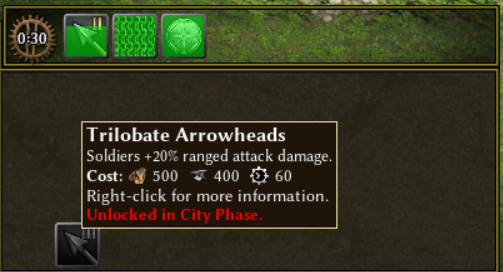
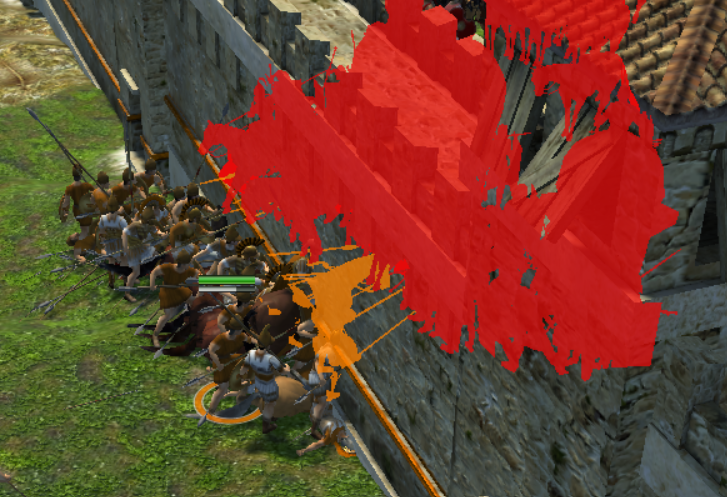
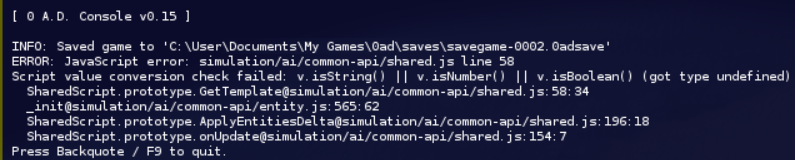
I came across these things the last couple of days. Some error while playing, but nothing bad happened: The lower description can't be read because of the drop-down menu, and when hovering over selected map, the lower description given is from other two maps: video(1) (online-video-cutter.com).mp4 It says "Unlocked in City Phase" when I'm in City Phase already, the requirement is instead the tech being researched: Pikes seem to go through stone walls (Philip's reforms were good, but chill a bit): Forgot this one, there should be more space available in the lower description:

-
The problem would still be the same: only one route is worth using at a given time. Retreating to the next longest route is putting a band aid to an exposed femur fracture
-
War and Peace makes me think of Napoleonic wars because of Tolstoy's book, obviously I think a better possibility would have been "Global Conflict". But, following the Latin or deity names other mods have (Delenda Est, Endovelico), the one that comes to my head is "Para Bellum".
-
Ah, forgot to mention it: to emulate local trade, Markets could also give a trickle. I think this could be an alternative to "limiting the number of Traders considering total enabled route length" to justify their expansion (garrison/ungarrison cooldown could still fix the other things). Best is, with simple rules, to generate something interesting, obviously.
-
Yes, but the point was that there are worse problems with trading routes to begin with, which could be solved by limiting Traders per route, and if one wants to make them go to other Markets, that would be harder to analyse. I tried to do it already anyway, for example I thought one could have many Markets, and to reduce micro, the Market screen could show a map with all possible routes, and one would enable or disable them (if some went through enemy territory), Traders taking any enabled route from any Market equiprobably (all to reduce micro, I wouldn't like having to click for every Trader every Market, sometimes more than once if they get disrupted, like this just one click would put them on the allowed network). Still, limit on number of Traders and gains with route length have to be such to have what I think is the ideal algorithm: Markets homogeneously covering the available area, the more Markets the better, but up to certain limit, in my case related to the total amount of Traders one is willing to have. This last bit is hard to get a grasp on if Traders travel to many Markets, that's why just bouncing between two Markets was more than an acceptable simplification to understand the maths, all things considered. Not that it's impossible, but working algorithms are the important bit, after deciding what characteristics for sure people want to be present. To try a working algorithm with random walk, Trader profits could be independent of route length, and Markets have a minimum separation (because of lack of diversity in products and clients), this way they would homogeneously cover the map in hexagonal patterns. Since I don't like hard limits (that's why my Suggestion 56, "Separation criteria", proposes a more flexible approach to Fortress and Tower minimum separation), another possibility could be that the Trader profit has a maximum at the Market separation wanted (long routes have more risks and logistical costs, reducing profits). This would also cover the map in hexagonal patterns (if possible, profits could be indicated when placing the Market, same as height bonus is indicated for the relevant structures). Limiting the number of Traders considering total enabled route length (keeping their average "density" constant, and to disable routes one might need to get rid of some Traders first) would still be needed to justify expansion (on top of all this a trading garrison/ungarrison cooldown could spread Traders better and remove any teleportation exploit in general). No, and even if you could, it would be way less profitable than making it oscillate between the two furthest points, which is the reason of my post