

Thalatta
-
Posts
604 -
Joined
-
Last visited
-
Days Won
15
Everything posted by Thalatta
-
Where's the original? That's the sky, the line coming at an angle is the ecliptic, the yearly apparent path of the Sun, which makes sense for a solar deity. Although many knew the Earth is round, they didn't really represent it as such, nor did they usually think it needed to be held. On the other hand, the sky was often represented as a sphere (since one sees the sky "turning" and showing different constellations through the year), and since it's up, it needed to be held somehow in many myths.
-
When are you going to share with us the vast knowledge you have acquired from the multitude of books you have read on the matter? Besides, I've already blatantly exposed the real agenda of whom you are quoting (and yours too, apparently):
-
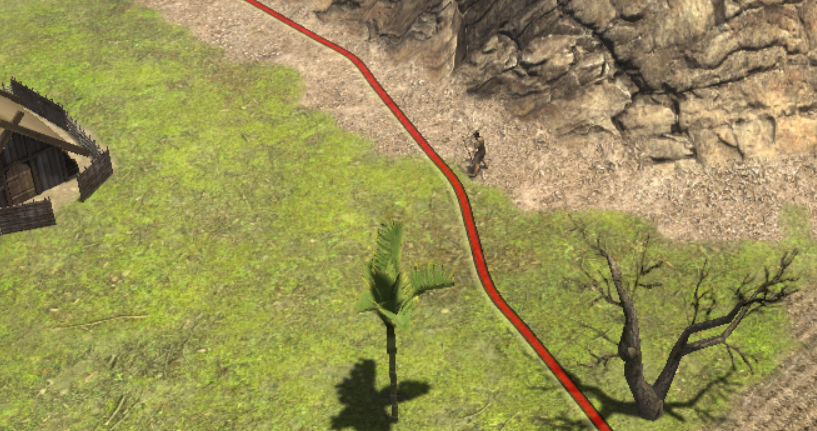
Easy to see if you choose the AI to view and look at the minimap: you had this Arab Javelineer attacking your House since 17:30. He gets killed there and you win.
-
I think it could be an interesting alternative, if simplified. No one wants to mow down pregnant women unnecessarily. The game that comes to mind is Populous: The Beginning. People are produced by garrisoning existing people in houses, giving an additional dimension to economy management. This would be quite realistic, and not that much overcomplicated. One could have small villages without a Civic Center. The Civic Center would be a later centre of government (historically, when enough organisation was reached), with certain techs, and taking them would still be a common victory condition. The following thing Populous does is that these people are then garrisoned in different buildings (Barracks, Temple) to become the different units. This might seem extra micro, but with the proper automation it should be fine. I had lots of fun playing that game like 25 years ago, it made an impression. I think Caesar III had a similar mechanism for growing the population (if it was not just immigration/emigration). Sadly most people think the way AoE did it is the only valid way. Still, this won't be implemented in vanilla just because, maybe make a mod as a proof of concept, and good luck.
-
Indeed, the community is too MP oriented (many times at its own peril) for something like this to fly, and in this case, it's actually understandable. The only way I see this working is for people not to care about wining but ranking, and getting more points when wining with weaker civs, but I just don't see it happening.
-
Not true. I (and most here are surely better than me) have no problems beating an Aggressive Very Hard AI, and I almost always do it only with infantry, which shows the harder levels need to be even harder. The only problem I've seen is that the easy levels are too hard for newbies.
-
I guess the best comedy just writes itself!
-
I think people will understand you because people use misnomers. I'm just saying I think it's confusing to say "turreted" when the ship has no "turrets" (the ship towers), or when troops can only be "turreted" in the part of the wall that has no turrets, and not "turreted" in the actual turrets. The problem is that, as with many other things in this game, the person that called that action "turret" had no idea what that actually meant. But a small one, ship towers were not really meant to increase range, but to be in a better position to rain missiles on enemy decks (usually they were the same height, with the exception of the quadrireme, which commonly had two levels of oars instead of three). That is different from the question of your poll. You asked "should being able to put units on the deck of the ship be just a mod, or part of vanilla 0 A.D.?", and my answer is obviously yes, for many reasons, but eventually, not necessarily right now, this has not been properly tested, nor is being yet done with what should be the main purpose in mind: boarding. So these things should start as a mod, and only after quite some fine-tuning, be implemented in vanilla.
-
By "turreted" I guess you mean the people on deck (even in cases where there are no real turrets there, I've stated many times around that this is an misnomer, and that "posted" works better in general). What I said is about the people on deck, so we are talking about the same thing. They shouldn't have a range bonus, unless there's an actual tower in the ship (which only the bigger ships have), and shouldn't be too much anyway. In theory yes, and have more range, but its accuracy could be reduced, since the ship moves. That's why catapults were used in the bigger ships, not only because of more space, but stability.
-
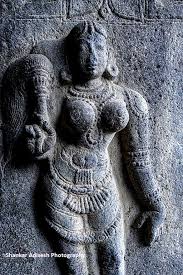
Why? That would deviate from their representations, wouldn't it? Why do you want to either cover or remove women (either these units or proposed Heroes) from the game? Shouldn't the game be even closer to those representations? If not, why, exactly?
-
Here a commentary on what has evidence and what seems to be "modern iconography's insistence": https://stefanosskarmintzos.wordpress.com/2012/01/16/the-thespians. Given that campaigns took place mostly in summer, I don't think all black would have been a smart choice under the Greek sun. Which is sad because they do look nice
-
Where is your proof? Look how they are represented: Maybe they should look more like that in the game, what do you think?
-
No, you aren't. You can also read a few comments back:
-
They do as much as some male Heroes included in the game, yet I don't see you complaining about them. You just joined and half of your 8 posts are against female units or Heroes, so it's pretty clear where you come from.
-
And that's fine, because as @real_tabasco_sauce says, you don't want all your ships to be ranged units when garrisoned. Besides, shooting while on a ship is harder than from land, so that bonus is misplaced (maybe only if you consider ship towers). In any case, "arrow ships" were never a thing, this is a unit copied from Age of Empires, and Naval Oxybeles is a tech copied from Age of Mythology, when that's just mounting an oxybeles on a ship (fixing all that would enhance the game). I think one should consider the "arrow ship" as a ship with an oxybeles, with a decent range, and just remove that tech (besides, "siege ships" are usually equipped with a lithobolos). Additionally, one could have some light close ranged attack if ships are garrisoned, since realistically this should affect mostly crews, not ships (but right now the game doesn't deal with that, which I think it should, for both ships and sieges, to enhance the game further). There are many more things to be said about ships, but later on. Regarding swimming, some could, but not heavy troops.
-
The Phoenicians were a Semitic people, nothing to do with the Greeks (except that the latter based their alphabet on the former).
-
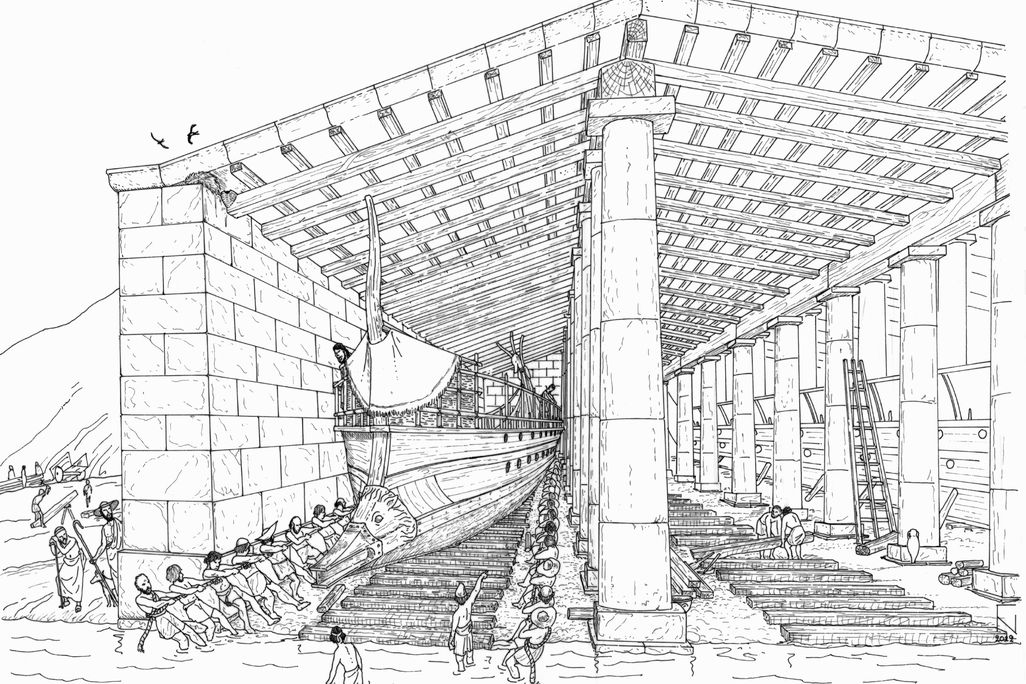
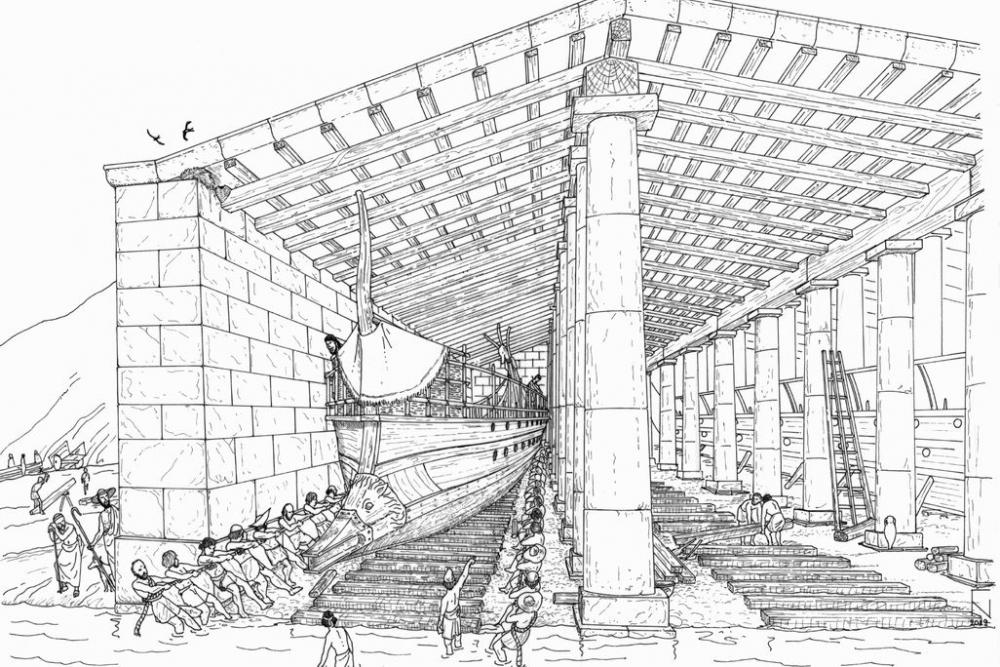
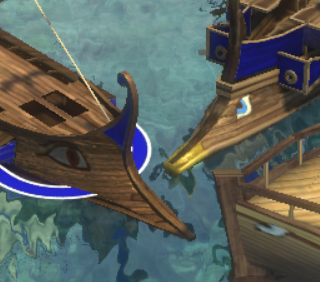
As for the Spartans, I start with issues that should be fixed, and end with more optional takes. From now on I'll be hiding references to make posts a bit lighter. The next part(s) will be mostly about siege engines and ships. PART I Simple things that should be: -In the civ description, "fell in 330 BC" should be "fell in 338 BC": a mistake regarding the Battle of Chaeronea. -Athenian Long Walls should be Makra Teichē (Long Walls): how they were called, and no need to add "Athenian". -Arsenal of Philon should be Philōnos Skeuothēkē (Arsenal of Philon), and have a different icon: to follow proper nomenclature, and instead of a flipped Arsenal icon with blue background, the actual remarkable building could be shown. -Ploion Phortegikon (Merchantman) should be Holkas (Merchantman), and Ploion Halieutikon (Fishing Boat) should be Epaktron (Fishing Boat): the present name comes from someone posting "I don't know what the correct word is, though. Perhaps ploion phortegikon?". His source is fine for the fishing boat, but I came across these terms in Casson's glossary. -Ostracism should be Ostrakismos (Ostracism), and have a different icon: to follow proper nomenclature. The icon looks too much like the fist of Will to Fight… I'd raise its middle finger . No, the icon could be an inscribed ostracon (hence the name), a piece of pottery where the name of the person being voted to be ostracised would be scratched on. -Athenian Slingers should be Athenian Archers: seems way more appropriate according to records. -The Hypozomata icon should be changed: and show them instead of an anchor. -The Parthenon should have eight columns on its front: I understand that this decision could have been taken because of space constraints and simplified representations, but it's a bit shocking to those who have a clear enough idea of what it should look like, since it was not common in mainland Doric temples, making that a big part of its uniqueness. The sides should have 17, but that's much less noticeable. -The dock's roof and column configuration is wrong: as I've already mentioned somewhere. -The Merchantman’s eye seems low quality: at least when compared to other ships. Simple things that could be: -Economic Reforms could be Seisachtheia (Debt Relief), and Economic Fortune could be Euboikos Stathmos (Euboic Standard): names of actual Solonian reforms, instead of boring Catafalque bonus names. Economic Reforms increases Worker gathering speed, and the seisachtheia, "relief of burdens", were a debt relief set of laws. Economic Fortune cheapens economic techs, and the Euboic weight standard made commerce more competitive. -Commercial Treaty could be Symbola (Bilateral Treaty): for corresponding Greek civs. -Delian League civ bonus could be Naucraria (Naucrary): this organisational system would be in place at the start of the game, unlike the Delian League, which was founded in 478 BC, and doesn't sound nice as an Athenian development, but more of a Team Bonus (like the more aptly named Peloponnesian League for the Spartans). -Triērarchia (Trierarchy) could be a tech for faster ships: the trierarchy (successor of the previous naucrary system) was a public service obligation on the wealthy for the outfitting, maintenance and operation of warships, allowing for their more efficient financing and manning, making ships faster because of outstanding oarsmen, which is important for Athens. -Periclean Defense Strategy could be Strategic Withdrawal, and Scholarship and the Arts could be either Pentecontaetia or Golden Age: these Pericles Hero bonus names are too long, and unspecific. The first explains what the strategy actually was, and the second refers to either the period of Athenian rise, or the more generic "Golden Age" term, also used for this period. -Peltast Reforms could be Iphicratids, and for all infantry: this Iphicrates Hero bonus gives Infantry Javelineers +15% movement speed, which comes from a misreading of Diodorus Siculus by the Encyclopædia Britannica. Still, something Iphicrates did do is improve boots of troops in general. It's quite confusing to have Iphicratean Reforms, Peltast Reforms and Formation Reforms, when the first two seem to be the same thing (it's not exactly known what the Iphicratean reforms entailed, if they even happened), I'll return to this later. I'm not sure what Formation Reforms refers to, given that 63 stratagems are attributed to him. Changes that have been already proposed: -Conscription at the Stable could be Hippeia (Cavalry Class): already proposed State Weaponry as the Conscription alternative for the Barracks (since "conscription" has modern connotations, and infantry and cavalry weren't "conscripted" in the same way). The cavalry class would involve the wealthiest citizens, linked in turn to cavalry service as an obligation: https://lexarithmos.app/en/lexicon/ippeia. Other changes that could be considered: -Naval oriented civs could have Lighthouses, for increased FOV and ship speed bonus: these appeared in the Hellenistic period. In addition, common early buildings that are not being considered are Stadions, Hippodromes, and Gymnasions (beyond the Athenians), just to mention them. -Tragōidia (Tragedy) and Kōmōidia (Comedy) techs for the Theatre: they were invented around the start of the game. The Spartans could have things like Gymnopaídiai (Gymnopaediae) instead, since they "held mostly non-scenic contests and games", like the "Gymnopaidiai". -Ohi Peri Ton Dionyson Technitai (Artists of Dionysus) tech for the Theatre: late tech (270s BC), association of artists that coordinated performances. They were also present in Ptolemaic Egypt, Macedon and Thebes, among others. -Demosthenes' Reforms tech: mid-game tech (340 BC) for cheaper ships. A reform of the trierarchy, which fixed the total number of triremes and distributed costs better. -Markets could have Aleteia/Letourgia mutually exclusive techs: Aleteia could cheapen Traders, while Letourgia could increase returns per trade, since either rich men have either tax exemptions (to increase commerce, but the state doesn’t get as much per trade), or must contribute (causing the opposite). There should be situational case uses. -Oligarchy/Demagogy mutually exclusive techs: the first giving a defense bonus, the second an attack bonus. -Hoplomachia (Weapons Training) could improve hoplite experience gained while garrisoned: mid- to late-game tech, since hoplites in Classical Greece didn't train with weapons (only their bodies), not even the Spartans (or at least there's no evidence for it), the idea being that courage alone was enough (most didn't have free time for it anyway). Weapons training picked up only at the end of the Classical period. Of course others like ranged units are not included in this (I don't know if presently they gain experience by hunting, which would make sense). -Mediterranean Draw could be a preceding tech for Archery Training, for Greeks: mostly for those who want to add techs in their mods, this draw technique became more standard early in the game's timeframe, although it should improve mediocre archers, not make them better than those from civs where archery was culturally relevant. These things seem a bit out of place in the Forge. -Chomata (Moles) Dock tech: to increase Dock HP. -The Gymnasium could be treated quite differently: I wonder what's the reason for having Schytian Archers coming out of this building, Mercenary Camps should be the way to go for mercenaries: Crete, Thrace and Scythia were never really part of the Athenian "empire". I would then relocate the other military units from here to the Barracks, and move Iphicratean Reforms to the Council Chamber. Gymnasia were all around centers of training and study. The Academia of Plato, Lyceum of Aristotle and Kynosarges of Antisthenes were the greatest in Athens. They would mainly have (inside or around) a palaestra (for pankration, etc) and a dromoi (for running, hoplitodromos, etc), which could be damage and speed techs, respectively. Since I think it would be nice for each civ to have a unique limited preferably non-combat unit, like Han Ministers (or Spartan Ephors and Theban Musicians I proposed), Athens could train Philosophers, to give research or culture bonuses or whatever. It was also associated with medical training since the Aleiptae, who oiled and dusted athletes, also acted as surgeons (if eventually actual healers and priests are separated). -Epibatēs Athēnaios (Athenian Marine) could be Iphikrateios Hoplitēs (Iphicratean Hoplite): contradictorily enough, Athens didn't rely on "marines" for boarding, but on ramming (AI gets easily confused with these things). The word epibatēs is used in general for anyone on deck, and the deck-soldiers were (mostly) hoplites. Iphicratean hoplites is a modern term for something poorly attested that didn't really caught on in mainland Greece then: in principle hoplites were given longer weapons, lighter armor, and smaller shields, and/or (more probably) peltasts were given long spears and more armour, basically producing proto-pikemen, and possibly just for mercenaries in naval service. -Iphicratean Reforms could be called Arms Reforms, unlock Iphicratean Hoplites, and other effects: this should be the order, and I think these units were had in mind when creating the "Marine". I renamed it because, as mentioned, there's some redundancy around. Iphicratean Hoplites could be trained in Docks and Triremes, given that some think this applied to mercenaries in naval service, after witnessing Egyptian forces possibly using long spears for naval combat. If possible, Thracian Peltasts could gain experience to have the ability to switch to them (maybe too weird to have a mercenary switching to champion), and right now the Athenians don't have a hoplite mercenary force to also do this. If we are to literally believe Siculus (risky), Athenian hoplites would do. -Epilektos (City Guard) is not characteristically Athenian, while a Fast Ramming Trireme could instead be considered: epilektoi just means "chosen" in armies, and many had them. I know that a ship would be a weird champion unit, and I'll return to this in the corresponding part about ships, although I wish I had better ideas for an Athenian land champion unit, maybe later. The Epilektoi Infantry civ bonus would then be removed, its role taken in part by the Arms Reforms tech. Other information that could eventually be useful: -For an Iphicrates javelinmen bonus, "the running Spartans finally gave up and turned around only to have Iphicrates and his crew reverse back into range and take out a few more of them from behind", from Bardunias and Ray Jr. -For an Iphicrates ship bonus, "not only did Iphicrates improve his oarsmen's fitness but also made his ships go faster", from Gardiner. -Siege Tower Artillery tech to increase its firepower, not sure about Athens in particular: "the bottom storey (..) is supposed to have accommodated (...) stone-projectors (...) there would have been space for only three, side by side (...) to concentrate heavy firepower at battlement level, where men and masonry were most vulnerable (...) little point in loading artillery in the upper storeys, where its limited angle of depression was a handicap (...) catapults in the third and fourth storeys could have proved useful at long range". -Bronze Teeth tech for battering ram to add pierce and maybe cut damage, not sure about Athens in particular: "Bronze head (...) late-5th-century (...) five triangular teeth, was perhaps designed to cut into mud-brick", from Campbell. -For those who want secondary weapons, Scythian archers could also have axes: they were "armed with a composite bow, a dagger and the sagaris, or battle-axe", from Fields. -Order names for when formations take a bigger role: "Orders for a turn – epistrophe for a 'quarter-turn' or perispasmos for a 'half-turn'", from Dahm. -To denote rank, maybe I mentioned greaves and cloak, but only the second would be accurate long-term: "Greaves fell out of use before the Peloponnesian War; armour became simpler and the cloak became more common (and was viewed as a symbol of rank in both Athens and Sparta)", from Dahm. For reference, the preceding Thoughts on the Spartans post: https://wildfiregames.com/forum/topic/143241-thoughts-on-the-spartans: the comments made for the Spartans on techs from the Civic Centre, House, Dock, Forge, Temple, dropsites and fortifications apply also to the Athenians (in fact, some comments made were indicated not to apply to the Spartans).
-
With "hidden" I meant to make them both invisible and intangible to the enemy. Hopefully that'd fix everything.
-
Ideally, after placing ladders beside walls, they would let you post (wrongly called "turret") your troops slowly on top of enemy walls. In the meantime, having a tech that gives a wall capture bonus sounds actually reasonable and uncomplicated for the time being. One would then just post troops on them and unpost them on the other side. EDIT: can that actually be done? Give a capture bonus ONLY for walls?
-
Also, all this could be kind of connected to something I mentioned before in https://wildfiregames.com/forum/topic/124829-a-call-for-umbrella-factions/#comment-758892: The Archaic period mentioned (800-480 B.C.) would be the last two phases here, starting with the rise of the city-states (which are actually small regions, by "Athens" in vanilla one should understand the whole Attica) and continuing with important colonies that continue independently (Syracuse in this example). The Mycenaeans would span from around 1700 to 1150 BC, while the Greek Dark Ages would correspond to the second phase. The diagram tries to represent how people identified themselves, and when dialects were first attested (Mycenaean being first), but not how they are related between them (thus, this is an attempt to a civ/tribe/city-state tree, it's certainly not a linguistic tree). The Greeks would keep identifying themselves with their tribes/dialects, but this didn't mean much regarding alliances (although some cultural similarities could be singled out for gameplay purposes).

-
But that's caps with teeth, just caps I think would be safe to place in the Archaic period, maybe even from before, down to the Iliad, which has no mention of such things (EDIT: obviously just a log would appear somewhere around here first, so it would be fine to start in 776 BC with a log and soon after either capping it, for more attack, or having a shed for it, for more resistance). Regarding the boulders mentioned in the Iliad, I can only guess, but apparently (can't remember myself since I've read it 25 years ago) they were used by the Trojans against the Greek fortifications (if such a thing even existed), and not the other way around. This could be both because the Greek fortifications (and gate) would have been much weaker, and because the terrain played against them (the plain coming mostly downwards from Troy to the shore, and the Greeks having not much of a choice than to build on low ground). And although there are no reliable sources regarding superhumans lifting impossibly heavy boulders, there are cases of boulders being rolled down for defensive purposes, from Xenophon's Anabasis ("when the rearguard, so advancing, had reached a ravine which they must cross in order to strike up the steep, at that instant the barbarians began rolling down great boulders, each a wagon load, some larger, some smaller; against the rocks they crashed and splintered flying like slingstones in every direction") to New Zealand, according to https://teara.govt.nz/en/rock-limestone-and-clay/print ("the defenders would hurl stones and roll boulders onto the enemy").
-
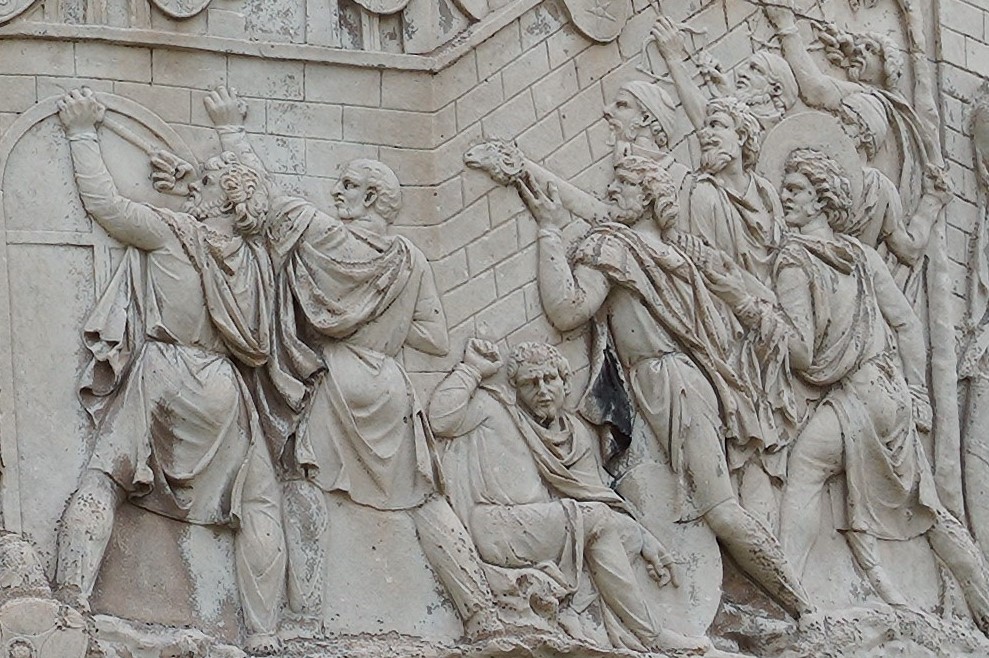
Yes, that's also in Campbell's book: "the vertical blade, flanked on either side by five triangular teeth, was perhaps designed to cut into mud-brick". But none of this confirms it belonged to a log being carried by troops, as mentioned, it's dated from the late 5th c. BC, a time where there were already ramming "engines". But we would need to additionally know: were they targeting stone walls? Mud-brick walls? Wooden palisades? A gate? For the last two probably it would work, for the first two, I would need to see more concrete evidence. Looking at the representation, it would seem that they are running towards the gate:
-
Maybe after being placed beside a wall, units could go slowly up, in the same way they go up when they are posted on top of walls. Would look a bit goofy right now, but still. Yes, the Assyrians would do that to ram a thinner part of the walls. In this case, Old Smyrna 1948-1951 by J. M. Cook states that "so gigantic a mound, raised from the low ground to overtop the city fortifications, can only be explained as a siegework; and on chronological grounds therefore it can with certainty be attributed to Alyattes", which would seem to imply that they built it all the way up for troops to climb, but then it says "at a low level in the mound (about 8 metres above sea-level) a large mass of solid mud brick was encountered in our excavation; this may possibly have fallen from a breach effected in the superstructure of the city", and later on "the mud brick superstructure of the fortification there fell forward at the time of the capture or very soon after", which seems to imply ramming at a higher level. Maybe "overtop" was not literal, and the second interpretation (the Assyrian way) is indeed the faster way to do things. All this is a bit of a problem since I don't think troops carrying a log (even capped with metal) would have had enough strength to break a wall, even at a higher level. Interestingly enough, this was also the case for the Thucydides quote already mentioned, before stating the "snapped off the nose of the battering ram" bit, he says that "while raising the mound the Peloponnesians also brought up engines against the city, one of which was brought up upon the mound against the great building and shook down a good piece of it", thus, these were already engines, used in the Assyrian way. All this means that I don't see these siege ramps/mounds viable before having proper battering rams, which coincides with both appearing in Greece in the 5th c. BC, as mentioned before. I think the earliest attestations for these in Greece come from the 5th c. BC. In conclusion, and besides the guys with a log (after all, D. B. Campbell in Greek and Roman Siege Machinery 399 BC-AD 363 states that "it is very likely that Western warriors would soon have discovered the value of a stout tree trunk in bursting open a gate"), what seems reasonable in chronological order is: spies, climbing mud-brick walls at certain points, at some point capping the log with metal, after that (EDIT: or before, who knows exactly, both could be independent in the game) and seemingly before the 5th c. BC building a non-movable shed for it, and having ladders for the newer unclimbable stone walls.
-
Indeed, surely this started early. For the ram I mentioned, Thucydides states that the defenders "snapped off the nose of the battering ram", implying it was capped, probably with metal like the Olympia ram, which is from around the same period. There are plenty of engagements for which there are no records, but in any case, attacks were usually concentrated on the gates. I don't see that as desirable, but other possibilities could be: -Spy units hard to see to the enemy, which I proposed recently, could open gates. This is not some far fetched Trojan Horse thing: "political factions aiming at the overthrow of a government could render invaluable assistance in several ways. One method was the opening of the gates of a city under siege. Another was to make it possible for enemy forces to enter the besieged city under the cover of darkness. An excellent example of this is provided by the siege of Plataiai. According to Thoukydides (2.2.1-3), a force of three hundred Boiotians entered the city at night with the aid of Nauklides and his friends who opened the gates for them", from Espionage and Treason in Classical Greece, by A. Gerolymatos. -Later on, siege ladders could be considered, since apparently they "are mentioned in a fragment attributed to Archilochus" ca. 650 BC. -Even later, around 585 BC "the Lydians, presumably under Alyattes II, took Old Smyrna by building an earthen siege ramp" (which included wood). Maybe the Greeks learned from that, but their use by them is not attested until over a century later. -On top of all that, initially walls would have been made mostly of mud-brick, which "resting on a low rubble socle, was not very high or very strong", from Ancient Greek Fortifications, 500-300 BC, by N. Fields. This would have made "climbing the stone and mubrick walls" feasible at some points (as mentioned in the Iliad), where their slope wasn't as steep. For game purposes these points could be where the walls take a turn, and some units could be able to walk over them (at a great speed and resistance cost). In any case, at some point "all-stone fortifications became more common", allowing for taller and steeper walls. Still, there's an interesting difference between both kinds of materials, although maybe hard to implement in the game: "against the blows of engines brick brings greater security than fortifications built of stone. For stones break and are dislodged from their fittings; brick however, does not suffer so much from engines, but it crumbles under the action of water just as wax is melted by the sun" (the last method being how Sparta took Mantineia).
-
I just got fed up trying to convince the AI that helots are not Durin's folk, so left it at "some of which clearly need to be improved"