

Thalatta
-
Posts
604 -
Joined
-
Last visited
-
Days Won
15
Everything posted by Thalatta
-
Merchants would mostly keep to certain regions. Hardly anyone in the Mediterranean tried to travel to the source of tin for example. I think it's fine that a given Trader bounces between two Markets (representative of a region, not two literal markets, of course they went around a few). I think a problem is that the game makes the most profitable trading route the only one worth having, making things quite dull. To solve this, I think traders per route need to be limited (have slots like resources, varying with distance), and the gain be such that multiple Markets at both ends is not the most profitable configuration (that's why a per Market limit instead would be easily exploitable). Looking at the code, the trade gain goes with distance squared, with a damping for long distances (dividing by 1.25 at map diameter, I think). Ignoring the damping for now, the question would be: given a bunch of Markets with all routes full, where should a new Market be placed for maximum profit? I'll assume Trader slots will vary linearly with route length, to account for time needed to travel them (fixing Traders arriving to Markets per unit time). This problem is then a generalised Leibniz geometrical theorem (https://arxiv.org/pdf/0710.0342), since one wants to add up the square of the distances to all Markets. The solution is that profit is greatest the farthest away from the centroid of all original Markets (I don't think damping changes this result much, and not in an obvious way anyway). This is not nice, since Markets would need to be in a periphery, as expanded as possible (a circle empty inside would be ideal for a given centroid distance, obviously), instead of forming a more interesting network. I don't have a proposal for now, but I think this issue is worth exploring to reach a solution that is simple, intuitive, interesting and not exploitable.
-
Implementing forces in Unit Motion (HELP WANTED)
Thalatta replied to Atrik's topic in Game Development & Technical Discussion
Indeed, a lower threshold would be like trampling, a higher one charging/ramming. That's quite nice and flexible! -
Implementing forces in Unit Motion (HELP WANTED)
Thalatta replied to Atrik's topic in Game Development & Technical Discussion
I agree with all that @guerringuerrin said. Those tests look really good, and in such tight spaces. @Atrik, since I guess now with inertia units need to accelerate, is heavy cavalry dealing "charge" damage only when at max speed? (I'm not sure if this is what's called "trampling", which wouldn't be the same thing in reality). Because I guess that would be nice, one would need to repeatedly move out and smash for that to be more effective, similarly to how it should really work for ramming ships, although elephants I guess could charge out when mobbed. -
The Fox of Caerbannog isn't real, he can't hurt you. The Fox of Caerbannog:
-
[Devlog] Burning Heart (a narrative campaign for 0 A.D.)
Thalatta replied to lilypoppy's topic in General Discussion

- 16 replies
-
- 2
-

-
- 0ad
- creative commons
- (and 2 more)
-
Well, I recommend you to read what has been previously discussed (the last couple of messages for example). I think @guerringuerrin agreed on making a PR on redefining difficulty levels, but I forgot what's the status of this (I think something else was mentioned, but can't remember right now, anyway some PRs take quite some time). Some people have made nice progress with the AI lately, so I'm optimistic that "cheating" and difficulty inconsistency will be addressed at some point.
-
The difference between the Persian women in the game & in the reality
Thalatta replied to shiraz's topic in Help & Feedback
You can access it here: https://www.researchgate.net/publication/354233527_Veiling_in_Ancient_Near_Eastern_Legal_Contexts (haven't read it). -
Puedes compartir las fuentes que digan de qué período y material son?
-
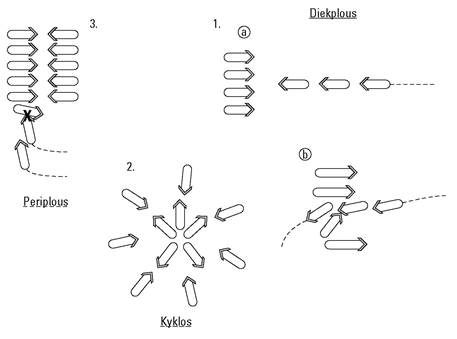
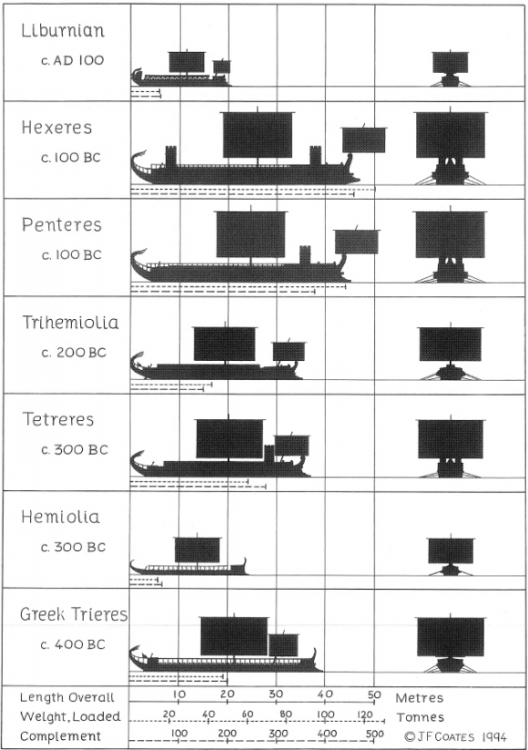
This (in principle last) part is mostly about Mediterranean ships. Both "Arrow Ships" (which were never a thing) and "Ramming Ships" are redundantly named Triērēs Athēnaia, so I'll propose a more interesting and realistic but simple naval scheme, taking into account the eventual implementation of boarding, and representing important ships used at the time. The proposals come after summarising what's relevant, followed by some details that could eventually be useful. PART III General summary: -Beginning: by 500 BC, warships with one level/bank like the eikosoros (20 oarsmen, 15 m long), triakontoros/triaconters (30 oarsmen, 25 m long) and pentēkontoros/penteconters (50 oarsmen, 40 m long) had been used for centuries as transport ships, the rowers being the troops themselves. Galleys started undecked, with "a scant deck forward for the lookout and a slightly larger one aft", and "the only specifically naval weapon known was the grappling iron", since "ships grappled one another to let their marines have it out on the decks with bow, sword, or pike". Naval rams, and as a consequence for more power, two levels (with specialised rowers but less troops) and later three levels, appeared between 1000 BC and 500 BC, when earlier types became mostly obsolete. Between 7th to the 4th centuries BC the trireme was the main warship, and penteconters became fast auxiliaries for scouting and skirmishing. Other types of ships were the smaller-than-pentekontoros ploia makra (long vessels), "special" galleys like the Samia/Samaina (wider, from Samos), myoparones (at least from used by the Carthaginians), among other ones. -Classification: the number of oar levels would define if a ship is monokrotos, dikrotos or trikrotos, and the amount of oarsmen per file (transversal cut) per side would define if a ship is monērēs/monoreme, diērēs/bireme (twos), triērēs/trireme (threes), tetrērēs/quadrireme (fours), and so on, where I used Greek/Latin (and a common shortening). From bottom up, the levels were called thalamian, zygian and thranite. "Diērēs" and "trikrotos" weren't proper navy terms since each had many types: there wasn't a specific "diērēs", and each "trikotos" was specified. Fours were usually dikrotos, as were eights or nines and above. Ships being aphract or cataphract means they are undecked or decked (later taken as "boxed-in"), respectively. A ship is anasteiros if their main ram is above the waterline, "a characteristic of the bigger warships (fives or sixes and above)" "to pierce and hold the ships attacked so that the decksoldiers could board and capture them". -Tactics: as mentioned, by 500 BC ramming would have replaced boarding as the preferred tactic for many (like the Athenians, Carthaginians or Rhodians). Warships wouldn't usually sink, but "swamp", because of their positive buoyancy, disabling them (sometimes their crews would keep fighting), but leaving the possibility for towing them. As ships became sturdier, boarding took precedence again (through the Macedonians and Romans, for example). Catapults started being used on ships around the start of the Hellenistic period, being also used against them from land. Ships from fives to tens could include towers for missiles (small towers can be found attested for smaller ships). Regarding formations and movements, there's epi keras (line ahead), "the normal formation for ships on passage", metopēdon (line abreast), "a formation which it would not be easy to maintain on a voyage", diekplus (breakthrough), periplous (outflanking), and to defend against these, kyklos (circle), these last three shown in the diagram below, and stolos (crescent-shape), "with the bigger ships on the wings" "to prevent the enemy from making a breakthrough", most from Morrison. Ship types: -Three: attributed to Corinthians. 170 rowers, 35 m long. Usually with a parexeiresia (outrigger) for the thranite oars (more rarely also on fives). "The normal complement of armed men on deck in the later fifth century is shown by Thucydides to have been ten hoplites and four archers. But troop-carriers would take up to forty hoplites". "There was also the troop transport proper (hoplitagogos)". "In the latter part of the fourth century" they "ceased to be front-line ships", but "they remained as a large part of a fleet, and were given the task of towing troop- and supply-ships, as well as serving for reconnaissance and communications". "Ptolemy's fives and fours were swamped by ramming suggests that such action probably by Demetrios's [sic] fast threes. Though fast they are said not to have been able to catch up with merchantmen sailing before the wind". "All threes are here characterised as fast sailing in contrast to the fours and fives". -Four: attributed to Carthaginians. 176 oarsmen on "88 double-manned oars at two levels, 44 on each side of the ship", "broader than the three but shorter with a maximum of 22 as against 31 'rooms'". Deck "2.2 m above the loaded waterline, 0.7 m or more below those of fives and 0.4 to 0.6 m below those of threes". "Fours were significantly lower than fives, decksoldiers from fours being unable to leap aboard a five". "Cheaper to build than the three-level three and five". Although heavy, "she was fast and manoeuvrable". "A little faster under oar in a sprint than a five and at endurance speeds probably as fast". "Permanent boxing-in with louvres" "succeeded the upper and lower temporary protective gear". Quadriremes in Rhodian navy: "Catapult operators; at least 2. Archers; at least 6. Marines; at least 19". "In the 4th century BC four new types of oared warships were developed, the four, the five, the six and the one-and-a-half-er". By 330 BC Athens had Fours, and by 325 BC Fives, a few each, but growing. -Five: attributed to Syracusans (and Phoenicians, for whom the "uppermost level of oars is not rowed through a" parexeiresia "and that there are two instead of one course of open rooms"). Average of 240 to 300 oarsmen, complement of 120. "10% longer than the three". 8 m wide overall and 5.7 m at the water line. "15% slower in a sprint than a three". "The ship would be fighting in denser melées for boarding, besides being slower than threes and decidedly slower to turn. She would therefore be more prone to be rammed by them, so the need to strengthen the hull would have become apparent, calling for more additions to weight and breadth to maintain stability". "A heavy screen, which might have been of wooden louvres". "The appearance of a second open course suggests the need for more ventilation and the presence of more oarsmen at the three levels of oars than in the threes". "Hair sidescreens could well have given sufficient protection against missiles hand-thrown or shot by bow" "but they would have been less effective against the later, heavier, catapulted missiles". "The five is likely to have been an expensive ship to build and run". -Six: attributed to Syracusans. 360 oarsmen and 140 complement. Around 40 cm higher than fives. Breadth above waterline of 5.7 m, overall 7.5 m and draft 1.5 m. A glorified five, very similar to them. Many, like Romans and Rhodians, didn't really go higher than this. -Seven: attributed to Macedonians (same up to Ten). 400 oarsmen. 2.95 m above water. Could have been developed to carry more troops than the Six. Able to grapple and overwhelm any lesser type by boarding. No need for speed, 4 or 5 knots continuously for some hours. Popular and useful type. Larger ships were built in small numbers, probably an attempt at ramming invulnerability, difficult to capture, carrying catapults and troops. -Eight and Nine: "While eights and nines did in at least some, probably earlier, cases have three levels of oars, two level systems were probably adopted later". "Three levels of oars would have been best if speed was important", while two levels "would have met the requirements for heavy ships, to carry a heavy load of armament and troops and be relatively well protected to enable them to act like the floating fortresses". "The price would have been paid in cost and speed". "The steadiness of beamy ships" "made them better platforms for missile-throwers". "The development of catapults for use at sea is likely to have encouraged a change to two-level oarsystems", since "more men at each oar and on fewer levels would be somewhat less prone to disruption when oarsmen were killed or wounded by a missile". "Eights and above may be seen to have been attempts to create fortress-like ships, immune to ramming, difficult to capture by boarding, and carrying a powerful armament of catapults". -Ten: Oarcrew 600, complement 200. Breadth above waterline of 9 m, overall 10 m. Length not likely much more than that of sixes and sevens. -Eleven to Sixteen, Twenty, Thirty: built, but "no active service" "is recorded". Ptolemy II at some point had "two thirties, one twenty, four thirteens, two twelves, 14 elevens, 30 nines, 36 sevens, five sixes and 17 fives, while the ships from four to τριηρημιoλία were double these", from Casson. -Forty: showpiece, around 135 m long, 7250 personnel. Again 3 levels. Possibly a catamaran. -Hēmiolia and Trihēmiolia: light and fast, from Hellenistic times. The hēmiolia was a one-and-a-half oar rows on its two levels, and the trihēmiolia a two-and-a-half oar rows on its three levels). -Merchantmen: "unladen transports stood significantly higher in the water than fives. The difference of height was apparently sufficient for 'the Carthaginians from their warships (rostratae) to throw most of their missiles ineffectively against a higher position, seeing that they had to do it leaning back, while a missile scoring a hit from the transports above did more damage, deriving its force from its mere weight'". "As big ships, they were dependent on sail alone and slow". "From the fifth century B.C. on, carriers of from 1000 to 150 tons burden were in common use, while those of from 350 to 500 tons, though obviously considered big, were by no means rare. When it came to passengers, vessels could take as many as 600 on long voyages. In the Hellenistic Age", "the biggest merchant ship known from the ancient world" "three-masted, three-decked grain carrier of some 1700 to 1900 tons burden". "The use of lead sheathing over pitch-impregnated fabric was a well-established practice royal three-masted merchantmen". Game proposals: -Ramming damage could need a certain speed: I thought about giving ramming a minimum range, but this wouldn't allow attack orders at the last moment while at speed. Ships would need to have slow acceleration. If things get too crammed, ramming shouldn't be possible, boarding becoming the main tactic. This is why Athens lost at Syracuse in 413 BC. -Ramming the enemy's bows (front) could be inefficient: implementing this would make tactics like diekplous, periplous, kyklos and others automatically emerge. Realistically, it should cause self-damage (while a tech like Epotides, a frontal reinforcement, could reduce this), but that might complicate things unnecessarily. -Capturing ships and buildings could be similar: with capture resistance decreasing with HP. Deck soldiers should be quite inefficient at damaging ships, this being achieved mostly by ramming or catapults. In conclusion, the total destruction or immediate capture of a ship should be way more inefficient than a combined approach. Ideally, I think garrisons should be vulnerable in certain ways, and this would also make capturing easier. -Damaged ships could present handicaps: there was some talk of doing this for land units. For ships, it seems even more necessary if they are going to be captured in the middle of a battle (ideally after being damaged). Personally, I still think base garrisons and virtual combat would solve most issues, in this case, oarsmen number (and a default complement if needed) would also determine handicaps, and their redistribution when a ship is captured subject to gameplay balancing (I've read cases where one third of the oarsmen used would come from the ones just captured). -Triērēs (Three) and Tetrērēs (Four) could be ramming ships: they wouldn't garrison many troops, but wouldn't need that to be useful, since their attack comes from their speed, which comes from their oarsmen, who are assumed to be always present in all ships. They would automatically reverse after ramming, unless boarding is ordered. Fours would be cheaper but slower, and lower because of its two levels, thus much worse at boarding. Athens should have the Tachunautousai Triērēs already proposed (with no garrison slots, which could be a "champion" characteristic of ships, as previosly mentioned). Between Threes and Tens an ascending number of garrison slots has to be decided. -Pentērēs (Five) and Hexērēs (Six) could be boarding ships: all ships should be able to board, but these would be optimised for that task because of their size and speed balance. They would board after ramming, unless reversing is ordered, but that should take time since they get stuck because of their high main rams. Fives would have one tower for light missile cover at the front (its rate could depend on garrisons), while Sixes would have an additional tower at the center. Garrisons are needed for boarding, while for larger ships they’d serve a more defensive role. These were the most pragmatic ships, the Romans wouldn't usually go higher than Sevens, which were used as flag ships. -Heptērēs (Seven) and Oktērēs (Eight) could be oxybeles ships: as for larger ships, not able to ram (for gameplay considerations mostly). Sevens would have three towers along the ship, the middle one with an oxybeles (maybe the closest to the "Arrow Ship", if not a bit more powerful, but catapults mounted on ships would be less accurate). Eights would double the front towers, and it would have two levels like the Four (but around as tall as the ones with three levels), making them slower but sturdier. In general I was placing more catapults from Fives up, but decided to keep it conservative and differentiated among these "classes", for now. -Ennērēs (Nine) and Dekērēs (Ten) could be lithobolos ships: both with two levels. Hard to capture if garrisoned, but really slow and expensive. Nines would have five towers, doubling the central one of the Eight, where it would have two lithoboloi. Tens would have six towers, doubling the back one of the Nine, and having two lithoboloi on the front towers, for a total of four of them (a large increase in siege power for a decrease in missile cover from three to two towers). Ships higher than Tens reportedly never saw combat. I like that this scheme realistically places two warships on each "class", with somewhat fuzzy transitions, but the extremes being completely different, following the 0 A.D. philosophy of the Citizen Soldier for example (placed between the radically different Workers and Champions). -Possible distribution: currently Athenians have 2 "Athenian Threes" (Arrow and Ramming), Macedonians a Three (Arrow) and a "Macedonian Three" (Ramming), Ptolemies a Four (Arrow), an Five (Ramming) and an Eight (Siege), Romans and Seleucids a Three (Arrow), a Four (Ramming) and a Five (Siege), and Spartans a Two (Arrow) and a Three (Ramming). As a preliminary idea (as all this is before any proper balance considerations) to give an example, one could give Athenians a Tachunautousa Three (fast Ramming), a Four (Ramming) and a Five (Boarding), Macedonians a Five (Boarding), a Seven (Oxybeles) and an Eight (Oxybeles), Ptolemies a Six (Boarding), a Seven (Oxybeles) and a Ten (Lithobolos), Romans a Five (Boarding), a Six (Boarding) and a Seven (Oxybeles), Seleucids a Six (Boarding), a Seven (Oxybeles) and a Nine (Lithobolos), and Spartans a Three (Ramming, and good luck at then boarding with good infantry). Other civs that would basically also have these types of ships are Persians (same ships as Sparta) and Carthaginians (same ships as Athens), while those on the Atlantic would have strong ships that can't ram nor use catapults, but be used mostly for boarding and missiles (and fire stuff). -Hoplitagogos (Hoplite Carrier) tech could reduce speed and increase garrisons of Threes: but only for Spartans and maybe Persians (and coming Thebans), to improve their boarding chances. In sources the translation given is actually "troop transport", but this take would align better with the next point. -Oinagogos (Wine Carrier) and Sitagogos (Grain Carrier) techs could increase Merchantment profitability: just some terms I came across when searching for hoplitagogos. -Molybdiai Keramides (Leaden Sheets) tech could increase Merchantment profitability, and reduce their cost, but also speed: as I proposed in Thoughts on the Spartans for Lead Sheathing, but these new terms (which mean the same) would be the nominative plural of "μολυβδίναις δὲ κεραμίσιν", "with leaden tiles", from Athenaeus. -Regarding Scouts: right now Romans have a Liburna, which is fine since it's a particular type of lembos, Ptolemies and Seleucids a Dierēs, which should be diērēs but already explained didn't specifically exist, Macedonians a Hemiolos, the usual term being the feminine hēmiolia, Athenians and Spartans have a Pentēkóntoros, apparently the outdated one-level variant. Instead, one could give Ptolemies a Trihēmiolia, Seleucids a Hēmiolia, Athenians a Pentēkontoros (two levels), Macedonians a Triakontoros (two levels), and Spartans keep the current Pentēkontoros (one level), while coming Thebans could have a Triakontoros (one level), to represent all of them, their average naval power, and some reflecting what sources mention. Threes were faster than these, but for gameplay reasons Scouts, like Merchantmen, could be always under sail, to make them faster and allow a larger FOV since their mast is up, while Threes to Sixes could rely on oars only. Seven to Tens could rely on both, again with larger FOV since they are mainly ranged, and by then for sure not being faster than the ships just chosen for scouting. Additional details: -Propulsion: sails were mainly used, partially lowered in strong winds or to escape daytime detection. All oars were manned only during emergencies (reliable speed) or battle (manoeuvres, with sails lowered and the mast "dropped sternwards", with all that left at port if possible, although maybe this was not possible for merchant ships). Small auxiliary sails appeared just before the start of the game. Athens experimented shortly with "light" sails before the Hellenistic period "to do away with the trouble and expense of equipping ships with two sets of gear and to experiment with a single set carrying a sail of finer cloth". In navies, "slaves were used as rowers only at times of absolute emergency", usually they were "citizens, mostly the poor". This was not the case for merchant ships. -Defenses: yards "reached so far beyond the hull that they could be fitted for dropping stones or other heavy weights on enemy galleys that tried to come alongside", called "stone-bearers" (lithophoroi) or "dolphin-bearers" (delphinophoroi). "The development of side-screens in the 5th century is well attested", "sidescreens (pararrhymata, parablemata) appear frequently in pairs (port and starboard)", "it is likely that the" white "canvas was protection against the sun and weather while hair and leather material was protection against missiles", and "fill the open space between the edge of the deck and the top of the" parexeiresia (outrigger) "in the three", while the katablema and hypoblema "gave protection under the" parexeiresia. Models and sounds: -"As the ships came close together and the impact of the ram was imminent, those on the deck sat down", by Morrison. -By 500 BC, rams would have already developed from "one that ended in a point" to "heavy, two-pronged ram made of bronze", while the "heavy three-finned bronze ram" is "thought to have been introduced around 400 BC or even earlier", from Fawcett. -For some, "the prow shows a" proembolion "extending as far forward as the main ram, which is at the waterline. The aim of this remarkable development seems to be to combine the advantages of ships with high main rams (anasteiroi) and those with rams at waterline level", from Morrison. -"Craft used for scouting were painted to resemble the sea", "and so were pirate craft" (blue-gray), from Casson. -Sails were usually "left white, though it could be dyed various colors for various reasons: purple to distinguish a royal vessel or a flagship, black for mourning, sea green or blue for camouflage, other colors for decorative effect", from Morrison. -"In addition to the pennants at the stern, merchantmen often flew one at the masthead and occasionally at each yardarm". "On warships, the name-device was placed on both sides of the bow, either carved or painted or in the form of a bronze plaque. Merchantmen carried it on both sides of the stempost", from Casson. -"The poop, too, was where were placed ornamental representations of deities or other creatures that served as common markings for the galleys belonging to a given state. This practice was carried down to the fifth century B.C. at least; thereafter, Greek galleys either substituted or, in addition, carried the stylis", which "was a pole, generally fitted with a short crosspiece, which was set up alongside the aphlaston and which bore either a device symbolizing the guardian deity of the ship or his name written out. The stylis found scant favor among the Romans", from Casson. -Anchors were "kept at the ready both fore and aft", and tied with rope, although "anchor chain was not unknown but its use was strictly exceptional". Most were made "two-thirds of wood and one-third of a heavy substance, either lead or stone", "the arms were of wood with metal tips—but no flukes", which "do not appear until late in the Roman Imperial period and only rarely then". Regarding shapes, "in Roman Republican times, the arms were straight and formed more or less an isosceles triangle with the shank. In Imperial times, they were curved to form a crescent", and in "in late Imperial times they became straight again, sticking out at right angles to the shank for most of their length, with but a slight upward curve at the ends". "The warship's anchor was a variation on the merchant ship's. To cut down on bulk, arms and shank were of iron; the total weight of this part of a trireme's anchor could be less than 50 pounds", from Casson. -"Sometimes the oarsmen would join in a rhythmic cry, repeating it over and over to mark time. The cries "O opop, O opop" and "ryppapai" each one mimicking the rhythm of the oar stroke, are both attested for Athenian crews", from Fields. -"Cleopatra's use of the timbrel instead of the Roman trumpet to transmit orders at sea", from Morrison. @Asher, @Atrik, since you were tinkering with ships lately, here the post I told you was coming, hopefully you can get something out from this.
-
Implementing forces in Unit Motion (HELP WANTED)
Thalatta replied to Atrik's topic in Game Development & Technical Discussion
Yes, with decomposition I meant what causes the translation (your normal) and rotation (the perpendicular projection of your normal respect to the lever). By "radial" I mean the force vector applied to the centre of the object would give the direction of motion, which in your case it's the normal since you are dealing with a contact force. I tend to visualise things in a more abstract way (there are force vectors), and you in a causal way (the contact is a normal force). So all seems fine. Yes. Imagine a ball moving slowly, but rotating really fast. If you push it off centre (on the half rotating away from you), doing so "in tandem" with its translation wouldn't benefit its rotation much, for that you would need to do it "in tandem" with its rotation, otherwise you fall behind, as previously explained (Edit: doing it faster would also work, since the system is not resonant). Now, all that is just to justify that you can have independent scaling for translation and rotation. If choke points will be a mess or not, hard to tell without trying, that's why I said "hopefully", having in mind that in choke points relative speeds could become quite random, but hopefully low enough, although if objects accelerate instantly I have less hopes for things to work out (I hope ships need to accelerate though, otherwise my coming ramming ideas won't be as nice). -
Implementing forces in Unit Motion (HELP WANTED)
Thalatta replied to Atrik's topic in Game Development & Technical Discussion
@Atrik maybe you consider something already, I haven't delved deep enough into the code. In collisions, you would have radial and perpendicular components, the last one making the body rotate. Is that last one also scaled by relative velocity? I thought only the first one. But even if both are, their scaling could be treated differently, and what I'm saying is that if the perpendicular component were to depend even more strongly on relative velocity, it would rotate static objects blocking the way more easily, while (hopefully) not affecting those marching shoulder to shoulder, which are the problems mentioned. I'm not sure how it would behave if objects collided head on (high relative velocity), but the dependency could be defined in a way that the resulting behaviour is also what is wanted. -
Implementing forces in Unit Motion (HELP WANTED)
Thalatta replied to Atrik's topic in Game Development & Technical Discussion
I see, it was even more constrained than the case of me pushing that elephant in the open. It all comes down to their resistance to rotate, and how messing with that messes with other things. Seems the only solution is "taking into account the relative velocity" between them, but I guess you didn't want to complicate the code with that. -
Implementing forces in Unit Motion (HELP WANTED)
Thalatta replied to Atrik's topic in Game Development & Technical Discussion
@Atrik I'm a bit confused now... collision surfaces were rounded all along? If so: -Is that some non-elliptic oval? Doesn't it take more computational resources than for an ellipse? (since I guess more equations would be required to define that). -What was happening with the elephant sliding against the wall then? If pushed off-center, shouldn't it have rotated? -Can't the scheme be unified and ships be treated in the same way? Or all objects for that matter. -
I just hastily butchered @lilypoppy's diagram with GIMP.
-
Ah, pero esto es de la Edad del Bronce Temprana, usualmente no después del 2000 A.C., aunque Ronan O'Flaherty en "The Early Bronze Age Halberd: A History of Research and a Brief Guide to the Sources" menciona que Joseph Raftery argumenta por 1000 A.C. para esas armas, pero ciertamente bastante anterior al período del juego. Se llaman alabardas sí, aunque no se parecen demasiado a las alabardas medievales, ni son parte de su evolución.
-
[Devlog] Burning Heart (a narrative campaign for 0 A.D.)
Thalatta replied to lilypoppy's topic in General Discussion
I see you added the hinges as I told you, but small metal screws wouldn't be invented until over 1500 years later!! Don't underestimate these details- 16 replies
-
- 1
-
-
- 0ad
- creative commons
- (and 2 more)
-
Mod Volatile Market. A more various simulation of market behavior.
Thalatta replied to mod_3d's topic in Game Modification
Quite interesting, some things are similar to my upcoming Market suggestion, for example: -Selling resources at retail (slow, but more profitable than direct barter): I thought of local trade (retail) represented by a trickle, while global trade as it is now, but more profitable, while removing instantaneous barter and integrate it on the mentioned ideas (I think it's a silly system copied from AoE that many other games don't have). -Once units appear on the map, they consume coins and food: I like the upkeep idea, but it's more radical, for now. -If a player's balance of these resources becomes negative, unit recruitment and construction are locked: I think it's not enough punishment, makes sense for a certain time, but after that, units disbanding and mercenaries rebelling by going to Gaia would be interesting. -Interest on deposits: nice idea, since "there is evidence for the existence of private banks in Greek antiquity since the end of the 5th century BC. They functioned as offices for changing money or keeping coins and valuables. In addition, they operated as pawnshops", from the Museum of the Bank of Greece. -Traders. The main role is to influence prices during barter transactions. The option to generate resources by moving between markets has been disabled: that's where I'll propose things in the exact opposite way (Traders travelling and doing the bartering trades continuously). -
Implementing forces in Unit Motion (HELP WANTED)
Thalatta replied to Atrik's topic in Game Development & Technical Discussion
Yes, I agree they should be very clumsy, as ships, nothing wrong about that. But what I find might be solvable is their uncooperativeness , by putting in place the measures needed for them to rotate in certain situations. -
Implementing forces in Unit Motion (HELP WANTED)
Thalatta replied to Atrik's topic in Game Development & Technical Discussion
Reducing hitboxes might solve the issue with the wider path from your first video, but the narrow one would remain. It's like chasing the issue. I think hitbox shape might be more determinant: in tight spaces, vertices complicate rotating and straight sides give too much front for static equilibrium. Maybe elliptical shapes with increased on-center repulsion range to avoid compact tiling might be worth a try (since that seems to be the only problem about them, for now). -
His Spanish commentary is pretty fun. He constantly calls the so-called champion units "elite units", as they should be more accurately renamed. He likes the graphics and historical accuracy, and encounters the issues of lack of hotkeys to build and, often and annoyingly, units walking in column formation when not ordered to. There are some not that intuitive things he doesn't realise, like Docks being dropsites, dropping resources before fighting, or how to capture. Comments showing yet again what people usually ask for: -"You know what I've always wanted from any RTS is the ability to build roads; that makes building cities more satisfying". -"There's a game that adds a lot of versatility to the game (even more) called Delenda Est. It introduces slave mechanics, new crops, money as an extra resource, prestige (which includes new sculptures and new recruitment systems)... I highly recommend it for greater replayability". -"One of the things that bothers me about this game is that soldiers start working when you're in the enemy base simply because you clicked the wrong tree. Also, that there are no default hotkeys or that they can be configured in the menu like in Age of Empires. And that some things are very simple or straightforward in terms of depth, but I think we already have that in Age". -"The only thing I find lacking about Age of Empires games is that they ignore logistics as a historically fundamental military concept. It would be awesome if they nerfed units when you move them away from urban centers, and allowed you to build roads or logistics nodes to compensate, or something like that. Penalties based on terrain type would be cool too". -"It's improved a lot. I played it about a year ago and it was still lacking, but now it's almost completely polished and super playable". -"The fact that the scale of the characters and buildings is in proportion, that alone convinced me". Indeed, same with ships
-
Implementing forces in Unit Motion (HELP WANTED)
Thalatta replied to Atrik's topic in Game Development & Technical Discussion
I see, tangential forces would need friction to act. And I guess including that might cause a bunch of other problems, like units getting quite stuck. -
Implementing forces in Unit Motion (HELP WANTED)
Thalatta replied to Atrik's topic in Game Development & Technical Discussion
I see. I wonder if increasing on-center repulsion range (to leave free self-alignment rotation) could have been a way out of that. Btw, I noticed that in your code you mention "a circular body is always struck through its centre", I guess this is some non-physical simplification since you might care more about just rotating elongated objects? -
Implementing forces in Unit Motion (HELP WANTED)
Thalatta replied to Atrik's topic in Game Development & Technical Discussion
Since those wouldn't really solve sliding against a wall, what about ellipses? The equation is not that much more complicated than for circles (which are a particular case of them), but maybe many things have to be changed... -
Regarding "construction of 100-traders long "lines" of caravans", "just looks bad": totally agree, and have proposed solutions a couple of times. Regarding "markets now generate income at a fixed rate": I was thinking about it to emulate "local trade". The "logarithmic" idea is interesting, quite different from what I was in principle thinking for a new system, while I don't agree much with "garrison workers in your markets to leverage full efficiency", it seems a waste of units.
-
Implementing forces in Unit Motion (HELP WANTED)
Thalatta replied to Atrik's topic in Game Development & Technical Discussion
Ok, that is quite unfortunate, but maybe for now we can let it slide (no pun intended). I just wanted to make the effect quite evident :P, but here the same without so much micro: vvv.mp4 It seems to me they should rotate more and slide less, but at the same time, one doesn't want "elephants moving shoulder to shoulder might also wiggle a bit more". This seems similar to the impedance issue I mentioned before, but for pushes causing torques: taking into account the relative velocity of the elephants should improve the issue (if you already do it, maybe it should be done more strongly? I have not gone through the whole code, just in case).