Leaderboard



.thumb.jpg.b21ca1d0c15fb56b42c39b25a0a40815.jpg)
Popular Content
Showing content with the highest reputation on 2026-09-17 in Posts
-
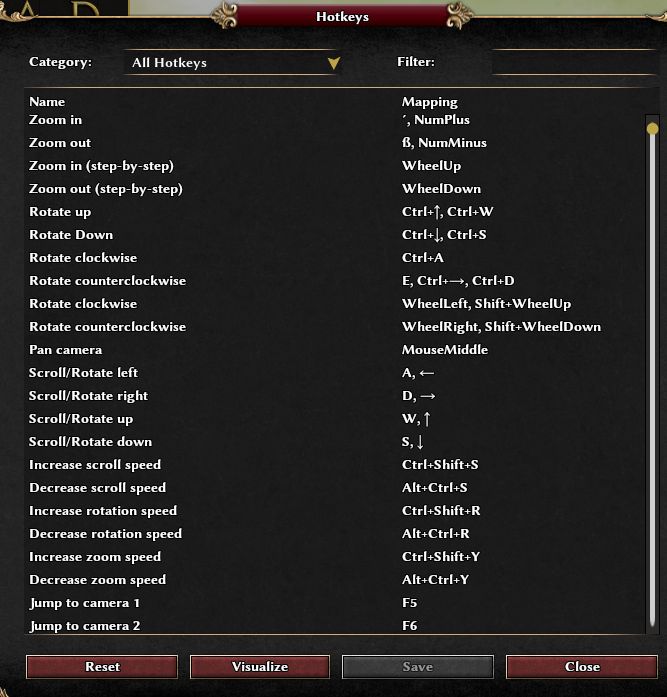
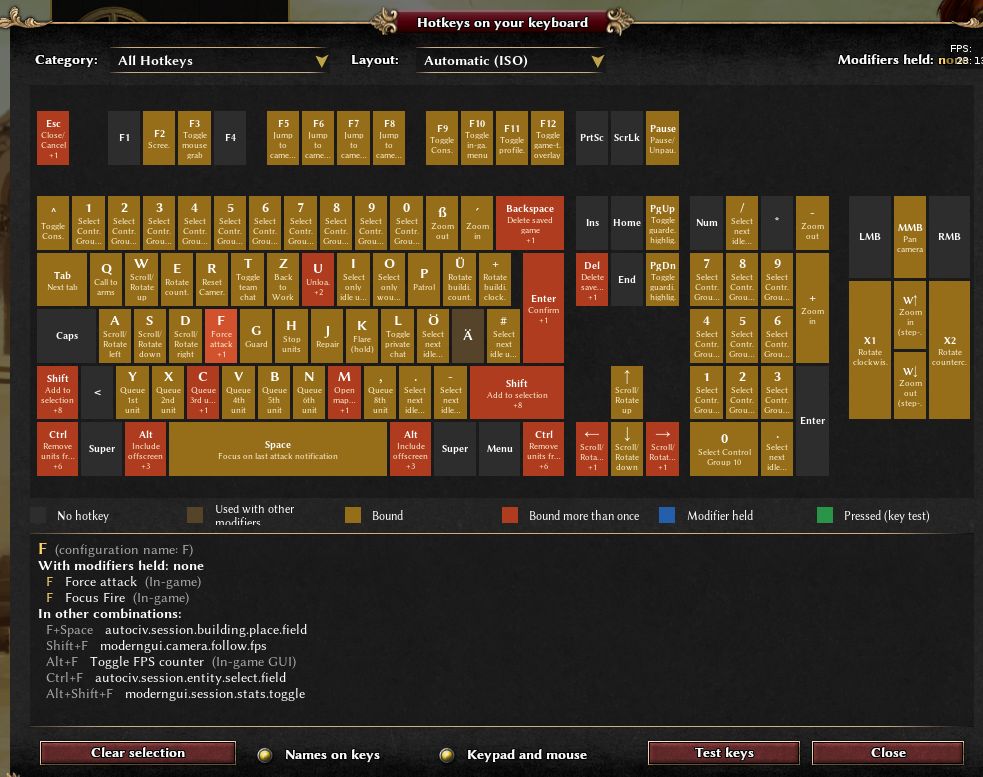
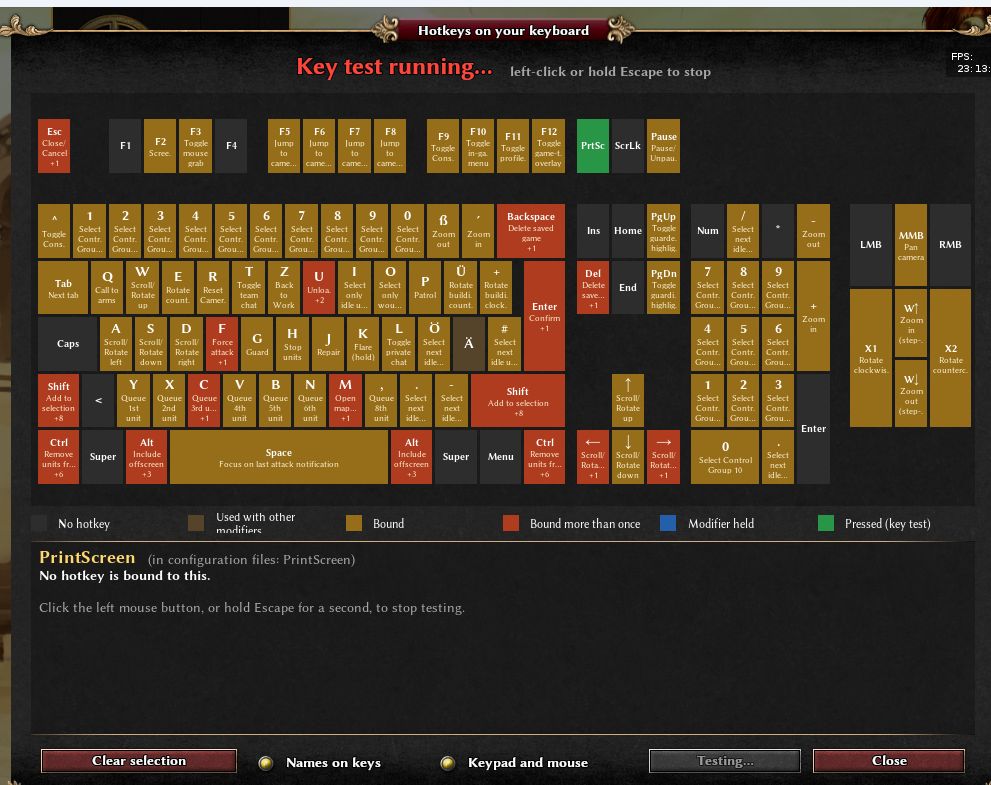
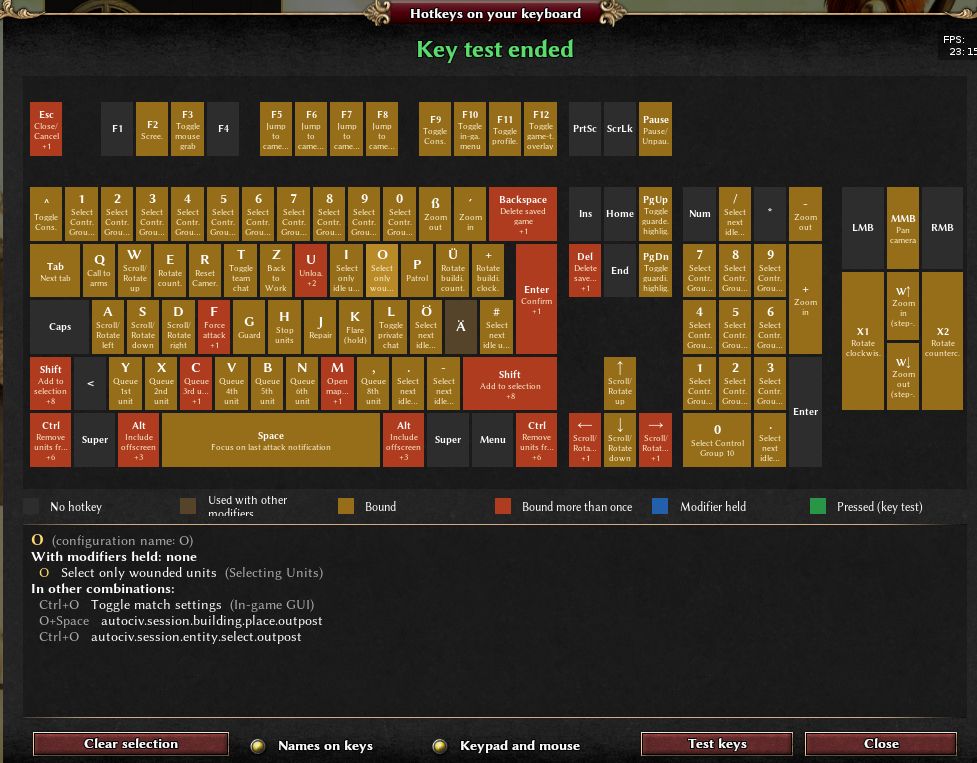
Attached is a little mod that adds keyboard visualization of hotkeys including testing capability on your configured keyboard for both 0AD releae 0.28 and the SVn version 0.,29. It will be also available from mod.io once signed. show-keybindings-r28.zip show-keybindings-maintainer.md show-keybindings-r29.zip3 points
-
There are open issues on git tea which can be found here of other animals people started to work on that are half way done if you want to knock a few out easily while your out it. Please don't open issues for new animals just a PR to add the new the animal is nice.3 points
-
I was thinking of changing the basic-> advanced -> elite // champion nomenclature in Delenda Est to something like what you propose, but haven't gotten around to it. I'm quite deeply obsessed in my current writing project at the moment (you'd love it, its subject is the Greco-Persian Wars), but it's on my todo list. The only issue--and it's a big one--is that the current nomenclature is quite embedded into the inner workings of the templates and art. Not impossible to change by any means, just a nice little project on its own. For instance, think of all the actor file names ending in _b, _a, _e, _c. I enjoy tackling projects like that, but I'll only do it if the crew here deems it desirable. Not gonna put all that work into a PR which will languish along the bank of the River Styx. Another one I want to tackle is the Civic Center nomenclature, which is currently quite inconsistent. That's a whole other PR.3 points
-
Hi, I hope that you know my world map. For the first time I want to create new entities for custom biomes. Is there any similar project for american, asian or oceanian fauna and flora? Maybe a guideline for a list of entities that could be useful for the community, because I don't want to reinvent the wheel. (I've already red guidelines about markers' number limitation and textures format and size.) Claude wrote this for me, please share with me your opinion. Tropical Rainforest (Congo, Amazon, SE Asia) Fauna: jaguar, tapir, sloth, coati, macaw/generic parrot, poison frog (small decorative) Flora: kapok/ceiba with buttress roots, climbing liana, tree fern, epiphytes/orchids (trunk detail), banana palm Tropical Savanna Mostly complete. Nice-to-have: hyena, ostrich, umbrella acacia (shape variant, not new species) Hot Arid Desert Fauna: fennec fox, scorpion (decorative), desert monitor Flora: already covered (palms, thorny acacias). Missing columnar cactus, but that's American — see below American Desert/Scrubland (Sonoran, Chihuahuan) Fauna: coyote, roadrunner, rattlesnake Flora: saguaro, prickly pear (Opuntia), yucca, mesquite Cold Arid Steppe (Central Asia, Patagonia, Mongolia) Fauna: saiga antelope, wild ass/onager, European bison, corsac fox Flora: feather grass (Stipa), steppe wormwood/artemisia, tumbleweed (Salsola — explicitly requested on the official forum) Mediterranean Essentially complete, no priority gaps Temperate Deciduous Forest Complete via existing temperate/alpine biome, no urgent gaps Boreal/Taiga Fauna: moose, reindeer/caribou, lynx, wolverine Flora: spruce, larch — likely reusable from alpine biome, check if current textures hold up at higher latitude Tundra/Polar Fauna: reindeer/caribou (shared with taiga), seal, muskox, ptarmigan Flora: lichen (ground decorative), moss, dwarf willow, dwarf birch Dry Tropical/Monsoon Forest (Yucatán, coastal East Africa, central India) Fauna: peccary, coati, green iguana, toucan Flora: ceiba (shared with rainforest), agave, tropical columnar cactus, royal palm High Mountain/Alpine Fauna: marmot, ibex (if not covered by generic goat), golden eagle as a dedicated model (not the current generic "hawk") Flora: mostly fine with existing conifers Oceanic/Tropical Islands Fauna: crab, sea turtle Flora: already fine with existing coconut palms2 points
-
2 points
-
I have for you something better than that:2 points
-
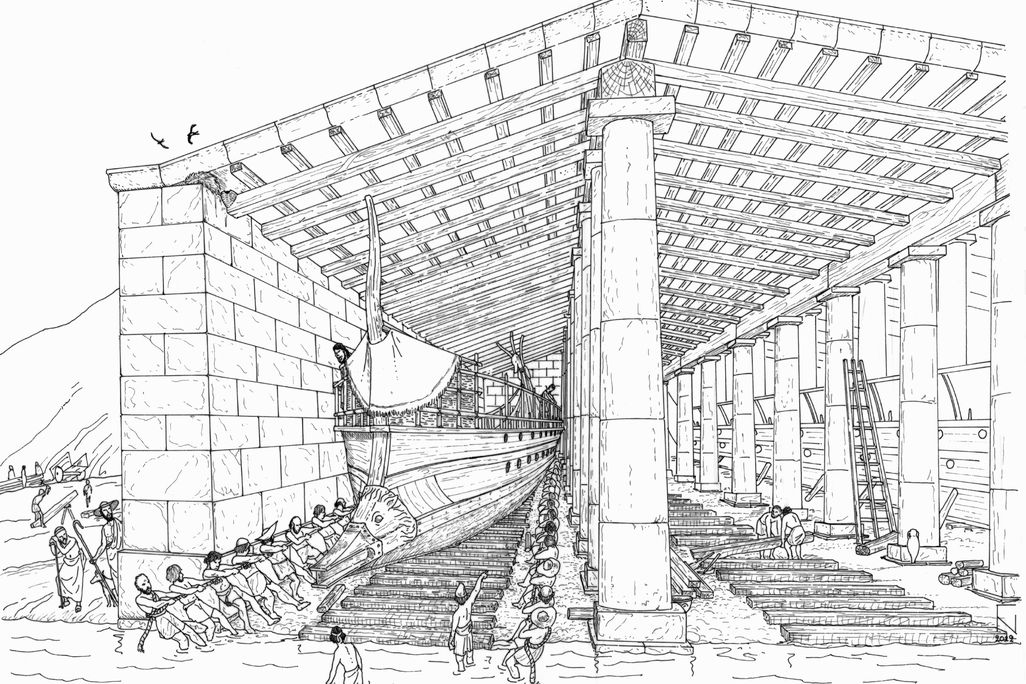
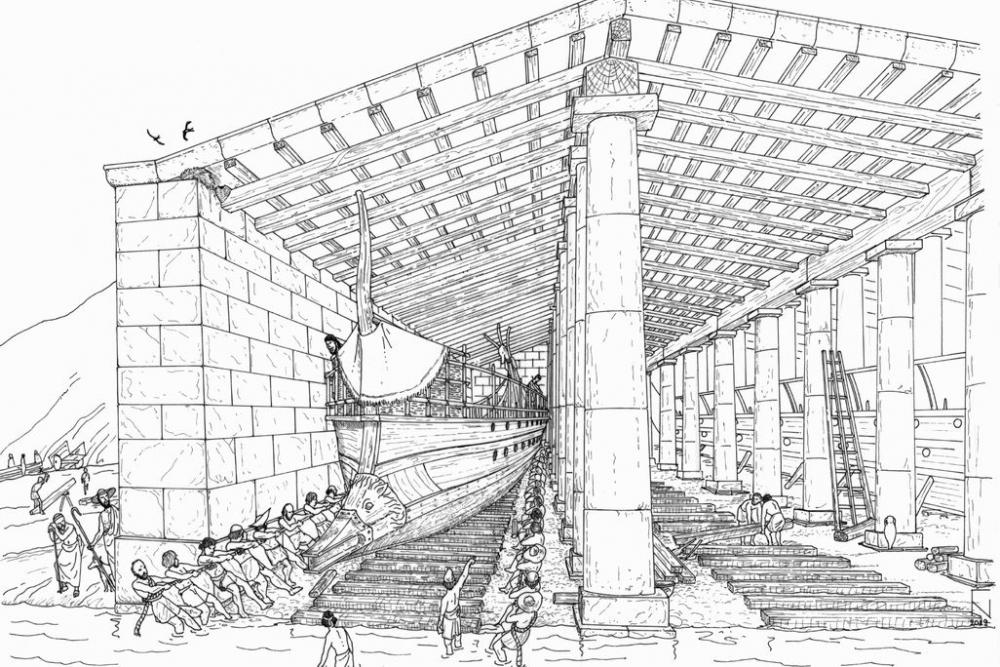
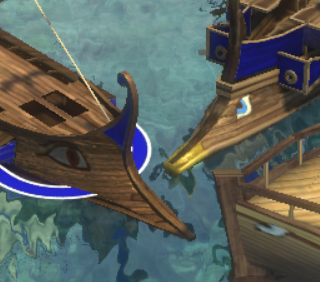
As for the Spartans, I start with issues that should be fixed, and end with more optional takes. From now on I'll be hiding references to make posts a bit lighter. The next part(s) will be mostly about siege engines and ships. PART I Simple things that should be: -In the civ description, "fell in 330 BC" should be "fell in 338 BC": a mistake regarding the Battle of Chaeronea. -Athenian Long Walls should be Makra Teichē (Long Walls): how they were called, and no need to add "Athenian". -Arsenal of Philon should be Philōnos Skeuothēkē (Arsenal of Philon), and have a different icon: to follow proper nomenclature, and instead of a flipped Arsenal icon with blue background, the actual remarkable building could be shown. -Ploion Phortegikon (Merchantman) should be Holkas (Merchantman), and Ploion Halieutikon (Fishing Boat) should be Epaktron (Fishing Boat): the present name comes from someone posting "I don't know what the correct word is, though. Perhaps ploion phortegikon?". His source is fine for the fishing boat, but I came across these terms in Casson's glossary. -Ostracism should be Ostrakismos (Ostracism), and have a different icon: to follow proper nomenclature. The icon looks too much like the fist of Will to Fight… I'd raise its middle finger . No, the icon could be an inscribed ostracon (hence the name), a piece of pottery where the name of the person being voted to be ostracised would be scratched on. -Athenian Slingers should be Athenian Archers: seems way more appropriate according to records. -The Hypozomata icon should be changed: and show them instead of an anchor. -The Parthenon should have eight columns on its front: I understand that this decision could have been taken because of space constraints and simplified representations, but it's a bit shocking to those who have a clear enough idea of what it should look like, since it was not common in mainland Doric temples, making that a big part of its uniqueness. The sides should have 17, but that's much less noticeable. -The dock's roof and column configuration is wrong: as I've already mentioned somewhere. -The Merchantman’s eye seems low quality: at least when compared to other ships. Simple things that could be: -Economic Reforms could be Seisachtheia (Debt Relief), and Economic Fortune could be Euboikos Stathmos (Euboic Standard): names of actual Solonian reforms, instead of boring Catafalque bonus names. Economic Reforms increases Worker gathering speed, and the seisachtheia, "relief of burdens", were a debt relief set of laws. Economic Fortune cheapens economic techs, and the Euboic weight standard made commerce more competitive. -Commercial Treaty could be Symbola (Bilateral Treaty): for corresponding Greek civs. -Delian League civ bonus could be Naucraria (Naucrary): this organisational system would be in place at the start of the game, unlike the Delian League, which was founded in 478 BC, and doesn't sound nice as an Athenian development, but more of a Team Bonus (like the more aptly named Peloponnesian League for the Spartans). -Triērarchia (Trierarchy) could be a tech for faster ships: the trierarchy (successor of the previous naucrary system) was a public service obligation on the wealthy for the outfitting, maintenance and operation of warships, allowing for their more efficient financing and manning, making ships faster because of outstanding oarsmen, which is important for Athens. -Periclean Defense Strategy could be Strategic Withdrawal, and Scholarship and the Arts could be either Pentecontaetia or Golden Age: these Pericles Hero bonus names are too long, and unspecific. The first explains what the strategy actually was, and the second refers to either the period of Athenian rise, or the more generic "Golden Age" term, also used for this period. -Peltast Reforms could be Iphicratids, and for all infantry: this Iphicrates Hero bonus gives Infantry Javelineers +15% movement speed, which comes from a misreading of Diodorus Siculus by the Encyclopædia Britannica. Still, something Iphicrates did do is improve boots of troops in general. It's quite confusing to have Iphicratean Reforms, Peltast Reforms and Formation Reforms, when the first two seem to be the same thing (it's not exactly known what the Iphicratean reforms entailed, if they even happened), I'll return to this later. I'm not sure what Formation Reforms refers to, given that 63 stratagems are attributed to him. Changes that have been already proposed: -Conscription at the Stable could be Hippeia (Cavalry Class): already proposed State Weaponry as the Conscription alternative for the Barracks (since "conscription" has modern connotations, and infantry and cavalry weren't "conscripted" in the same way). The cavalry class would involve the wealthiest citizens, linked in turn to cavalry service as an obligation: https://lexarithmos.app/en/lexicon/ippeia. Other changes that could be considered: -Naval oriented civs could have Lighthouses, for increased FOV and ship speed bonus: these appeared in the Hellenistic period. In addition, common early buildings that are not being considered are Stadions, Hippodromes, and Gymnasions (beyond the Athenians), just to mention them. -Tragōidia (Tragedy) and Kōmōidia (Comedy) techs for the Theatre: they were invented around the start of the game. The Spartans could have things like Gymnopaídiai (Gymnopaediae) instead, since they "held mostly non-scenic contests and games", like the "Gymnopaidiai". -Ohi Peri Ton Dionyson Technitai (Artists of Dionysus) tech for the Theatre: late tech (270s BC), association of artists that coordinated performances. They were also present in Ptolemaic Egypt, Macedon and Thebes, among others. -Demosthenes' Reforms tech: mid-game tech (340 BC) for cheaper ships. A reform of the trierarchy, which fixed the total number of triremes and distributed costs better. -Markets could have Aleteia/Letourgia mutually exclusive techs: Aleteia could cheapen Traders, while Letourgia could increase returns per trade, since either rich men have either tax exemptions (to increase commerce, but the state doesn’t get as much per trade), or must contribute (causing the opposite). There should be situational case uses. -Oligarchy/Demagogy mutually exclusive techs: the first giving a defense bonus, the second an attack bonus. -Hoplomachia (Weapons Training) could improve hoplite experience gained while garrisoned: mid- to late-game tech, since hoplites in Classical Greece didn't train with weapons (only their bodies), not even the Spartans (or at least there's no evidence for it), the idea being that courage alone was enough (most didn't have free time for it anyway). Weapons training picked up only at the end of the Classical period. Of course others like ranged units are not included in this (I don't know if presently they gain experience by hunting, which would make sense). -Mediterranean Draw could be a preceding tech for Archery Training, for Greeks: mostly for those who want to add techs in their mods, this draw technique became more standard early in the game's timeframe, although it should improve mediocre archers, not make them better than those from civs where archery was culturally relevant. These things seem a bit out of place in the Forge. -Chomata (Moles) Dock tech: to increase Dock HP. -The Gymnasium could be treated quite differently: I wonder what's the reason for having Schytian Archers coming out of this building, Mercenary Camps should be the way to go for mercenaries: Crete, Thrace and Scythia were never really part of the Athenian "empire". I would then relocate the other military units from here to the Barracks, and move Iphicratean Reforms to the Council Chamber. Gymnasia were all around centers of training and study. The Academia of Plato, Lyceum of Aristotle and Kynosarges of Antisthenes were the greatest in Athens. They would mainly have (inside or around) a palaestra (for pankration, etc) and a dromoi (for running, hoplitodromos, etc), which could be damage and speed techs, respectively. Since I think it would be nice for each civ to have a unique limited preferably non-combat unit, like Han Ministers (or Spartan Ephors and Theban Musicians I proposed), Athens could train Philosophers, to give research or culture bonuses or whatever. It was also associated with medical training since the Aleiptae, who oiled and dusted athletes, also acted as surgeons (if eventually actual healers and priests are separated). -Epibatēs Athēnaios (Athenian Marine) could be Iphikrateios Hoplitēs (Iphicratean Hoplite): contradictorily enough, Athens didn't rely on "marines" for boarding, but on ramming (AI gets easily confused with these things). The word epibatēs is used in general for anyone on deck, and the deck-soldiers were (mostly) hoplites. Iphicratean hoplites is a modern term for something poorly attested that didn't really caught on in mainland Greece then: in principle hoplites were given longer weapons, lighter armor, and smaller shields, and/or (more probably) peltasts were given long spears and more armour, basically producing proto-pikemen, and possibly just for mercenaries in naval service. -Iphicratean Reforms could be called Arms Reforms, unlock Iphicratean Hoplites, and other effects: this should be the order, and I think these units were had in mind when creating the "Marine". I renamed it because, as mentioned, there's some redundancy around. Iphicratean Hoplites could be trained in Docks and Triremes, given that some think this applied to mercenaries in naval service, after witnessing Egyptian forces possibly using long spears for naval combat. If possible, Thracian Peltasts could gain experience to have the ability to switch to them (maybe too weird to have a mercenary switching to champion), and right now the Athenians don't have a hoplite mercenary force to also do this. If we are to literally believe Siculus (risky), Athenian hoplites would do. -Epilektos (City Guard) is not characteristically Athenian, while a Fast Ramming Trireme could instead be considered: epilektoi just means "chosen" in armies, and many had them. I know that a ship would be a weird champion unit, and I'll return to this in the corresponding part about ships, although I wish I had better ideas for an Athenian land champion unit, maybe later. The Epilektoi Infantry civ bonus would then be removed, its role taken in part by the Arms Reforms tech. Other information that could eventually be useful: -For an Iphicrates javelinmen bonus, "the running Spartans finally gave up and turned around only to have Iphicrates and his crew reverse back into range and take out a few more of them from behind", from Bardunias and Ray Jr. -For an Iphicrates ship bonus, "not only did Iphicrates improve his oarsmen's fitness but also made his ships go faster", from Gardiner. -Siege Tower Artillery tech to increase its firepower, not sure about Athens in particular: "the bottom storey (..) is supposed to have accommodated (...) stone-projectors (...) there would have been space for only three, side by side (...) to concentrate heavy firepower at battlement level, where men and masonry were most vulnerable (...) little point in loading artillery in the upper storeys, where its limited angle of depression was a handicap (...) catapults in the third and fourth storeys could have proved useful at long range". -Bronze Teeth tech for battering ram to add pierce and maybe cut damage, not sure about Athens in particular: "Bronze head (...) late-5th-century (...) five triangular teeth, was perhaps designed to cut into mud-brick", from Campbell. -For those who want secondary weapons, Scythian archers could also have axes: they were "armed with a composite bow, a dagger and the sagaris, or battle-axe", from Fields. -Order names for when formations take a bigger role: "Orders for a turn – epistrophe for a 'quarter-turn' or perispasmos for a 'half-turn'", from Dahm. -To denote rank, maybe I mentioned greaves and cloak, but only the second would be accurate long-term: "Greaves fell out of use before the Peloponnesian War; armour became simpler and the cloak became more common (and was viewed as a symbol of rank in both Athens and Sparta)", from Dahm. For reference, the preceding Thoughts on the Spartans post: https://wildfiregames.com/forum/topic/143241-thoughts-on-the-spartans: the comments made for the Spartans on techs from the Civic Centre, House, Dock, Forge, Temple, dropsites and fortifications apply also to the Athenians (in fact, some comments made were indicated not to apply to the Spartans).
 1 point
 -
Hi everyone, as some of you may already know, @SneakEP is hosting a summer tournament. I have the honour to announce, that thanks to @freyabartok, this tournament has the most epic prize that i have seen so far. You can win this hand-embroidered 0 AD - Pullover ! If you want to join the tournament and stay informed follow: https://discord.gg/bWZS85Sj7 D05C85DC-110C-4F6D-ACE7-5205E8FF6371.MP41 point
-
Awesome - please consider also merging a function like modiomod into your bundle.1 point
-
At the time: FINISHED: the blender mesh TO DO: optimize the texture to fill all the 64x64 image TO LEARN HOW TO DO: animations But I am confident, because till the previous week I had never used blender.1 point
-
"gigabundleUI" LOL1 point
-
OP! Start with that next time Already thinking about merging this into gigabundleUI1 point
-
@guerringuerrin Thanks! I was just confused with my keyboard settings and wanted to see where everything is...1 point
-
Ey, @Grautvornix, this is an awesome feature!1 point
-
It's the same as the cougar, puma concolor in binomial nomenclature1 point
-
Limiting the amount of repairs seems like a complicated rule. All this was just to justify a Tachunautousa Triērēs as a champion trireme for the Athenians, and maybe redefine the Helepolis as a champion siege tower. For both, garrison prohibition (and high population cost) would work, making them "fully garrisoned" always (although for the Helepolis, eventually units should be able to go through it to take walls, just not be able to stay inside to change its stats). I guess the only problem is catapults, a solution being adding at least one garrison place for them. This is not far-fetched, since catapult operators are always at least two, and I remember catapult crews up to 9 and 11 people for Greek and Romans, respectively. High population cost should be properly balanced to avoid any super siege domination.1 point
-
@Atrik You are right, should 've opened a bug report officially. My point was, however, that I was not sure it really is a bug or if I tampered with my install too much. Thatt's why I asked for other observations. Thanks that you fixed it!!! Got to learn how to open git tickets, shouldn't be too difficult .1 point
-
No, there is the walrus. If anyone wants to collaborate I'll submit all on my github repo. You can also give me some advices on github issues.1 point
-
Just to mention some iconic South American animals that seem missing (some not very known to outsiders): condor, rhea, capybara, maned wolf, viscacha, guanaco, vicuña, and of course the more known domesticated variants of the last two: llama and alpaca. Also shared with other continents: penguin, flamingo, anteater, armadillo and cougar. I can't remember if elephant seals or sea lions are already in the game.1 point
-
We need five more AI names added to Claodicus, Divico and Caesorix. As we already had some intense debate on Specific Phase names for the Germans I thought we might get some input from the community as well (i.e. @Genava55 and @Thalatta). Background @Vantha already reported Issue #8404 back in October: Suggestion Of course we could reuse the Hero names Boiorix, Teutobod und Lugius, but making it more diverse sounds good to me. What do you think?1 point
-
Well if the unit has a generic name mentioning a tribe (as some of existing German units or proposed mod units) i suppose you'd have to figure out how to write it in the specific name.1 point
-
Yes, there are sources recording they were deployed along cavalry, but since they are never clearly described as fighting as cavalry (as far as I remember), probably they could have sometimes fought like hamippoi (those running alongside horses). This and their "unclear" role (or maybe "varying", across different periods) is what led me to propose in Thoughts on the Spartans for them to be "faster and with larger FOV" to "balance a weak cavalry", and given that Spartan hoplites should be particularly slow, as mentioned a few comments back1 point
-
Personally I prefer not presuming the etymology of those tribal names. It is easier to interpret the personal names as a reference to their tribes.1 point
-
How you want. I wouldn't mind many PRs if they're small and managable. Feel free to ping me in the PR(s) on Gitea. This is essentially what I meant to say with "their role was unclear", which admittedly was not the best choice of words, though. If I remember correctly, there even is a record where it kinda sounds like they were fighting as cavalry. There has always been debate on whether the SpecificNames ("native" names) always need to be a direct translation of GenericNames (English names). My personal take is that they don't have to, I wouldn't mind (and actually prefer) "Prodromos (Cavalry Javelineer)". The word-by-word translation (like Hippakontistēs here) can be in many cases straightforward, but a bit boring. If there is a more historically interesting and relevant term unique to that civ, I'd use that instead, even if describes a broader group of people/soldiers. Again, a unit can represent more than just the soldiers equipped in the exact same way. One idea floating around is to in addition to the SpecificName and GenericName introduce a "ClassName". Then we could use "Prodromos" as the SpecificName, "Scout" as the GenericName and keep "Cavalry Javelineer" as the ClassName. This would be cool to have for other units too. I'm aware. My point was that the generality isn't a bad thing.1 point
-
@guerringuerrin thanks! Although this part was easy, Part III has been another matter summarising around 18 pages of notes... Although I'm not coding anything, it's meant to historically improve vanilla and inspire other mods with whatever is too much1 point
-
I strongly recommend the terms I used, I can copy-paste lots of quotes from books using them if needed Hopefully I'll hear more about those! @Grautvornix, maybe a better idea regarding a champion ship and engine restriction: they cannot be garrisoned, and they cost more population. They are assumed to be fully garrisoned always, exactly because they are always meant for top performance (EDIT: although not all engines can be garrisoned... but hopefully champion versions for those can be avoided).1 point
-
A lot of work here, @Thalatta! I hope you can pull it off. If you have any problems compiling, or if you need help with anything else, we're here.1 point
-
@Vantha I guess I'll make a big PR of names, not to spam with too many PRs. Regarding Ekdromoi and Prodromoi, as mentioned, they are roles, but: -You state there that "the Skiritai's role in battle still unclear to this day. It's not proven they fought as Ekdromoi", but Thucydides in his Peloponnesian War states "Agis afraid of his left being surrounded, and thinking that the Mantineans outflanked it too far, ordered the Sciritae and Brasideans to move out from their place in the ranks and make the line even with the Mantineans". This "move out" and "making the line even" sounds, at least to me, extremely similar to Xenophon's "maintaining a front level with the sallying troops" I previously quoted, with "sallying troops" being what's translated from the ekdromoi word he uses. This is not to say that the Sciritae were in that role always. -The game does have the unit Prodromos (Cavalry Javelineer), for the Athenians at least, but that's clearly not the correct translation. I was going to propose in Part II either Prodromos (Scout) or Hippakontistēs (Cavalry Javelineer). I prefer the second one, people would realise it's what makes sense to be used as a scout. Regarding psilos, I have to disagree, considering I quoted from five different books precisely to show the generality of the term, with Sekunda even stating for certain context that likely "it can be taken to mean non-combatant 'attendants'". Regarding "Athenian slingers for instance are only slingers for gameplay reasons", I guessed this could be a reason (although I was hoping it was random!), and this is the kind of explanation I'd like to hear from people that know since I have no idea, because it's unfortunate that things end being the other way around than explicitly attested , although if gameplay reasons are too strong I do see the difficulty in adjusting everything else for this.1 point
-
Exactly, that's one of the secrets of Athenian ships speed: rowers from the thetes (lowest citizen class) training all their life to get a place as oarsmen. Champions are supposed to be the full-time troops, the elite. But it's also about the machines themselves, strict specifications is what made certain triremes fast, and the best were given a top rating (coming in Part II). I'm more inclined to give them restrictions (like organic champions). I mentioned going back to the Dock or Arsenal because specialised tools and materials would be needed to properly repair these fine-tuned machines. As you say, this would be more accurate for ships than for siege engines. For engines there were "depots" back in their city-states: the arsenals (there are surviving storage lists). One cannot really build most catapults in the field, they are built in workshops, transported by parts, and assembled close to where they are going to be used. Smaller engines would then need proper replacement parts, and while armies would be carrying them, one can also think they'd eventually run out of them (and if close to one's territory, one can "emulate" proper supply lines by building an Arsenal there, which would just represent where the engineers are making the proper adjustments). Bigger engines were indeed built in situ, but they would be destroyed or abandoned (and/or salvaged, pending implementation), they should be extremely slow and make any further marching after repairs unviable (that is, I wasn't expecting players to return those all the way to an Arsenal from enemy territory in the first place). All this means that with imperfect but simple rules (same for ships and engines) one could end up emulating more realistic situations than expected. Hopefully1 point
-
Great. Feel free to ping me then in the issue or assign it to me. Or even better, if plan you to do it more often in the future, make a PR yourself; changes like this can be made pretty easily, the unit names are defined in the template files in binaries/data/mods/public/simulation/templates/units/. I could help you figure out the Gitea stuff. Regarding the Ekdromoi, I made this thread a few years ago: Regarding the Prodromoi, they are already present in the game, no? About the term "Psiloi", I don't think it's too general. There's always a balance to strike between making it perfectly accurate, but also interesting gameplay-wise. That's why we often chose the native name describing the people that a unit actually represents rather than what it ended up as in the game. The Athenian slingers for instance are only slingers for gameplay reasons, but they historically represent any skirmishers in general, including the ones that just threw rocks.1 point
-
I'm on a forum a lot and I had miss both your posts still. I only dug into the issue when realizing the bug myself. Since games can have diplo turned off, there is a small chance this bug could have even made it to next release unnoticed even... This is a formal invitation to help on git by opening tickets when you encounter such bugs..1 point
-
Thanks for your concern . We've already resolved this.1 point
-
@Thalatta as the self proclaimed biggest worshipper of Athena im hurt you did not ping me into this topic before1 point
-
I have a lot of suggestions, i think i will start with Cimbrii (i'm tired and will continue later) There is amber in Jutland but i'm not sure they really had a monopoly, the Baltic was more important for this trade. I would not go as far as to say they have an axe tradition, axes are only mentioned with the women of the Ambrones. Main weapons seem to have been spears. Swords are important for elite cavalry and in a ceremonial role (seeresses executing prisoners). The women of the Ambrones used swords and axes, could it be swords were relatively common even with civilians? maybe (or it could be some of them were the aforementioned seeresses) As above spears could probably still be available, it was largely the most important weapon for all germans (and the Cimbri are described fighting in formation) Bows are not mentioned in any sources about Cimbri, but seem to appear in some Scandinavian finds (maybe could be auxiliaries instead). There is no evidence of greaves for Germans Shields could have a wooden spina, possibly wicker shields for skirmishers in first tier (but the later is a bit of speculation) I'm not sure they would have had that many Scandinavian auxiliaries (the Cimbri were already from Denmark so i assume you mean Norway or Sweden) Volcae and Helveti allies are more attested. Maybe they can have these in an allied camp instead or all German civs can recruit allied units from the Great Hall or similar building (with regular champions on the fortress). Also no evidence for German tattos in this period. Suiones and Rugii appear in later sources and dont seem to have joined the Cimbri The Scandinavian archers could maybe be included as allied units (if you want the civ to portray the larger region) but probably not champion. Infantry champions could be the Cimbrian front rank infantry who fought chained to each other probably champion spearmen since they did this to not break rank (alternatively the chains are a unique technology that provides an unique effect to champion infantry). They could also have swordsmen (A mix of single edged german swords and Celtic swords are found in Denmark) Maybe even some sort of champion axe raider as well like the current Germans(perhaps Ambrones, since at least their women used both axes or swords). Most plausible helmets would be Montefortino or Coolus Manheimn types Description of priestess Not much evidence for axe cavalry, i'd make it a cavalry spearman instead. For the cavalry we have the following description the helmets seem to have been decorated with animals (probably figurines like the ravens and boars on some celtic helmets) Breatsplate are almost certainly chainmail (Celtic influence, maybe captured Roman armor as well), and the long swords are probably Celtic style. Maybe replaced Caesorix with Lugius (little info on both, Lugius died in combat and Caesorix was captured). So my idea for Cimbri rosters (excluding possible allies)would be: Citizen Spear infantry (framea) Citizen Sword infantry (single edged Germanic sword) Citizen javelin infantry Citizen slinger? Citizen javelin cavalry Citizen spear cavalry (framea) Champion Cimbrian spearman (Celtic spear) Champion Sword infantry (Celtic sword) Champion Ambrones raider (axes and clubs) Champion Cimbrian sword cavalry (celtic sword) Champion seeress Tacitus' Germania: https://topostext.org/work/676 Plutarch's biography of Mariushttps://penelope.uchicago.edu/Thayer/E/Roman/Texts/Plutarch/Lives/Marius*.html Strabo's description of Cimbri https://penelope.uchicago.edu/Thayer/E/Roman/Texts/Strabo/7B*.html1 point
-
Frankly, I don't think that we should do that. Not argueing from history but from the gameplay perspective: For a game that offers different civs, these need to be balanced so they all remain a valid option to be chosen by the player. Any "less capable/less valueable" civ would simply never be chosen and we can remove it from the game. But all this while having different characteristics so that specific strategy might be beeded to win a game, e.g. Kush against Rome.1 point
-
Thanks @Genava55 how about this list ? - Arminius - Cheruscan leader who defeated Varus in the Teutoburg Forest; mentioned by Cassius Dio and Tacitus. - Maroboduus - King of the Marcomanni who ruled a powerful kingdom beyond the Roman frontier; mentioned by Tacitus. - Veleda - Bructerian seeress with major political influence during the Batavian Revolt; mentioned by Tacitus. - Vannius - Quadian ruler installed over a Suebi-related frontier kingdom; mentioned by Tacitus. - Ariovistus - Suebian leader who crossed the Rhine into Gaul and fought Julius Caesar; mentioned by Caesar in Commentarii de Bello Gallico. - Catualda - Marcomannic noble who overthrew Maroboduus before being driven into exile; mentioned by Tacitus in the Annals. - Ballomar - King or leading war chief of the Marcomanni during the Marcomannic Wars; mentioned by Cassius Dio. - Gannascus - Chieftain of the Canninefates/Chauci associated with raids on the Rhine frontier; mentioned by Tacitus in the Annals.1 point
-
Vannius, Veleda, Maroboduus, Arminius=> yes Segestes is the father in law. Thusnelda is the wife. Cniva is a gothic king. Cunnius and Catti, never heard of them. More context please. Or check the info and the spelling. Maybe consider Ballomar, Ariovistus, Catualda and Gannascus.1 point
-
@Genava55 I opened a PR with the following names as AI usernames for Germanic civ based on writings by Livy, Plurach, Cassius Dio and Tacitus Arminius - Cheruscan leader mentioned by Cassius Dio & Tacitus Maroboduus - King of the Marcomanni mentioned by Plutarch Thusnelda - sister of Arminius mentioned by Tacitus Veleda - priestess of the Bructi tribe mentioned by Tacitus Segestes - Cherusci leader , father of Arminius mentioned by Tacitus Catti - Chatti leader, mentioned by Livy Cunnius - Suebi leader mentioned by Tacitus Vannius - Suebi leader mentioned by Tacitus Cniva - Suebi leader mentioned by Tacitus Could I get your feedback on historical appropriateness for each of these & spelling ?1 point
-
Sure. It pretty straightforward for those. Teutobod = *þeudō (people, tribe) + *budô (voice, message, command) = Þeudōbudô Lugius = *Lugi- (of the Lugii) + *-jaz (equivalent to Latin name ending in -ius) = Lugijaz Boiorix = *Bajā-/*Boio- (of the Boii) + *-rīks (king) = Bajārīks1 point
-
Boiorix and Lugius are probably Celtic but we can Germanize their names. So it would be Þeudōbudô, Lugijaz and Bajārīks.1 point
-
A first draft, some names are quite difficult to interpret in Proto-Germanic (PGmc) Historical names Etymology Meaning PGmc reconstruction Claodicus *hlūd- + *īk- "Powerful through his fame" *Hlūdagīkaz Caesorix *gaizaz + *rīks "King of the spear" *Gaizarīks Teutagonus *theudō + *gunthiz "People's battle" *Theudagunthaz Cotto *kath- / *kott- "The fighter (diminutive)" *Kottō Deldo *dal- / *del- "The shining one or the sharer" *Deldō Atès / Atas *attō "Father (honorific title)" *Attō Nasua *nas- "The one who has a (large) nose" *Nasuō Cimberius *kimbra- + *-jaz "The one of the Cimbri" *Kimbarjaz1 point