Leaderboard


Popular Content
Showing content with the highest reputation on 2026-09-15 in all areas
-
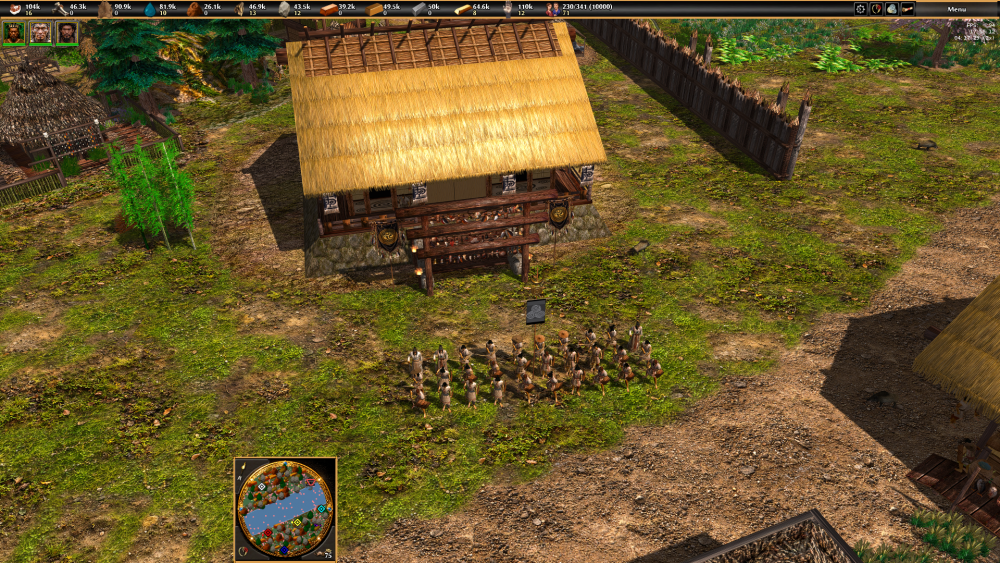
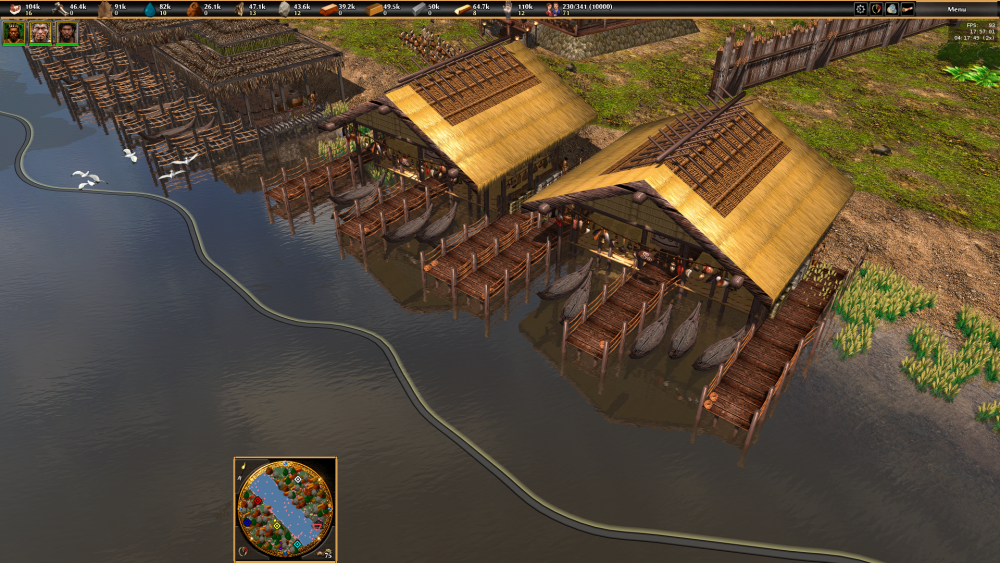
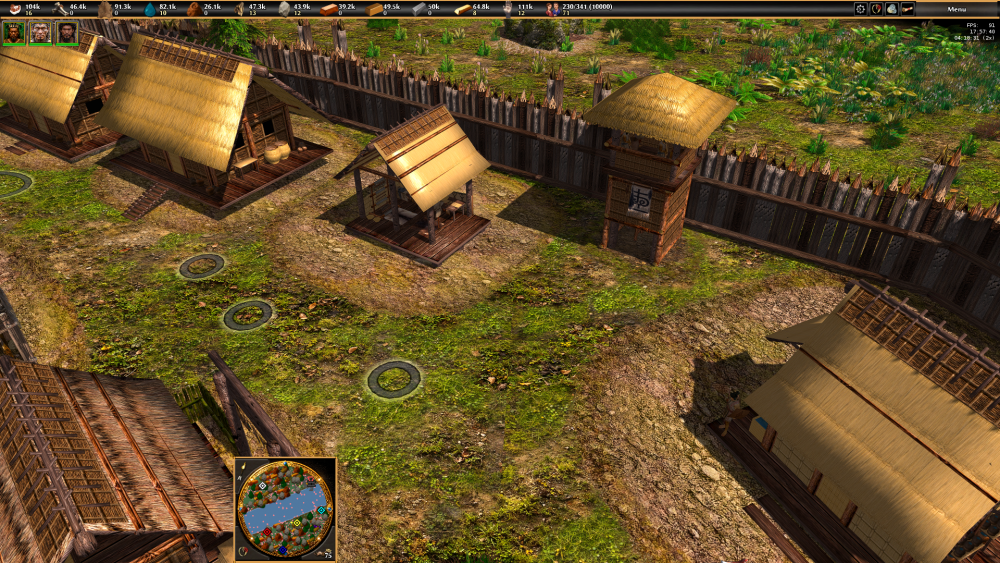
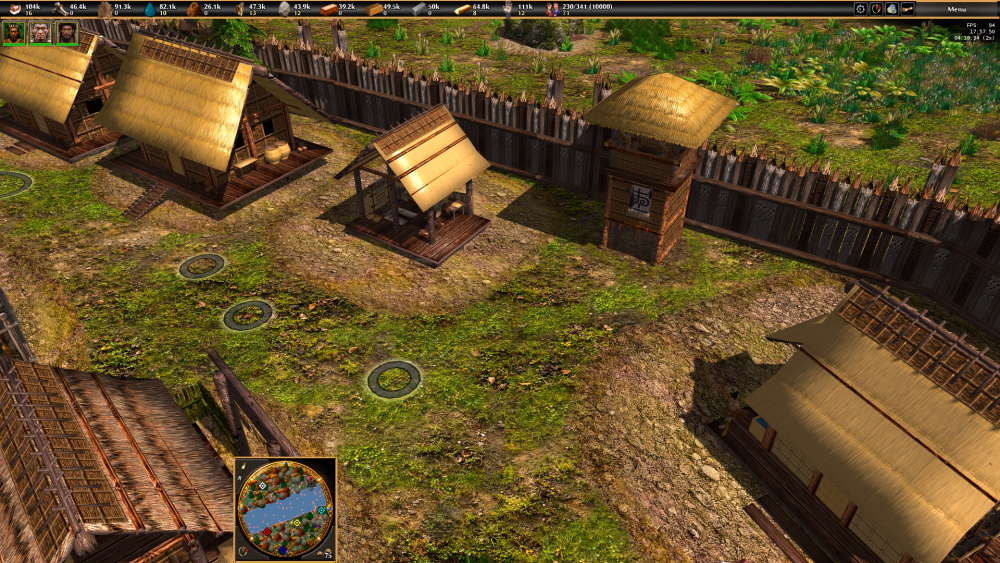
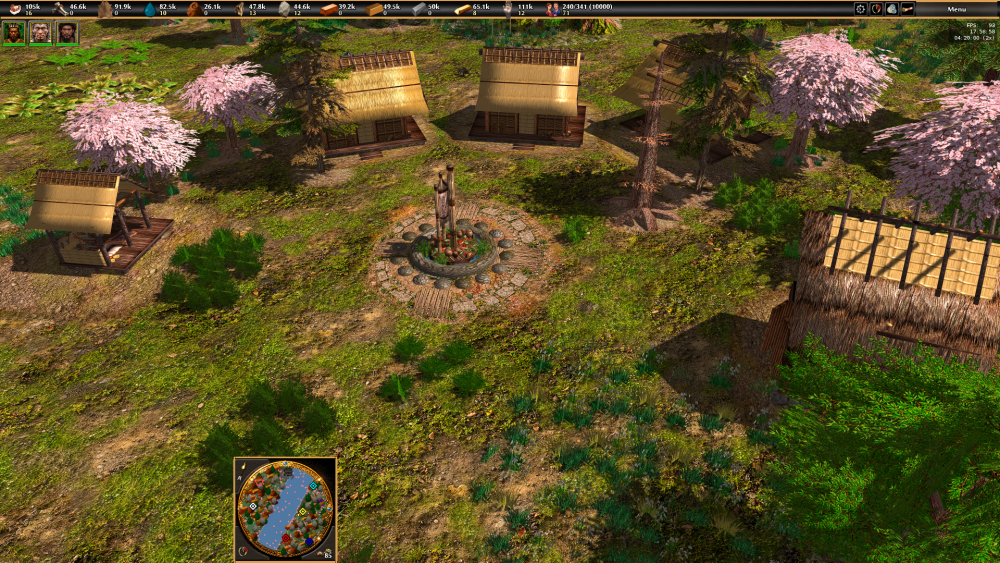
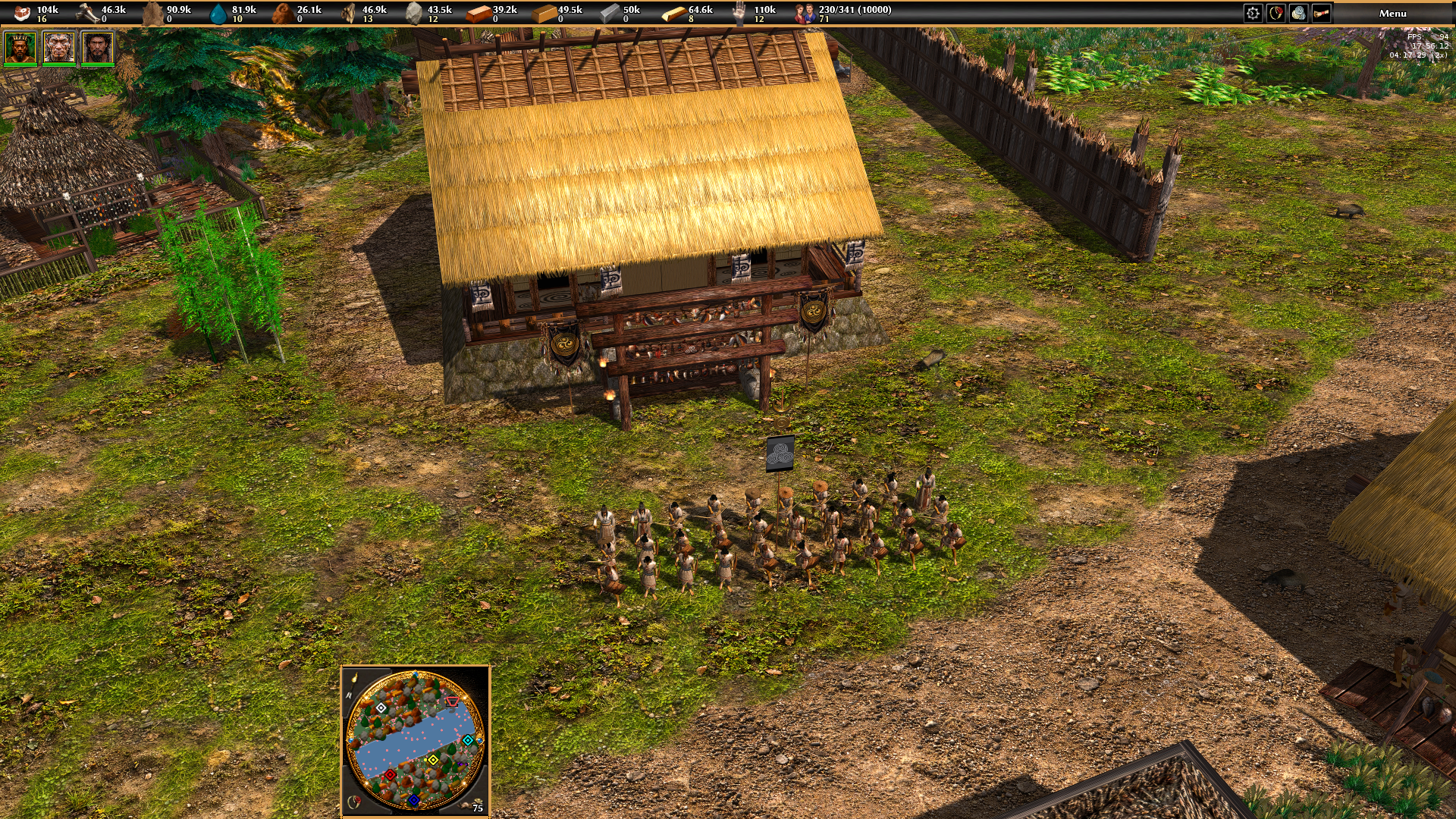
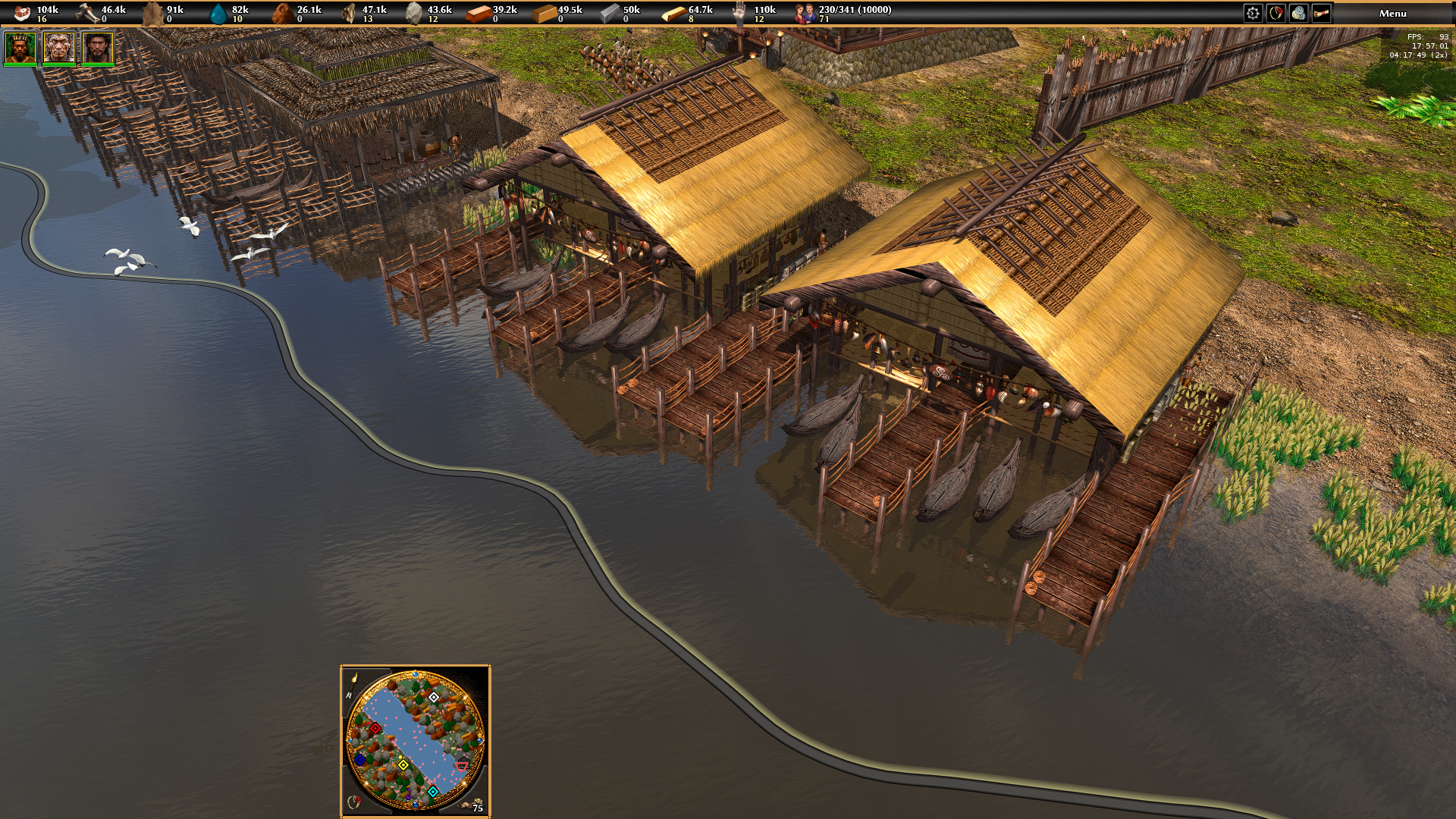
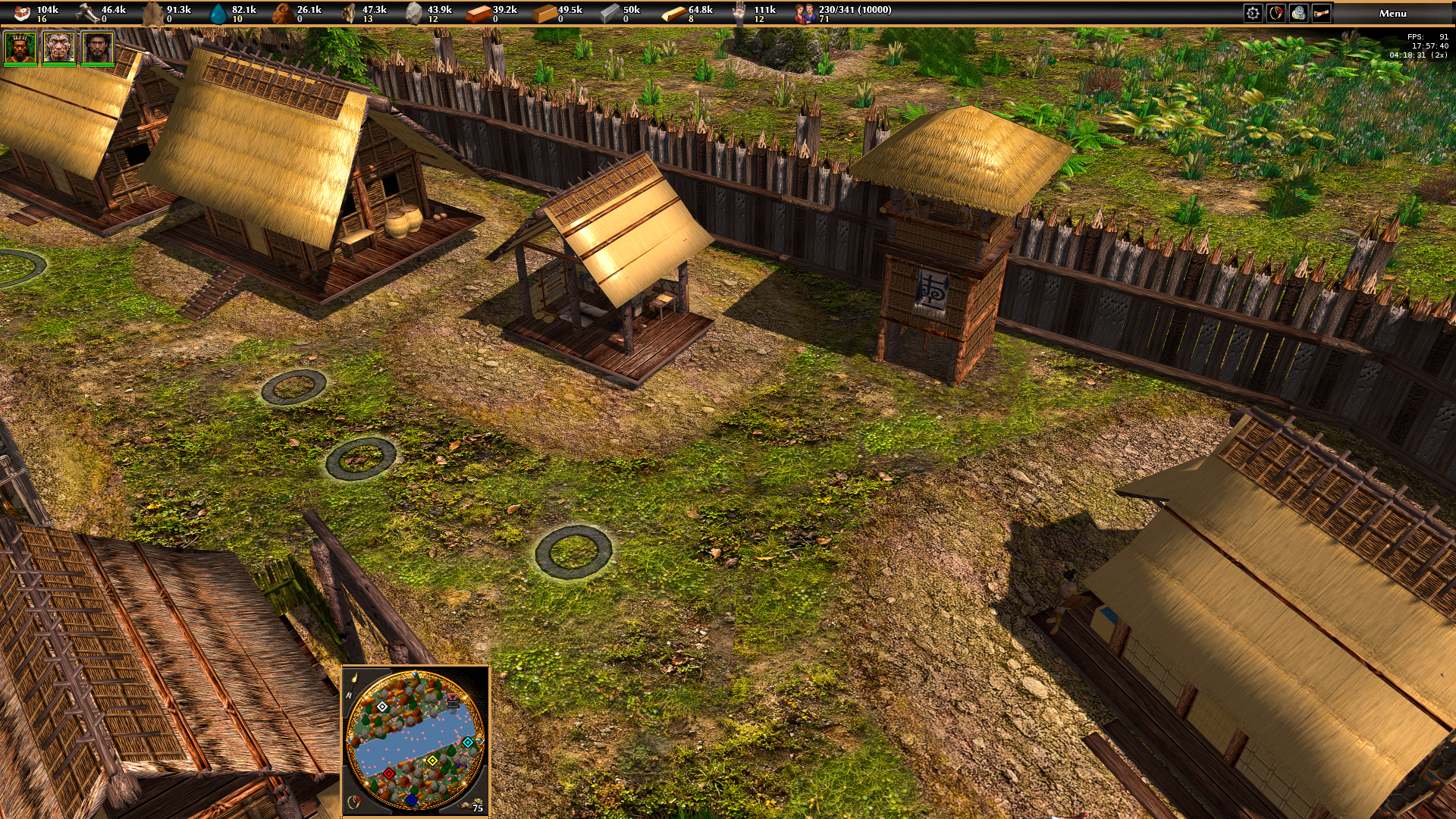
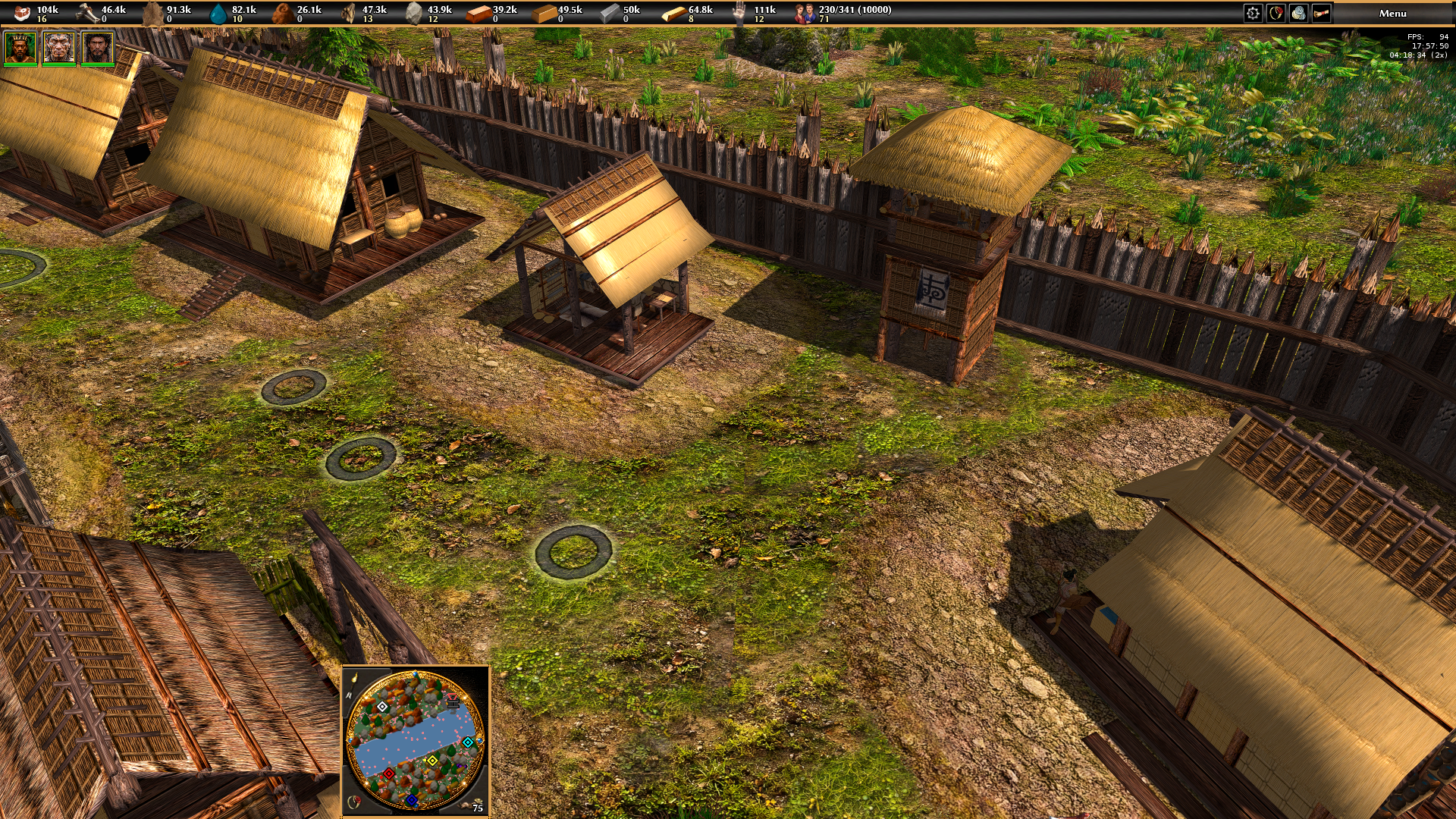
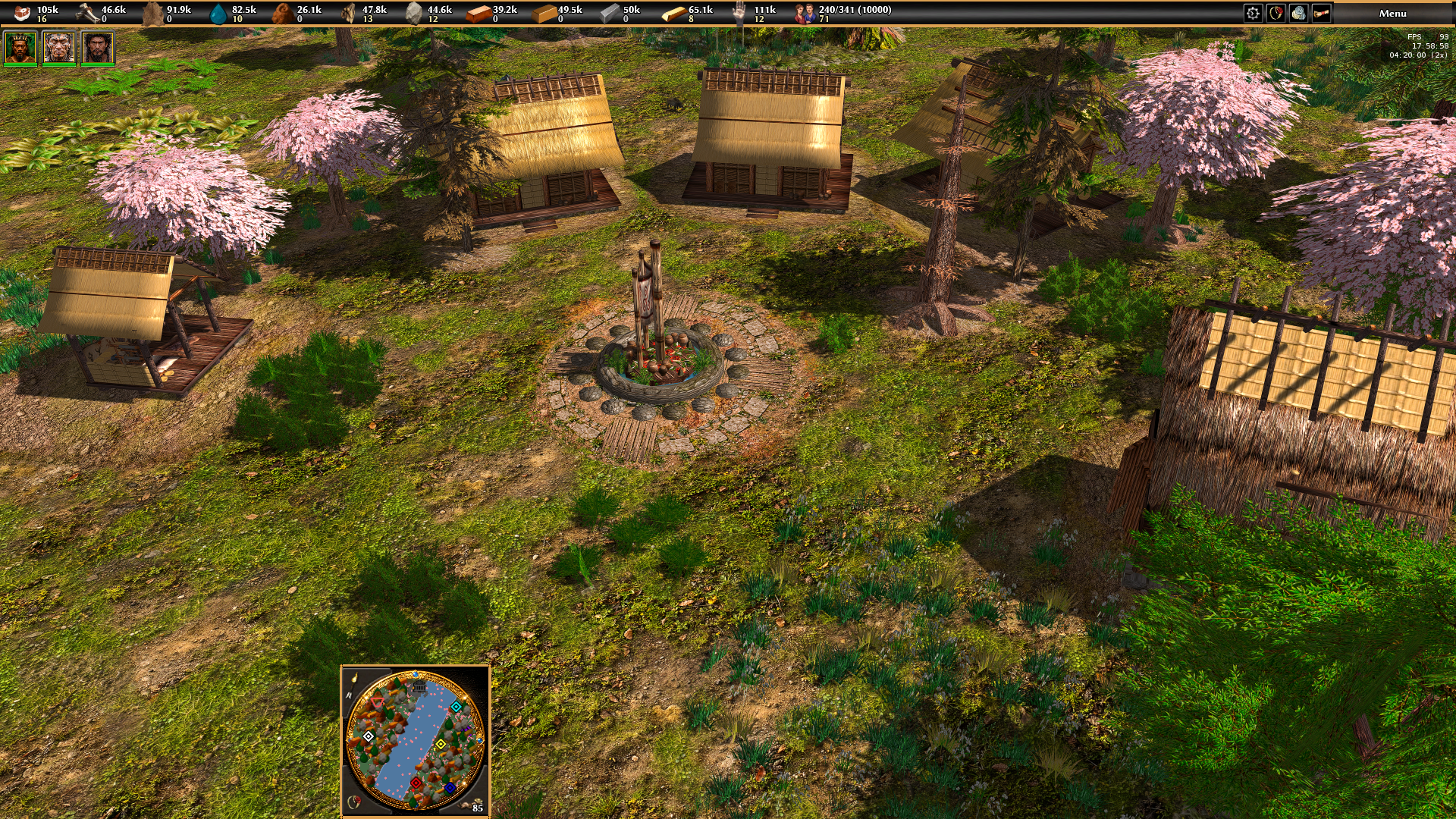
Hey everyone, I’m here to share some more news about my mod, World Rising! Unfortunately, I had a problem with my graphics card, which ended up burning out, so I was unable to work on the project for a while. But now I’m back! Even with this setback, I still managed to make good progress on development. I created new buildings and also worked on several new technologies for them, with the goal of making the progression between cultures more interesting and noticeable throughout the game. By the end of this week, I plan to add new units, finish more technologies, and create a few more buildings. Little by little, the transition from the Jomon culture to the Yayoi culture is really starting to take shape, and I’m very happy with how this evolution is looking visually in the game. For now, here are some images showing a little of the Jomon → Yayoi transition. As always, let me know what you think! Criticism, suggestions, and ideas are always welcome and really help with the development of World Rising. Thank you to everyone who continues to follow and support the project!
 4 points
 -
Once or twice a year, somebody appears and says women should wear more clothes, then they vanish quickly. (Shills for big textile industries?) Gotta give it to @NotReallyHelpingHands, they're more persistent then the usual troll.4 points
-
Who knows, maybe he wants them more naked, more muscular, and more oiled2 points
-
This could be something cool to add in the game if we wanted to, even if not for a main civ, for a campaign.2 points
-
Cherusci, Franks, Alemanni, Goths, Marcomanni. They all appeared before 300 AD.1 point
-
Agreed on the removal/restriction of techs for sparta. In general I'd love to see this applied to other factions as well, when it fits them historically. There could also be some restriction where some techs that would normally be available to some civs earlier, would be available later for other civs that have similar background/culture (bit misleading wording, but I'm thinking more like differences between gaul and britons, with gauls having better cavalry than the brits, and the tech requirements/restrictions reflecting that)1 point
-
Actually for naked fanatics, I can't find the exact source, but I do remember some discussion a while back I had on an different forum, where it was discussed that while most "naked fanatics" were definitely naked, a few still kept their pants on. I'll try and find the discussion again, but it does sound kinda neat little visual easter egg?1 point
-
It's not only the women, the gaul naked fanatics should be covered as well. It's the only right way.1 point
-
I forgot to mention,but why is Wei Qing's bonus named "Mandate of Heaven" ? he isn't even an emperor1 point
-
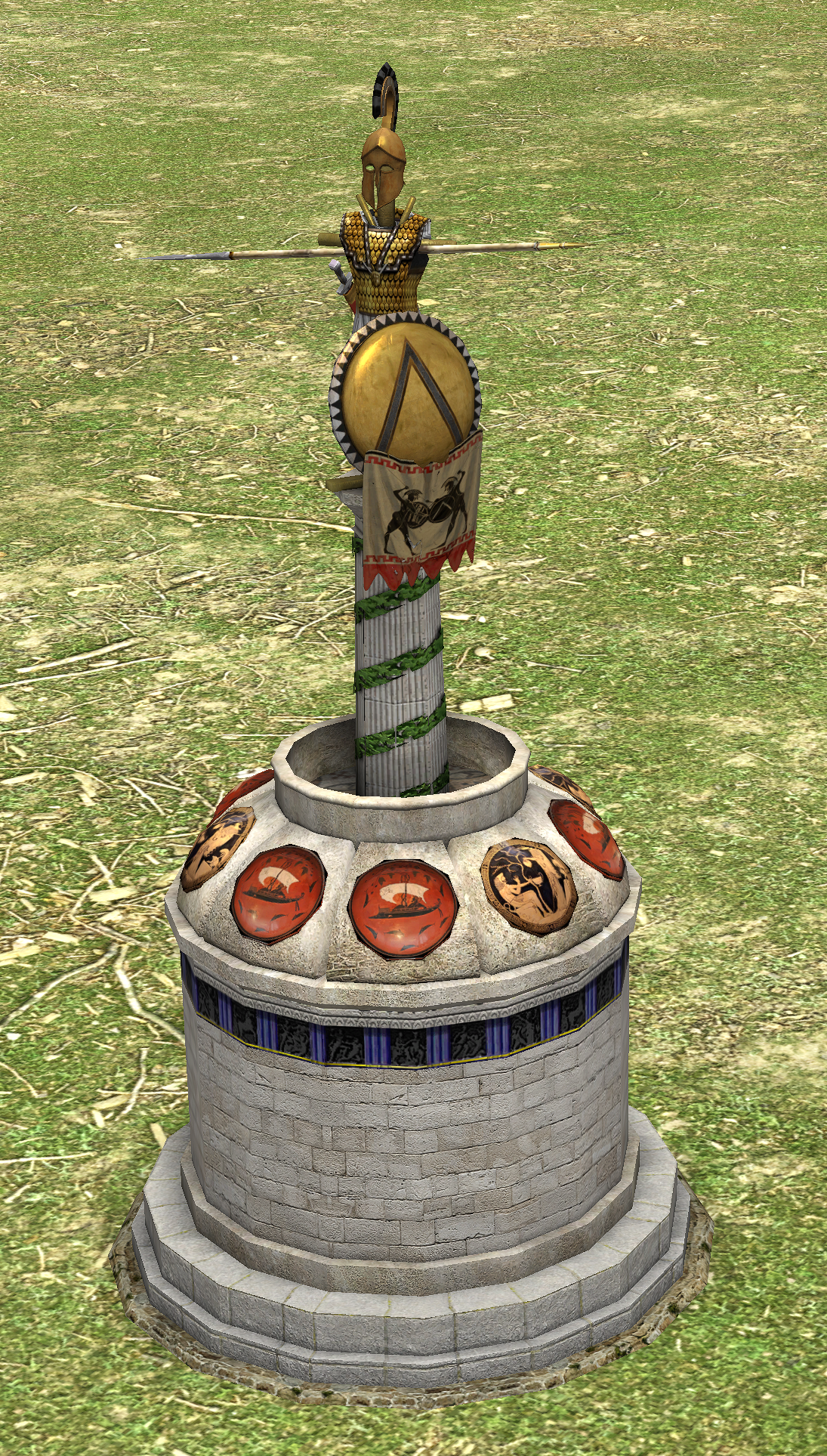
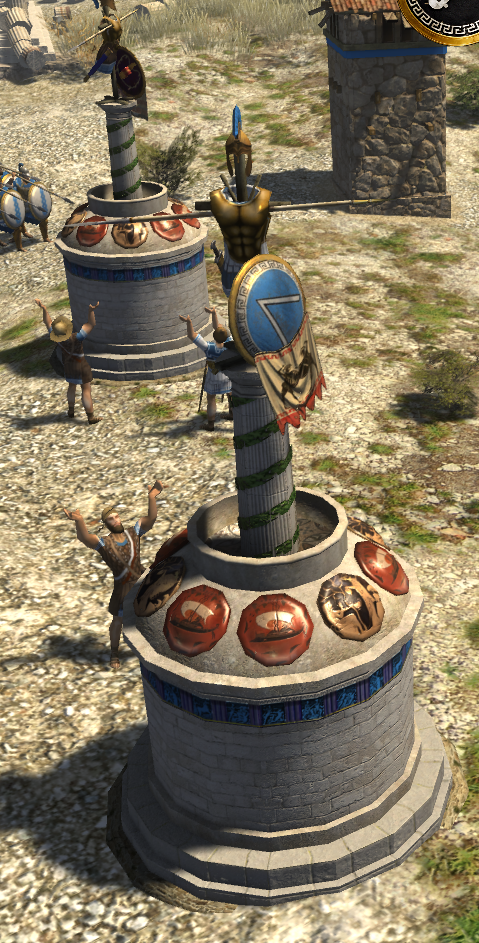
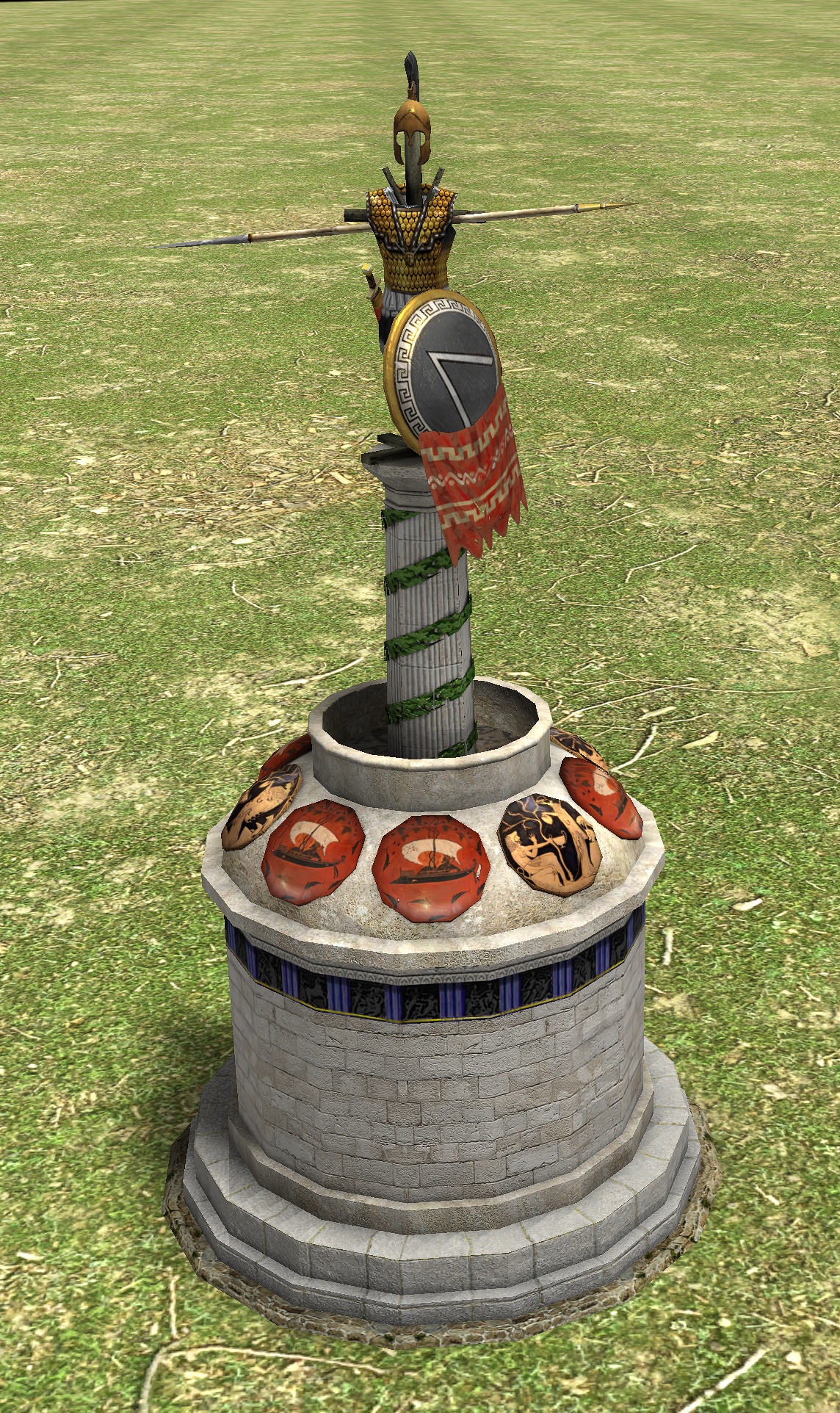
Here's the updated mod. I changed the positions of the three prop-points in the mesh tropaion_post.dae, all other files are untouched. Sure, would be nice if someone made a pull request. tropaion_0.28.2.zip1 point
-
The Suebians currently still have 1000 A.D long ships. I'd suggest giving them the same models as the Cimbri already have.1 point
-
LMAO my people1 point
-
Actually, thats wrong. Because...1 point
-
Possible, that'd be something to have an AI look into if you want this implemented. Also note that for a bridge, pathfinding isn't really needed, so just to have the units "walk" across the bridge should be easy. Not really. That's a bit difficult, I've done it before tho: A: make the "bridge" a unit B: give it Build Restrictions like a regular building C: give it a unique "amphibious" passability class in passability.js D: work out any small details like cost and foundation and stuff.1 point
-
Possible emblem https://balkancelts.wordpress.com/2012/06/10/galatia/ Galatian bronze plate and H-Shaped horse bit – from Hidirsihlar tumulus, Bolu, Turkey (3rd c. BC) Galatian coins: https://balkancelts.wordpress.com/2012/07/03/coins-of-the-galatian-kings/ Fig. 4-5 – Kings Of Galatia, Deiotaros. (Ca 62-40 BC) AE. Obverse: Laureate head of Zeus right. Reverse: Large monogram and Celtic oval shield.1 point
-
The reason I follow every unique mod.
 1 point
 -
Archeologically, the term Rhine-Weser Germanic is used after the Roman conquest and the creation of the Roman empire. What you have in mind are the Ubii, the Usipetes and the Tencteri but their identification is uncertain. Materially they are Celtic. The Ubii had the oppidum of Dünsberg.1 point
-
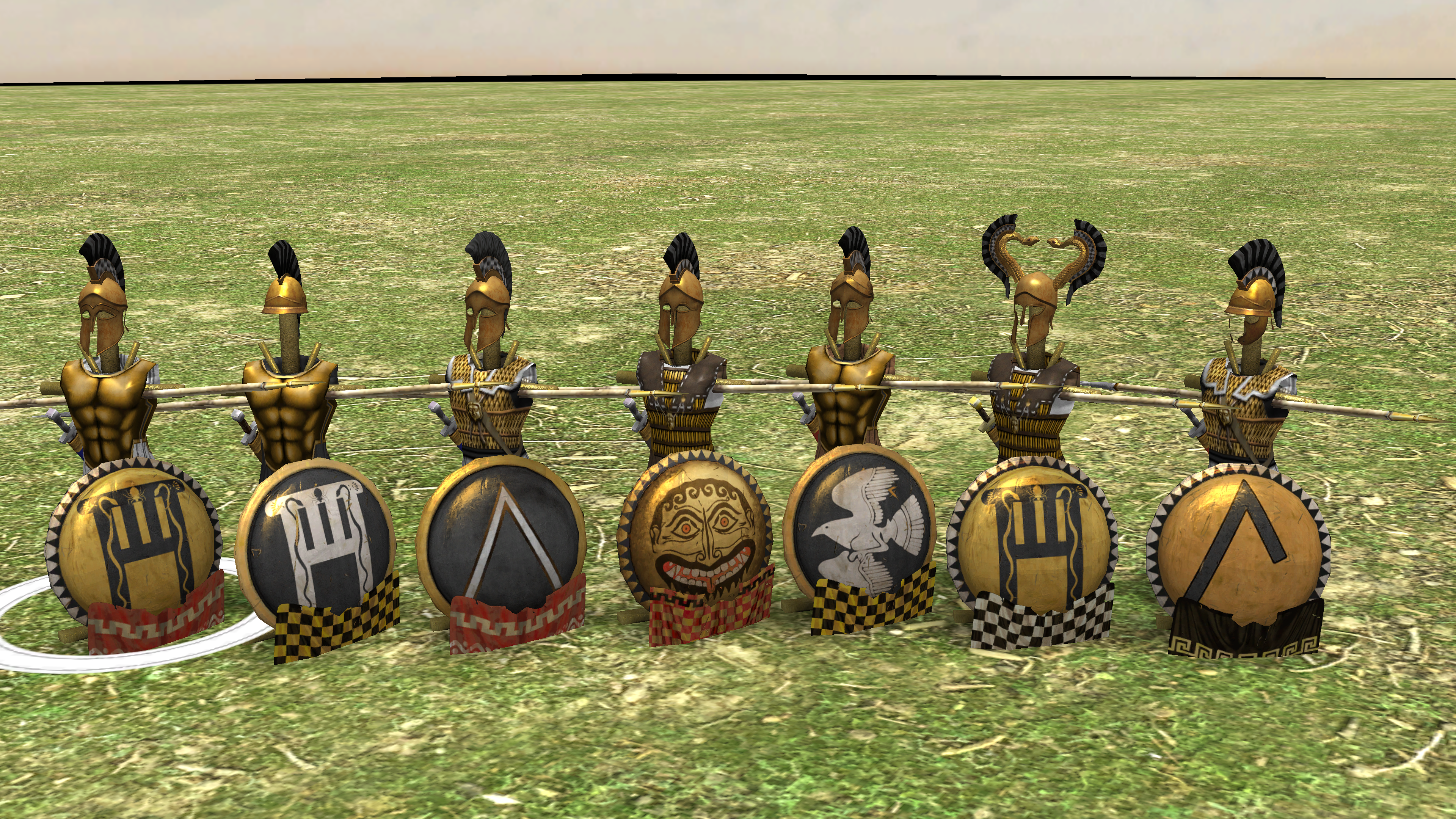
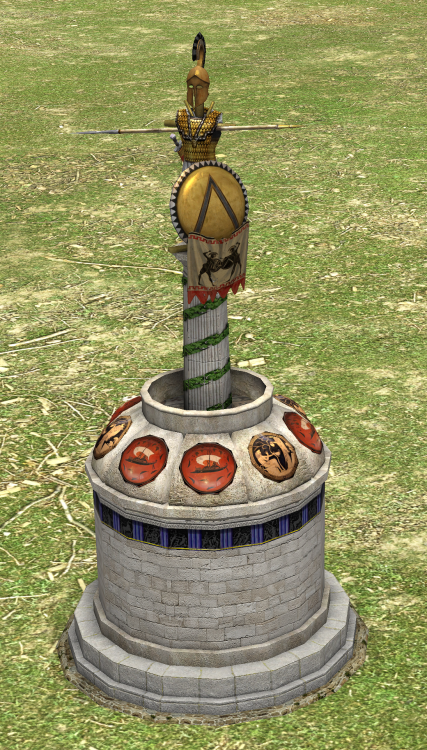
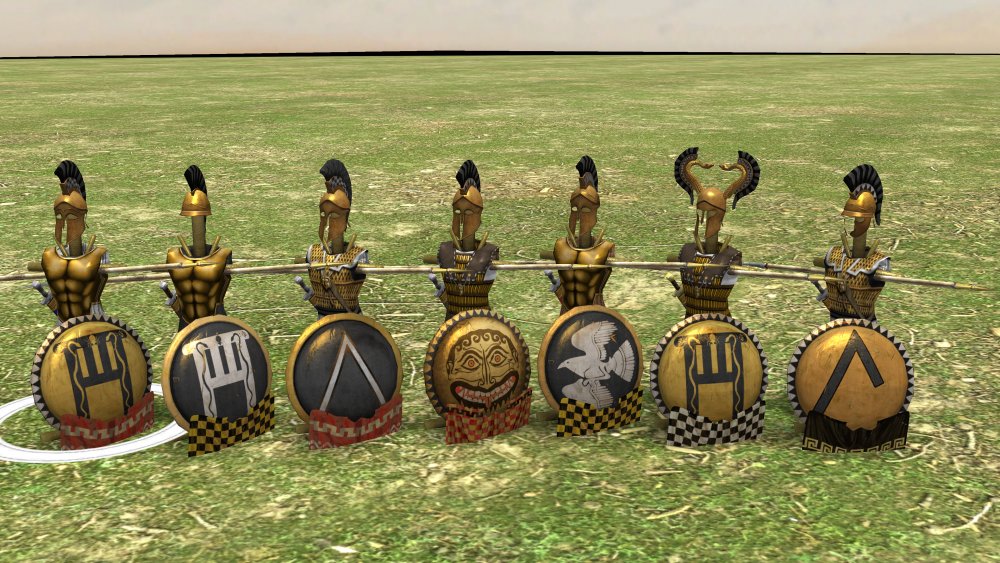
Thanks! Glad you like it All done: All the shields, armor and helmets are defined in tropaion_post.xml (so it's basically a small tropaion). I've added all kind of spartan shields: We can easily add or cut out any asset to match historical accuracy tropaion_0.28.1.zip
 1 point
 -
@Thalatta The actor actually uses several variations, so that it can be all things at once.
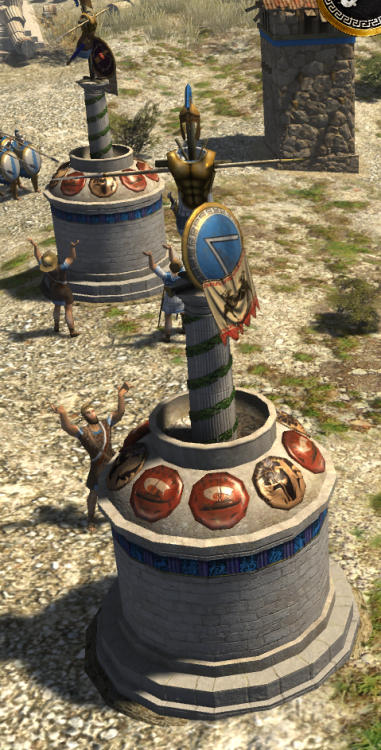 1 point
 -
Seems pretty good to me! You seem to have placed the spear as it was placed, according to these coins: I would just hang the sword higher up, and on the left side (as should be for right-handed people), to reproduce what's seen in the coins (maybe I'd also go for another kind of armour, but it seems @wowgetoffyourcellphone chose scale armour for some units, I wonder if for some reason): I'm quite confused about the helmet. You used a Chalcidian, while I'm not sure if the coins show a Boeotian, which would be highly irregular since the equipment placed in a trophy should be that of the defeated army, but on the other hand this is a highly irregular monument since, unlike all previous trophies, it was made to last, so I wonder if a decision was taken of using Theban equipment instead (which would require another shield device). I couldn't find any commentary on this for now, so I cannot say for sure what's going on with this (it could just be a Chalcidian or Corinthian tipped upward, but doesn't seem so on the right coin).
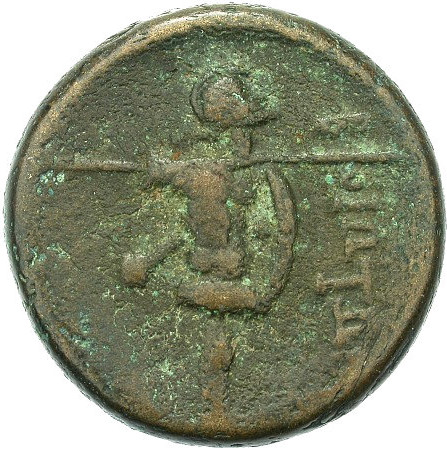
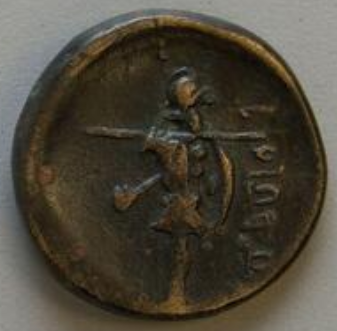
 1 point
 -
Thoughts? @Thalatta @wowgetoffyourcellphone tropaion.zip
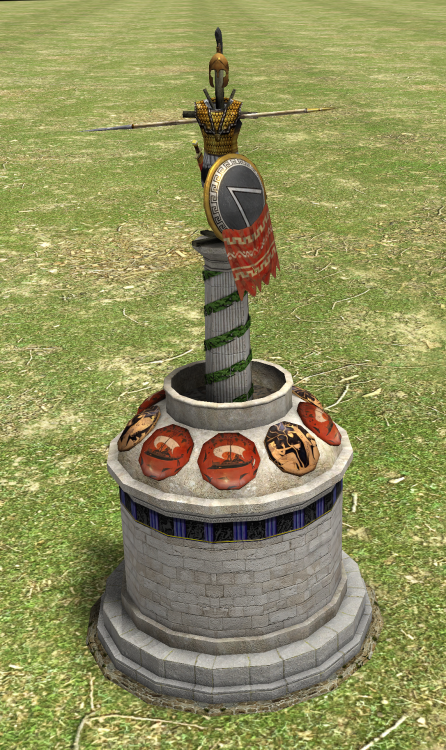 1 point
 -
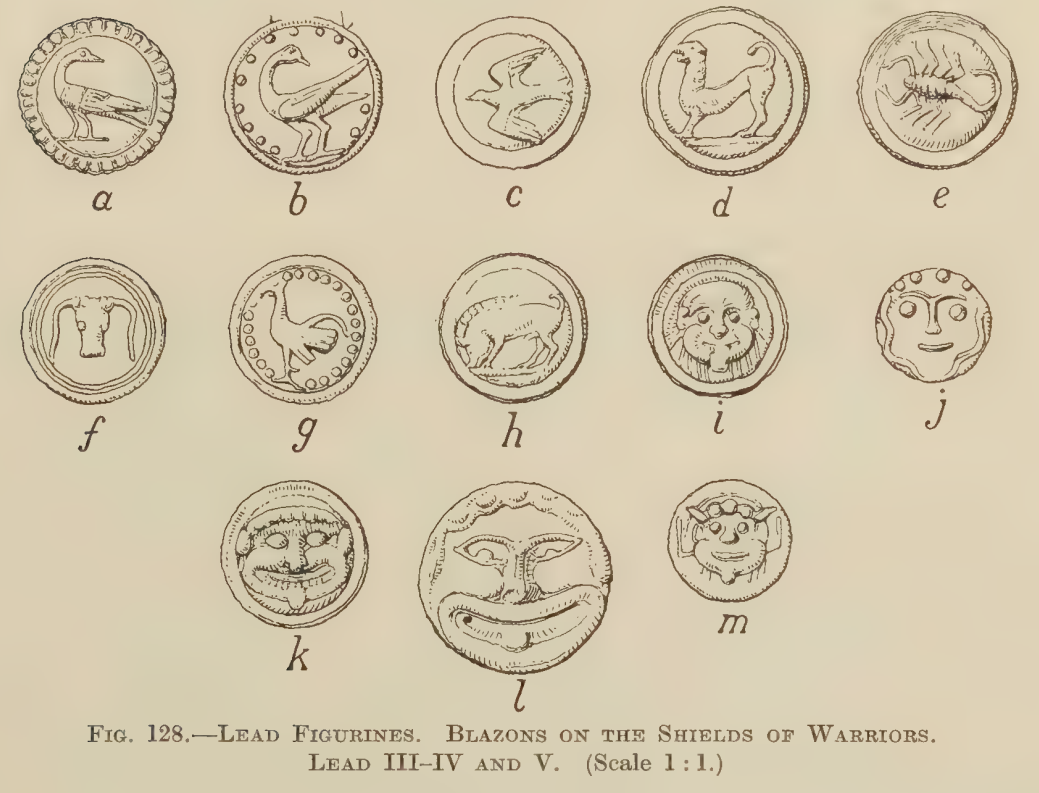
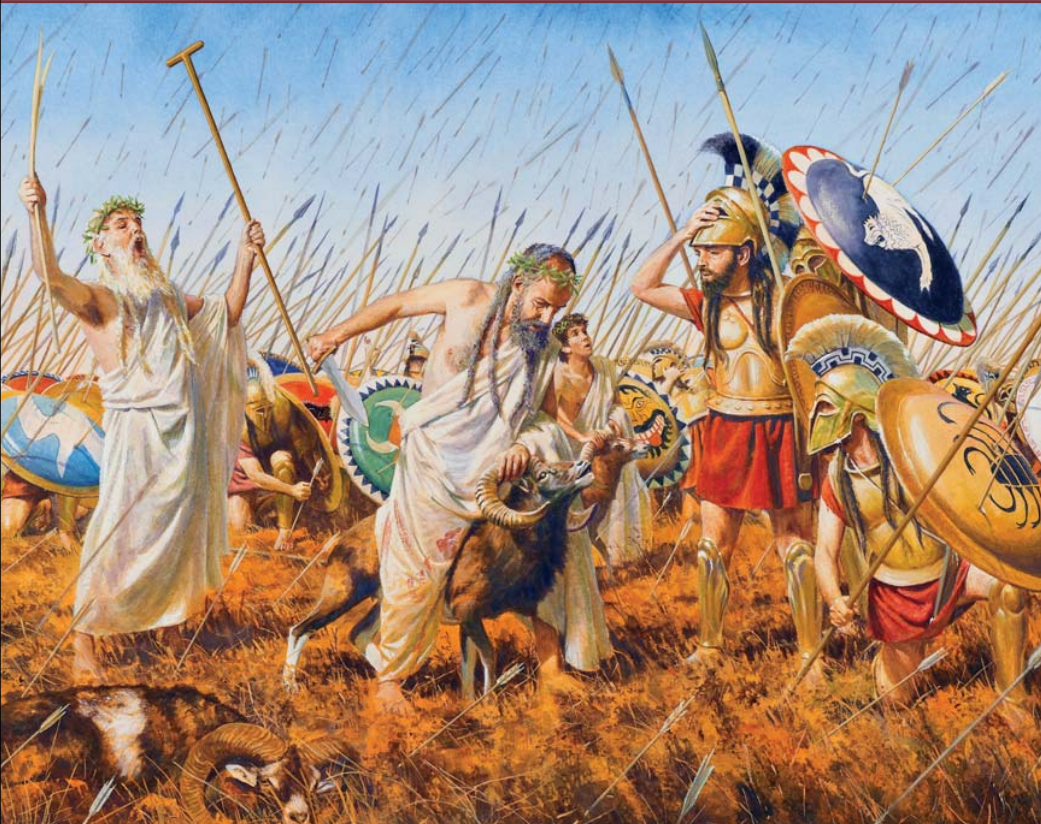
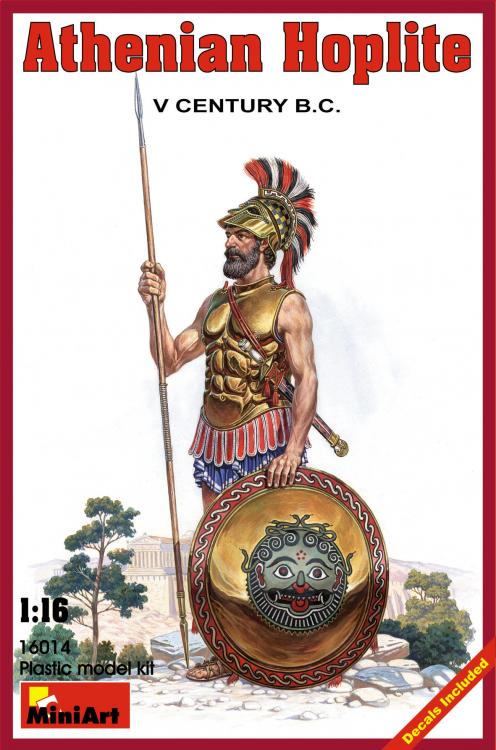
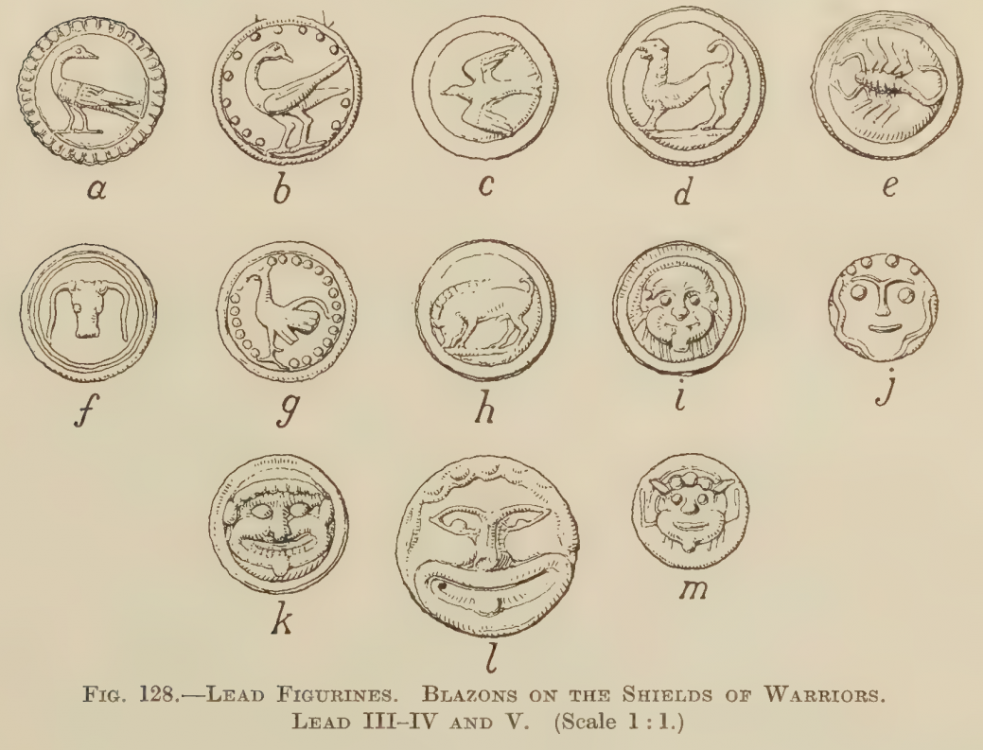
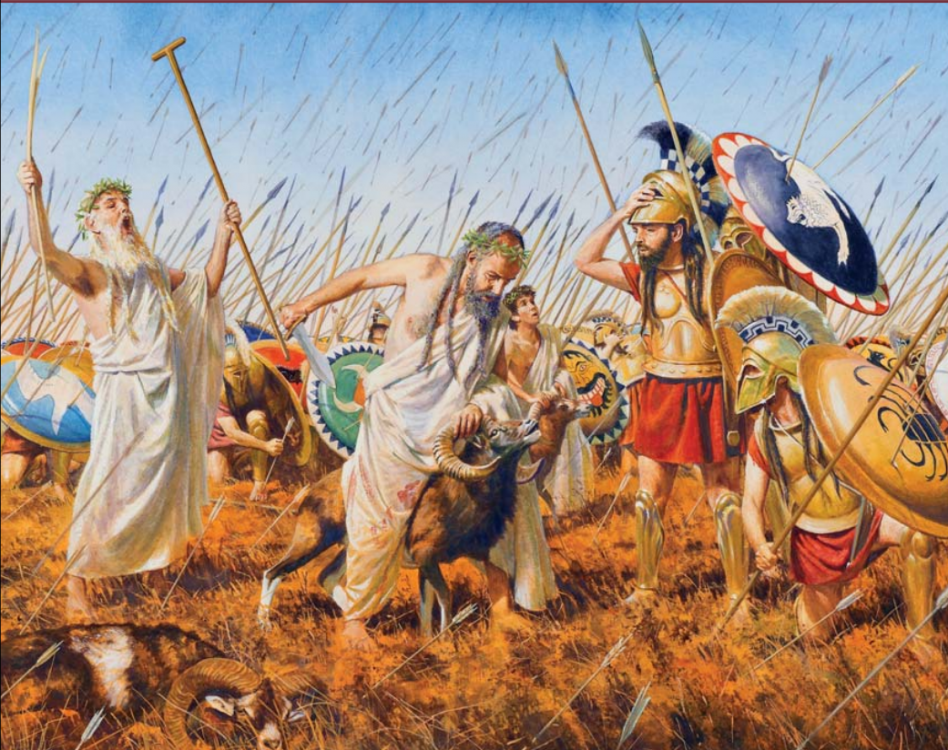
In Part I, I mentioned that one civ. bonus was wrongly called Hellenistic Architecture. Now I see it says Hellenic, I’m not sure if this was changed or I misread it (the tooltip explanation is still not right). In Part II, I said that Ship Cladding could be Lead Sheathing, but as I suspected, it should apply only to civilian ships (to make them more profitable, since it reduced maintenance) and not warships (because it would slow them down), which could have instead Pararrhymata (Side Protections), used after some point in the 5th century BC. Now I see Ship Cladding has been removed because the tech tree was too lengthy. In any case, this information might be useful for some (@wowgetoffyourcellphone, I’ve seen DE has a more extensive tech tree, not sure how far do you plan to push that, and for how much historical accuracy you strive for), and it’s my view to have many expensive techs, to penalise blind clicking, and open different ways to play each civ, depending on scenario, enemies, etc, reducing mechanicality and enhancing adaptability. Still, in what follows I’m not really adding techs, just mostly renaming or even removing them. Now, to the last part (planned at least, unless I eventually come across new things). Part III Simple things that should be: -Perioikoi Hoplite/Cavalryman and Skiritai Commando should be Perioikos Hoplite/Cavalryman and Skirites Commando, I think: not to mix plural and singular, if Ancient Greek speakers can confirm (otherwise it reads like Romans Centurion). Simple things that could be: -Hoplite Tradition could be Hoplite Reform: that’s what the bibliography tends to call it. Espionage and Counterintelligence could make use of some Ancient Greek terms (spies is kataskópous, apparently). -In Barracks, Conscription could be State Weaponry: I’d have called this tech Arsenals, but there’s already a building called Arsenal. It doesn’t seem like any change in “conscription” at the time of the game would have sped up troop output. Regarding the “establishment of state stores of weaponry”, in the 4th c. BC it became common for many to have stores with arms and armor, to be distributed to those who didn’t have them. The system of supplying arms and armour to Spartan citizens, helots and former helots was adopted around the Second Messenian War, and from at least 424 BC the state supplied arms and armour to helots and neodamodeis on garrison duty. This was followed by many around this time, like Athens, Syracuse, Carthage and Macedon. In the Early Hellenistic period the system of distribution of arms and armour by the poleis was wide-spread. On the other hand, some detachments like cavalry (at least for Macedon) were expected to provide their own equipment (from The Role of Metals in Ancient Greek History, by M.Y. Treister). -Wicker baskets could be Kalathus: wicker baskets existed for thousands of years. The calathus is a basket that “from the early 5th century [BC] onwards, when women working wool began to be depicted more regularly in Attic vase-paintings and elsewhere, the kalathoi show a more specific shape which would become standardised with remarkable consistency”, “this form which was optimized for wool-work may actually fulfill completely different functions. Among the objects portrayed in the painted architectural illusion decorating room 23 of the Villa A of Oplontis in the Vesuvian region, we see a kalathos filled with ripe fruit. Although there is obviously more to this strange still-life-like combination of a veiled kalathos and an unlit torch, the kalathos in it notably functions as a fruit basket. Using a kalathos for harvesting fruit seems to have been a common thing to do” (A Wool Basket in Clay: Remarks on the Change of Material, the Unusable Object and the Ancient Greek “Culture of Things”, by N. Dietrich). -Regarding the Storehouse, I wonder why all civs (except Carthaginians, for which stone techs are free) have all the techs. Maybe this is a bit provisory anyway, but I guess it would be better to differentiate civs a bit by not giving all of them. Some could have even different costs and benefits (or combined benefits, Archimedes’ Screw should give both farming and mining bonuses). These decisions should be informed by history, and then proper characteristics could be given, and things rebalanced. –Baskets, Wheelbarrow, and Horse-drawn Carts could be Wheel Ruts, Improved Roads, and Logistics: “China had the wheelbarrow over two thousand years ago, but there is no evidence for its use in Europe prior to the medieval period” (Early Metal Mining and Production, by P.T. Craddock). M.J.T. Lewis challenges this (considering a “one-wheeler” mentioned in a list), although concedes that at most it would have been used for light loads in construction sites, while not for farming and mining. Donkeys, mules (particularly on mountains) and oxen would be preferred over horses to draw carts, but had been like that for many centuries. On the other hand, better infrastructure and organisation played a more prominent role at this time. I hope someone will eventually come across better names though. –Wedge and Mallet, Shaft Mining and Silver Mining could be Wind Deflectors, Paired Shafts and Archimedes’ Screw, but not for Sparta: at this time, most mining improvements were on the fields of ventilation and drainage. “The generation of a draught may also have been achieved by means of a wind deflector, as in the case where the wooden shaft lining was used as a forced drain” and the “most original and sophisticated shaft type is that with parallel air ducts”, from The Laurion Shafts, Greece: Ventilation Systems and Mining Technology in Antiquity, by D. Morin, R. Herbach and P. Rosenthal, and “Diodorus Siculus specifically describes the use of the screw in mines” (Craddock). Sparta didn’t engage in large-scale mining, unlike Athens for example. –Servants, Serfs and Slaves could be Crane, Triple Pulley and Compound Pulley, but not for Sparta: the names used right now are not that exclusive of quarrying. “Because most quarries were open pits, prospecting, ventilation, and lighting presented fewer difficulties than in mining, and even drainage was easier to deal with” (Greek and Roman Technology, by A.N. Sherwood). “There is no evidence for the use of cranes or hoists in architecture before the late sixth century B.C., and until then heavy blocks must have been raised by pulling them up earth ramps”, “before the invention of the compound pulley, early cranes must have used a rope passed over a simple pulley”, and “the invention of triple and compound pulleys (trispaston and polyspaston) was a major advance in the design and mechanics of cranes. This has been ascribed, probably erroneously, to Archimedes”. Also, “the earliest secure mention of the compound pulley appears in the pseudo-Aristotelian Mechanics 18 (ca. 270 B.C.)” (The Oxford Handbook of Engineering and Technology in the Classical World, by J.P. Oleson). Sparta probably didn’t use any of these. –Iron Axe Heads, Stronger Axe and Sharper Axe Heads could be Improved Saw, Botany and Hand Plane, but the last one, maybe two, not for Sparta: I’ve read things like “the shape and dimensions of the saws were probably similar to today’s hand saws as early as the 6th c. BC”. Also, “between the third century B.C. and the first century A.D., Theophrastus, Cato, Varro, and Pliny the Elder wrote extensively about silviculture and the uses of various species of trees” (Oleson), and Theophrastus is called the father of botany. Finally, “most of the tools used for working wood were already known in the Bronze Age, and with the use of iron they took on the shapes that, for the most part, are still in use today. The plane, however, which requires a very sharp and durable blade, may have been invented and certainly only became common in the first century AC” (Sherwood), with some saying the Greeks invented it (I’m not sure if when part of the Roman Empire already). I’d remove at least the last one for Sparta. It’s been quite hard to find something relevant at the time of the game. -Regarding the Temple, I’m rearranging techs a bit more thematically. Some won’t be new developments of the time (as I always try to do), but are important anyway. –Sacrificial Ritual could be Amphictyony: which sacrificial ritual? (more later). Given that it reduces training time and removes metal cost, Amphictyonic leagues were religious-political associations that protected sanctuaries and became more powerful after the First Sacred War (before the start of the game, but other Amphictyonies would appear with the years), while they “have recorded their provisions for the upkeep of Sacred Roads (380-379 BC)” (Sherwood), facilitating religious processions. –Olympic Pantheon (Healing Range) could be Dodekátheon (Olympic Pantheon): following proper nomenclature. –Healing Range 2 could be Mystery Hero Cults: it added another layer to the traditional polytheism (Sparta was quite into hero ones, not mysteries). –Sphagia (Healing Rate) could be Sfagia (Sphagia): following proper nomenclature. –Hippocratic Oath could be Thysia: since it’s Healing Rate 2, and “sacrifices performed specifically for divination—that is, sacrifices offered to obtain the gods’ counsel and approval regarding a decision to be made or an action to be undertaken (hiera and thysia). In contrast, the sphagia, which can in one sense be considered a divinatory sacrifice but in many other respects diverges radically from hiera and thysia (for example, the participants do not consume the flesh of the sacrifice and the internal organs are not burned on an altar)” (“Divinatory Sacrifice (Hiera) and Divine Approval in Xenophon’s Anabasis”, by N.E. Okur). In general, Thysia is done at the altar, Sphagia before battle. –Living Conditions could be Physiotherapy: gives +1 HR to garrisons. It starts with Herodicus and Hippocrates. I’m specifying the Hippocratic Corpus a bit. –Battlefield Medicine could be Physiology, maybe not for the Spartans: a regeneration bonus. It starts with Alcmaeon of Croton and Hippocrates, although maybe Spartans didn’t pay much attention to this. Changes that have been already proposed: -Reduce Stable role: maybe Conscription could be removed, as I mentioned before. -Reduce Arsenal role: maybe most techs could be removed. Rams and oxybeles are fine, since there was “Spartan use of battering rams at Plataea in 429 BC” (Greek and Roman Siege Machinery, 399 BC-AD 363, by D.B. Campbell), and regarding the non-torsion catapult, this “machinery most probably arrived in the Peloponnese along with the troops under Cissidas, sent by Dionysius I in 368 or 367 B.C.”, although it was not used much (Greek and Roman Artillery, Historical Development, by E.W. Mardsen). -Reduce Market role: maybe Commercial Treaty could be removed. -Separate religion and medicine, eventually: I’ve seen the argument that “health is multifaceted”, but if a morale system is added, priests should affect it, while health should be left for physicians. For Ancient Greece, both could either come from the Temple, or the Asclepieion could be added. Units like druids could take both roles, being herbalists, though not as efficiently as a Roman surgeon for example, which could be produced from an independent building (Tabernae Medicae maybe). These are the extremes, many civs would fall in the middle. Then, some techs could be priest “abilities” instead (like Sphagia and Hiera, doing other things). Other changes that could be considered: -Scytale as civ. bonus: transposition cipher for communications, since 7th c. BC, for FOV increase. -Regarding emblems: sources are quite a mess regarding shield emblems, from a 1:1 scale fly to an army of lambdas, to modern authors stating we have no evidence they used the lambda, to someone stating lots of stuff who knows based on what. In conclusion, we don’t know a lot. But I’d have chosen the Gorgon head for the maxed up Spartiate, seems to have more relevance on certain representations, as can be seen along many emblems in The Sanctuary of Artemis Orthia at Sparta, by R.M. Dawkins, shown below: Then, some interesting random quotes from Treister’s book, which could eventually be useful: -By the second quarter of the 4th century [BC], fortress towers often incorporated specially designed catapult chambers. -The cost of maintaining an army and even more so of a fleet, even in peacetime, was considerably higher than the expense. -Introduction of the technique for casting life-size bronze statues. -Monetary courts, developed with the growth in the employment of mercenaries, led to an increasing need for coins. -Arms taken from enemies were usually dedicated to the gods. Only the Spartans considered it worthless to dedicate to the gods armour which had belonged to "cowards". And on a final note, I really recommend searching for things on the sources I’ve mentioned, there’s plenty on them that I haven’t read, and they could still hold the key to many relevant things for the time period of the game (particularly Oleson’s and Sherwood’s books). Here is a sphagia scene, from the front of Campbell's Spartan Warrior 735-331 BC:
 1 point
 -
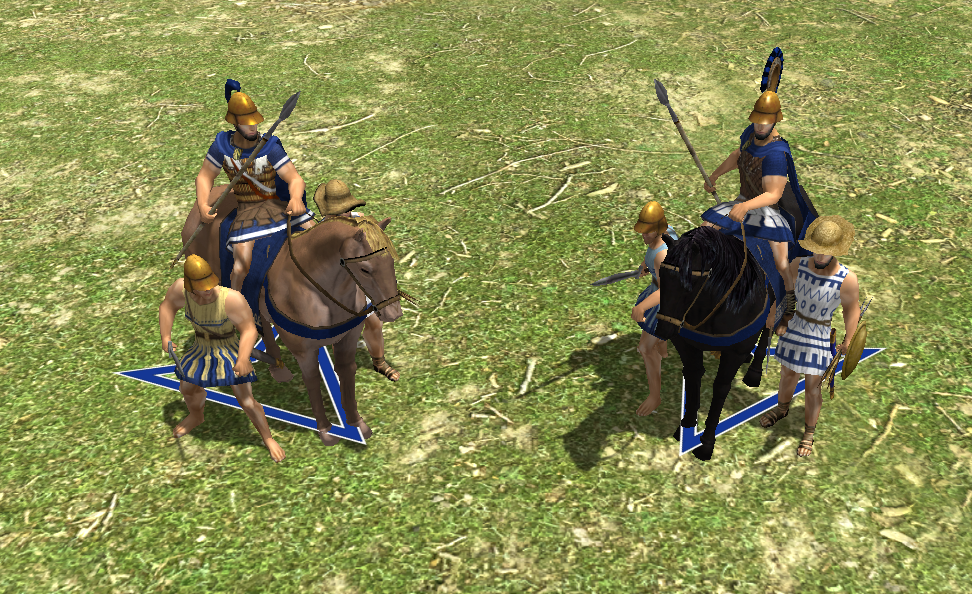
There are several ways to make Hamippoi work. I opted to make them all 1 actor and unit. Other ways could be: Cavalry can train cheap melee footmen called "Hamippos." Either as a default feature or unlocked with a tech. A tech called "Hamippoi" which boosts cavalry. A "Hamippos" infantry unit with a strong aura benefiting cavalry. Mix and match any of the above. I went with the one unit option for this release. Next release I could try something else.
 1 point
 -
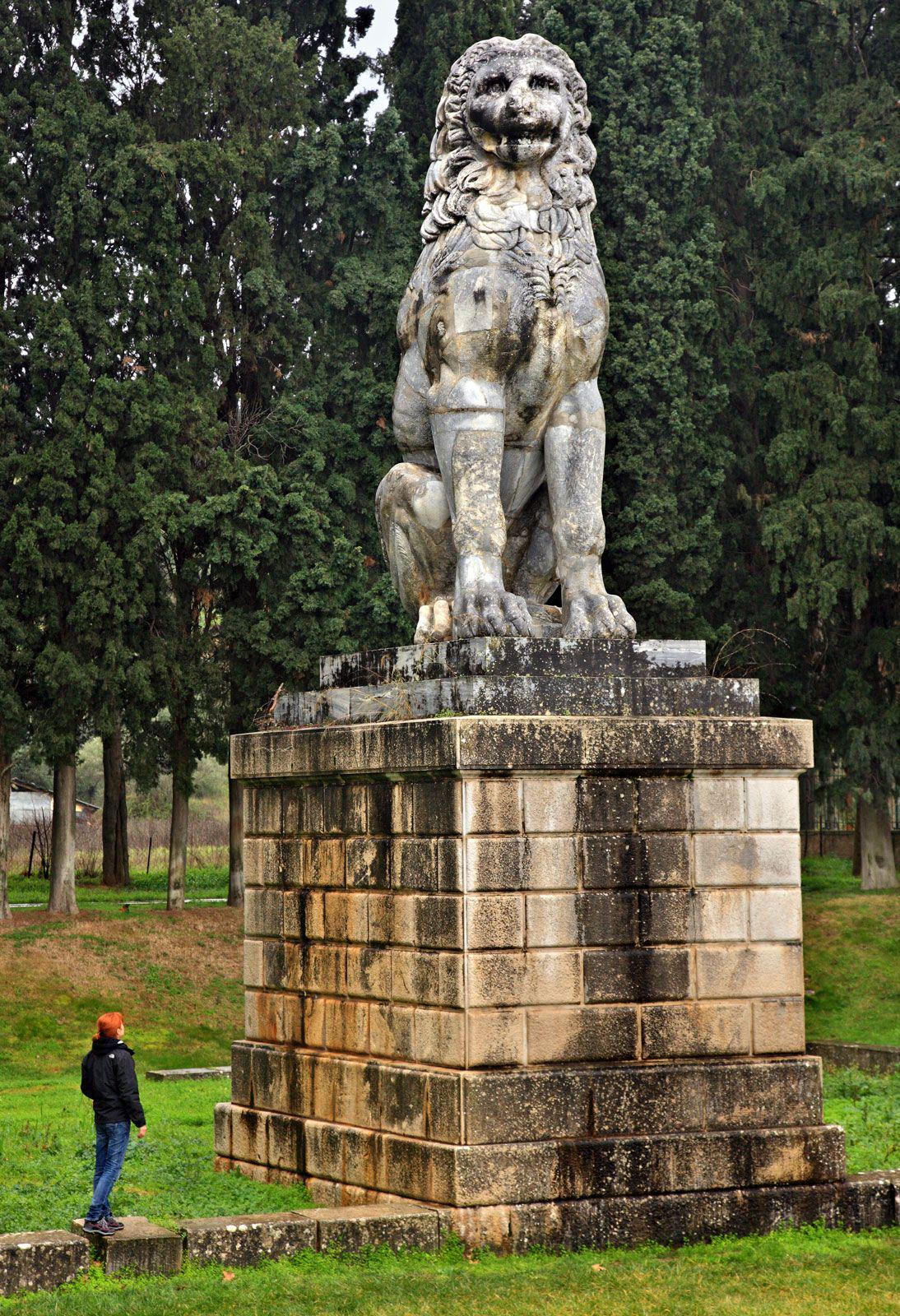
In case more is needed, another great monument they had is the Lion of Chaeronea (this time commemorating a defeat, against the Macedonians). It was rediscovered in 1818 and put back together in 1902. Not my picture (sadly it was hard for me to visit):
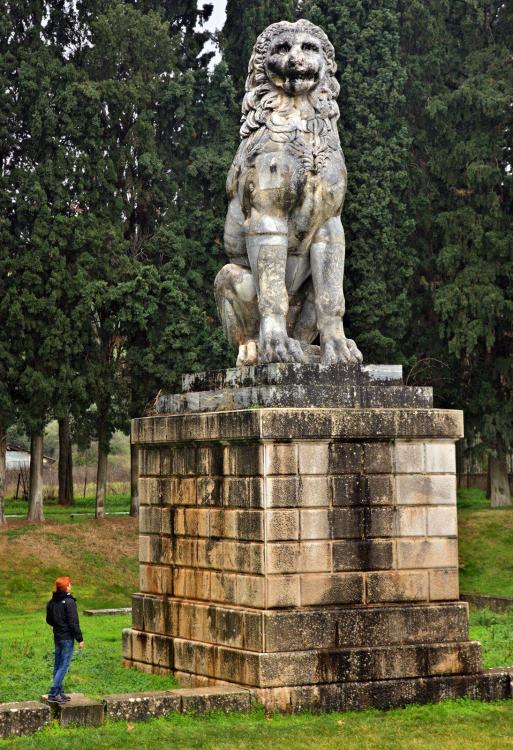 1 point
 -
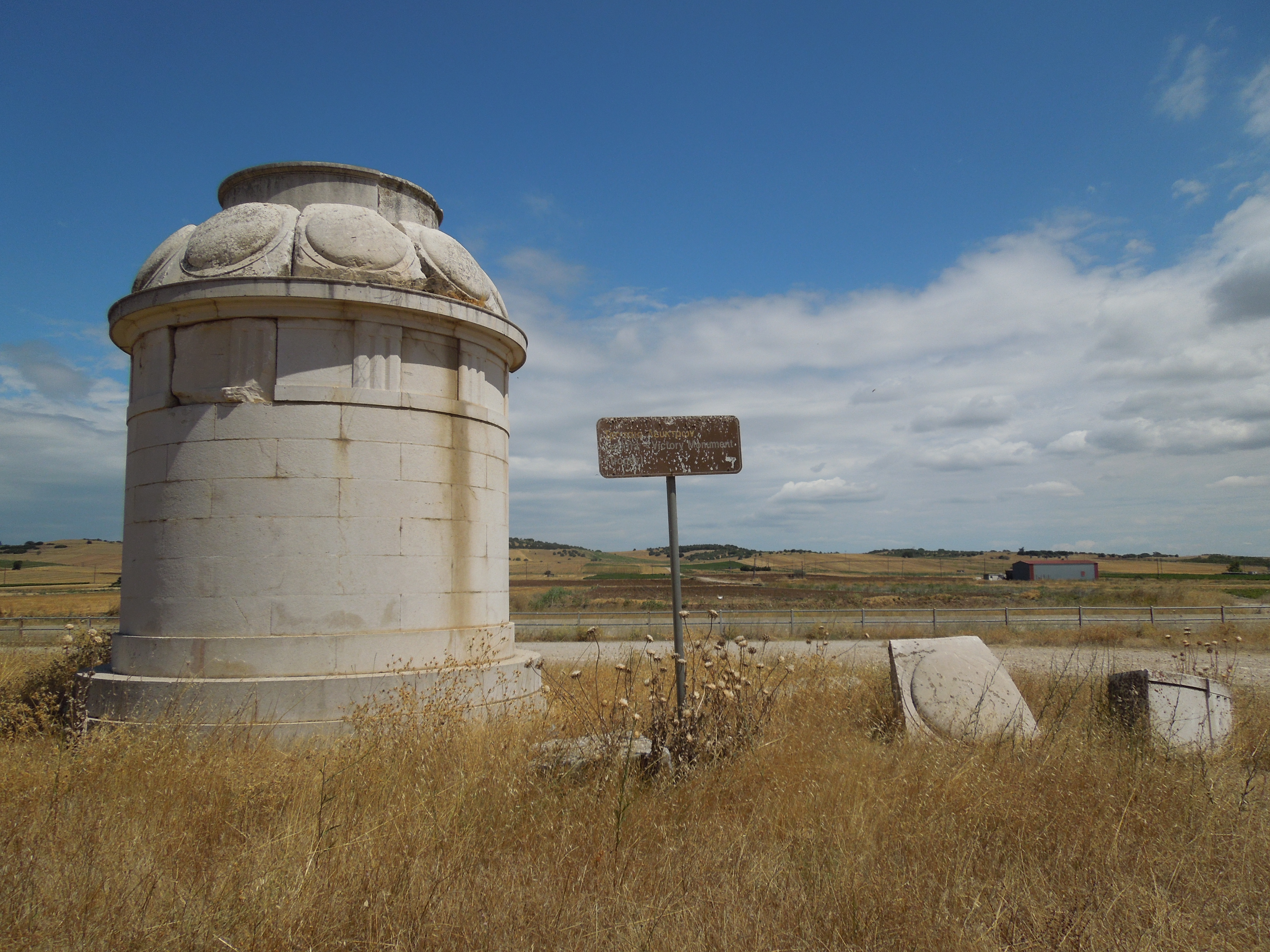
Besides the obvious Epaminondas and Sacred Band, I’m happy you have included their “fire-throwing engine”. From the top of my mind, I can suggest the Hamippoi ("those running with horses"), highly mobile light infantry (possibly javelinmen) that ran alongside cavalry and countered enemy cavalry (maybe could have mutual bonus). Xenophon says “Epaminondas on the other hand had made a strong column of his cavalry, also, and had mingled foot soldiers among them”, and says that “Another duty of a cavalry commander is to demonstrate to the city the weakness of cavalry destitute of infantry as compared with cavalry that has infantry attached to it. Further, having got his infantry, a cavalry commander should make use of it. A mounted man being much higher than a man on foot, infantry may be hidden away not only among the cavalry but in the rear as well“. Found this video about them (where at the end he mentions the Macedonians also using them), and since they are more a role for the fit and not a completely different unit, maybe it could relate to unit upgrade with experience: Regarding special structures, the Tropaion of Leuctra (trophy monument for their victory against the Spartans) still stands today a few km away from Thebes (where there's not a lot still standing), although only the top stone shields are original. Here the photo I took of it:
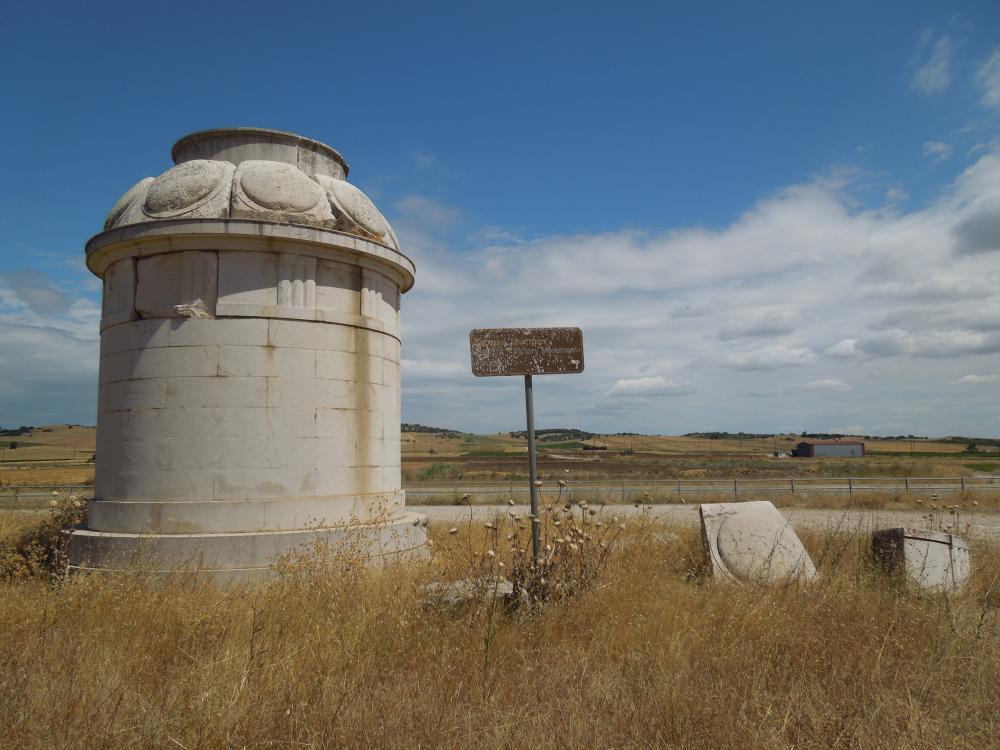 1 point
 -
Here are countries where I have been invited to go : - Korea - Brazil Both countries I would like to visit, but they are far off where I live (Canada). But, in a near future, the first place where I would like to go is : Japan. (LOL) Well, I'm not learning Japanese for nothing I'll probably like to live there part-time. Korea would then be really close to go! Here are other countries I would like to visit : - Ireland (Eire!). I've learned that the Shannon river is a really beautiful place, but most countryparts of Ireland are beautiful. - Bretagne (this is part of France, I know). My family seems to come from that land, even though my last known ancestors were probably French-speakers of Bretagne. - Melville Island (this is part of Canada) : I would like to visit that place especially because I find it really beautiful, in its way. But it's far. I'll need to build a 10 000km long trip to go there. But I'll see marvellous places along the way as well : my birthplace ; the Mackenzie River ; Banks Island (renowed for its flowers, just south of Melville Island). As for global regions in which I would be interested : - Middle East (especially Israël, Lebannon and Syria), what we call in French "Le Levant". - Mesopotamia. I know it's mostly Irak, and is Middle East, but it is to me a different place. There I would like to visit its night, for the stars are said to be beautiful! - Turkestan : This is the region which is just north of Afghanistan. The people over there speaks Turkish languages (hence Turkestan). I would like to visit Samarkand, Timur Lan's capitol. Timur lan is also known as Tamerlan.1 point
-
The graphics look good (for the most part) BUT Whenever you select a unit, you get a picture of it and those could definitely be improved0 points

.thumb.jpg.b21ca1d0c15fb56b42c39b25a0a40815.jpg)