Leaderboard



Popular Content
Showing content with the highest reputation on 2026-08-26 in Posts
-
Three versions ago? Maybe? Supposedly? It was communicated then. I never paid attention to it, but I believe @guerringuerrin.3 points
-
If you guys make the map and outline a story, I’ll write the required triggers for2 points
-
2 points
-
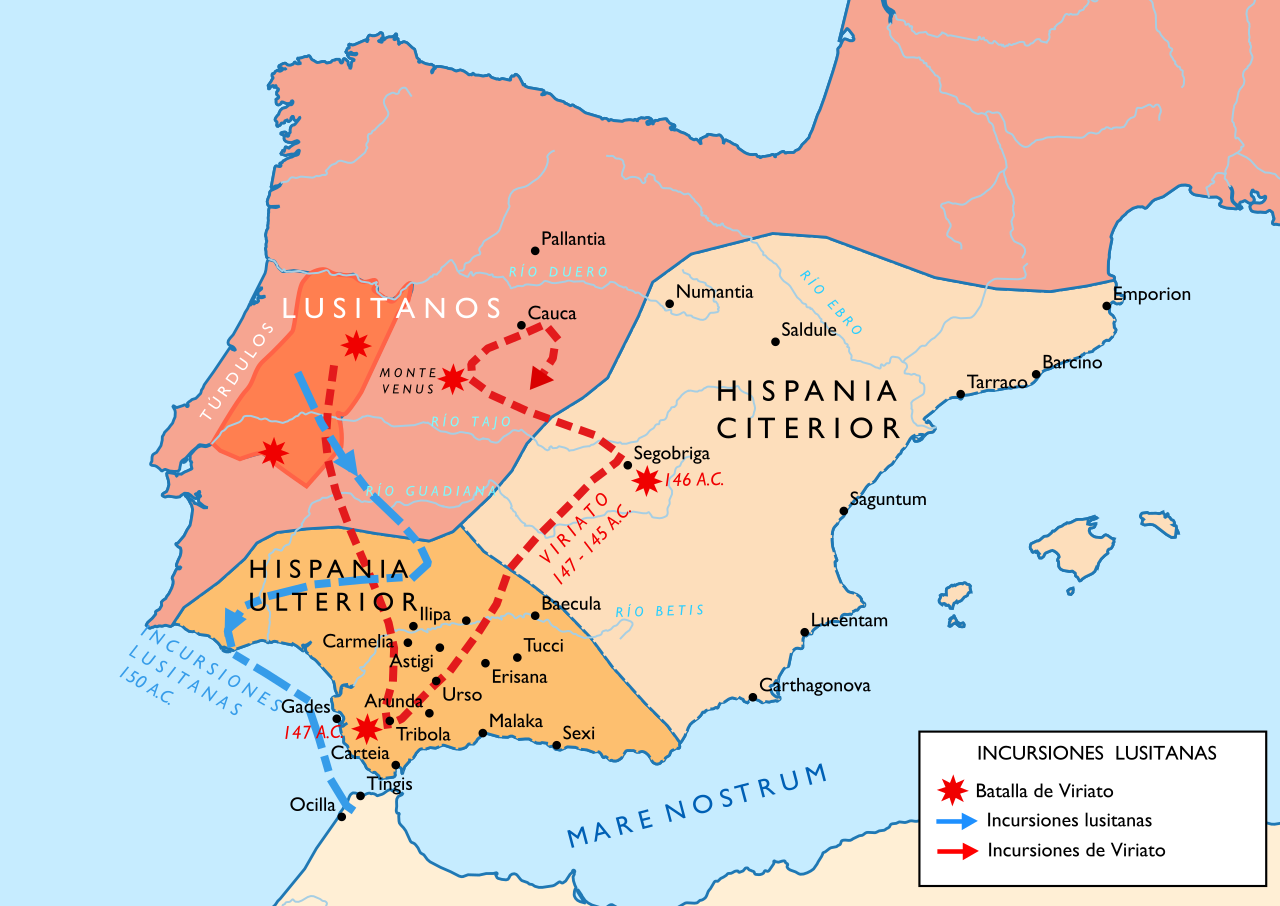
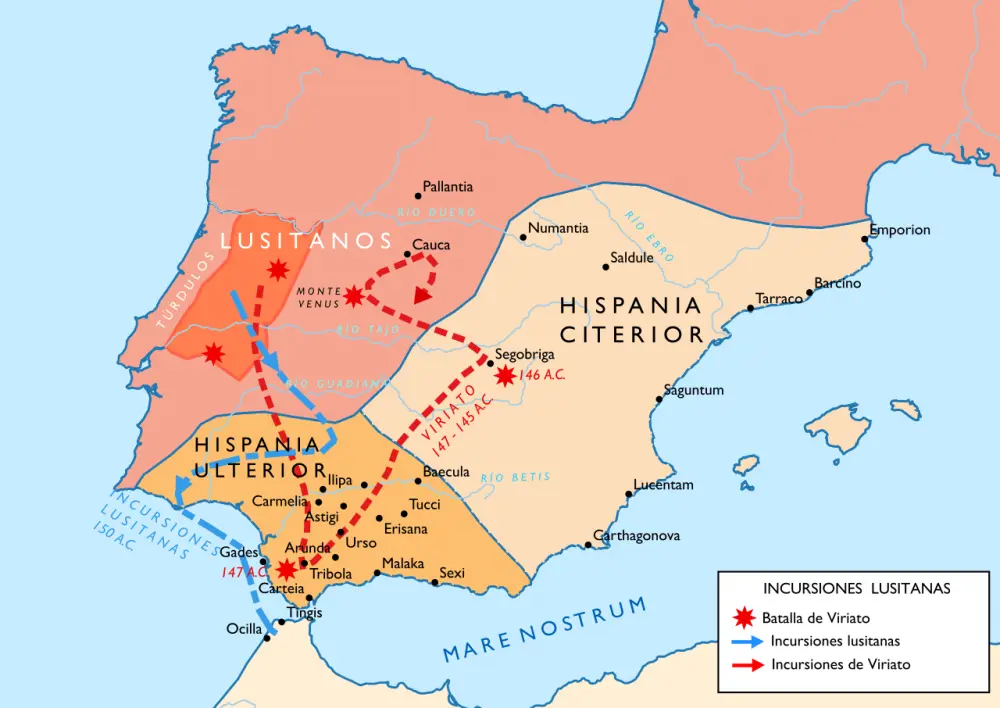
@lilypoppy I'll go through Richardson's commentary to refine each scenario. He states that Appian thinks Carpessus is Tartessus, but "it is often assumed that Appian here means Carteia, on the bay of Algeciras, close to Gibraltar". This means that Carpessus/Carteia should be in the south of the map, and Tribola in the north: Also checked A Historical Commentary on Polybius, by F. W. Walbank, but there's no more info regarding the Titthi and Belli, while in Hispaniae, also by Richardson, it's stated that "might be that there was a division between those of the Belli and Titthi who supported Rome and those who sided with the Arevaci", meaning, maybe not all of them were pro-Roman (there are contradictions between Appian and Polybius anyway). Finally in The Decline of the Roman Republic, by G. Long, I find: "The quaestor of Vetilius was with the troops which fled to Carpessus. Appian says that he applied to the Belli and Titthi for five thousand men, that he received them and sent them forward against Viriathus, who killed them all. The quaestor himself kept quiet within his walls waiting for help from Rome. We cannot understand how a man shut up in a town on the south coast could communicate with people in the centre of Spain, and receive troops from them. If the Belli and Titthi fought with Viriathus, it may have been in their own country and in self-defence. Appian's narrative is here unintelligible". Trying to follow Appian as closely as possible (not to overcomplicate ourselves), I'd leave things mostly as stated before, assuming that somehow the Titthi and Belli are at the scene already, or arrive after being called upon before these events, or just after but a long time has been compressed. I'm thinking then, as I said before, to "move the Titthi and Belli colonies closer to the Romans", but maybe instead of colonies they should be rally points from where their armies will enter the map after triggered. That would be great, thanks a lot! I have no problem writing whatever needed.
 1 point
 -
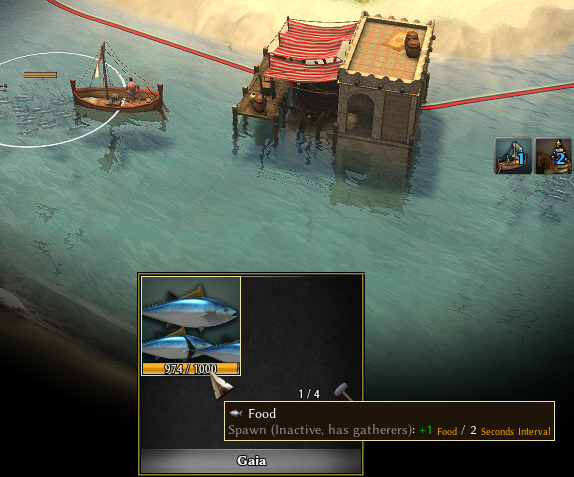
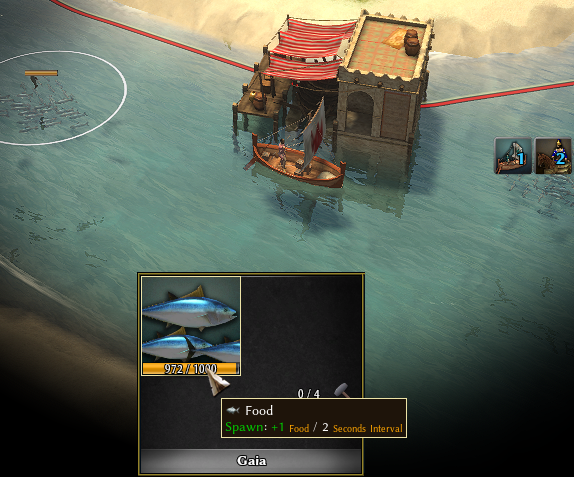
Fishes have the specificity (unlike berries) to stop regenerating if they have any gatherer on them. So it doesn't matter much if you have 1 or 4 boats assigned they will not regenerate much anyway.
 1 point
 -
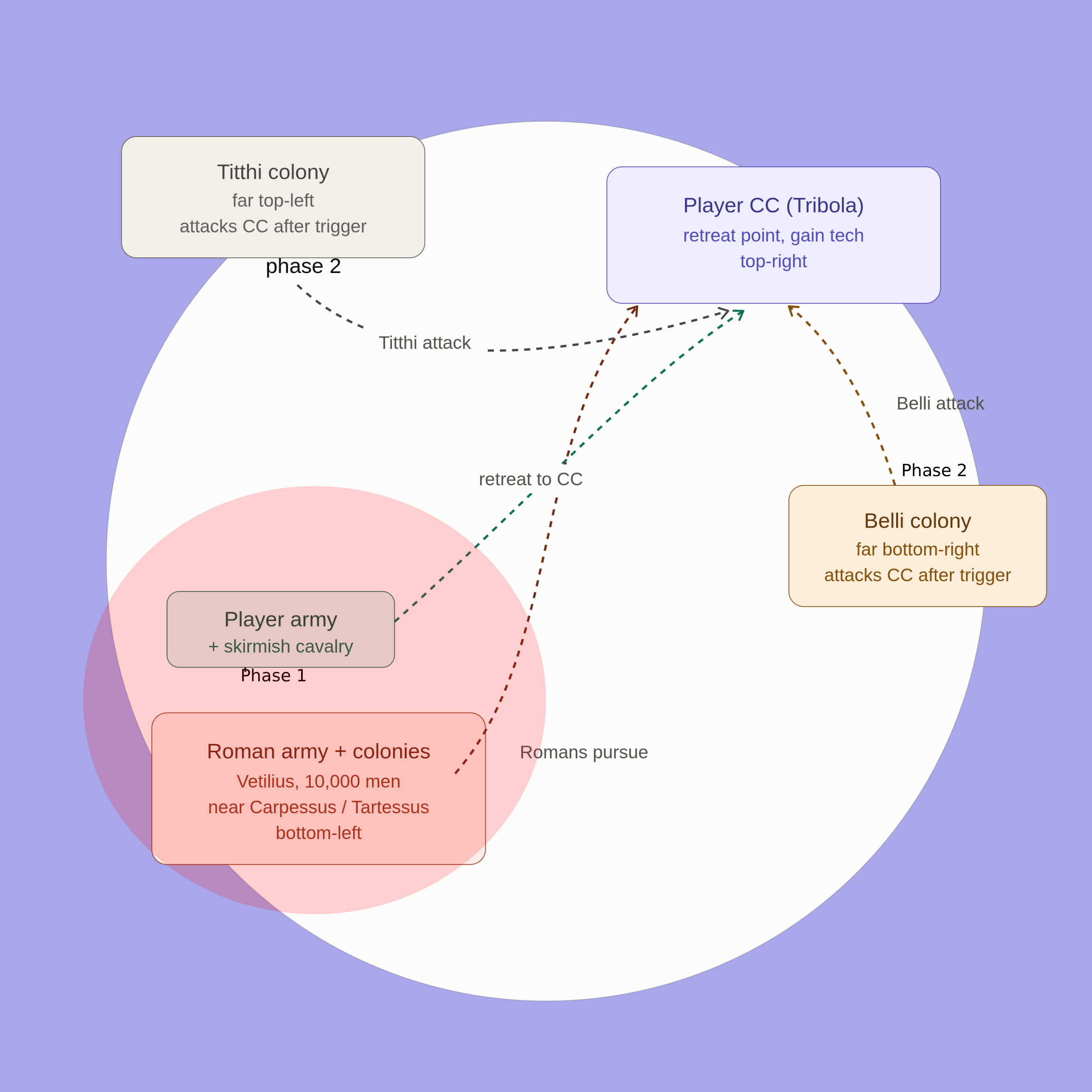
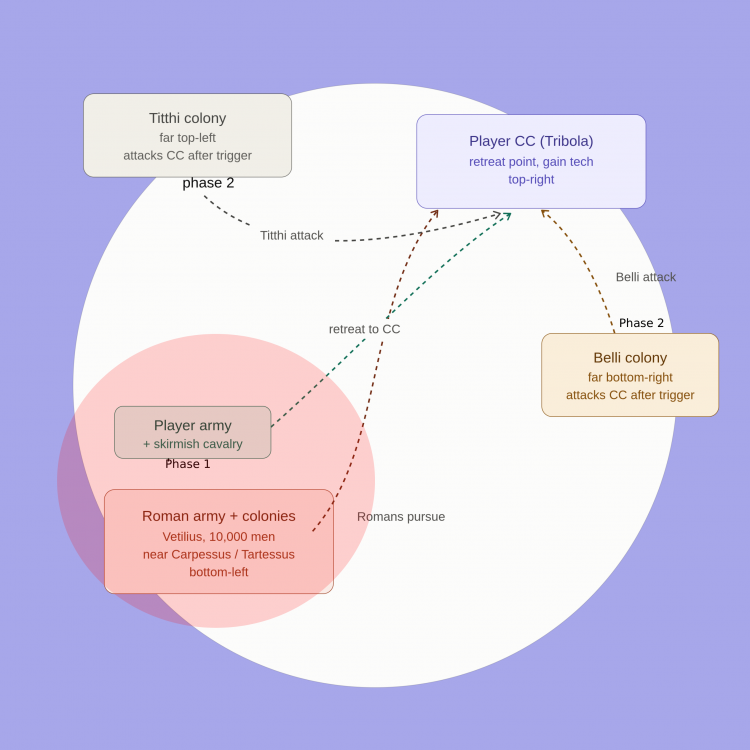
@Thalatta Here's how I understand the scenario 1 , let me know if this is right: Setup: player starts bottom-left near the Roman army (Carpessus/Tartessus). CC is top-right, representing Tribola. Phase 1: skirmish cavalry distracts the Romans while the rest of the army retreats to the CC. At the CC: we regroup and grow stronger (tech, troops, defenses) before the Romans arrive, then fight and defeat them — Vetilius dies here. Phase 2: a trigger fires and Belli/Titthi armies attack the CC. We destroy them to win. Two questions: Is the CC meant to be Tribola specifically? Is the fight against Vetilius at the CC a real battle, or a scripted event on arrival? Thanks again for all the work you put into this! Here's the map:
 1 point
 -
Not to be rude Emacz, but it’s kind of annoying that every post you make outside of your one thread is just an advertisement, I click on each thread in hopes of some new knowledge or idea, and it’s just a commercial.1 point
-
Ready for your first Pull Request?1 point
-
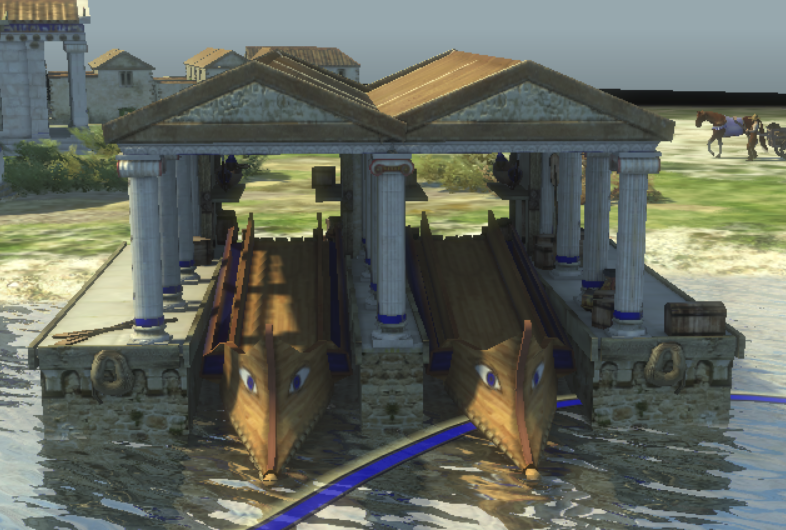
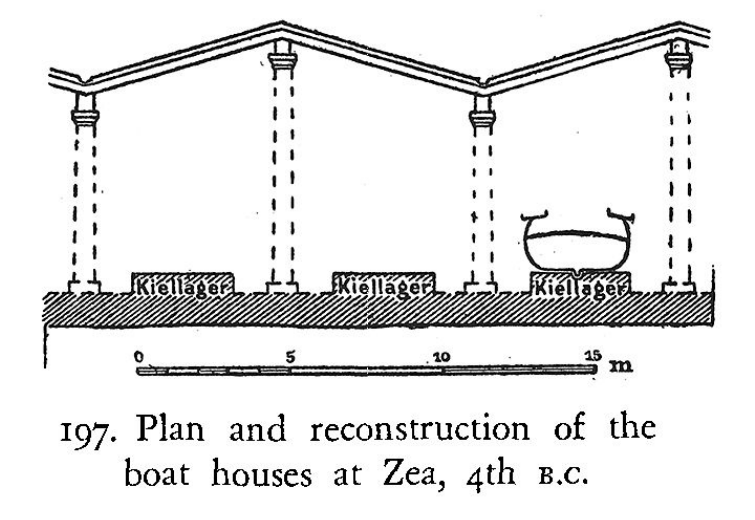
Shipsheds should be rotated 90°, that way you can easily make them longer in the correct direction to fit the ships inside. Vanilla follows this idea, but it's also wrong there, because the game does this: When it should be like this (more efficient): These are Athenian structures, built monumentally, most other Greeks (like the Thebans, who were not good at sea) would use impermanent timber shipsheds.
 1 point
 -
Maybe we should enhance the tooltip of fruits (bushes, trees ...): https://gitea.wildfiregames.com/0ad/0ad/src/commit/2cc0cf457a766000e6372355e8c2b97e824bb962/binaries/data/mods/public/simulation/templates/template_gaia_fruit.xml#L9 Any ideas?1 point
-
Gosh, I never noticed this! They do, just checked. That has to be one of the reasons why I was recommended time ago to distribute the gatherers among different berries, one ends extracting more food this way. I can't find something I proposed time ago: I wouldn't make the berry tree disappear when done, but leave an empty bush that can provide a little wood. Either one chops them for wood, or leaves them for food. Now I'd add that one could then make regeneration a bit different: not slow and continuous, but faster and at certain times, depending on the tree type.1 point
-
1. Find gitea repo site and clone 2. Create your new branch off main 3. Do changes on your branch locally 4. Commit and push changes to remote version of your branch 5. Raise PR from remote version of your branch to main1 point
-
who should I ask for to make pull requests for these stuffs? (only the stuff that is "uncontroversial" like the hero speed bonus applying to hero itself if applicable, or ele garrison inside forts etc so that the gitea isnt clogged with balance stuff) ANYONE UP FOR THE TASK? XD1 point
-
3rd one looks really good. Hence, variations:1 point
-
@Obelix in gymnasium the spear champs... they are city guards. they can be trained from the gymnasium or the regular hoplites become city guards upon ascension to the "4th rank" over the regular 3rd rank by gaining experience and @Dakara I think the marian is cool... but still maybe 10% more exp is good1 point
-
"Strategy Game Icon Style" (the standard I've taught the LLM to maintain): Iconized for in-game: Athletic Dances (replaces "Feminine Mystique") Cost 300 Food 300 Glory Effect Spartan Women +100% attack. Spartan Women +25% health. Spartan Women +5 carry capacity for all resources. Description Ancient Spartan dance was closely tied to education, athletic training, religion, and communal identity. Spartan boys and men practiced martial dances, especially the pyrrhichē, which imitated combat movements—dodging, striking, advancing, and retreating—and helped develop rhythm, agility, and coordination. Choral dancing was equally important at festivals such as the Gymnopaidiai and Hyakinthia, where age groups performed songs and dances that celebrated discipline, military virtue, civic continuity, and the gods. Spartan girls also received unusually extensive physical training by Greek standards, and dancing formed part of that culture of public athletic display. The female Spartan dance usually called the bibasis (Greek βίβασις) was an especially athletic form. Ancient descriptions portray dancers repeatedly leaping upward and striking or touching their buttocks with their heels while airborne, apparently counting the successful repetitions. It was therefore less like a restrained ceremonial dance and more like a combination of dance, jumping exercise, and competitive athletic display. Both young men and women could perform versions of it, but Spartan girls became particularly associated with the feat. One ancient anecdotal tradition even praises a girl for performing a thousand consecutive kicks or jumps, although such numbers should be treated as celebratory exaggeration rather than a precise athletic record. For Spartan women, the bibasis fits the broader educational ideal attributed to Sparta: girls were encouraged to cultivate strength, stamina, coordination, and bodily confidence, rather than being confined exclusively to domestic accomplishments. The dance would most plausibly have been performed in a short, practical tunic, allowing freedom of leg movement, probably barefoot, and without armor. It was athletic, rhythmic, and distinctly Spartan in the way it blurred the boundary between dance and physical training.1 point
-
1 point
-
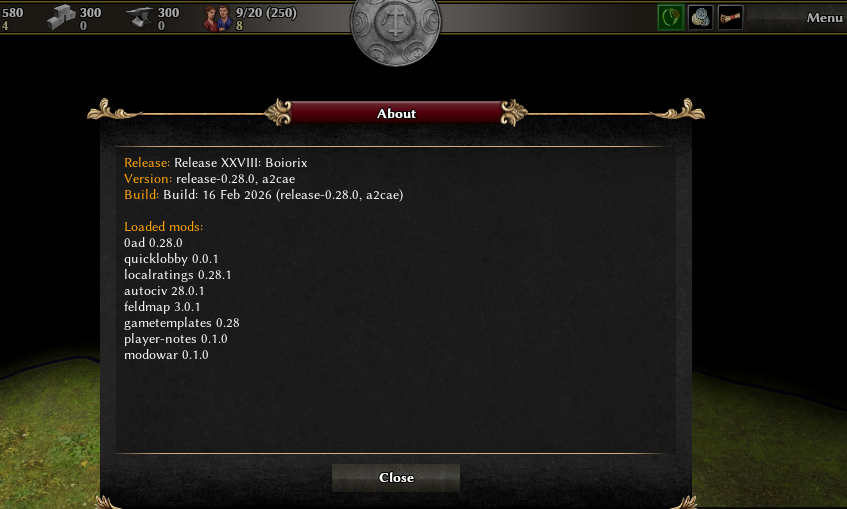
The About page and moving that info from the top ribbon to that page is now a must have for me. Good job on that. Let's make a PR for it! About the color overlays: I'd much rather just have a visible timer like any other RTS in existence. The color overlays are a neat idea, but not intuitive at all.1 point
-
AFAIK that's how they behave in the wild. And I agree that foxes should not attack unprovoked.1 point
-
@lilypoppy, this was actually harder than I thought because there are some issues with Appian's account. I ended up using another version that made more sense, for then to realise it was "forced" to make more sense by transcribers. In any case, I'm using it, and will explain things at the end (referred with *, ** and ***) of the following summary (hidden for those who just want to skip it): For my campaign proposal, first of all, I don't really know what can be actually done regarding certain triggers, hopefully things can somehow work as I state (and I've seen in other games), otherwise modifications will be needed. Campaign title: you used Fire of Freedom, which sounds a bit weird to me. I guess it takes from Polybius' "Fiery War" term regarding these and related events. Burning Heart could be another name, hinting to Braveheart (a barely similar story), and it's a song by the band Survivor (Viriathus survived the massacre, just to have some obscure connections I guess). I arranged all in four scenarios: Scenario 1, The Blood of Lusitania (based on §60, §61, §62 and §63) Introduction: mention of the ongoing war, Viriathus made leader after saying they should escape the Roman army instead of seeking talks, or they could be massacred again. Setup: one starts with no resources, with a CC on one extreme, and on the other extreme an army with skirmishing cavalry close to a Roman army and settlements, with Belli and Titthi armies standing by (if Carpessus is Tartessus, the armies should start in the lower left, and the player CC in the upper right). Objective: distract the Roman army with skirmishing cavalry while the rest reach for the CC. After a certain time, supposedly after the first Roman wave is repelled, the armies of the Belli and Titthi should attack, and killing all of their troops wins the scenario. Scenario 2, The Fire of Carpetania (based on §64, §65 and §66) Introduction: mention about raiding and expecting different Roman armies to be sent, while planning to convince the Arevaci, Titthi, and Belli to join the cause. Setup: one starts with an army without builders, and no resources. Objective: certain amount of loot, treasures, tribute, and similar, as to be obtained, ideally making conquering not the way to go. At some point in time or progress, more and more Romans come into play (they should be unstoppable), and the option to somehow convince the Roman allies to join appears. The scenario is won when convincing a certain number of them. Scenario 3, The Wrath of Hispania (based on §67, §68 and §69) Introduction: mention the defeat against Aemilianus, along with the expansion of the war in other regions, and that after a few engagements, Servilianus has been sent with elephants from the Numidians and is seemingly defeating Viriathus in a battle. Setup: one starts with neither buildings nor resources, just with an army being attacked by a much larger Roman army (with elephants from Africa), and the Lusitanians having then to retreat, and plenty of passive units around become the player's when approaching them (or similar, to represent rallying of fleeing units). Objective: turn the tide of the battle by finding these "capturable" units fast. Capture buildings to start gathering resources. Certain Roman CC must be captured to win the scenario. Scenario 4, The Ashes of Betrayal (based on §70, and also foreshadows §74) Introduction: mention that with the last victory Viriathus obtained a peace treaty, but that Caepio is not happy about it and convinces the Roman Senate to reignite hostilities. Setup: besides a certain amount of Gaia dropsites, I think the rest could be normal. The Vettones and Callaici could also be present to distract the Romans, which should start with advantage. Objective: destroy the Gaia dropsites before a certain amount of them is captured by the enemy. Ending: (based on §71, §72, §73, §74 and §75): mention the ignited guerrillas, and Viriathus wanting peace but betrayed and killed, the new leader Tantalus trying but surrendering to the Romans, with the Lusitanians obtaining lands to live the peace, ending the war. This would be similar to the endings of movies like The Last of the Mohicans or The Last Samurai, not a victory in a way, but a story of resistance.1 point
-
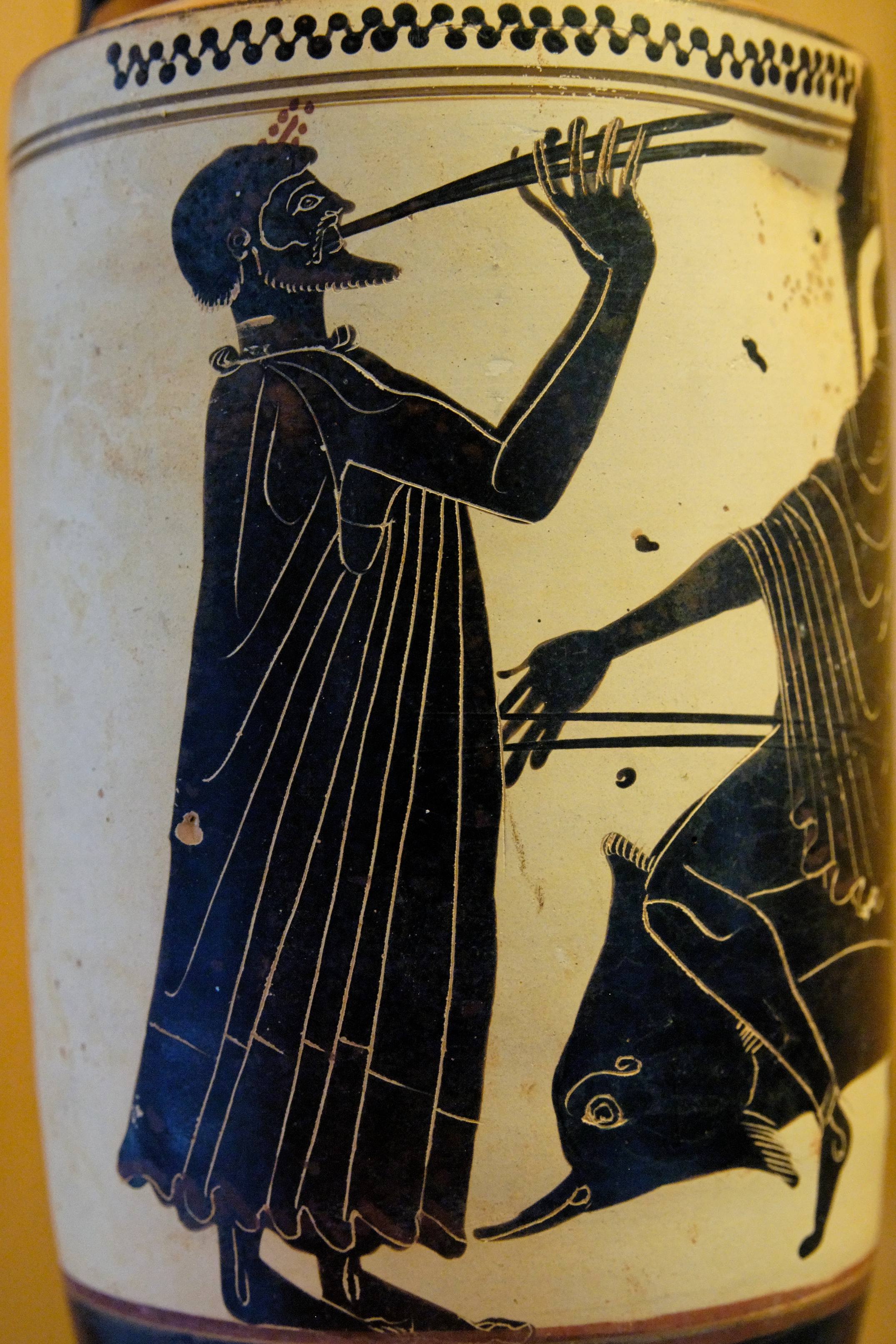
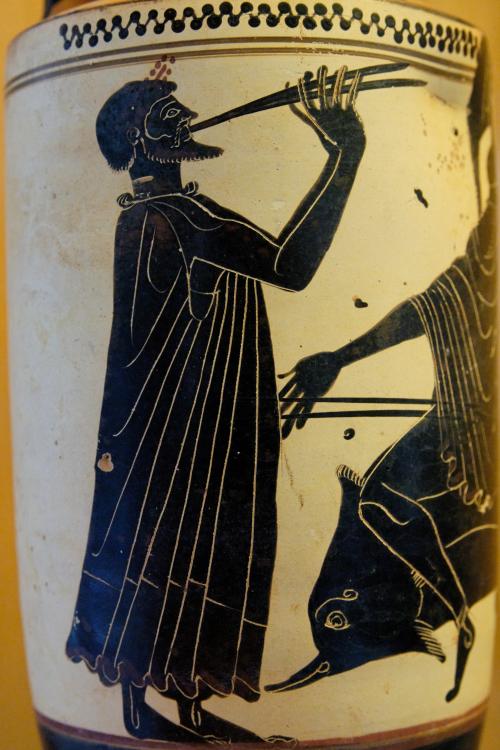
The Thebans were quite big in music (mythologically, the walls of Thebes were built by Amphion with his golden lyre). Since the Han have Ministers, and I proposed Ephors for the Spartans, I'm going to propose Philosophers for Athenians, and had in mind Musicians for Thebans, for each civ to have a unique limited non-combat unit. Apparently, Theban aulos players were credited with adding keys to the instrument around 400 BC, like clarinets today (https://lucianofsamosata.info/wiki/doku.php?id=2013:aulos), with the most famous player of the instrument being Pronomos of Thebes (https://instrumentheritage.com/aulos). Timotheus of Thebes, as another example (both him and Pronomos had long beards):
 1 point
 -
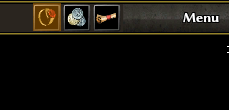
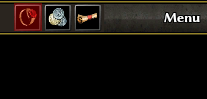
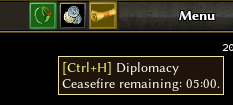
A potential About page in-match: Diplomacy ceasefire indicators: No color overlay = normal match attack mode Green overlay - ceasefire in operation hover shows time remaining Orange overlay - ceasefire will end with 1 minute Red overlay - ceasefire will end within 20 seconds - get outta Dodge! The text below highlighted is what would be moved to the 'About' page to save space:


 1 point
 -
Indeed this should not happen, but I also think siege towers should be used for what they were actually used. Then, some other things would need to be changed, like making siege towers extremely slow and expensive.1 point
-
I think firstly that walls must be made more useful and less buggy before another countermeasure to them (new Siege Tower features) is implemented. Walls need: 1. Environmental Snapping, such as to (very important) cliffs and impassable water edges, and to objects such as stone mines. 2. A health/cost/buildtime rebalance once they become more ubiquitous in multiplayer. The balance here will be crucial. Perhaps they should be slightly OP in most situations so that countermeasures such as Siege Towers (and other things? Undermines?) are warranted in the first place. 3. (not crucial) I'd like to add Sally Ports, which are like narrow "gates" but only allow one unit through at a time. So, they allow your units through and are more defensible than gates, but are allowed much lower passable bandwidth (and only let soldiers through, not civilian units, elephants, or siege weapons). Battle for Middle Earth II had these and they were nice. 4. I think the way archers "unturret" off of the wall is goofy-looking. Furthermore, which side of the wall they ungarrison to is not immediately clear nor easily controlled (if currently even possible at all?). We should fix this somehow. Maybe we can animate units running laterally across the wall's parapet to the nearest wall tower and ungarrisoning from those.1 point
-
i'm just trying to think how it would complicate battles, you couldn't really retreat then without sacrificing units to cover the retreat (which is realistic). It would also make healers way more important (and maybe require people to maybe obtain them sooner.1 point
-
The idea of reusing building capture logic for ships is excellent, but I believe it needs one critical addition: both ships should take hull damage during the boarding process. Otherwise, boarding becomes a no-risk, high-reward action that undermines naval warfare. Why it's important Historically, boarding was a brutal melee that damaged the ships themselves (broken oars, rails, rigging). In gameplay terms: if you can capture an enemy trireme for free just by having 10 hoplites on a transport, why bother building warships? Proposed mechanics (simple and implementable) Ongoing damage: During boarding, both ships lose a small percentage of HP per second. Damage rate depends on: Ratio of garrison military strength (fiercer fighting = more damage). Ship type (warships are tougher, transports are fragile). Technologies (e.g., "Grappling Hooks" could reduce damage for the attacker). Final penalty for captured ship: After a successful boarding, the captured ship suffers an additional HP loss (e.g., 15–20% of its current HP), representing the final deck struggle. Attacker also pays a price: The attacker's ship takes damage over time and loses some of its garrison (e.g., 2–4 units killed). Half of the surviving attacker's garrison (rounded up) transfers to the captured ship; the rest remain on the original ship. This is in addition to the unit transfer already discussed. Defender's garrison is entirely eliminated (killed or captured). Risk of sinking: If a ship's HP reaches zero during boarding, it sinks and the boarding is interrupted (or the surviving ship wins if the fight was almost over). Why this improves the game Balance: Boarding becomes a costly operation, not a free alternative to destruction. Tactical depth: You can soften a ship with ranged attacks, then board to capture it with fewer losses. Realism: Reflects ancient naval tactics (ram, then board). Interesting choices: Do you risk your transport full of elite infantry to capture an enemy flagship? Prevents snowballing: The captured ship starts with very low HP and requires repairs, making it vulnerable to immediate counter-attack. Example numbers for testing Base damage: 2% of max HP per second to each ship. Damage multiplier: (defender_strength + 1) / (attacker_strength + 1), clamped to [0.5, 2.0]. (If defender has twice as many soldiers, damage doubles.) Captured ship extra damage: –15% of its current HP after capture. Minimum boarding time: 5 seconds (prevents instant capture). Attacker garrison losses on success: 2–4 random units + half of the survivors move to the captured ship. Visual feedback Initially, simple effects would suffice: sounds of fighting, smoke/blood particles. Later, ship entanglement visuals (ropes or a boarding ramp) would be great. It would be nice if the ship's texture became more damaged. Regarding the "base garrison" idea from @Thalatta – I see its value for reducing micro, but my proposal works with the existing garrison system. Perhaps both could be combined in the future. I encourage everyone interested to share their thoughts. If there is support, I can help with testing and refining the numbers. Thanks for considering!1 point
-
I think only ramming ships should be able to board, and should have a harder time with faster ships, needing to ram them a bit beforehand. Then, a defending “base garrison” would need to also be overcome in “virtual combat”. This base garrison could be depleted by ramming, making the target ship incur a speed (and maybe attack) penalty. After capture, the base garrison from the attacking ship (never involved in boarding actions) should be automatically distributed among both ships. Base garrisons could slowly replenish at sea, fast at ports. All this easily removes the necessity of having to garrison everything, while making things realistic by keeping boarding fairly common (as it was) but preventing snowballing from opportunistically hoarding ships. Better explained: It would be annoying to have good ships get captured by hit and run tactics from slower ships with a small crew and when not even engaged in combat (which happened mostly with sails lowered, but I guess the game simplifies this and that’s why the ramming ship has them like that). This is the Fortress capture problem at sea (which these ideas also try to solve). Boarding should then be done only by ramming ships, the one representing close combat. They should have a “Grappling Hooks” button that would work when really close, but the target ship should have a chance to get away depending on its speed relative to the attacker’s ship. Ramming was done not just to sink ships, but also to slow or stop them by shearing their oars (which would injure or kill the oarsmen). Only then using grappling hooks for boarding would be feasible. The corvus could prevent the target ship from getting away, but it wasn’t just “way more efficient at boarding”, it was necessary because the first Roman ships were slow compared to the Carthaginians’, after a couple of battles their ships improved and they ditched the corvus (which apparently made ships unstable), so it shouldn't be seen as a technology that improved things from then on but as a short lived early necessity. I’d change needing “4 or more garrisoned troops” and instead give every ship a “base garrison”, taken into account for the defenders when in virtual combat. This would be just a few parameters regarding how many they are, their attack, and defense (and loot, which I’d reserve for a successful boarding, but maybe that’s extra code and not how the game works). The number of troops needed to take an ungarrisoned ship would then depend on the ship itself (would be annoying having to garrison the biggest ships because of small ships with 4 archers lurking about). I feel units like cavalry or elephants shouldn’t count in any of this. An attacker can choose to disengage the grappling hooks if things are going south, which would also automatically happen if the defenders repel the attack (leaving the attacking ship only with its untouched base garrison). Most oarsmen were skilled armed free men, who were killed or taken prisoner, not generally made row a captured ship (which is very complicated, they had to be willing and motivated). This is why I disagree with “the first ship will receive part of the second ship's garrison”, it's not rooted in reality, and it's too snowbally. If the boarding is successful, the base garrison from the defending ship could be considered killed (or sold to slavery considering loot, etc), and the one from the attacking ship would need to be split (maybe in proportion to capacity). A depleted base garrison should give speed penalties to the ship. After all, captured ships had to be scuttled or were slow after battles for being poorly manned. The base garrison could replenish slowly, fast if close to a port. All this makes keeping ships harder than just boarding and capturing, allowing for more strategic decisions and preventing disproportionate gains. When everyone is killed in the target ship, one would take control of it and, while still hooked, one should be able to choose if to keep it or scuttle it (and maybe if just abandon it). For now I'm not proposing any base garrison manual redistribution not to complicate things. I’d make ships suffer damage mostly from ramming only, I feel ships are too weak to arrows in this game, they should be more like rams, while arrows should mostly affect their garrisoned troops, and the base garrison should be affected mostly by ramming (oar shearing and hull breaching). I would add this mechanism on everything, siege engines and buildings. Fortresses would have a decent base garrison with a bigger defense bonus than on a ship. They wouldn’t count as population, they’re just a “resistance to be taken” parameter (which is going to be implemented one way or another anyway, better to rename things realistically for immersion and intuition, all this is a bunch of parameters only), and a “speed (and maybe base arrow rate) penalty” if depleted, for things to work nicely on ships to take faster ones. Big ships is one of the things that are good about this game, no need to try to be just another RTS clone. A few words about realism: what I said before greatly simplifies reality, even when much was written. The only difference from the original proposal is the few parameters to characterise a base garrison, whose quantity would influence the speed of ships and be reduced by being rammed (if just being damaged can be considered for now that’s ok), and that faster ships could get away from the grappling hooks (Edit: and removing the arbitrary troop quantity requirement to be able to board, one might try capturing a small ship with 4 soldiers, but a big one would be suicide). If one would want more realism, ramming should be done on the sides (made difficult when ships are formed side by side), and shearing should be done with an angle from the front (diekplous), or back after going around (periplous), but I know this is too much detail for a game like this (although the more is taken into account the better for tactics).1 point
-
Why not. But this fail may be possible and without garrisoned champions on ram ship. Three ram ships also will beat one arrow ship, as I understand. The enemy may disembark units from the ship and give you a hard time. What does it mean ? This is war reality. When enemy have more units and use it with mind he will beat you any time. Try to find the solution! For example - sink his ramming ship with javelinners or archers. Small amount of distant units will sink one ram ship with ALL the champions for short period. Fastly! "The enemy will have more units and I will be defeated" — it is not the real reason to decline the feature. In case you lost the unique ship. And lost your shipyard. There are a lot of ways how to build new doc and new ship, even you have not gold and gold mines around. Just make a market and trade the food (or other goods) for the gold. By the way. The dock is also a market. But.. In other way. You may garrison some units to the trade ship as a garrison and capture any war ship without units. Only imagine... And this is also war reality. Defend your units. Be carefull! Use the tactics! Guard everything. This is real strategy!1 point
-
If this is for the main game i strongly advise against doing that. It overcomplicates the mechanics for nothing and nullify the possibility of upgrading units when already fighting.0 points