Leaderboard


Popular Content
Showing content with the highest reputation on 2026-04-23 in all areas
-
NEWS: New mesh fabrics for women (Long tunic variant, dress with centered texture; I'll show the women's version with a robe soon): I am creating new textures and East Asian units are being created. Great help from @Alisson Fabrini with baking AO and 3D improvements.
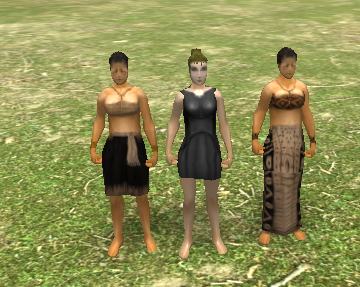 3 points
 -
Habemus monitor, and is 2k!2 points
-
It's possible I made a poc for it on Gitea a while ago.2 points
-
We're working on this too. Not sure the search will be better tho. We're trying to get away from this proprietary software.2 points
-
For the stone walls it would be nice to have some pebble stones or grass/ plants along the corner where the wall meets the ground. Maybe you would like to bake the ambient occlusion for the decal with the walls imported, or bake ao into the diffuse. For the rest, I don't know if you are planning to add this for all buildings, but if you do it would be nice to keep a difference between rural buildings (farm, corral, storehouse etc) and city buildings, maybe even military and civil city buildings. The ones you've done already are looking much better now1 point
-
Would it be possible to have biome/map texture specific decals? Like for example for snowy maps for the decal dirt to be snow, for desert maps for the decal dirt to be sand, etc. Since atm, if @Alexandermb goes ahead and gives the Spartans mud/moss decals it will look very strange in winter and desert maps.1 point
-
On top of that, adding small, non-interactive, scattered elements around buildings and across the terrain is always welcome. These details enrich the scene, reinforce the historical setting, and improve immersion without impacting performance, since they do not require gameplay logic or interaction. For instance: small piles of stones, broken pottery shards, clay jars left outside houses, wooden buckets, firewood stacks, loose straw or hay patches, worn footpaths between buildings, mud patches near entrances, simple wooden stools, abandoned tools like hammers or chisels, woven baskets, animal bones or remains, ash piles from fires, charcoal fragments, rope coils, small fences or stakes, cloth scraps or drying fabrics, barrels or storage containers, crates or wooden boxes, cart tracks on the ground, water puddles in uneven terrain, moss patches on stones, vines creeping on walls, fallen leaves or organic debris, sand or dust accumulation in corners, simple market leftovers like spilled grain or fruit, training dummies near barracks, broken shields or discarded equipment, fishing nets for coastal maps, scattered reeds or grasses near water. These kinds of elements help tell a story about daily life and activity, making the world feel more dynamic and grounded without overcomplicating the gameplay layer.1 point
-
I agree with this direction. Even when buildings are meant to look recently constructed, a bit of environmental integration goes a long way in making them feel believable within the world. Adding subtle dirt accumulation around the base of walls, slight discoloration from moisture, or small traces of wear can help anchor structures to the terrain instead of making them look like they were just placed there. In real life, even new constructions quickly pick up signs of use and exposure. A hint of mud near entrances, some irregularity in textures, or very light weathering can add depth without making assets look old or neglected. It is less about making things look aged, and more about breaking the “pristine” feel so that the scene reads as lived-in and coherent.1 point
-
@Genava55 I opened a PR with the following names as AI usernames for Germanic civ based on writings by Livy, Plurach, Cassius Dio and Tacitus Arminius - Cheruscan leader mentioned by Cassius Dio & Tacitus Maroboduus - King of the Marcomanni mentioned by Plutarch Thusnelda - sister of Arminius mentioned by Tacitus Veleda - priestess of the Bructi tribe mentioned by Tacitus Segestes - Cherusci leader , father of Arminius mentioned by Tacitus Catti - Chatti leader, mentioned by Livy Cunnius - Suebi leader mentioned by Tacitus Vannius - Suebi leader mentioned by Tacitus Cniva - Suebi leader mentioned by Tacitus Could I get your feedback on historical appropriateness for each of these & spelling ?1 point
-
I think the play0ad website could really use a modern update. Last time we redesigned it was like 10+ years ago.1 point
-
I think around houses/storehouses, etc. could be more dirt-like. Otherwise, nice direction established here.1 point