
All Activity
- Past hour
-
 They are not supposed to have these. The were previously able to build like mercenaries, hence the classes, but the champion designation helps clearly separate them from normal CS. I should have also re-created the icon in a red style, but I forgot to do this In general, I don't think the class of champion should be so constrained (by cost, attack, armor). So this is an example of a unique champion that isn't so expensive, but has a particular role.
 -
 We should fix the bug of classication , they are champion
 - Today
-
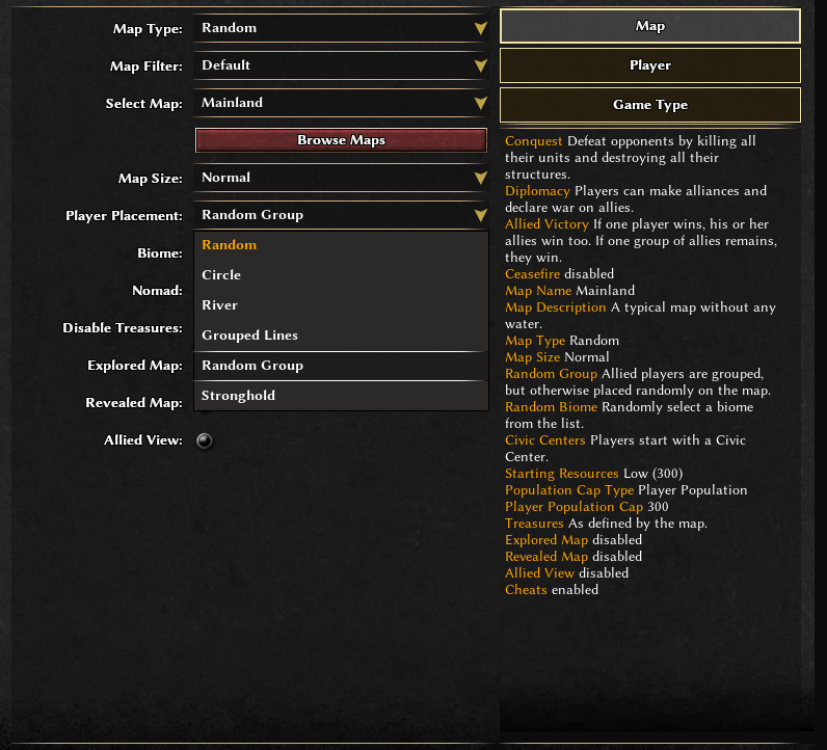
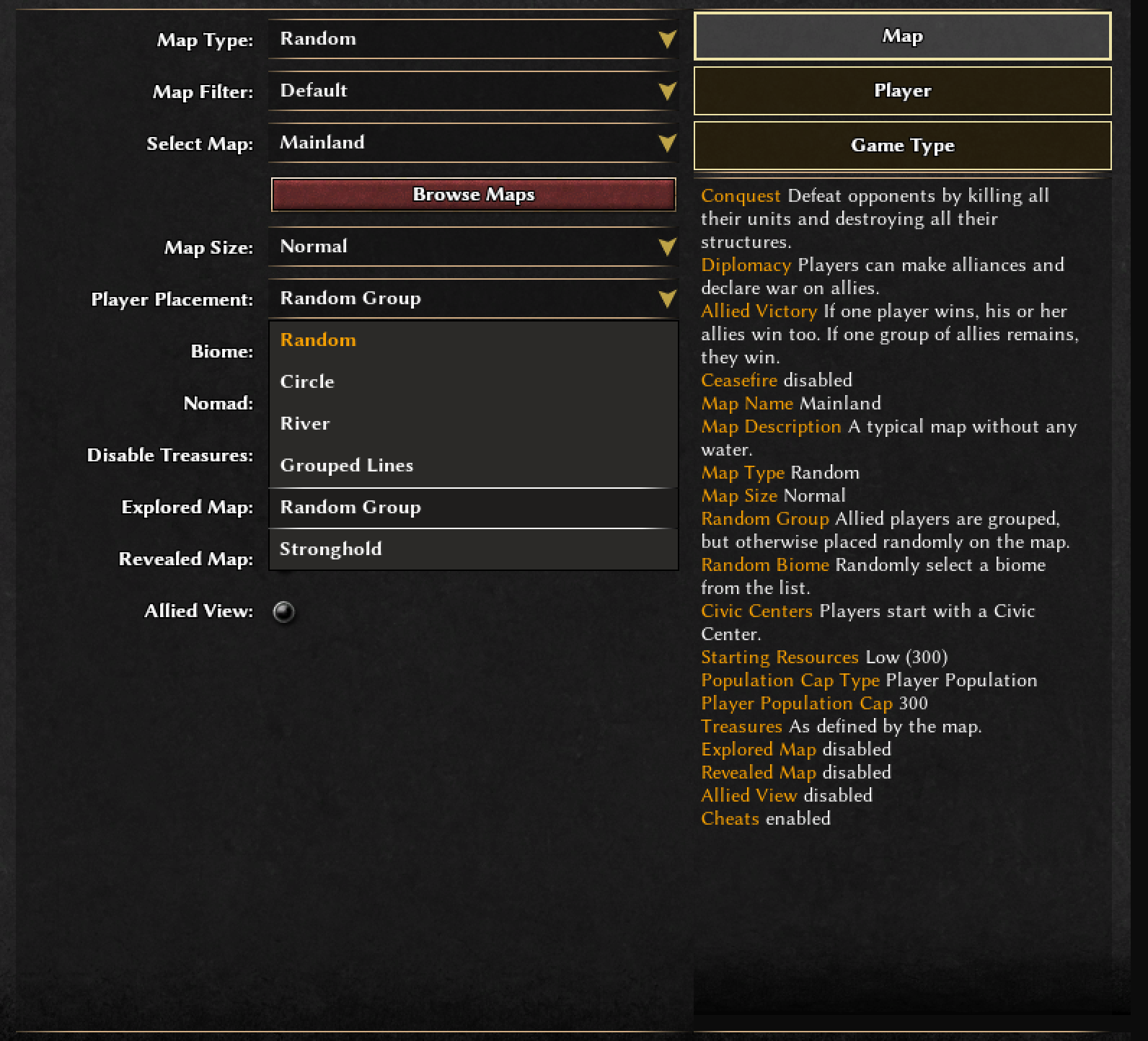
I have seen you asking for a mod, there are many maps that already have the option for random placement (thanks @BreakfastBurrito_007) (th
-
 When I first tested German Civilization, I trained some of them for eco, cause they are called worker. Then I had no use of them. Sure next time this does not happen to me again. Albeit I think they should be usable like mercenaries as builder when not full workers. But it seem not to be necessary to make germans stronger.
 -
 Looks like a very fast p1 unit to rush civic centers. it's same as p2 kushit maceman but weaker Also looks like a good combo using them along with log rams on p2
 -
New German fractions Cimbrian Clubman, what are they really ment?
Arup replied to Frederick_1's topic in Gameplay Discussion
it is weird. if it weren't a champion,it would be a regular infantry and would be at the left most part of the list in the barracks. However,this would make the unit be mistaken as a good fighter as well (which it isn't. it is a good building destroyer not fighter). this is why it was given the champion classification. @real_tabasco_sauce may confirm -
The description of Cimbrian Clubman puts them in the following categories: Classes: Builder, Worker, Soldier, Infantry, Melee, Maceman, Champion As I have tried, they can not gather, and do also not built, even do not help building. So at least I'd say the first two categories are false. Altough it would be nice in phase one if they can be help in eco. For a Champion, their health is only 100 like citizen Melee. Their resistance is even worse than spearman, so their only advantage is speed. Capture attack of 2.5 is also not on par with champion but with citizen soldiers. So, is this by design little weird, or is something off?
-
The game has NO official Discord server and DOES NOT ENDORSE ANY!!! This is probably just a fanmade server, (one of many) where is this screenshot from?
-
This is the ERROR I get when hosting a game with autociv: EDIT: Without any other mod except 0ad and Autociv, and with 6 AI bots

- 493 replies
-
- 1
-

-
- hotkeys
- autoassign civ
- (and 9 more)
-
many such common issues we miss out on during testing because we dont have multiple players trying out the release candidate :(
-
Hosting with autociv is getting some errors - just let you know..
- 493 replies
-
- 3
-

-
-
- hotkeys
- autoassign civ
- (and 9 more)
-
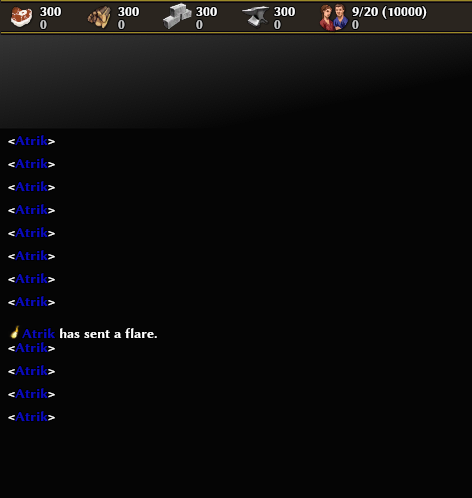
Without : With fix :
-
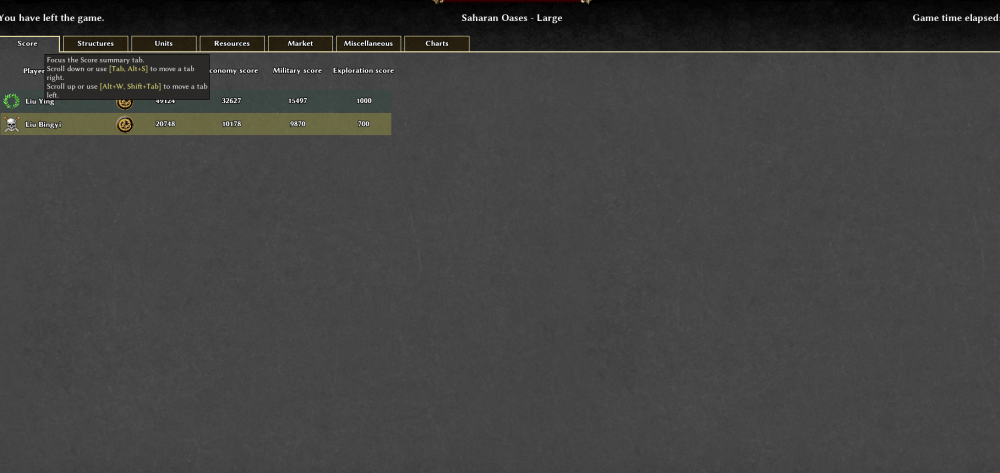
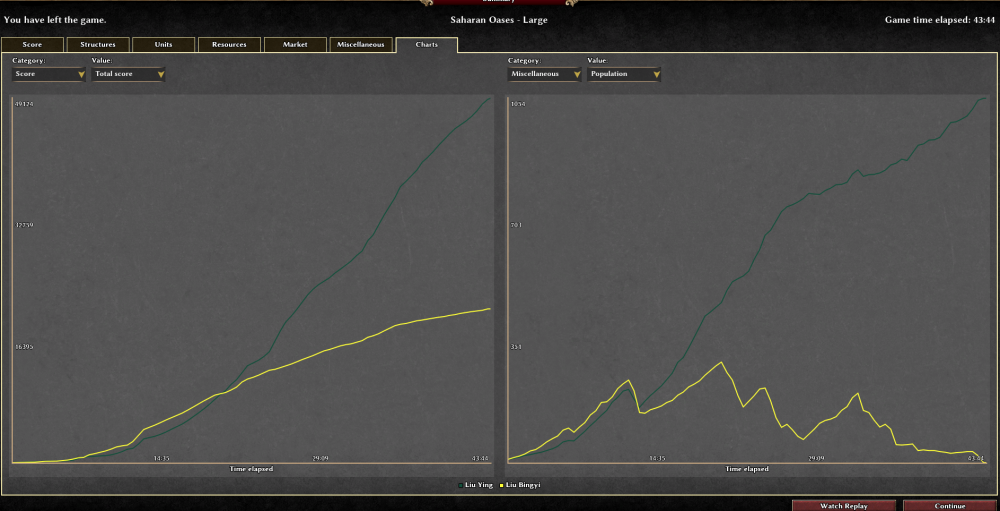
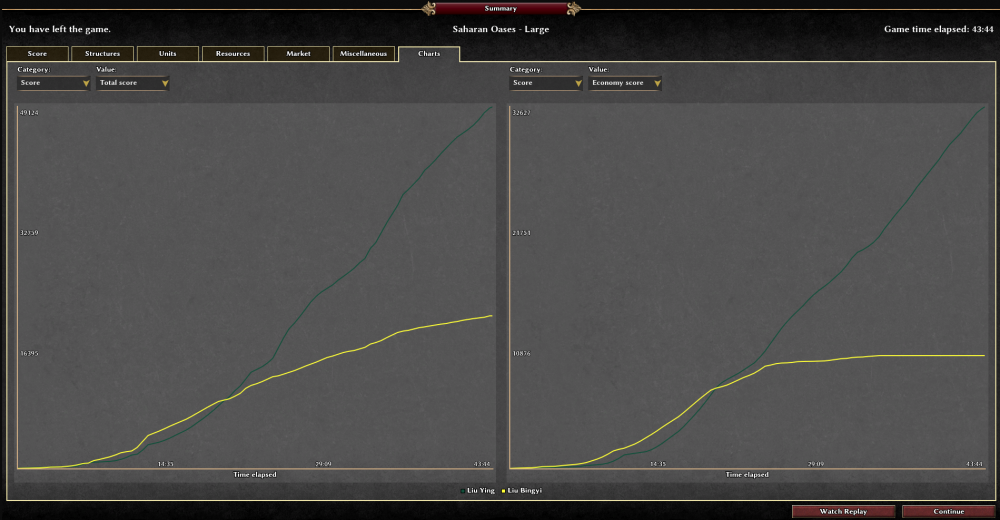
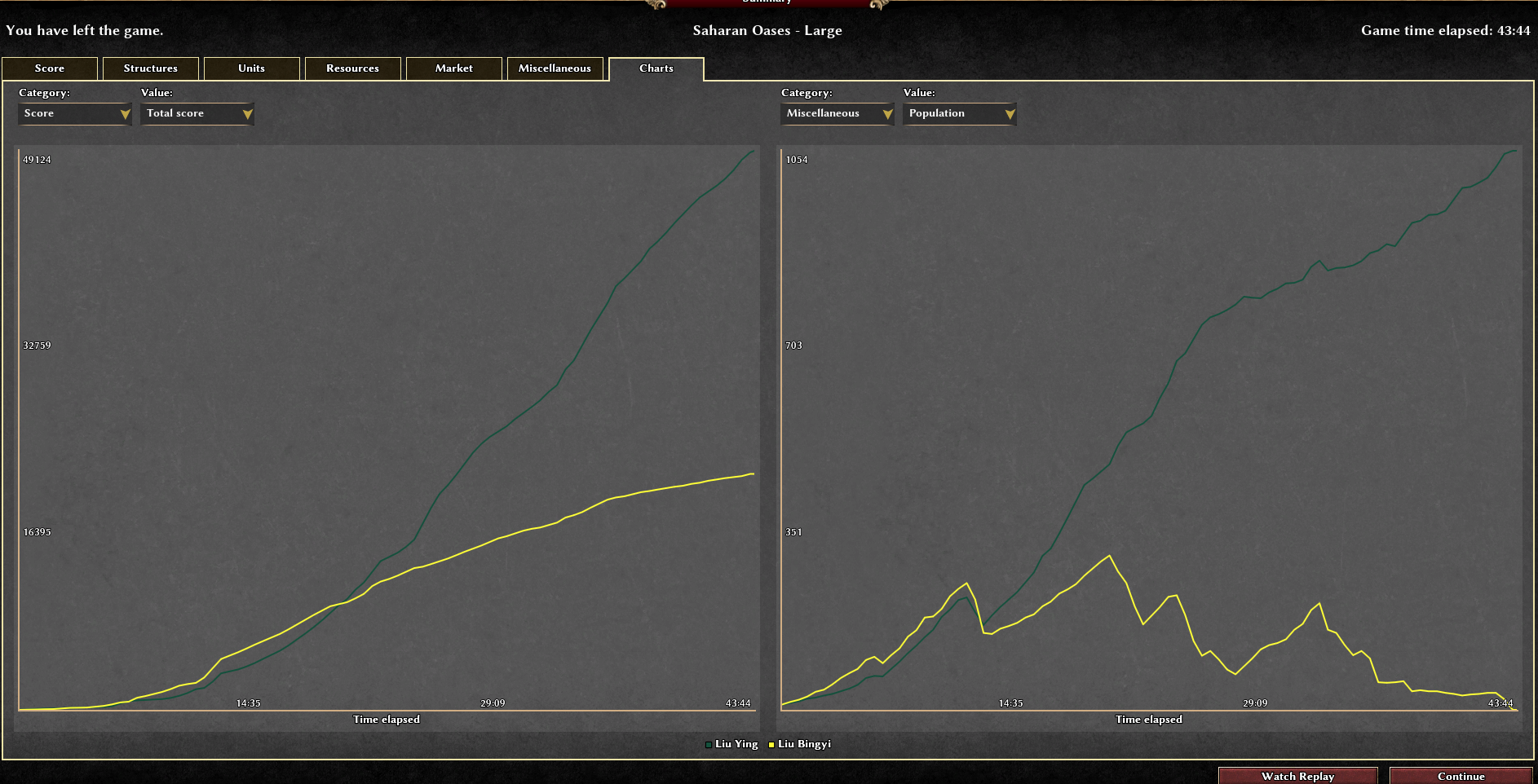
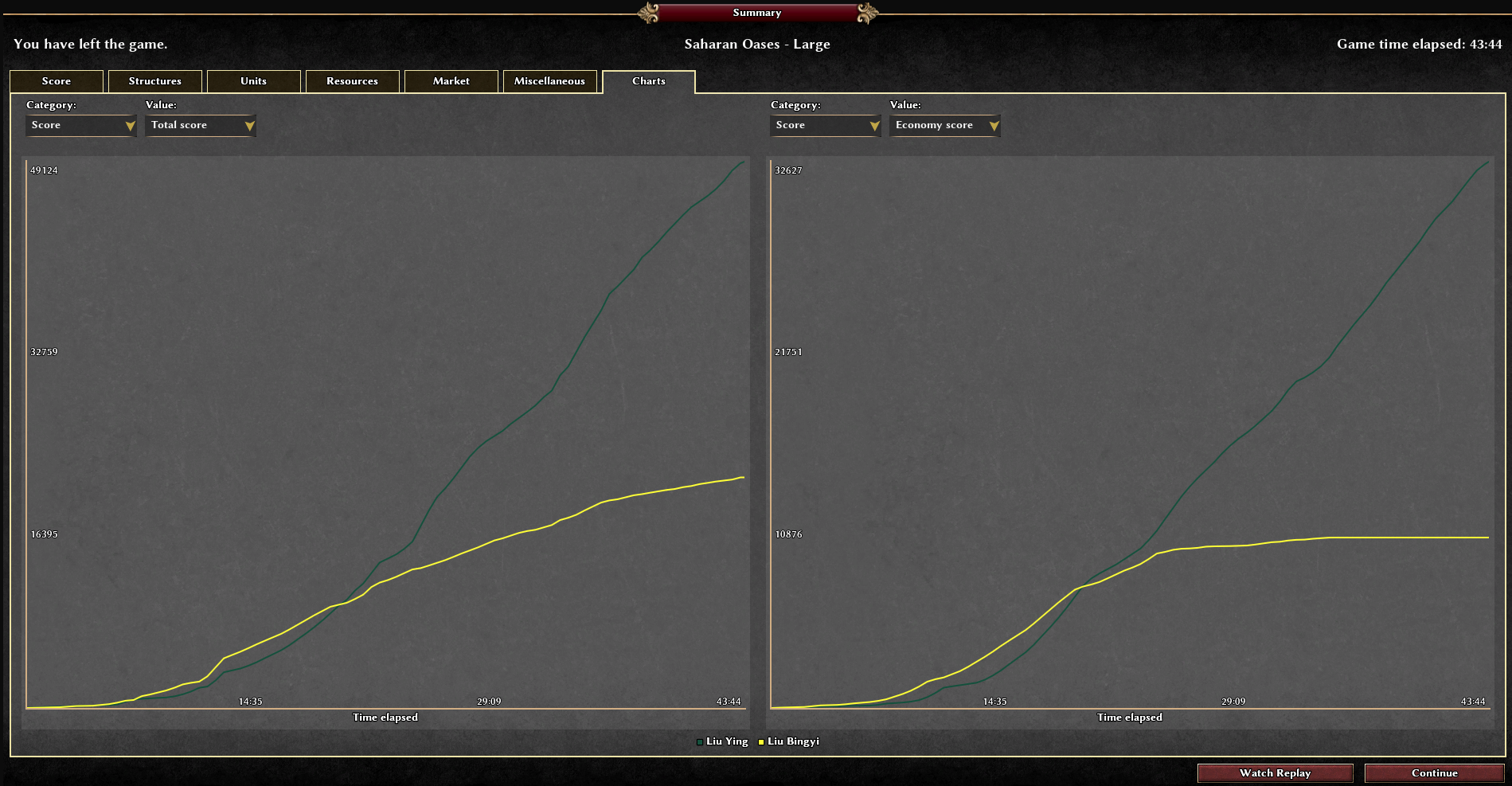
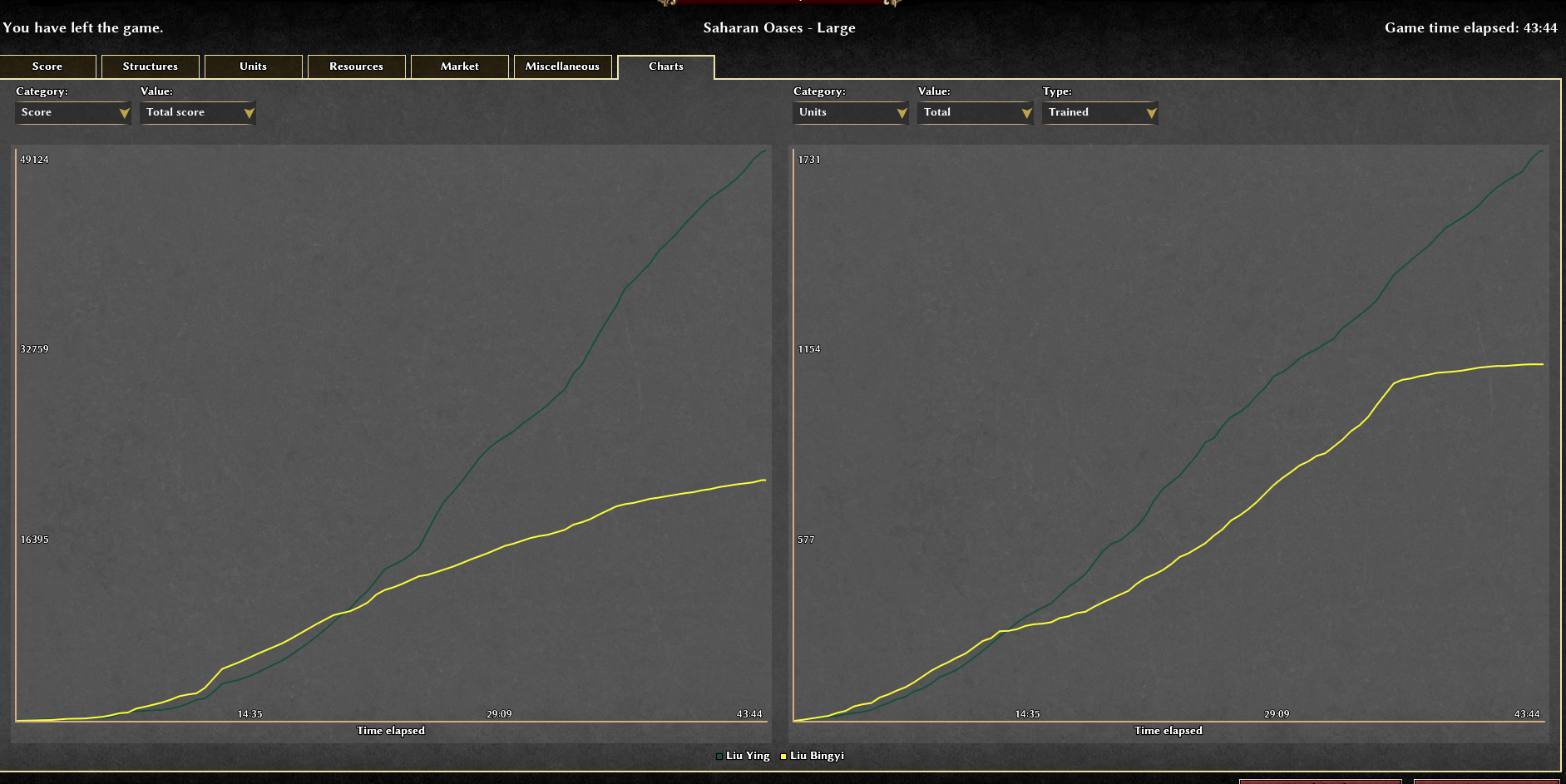
some match statistics
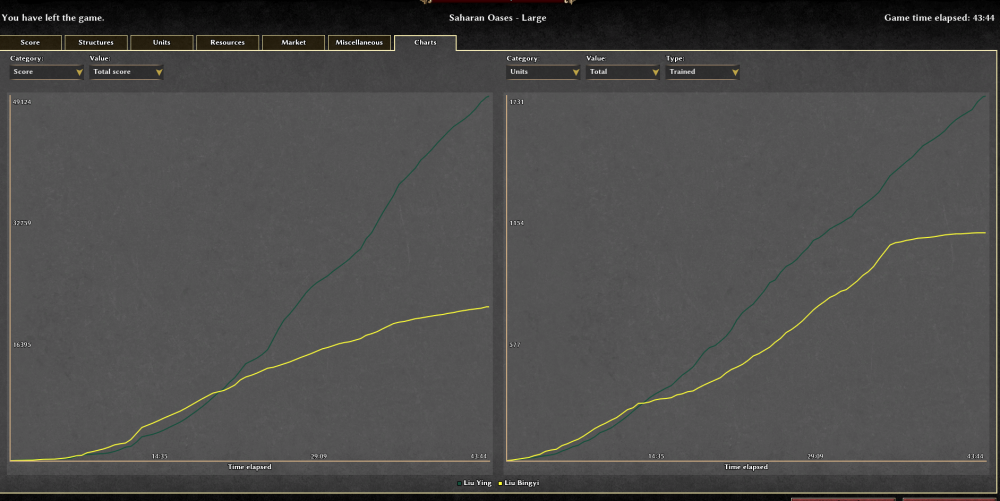
-
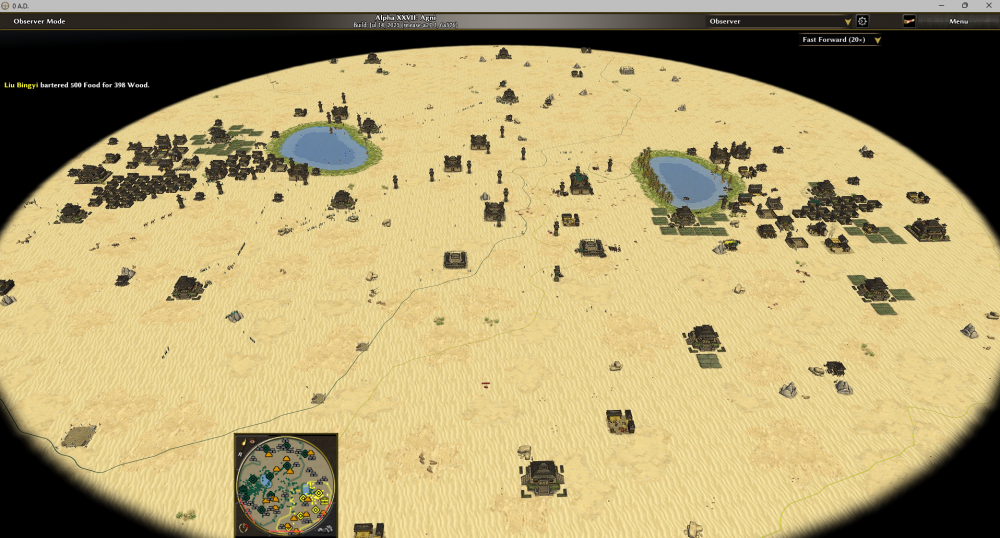
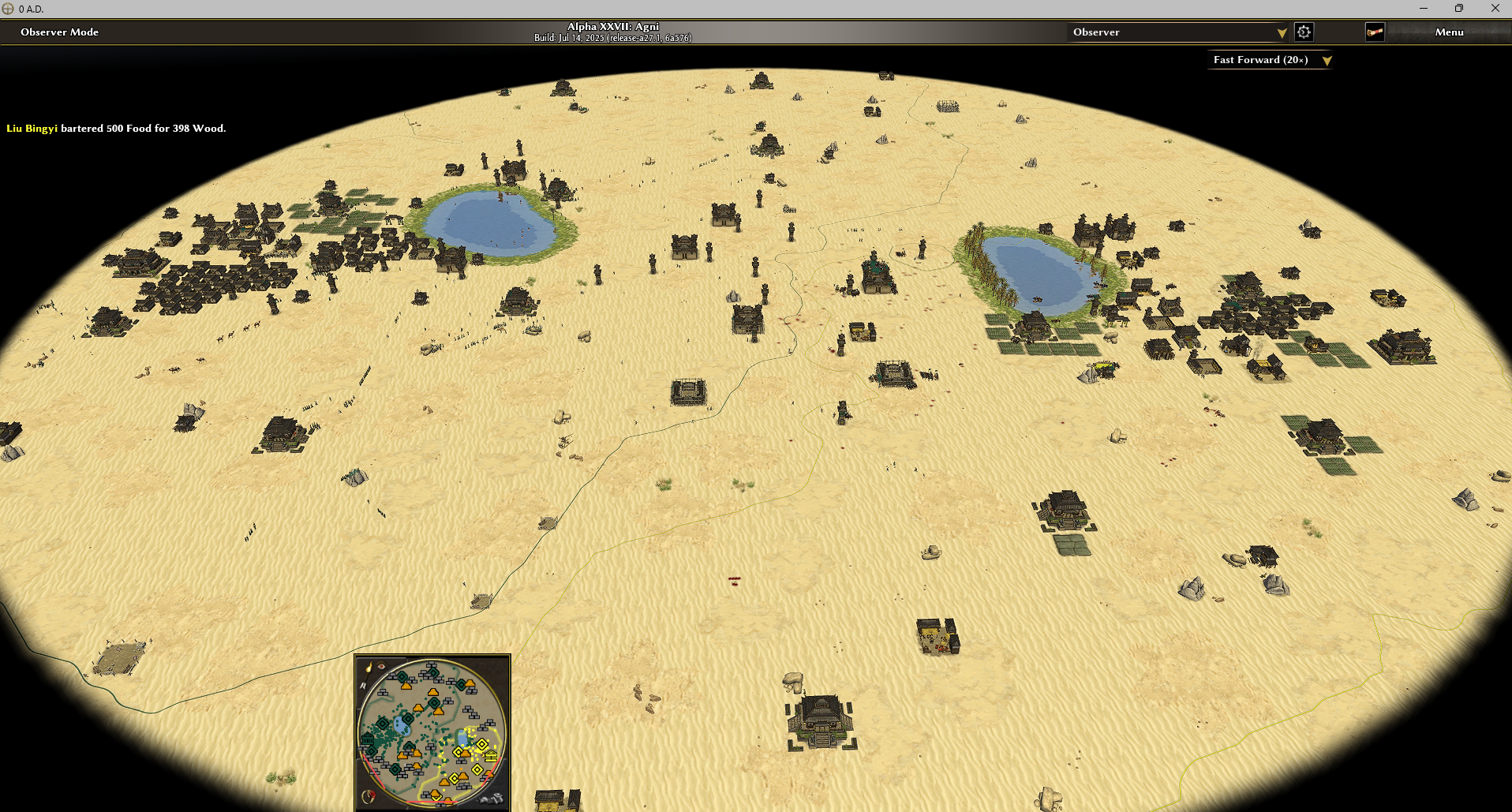
The city of Han was built by Iron Tortoise (emerald green) and Petra (yellow).
-
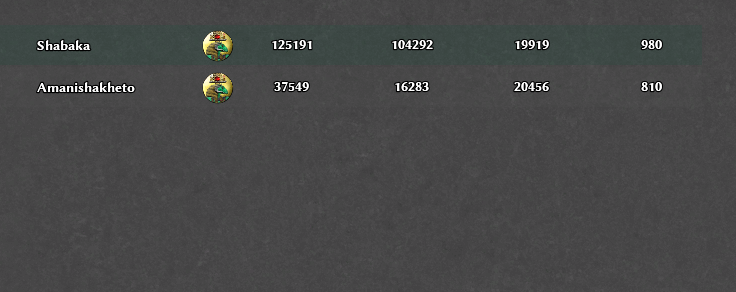
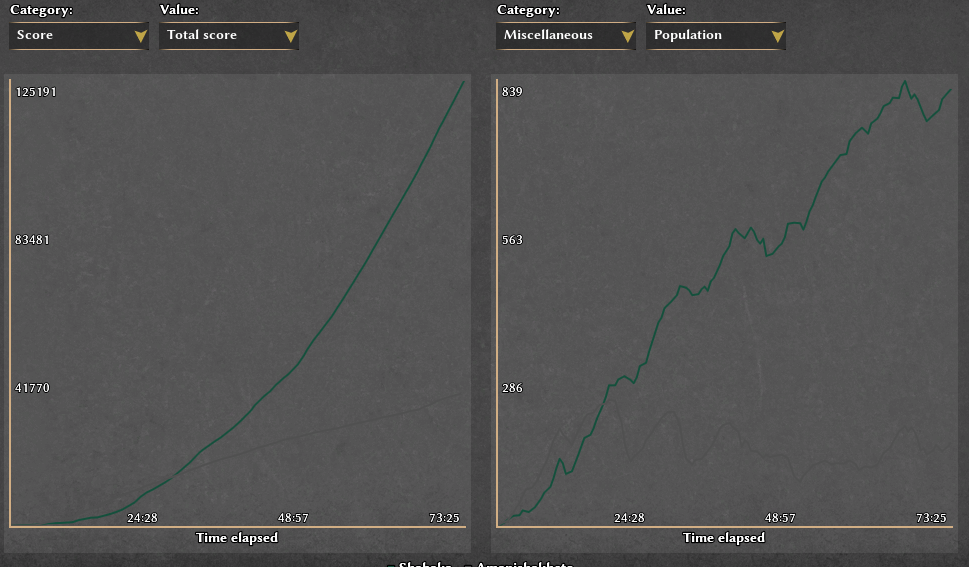
This bot's economic indicators are quite good when facing Petra
-
I think it would be more interesting if we created AI bots with different mindsets and behaviors instead of just allowing Petra of varying levels to participate in battles. Here's a bot I created based on Petra but with a defensive focus, called Iron Tortoise. It defeats Petra in every battle with its unlimited population and abundant resources. Besides that, I think there should be separate bots with behaviors of nomadic civilizations, maritime civilizations, and possibly more. Everyone is welcome to try them out and give feedback. I'd love to hear your opinions. bot_IronTortoise.zip
-
Fix for the line spacing bug ChatLinesFix.zip
-
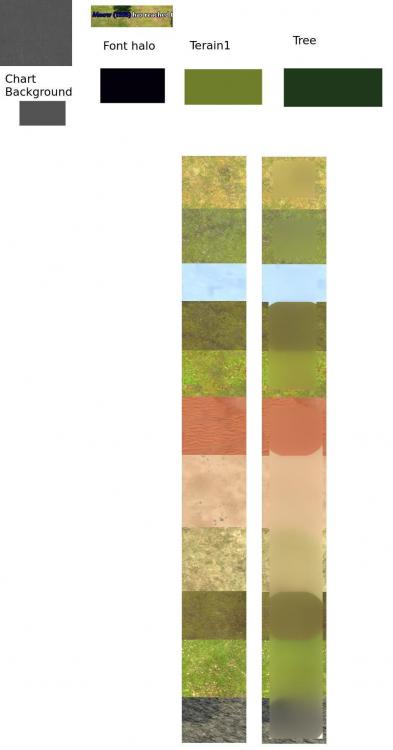
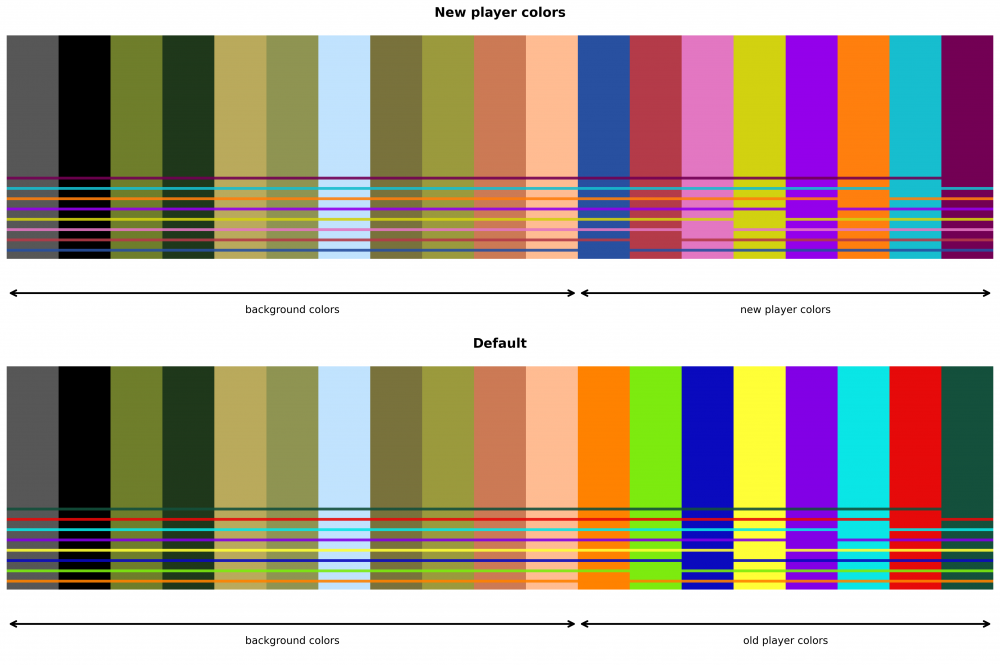
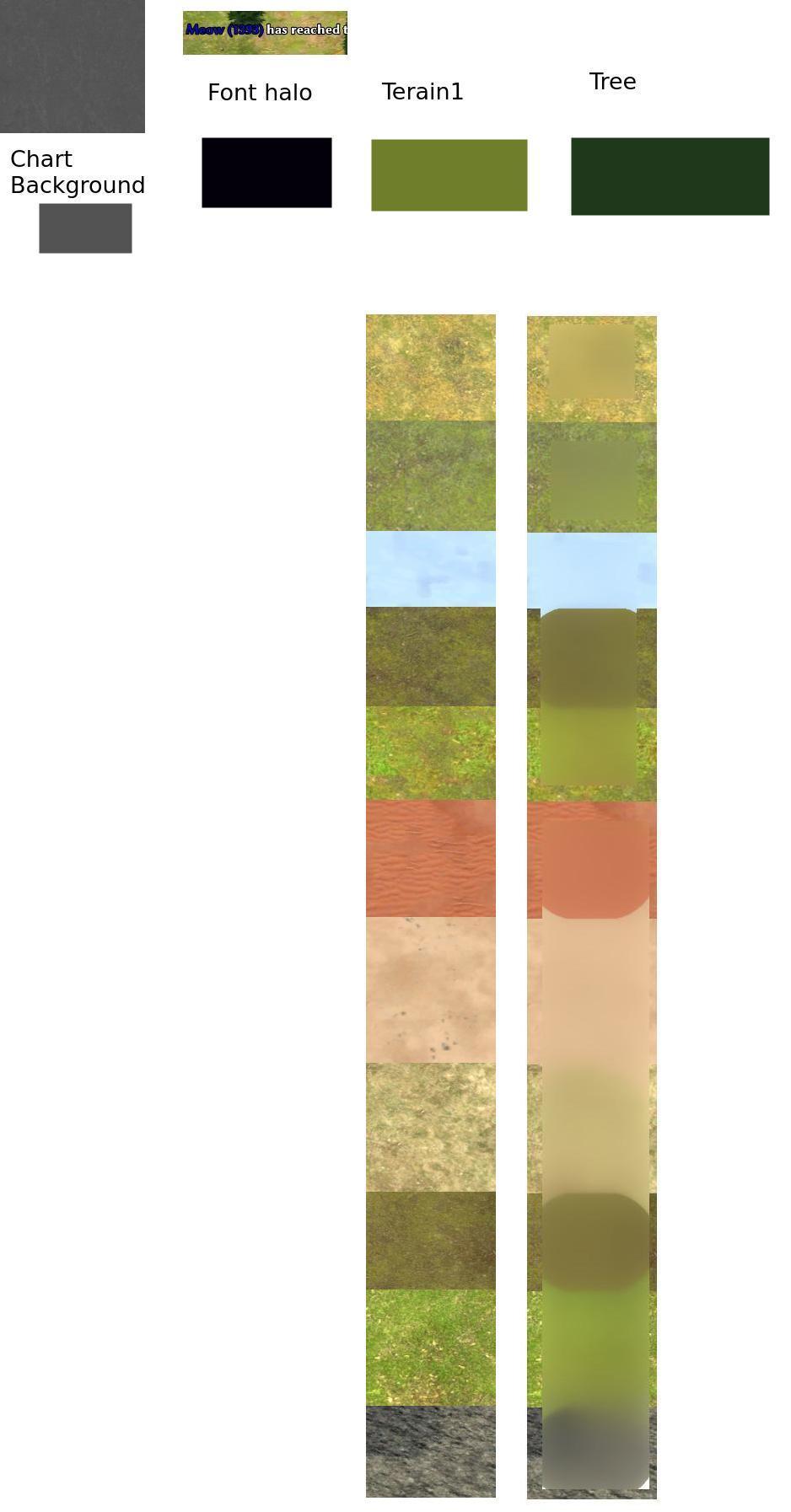
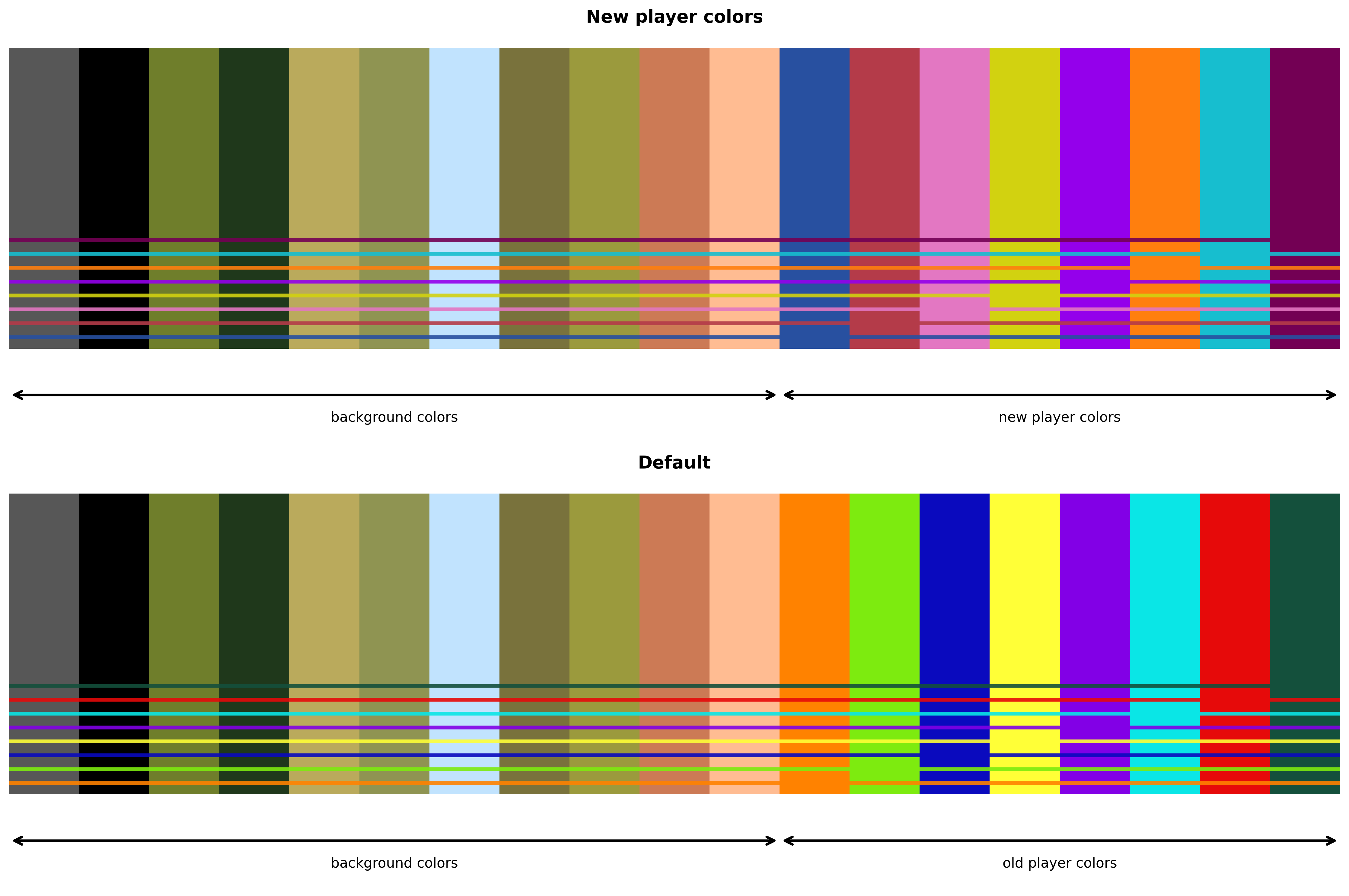
A minimal mod that replaces the default player colors with a more practical color scheme. The Problem The default player colors in 0 A.D. have several issues: Too many similar color options (hard to distinguish enemies at a glance) Colors are dependent of host settings (creates inconsistency) Some colors are overly bright/neon (unrealistic, visually aggressive) The Fix This mod provides a clean, simplified color palette that: Reduces color choices to only essential, distinct shades Improves distinguishability - no more confusing similar blues or greens Standardizes colors - consistent for all players regardless of host Tones down brightness - realistic, non-aggressive colors Changes nothing else - tiny codebase, easy to maintain across game versions Why It Matters Here's a real scenario that shows why this mod is needed: You're playing as a blue-toned civilization. You're attacked by two enemies - one with a similar blue tone and one red. The red enemy holds 30% of capture points, the blue enemy holds 20%. You miss the blue enemy entirely because their color is too similar to yours, while the aggressive red tricks you into thinking the threat is only 30%. By the time you realize the real danger, it's too late. Why not another color mod There are several other color mods. Some offer 16 color changes, the more colors the less distinct they can be. Some touch areas one might not be interested in. I had issues with the others and ended up making this. The python script is there if you want to replicate it with a different approach and a picture with the background blurred to show how I got the backgrounds. I started with the the tableau colors that I know and like from matplotlib. Install by putting the zip in the right folder: On Windows (Vista or newer): C:\Users\{name_of_user}\Documents\My Games\0ad\mods\ On OSX: ~/Library/Application Support/0ad/mods/ On Linux: ~/.local/share/0ad/mods/ (may be found in GUI via Home/.local/share/0ad/mods/) color_by_distance.py ffm_simple_colors.zip
-
 Just what I was needing, thank you very much!
 -
Thank You very much!
-
It's available : https://gitlab.com/4trik/ModernGUI . Since I've introduced a some of new things, and the mod is pretty fat with so many options, It's in bug discovery phase right now (I don't know of any bugs nor any been reported at this time). I'll make a post when I'll have more confidence. If you do try it and find anything you can report it to me.
- 493 replies
-
- 4
-
-
-
- hotkeys
- autoassign civ
- (and 9 more)
-
I assume a lot more work still to go to make ModernGUI 28 compatible? Absolutely feel naked playing w/o it
-
Not sure if this is known but getting a strange text in a discord embed of the game website. Why does it say "gerbilOFdoom" in the corner? Also idk how website embeds like this work but it should probably give a bit more relevant info. Like the current release version, and maybe a nice screenshot along with the game description.

-
I salvaged some of autociv into ModernGUI, I can help with some of the fixes I covered doing so: Fix for the option page, just return a promise in init autociv_patchApplyN("init", function (target, that, args) { const promise = target.apply(that, args); [...] return promise; Same for lobby autociv_patchApplyN("init", function (target, that, args) { autociv_InitBots(); // Call everything that isn't sensible to the page being fully init here const result = target.apply(that, args); return Promise.resolve(result).then(resolvedValue => { // Call everything that is sensible to the page being fully init here autociv_focus.chatInput(); g_LobbyHandler.lobbyPage.autocivLobbyStats = new AutocivLobbyStats(); initChatFilterInput(); return resolvedValue; });
- 493 replies
-
- 3
-
-
- hotkeys
- autoassign civ
- (and 9 more)
- Yesterday
-
What place names can tell us (Was Ortsnamen uns erzählen können) Selected excerpts from this article: https://nationalatlas.de/nadbeitrag/was-ortsnamen-uns-erzaehlen-koennen/ I translated them from German to English. Here: The oldest settlement names in Central Europe date back to pre‑Germanic times. They are of Celtic or Romance origin and appear above all in the western and southern Germanic regions of the Germania Romana. The earliest Germanic names occur somewhat more frequently; they often end, for example, in ‑lar or ‑mar. After the Migration Period, beginning in the 4th century, the first major wave of land appropriation took place, during which fertile and easily cultivable areas were settled. Typical place‑name endings from this period include ‑heim, ‑ingen, ‑stedt, and ‑stetten. In the Merovingian era (6th–8th century), the settlement area was expanded (early period of development). Settlement names ending in ‑dorf, ‑hausen, and ‑weiler generally date from this time. The greatest expansion of settlement in Central Europe occurred during the clearing periods beginning around the 8th century. The old settlement landscapes were largely populated; people then began to push into the low mountain ranges. At first, the edges of the mountains and the valleys were settled (e.g., ‑bach, ‑born, and ‑brunn). From about the 10th century onward, and throughout the High Middle Ages, the forest was increasingly pushed back and new settlements were established. Typical place‑name endings from this period indicate the clearing process, such as ‑roth, ‑rieth, ‑reut, ‑brand, ‑schwand, ‑hau, ‑schneid. – dorf The most common place‑name ending of the Middle Ages is likely ‑dorf (in northwestern Germany also ‑trup and ‑drup). Settlements of this name type first appeared during the early development phase (5th/6th century) in the Rhine–Moselle region. They then spread throughout the entire German‑speaking area and remained in use throughout the Middle Ages. As in most early place names, the determining element is usually a personal name or the name of a kin group. – ingen Place names ending in ‑ingen are, alongside the ‑heim names, among the typical settlement names of the Germanic land‑taking period (from around the 4th century). Although modern scholarship rejects the earlier ethnic interpretation—‑ingen in Alemannic areas, ‑heim in old Frankish regions—the distribution map clearly shows a strong spatial concentration of ‑ingen names in the southwestern German Alemannic‑Swabian area. In the Bavarian region, the corresponding ending is ‑ing. The linguistic adaptation in French is ‑ange. Place names as sources for settlement history using the example of Northwest Switzerland (Ortsnamen als Quellen für die Siedlungsgeschichte am Beispiel der Nordwestschweiz) I'm posting a translated excerpt from the article; the original is available here: https://toponymes.ch/Texte/Siedlungsgeschichte.pdf 6.6. ‑heim and ‑dorf Names, Other Alemannic Settlement Names The ‑heim and ‑dorf names in northwestern Switzerland are not entirely easy to interpret. ‑heim names are usually assigned to the oldest naming layer. In our region they occur only twice (Arlesheim and Riehen) and are generally regarded as outliers of the numerous Alsatian ‑heim names. ‑dorf names are likewise rare here; apart from Rodersdorf, all of them lie near the Hauenstein route. Niederdorf and Oberdorf are clearly secondary. They were introduced in 1285, after a massive landslide, to designate the remaining parts of the village of Onoltzwil. Frenkendorf, Füllinsdorf, and Arisdorf—since they lie in the middle of a zone with demonstrably unchanged Romance names—are hardly to be counted among the oldest Alemannic layer either, but should rather be attributed to the period of territorial expansion in the 7th and 8th centuries. The remaining Alemannic settlement names, which all belong at the earliest to the period of Alemannic territorial expansion, are distributed fairly evenly across our region. Gothic Online - Lesson 6 - Todd B. Krause and Jonathan Slocum https://lrc.la.utexas.edu/eieol/gotol/60 Interesting article on the Gothic Social Organization, using both etymology and semantic analysis of the Gothic bible to interpret the structure of the Gothic society. The introduction explains correctly why etymology alone is not a solution to understand ancient societies. háims: the organized village. This is the basic center of agriculture and commerce. weihs: essentially equivalent to the háims as the organized village and basic center of commerce.






.thumb.jpg.b21ca1d0c15fb56b42c39b25a0a40815.jpg)
-
Latest Topics
-