
Ultimate Aurelian
-
Posts
550 -
Joined
-
Last visited
-
Days Won
5
Everything posted by Ultimate Aurelian
-
Minoan language is mostly undeciphered. There are few names apparently, but no context of who those people were (probably not even rulers). https://issendai.com/minoan/minoan-and-mycenaean-names/minoan-personal-names-from-dedicatory-inscriptions/ I think it would be better to use generic archetypes: Queen/High priestess (support hero with ceremonial axe, weak in combat but boost morale of nearby units. Economy/territory bonus). Admiral/Great warrior (Military hero with spear, very good in combat. Infantry or naval bonus.) King (Civil hero with sword, good in combat. Construction, trade or territory bonus)
-
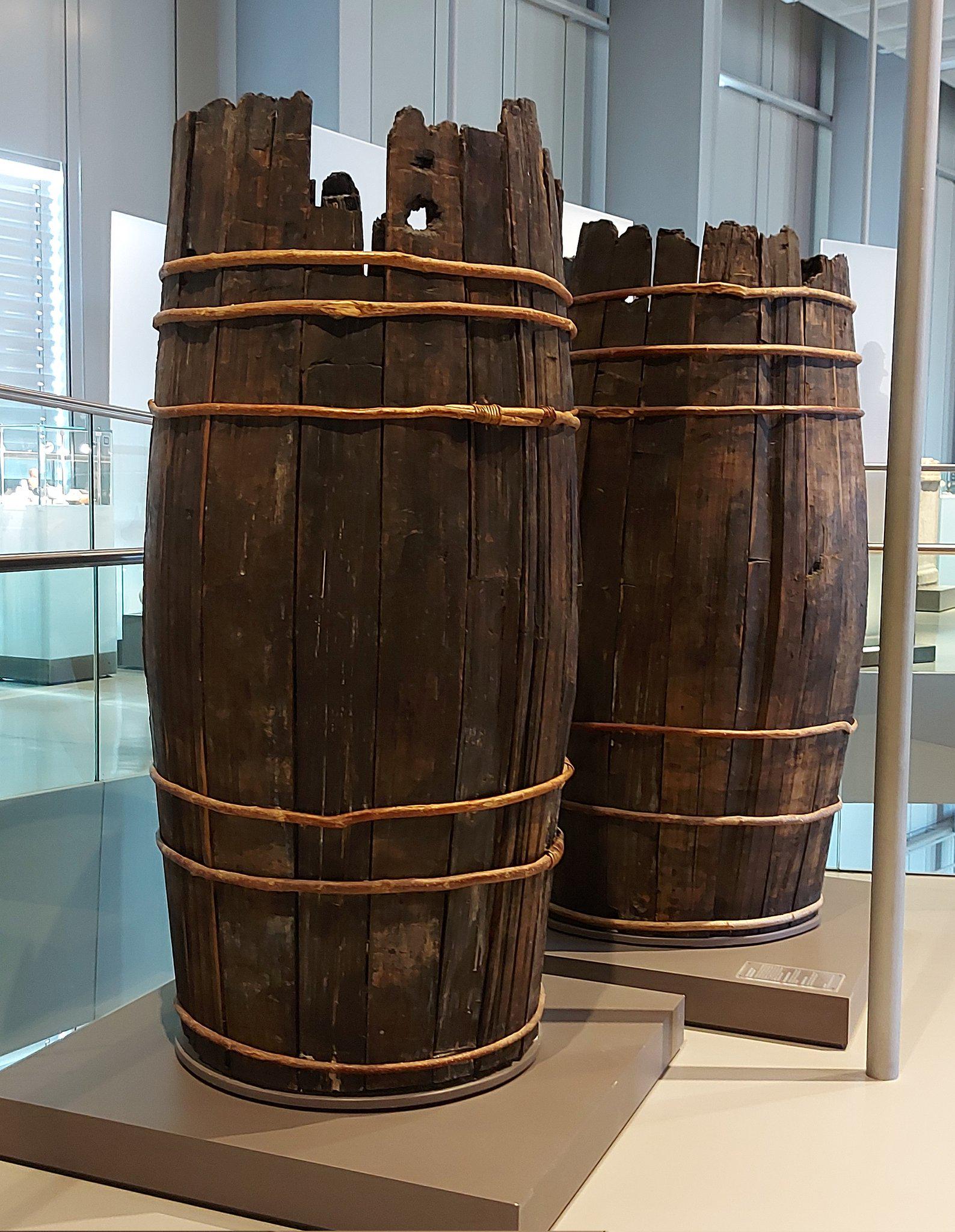
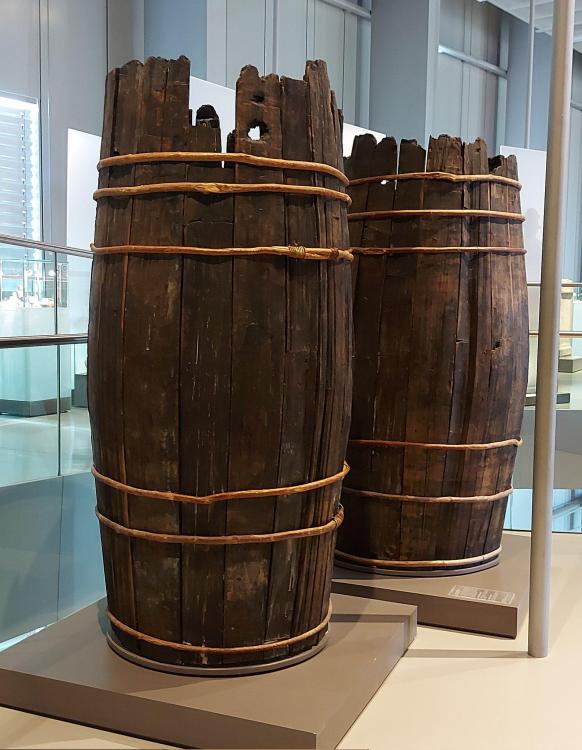
First century barrel https://lugdunum.grandlyon.com/fr/Oeuvre/17434-Tonneau-reutilise-comme-cuvelage-d-une-fosse Roman barrels found in the Xanten
-
For Mycenaean heroes there are three options in my opinion: 1 use the (poorly documented) mycenaean figures we know: https://en.wikipedia.org/wiki/Enkhelyawon https://en.wikipedia.org/wiki/Attarsiya https://en.wikipedia.org/wiki/Tawagalawa_letter 2 mantain current mythic heroes 3 generic archetypes (Wanax, Basileus, Lawagetas....maybe religious hero) For mythic heroes we have detailed descriptions of their equipment (although keep in mind Homer mixes elements from bronze age and the later geometric period): https://www.salimbeti.com/micenei/armour5.htm https://www.salimbeti.com/micenei/shields4.htm https://www.salimbeti.com/micenei/helmets4.htm The mod's Egyptians seem to be based Saite period but with some New Kingdom heroes and Sherden guards , perhaps could be rework around a specific period. New Kingdom is of course more popular; although i find the Saite period to be interesting (mostly due to how little known it is, and because of their interactions with classical civilizations like Greece and Persia).
-

===[Task]=== Crowd Sourced - Dacians
Ultimate Aurelian replied to Lion.Kanzen's topic in Game Modification
https://analelebanatului.ro/en/view-article/320/ Seems to be arguing for the temples being granaries, but does not seem to be consensus. This other article was apparently refuting the granary theory. https://analelebanatului.ro/en/view-article/289/ -
For slingers you could for sure give the elite ones with lead/clay bullets more damage and range than militia or tribal units with stone projectiles (EB2 does this). Any more skilled unit would also probably fire a bit faster. Does this game have accuracy mechanic? i think some of the Scythians in the DE mod dodged projectiles at least.
-
I know in some cases poorer troops used wood javelins hardened with fire but not sure this was the case with Greeks. Less accuracy would be the best way to portray the difference in troop quality, if it's not possible i guess less damage and less range is good enough. They could also have less HP (lighter equipment, less morale, less trained in melee combat).
-
Specific Name Review: Units
Ultimate Aurelian replied to Doktoreus's topic in Game Development & Technical Discussion
This seems to now be used for the Gaul and Briton villagers. Not sure how accurate it is in that more lower status role (in any case, the villagers might work better as freemen/commoners. With the servants/slaves being portrayed by another type of villager once implemented). -
Specific Name Review: Units
Ultimate Aurelian replied to Doktoreus's topic in Game Development & Technical Discussion
I had not heard of the Celts using this term; i assumed it was something from the Greco-Roman sphere only. According to wiktionary Rammaz means strong (only coming to mean ram in proto-west germanic); now Bukaz does mean buck already so it is kind of plausible. Maybe something like Hand ram: Bagmawaldōz (beam wielders),Gataslahanōz (gate smashers) Covered ram: Rammabukkaz That could work. Or something with those verbs? https://en.wiktionary.org/wiki/Reconstruction:Proto-Germanic/wihslōną https://en.wiktionary.org/wiki/Reconstruction:Proto-Germanic/saljaną Also the axeman champion is called Slōgijanōz, maybe could be renamed to Slōgijanaz (my understanding is -az is singular and -ōz is plural). -
Specific Name Review: Structures
Ultimate Aurelian replied to Doktoreus's topic in Game Development & Technical Discussion
I had not looked at the stats. I do agree it could be reworked to not be as strong, maybe closer to a Roman siege wall? And Gaul walls could have stronger stats (or be improved with murus gallicus technology). -
Specific Name Review: Units
Ultimate Aurelian replied to Doktoreus's topic in Game Development & Technical Discussion
Some suggestions for German unit names: Rammabagmaz is supposed to be ''ram beam'', but if rammaz meant ram it might just mean the animal and not siege engines in this timeframe (Ram as a siege engine might just be a translation of Latin Aries). https://en.wiktionary.org/wiki/Reconstruction:Proto-Germanic/rammaz Maybe battering ram could be called Bagmawaldōz (beam wielders) Mangārī is a later Proto-West Germanic word, trade ship could be called Kaupinizbaitaz (merchant's boat) or Saiwikaupô (sea merchant). Note that the word kaupô is a loanword from Latin and might not yet exist in the game's timeline (but so far i could not find any native proto-germanic terms for merchant). Hero specific names: Seeress' specific name is a later Norse word. Could be replaced by haljōrūnō. -
Specific Name Review: Structures
Ultimate Aurelian replied to Doktoreus's topic in Game Development & Technical Discussion
Well currently theyre just bigger wooden walls that hold troops, not really stone walls. The Germans seem to at least have built fortifications in their own homeland before migrating, whatever the walls could be manned i'm not sure. https://en.wikipedia.org/wiki/Borremose (A fortified village found in a region of Denmark sometimes theorized to be the Cimbrian homeland. It was abandoned in the 2nd century.) -
Specific Name Review: Structures
Ultimate Aurelian replied to Doktoreus's topic in Game Development & Technical Discussion
Some of the German structures lack unique names. I've also found better alternatives for previously suggested ones. Corral: Kurnahūsą(Granary; shared with farmstead) -> Bansaz (cradle, stall, barn) Storehouse: Skattasfriþuz (shelter of riches) -> Banstiz (cradle, barn, storehouse) Outpost: Staupilaz (“that which is steep, tower, steeple”) -> Wardo (protection, attention, lookout, watch post) Sentry tower: Staupilaz Defense tower: Warīnīzstaupilaz (defense tower; probably incorrect composite) -> Grautastaupilaz (great tower) Palisade: Tūną (Enclosure, fence. root of the word town). Hagô (enclosure, yard, pasture), Gardô (Hedge, Fence, enclosure, garden, house) Pallisade Gate: Gata Wall Gate: Grautagata (Great gate) Wall Tower: Wallaz Staupilaz -> Wallastaupilaz (just a more correct composite word) Barracks: Druthislegra (War band's camp) -> Druhtīzlegrą (just improved writing) Hailagastadiz (Holy place) -> Alhs (Temple, sanctuary, shelter, settlement) Wagon Camp: Legrą (A place where one lies; camp) Fortified Wagon Camp: Wagnaburgz (wagon fort) Edit: Wonder: Sigigamundiz (Victory memory/commemoration/memorial. Although ideally they'd get a new less generic wonder, possibly based on Hedegaard find). Arsenal: Wēpnasfriþuz (Weapons shelter) -> Wēpnabanstiz (weapon storehouse) Market: Kaupôsmaþlą (Merchant's Gathering. Incorrect composite) -> Kaupanǫ̂legrą (Merchant's camp) * *All Proto-Germanic words for merchant seem to be Latin loan words that might not have existed yet in the game's time period. Althoug there are verbs for selling, buying and trading that might be used for a hypothetical word for someone who engages in those activities. -
Well if the unit has a generic name mentioning a tribe (as some of existing German units or proposed mod units) i suppose you'd have to figure out how to write it in the specific name.
-
I suppose you just treat them like personal names without inferring meaning then. That can actually work (they probably had some meaning in real life, but we can't necessarily know it) I was considering suggesting some names for mod units and was in doubt about that. Specially what to call the Cherusci or Chatti. A lot of people associated the Cherusci with deer (herutaz) i was questioning whatever it could be derived from ''heruz'' (sword; heruskoz would be something like the ''sharp'',''sword like'', ''sword-esque''). Or whatever Chatti could be related to hatjaną (hunt, attack, pursue), hataz (hate), or haftaz (captive, bound. As in Germania it is mentioned some of them wear iron rings until they kill an enemy; and that this is seem as shameful by other tribes).
-
Civ: Germans (Cimbri, Suebians, Goths)
Ultimate Aurelian replied to wowgetoffyourcellphone's topic in Delenda Est
Empire phase could be called this https://en.wiktionary.org/wiki/Reconstruction:Proto-Germanic/rīkiją Interesting post from Imperator: Rome forums: https://forum.paradoxplaza.com/forum/threads/furor-teutonicus-archaeology-and-tribes-of-the-ancient-germanics.1161206/ -
https://www.researchgate.net/publication/347859019_Cimbri_and_Teutoni this article proposes an interesting etymology for the name of those tribes. I'm not sure it's really a composite word (Sometimes the source mention just Cimbri or just Teutones); but the kumƀrii̯a etymology might be plausible. https://en.wiktionary.org/wiki/Reconstruction:Proto-Germanic/lugiz It's the word for lie, although probably coincidence (i think name of the lugii might be celtic in origin).
-
I have a lot of suggestions, i think i will start with Cimbrii (i'm tired and will continue later) There is amber in Jutland but i'm not sure they really had a monopoly, the Baltic was more important for this trade. I would not go as far as to say they have an axe tradition, axes are only mentioned with the women of the Ambrones. Main weapons seem to have been spears. Swords are important for elite cavalry and in a ceremonial role (seeresses executing prisoners). The women of the Ambrones used swords and axes, could it be swords were relatively common even with civilians? maybe (or it could be some of them were the aforementioned seeresses) As above spears could probably still be available, it was largely the most important weapon for all germans (and the Cimbri are described fighting in formation) Bows are not mentioned in any sources about Cimbri, but seem to appear in some Scandinavian finds (maybe could be auxiliaries instead). There is no evidence of greaves for Germans Shields could have a wooden spina, possibly wicker shields for skirmishers in first tier (but the later is a bit of speculation) I'm not sure they would have had that many Scandinavian auxiliaries (the Cimbri were already from Denmark so i assume you mean Norway or Sweden) Volcae and Helveti allies are more attested. Maybe they can have these in an allied camp instead or all German civs can recruit allied units from the Great Hall or similar building (with regular champions on the fortress). Also no evidence for German tattos in this period. Suiones and Rugii appear in later sources and dont seem to have joined the Cimbri The Scandinavian archers could maybe be included as allied units (if you want the civ to portray the larger region) but probably not champion. Infantry champions could be the Cimbrian front rank infantry who fought chained to each other probably champion spearmen since they did this to not break rank (alternatively the chains are a unique technology that provides an unique effect to champion infantry). They could also have swordsmen (A mix of single edged german swords and Celtic swords are found in Denmark) Maybe even some sort of champion axe raider as well like the current Germans(perhaps Ambrones, since at least their women used both axes or swords). Most plausible helmets would be Montefortino or Coolus Manheimn types Description of priestess Not much evidence for axe cavalry, i'd make it a cavalry spearman instead. For the cavalry we have the following description the helmets seem to have been decorated with animals (probably figurines like the ravens and boars on some celtic helmets) Breatsplate are almost certainly chainmail (Celtic influence, maybe captured Roman armor as well), and the long swords are probably Celtic style. Maybe replaced Caesorix with Lugius (little info on both, Lugius died in combat and Caesorix was captured). So my idea for Cimbri rosters (excluding possible allies)would be: Citizen Spear infantry (framea) Citizen Sword infantry (single edged Germanic sword) Citizen javelin infantry Citizen slinger? Citizen javelin cavalry Citizen spear cavalry (framea) Champion Cimbrian spearman (Celtic spear) Champion Sword infantry (Celtic sword) Champion Ambrones raider (axes and clubs) Champion Cimbrian sword cavalry (celtic sword) Champion seeress Tacitus' Germania: https://topostext.org/work/676 Plutarch's biography of Mariushttps://penelope.uchicago.edu/Thayer/E/Roman/Texts/Plutarch/Lives/Marius*.html Strabo's description of Cimbri https://penelope.uchicago.edu/Thayer/E/Roman/Texts/Strabo/7B*.html
-
I thought splitting civilizations by material culture might make it easier to differentiate them, although i do agree it might be not be the most accurate option.
-
The map i found seemed to be putting them in the Rhine, hence the doubt (i think the map uses archaeological cultures). https://threadreaderapp.com/thread/2027476111148343343.html Perhaps originally Elbe Germans absorbing elements of Rhine cultures or the opposite (i even recall them being placed on the North Sea group in an earlier thread).
-
On the usage of AI to generate 0 A.D. content
Ultimate Aurelian replied to wowgetoffyourcellphone's topic in Official tasks
Like i said previously it is a very big grey area that may well cause issues with the license in the future (or even now, i'm not an expert). I was not advocating for it. -
Alemanni and Marcomanni were Suebi, although i suppose you could theoretically split them (no idea how much material there is). Are Vandals viable in this timeframe, or can they just be included in Lugii? Cherusci i assume are earlier Rhine Germans (or North Sea, or even their own thing with how not all sources seem to agree on what they were) and Franks are slightly later Rhine Germans.
-
For the extended timeline of the mod (500 BC-300 AD), are there any others that might be appropriate?
-
On the usage of AI to generate 0 A.D. content
Ultimate Aurelian replied to wowgetoffyourcellphone's topic in Official tasks
It is an open source game using creative commons. Granted the whole topic of AI copyright is a huge gray area right now; so having AI content in the official game might potentially cause issues with license in the future (IE some companies already claim to own AI music you generate but allow non-commercial use, in the future some countries might take stricter approach to copyrighted training data). https://theconversation.com/ai-can-make-up-songs-now-but-who-owns-the-copyright-the-answer-is-complicated-229714 -
Civ: Germans (Cimbri, Suebians, Goths)
Ultimate Aurelian replied to wowgetoffyourcellphone's topic in Delenda Est
The Suebians currently still have 1000 A.D long ships. I'd suggest giving them the same models as the Cimbri already have. -
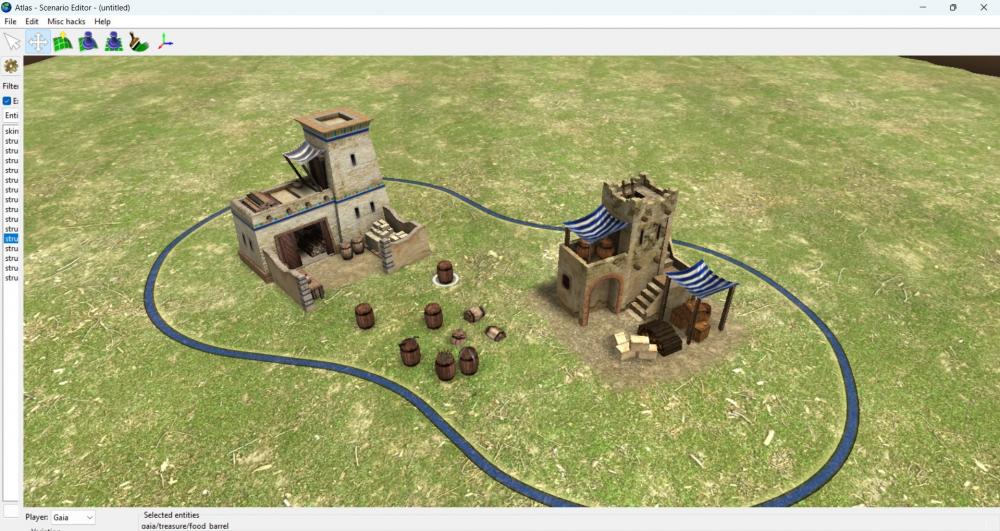
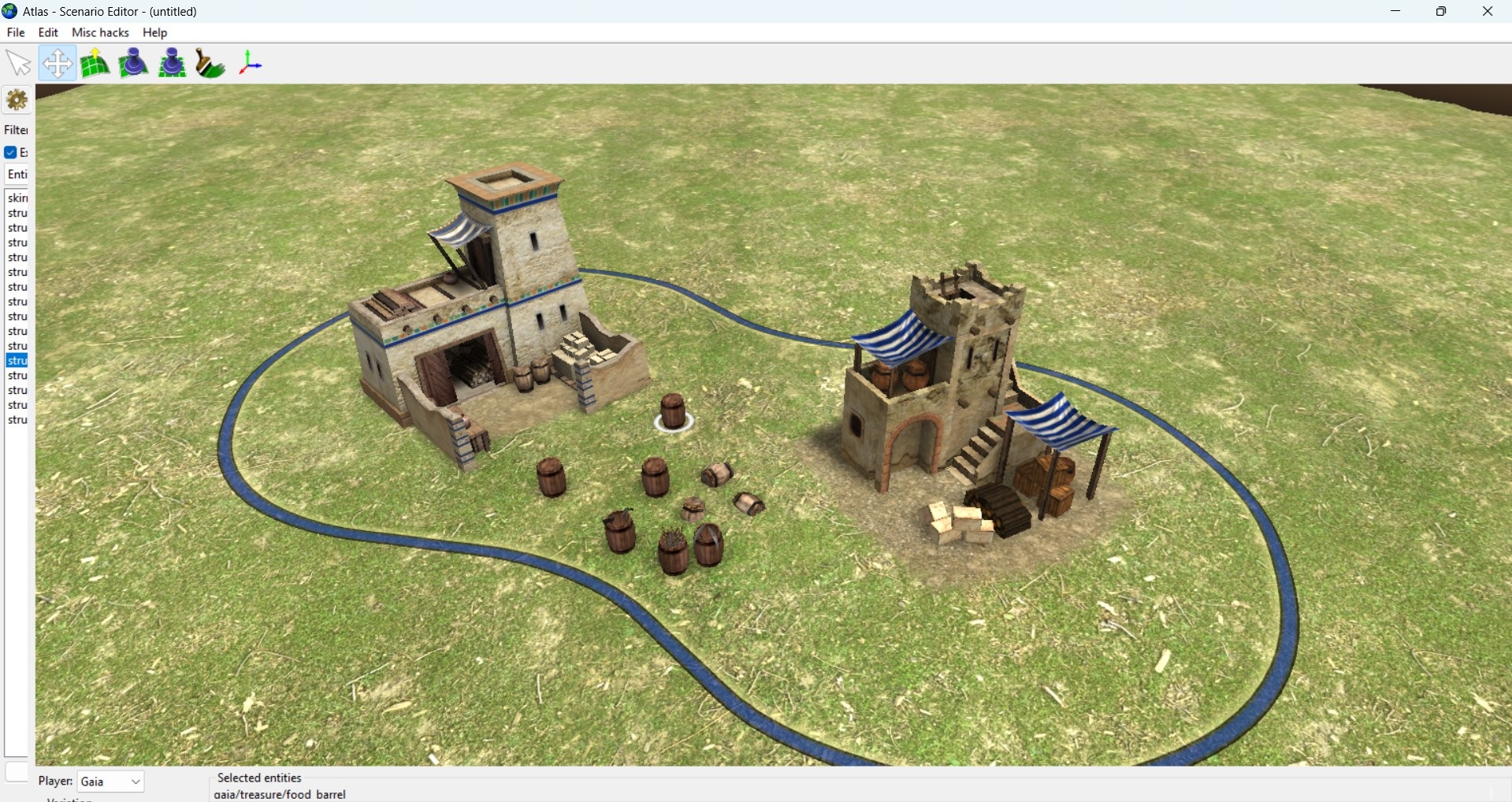
A number of structures use metal hooped wooden barrels as props and barrels also show up as treasures. However from what i could find in the game's timeframe barrels were only used in Gaul and (towards the end of the timeline post Gallic Wars) in Roman frontier camps. Barrels in this period seem to have used only wooden hoops; metal hoops seem to first show up in the middle ages and only become truly common after the industrial revolution. My suggestion would be to replace these with the existing pottery and basket props; and possibly create new more accurate barrels for the Gauls in the future. https://www.journals.uchicago.edu/doi/10.1086/677034