
All Activity
- Past hour
-
.thumb.jpg.b21ca1d0c15fb56b42c39b25a0a40815.jpg)
Civ: Germans (Cimbri, Suebians, Goths)
Genava55 replied to wowgetoffyourcellphone's topic in Delenda Est
En cualquier caso, este mapa muestra los pueblos germánicos en el siglo II de nuestra era. -

Civ: Germans (Cimbri, Suebians, Goths)
Duileoga replied to wowgetoffyourcellphone's topic in Delenda Est
Buenos días, tardes : -Para la 3ª facción germana elegí a los "Queruscos" la reconstrucción más fiel de sus guerreros y arquitectura y por los nombre históricos .Miré otras tribus como Sicambrios o Catos pero llegaban a 6 personajes históricos y mínimo deberían tener 8 o más, para los mapas más grandes.Además de que el héroe Arminio ya está creado y creo que hay más interés en esta tribu y la batalla de Teutoburgo.Ejemplo: Sicambrios: 1. Antharius-----------------( )55 a.C 2. Melo ----------------------( )16 a.c 3. Baetorix ------------------( )16 a.C 4. Deutorix------------------ ( )9 d.C Chatti 6. Adgandestrius ------------( ) 11 a.C-19 d.C 7. Gandestrius----------------( ) 9 d.C 8. Arpus ---------------------( ) 9-16 d.C 9. Actumerus ----------------( ) 9-16 d.C 10. Gandemeerus------------( ) 9-16 d.C 11. Ucromirus-----------------( ) 9-16 d.C (También,muchos de los héroes de los queruscos nacieron antes de 1d.c entrando dentro de los estándares del mod Endovélico.Aunque en el juego aparezca Boadicea, no quiero extender en general tanto las fechas para el mod.) ¿Qué opinan? Disculpen me las molestias* -
That's strange that'd we get a corrupted download. Sometimes their mirror fall though... I sometimes have to update the urls in my local copy until they fix it.
-
Civ: Germans (Cimbri, Suebians, Goths)
Genava55 replied to wowgetoffyourcellphone's topic in Delenda Est
You can find more information about them here: https://www.academia.edu/124853492/Meanwhile_in_the_North_Handmade_Pottery_beyond_the_Roman_Frontier At least it explains why they are separated on this map. Although the Old Frisian is related to Old English and Old Saxon, this is maybe a feature happening during Late Antiquity and the Middle Ages. Maybe it was not the case during the Iron Age. A sacrificial scene takes place in a fenced area right in front of the temple. The temple is the building on the right. The main building is seen on the left, and in the background, the palisade is under construction. Craftspeople are working in the area between the two buildings. In this case, the drawing is primarily based on our results from the 2025 excavation. -
I had a problem with gmp also, the script would download it, then the script would quit. I tried extracting it myself, and there was an error. Then I go to the link and download it manually, and copy over the files, and it works
- Today
-
Freetype is down again
-
Ok, sorry about that. So, I was just building it again, and I got the failed to build freetype error again. I put the URL in the browser, and it said error 502, bad gateway
-

Guide: Running AutoCiv Mod on 0 A.D. Alpha 27 (Temporary Workaround)
ffm2 replied to Tulughma's topic in Game Modification
Just get it from the last site of: -
Can we see your logs?
-
What's really weird is you not being able to build it. Do you get any errors ? Does it happen without the mod ?
-
 i am using 0AD 0.28 and autociv v0.27 is not working for me can you help me to support autociv mod?
 -
subzero57 joined the community
-
not asking to disable mod, just want to know how to disable that "waiting for builder" setting.
-

Civ: Germans (Cimbri, Suebians, Goths)
Ultimate Aurelian replied to wowgetoffyourcellphone's topic in Delenda Est
https://maptism.org/maps/germanic-tribes-2nd-century/ https://x.com/Maptysk/status/2027476111148343343 https://threadreaderapp.com/thread/2027476111148343343.html I find it interesting that the Friisi are their own thing and the Cherusci are included in Rhine Germans (rather than having both in the same North-Sea group of the Chauci) -
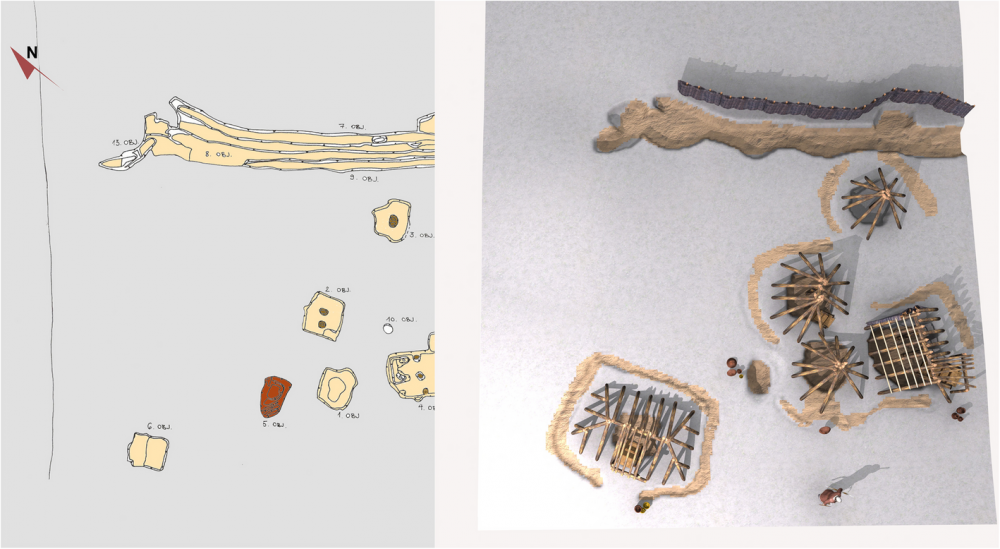
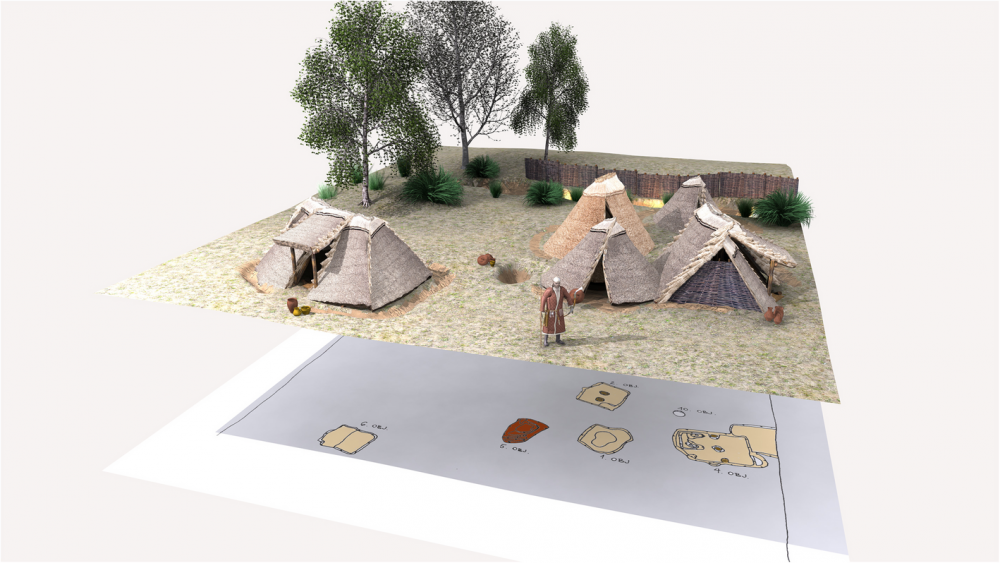
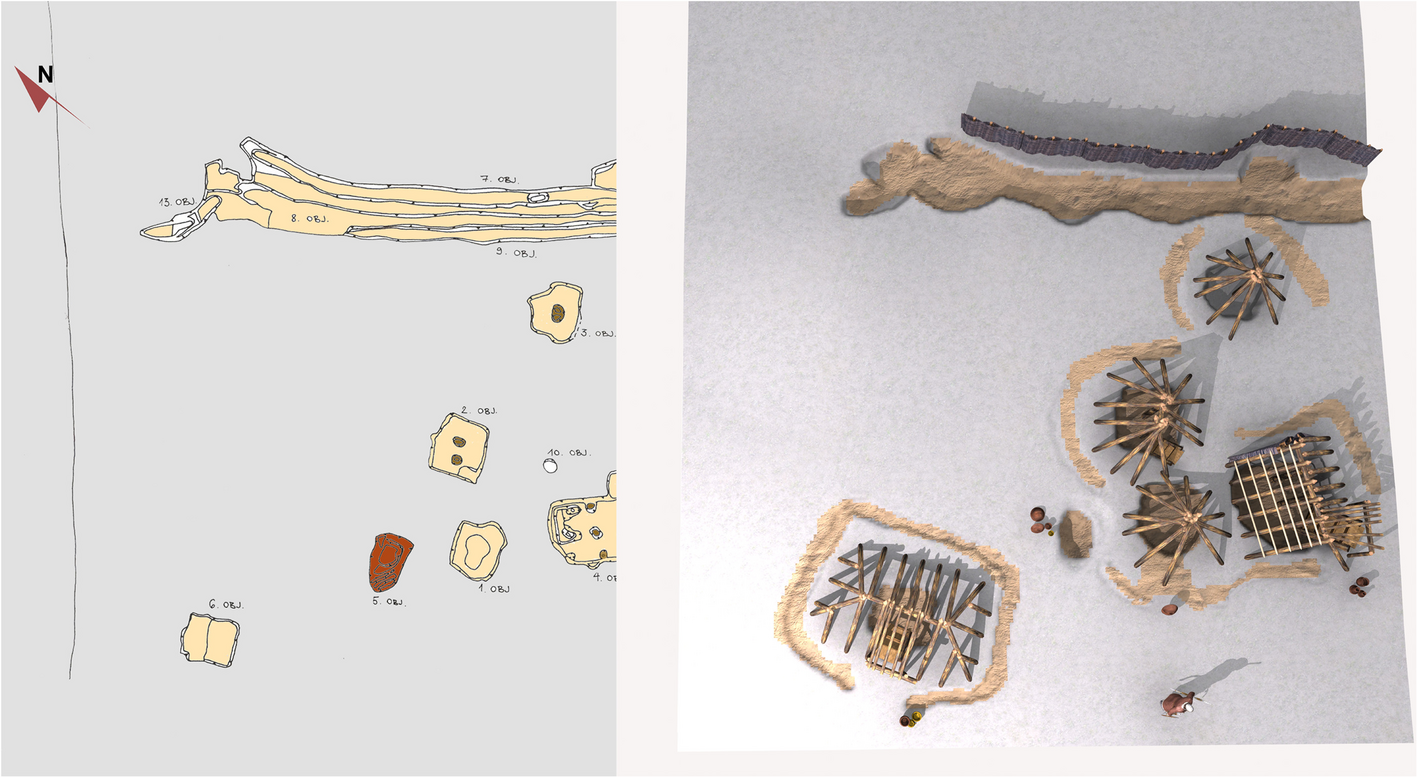
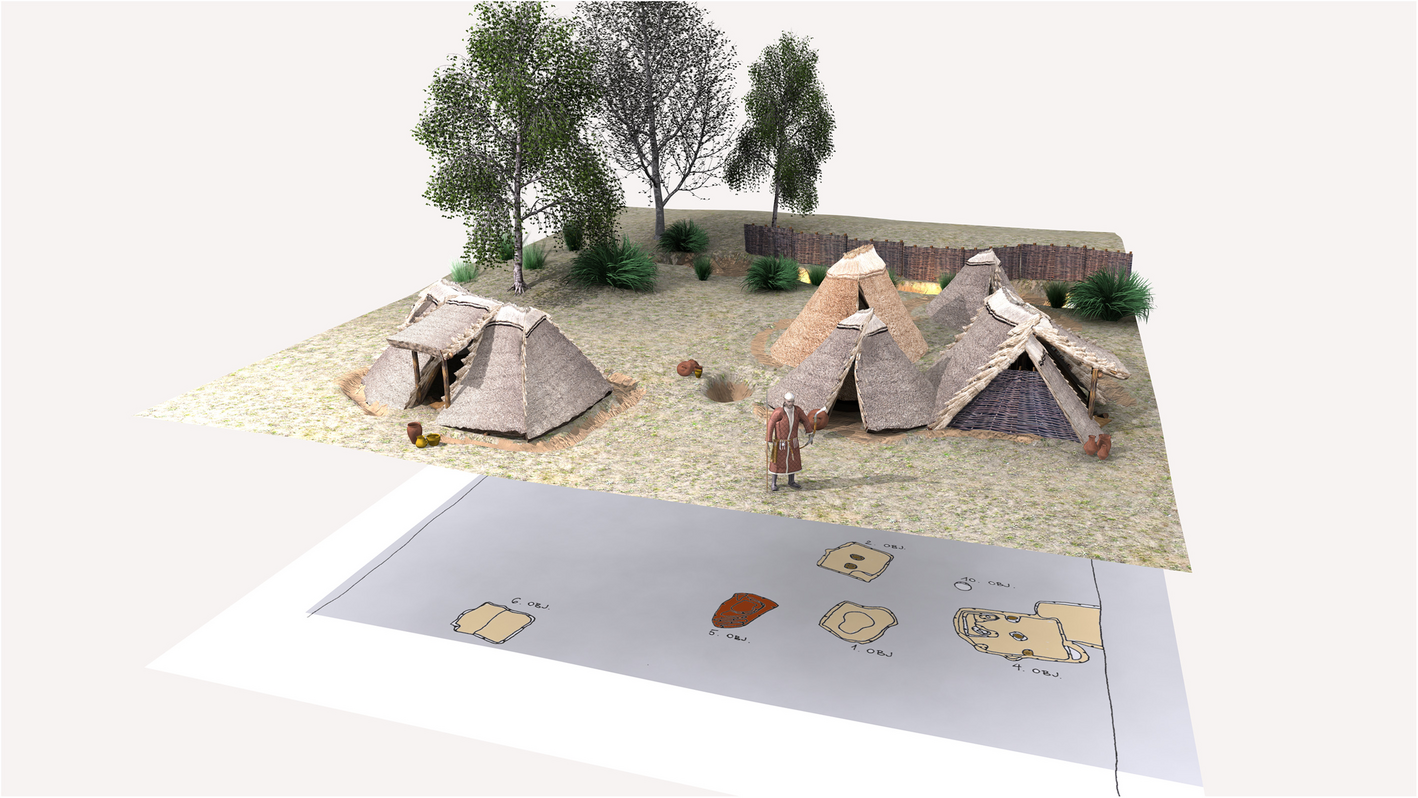
https://link.springer.com/article/10.1186/s43238-025-00191-2 Avar village near Orosháza: Most of their buildings could probably look like this. The ''allied camp'' could have a more Germanic or Slavic style; it it could work as sort of ''military colony'' building that can train allied infantry and slave villagers (most nomadic civs could have something like this to portray settled vassals).
-

mod shiny - alternative main menu & UI theme
hyperion replied to maroder's topic in Game Modification
Don't know if that is the latest, but the latest I have at least. shiny_a27_2-01w3.zip -
Hi, Does anyone has "a backup" of the latest dev version (un)available of this mods ? It was really nice and very promising, I used it at the time and I probably could try to help on it/ update it but the "stable" version on mod.io definitely not implement what was evocated here.
-
Onde fica o cache?
-
Civ: Germans (Cimbri, Suebians, Goths)
Ultimate Aurelian replied to wowgetoffyourcellphone's topic in Delenda Est
Does it say what the smaller enclosure was? (the small enclosure outside) -
Olá, boa noite. Aqui não estou com esse bugs, mas pode ter sido em alguma das últimas atualizações, vou atualizar o Github novamente com as últimas atualizações. Tente atualizar aí também, se for preciso apague o cache do jogo isso pode ajudar.
- Yesterday
-

Unusual graphics behaviour on intel arc, Linux
vladislavbelov replied to blarp123's topic in General Discussion
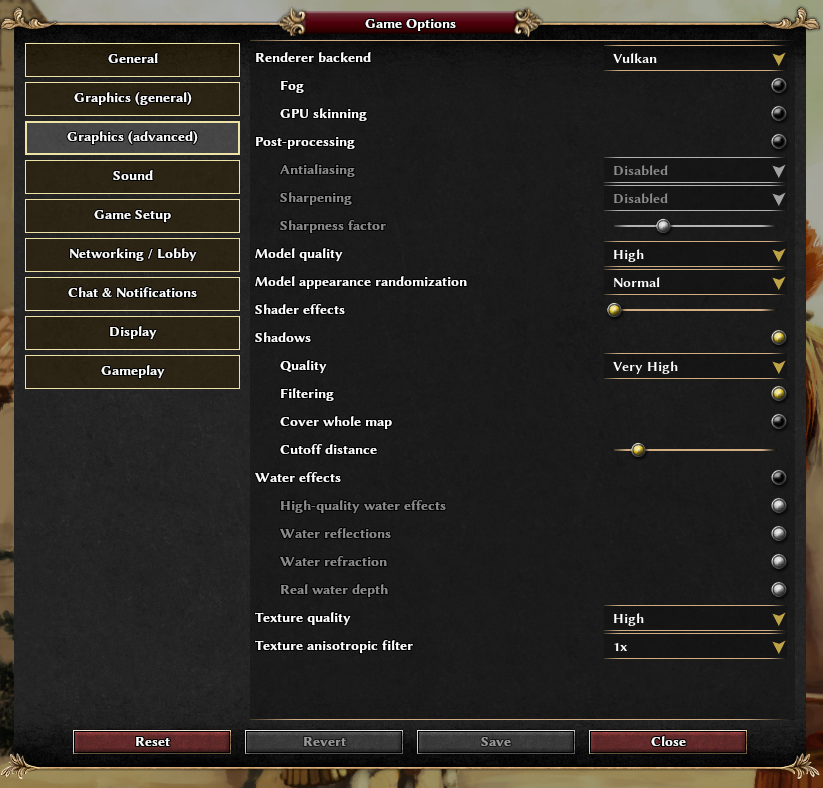
Hmm. If change the shadow quality to high and restart, does the problem happen? Also if switch to Very High after a start with High does the problem happen? Also could you add the following line to your user.cfg? renderer.backend.vulkan.disabledescriptorindexing = "true" -

Unusual graphics behaviour on intel arc, Linux
blarp123 replied to blarp123's topic in General Discussion
Yes it still happens when all other settings are disabled. Here's the log with the flags you gave. mainlog.html userreport_hwdetect.txt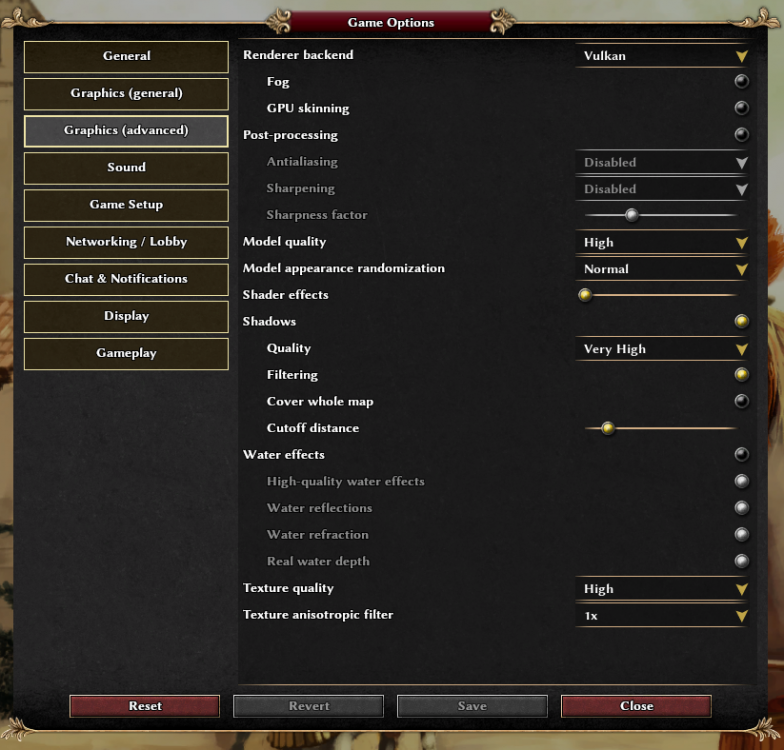
-
Unusual graphics behaviour on intel arc, Linux
vladislavbelov replied to blarp123's topic in General Discussion
Could you add the following lines to your user.cfg (might be removed later) and attach mainlog.html and userreport_hwdetect.txt after run with it? renderer.backend.debugcontext = "true" renderer.backend.debugmessages = "true" renderer.backend.debuglabels = "true" renderer.backend.debugscopedlabels = "true" Also is the problem reproducible when all other settings are disabled? -
===[TASK]=== Wooden Theatron for the Spartans (and Thebans)
nifa replied to wowgetoffyourcellphone's topic in Official tasks
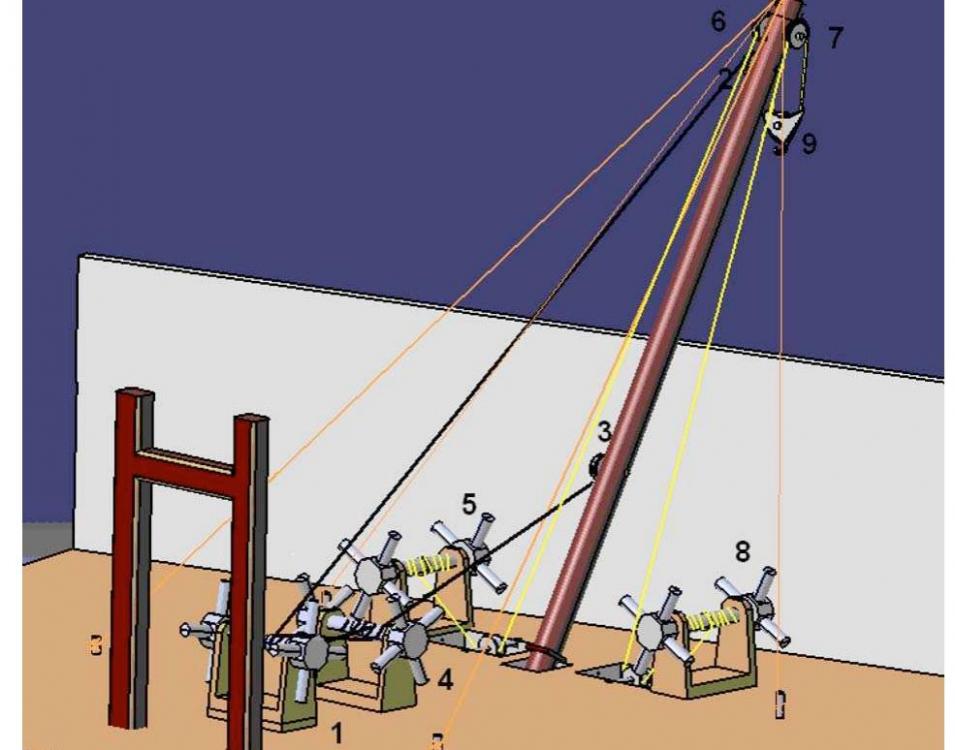
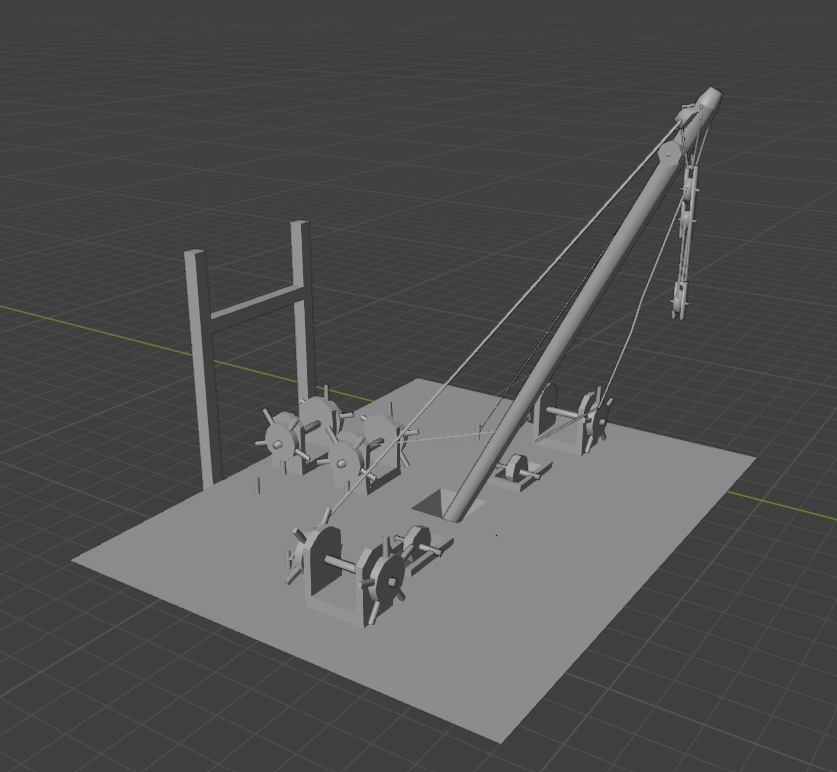
https://www.academia.edu/8717811/Deus_Ex_Machina_Mechanism_Reconstruction_in_the_Theater_of_Phlius_Corinthia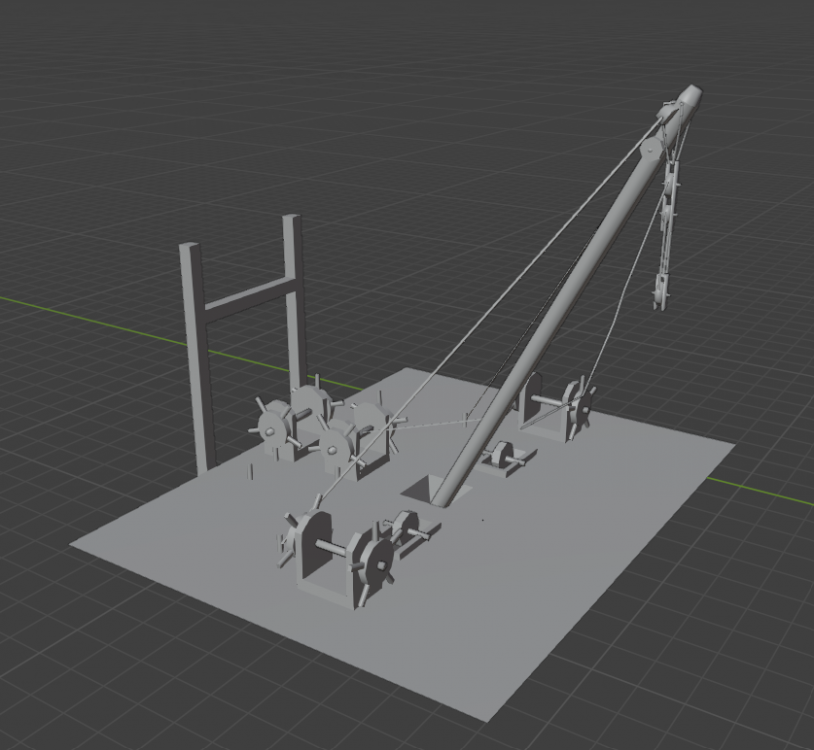
-
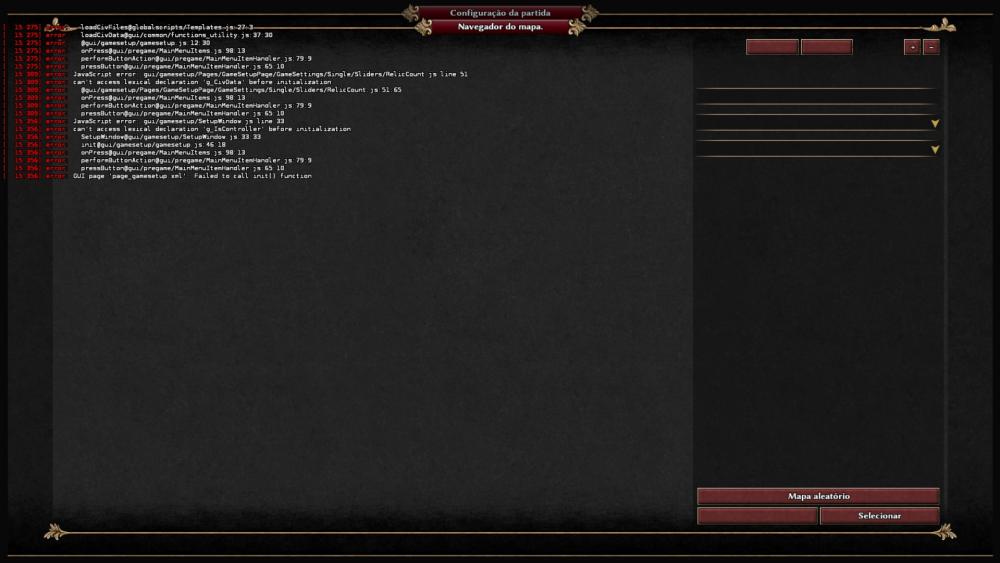
I have this bug upon starting. Tenho este bug na hora de iniciar uma partida
-
Civ: Germans (Cimbri, Suebians, Goths)
Genava55 replied to wowgetoffyourcellphone's topic in Delenda Est
Here a translation of the description from the museum: The sanctuary or temple, which is located in the southeastern corner of the fortification, perhaps within a demarcated parcel. It has burned down, and beneath the destruction layer we found traces of two temple phases. The entire structure measures 15×16 m and is almost rectangular. On the outside, there is a deep trench (dug almost 2 m below the surface) in which sturdy round wooden posts stood at intervals of 30 cm. Inside this outer building, there was a smaller, yet still very sturdily constructed building or "room", 9.5 m long and 5.7 m wide, with an entrance to the south. Between the outer colonnade and the inner building, there are traces of a clay floor. The roof must therefore have extended all the way over the colonnade, covering the entire structure. The inner structure rests on four deeply founded load-bearing posts, and the wall is constructed of vertical oak planks. Finds of plaster suggest that the walls were plastered with a whitish and perhaps painted layer of plaster. Exactly in the middle of the inner building, there is a 2×2 m raised area built of solid clay; on top of this, in the youngest phase, lies an ornamented hearth that partially covers the hearth of the oldest temple, which is visible as a very intensely burnt zone in the clay. Here, it is very clear how the youngest temple was shifted approximately 75 cm to the north compared to the older temple, but otherwise it is nearly identical to the oldest temple. In connection with the rebuilding, the floor in the inner building was leveled. Only the older hearth remained untouched; the new one was simply laid directly over it. Preliminary results suggest that the temple functioned in the decades right around the time of Christ, and the younger temple may also turn out to be contemporary with the rebuilding of the village and the fortification of the central farm.






-
Latest Topics
-