
All Activity
- Today
-
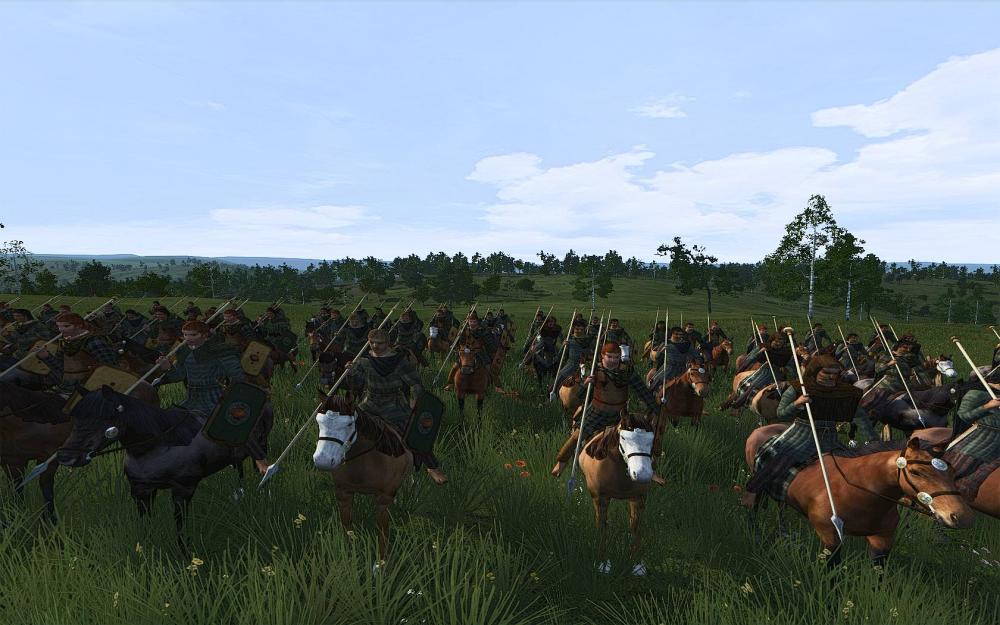
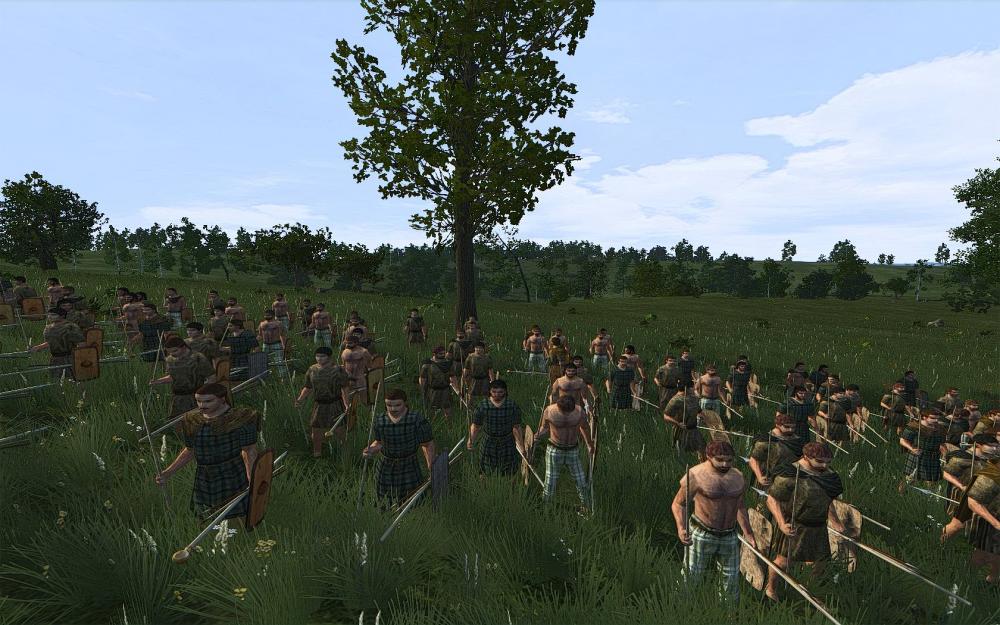
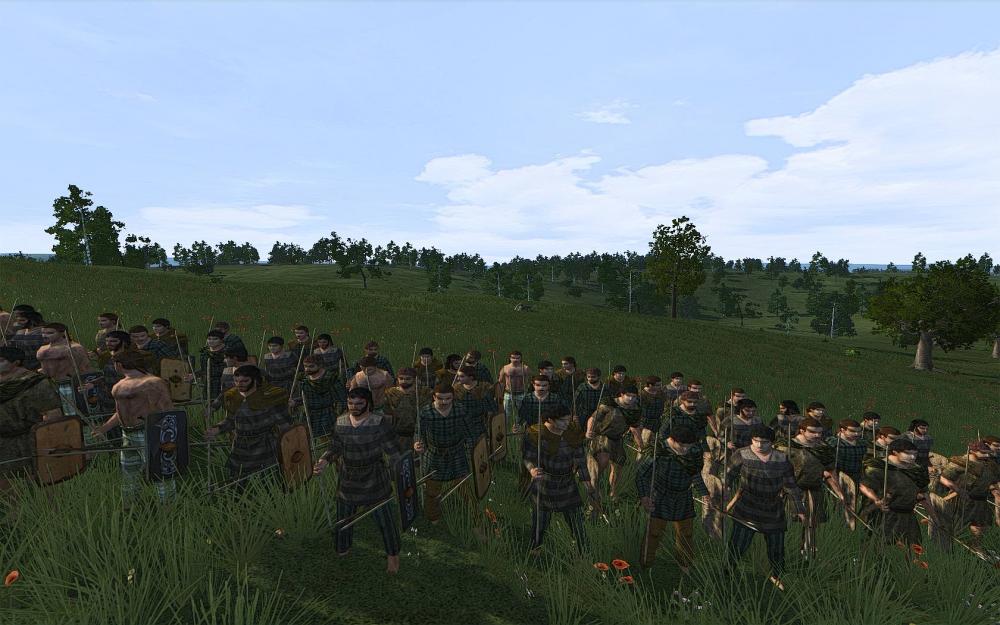
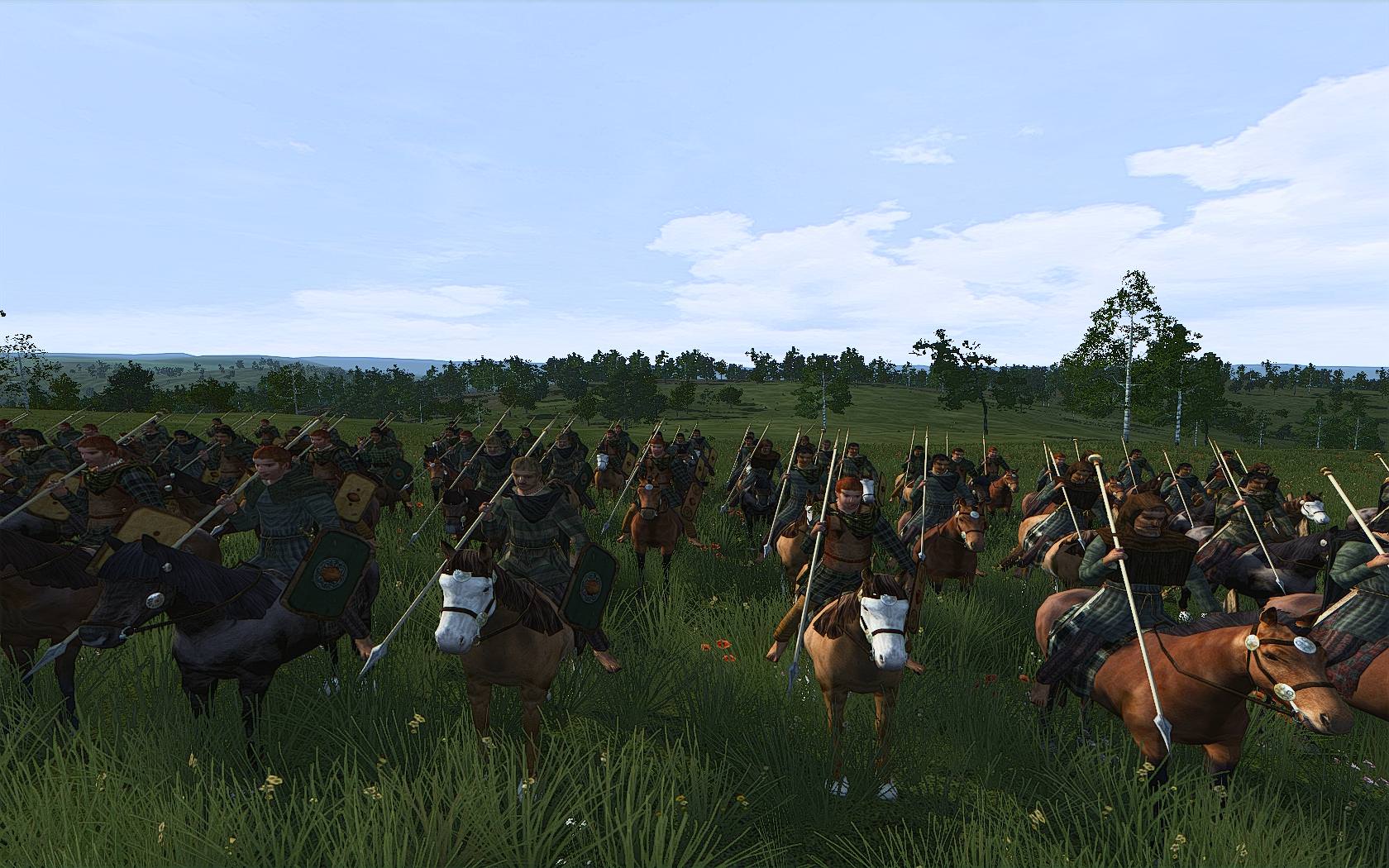
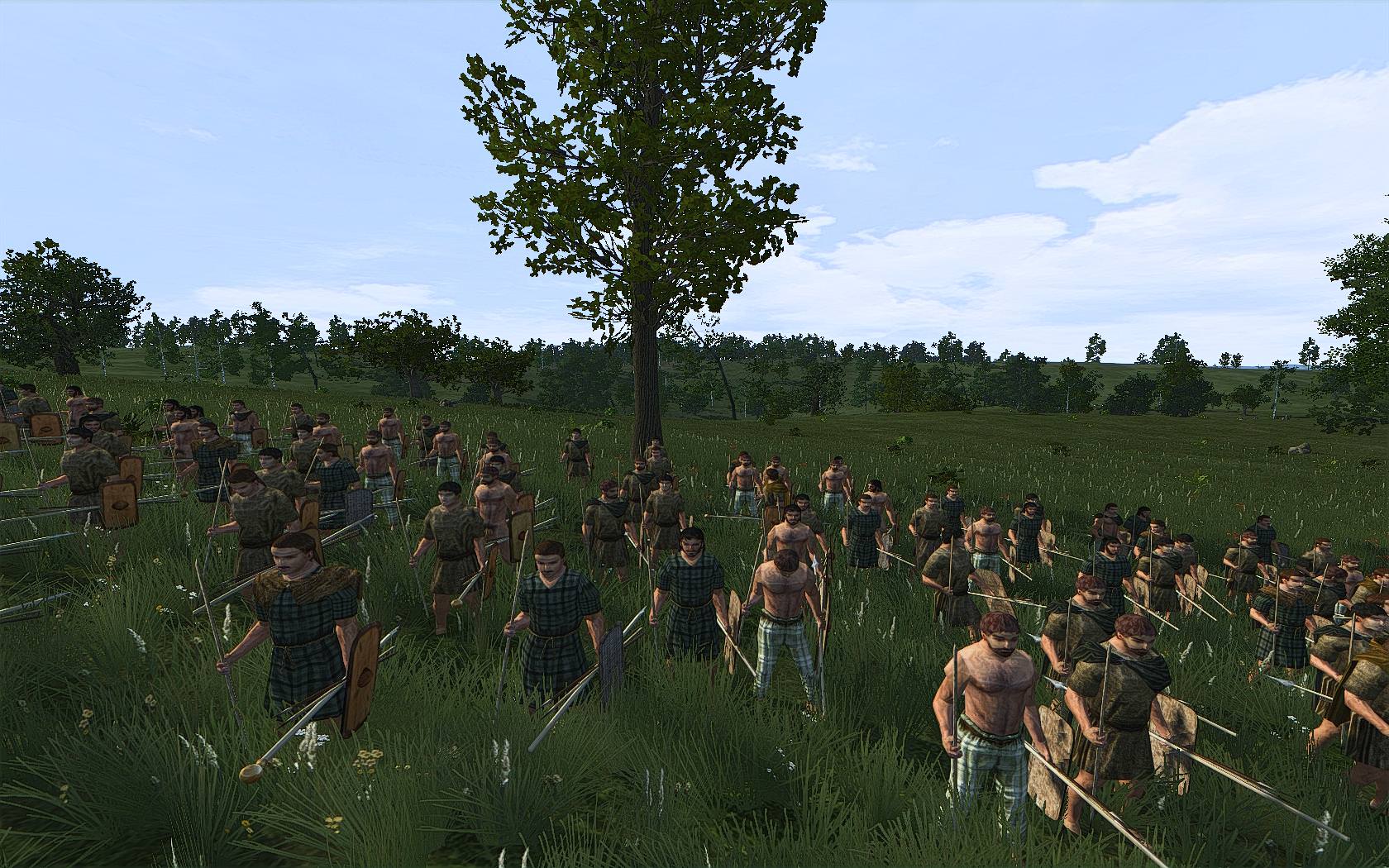
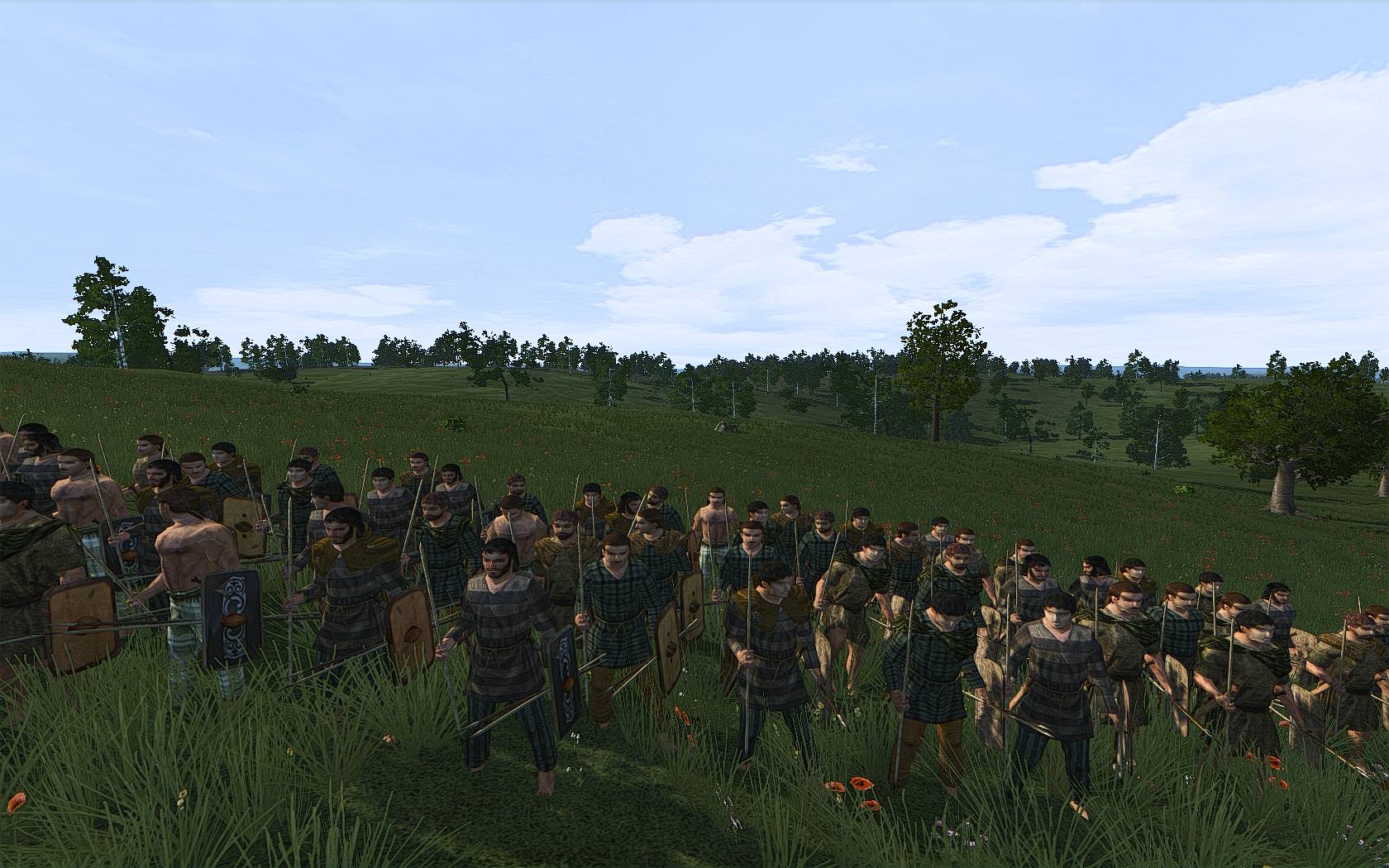
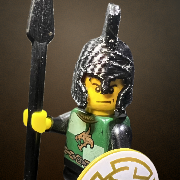
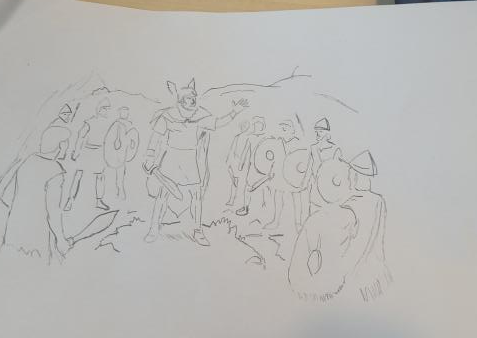
For unit ranks i think you could have something like Basic: No shirt, pants or loincloth. Plain shield Advanced: Simple tunic without pants Elite:Simple tunic with or without pants, cloak, painted shields. Champions: Torcs, finer tunics with pants, finer cloaks, painted shields. Perhaps headdress or some kind of leather/cloth armor for champions too.
-

Help Wanted. Export to sprite sheet.
Boston replied to Boston's topic in Tutorials, references and art help
He seems to have dropped of the radar, so my offer still stands. I think 50-100 AUD would be a fair price. I don't know. Boston -

Implementing forces in Unit Motion (HELP WANTED)
Thalatta replied to Atrik's topic in Game Development & Technical Discussion
Yes, with decomposition I meant what causes the translation (your normal) and rotation (the perpendicular projection of your normal respect to the lever). By "radial" I mean the force vector applied to the centre of the object would give the direction of motion, which in your case it's the normal since you are dealing with a contact force. I tend to visualise things in a more abstract way (there are force vectors), and you in a causal way (the contact is a normal force). So all seems fine. Yes. Imagine a ball moving slowly, but rotating really fast. If you push it off centre (on the half rotating away from you), doing so "in tandem" with its translation wouldn't benefit its rotation much, for that you would need to do it "in tandem" with its rotation, otherwise you fall behind, as previously explained (Edit: doing it faster would also work, since the system is not resonant). Now, all that is just to justify that you can have independent scaling for translation and rotation. If choke points will be a mess or not, hard to tell without trying, that's why I said "hopefully", having in mind that in choke points relative speeds could become quite random, but hopefully low enough, although if objects accelerate instantly I have less hopes for things to work out (I hope ships need to accelerate though, otherwise my coming ramming ideas won't be as nice). -
.thumb.jpeg.67ef5b5dc6d918163efa04cd5336830d.jpeg) we are here forever....
we are here forever.... -
It's much easier to use on Telegram, and it's very user-friendly.
-

Implementing forces in Unit Motion (HELP WANTED)
Atrik replied to Atrik's topic in Game Development & Technical Discussion
We don't decompose the collision vector. We calculate the resulting impulse from the contact normal, and the spin actually comes from calculating the torque given the impact position to the center. Since the shape is (almost) a rectangle, then it's just about calculating the lever effect on a axis - the contact point projected on it. Velocities are also calculated based on this closest point. I think to apply your idea it would be to add a scaling to the lever effect? But I'm not sure it's always desirable, for example on the choke point wouldn't that create more units facing the wrong direction of movement? -
- Yesterday
-
Implementing forces in Unit Motion (HELP WANTED)
Thalatta replied to Atrik's topic in Game Development & Technical Discussion
@Atrik maybe you consider something already, I haven't delved deep enough into the code. In collisions, you would have radial and perpendicular components, the last one making the body rotate. Is that last one also scaled by relative velocity? I thought only the first one. But even if both are, their scaling could be treated differently, and what I'm saying is that if the perpendicular component were to depend even more strongly on relative velocity, it would rotate static objects blocking the way more easily, while (hopefully) not affecting those marching shoulder to shoulder, which are the problems mentioned. I'm not sure how it would behave if objects collided head on (high relative velocity), but the dependency could be defined in a way that the resulting behaviour is also what is wanted. -
Implementing forces in Unit Motion (HELP WANTED)
Atrik replied to Atrik's topic in Game Development & Technical Discussion
Wait, but I told you it does for collision, just not for the 'soft' push who are mostly meant to keep units apart more then simulating a collision. So for 'soft' pushs you don't really want to scale it down with velocity. It's not so much about complexity you even tried yourself it's just less then 10 lines of codes, less if we refactor with the one for collision. But why would it help rotation here? -
Implementing forces in Unit Motion (HELP WANTED)
Thalatta replied to Atrik's topic in Game Development & Technical Discussion
I see, it was even more constrained than the case of me pushing that elephant in the open. It all comes down to their resistance to rotate, and how messing with that messes with other things. Seems the only solution is "taking into account the relative velocity" between them, but I guess you didn't want to complicate the code with that. -
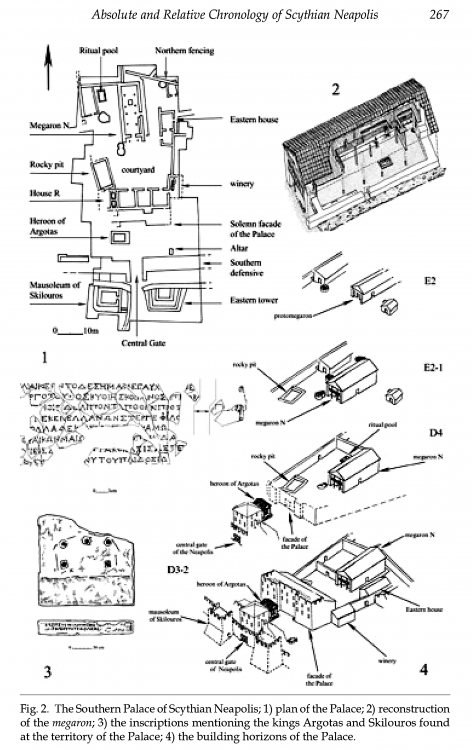
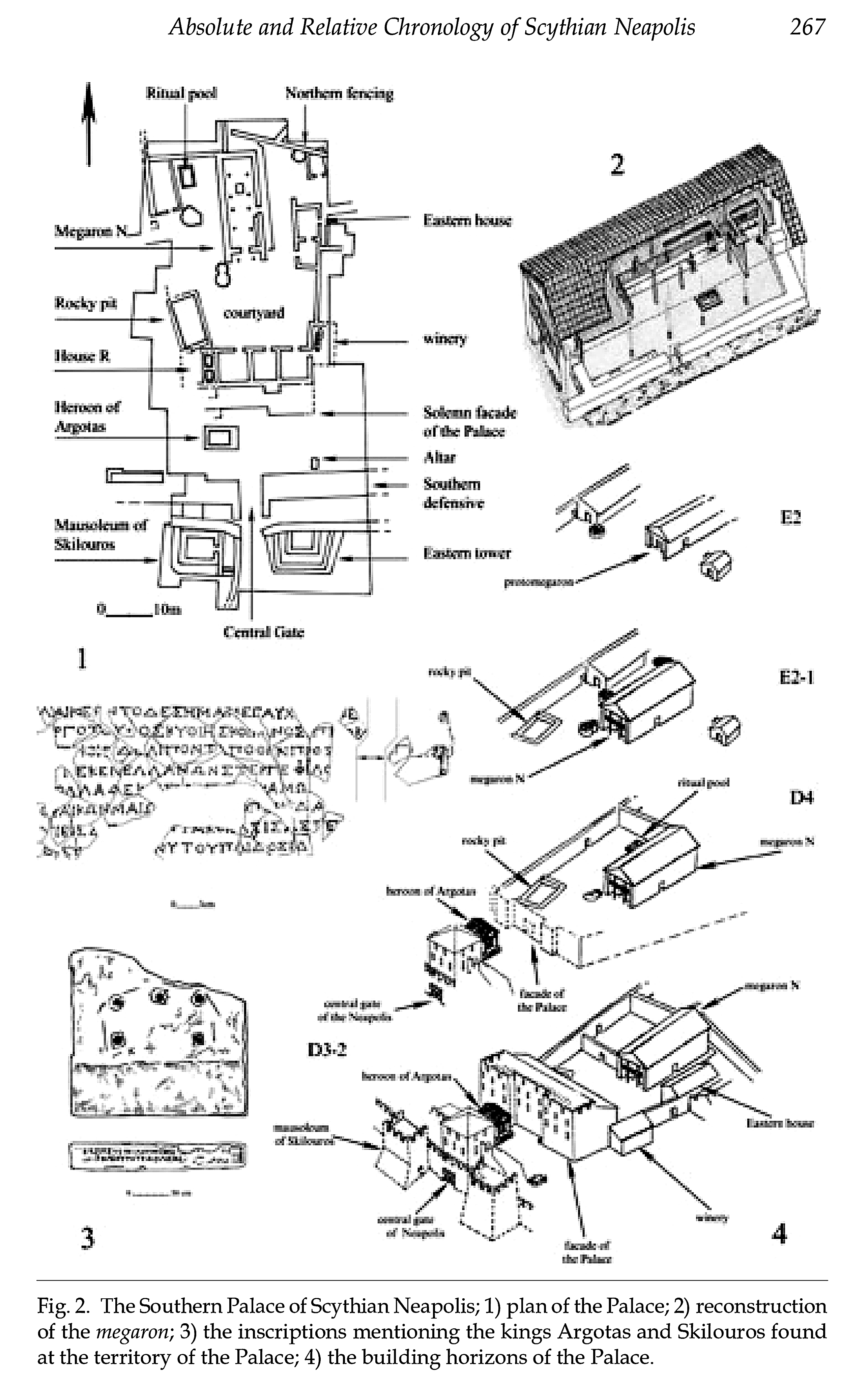
"Great Scythia" flourished across the northern Black Sea steppes, including Crimea, from the seventh to the fourth century BC. The traditional view held that Sarmatian expansion from the east caused its collapse in the early third century BC. Although Scythian culture disappeared from much of the region, the Scythians were believed to have retained Crimea and established a powerful kingdom there. This Crimean kingdom supposedly reached its height in the second century BC and pursued an aggressive policy towards the Greek cities. It subjugated Olbia, seized Chersonesos’ territories, and threatened the Bosporan Kingdom. The conflict ended when Mithradates’ general Diophantos destroyed the Scythian Kingdom, after which the Greek cities entered Mithradates’ state. Archaeological discoveries since the early 1990s, especially at Neapolis Scythica, have fundamentally revised this interpretation. The city was once thought to have been founded in the late fourth century BC as the successor capital of Great Scythia. Excavations showed, however, that the earliest remains belonged to an unrelated Tauric settlement that disappeared in the early third century BC. The site was then abandoned for a considerable period. New buildings appeared only around the middle of the second century BC. A political centre began to develop around 150 BC, followed by fortifications around 140 BC. After the settlement was destroyed by fire between 135 and 130 BC, a royal palace and stronger defensive walls were built. Only then can Neapolis Scythica confidently be identified as the kingdom’s capital. Its destruction in the late second century BC, probably during Diophantos’ campaign, suggests that the Crimean Scythian Kingdom existed for only forty to fifty years. These findings reveal a major chronological and cultural gap between Great Scythia and Late Scythian society. The last sites of Great Scythia date to the early third century BC, while Late Scythian culture emerged only near the century’s end. The two societies were also fundamentally different. Fourth-century Scythians were nomads, known mainly through burial mounds, whereas Late Scythian communities lived in fortified and unfortified settlements with flat-grave cemeteries, mostly in the Crimean foothills. The disappearance of Scythian burials from the Crimean steppe suggests that the Scythians were forced to leave the region rather than maintaining continuous control over it. In the foothills, they adopted a settled way of life and participated in the formation of a new, culturally mixed society. Local Tauric traditions played an important role, alongside Classical and La Tène influences. Most scholars therefore reject direct political or cultural continuity between Great Scythia and the Late Scythian Kingdom. The term “Late Scythian” remains useful mainly as a scholarly convention: it describes a new, settled, and culturally diverse society rather than the uninterrupted continuation of earlier Scythian civilization.
-
That takes time, but I can make it that realistic. I was talking about colors.
-
The temple was very important in Babylonian life. It's literally a bank and it's used to store grain. Their deity king is Marduk, equivalent to Baal; the priestly caste was very important.
-
It was triggered when I opened the map in atlas Could you make it so you can do a selection of stuff to delete, or even change player
-
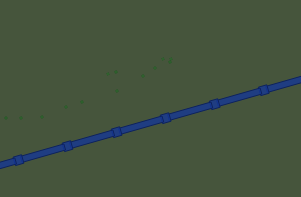
I placed some trees and they were really hard to see. Maybe if you changed the color? In the 2d map preview, could you have the map be round if it is a circular ma
-

New Atlas helper tool - Mercator
Grautvornix replied to Grautvornix's topic in Scenario Design/Map making
Thanks - at least something imnproved. What did the error message say and how was it triggered? -
So, I still was getting an error when I opened the map into scenario, but the walls did load this time
-
Map making support and conversion tool: post-Atlas
Grautvornix replied to Grautvornix's topic in Scenario Design/Map making
Here is a minor update of post-Atlas 1.10.0. It fixes a few minor things and adds a more detailed view on treasures, and another test for gaia-owned resources that were wrongly allocated to a player (occurs in some maps form the past). Also should clear issues when using with snap installs on Linux. Let me know any issues you may find or any suggestions you may have. post-atlas-1.10.0.zip CHANGELOG.md -
For those diagrams, it's best to use Inkscape. Vector files are more enjoyable to work with.
-
Implementing forces in Unit Motion (HELP WANTED)
Atrik replied to Atrik's topic in Game Development & Technical Discussion
The shape is a radius around a segment, a 2D capsule, which you generally picture as a rectangle but for small segments, it start being more circular. They are, and for boats their footprint shape was displayed as it was (the champion ele had the triangle one because it's a champion). Since they are long shapes, there it looks more like a rectangle then for elephants. So I was approximating them as being all rectangle, but now that it is drawn for elephant, it's obvious that it's a bit less true for them. Although they are still pretty close to a rectangle. For buildings, it was always was one contact point anyway, as it doesn't use the hitbox used for pushing. But the example you gave was still trickery! The wall was blocking the unit from complying to the push because of having one less degree of freedom. -
New Atlas helper tool - Mercator
Grautvornix replied to Grautvornix's topic in Scenario Design/Map making
Another BETA release 0.11.0 is available (download form top post of this thread. Along with many bug fixes and usability improvementsm it features - a complete rework of the GUI (particularly the entity placer) - capability to load a 2D heightmap to create a raw 3D terrain and save it to a pmp-file for ATLAS editing - a summary tab that also verifies map integrity using many tests of post-atlas and allowing to fix these. Next steps will include a terrain sculptor that allows preparing a basic terrain layout for refinement in ATLAS. -
 I used Claude to make a quick diagram, and then I used Photopea to place everything better and refine the text.
 -
Implementing forces in Unit Motion (HELP WANTED)
Thalatta replied to Atrik's topic in Game Development & Technical Discussion
@Atrik I'm a bit confused now... collision surfaces were rounded all along? If so: -Is that some non-elliptic oval? Doesn't it take more computational resources than for an ellipse? (since I guess more equations would be required to define that). -What was happening with the elephant sliding against the wall then? If pushed off-center, shouldn't it have rotated? -Can't the scheme be unified and ships be treated in the same way? Or all objects for that matter. -
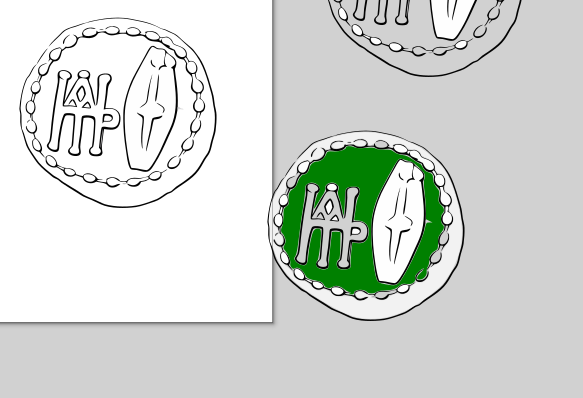
I just hastily butchered @lilypoppy's diagram with GIMP.

.thumb.jpg.b21ca1d0c15fb56b42c39b25a0a40815.jpg)



-
Latest Topics
-

