Leaderboard

Popular Content
Showing content with the highest reputation on 2026-09-19 in all areas
-
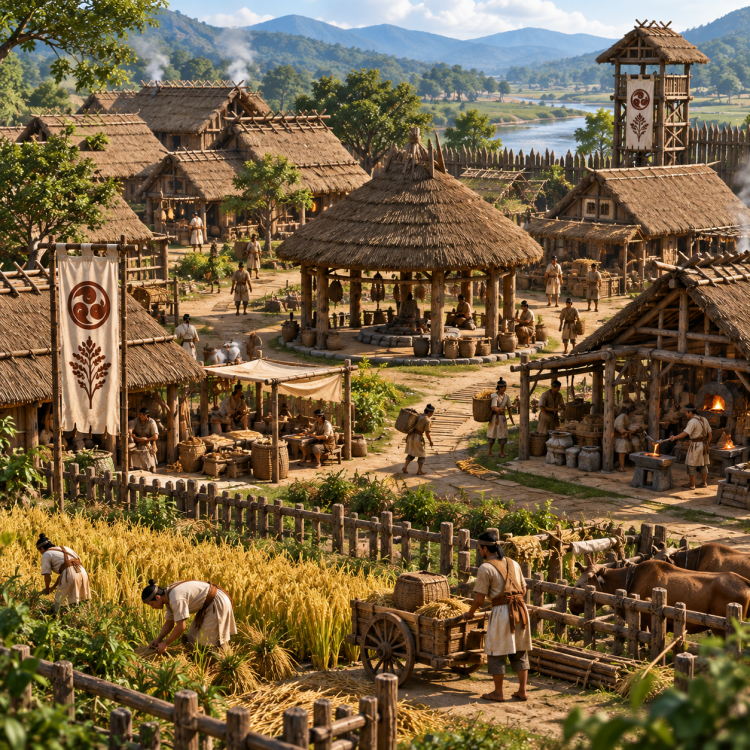
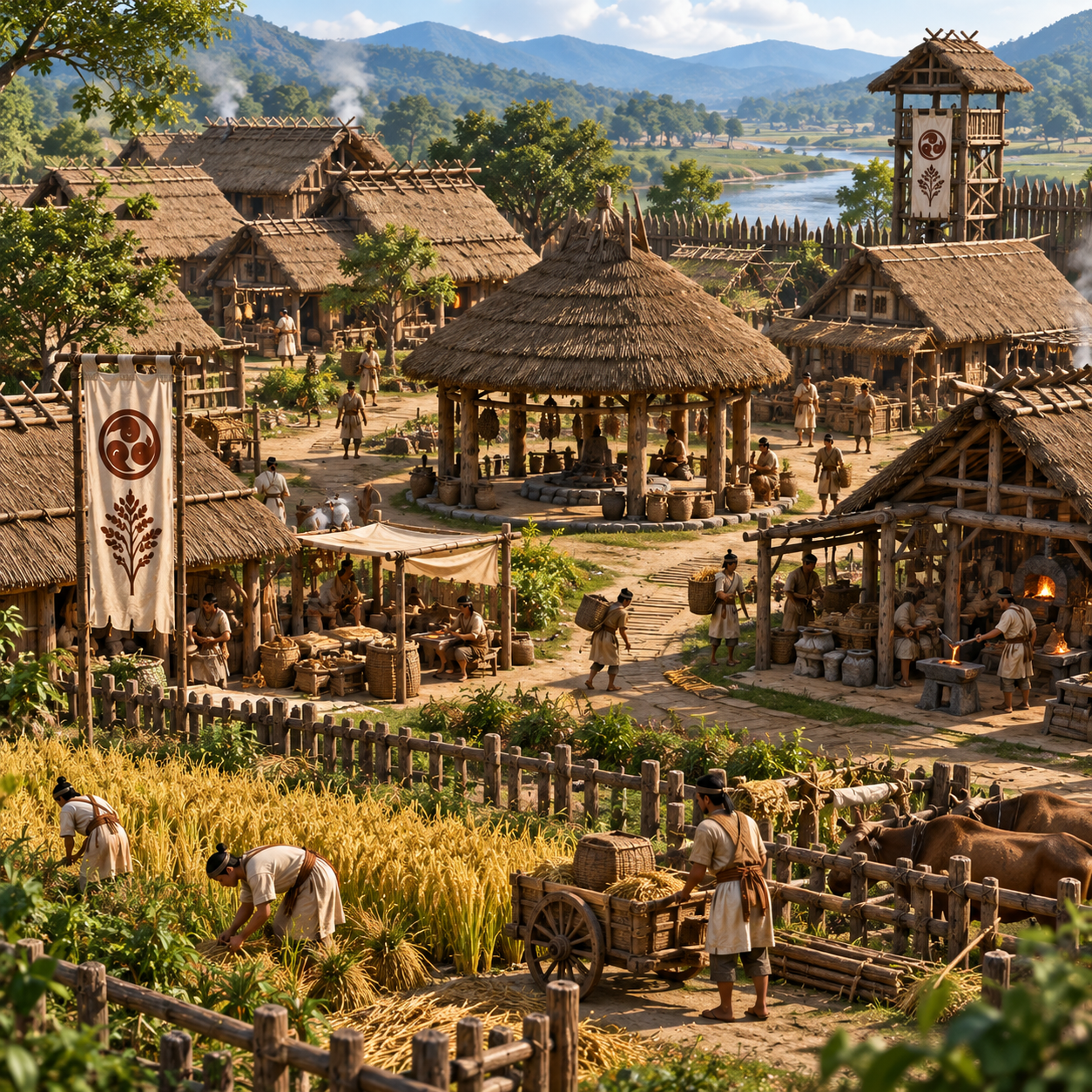
Hey everyone, I’m here to share some more news about World Rising! The Yayoi culture is already well into development, with approximately 60% completed. We have also started working on the Kofun culture, which will represent the final Era of the Japanese cultural progression in the game. By the end of this week, I plan to share more images of the new structures and also show some of the new units currently being developed. Another feature I’m currently finishing is the weather system, and I’m really enjoying how it’s turning out! This map will feature three different types of rain: drizzle, heavy rain, and thunderstorms. One of the most interesting aspects of this system is that weather events will not necessarily affect the entire map at the same time. Rain will appear randomly in different regions of the map. This means that your city could be enjoying calm, clear weather while, on the other side of the map, an enemy city could be dealing with a powerful thunderstorm. The goal is to make the world feel more dynamic, with different regions experiencing different weather conditions throughout the match. I’m also working on the skeletons, rigging, and animations for the animals I created to implement in the game. I have to admit, this part has been quite a lot of work, but little by little these animals are starting to come to life inside World Rising. Finally, I plan to create one more tree model and two new types of plants to expand the Japanese biome and make the environment feel even richer and more diverse. Development continues to move forward, and there is still a lot more to come. I’ll be sharing more updates and development images soon. Thank you to everyone who continues to follow and support World Rising!
 5 points
 -
Please make a PR for the base game. lol You're in luck too! The next Release will fix rain particle orientations.4 points
-
I have more exciting news about World Rising! I’m developing a dynamic weather system that will transform the environment during each match. Clouds will gradually form in the sky, while rainstorms and thunder may arise unexpectedly. These weather changes will make every match feel more alive and unpredictable, further enhancing the game’s immersion and realism. VID_20260918_014029.mp43 points
-
Hi everyone, I've been looking into the possibility of creating Proto-Germanic voice lines for the Germans in 0 A.D. First, a note about AI: I used ChatGPT to help me find linguistic sources and prepare the first word suggestions below. This is preliminary research, not a finished translation. I'm not a historical linguist, and the proposed forms have not been independently reviewed by one. Some of them may well be wrong. No audio has been generated yet. My idea is not to reconstruct exactly what the Cimbri spoke around 100 BC. As far as I understand, the surviving evidence simply doesn't allow this. Instead, I would like to find a reasonable linguistic approximation that fits the historical setting of 0 A.D. and sounds good in the game. We only need about 18 short voice lines. Ideally, they should be one or two syllables long, but I don't think this needs to be a strict requirement. Before experimenting with recordings or text-to-speech, I would like to get the words and their pronunciation into a reasonably good state. 1. Which language should we use? Release 28 describes the Germans as a coalition of the Cimbri, Teutones, Ambrones and other Celto-Germanic groups. Official Release 28 announcement The linguistic situation seems rather uncertain. For example, Gilles Quentel discusses early contacts between Continental Celtic and Germanic. There are also different interpretations of the surviving names of the Cimbri and Teutones. Bichlmeier and Blažek discuss several possible etymologies of these tribal names in their 2020 publication. I think reconstructed Proto-Germanic could be a reasonable common language for the faction, as long as we make clear that this is an approximation, not a reconstruction of an attested Cimbrian dialect. There is also the question of the First Germanic Sound Shift and its chronology. For our purposes, I would initially use a consistent reconstructed Proto-Germanic pronunciation rather than trying to reconstruct a hypothetical earlier dialect specifically for 100 BC. Of course, I would be interested in other opinions on this. 2. First suggestions for the voice lines I used the English meanings from the Audio Voice List, with the Latin translations as an example: Audio Voice List – 0 A.D. Wiki The following is a working draft, NOT a finished or academically validated translation. All proposed Proto-Germanic words and forms are reconstructions, not directly attested historical expressions. Some of the specific forms still need linguistic verification. Most candidates were initially found through Wiktionary's Proto-Germanic reconstruction entries, which often refer to etymological dictionaries such as Kroonen or Orel. However, I have not independently checked every individual reconstruction against these books. I also used the freely available Proto-Germanic grammar by Winfred P. Lehmann and the IE-CoR linguistic database. Some forms are more tentative than others. I have marked the particularly uncertain ones instead of pretending that we already have a complete solution. Selection and greetings English Proposed form Notes Hello hailaz! Literally "healthy, whole". A possible greeting, but not an attested Cimbrian one. What is it? hwat? Simply "what?". Shortened for gameplay. My lord? frawjô? "Lord", without "my". The appropriate form of address should be checked. Movement and fighting English Proposed form Notes I will walk gō "I go / walk". I will fight fehtō "I fight". The meaning and exact form should be checked. I will attack! hwētō! "I attack". This candidate needs further linguistic checking. I will march! farō! "I go / travel". Not specifically military marching, but perhaps sufficient for a short acknowledgement. I will retreat! wīkwaną "To yield / retreat". This is still an infinitive. A shorter and grammatically appropriate spoken form is needed. Battle cry open Perhaps a non-verbal shout would work. Alternatively, a short expression based on a reconstructed verb for fighting could be considered. I would not want to invent something and present it as an authentic Germanic battle cry. Working and gathering English Proposed form Notes I will build timrō "I build". I will work land arjaną "To plough". The appropriate short spoken form still needs checking. I will gather samnō "I gather / collect". I will herd drībō "I drive". This could refer to driving livestock, but is not exactly the same as tending a herd. I will fish fiskō "I fish". I will repair bōtī "Improve / make good!" Not specifically repairing a building. The form and its use in this context need checking. I will hunt huntōn- Reconstructed verb stem only. The precise form and vowel length remain open. I will heal hailī "Heal!" An imperative rather than "I will heal". The exact form needs checking. Regarding hunting, the IE-CoR database gives huntōn- as its reference form, but its explanation also mentions hūnton-. The vowel length and the actual spoken form therefore need further checking. Other (I will put myself into) garrison — felhō Intended meaning: "I enter / go inside". This is one of the least secure suggestions and needs both lexical and grammatical checking. It is not an attested term for entering a garrison. A few remarks about the list The grammatical forms are not consistent yet. Some are first-person forms, others imperatives, infinitives or reconstructed stems. Personally, I don't think every response necessarily needs to be in the same grammatical form. The important thing is that it works as a short and natural-sounding acknowledgement in the game. However, we should make sure that the individual forms are actually plausible and not simply invented by an AI. Also, several suggestions deliberately use a broader meaning than the English original. For example, "I travel" instead of "I march" or "I drive" instead of "I herd". These would be gameplay decisions, not exact translations. I would be happy to replace any of these suggestions if there are better alternatives. 3. Sources Here are the main sources I found. Historical background Gilles Quentel (2012): Early Linguistic Contacts between Continental Celtic and Germanic: Lexical Aspects. Publication on ResearchGate Harald Bichlmeier and Václav Blažek (2020): "Cimbri" et "Teutoni". Journal article – Acta Linguistica Lithuanica Václav Blažek: On chronology of the First Germanic Sound Shift (Lex Rask – Grimm). Publication via DOI These publications discuss historical names, etymologies and linguistic developments. They do not provide translations of the 18 voice lines. Grammar and pronunciation Winfred P. Lehmann: A Grammar of Proto-Germanic. University of Texas at Austin. Complete online grammar The chapters on phonology and inflection are particularly relevant. R. D. Fulk (2018): A Comparative Grammar of the Early Germanic Languages. Publisher's page – Open Access e-book The complete e-book is freely available. I have not worked through the whole book, though. Vocabulary IE-CoR – Indo-European Cognate Relationships Linguistic database One useful example is the entry for "hunt": IE-CoR: hunt. It references Kroonen's Etymological Dictionary of Proto-Germanic and also illustrates why some details need further checking. I also used Wiktionary's Proto-Germanic reconstruction entries as starting points for individual words: Proto-Germanic reconstructed terms Some examples: fehtaną – to fight timrōną – to build fiskōną – to fish hwētaną – to attack These entries are helpful for finding possible forms and references, but they are not a substitute for checking the original academic literature. 4. What is still missing? Before recording anything, I think we would need: Someone with knowledge of historical Germanic linguistics to review the suggested words and their grammatical forms. A consistent pronunciation guide, preferably using IPA. Better solutions for the uncertain expressions, especially retreat, repair, healing and garrison. A decision on the battle cry. A way to produce natural-sounding recordings that can be freely distributed with 0 A.D. I know there has already been some discussion about AI-generated content in the project. I'm not attached to using AI for the final audio. Human recordings would be fine as well. For now, AI has mainly helped me find sources and put together this preliminary list. I would be interested to know whether AI-assisted linguistic research is acceptable for this kind of contribution, and what the requirements for the final recordings would be. 5. Questions Does this general approach make sense for the Germans in 0 A.D.? Would reconstructed Proto-Germanic be a suitable choice, or should we consider another linguistic approach? And is anyone here familiar with historical Germanic linguistics who could help check the proposed words and pronunciation? I would be happy to continue working on this if there is interest. Thanks!2 points
-
Spoiler Alerts! lol2 points
-
Good to know! And a big thanks to @Vantha1 point
-
Since now I see your mod applies to "finished" buildings, I guess you are not considering that. Independently of Salvage working with "salvager(s)" to avoid the issues mentioned, got a better idea to deal with Self-Destruct: make a destruction queue, each structure getting sequentially destroyed by quickly draining their HP (giving a little time to each element for the queue to work). This solves the unsightly collapse issue, only gets noticeable the more buildings at a time one wants to destroy, doesn't involve other units ("arsonists"), adds absolutely no micro, and opens the possibility of eventually aborting the process before it starts or while it's under way (in that last case, one ending with a damaged structure because of the HP drain). Doing the same for units is a possibility, for them to die in fast succession instead of all at the exact same time, which, like the collapse issue, is quite goofy.1 point
-
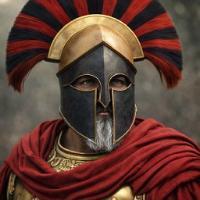
Aristides the Just in my current writing project. (Ostracized^) (Storming Psyttaleia before Salamis) (Ready to march the army to Plataea)1 point
-
Fantastic image!1 point
-
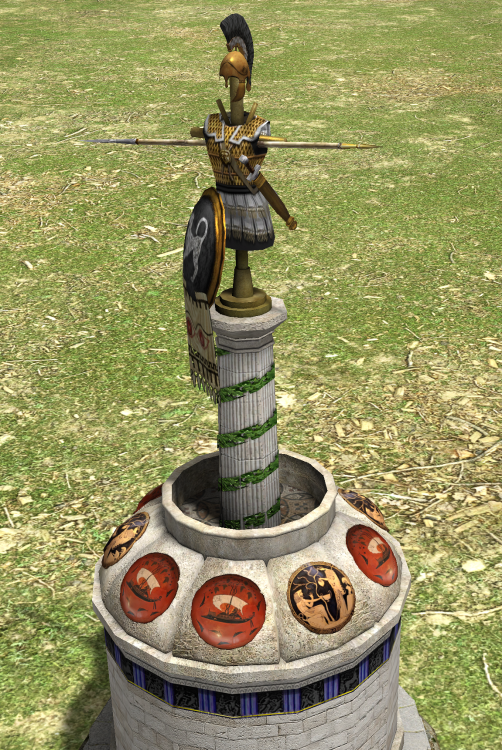
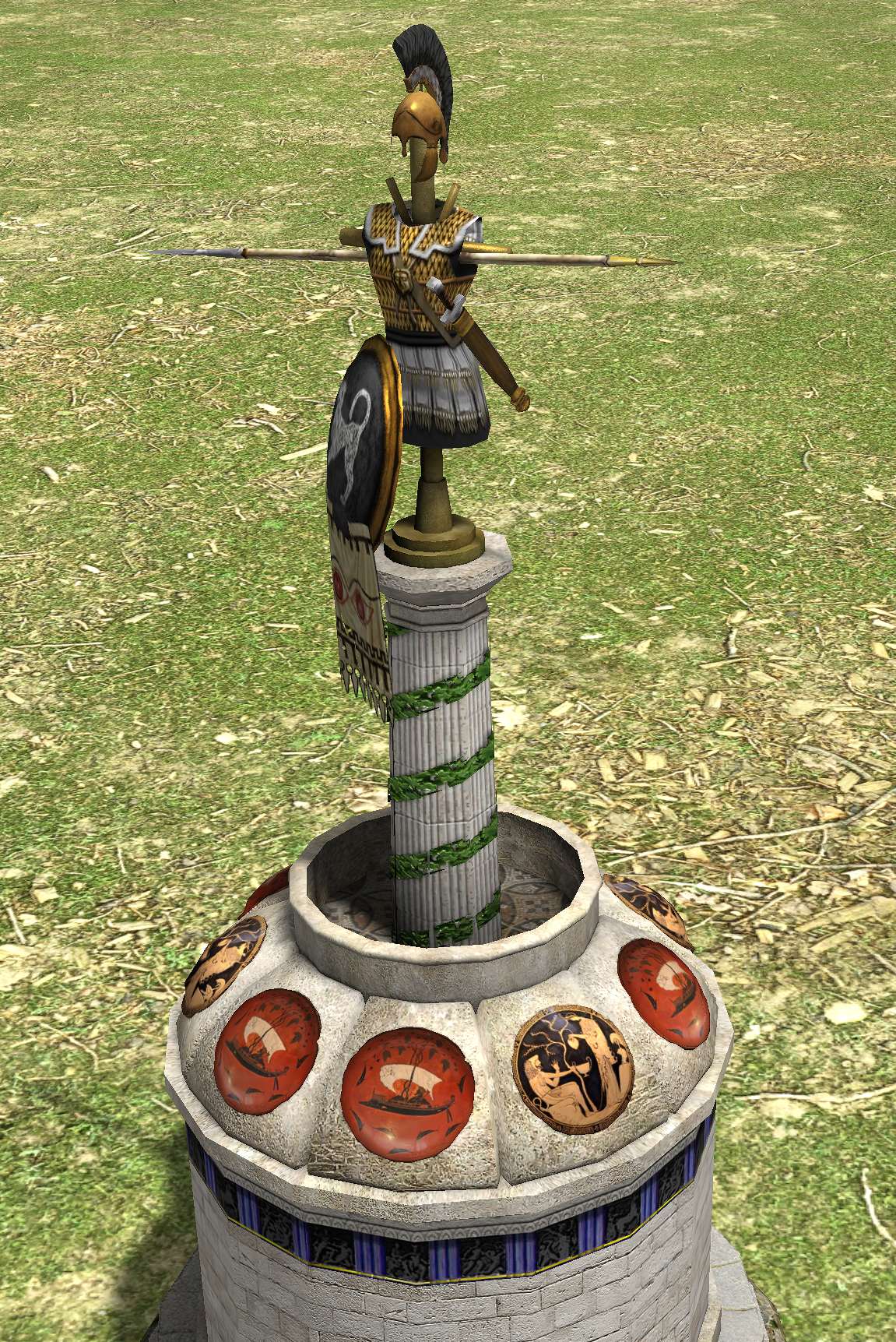
Moved prop_apron (the cloth) from tropaion_post.xml to tropaion.xml, which means that tropaion_post can be a small tropaion without a stone base. Also added a different bronze base to the post and gave the shields around the base more geometry, so they look less polygonal, as requested by @Thalatta tropaion_0.28.3.zip
 1 point
 -
Cat units for the Athenians! (There's the crazy story about the Persians releasing cats on the battlefield of Pelusium, knowing the Egyptians wouldn't risk to hurt them with their arrows).1 point
-
1 point
-
A ram (animal) association is plausible since the Greeks and the Celts did the same. Rammabukkaz could be the proto-germanic equivalent to the High German Rammbock. I would use something with *warō ("wares, goods, merchandise"). Maybe *Warnaweraz or *Warnamannoz.1 point
-
I really get sad when reading thread titles like this one and replies seconding it. IMO saying an open source software project 'is wasting its potential!' is discrediting the work of the main developers and the hundreds of contributors who are all doing it voluntarily in their free-time. You can't use key figures like controlling in a capitalistic enterprise does to work for share holders. FYI1 point
-
Lack of volunteers and manpower. If people of our generation dedicated themselves more to creating than consuming, we would have more people volunteering.1 point
-
I agree that 0ad is wasting its potential, but I don't think the scenario should be the absolute priority, I think the better immediate step is working out the multiplayer mostly an anticheat, account management etc to push the game to mainstream platforms like steam. once more people notice, the additional interest should drive people into creating content and improving the game, the opposite is having a well polished game that no one knows about.1 point
-
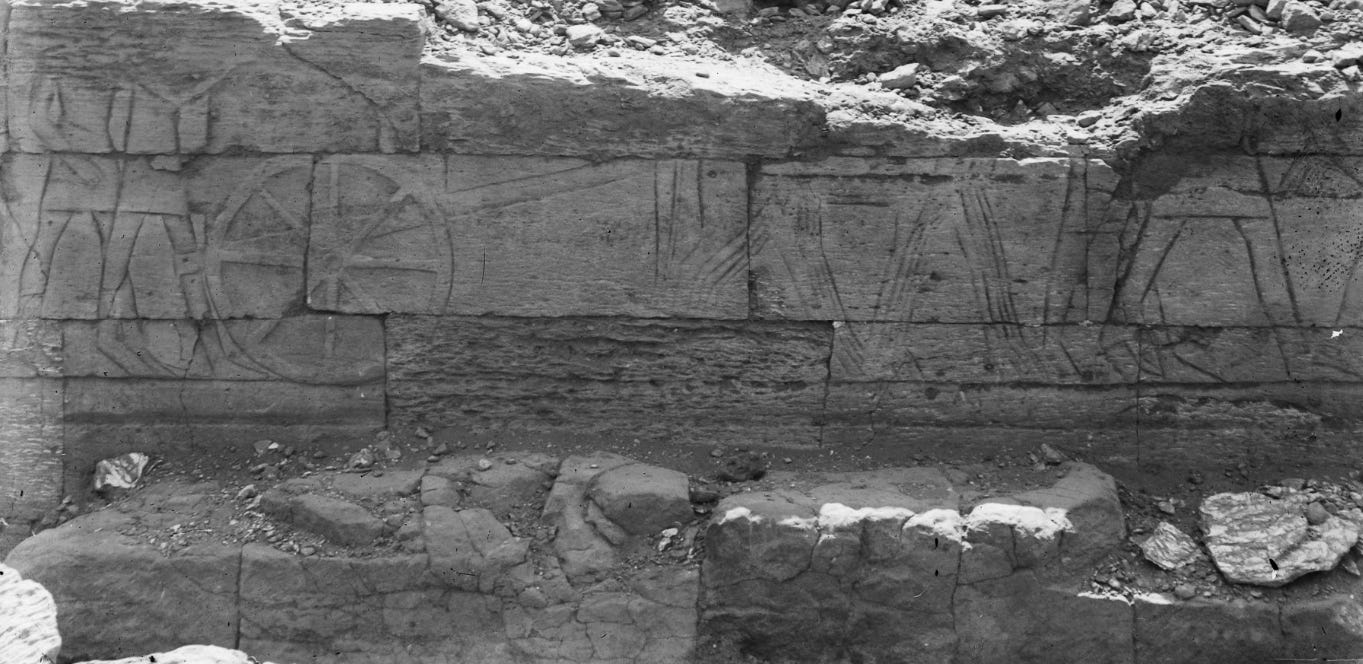
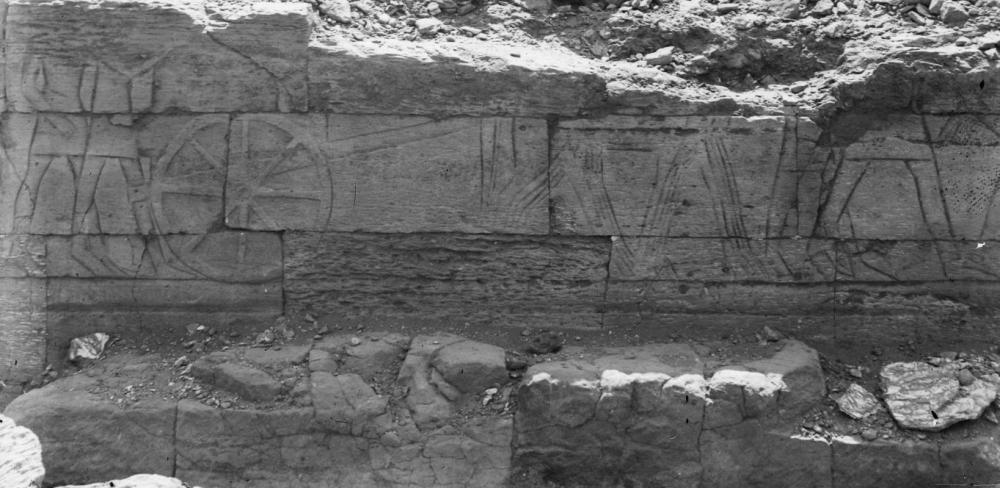
Hi, guys... Apologies for my absence and late reply... I randomly saw this post on reddit and decided to check the forum for the topic. I'm not principally opposed to this idea. I actually like it. But of course I'm biased because I'm the one who created that chariot model in the first place. War chariots were certainly used to an extent. As early as the Classic Kerma Period, prior to the Egyptian occupation, chariots appear in the iconography of Kushite rock art from Lower Nubia dated c. 1750 - 1500 BC., depicting battle scenes, such as the Kushite victory scene at Nag Kolorodna. As early as 950 BC, after the Egyptian withdrawal from Kush, we find the earliest archaeological evidence of chariotry in the form of a horse burial from Tombos. "Stress on her ribs and spine indicate she wore a chariot harness during her active life." Especially during the 25th Dynasty, chariotry was important. King Piye for example mentions mounting a chariot during his conquest of Egypt. In his Great Triumphal stele, it is written: "Off sailed His Majesty northward to the harbor of the Hare Nome. His Majesty’s coming forth from the cabin of (his) bark, and mounting on a chariot. The awesomeness of His Majesty reached the Asiatics, every heart trembling at him." "The remains of 24 horses in four graves were found at el-Kurru, with each group consisting of a team for a four-horse chariot. These horses were adorned with decorative and ornate trappings, such as silver plume holders, amulets, and multiple strands of beads. These horses were associated with the four Twenty-Fifth Dynasty Napatan kings: Piankhi (r. 743–712 BC), Shabaka (r. 712–698 BC), Shebitka (r.698–690 BC) and Tanwetamani (r.664–653 BC)." The actual chariots were unfortunately not, or barely preserved on account of the wood rotting away. But chariots are repeatedly depicted in reliefs of the 25th Dynasty, the Napatan period and the Meroitic period. The latest depiction of a chariot in Kushite art that I'm familiar with is a relief carved into the walls of temple M250, which is associated with battle scenes. It's located in Meroë, and dated to the 1st century BC, Meroitic period: Unfortunately, most of my visual references are stored on my old laptop which broke down and I currently don't have access to it. But fortunately, Isaac Samuel wrote a wonderful and well sourced article on the horsemen and charioteers from the kingdom of Kush: https://www.africanhistoryextra.com/p/the-knights-of-ancient-nubia-horsemen
 1 point


.thumb.jpg.b21ca1d0c15fb56b42c39b25a0a40815.jpg)

.thumb.jpeg.67ef5b5dc6d918163efa04cd5336830d.jpeg)