
All Activity
- Today
-
I'm deleting my contribution notes but I think this one I wrote down in May is worth leaving here since it addresses some clear issues with the previous answers (although the point has already been made, but even more clearly here). I just didn't care to post it, still really don't, but it has some interesting information (even when the mentality of not giving much worth to these type of contributions has been recently demonstrated): Are you even aware that my screenshot is from your own reference Towards a New Edition of the Épinal-Erfurt Glossary, by Michael W. Herren and Hans Sauer, from 2016? Why wasn't it an "appeal to authority" when you used it? Or when you quote anything at all? That's not "completely illogical", but just how language works. The word tuun did designate village because they could be an 'enclosure', after all Kluge "mentions OE betȳnan (a derivative of tūn), "to enclose, hedge in", before quoting this highly significant sentence found in the ASC (about the foundation of Bamborough in 547): "sēō wæs ǣrost mid hecge betȳned and þǣr æfter mid wealle" ("it/which was first enclosed by a hedge and then by a wall"). In his OE dictionary, Borden gives us an exhaustive list of all the meanings of tūn (within a semantic continuum between what is smallest and what is largest at both ends): "enclosed place; dwelling, enclosure, garden, field, yard, farm, manor; homestead, house, mansion; group of houses, village, town"", while the meaning of "'village' must have arisen at an early date as shown among other things by the numerous names in -tūn, even -ingatum found in Normandy and the Boulogne district and apparently due to early Saxon colonization in the district. Saxons are mentioned here by Gregory of Tours in the 6th century", when already "in the Vth century, Saxons became "permanent settlers" in northern and western Gaul" (https://www.persee.fr/doc/bamed_0240-8805_2017_num_90_1_1160), and all this is so well documented (even you couldn't avoid quoting a translation contradicting your own position) "that I don't understand how you can't see it". In addition, although in Classical Latin conpetum/conpitum means "cross-roads", by the time of the EE glossary settlements would have developed at many of these junctions (https://www1.leiza.de/transformation/posterexposition/transformationposter08uk.pdf), and this really doesn't have much to do with just a single farm. That's why the combination of tuun and conpetum, used to describe þrop, is translated as "village or hamlet" by the people specifically studying the EE glossary, who were cited by you in the first place. Besides, the letter C, under which this translation is placed, was extensively reviewed between 2022 and 2023, if not also more recently (https://epinal-erfurt.artsci.utoronto.ca/index.php/corrections). None of this changes because of particular and/or outdated quotes that have been of course considered in the bigger picture already. As mentioned, you already cited a current relevant reference specifically focused on what those early OE glosses say. When shown its actual translations in my screenshot, you disavowed it, accused me of "appeal to authority", and now found instead, first, some 2009 random reference dealing with another subject, and then another from an author who died over 60 years ago. This cherry-picking leads nowhere. But sure, let's use that old Oxford dictionary, let's compare the haimaz and þurpą OE cognates, that is, ham and thorp, using your new (older) reference: "ham from the first meant 'home, homestead'", while for þrop "its meaning is doubtful", and was used "possibly in the sense of hamlet" (the only part you quoted), which is what I've been saying all along, and the actual point of the discussion you are just dancing around: originally haimaz was ambiguous and more related to home or house, while þurpą was some kind of larger, whatever small, settlement. It doesn't need to refer to a full-blown "village" to be the better option for Phase 1 (and you are just returning yet again to the point of where you would put the line between a hamlet and a village at that time anyway, which is not even necessary). All that should be way more than enough, but let's take it further and do what I've been mentioning all along regarding other languages: look at the Celtic branch, for instance. According to the Etymological Dictionary of Proto-Celtic, by Ranko Matasović, and taking a step back, the PIE cognate of þurpą, treb, is reconstructed as "settlement" (often just "dwelling"). Moving forwards, Proto-Celtic trebā is reconstructed as "settlement", as is Proto-Brythonic treβ. Are those also wrong, according to you? Let's look at immediate descendants for which there are actual texts (of course, you should cross-check everything): For Old Welsh, a very early attestation of the cognate treb can be found in margin entries of the 8th century Lichfield Gospels (the Old Welsh text added at most in the 9th century, according to the Geiriadur Prifysgol Cymru). It says "Osdendit ista scriptio quod dederunt ris et luith grethi treb guidauc", which in the Palaeographia Sacra Pictoria, by J. O. Westwood, is rendered into Latin and modern Welsh as "Ostendit ista scriptio quod dederunt Rhesus et familia Gretlii Trev wydhog… (nomen loci)", where this Trev wydhog (Trefwyddog) is clearly big enough to be a named place. There are plenty of sources addressing this: Studies in Celtic History, edited by Broun, Ní Mhaonaigh and Pryce, states "'Lanecros' was a grange of Talley Abbey, occupying the eastern part of the parish between the rivers Camddwr and Twrch. Originally this had been a much larger estate, Trefwyddog, recorded as a marginal grant of mid-ninth-century date to Llandeilo in the Lichfield Gospel", clearly making a tref "much larger" than a grange, that is, a farm estate. The Agrarian History of England and Wales, by Joan Thirsk, discusses the previous case and defines multiple times the term tref as a township. In the Aberystwyth Studies, by Members of the University College of Wales, the 10th century codification of the Laws by Hywel Dda are mentioned, which define "the homestead, tyddyn, was somewhat less than four acres in extent. A tref consisted of 256 acres", showing how "much larger" a tref is compared to a homestead. I also checked for Old Breton, but it's hard to get a grasp on sizes, although in A Dictionary of Old Breton, by C. Evans and L. Fleuriot, the derivative "trebou" is given as a "division of a parish", and this is not just someone's farmstead, given one can refer to "elements within the parish, such as a particular settlement and its fields", as The Oxford Handbook of Later Medieval Archaeology in Britain, by C.M. Gerrard and A. Gutiérrez, states. On the other hand, and using the same sources, the PIE cognate of haimaz, ḱóymos, is reconstructed as "of the home, belonging to the family". Moving forwards, Proto-Celtic koymo is reconstructed as "dear, nice", as is Proto-Brythonic kʉβ̃. For Welsh cu is translated preferably as "dear, beloved, amiable, pleasant", and for Old Breton cum is translated as "sweet, dear". I'm not going to go through more immediate descendants like with the þurpą cognates because the point should be beyond clear by now. The point is: already with PIE cognates, þurpą seems to relate to a settlement (whatever small, more than enough to describe Phase I), and haimaz to something much more ambiguous, related to what's homely (not as appropriate to describe Phase I). In other languages where the cognate of þurpą is closer to a farm, the cognate of haimaz is still closer to what I've mentioned (for example in Old Irish). The only one I've come across seemingly inverting this relation is, you guessed it, Gothic, with haims meaning village (sometimes country anyway) and þaurp meaning farm (in only one instance anyway). There could be a few others, but considering what has just been said, the evidence you have tried to put forward is incomplete, circumstantial and unrepresentative, that is, Gothic closeness to PGmc is no guarantee of anything without the proper comparative studies. What is your explanation for all that has been mentioned? That both developments happened independently in the Germanic and Celtic languages? That there was a massive horizontal transfer? That the current PIE (and their descendants) reconstructions are somehow wrong? All with what evidence? Those who reconstructed all these languages back to PIE agree that the meanings I state were present at least back then (which is why I mentioned PIE in the first place long ago without explaining much, to which you remarked "I don't see any relevance in this line of argument", hopefully now it's clearer). I left this one for last just to make more evident how absurdly it comes across, more so considering that you tried to wield the EE glossary while ignoring not only that it's included in the Corpus (one of the first things to know about it), but that its contents state what I say (as per my screenshot from your own specific reference). I even used the dictionary you tried to run to after that to expose both definitions at the same time, and then compared with the Celtic branch (not even needed, but it seems you are a bit stuck "repeating the same appeal to authority over and over"). So, don't fall into the apparent local tradition of denigrating people when you disagree with something, it doesn't further your argument, quite the contrary. In conclusion, it's not correct to assume that þurpą (cognates) only meant at most a single farmstead at that stage, and less so that the meaning only changed to some kind of small settlement much later in the Germanic branch (with OHG), unconvincingly implying that it also happened independently in the Celtic branch. Its "crowd" etymology has been discussed already, and reinforces all this. The stated ambiguity of haimaz (cognates) is also constantly reinforced. It is then quite clear then why the accepted PGmc reconstructions say what they say, and why there are no sufficient arguments for any revisionism. Anyway, that was mildly fun. I'm not reading the forum anymore so I leave it to someone more impartial that might be able to deal with the matter, like @Ultimate Aurelian.
-

Is there a public repo for play0ad.com?
eZamus replied to bowen951209's topic in Game Development & Technical Discussion
If needed I would like to help in this direction, it been months I think about it, (Since an Issue where someone provided a very nice design and vanish xD) Having a static site could be managed directly via Gitea, and lot of static framework are compatible with CMS like Sveltia https://sveltiacms.app/en/ (git CMS, successor of Decap CMS, actively maintened, authentification via gitea possible, every post / page is a MD file, with a media manager, i'm not related to this, but it was my nicest discovery this year, and could be "the user-friendly" missing link) The current site is pretty much "static", in the way it doesnt have any dynamic formulaire/ comment etc, and migrating in a static site could prevent drama like last week (big vulnerability on PHP) improve performance and the "server side" would be lighter I am bad as UI to make a nice design but for making a skeleton app and migrate from WP, I Could help, in fact if you can provide me an export (xml), I could work on convert to Markdown and so far. When the data are extracted and stored, is pretty easy to migrate to any other framework, Hugo, Zola, Astro ... (I hate WP, I use it actually for work and he drive me crazy) edit: > Something I'd want to is to be able to translate it Not tested, but Sveltia provide multilingual support : https://sveltiacms.app/en/features/i18n -

Is there a public repo for play0ad.com?
Stan` replied to bowen951209's topic in Game Development & Technical Discussion
We could but IIRC it was decided against . Could be reevaluated. The main issue was it was harder for non technical people to get changes in. Something I'd want to is to be able to translate it Couldn't find it -
Gitea is down again but basically you need to use the game's archivebuilder to compress and optimize your assets. If you don't it has to be done at runtime for all your users and they might have bugs you don't have or they might not be able to use your mod at all. DAE turn to PMD/PSA XML turn to XMB and PNGs TGA turn to DDS.
-

Photocraft : The opensource Photoshop
Nicolaus_von_Kues replied to Nicolaus_von_Kues's topic in Art Development
It has graphical bugs and some weird things, but it can be used with patience. -
OMG you lost me
-
Photocraft : The opensource Photoshop
Nicolaus_von_Kues replied to Nicolaus_von_Kues's topic in Art Development
Vectorcraft is 95% stable and bug-free. But it has stability issues. Even so, it's still perfectly usable. -
Ok thanks. I compiled it, and I tried it, but I got a bunch of: { "code": "PACKAGE_MISSING_XMB", "severity": "warn", "file": "simulation/templates/units/sele/cavalry_javelineer_scout_stable.xml", "detail": "simulation template XML has no compiled .xmb counterpart" }, how do I generate the xmb files, and what do they do?
- Yesterday
-
 Could we change the website to one of those static sites that uses a git instance to host it so we could just make changes there to update the website?
-
Is there a public repo for play0ad.com?
Stan` replied to bowen951209's topic in Game Development & Technical Discussion
That's the last time it was versioned. I'm not quite sure how it is versioned, but it's something that could be looked into i guess, if there is any interest. -
Glad to hear that! Thanks! Yes known limitation, there should be either another mission, or another option when you found a city form ruins for the second time. I agree it needs much more love. The attack-move bug is mitigated (resembling this PR) but it shows it's not enough for battalions. About the rearranging and controlling individual units, I might need to try some things to even have an opinion about what to think about how it could be like or mitigated...
-

Is there a public repo for play0ad.com?
bowen951209 replied to bowen951209's topic in Game Development & Technical Discussion
Thanks. But the latest commit is 7 years ago, so maybe somewhere else. -
And this is what I mean when I say that the tendency to readjust can sometimes lead to weird situations. For example, here I just want to move the infantry group blocking the gate out of the way to make room for the siege engines. But since the whole battalion is selected automatically and the units are spread out, issuing a move command makes them all rearrange themselves. Maybe a modifier key that lets you move individual units separately could do the trick, but I'm not sure.
-
Fixed
-
Perhaps the Franks could have bolt throwing artillery http://google.com.br/books/edition/Early_Carolingian_Warfare/6Zt0BAAAQBA
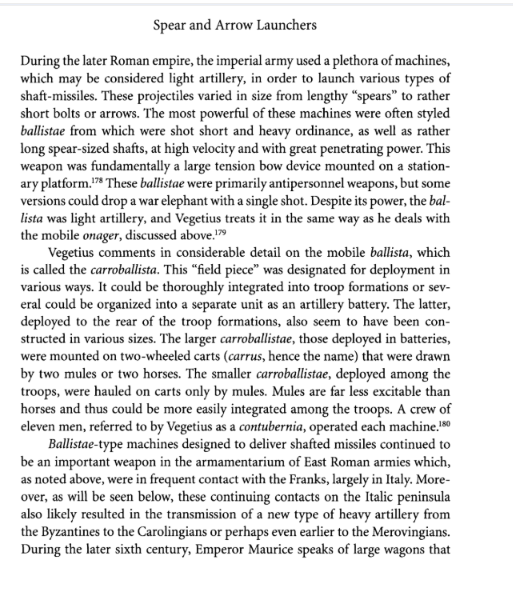
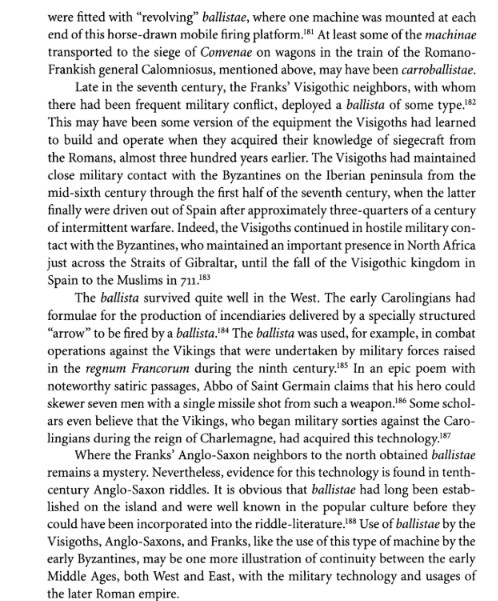
-
@Atrik, I've made a bit more progress in the campaign, and I'm having quite a lot of fun with it. I wanted to share a few things I've noticed. At one point, I captured a spot to found a city that was similar to the one at the beginning of the campaign. When I fought the bandits, though, I had such a large army that I was well over the 40-pop limit, so I had to just sit there and wait for the waves to come without doing anything. Perhaps that spot was meant to be discovered earlier, when the army wasn't quite so massive yet. As for the combat experience with battalions, I like it quite a lot. It opens up a range of interesting and fun possibilities. I think there's room for improvement in cavalry movement. At times, that tendency to constantly readjust feels a bit artificial and forced. It also makes it quite difficult to move battalions around. I'd perhaps try allowing cavalry to be used without a formation. Also, given that the motion rework is in place, it would be nice to experience it on these pre-built battlefields. I'd also like to be able to control siege engines individually. That would let you spread them out a bit to avoid them blocking each other and cover a wider attack area with bolts and catapults. Also, hotkeys to focus on next task, ignore next task and next turn, would be neat Lastly, I think attack-move behaves strangely. Towards the end of the video, you can also see a bug I've run into quite often: when I use attack-move, the battalion just stands still, and the only way to get it moving again is to use the regular move command.
-
That returns 404, is it private?
-
Do you have a link ? There are like 55 mods in the queue and i couldn't find it easily
-
Can probably be patched, yes
-
I see no file in your mod. https://github.com/StanleySweet/modaudit I've started, few problems still.
-
 I'm currently designing pitch materials for the screenplays and using the screenplays as outlines for the novel.
-
 Will this be available as a campaign as well? It is so breathtakingly embedding (not sure I am expressing it right but you may get the point).
-
0 A.D. Is Wasting Its Potential !
Nicolaus_von_Kues replied to lilypoppy's topic in General Discussion
Nerf the CS, if the problem is the effect of economic snow ball. The economic stats... -
@real_tabasco_sauce I'd like to remind you something you said in the illuminating thread I referenced: I agree with that, that's why I'm even against increasing training times and "every phase up would reduce training times" mentioned there, that would make the start of the game too slow for competitive players. I proposed instead (apparently ironically amazingly) increasing training times but making batching more efficient to keep the current training times for more average sized batches (again, all balance-pending, since this might make comebacks too strong, larger batches being produced even faster than currently). Lower difficulty AIs should not batch. I also find interesting the idea mentioned there that Mercenaries "should be able to be recruited very quickly", which could apply to their batch efficiency, giving them an accurate and clear use case.
-
Clio : muse of History









-
Latest Topics
-


