

Thalatta
-
Posts
604 -
Joined
-
Last visited
-
Days Won
15
Everything posted by Thalatta
-
@Ultimate Aurelian, just after having a very fast look at that: -"Shield: Hoplon": the term is not hoplon, but aspis (which you used somewhere else). -"Peripteros": this does not mean temple (that's naós*), it's an architectural style. -"Epiteíchisma": this is not any fortification, but one built in enemy territory**. -"Only rams": some guys with a log? The first recorded Greek battering ram is from 427 BC. *Are naós and naûs related? https://www.labrujulaverde.com/en/2026/02/is-a-greek-temple-actually-an-overturned-ship-a-new-theory-revolutionizes-the-origin-of-classical-architecture **That's why "epi" is used. Just fortification would be "teíchisma" (literally "walls", the whole "fort" could be called "phrourion", as in vanilla). You also have proteíchisma (what you build before your fortification, like a smaller wall or ditch) or hypoteíchisma (counter-walls).
-
I agree that this would be a nice addition to vanilla.
-
Marian Reforms (Romans) General Discussion.
Thalatta replied to Lion.Kanzen's topic in Gameplay Discussion
I guess because changes happen incredibly slowly... Hopefully the game will progress from being historically themed to be historically based, and maybe one day even historically accurate -
I've slowly gathered 20 new suggestions, ordered from things that seem to need a fix to less conventional ideas. Eventually I'll come back to all this, select the least controversial, and make a poll, PR or whatever. Hopefully the most obvious would have been implemented by then. 41) UI fixes: on Matches > Random, map size can be selected, but on Skirmish and Scenario it seems size is not stated, which I would like to know before starting one. For the Menu, in Learn to Play > Manual, under Hotkeys, it says "Options > Hotkeys", when it should say "Settings -> Hotkeys" (There's "Settings > Options", but no Hotkeys there), but I think all that should be removed because it's redundant with Hotkeys. Then, a Tutorial appears both in Learn to Play and Single Player > New Campaign, apparently with the first one not being able to be completed. I'd remove it from both places and put it on Single Player > Tutorial, to separate what is playable, in Single Player, from what is readable, in Learn To Play, which could be renamed to Information, Resources, Library, Encyclopedia, whatever. The menu states Catafalque Overview, but the window has as title Catafalque Bonuses, which is a better name to avoid repetition with Civilisation Overview, although I'd put Catafalque Bonuses inside Civilisation Overview to present and concentrate all information from a given civilisation better. 42) Simplified self-rally: the CTRL modifier shouldn't be needed for self-rally, just right-clicking does nothing right now, and the hovering icon is a crossed flag, making one think it's just impossible to do. Besides, when rallying to other buildings the hovering icon is the garrisoning one, no need for CTRL. It would then be more consistent and intuitive. 43) Building rotation and placing: besides rotating a building with a couple of hotkeys, one can also keep pressing the right mouse button. The problem is that, if I'm not wrong, when one chooses to do it with the mouse (which I think is nicer), one can't then also move the building around. SHIFT could be used to allow that, since it doesn’t do anything in that situation. 44) Hidden foundations: why are foundations destroyable, if they are just a plan? It could be less annoying. 45) Merchantmen capacity: it's weird that they are as profitable as Traders for the same distance. Ships were not only faster, but also had way more capacity. 46) Animal behaviour: most should be faster and weaker. Foxes should not be so aggressive (except against smaller animals). Animal regeneration and feeding (hunting or grazing) would be nice. Starting doing it weakly shouldn't change gameplay at all. Some of these things have recently been proposed. 47) Button additions: one for "Capture" is needed. "Attack" should be called "Call to Arms" (given that that's how the action is commonly called, and it's not just "attack"). I see there's a PR for the "Turret" button naming already. A button for Idle Warrior was recently proposed, but maybe just right-clicking on Idle Worker could do (while slightly changing its appearance). 48) Palisades and Walls issues: I can't seem to build just a single block, and when trying to do it while pressing SHIFT, things get a bit stuck until I press ESC or right-click. Also, one should be able to build Towers just besides Palisades (while pressing CTRL), Walls don't have this problem. 49) Building stances: it would have been useful to me if buildings that shoot arrows had stances. Sometimes I don't want to shoot on enemy buildings because I want to (re)capture them. 50) Upgrade categorisation: I find it weird to say Immortals are "upgradeable": "switchable" might be better. It would be nice to have a clearer categorisation of choices that are singular (most techs, Tower upgrades), multiple (mutually exclusive techs, could eventually be done for building upgrades) or reversible (Immortal "upgrades", could eventually be done for some "techs", like choosing type for government, etc). 51) Construction panel simplification: having all buildable structures always on view when someone who can build them is selected seems unnecessarily too much for new players, maybe there could be just a couple of build buttons, Common Structures and Unique Structures, like in many other games. This would also make the use of future action hotkeys more streamlined. 52) Building Auras: it would be nice if some structures don't just become useless, for example the Forge after all its techs have been researched. Maybe it should have some other effect, bonus aura, whatever. 53) Just Towers and Walls: Wall Towers are confusing. Recently, for them to shoot arrows recently was proposed, as it was in the past. Personally, I wouldn't have included Wall Towers into Walls, I would have instead made it possible to build Towers into Walls themselves (at a Wall block cost discount), or upgrading Wall blocks to achieve the same result. This is not really an increase of micro, because Wall Towers don't even shoot when ungarrisoned in the first place. 54) Target Area: this button concept could reduce micro in many situations. The size of the pointer would change to an adjustable circle (maybe using the hotkeys that rotate structures) in which the action performed at the centre of it would also be repeated whenever possible inside that circle. This can be used for things like gathering, hunting, combat, garrison, boarding, repair, etc. I think there's a PR for something similar regarding just combat, but this generalises that idea. For example, one could order to hunt all animals inside that adjustable area, in that order, by queuing. One could garrison all towers inside that area, or repair all that needs to be repaired inside it. Ideally, units would get more evenly distributed according to available slots. This would make ship boarding much faster, and the landing spot could be converted to a landing area with this tool, for ships to distribute themselves alongside the coast inside it. 55) Task specification: I've mentioned the modifiers "target reset" and "cycle reset". As an example with cutting trees, target reset would cancel the gathering order after the target tree (or trees if combined with target area) is spent, and cycle reset would only make one travel to the dropsite (and proceed to a random targeted tree if combined with target area). The cycle reset target area combination would be quite useful when used on regenerating resources, or also when range attacking multiple units if one wants to wear down them equally and not for a given unit to get fixated in killing another one. 56) Separation criteria: I think the minimum distance restriction between certain fortifications is quite limiting and artificial, although it's clear that it helps "the gameplay and the realism", as pointed out somewhere when also criticised. It takes a bit of time to plan for their distribution to cover what needs to be defended. An alternative and more realistic way would be for these (tall shooting) buildings to block each other's line of "fire". This blocked view should be bigger than the buildings themselves, one could think to account for reaction and aiming times when an enemy comes into view, to make these structures quite inefficient if built near each other. In this way things would be more flexible and faster, while there would still be a relationship between separation, coverage, garrisoning, and costs. Things might have to be adjusted a bit so that the optimal separation approximates the present one. 57) Edge icons: I've read this idea around here, it would be nice if there were a few icons outside the edge of the map indicating that there's some foreign far away port/market in that direction, and the trading units would be able to interact with these icons, leaving the map and returning with profits after a given time dependent on how distant that place is said to be. Caesars III had something similar, making it more immersive, like a bigger interconnected world and not just an isolated scenario. Other things could come from outside the edges, like small barbarian raids, mercenaries, or migrating animals, with their size and frequency a gameplay option (all this could also be disabled). 58) Corral changes: as someone mentioned, there's no advantage between raising livestock in a Corral vs building more Fields. I think they should be rethought a bit for more interesting use cases. It's been mentioned that Field yields could depend on terrain fertility, and I've mentioned that the count limit for certain animals in the Corral could be dependent on surrounding territory (plains better for cows, mountains for goats), that being besides water could mean fish farming, and that it could train Britons' dogs, since probably there were no dedicated kennels for this. Also, having Corrals could improve Fields efficiency (traction, manure), and that would be the historical order. Chickens are notoriously missing. 59) Building orientation: to maybe fix useless Palisades and Walls, ugly mindless structure placement, and the teleportation exploit, I thought that garrisoning/ungarrisoning could happen through the door only. An ungarrisoning cooldown after garrisoning could also be useful, particularly for the Market to avoid continuous horrid looking Trader caravans (my making Traders, and Merchantmen, garrison for a bit instead of just touching the destination). 60) Map layers: as a possibility for people who want to experiment with it, I was wondering if certain actions could trigger other maps and options. For example, one could have a campaign map, where buildings are cities and units are armies moving slowly, and when one wants (city building), or with some triggers (battles), the map is "zoomed in" and there's another map, more local, like they normally are now in the game. Maybe this requires obscene amounts of memory. Previous 20 suggestions: https://wildfiregames.com/forum/topic/18003-suggestions-for-0-ad/page/176/#comment-634810
-
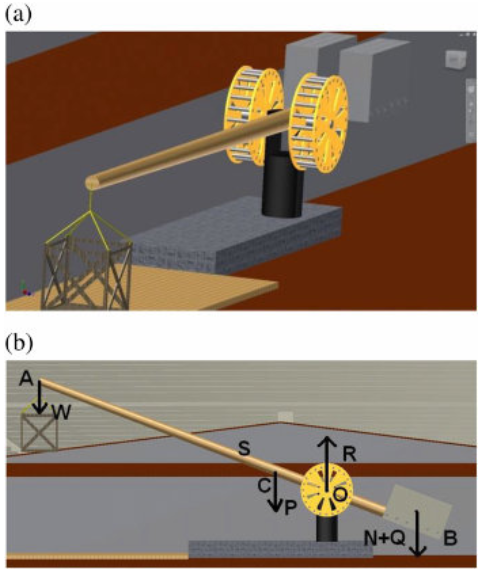
Well, from what we have already seen, everyone had their own way to do things. They themselves show that reconstruction for the theatre in Athens, stating it came from "attempting a rational reconstruction effort", and that "static and dynamic analysis and simulation of the mechanism kinematics were performed". Then, your link mentions foundations "of similar dimensions and general shape but without a sloping floor are known from theaters at Megalopolis, Eretria, Sparta, and Elis", implying their absence in famous city-states like Athens (whose foundations are known, and different). For Sparta, it would refer to the theatre from Late Hellenistic or Roman times previously discussed. They conclude that "the existence of similar foundations in the theaters of Megalopolis and Eretria, indicating their use for specific purposes connected with the needs of the drama makes the twin-facing stone base in the theater of Phlius unique", and "this approach will be useful for the reconstruction of mechanisms that may apply in the theaters of Megalopolis and Eretria, where similar stone foundations exist". For Athens, I found this: https://www.academia.edu/89373449/_Deus_Ex_Machina_reconstruction_in_the_Athens_theater_of_Dionysus, can you see it? Check the design specifications in 5.2 (taken "from the archeological and historical evidence discussed above"), and the reconstructions shown in the following pages (here some): In any case, your model could maybe be used for the Macedonians, if the Hellenistic theatre of Ohrid (and not the one of Aigai) is used, because I couldn't find anything regarding its mechanism (although the lack of similar foundations could be considered evidence against this).
-
This is true for many city-states worth considering, like the Corinthians or Rhodians, but it seems many get bored with too many Hellenic city-states. I guess eventually things have to be rearranged like in Total War, grouping those who have a similar culture, and making it clear what do they have in common. A few things I had already written down for the Syracusans: Epotis: tech for ramming bonus. The "Corinthian triremes" "had specially strengthened cat-heads for the purpose of ramming prow to prow", and "the Syracusans had adopted the Corinthian practice of strengthening their ships at the prow", from Ancient Greek Warship 500-322 BC, by N. Fields. Mamertine Mercenaries: mercenary ship unit that can train land warriors. They were employed by the Syracusans from Italy. Could have loot bonus, since they were raiders of land and sea, the Syracusans had a lot of trouble with them. Chain ships: set up temporary "chain walls" between ships, which would stay fixed, if somehow possible. They "moored at anchor both small vessels and triremes as well as merchant-ships, with iron chains between them, and to the vessels they built bridges of boards", from Diodorus Siculus. There's another thing for when I post about ships (@Asher, since you asked for tips, that'll come at some point), which is that "notably the Corinthians and Syracusans, preferring to ram prow to prow and decide the issue by boarding, beefed up the forward structure —ram, bows, outrigger cheeks— and reinforced the deck to carry a sizable contingent of fighting men", from Sea and Seamanship in the Ancient World, by L. Casson. Thus they should be able to transport more people by ship than other Greeks (but not than Romans, for example). I'd certainly not include the "Mirror Tower or Heat Ray Tower", its feasibility is doubted, and its earliest mention comes from Lucian of Samosata, four centuries later.
-
Abnormal behavior related to immortals and walls
Thalatta replied to Hexereticdoom's topic in Bug reports
And here I was just 3 days ago thinking this was not how the game was supposed to be I can confirm, right now I was having some fun with my flying ranged infantry. You bring them down by, while on ranged mode, posting them again on the walls, and then unposting them. -
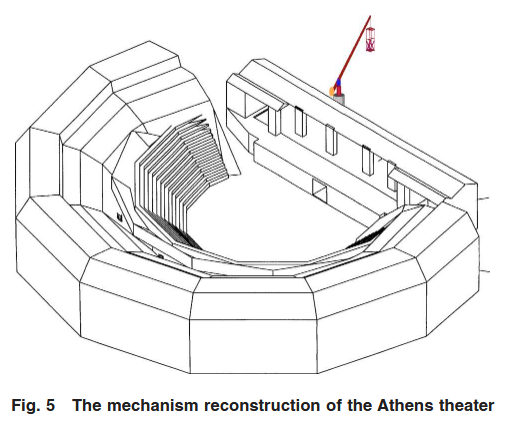
@nifa, just in case, the link you are using states that that crane would be from the Theater of Phlius, while for the Theater of Athens it gives this reconstruction (similar as previous things shown): All this comes from evidence at Phlius (which seems quite unique), and from descriptions from Athens. Another detail, in the link simple pulleys are used, while your model uses a triple pulley, which risks being anachronistic if you use it for the early theatre way before the Hellenistic age (at least considering its apparent "earliest secure mention").
-
@wowgetoffyourcellphone, since over the last month there has been "no progress" for every single civ that has ever come to your mind (even "nothing" for some of them... how dare you), I have a few other suggestions for you . Quotes are from The Topography of Thebes From the Bronze Age to Modern Times, by Sarantis Symeonoglou. Kadmeia's Seven Gates: civ bonus to start with walls and gates. Before the end of the Bronze Age "Thebes grew from a small community to one of the largest cities of Greece, famous for its extensive fortifications with seven gates". Great Wall of Thebes: tech for faster or cheaper wall building. Thebes doubled down with a second ring of fortifications. "In the hope of preventing future Athenian domination, the smaller towns near Thebes must have contributed manpower and funds for the construction of the Great Wall of Thebes with the understanding that it would be used to protect all of them if the need arose", "The second wall, therefore, had been built by 382 B.C., but the date of its construction is not clear". Oionoskopeion of Teiresias: Temple tech, ideally for morale, if not, it could be a speed bonus. It was an observatory used for "bird divination" (ornithomancy). It was the "only one such station" in Greece "in the Classical period". "Pausanias describes several sanctuaries in topographical proximity to the observatory". Statue of Herakles: cult statue for DE (alternative to the Lion of Chaeronea, although I prefer the latter). Thebes was considered the birthplace of Herakles (I visited the site of his alleged house). There were "colossal statues in Pentelic marble" for Athena and Herakles in a sanctuary, which also had a "statue of Herakles Promachos in marble", and somewhere else there was a "statue of Herakles Rhinokoloustes", which according to Pausanias "stands in the open". Pindar: Hero musician (actually poet, but they'd play and sing), if these are added. He was one of the Nine Lyric Poets, born in 518 BC (I thought could be early, but Leonidas was born c. 540 BC). His house was famously spared when Alexander destroyed Thebes.
-
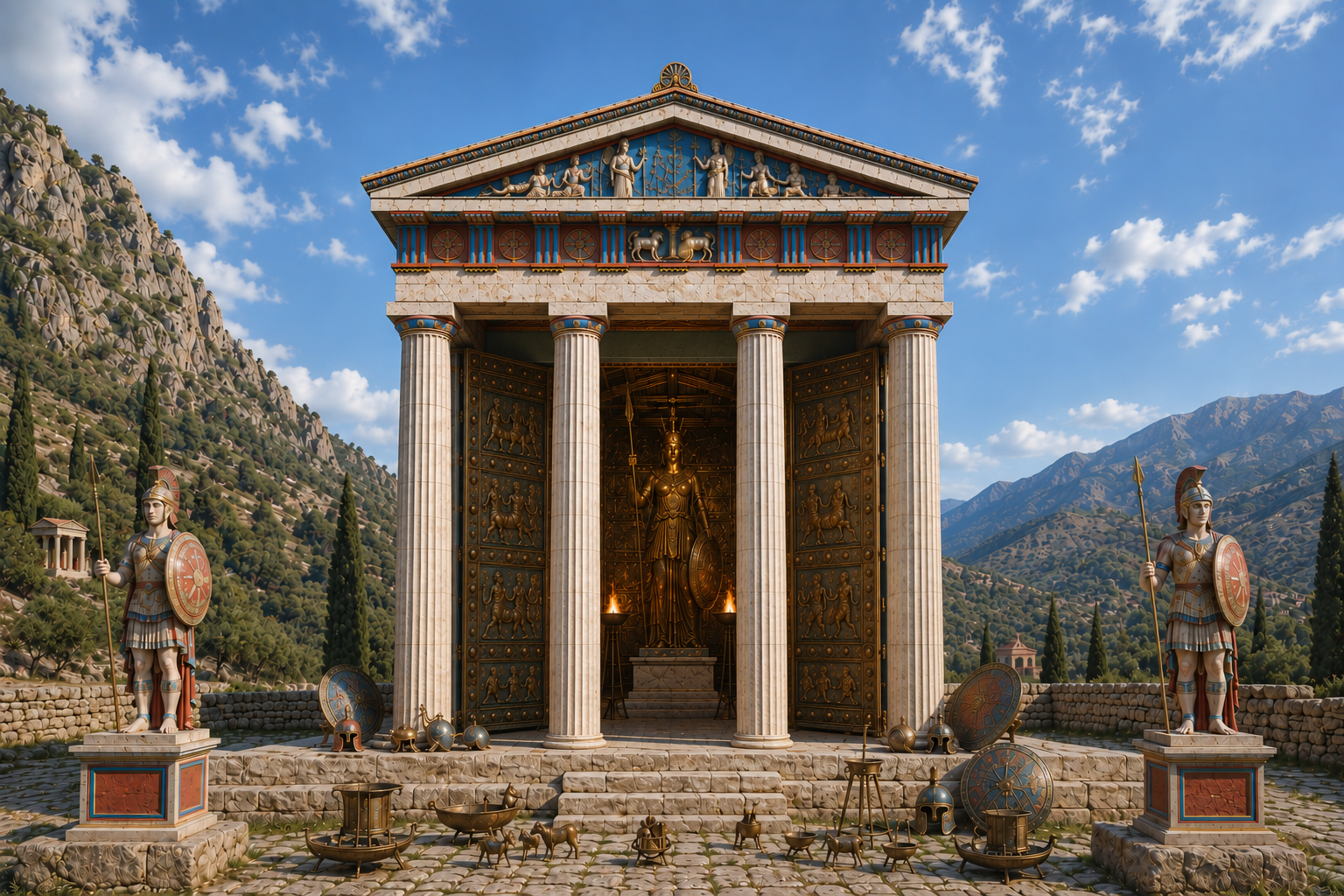
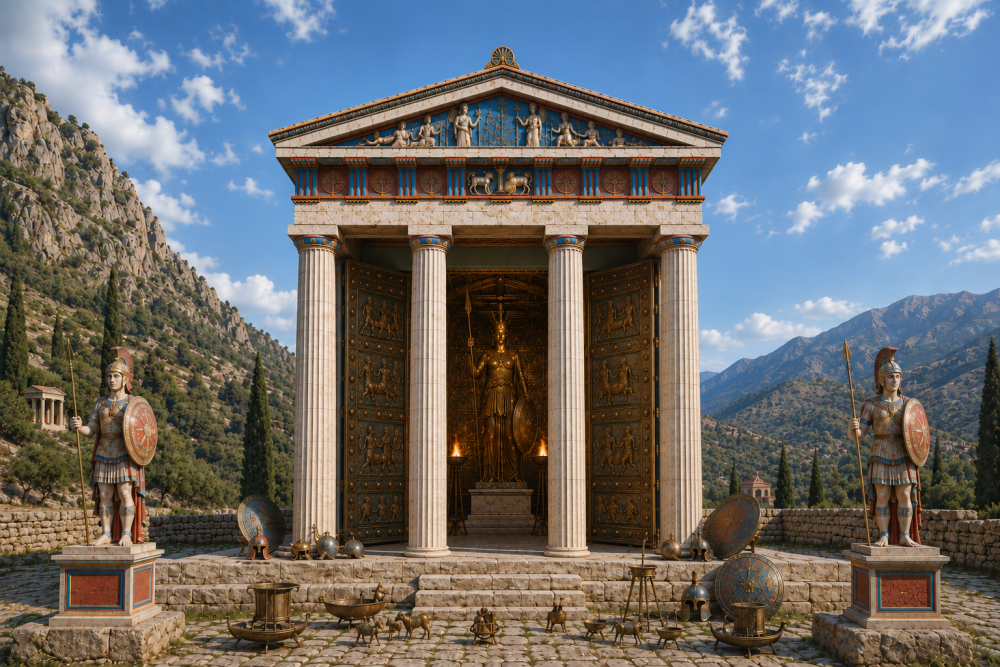
Another thing I mentioned could be considered is the temple of Athena Chalkioikos (mentioned by Pausanias in https://www.perseus.tufts.edu/hopper/text?doc=Perseus%3Atext%3A1999.04.0064%3Aentry%3Dsparta-geo), which was their most important temple. Chalkioikos means copper or bronze house, apparently it was internally decorated with bronze sheets, while there's "Euripides' mention of χαλκόπνλος, 'she of the Bronze Gates'" (from The Importance of Bronze in Early Greek Religion, by S. Constantinidou), so I wonder if a temple with shiny opened bronze gates revealing a shiny interior could be a possibility. Sadly, it's quite hard to reconstruct, since there's almost nothing to work with, but I've considered "an exterior peristyle, characteristic of Doric architecture. The temple's construction utilized local limestone, and evidence suggests that it was adorned with bronze sculptures and offerings" (https://madainproject.com/sparta#sanctuary-of-athena-chalkioikos), "the marble upper body of a hoplite (480–470 BC), which is now on display in the Museum of Sparta and has been identified with Leonidas was found around the temple. According to some archaeologists it was probably part of the sculptural complex of the temple" (https://realsparta.gr/en-us/What-to-do/Archaelogical-Sites-Monuments/Sparta-Acropolis), and "the volume of bronze objects at Athena Chalkioikos, including weapons, tools and votive artifacts, suggests that this Spartan sanctuary held a special place in local production, where religious devotion intertwined with economic activity" (from The Historical Review of Sparta, edited by G. Piras and R. Sassu R), among other things.
- 68 replies
-
- 1
-

-
- delenda est
- spartans
- (and 2 more)
-
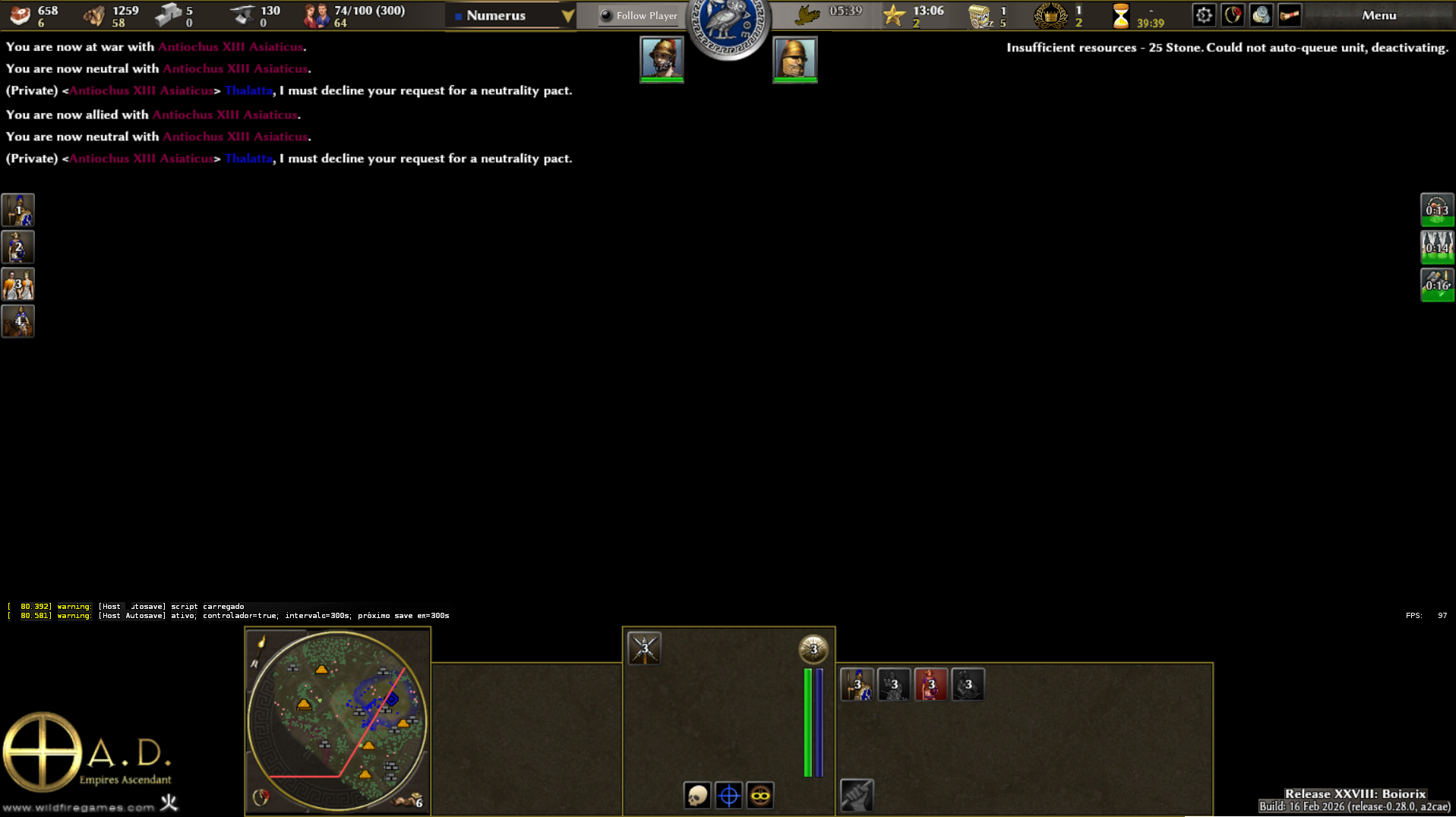
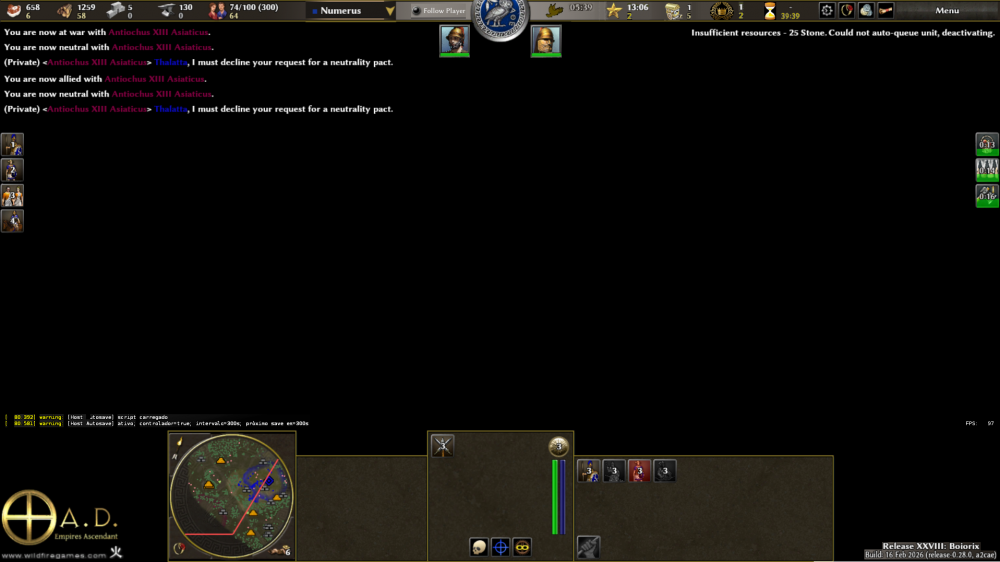
Another take at this, considering all kind of notifications I can remember, and all that has been said: My changes (just by clumsily editing images): 1) Tech icons at the same level as group icons. 2) Website moved under logo, and moved version information to the lower right instead (that background should be transparent). 3) Chat moved up and left, not to clash with the group icons*. 4) System messages aligned with chat, moved down to where the panel would appear, and filled upwards. A bit of a weird position since it's not part of the actual game, ideally shouldn't display anything (besides saved game notifications, I guess). 5) Top centre notifications moved to the upper right, mirroring the chat. 6) Notifications like FPS mirroring the system messages. 7) Observer options moved to the left upper bar. This works hand in hand nicely with the following point. 8) Hero icon moved to the centre top and a bit left position. When following a player, enemy Heroes could appear on the centre top and a bit right position. 9) Victory condition icons on the right upper bar (the white numbers could change colours if wanted): -Ceasefire: with time remaining (I'm not sure if any additional info can be added in yellow). -Wonders: with shortest time to someone's victory, and number built in yellow**. -Relics: with number captured, and total in yellow. -Regicide: with number remaining, and total in yellow (not that useful but whatever). -Clock: with match time remaining (if a mode requires so), and time elapsed in yellow***. Notes: *If group icons become more tree-like to accommodate battalions (as I proposed), the chat would still have at least 6 or 7 lines before clashing with them. **Notifications could additionally appear in the upper right for every minute remaining of the last five minutes of anyone to victory, and become a permanent countdown when a minute remains (or whatever times are considered appropriate). There's space for that, and notifications should be ordered according to time remaining. ***A "-" (dash) could be used if a mode is not active (besides, I think someone mentioned it's not possible to remove icons, but if it is, icons for deactivated modes could be removed, and in that case the clock would be optional to have, depending if one wants to still see time elapsed).
-
Sure, but bad rules have led to bad consequences. That's why palisades and walls are useless: people just cram buildings, and then say that's how tactics are, as if it were the only way to do things (and as if the present way is not resulting in nonsense). As I've said, you could make ranged infantry fly, and have coherent tactics and balanced gameplay, but that's not what's stated as the vision for this game, and the people that stagnate the game because otherwise would get frustrated that their memorised build orders won't work anymore should know better. I've only really played with the Spartans and the Athenians, because my intention is to review each civ and point out interesting historical stuff that could be added, and inaccurate stuff that should be changed (and I like to properly source every sentence, so it takes time going through many books). I've only done this with the Spartans for now, where I've mentioned that a stone theatre was a very late addition (Roman according to some, although it has Greek aesthetics), and it's not something "characteristic" of this civ anyway, maybe except for an early one for military festivals, as mentioned (EDIT: this referring to your link, the one from the game is, as mentioned before, a Roman addition for the Temple of Artemis Orthia). The Athenian is certainly Roman.
-
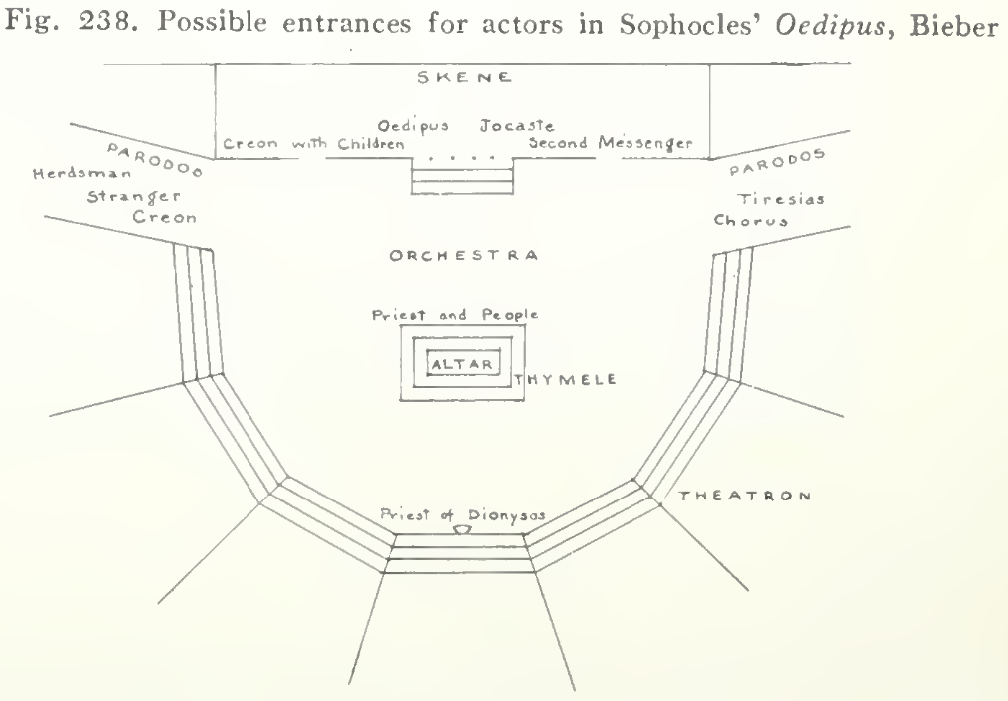
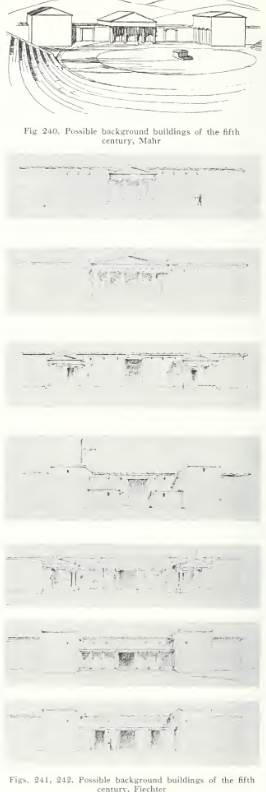
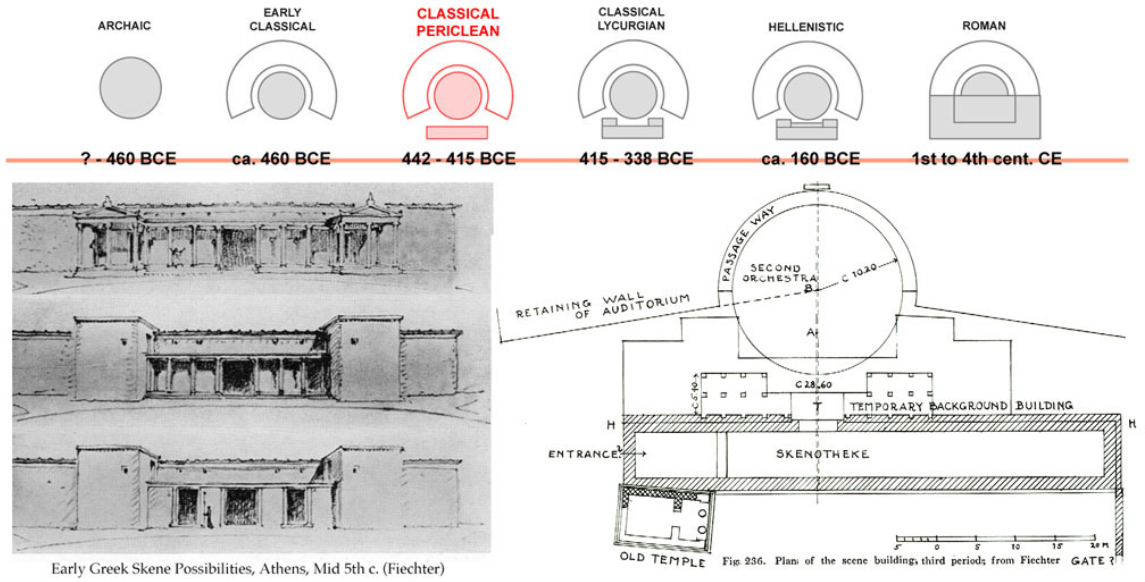
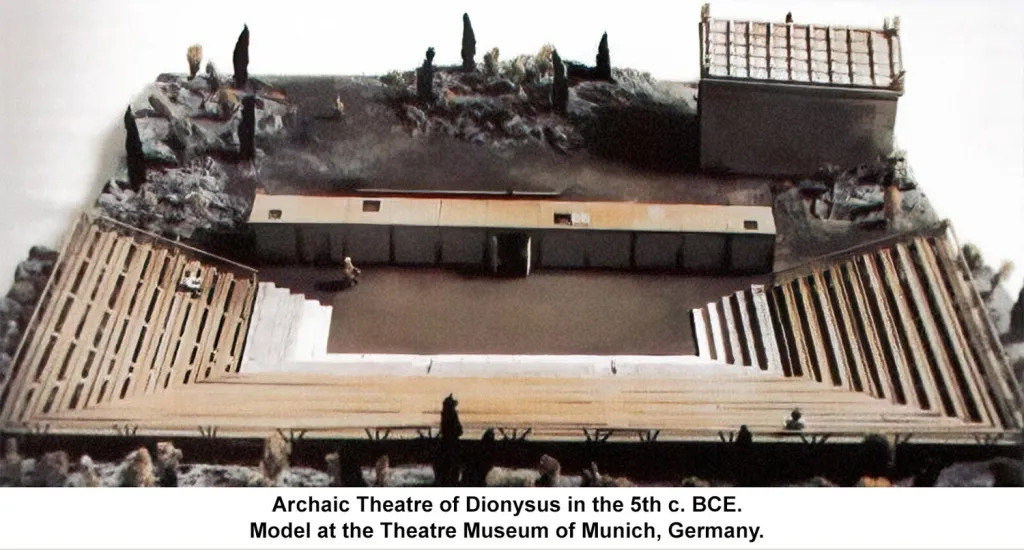
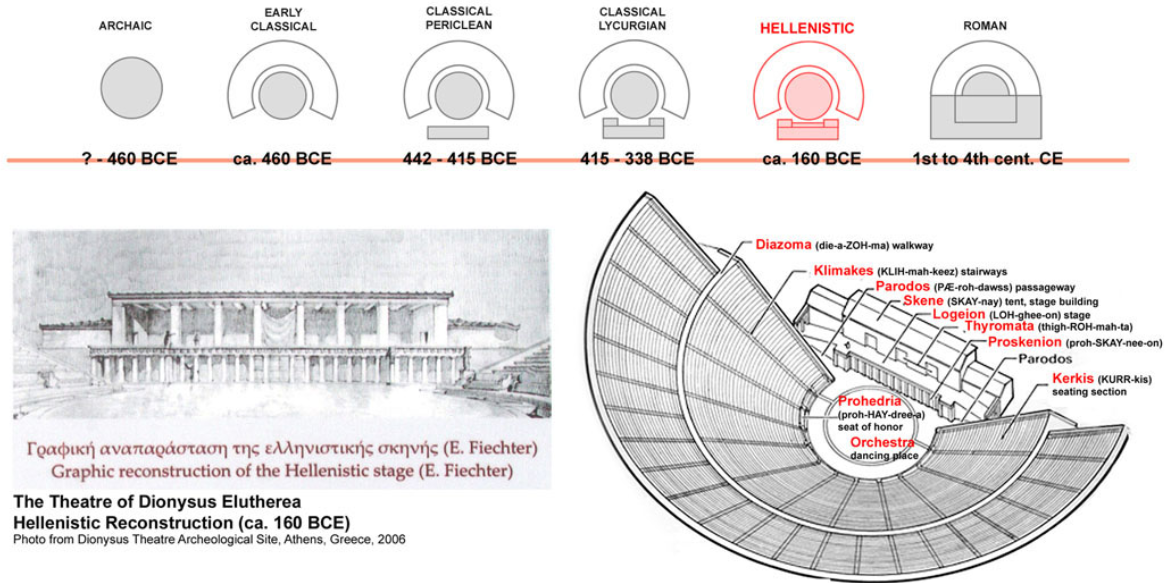
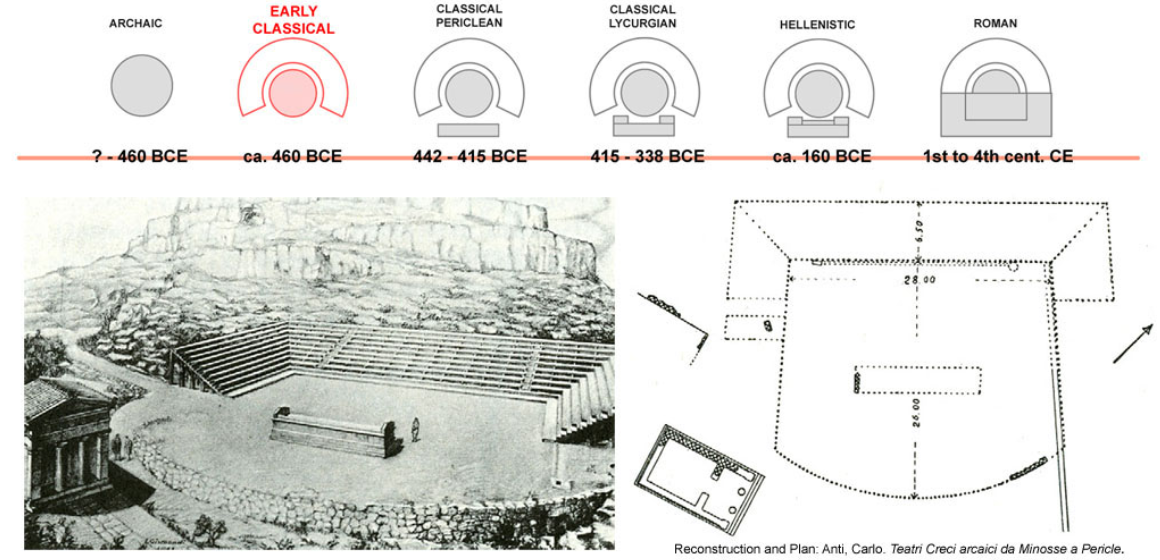
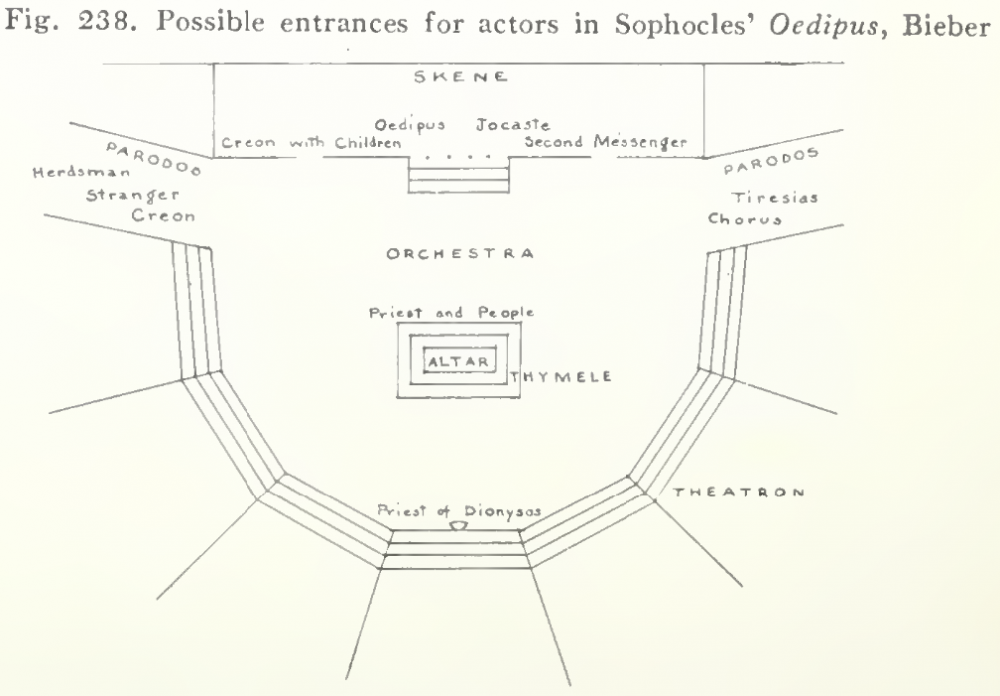
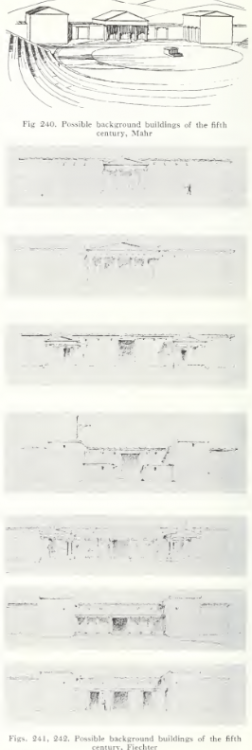
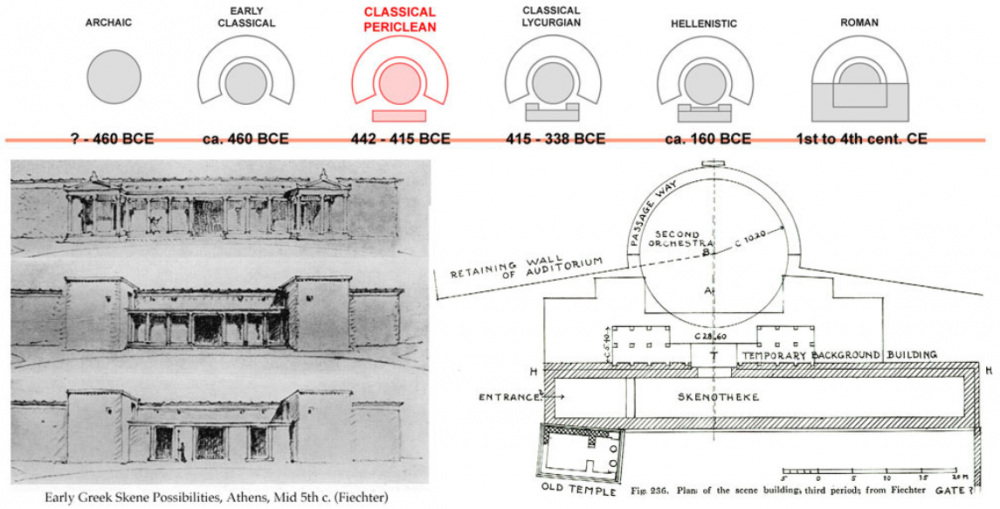
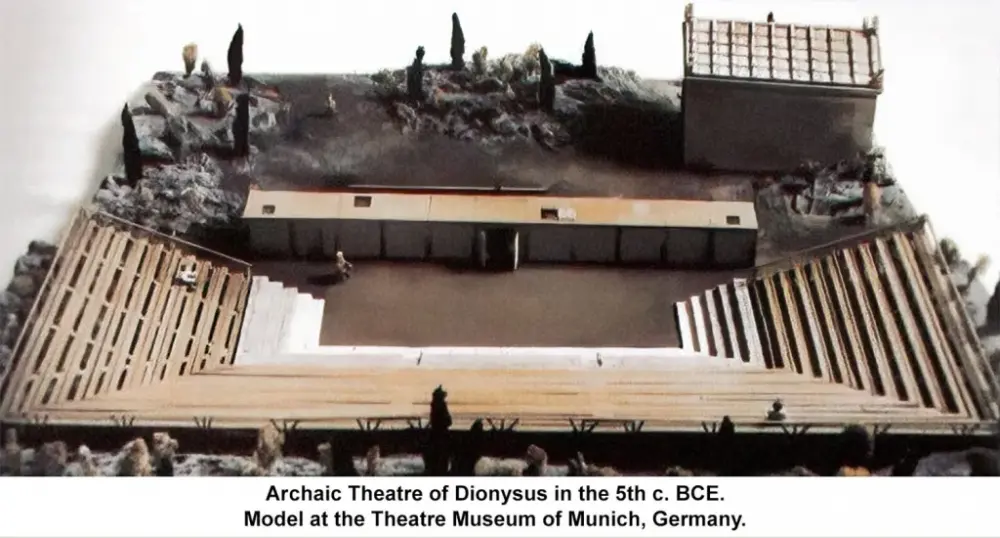
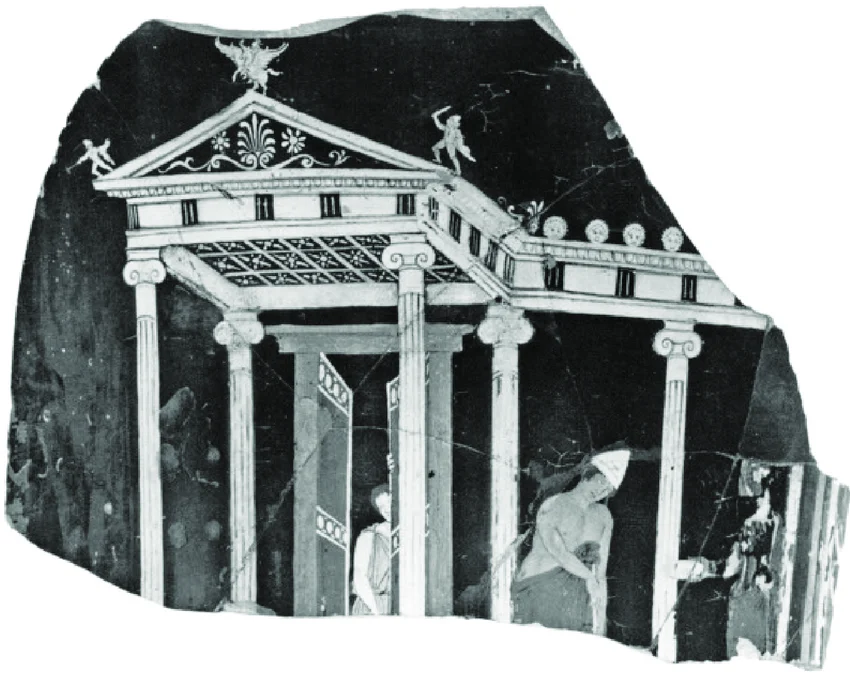
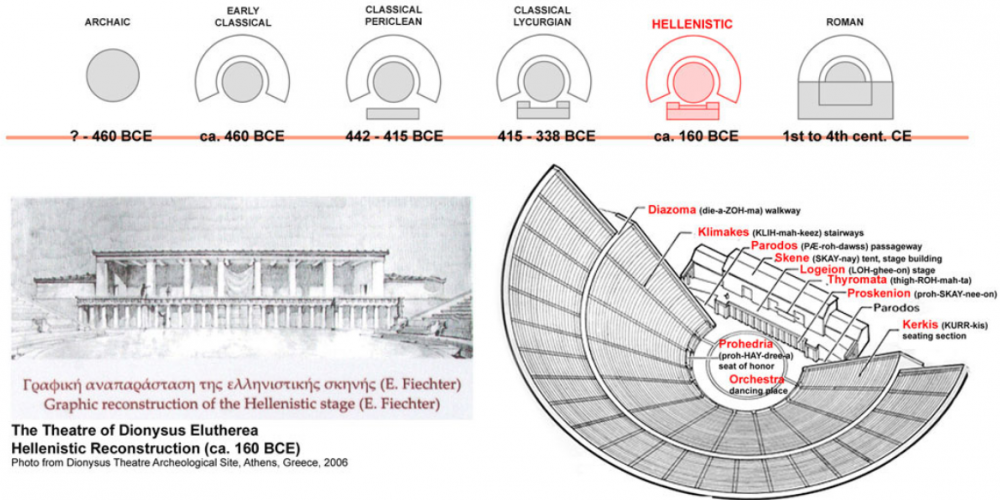
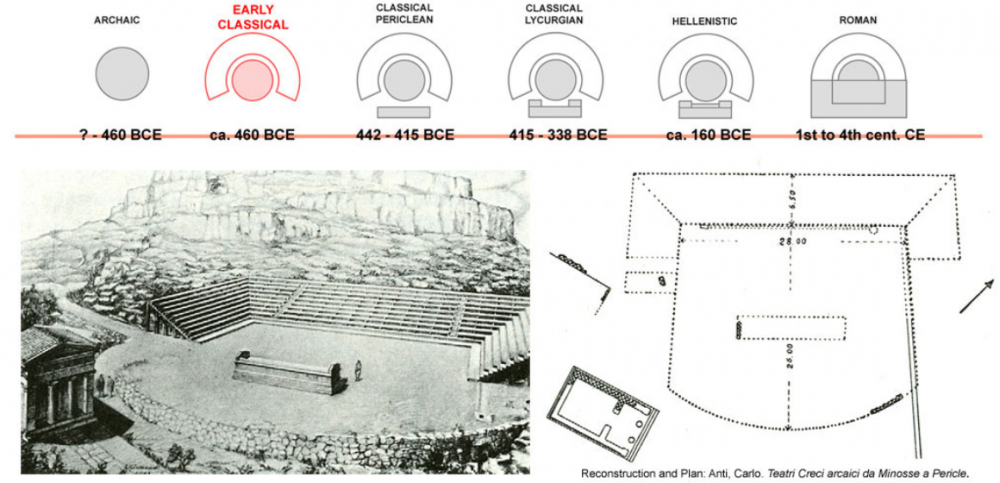
Probably the whole theatre needs to be removed because it's inspired in its Roman phase. But many reconstructions of the Hellenistic phase show a tiled rooftop, maybe because it was too high by then, and after all the theologeion (stage for the gods) is just some "raised platform or upper level where gods and divine beings could appear and speak", not necessarily the roof of the skene. It could also be that they found tiles and reconstructed it like that, but maybe not the whole roof was tiled. One has to be careful with these reconstructions anyway. That buildings must be the same size as their upgrades is something that I think needs to be reconsidered at some point. The aesthetics you have used seemed fine to me, it's just to change the configuration of things, and then keep fine tuning. Regarding the theatre of Dionysus, I mentioned that the Oxford Dictionary states that "vases with scenes from Attic comedy from the late 5th and early 4th cents. suggest that by this time the stage was about a metre high with a flight of steps in the centre communicating with the orchestra", yet I never see this on reconstructions. With that in mind, there are the most complete and graphical sites I've come across: https://ancienttheatrescom.wpcomstaging.com and https://www.whitman.edu/theatre/theatretour/dionysos/Dionysus Evolution/html files/Home.htm. I'll be taking images and quotes from them and from The History of the Greek and Roman Theater, by M. Bieber, if I don't state the source. Starting with Athens, for an early theatre, the trapezoidal seat plan might be too early, as shown in https://www.whitman.edu/theatre/theatretour/dionysos/Dionysus Evolution/html files/Dionysus.Early.Classical.htm, where one can choose the different phases (again, just reconstructions): While this model I found around would be from a bit later (notice the crane resting behind): But regarding the bench configuration, "Dinsmoor and Caputo believe that it was polygonal", so an alternative is this: Bieber states that "Dinsmoor has given this form to the auditorium of the time of Nicias" (a peace treaty from 421 BC, somewhat early for the time frame of the game). "The spectators sat on wooden benches which, of course, had to be straight, but could be arranged as a polygon. The seats of honor (proedria) were of stone". Also, the skene "was transformed in time from a temporary building, a tent or log cabin, to a permanent stone building, beginning in the period of the peace of Nicias". The following reconstructions are for the 5th century BC (not much can be seen, it's just to have an idea to see how much they vary, and don't want to keep searching sources): Some of those are shown with better quality here: Where there's some debate if the skenotheke (long storehouse behind the skene) was made of wood or stone. This vase fragment shows how the skene would have looked like: So for the early stage, somewhere in the middle of what I've just shown could be considered. For a later stage, the Hellenistic phase should be used: And who knows where the theologeion is now. Bieber states about them that they "may have been occasionally a high platform built of wood", or "over a side building". Regarding Thebes (the Theatre of Phthiotidai Thebes refers to another city-state) there's the theatre at the The Sanctuary of the Kabeiroi, which is 8 km from the city (https://www.mthv.gr/en/beyond-the-museum/tour-in-boeotia/the-sanctuary-of-the-kaviroi), and was built between the 3rd and 1st c. BC (Hellenistic), and had no skene, but an altar in the middle of the orchestra, and it was more religious in nature (https://www.gtp.gr/TDirectoryDetails.asp?ID=14695). In the city itself, Pausanias in his Description of Greece states that "near the Proetidian gate is built a theater, and quite close to the theater is a temple of Dionysus surnamed Deliverer". Luckily I found The Topography of Thebes from the Bronze Age to Modern Times, by S. Symeonoglou, which states that "the only theater of Thebes was, in fact, 600 m north of the gates", but remains are hard to find because stone buildings were "stripped for reuse during the Early Christian and medieval periods", "the theater, which must have been quite large, has so completely disappeared that we can identify no more than its approximate location", "judging from the size of this space, the theater was quite large", "regarding the date of the original construction, the literary record provides no clue. It is likely that it was built at the same time as the temple of Dionysos Lysios, that is, in the Classical period. I can only speculate that the construction of a very large theater with stone seating would not have been possible before 446 B.C., though this does not exclude the possibility that there was an earlier theater built of less permanent material". Then he explains that the reason Pausanias "refers to it as "near" must be that, standing before the Proitides Gates, the theater was the largest, most important, and most easily visible monument in Greater Thebes". Also he mentions that (stone) theatre seats were found when excavating later monuments (supposedly built using them). All this would indicate an evolution similar to Athens, but now I wonder if for them it's necessary to have a wooden version (would be focusing too much on this, while ignoring other things). Regarding Sparta, the theatre "held mostly non-scenic contests and games in honor of Leonidas and other heroes. It had a Hellenistic high stage introduced at a late date and that only in the form of a wooden rolling stage which was stored in a skenotheke, a shed in the parodos, and wheeled out over tracks on play days. This happened probably not before the first century B.C.", so in the Late Hellenistic or Roman period, as I mentioned in my previous post, making it too late for inclusion. Still, Herodotus in his Histories states "it was the time of the Gymnopaidiai; and as Demaratos was a spectator of them", indicating that in 500 BC there was some kind of theatre. Untersuchungen an Griechischen Theatern by H. Bulle states that "ist schon aus der Überlieferung zu entnehmen, daß das Theater ursprünglich nur für nichtszenische Feste bestimmt war, die Gymnopädien, das Ballspiel der Knaben, die Pompe der Hyakinthien u. ä.", confirming a tradition of not having plays, but martial festivals. If wanted (and given that it would be the only choice), a simple wooden theatre could be considered, although it's impossible to guess how it would have looked like. Given that it's Sparta, and how it was used, I would make it at simple as possible, no stage of any kind, and maybe decorated with some weaponry. Anyway, given that the original point was to discuss a wooden Spartan theatre...
-
Just in case, I meant when taking a screenshot. For the player to constantly see it could be optional.
-
Considering what @Stan` just said (I'm in the same page of wanting to know the version, particularly in a state of constant development), what about having the option of not to show the game's logo, but always show the version below it? I'm in favour of the rest of what you said.
-
That's nice, but it applies just to a couple of later Hellenistic theatres. After reading it I see that because of that chronological mix up I misinterpreted the parts of your theatre. In any case, I think what you've done could be useful if a later Spartan theatre is wanted (as I'll explain). Following chronological order: early theatre development is what I've already mentioned. My latest picture would be a nice point to represent developed wooden theatres. After that, "the logeion (stage) was raised higher and higher over time" (https://spac.or.jp/en/facilities/mmtheatron/text/01_greek_roman), resulting in the proskenion. Meaning, you weren't missing a stage, because you are showing a later theatre with the stage already raised, and what I called your episkenion is actually the skene. So, for an earlier wooden theatre, stick with my latest picture, and other comments, although there were many variations of them through Greece, obviously. Here a video showing (in general) this evolution, and concentrating more on the workings of this later phase: Athens' theatre became more monumental, and this is what's represented in the game. It seems Sparta, according to your link, followed another path, since they conclude: "the movable stage of Greek theatres was discovered in Messene and Sparta only; however, it might be too early to argue that the movable stage was a regional Peloponnesian phenomenon", and could be Roman inspired: "Recently, Spawforth advocated the Augustan dating of the Sparta theatre and explained the movable stage in connection with Roman theatrical devices". This means that the theatre you made would be the one Sparta had in Roman times. Because of that, I guess the present Sparta theatre will just be removed, which is good because it has another problem: it doesn't have a skene, but a temple, because someone found a theatre in Sparta looking like that, not realising that this was a Roman theatre built to see the bloody rituals at the temple of Arthemis Orthia (https://pausanias-footsteps.nl/regios/laconia/sparta/?lang=en), meaning that when one also builds the Spartan Wonder, the temple of Arthemis Orthia is actually appearing twice.
-
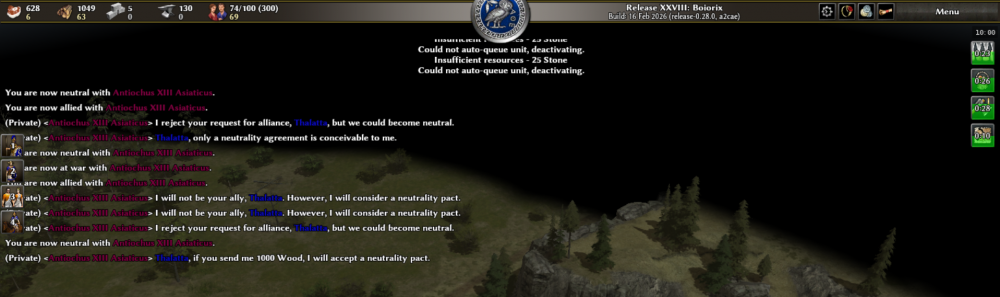
Agh, my bad, I forgot about those... Well, for starters, there are some things that are already quite suboptimal in vanilla: The upper left is reserved for system messages. There are so many things that could be fixed that I don't even know where to start, but to keep it simple right now, I would place those tech icons lower, at the same level as the group icons on the left, and with the same separation. Then you would have space for your notifications.
-
How would it look exactly with deactivated unit colouring? I wonder if that would become too noticeable. An alternative I proposed is that "the enemy would see as its own", but of course not control, and it could be attacked as any enemy. Regarding "sounds more like scouting and less than spying", limited speed and FOV would solve that, with a larger FOV reserved only for Heroes (from gossip and such).
-
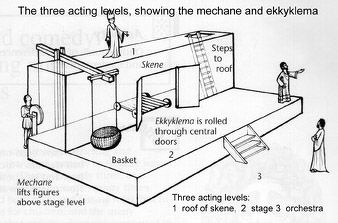
Can you share? More from the Oxford Classical Dictionary (previously I mentioned that "the stage was about a metre high with a flight of steps in the centre communicating with the orchestra"): "The stage was entered from either side (and some plays exploit the contrast), and from a central door in the stage building, representing palace, temple (and sometimes pavilion, tomb, or cave) in tragedy; for comedy, three doors are certain for the 4th cent., and were probably available in the 5th. The central door also housed the ekkykléma, a wheeled platform perhaps measuring c.2.5 1.5 m., and in any case large enough to display set-pieces of events that had taken place inside, like Ajax's torture and slaughtering of the animals in his tent in Sophocles's play Ajax. Towards the right (western) end of the stage area a crane (méchané, machina) could be manipulated from behind the stage building to bring gods or heroes through the air onto the stage, or to have them fly up from it, like Bellerophon on Pegasos in a scene of Euripides which Aristophanes parodies in Peace. The roof of the stage building was also accessible: it was used for the watchman on the roof in Aeschylus’ Agamemnon, but in later tragedy mostly for the appearance of gods. The contrast between the hidden interior of the stage building and the daylight outside, between the gods on high and the actors on stage, and between these and the chorus, half-way to the audience and virtually within its territory, are all physical facts which the playwrights exploited. It is possible that the stage building had wings already in the later 5th cent. but the evidence is uncertain. In the 4th cent. the most important development was the so-called Lycurgan theatre with its stone stage building faced with semi-columns." The most clarifying picture I could find: Then: -You can leave the episkenion (second skene level), it was present by the late 5th c. BC, but maybe modified to have space for a hatch and stairs. -You could add a small 1 m high stage with central stairs leading to the circular orchestra. Your three skene doors look too similar to panels. -Your stone semi-columns seem from the post-350 BC Lycurgan phase. By then, the seating would have been of stone also. I'd stick with wood. -You could leave the central door open to show the wheeled plataform. Maybe another door could be (partially) open, revealing clothes and masks. -That crane doesn't seem accurate (no counterweight), but there are plenty of options around, which would improve the rear skene looks. -I'm not really sure how the "interior" was used, seems a bit too hidden for me, maybe it's just that the stage has some shadow from the skene. EDIT: maybe the first row of seats could be made of stone, that was one of the first stone additions, and it was maybe present by the time there were three acting levels, after all "some think that there was no stage building till shortly before the Oresteia in 458 BC", at least using the Theatre of Dionysus at Athens as reference.
-
Is there an option for "tech research icons appear there"? I've never seen this. In any case, I would use the absolute corners only, and if left with no choice, the middle edge points. But right now you have upper notifications appearing from four different places, which seems too much. Seems quite dark and taking a chunk of a building, but maybe more things have to be behind it to see. And it's hard to read because, as many have complained and should be solved, in general the font size of the game is too small. Bigger font with black edges should remove the need for any panel.
-
Maybe placed on the corner? 34:44 appears twice after all, and maybe 22:11:24 could be placed on the very right of the "Elapsed" notification line. Could the notification panel length be automatically adjusted according to the length of the notifications? The word "Wonder" takes another line. Could the notification panel size be automatically adjusted according to the number of notifications? There's a big empty chunk blocking the view. Could the notification panel be made transparent (or kind of removed)? I don't see why it's needed, it could work like those center-top notifications. Personally I wouldn't use the Eye of Horus because it's a strong reference to one civilisation in particular.
-
@AssassinsQtip, here my tips for you: 1) Start with extensive research, get your hands into whatever Proto-Zapotec reconstruction publications you can find. 2) Their words are now written with modern conventional characters, keep notes on how they should be pronounced. 3) Make a list of words that could be useful for the game (or all of them if you want), written in both English and those characters. 4) Come back here, and we can check, by then I could go through the previous points to see if I can fix or add something. You should then write down things like To hunt: *'ko?oti/a This being an example of what units could say when ordered to hunt.
-
troll A troll's guide to trolling and troll strategies in TGs and SP
Thalatta replied to Arup's topic in Gameplay Discussion
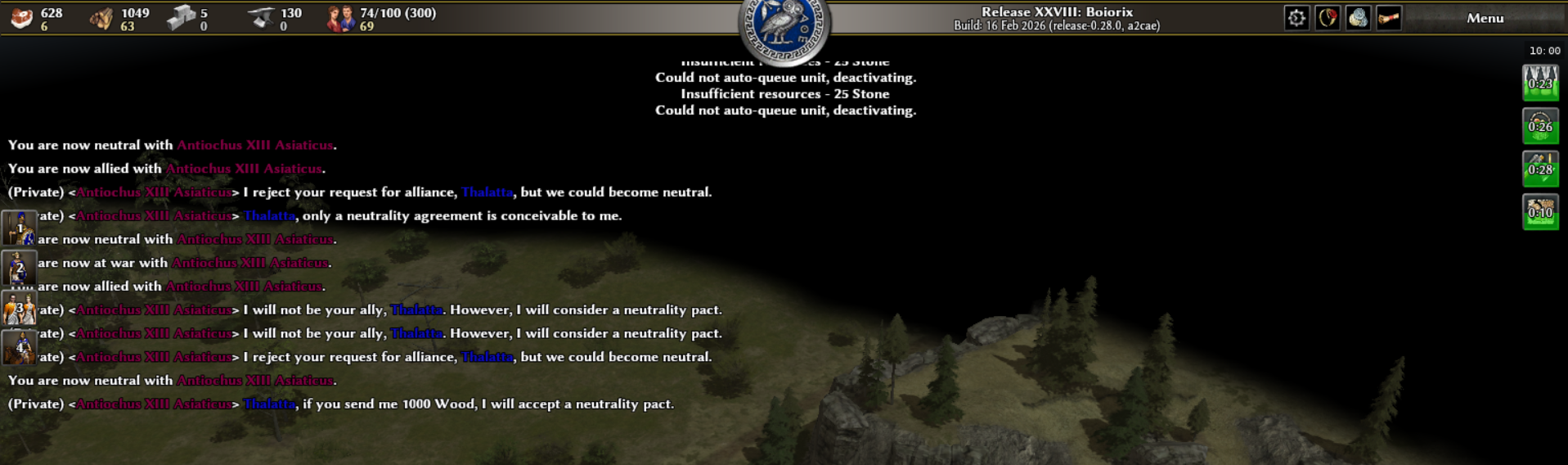
Why? Isn't that how for example Rise of Nations works? Besides not being realistic, except on particular cases, and for understandable reasons. Ah, thanks. But I don't get why it's not just right-click, right now that does nothing, and the hovering icon is a crossed flag, making one think it's just impossible to do. Besides, when rallying to other buildings the hovering icon is the garrisoning one, no need of CTRL. Is there a reason why that's not the same for self-rally? -
troll A troll's guide to trolling and troll strategies in TGs and SP
Thalatta replied to Arup's topic in Gameplay Discussion
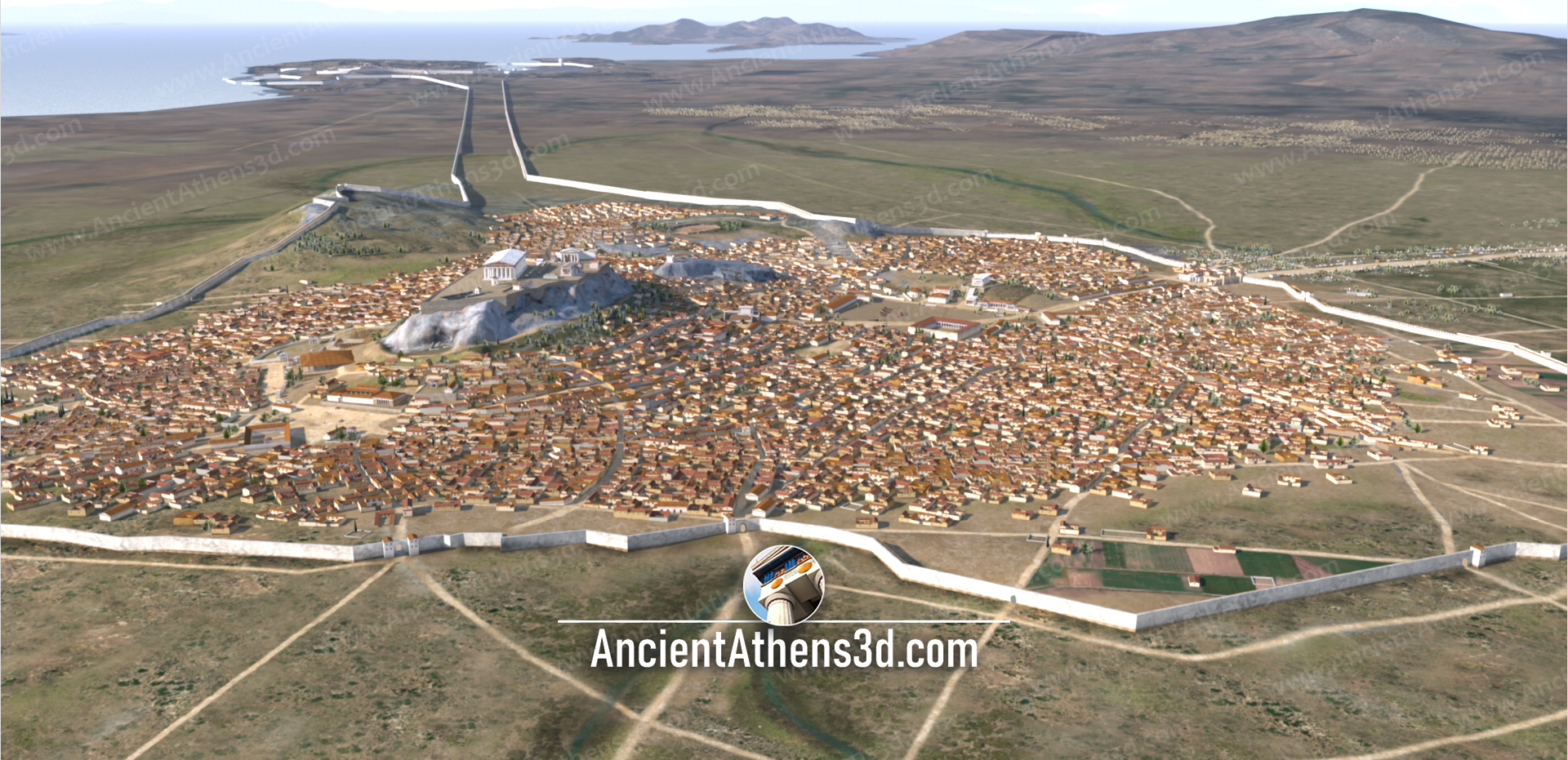
Never thought about this... even when it's like Athens' historical connection to its port (too bad in the game one can build docks on neutral territory, I'd reserve that just for some civs): Regarding the baking of champions, it does seem to me that's a bit OP, but I don't play MP. Related: why is it that a building cannot be set as its own rally point? Maybe because this strategy in general would become too OP? And yes, Hippocrates is the best, the AI can't deal with the nigh immortal army.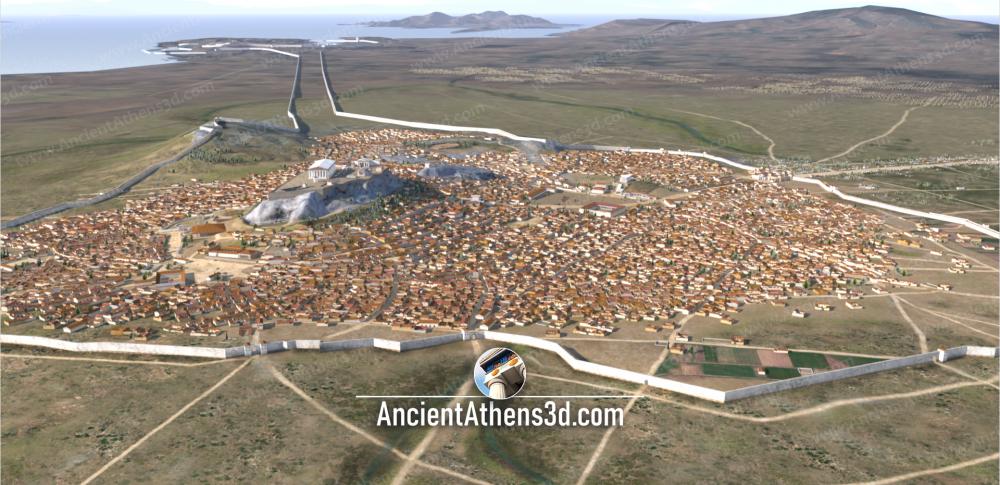
-
An alternative could be having a spy unit that only the owner can see (or the enemy would see as its own), along with enemy Lookouts and maybe Towers, also becoming visible after performing some action. These actions could be bribing, revealing information usually hidden to the player (enemy garrisons I think? or whatever useful), assassination, Hero detection, infiltration (climbing walls and palisades), and opening gates, among whatever others can think of. These actions could be made easier or unlocked with experience (instead of having extra techs that will be hard to historically justify). I'd rather have added micro and complexity from more interesting things as these than from repeatedly clicking easily automatable stuff.