Leaderboard


.thumb.jpeg.67ef5b5dc6d918163efa04cd5336830d.jpeg)
Popular Content
Showing content with the highest reputation on 2026-07-05 in all areas
-
Looking through old issues there are a lot that are either old and out of date patches, design suggestions that need to be discussed and nobody has for 10 years, or units / creatures that were worked on in the past and haven't been touched for a while. If nobody objects I propose we make a project for orphaned issues with patches and existing work, that I can put them all in, so people can find them (and maybe eventually pick up). I can also close them if we want. Also I may start closing older issues that are just gameplay and balance suggestions that nobody seems to want to discuss. Again if i close something important, let me know and i'll unclose it !4 points
-
3 points
-
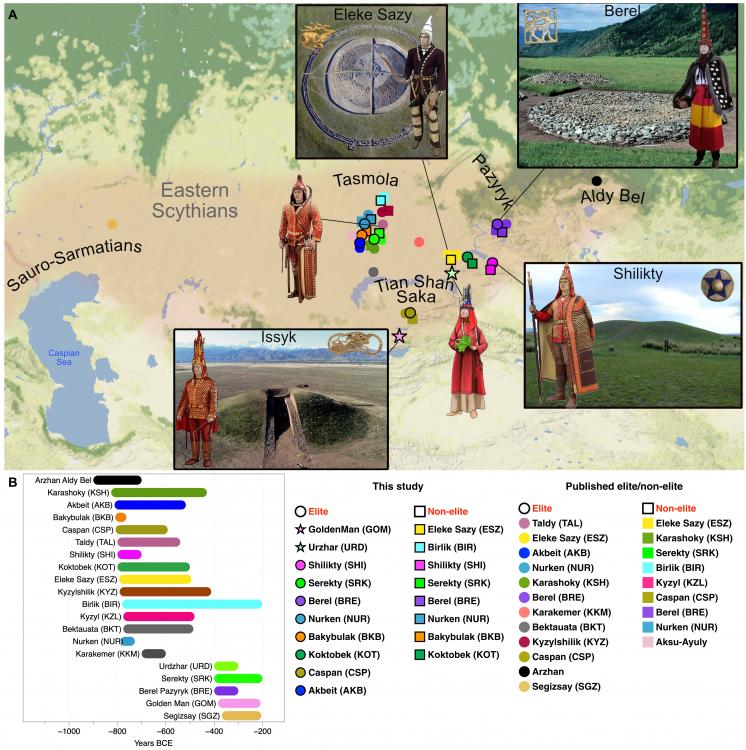
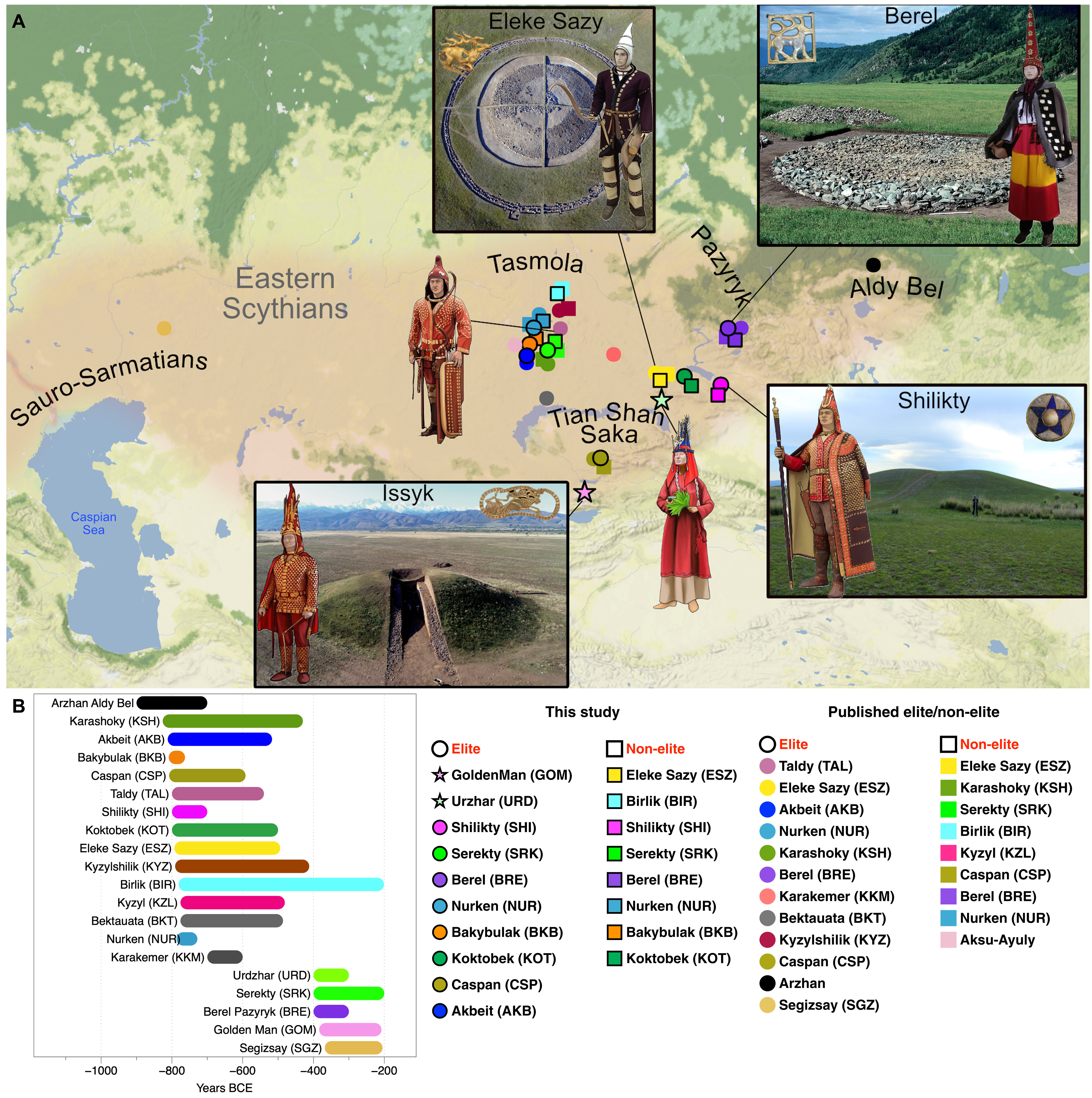
A genomic analysis of 85 individuals from the Iron Age shows that elite status was passed down from generation to generation and that women held prominent positions in the nomadic society The discovery of the Golden Man in the Issyk kurgans in Kazakhstan had become a national symbol and one of the most significant archaeological finds of the Eurasian steppe. But until now, researchers did not know its genetic makeup or its relationship to other high-status individuals found in the region. An international study combining archaeology, anthropology, and genomics has managed to sequence the complete genome of this emblematic figure, placing it within the genetic variation of Saka individuals from the Iron Age and resolving a decades-old question: it was a male, not a female. The Issyk kurgans, located about 50 kilometers east of Almaty, are part of a royal burial complex linked to the Saka culture dating to the period 400–300 BCE. The wooden chamber where the Golden Man rested contained more than 4,000 gold ornaments, weapons, a headdress embroidered with golden threads, zoomorphic artifacts, and a silver bowl with an inscription that has not yet been deciphered. The richness of the funerary goods contrasts with the simplicity of other contemporary burials, where grave goods are almost nonexistent. These stark differences have traditionally been interpreted as an indicator of the growing social inequality characteristic of Iron Age nomadic societies. [...] The results obtained by the researchers show that elite individuals were more closely related to each other than to lower-status people found in the same sites. This pattern persisted even when elite burials were located in different cemeteries separated by more than 100 kilometers. [...] A particularly significant aspect of the study is the confirmation that access to elite status was not restricted to males. Almost half of the high-ranking individuals in the sample are women, contradicting the idea that power in these nomadic societies was exclusively male. The significant presence of women in richly adorned tombs, along with the genomic evidence linking elite individuals across different burial sites, indicates that women held high-status positions within Scythian society, explains Ayshin Ghalichi, a researcher at Max Planck and the University of Texas at Austin. https://www.labrujulaverde.com/en/2026/07/dna-analysis-of-the-golden-man-reveals-that-a-few-elite-families-ruled-scythian-nomadic-society-2500-years-ago/ https://www.science.org/doi/10.1126/sciadv.aef0108
 2 points
 -
Oh, that's a good idea. I'll put the reason I close the issue in the issue itself so we have it. I may also compile some of the bigger/ cooler issues here for people if they want to pick up1 point
-
I am using a2cae and can confirm. I'd call this a bug as well and reported it.1 point
-
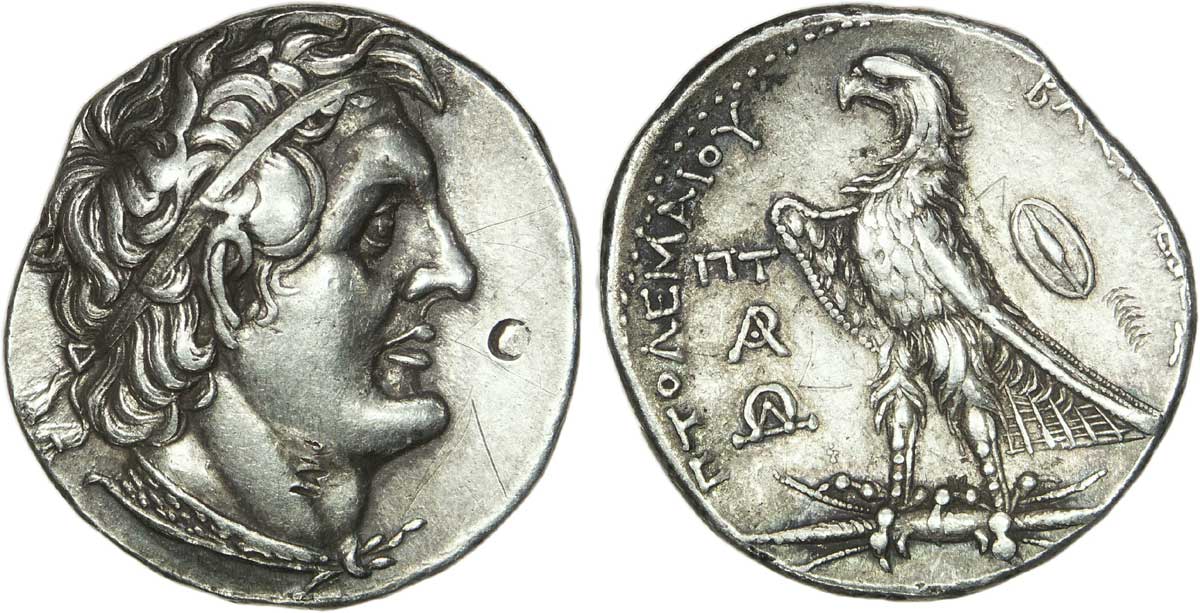
But it still has slight anachronistic errors. I call it artistic anachronism. If you look closely, the eagle on the coin has different feathers than the one on the emblem. The eagle emblem has modern feathers.1 point
-
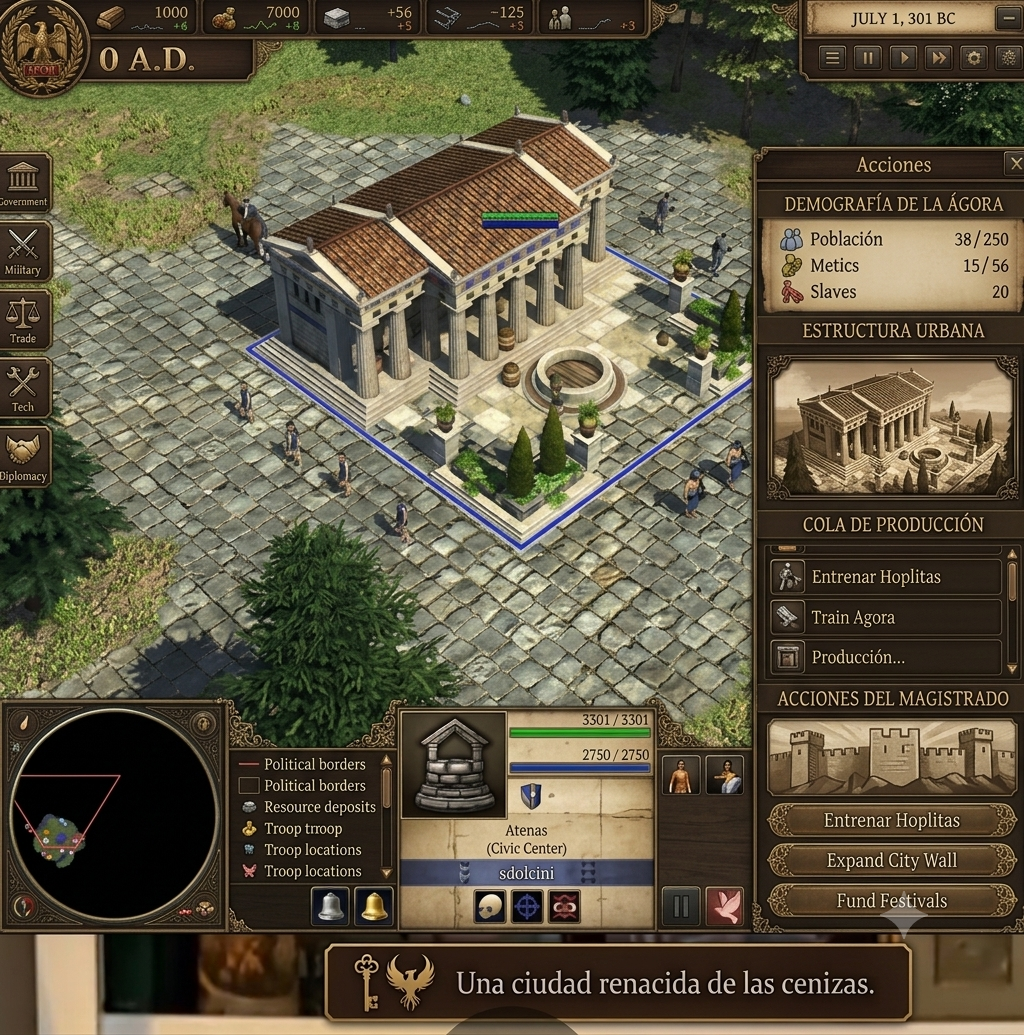
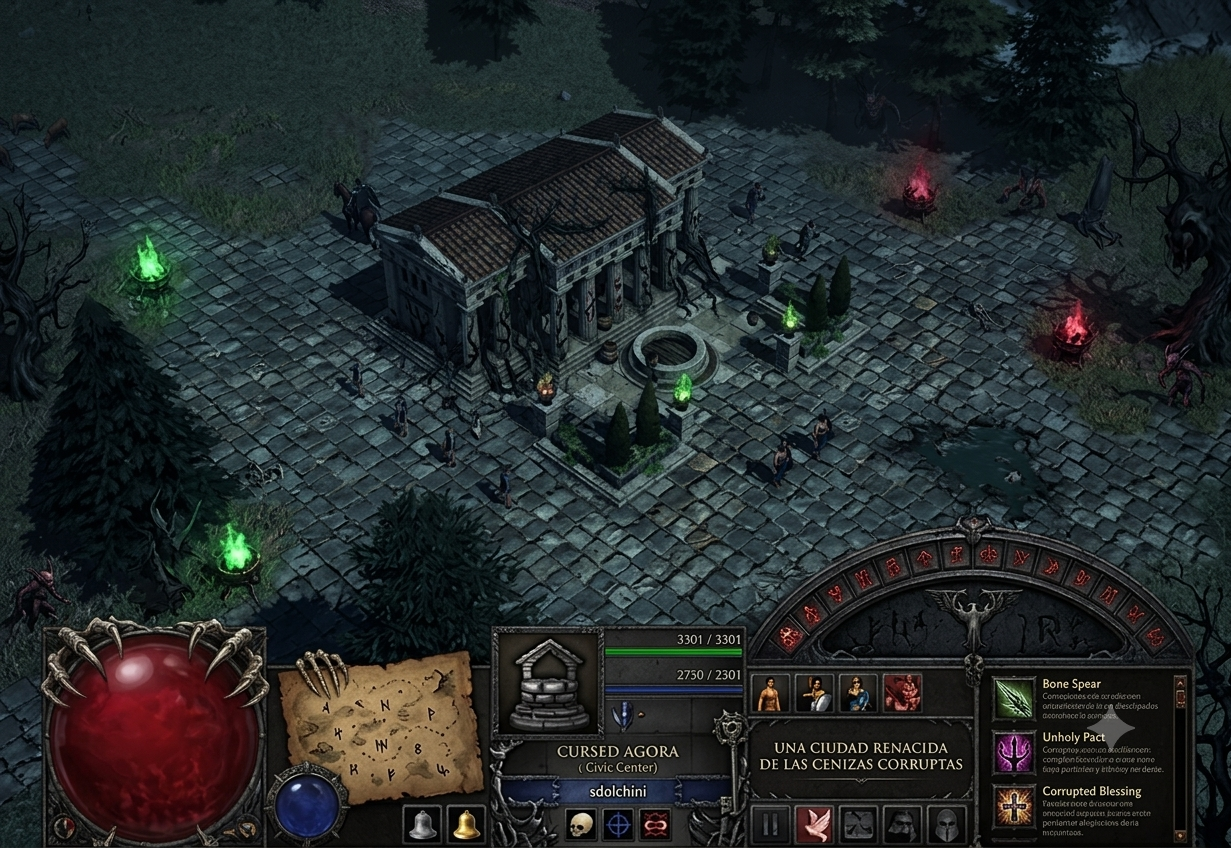
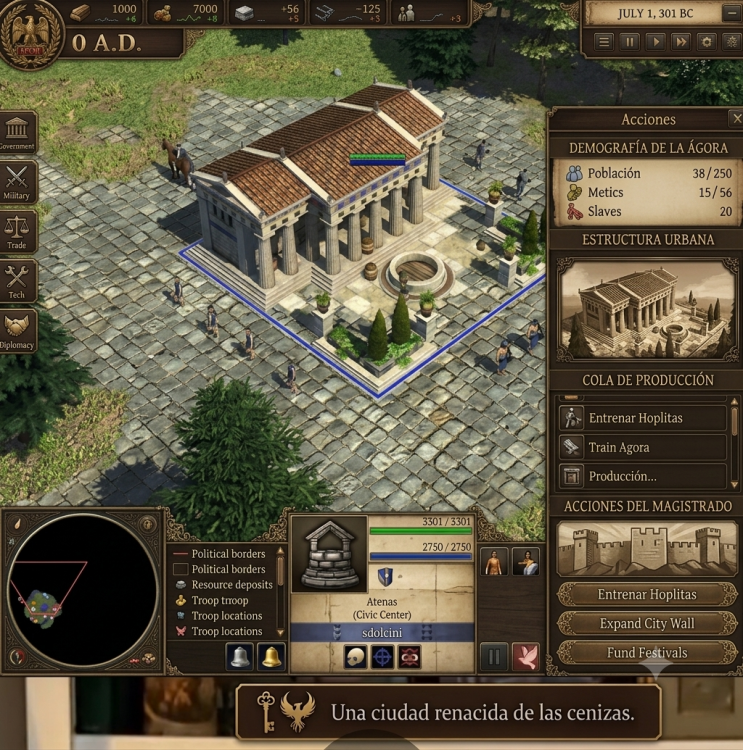
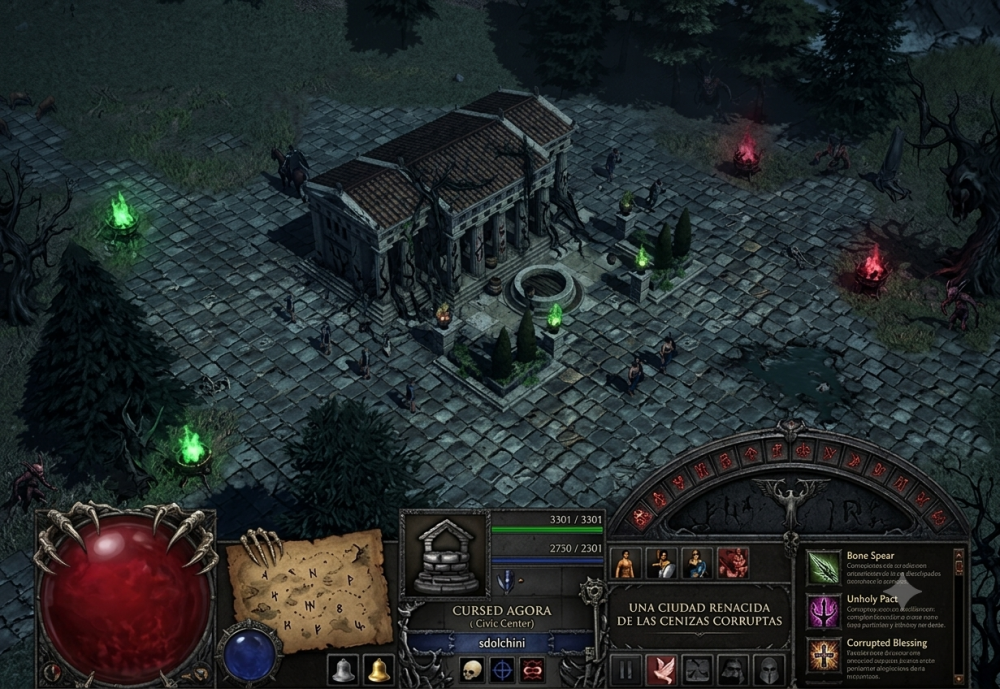
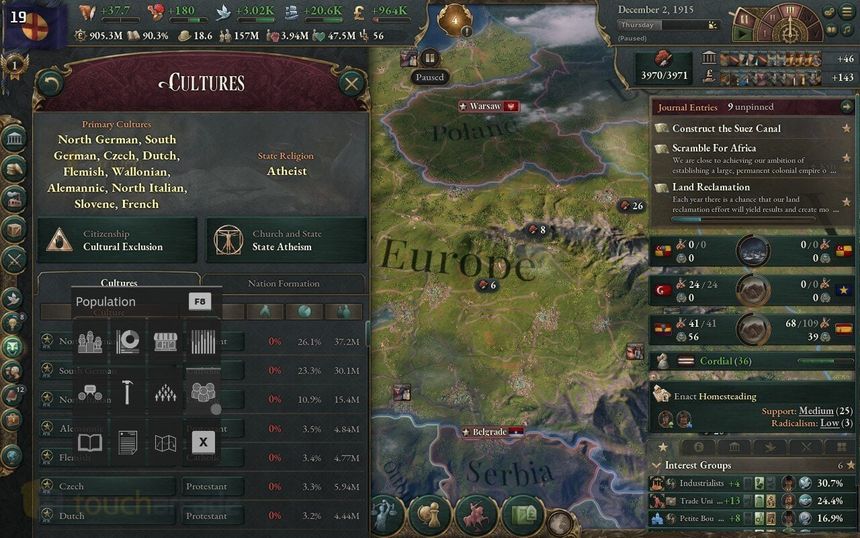
Testing some concepts with AI.
.thumb.jpeg.ad578eb6c416d084502cbec3343c44bd.jpeg) 1 point
1 point -
In the first photo I used a generic concept of the graphic style of Paradox games. If you pay attention, the backgrounds don't stand out; their role is not to stand out, they don't seek to take away the prominence of the sets or the titles.
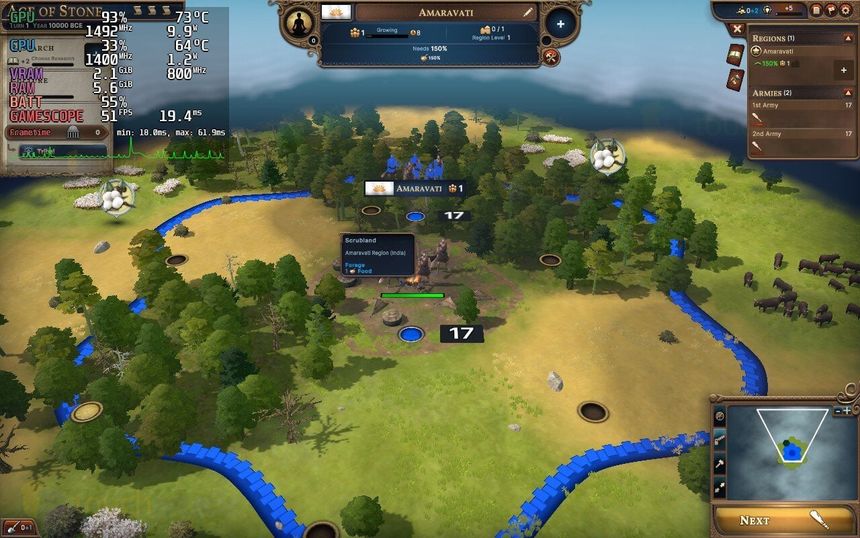 1 point
 -
This is the call to arms button, folks!
 1 point
 -
@wowgetoffyourcellphone does a great job adapting many historical details, and that's a lot to say from a insufferable perfectionist like me
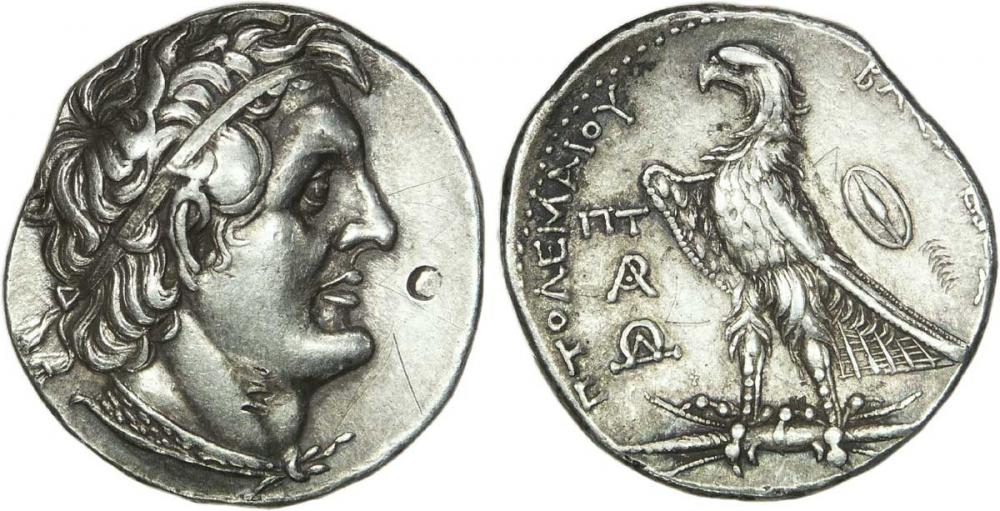 1 point
 -
Previously I proposed that since Khosraw I Reforms fixed harvest tax, it could make Fields trickle metal. Also they “further elevated the figure of the sovereign above the nobles and centralized power around him”, which could be a Hero bonus and champion penalty. For my take, I'm getting quotes from the book I mentioned: The Two Eyes of the Earth, by M.P. Canepa (I went through all of it). I write down first Aura, then Bonus, then Tech. I only declined Auras in the first person, but do whatever. As usual, it’s your decision what exactly they would entail, and I’m not sure about what’s possible. “Additional” ideas I leave mostly without hints, since maybe they are unnecessary. Ardashir I Overthrower: capture bonus ("After his successful usurpation Ardashir", referring to the Parthians). Inheritance: capture resistance bonus (“Believing these regions to be his by inheritance he declared that all the countries in that area including Ionia and Caria, had been ruled by Persian governors (...). He asserted that it was proper for him to recover for the Persians the kingdom which they formerly possessed”, this was really big for him, plenty of mentions regarding his “rightful inheritance”). Holy Fire: temple tech (“Ardashir I increased the cults of the temples and ordered the fire of Ohrmazd, which was on the altar at Bagawan to be kept perpetually burning”). Shapur I Shamer: attack bonus (the defeated Romans regarded the terms of a peace treaty “shameful”). Indemnisation: loot bonus (“Philip sued for peace and paid a large indemnity to Shapur I”, leading to “his official formulation of Rome as tributary and subject”). Humiliation: enemy Hero penalty tech (he captured Valerian in battle, a first for a Roman emperor, although “despite the assertions of certain extremely hostile Roman texts that speculated on his fate, in the reliefs Valerian is not humiliated, and he keeps his insignia of office”). Additional: Universality (“he expanded his father’s claims of dominion over Ērān, to ascendancy over Ērān ud Anērān (literally, “Iran and Non-Iran”)”). Shapur II Persuader: bribing bonus, or occasional automatic conversion? (“Ammianus devotes a chapter to the defection of Antoninus, bodyguard of the dux of Mesopotamia, to Shapur II”). Recognition: champion bonus (“the Armenian commander in chief Mushel so impressed Shapur II with his chivalrous treatment of his captured wife and attendants that the Persian king of kings honored him at the royal bazm as if he were in attendance”, and at another instance he “gave the Roman defector Antoninus honorific headgear along with a designated place at the royal banquet table and a seat in the council of the king to mark Antoninus’s integration into the Sasanian court hierarchy”). Glory of Iran: Hero bonus tech (“created a province called “Shapur, the Glory of Ērān””, they were big in personality cult). Khosrow I Autocrat: capture resistance bonus for CC under Hero aura, penalty if outside (“Both empires saw increasing centralization at the expense of local power bases, with sixth-century contemporaries Justinian I and Khosrow I responsible for intensifying this movement to autocracy in their respective realms”). Royal Gifts: discount on resource transfer (“Roman-Sasanian diplomatic exchange reached its apogee in the sixth century with the long coeval reigns of Justinian and Khosrow I”, and this “included objects that were given and received as gifts, throne room rituals, as well as the entertainments, culinary displays, and sundry other activities with which the two courts regaled each other’s envoys”). Maritime Silk Route: sea trade tech (“Peaking with Khosrow I’s control of all coastal areas from the Red Sea to the Indus, the Sasanians soon dominated the Indian Ocean sea trade. Under Kosrow I, the Sasanians began to expand into Sri Lanka and even markets in Southeast Asia”). Additional: Sanctuary (“after Justinian effectively closed the Athenian Academy in 529, prohibiting the teaching of law and philosophy there and pagans from teaching anywhere, six prominent philosophers led by Damascius traveled to Ctesiphon to seek refuge at the court of Khosrow I”). Additionally, he liked hippodromes. Khosrow II Pious: regeneration bonus (“after his victory over Bahram Chobin, Khosrow II spent a week at the site circumambulating the fire while reciting the Zand and Avesta”). Royal Hunt: hunting or ranged bonus (“The Sasanian motif of the “royal hunter” was an exceptionally powerful, not to mention popular, image”, “The side relief panels of Khosrow II’s (...) are the most extensive sculptural representations of the hunt, and the dynasty’s last. On the right panel, mostly unfinished, the king of kings hunts deer in an enclosure with a bow. The left panel depicts the king of kings hunting boars…”). Monumentality: whatever-statues/monuments-do tech (“Monumental rock relief sculpture fell out of vogue as a medium of triumphal expression for the Sasanian kings of kings, not to return until Khosrow II’s final brilliant reprise of the genre two centuries later”). I like that there's some thematic sense: Ardashir I captures and keeps, Shapur I is aggressive, Shapur II charismatic, Khosrow I a trader, and Khosrow II is more versatile.1 point
-
Making headway! Any ideas for auras and techs?1 point
-
Any thoughts on who should be who?
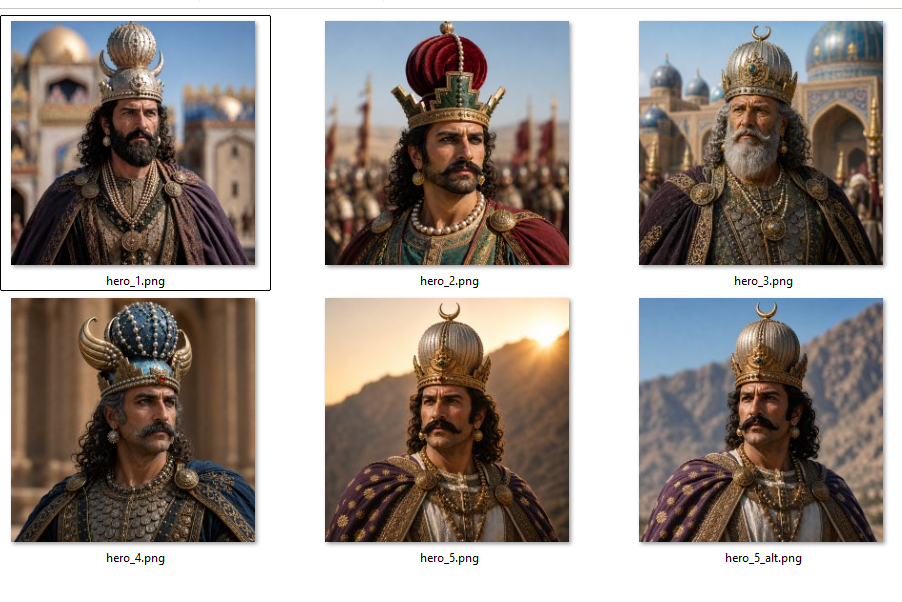 1 point
 -
Hi guys and girls !!! My name is coming from https://en.wikipedia.org/wiki/List_of_Boston_Legal_characters#Alan_Shore I'm writting you from Belgium (near Brussels). Sorry for my english. I'm 71 years old. Benear dead, but that's not really a problem. I had my time I'm playing 0 A.D. about 2 years now, and i love it. I thing that my level is middle. Better than easy. I love also to converse with AI. Voilà, you know me now. My born language is french. So long, perhaps on the network, if I understand how it works.1 point
-
corrals needs food before generating any meaningful amount :/1 point
-
Hello, fellow 0 A.D. players. I write to share (belatedly) the news that my peer-reviewed (academic) tutorial "Teaching History and Languages with a Strategy Computer Game: 0 A.D. in the Classroom" was published in the open access journal Programming Historian: https://programminghistorian.org/en/lessons/teach-history-and-languages-with-strategy-game The Programming Historian has an open peer review process on GitHub. All publications are released with the CC BY 4.0 license. If you might like to discuss anything in the tutorial -- or anything else, I suppose -- please feel free to reply in this thread. I am following. Thank you for making a beautiful, brilliant, and fully libre real-time strategy game.1 point
-
From 16 to 22 there was a game breaking unit that everyone agreed not to make (after a few month in the alpha). a23 felt "done". Now balancing started over again and when this model is "done" I fear a new model will be introduced (like historical) by new members that won't reach a mature state like a23. I also like the more diverse civs like the old ptols with free houses that took long to build (although they were always a bit OP).1 point
-
Check out the shrines in DE.1 point
.thumb.jpg.b21ca1d0c15fb56b42c39b25a0a40815.jpg)

.jpeg.3a88e79623c8e24ff7e1914ed30c02aa.jpeg)