All Activity
- Past hour
-
 I'm working on a 3-scenario campaign with the Iberians. Little known and a story to highlight I think it could be fun and original. The Fire of Freedom or (The Eagle's Shadow) You play as Viriatus, a Lusitanian chief fighting against Rome. Scenarios : i. Unite the tribes – build your base, defend, convince villages to join ii. Ambush a Roman supply column in the mountains iii. Final siege – hold your fortress against Roman waves I'm still learning the Atlas editor so if anyone has tips or knows good tutorials, I'd appreciate it. Any feedback or suggestions! Thanks
 -
Yes, I think I could just have the AI scan the manual to update the site
-
I think I just assumed that was the case, because it says "loot" and how ever many resources. I just assumed you got those, but I guess you have to destroy an enemy build/unit to get that
-
The Etruscans were a loose collection of city-states on the Italian Peninsula. Although together in battle and native to the region, the Etruscan city-states were more like dysfunctional family members than they were brothers, constantly fighting with each other when not under attack by their neighbors. Nevertheless, the Etruscans were a light in the dark that engulfed the peninsula, as they were greatly enlightened and sophisticated compared to their tribal neighbors like the Samnites. By the iron age, the Etruscans were close to being fully Hellenized in both culture and military, though certain aspects remained Etruscan. The Etruscans were one of the first people to become subjugated by Rome, though the Etruscans remained a unique identity well after their defeat, only being fully absorbed into Rome by 27 BC. In 0ad, the Etruscans are an infantry civ that benefit greatly in team games, and this is not more apparent than their team bonus: Integrated forces, which allows the Etruscans and their allies to recruit each other's units. This is a multi-faceted bonus so I'm going to explain this as simply as I can. The Etruscans and their allies can recruit each other's civilian units, allowing civs to have options they normally wouldn't have. For example, The Mauryas do not have a ranged option other than archers, but by being in a team with the Etruscans, they could get Etruscan slingers, and the Etruscans can get Mauryan elephant archers. The unit exchange is a two-way street; if a third team mate is using the Han, the Etruscans can use Han units but the Mauryas cannot. None of them get access to each others champion units, and neither are technologies, which is important for a reason I will explain later. Their civ bonuses include wealthy citizens, which reduces the total resource cost down to only 10 but costs metal instead of food, and Etruscan bronze, which improves the crush protection by +1. The Etruscan roster, although balanced, is quite small compared to other civs. Their village phase units are the Etruscan Hoplite, Etruscan archer, and Etruscan cavalry, a spear cavalry. Their only town phase unit is a slinger. These are their only citizen units. Their champions include an elite hoplite and an elite archer. Their ships are Greek and consist of a ramming ship and an arrow ship. Their only siege equipment is a ram. The Etruscans get no unique buildings but do get houses with 10 population. Their technologies consist of Irrigation network, which is an improved city phase grain technology, and Etruscan Ironworks, which improves the rate of metal gathering. Despite being a Hellenized civ, the Etruscans do not get technologies usually available to Greeks, such as hoplite tradition and Hellenic architecture. Their heroes are Lars Porsena, Lars Tolumnius, and Aulus Vibenna. The appearance of the Etruscan units would appear very much like one would see in Athens and Sparta, to the point that there would not be many differences, if any at all. The biggest difference is the variety of equipment; Greeks would use mainly the muscled bronze armor or linen armor, the linothorax. By comparison, the Etruscans did use these, but would also combine scale and disc armor native to the Italian Peninsula. The Etruscans also used Celtic scutum shields as opposed to the Aspis, and would not have commonly worn greaves. While the Etruscans had a slightly modified corinthian helmet, towards the end of their existence the Etruscans also used Celtic helmets.
-
 AI_Developer_p joined the community
 -
Looks pretty OP! I will have to PM you to see how you are using AI. Wondering if I can share the updated manual with you when we make changes and if that can change stuff on the website. For example, currently Legacy of Marathon is not an Athens tech. But if we bring it back you would just have AI scan that manual and make changes?
- Today
-
 Kyeyusede joined the community
 -
Unfrotunately i cannot give two hearts
-
I believe I remember to have read it somewhere in this forum but cannot find it. Was that feature removed at some stage or was it more like a misudnerstanding from my side? The case I though I understood is really: I build a warehouse or a tower or whatever building. This cost x amount of resources. when I don't need that building anymore I can destroy it and get x/2 (or some other fraction) of the original resources back. Does anyone remember if this used to be the case and it was removed?
-
@Emacz, could you check out the site, see how it looks, and if I should change anything. Others are welcome to see it too
-
Is this the ai doing it, or you? If it is ai, does it build houses in a row to the resource to speed the transportation?
-
Just was using ai to update our site. Do you think the nav bar (home, charts, civ) should go on the side, or the top, like it was?
-
Me be kinda confuseled about how this spread sheet works, could you explain a little please I actually figured it out, newver mind
-
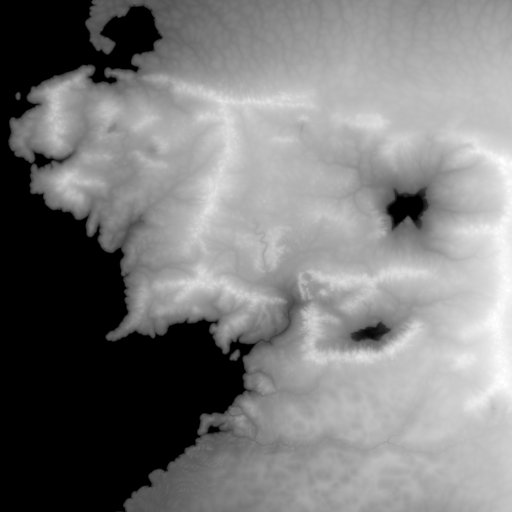
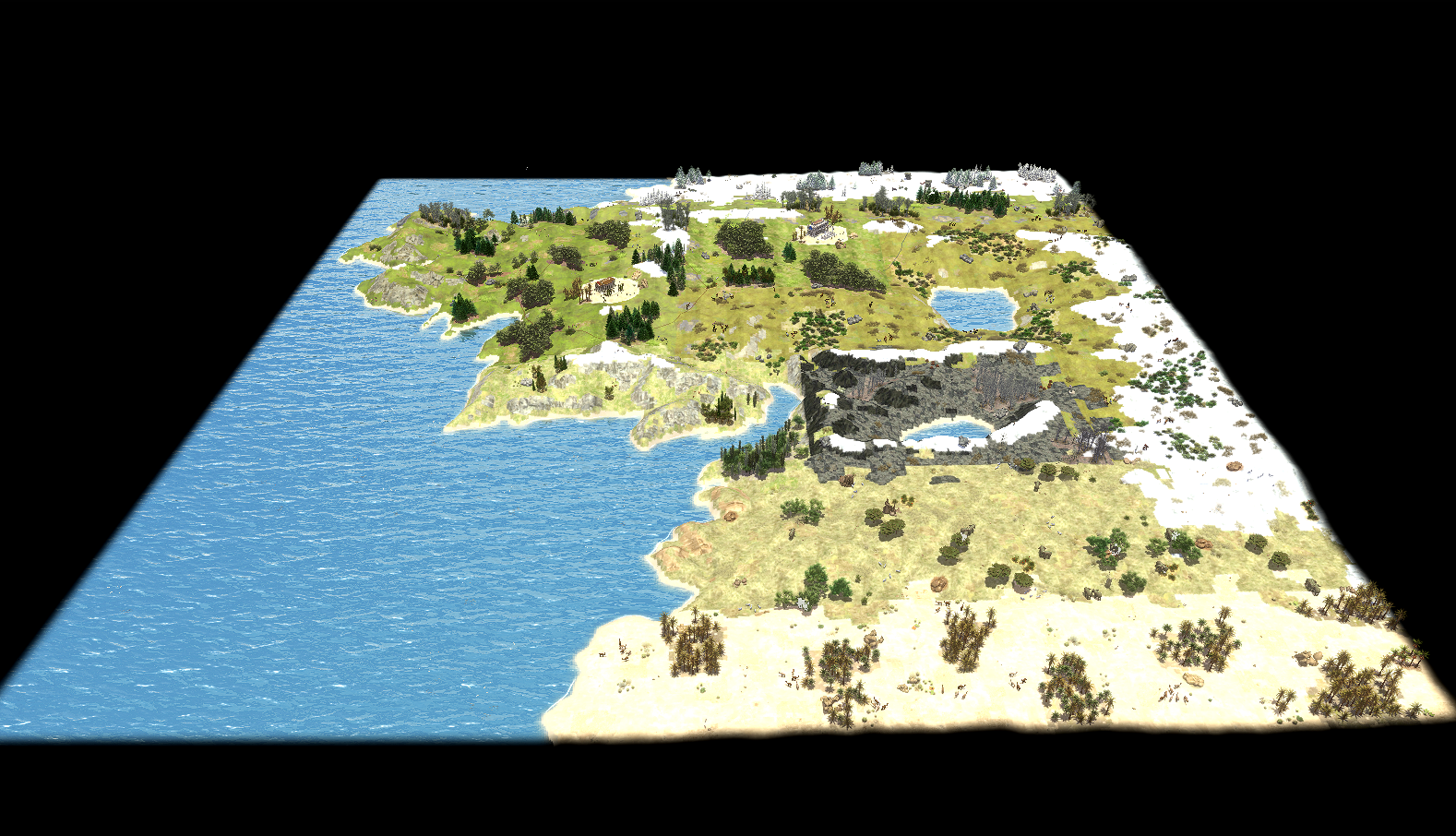
Obviously it's a piece of the Atlantic in the pic. Maybe someday somebody will give that map an overhaul.
-
You can find the new version of my mod on mod.io: https://mod.io/g/0ad/m/earth-maps These are the files of this map. The file mordor.json goes in: ~/.local/share/0ad/mods/user/maps/random/rmbiome/mordor/ for linux. middle-earth.json middle-earth.js mordor.json
- 1 reply
-
- 6
-

-
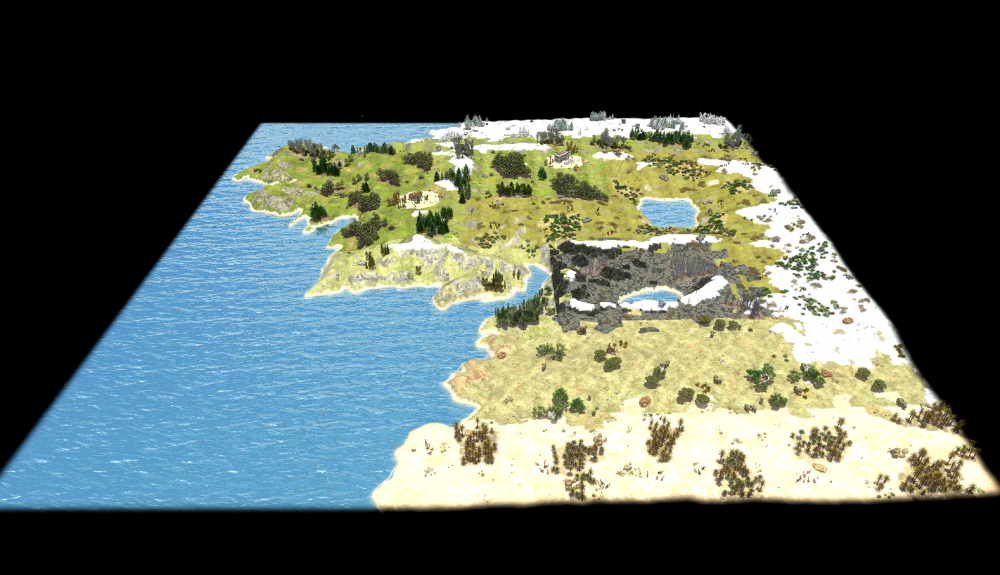
Biomes This map reconstructs the geography of Middle-earth on a real heightmap, divided into twelve climate zones that follow Tolkien's continental layout from north to south and west to east: Forodwaith (arctic), Angmar and the transitional Shire–Lothlórien border (alpine), the Shire and Lothlórien proper (temperate), Rhûn and Rohan (steppe), Gondor (Aegean/Mediterranean), Mordor and East Mordor, and North Harad and Harad (savanna and desert) to the south. Each zone is painted with its own biome, giving the continent genuinely different terrain textures, vegetation, and wildlife rather than a single palette reused everywhere: pine-covered alpine slopes around Angmar, temperate forest and farmland in the Shire, open steppe grassland across Rohan and Rhûn, Mediterranean scrubland in Gondor, and a dedicated custom biome for Mordor itself, distinguishing it visually and ecologically from the surrounding desert and steppe zones. Player starting positions are placed avoiding deliberately Mordor, keeping it a hostile, resource-marginal region rather than a viable base location, in keeping with its role in the source material. Visually, the map uses a warm, slightly desaturated sun tone against cool blue-green water, cumulus skies, and a light HDR tonemap with reduced saturation and moderate bloom, aiming for a muted, epic tone rather than the high-saturation look of the default temperate presets. Source materials Thanks to u/enpremi for his heightmap: https://www.reddit.com/r/lotr/comments/1avfmuw/high_resolution_middleearth_heightmap_link_in/ and to u/William_MM for the climate division https://www.reddit.com/r/imaginarymaps/comments/c5mzt9/oc_climate_map_of_middleearth/ This is my rielaboration for 0 A.D. base-1000.svg It is a 1000×1000 Inkscape overlay traced on top of the source heightmap, with one labeled rectangle per region (Forodwaith, Angmar, Shire, Lorien, Rhûn, Rohan, Gondor, Mordor, East Mordor, North/South Harad). Pixel coordinates read off this overlay were converted to the fractional `Vector2D` bounds (`fractionToTiles(...)`) hardcoded in `middle-earth.js`. It has no in-game role. Labels in .svg and in the .js script are informal working notes (a few are Italian).
- 1 reply
-
- 5
-
-

-
ok
-
Attached is an updated manual. It has some base vs CWA comparrions. Id like to think we are near completion, or at least for this alpha The only thing Im really unsure of is some of the balances between units. We really need a lot more play testing to conclude that. There also may still be a few bugs/errors that I havent caught yet. So if you are interested in testing it out either SP or MP that would be much appreciated. Please share any feedback here. Even if it's "this is the worst mod ever" Although i would hope if that was your opinion you would at least say what makes it so bad so we can consider changing it CWA_manual_v1.8.0.xlsm
-
Seems to me that units should have an ungarrisoning cooldown after garrisoning. This could also be used by Traders and Markets to avoid continuous horrid looking caravans.
-
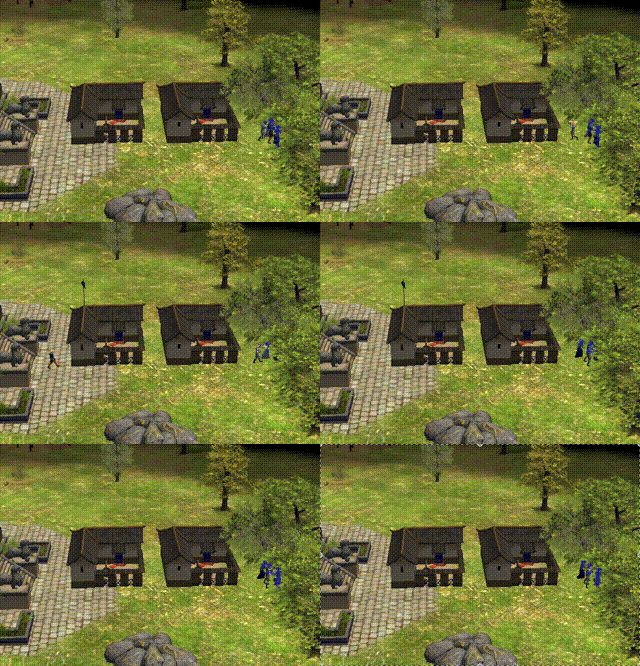
Teleportation gathering!
-
Well, looks like the Mediterranean, which is not an ocean but a sea But what I had in mind is that "Celtic regions of northern Europe", "had been constructing ships in a manner very different", "to withstand the rigors of the northern climate, the sails were of hide and the anchor cables of chain". Thus, if some "oceanic" waters (meaning, choppier, which could even appear on the usual "sea" waters if there's a storm, if eventually added) were to be considered, the different types of ship could react differently to it.
-
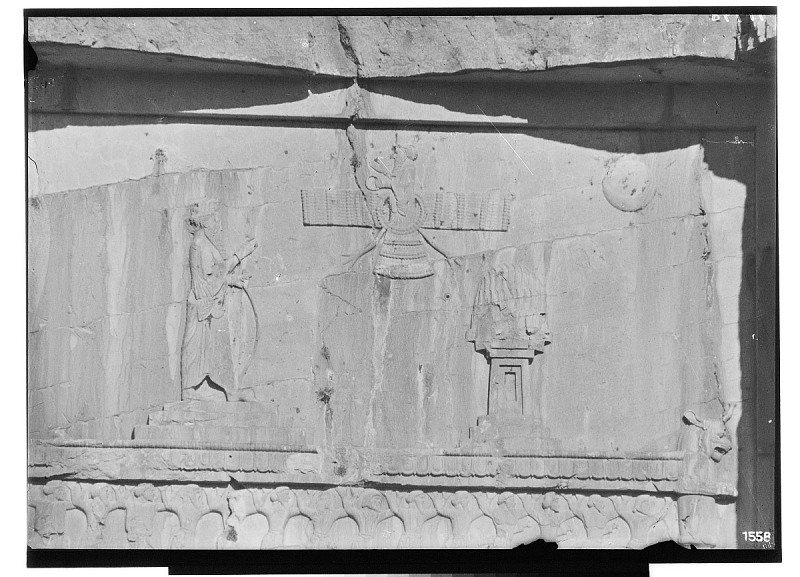
If the religion to be represented is Zoroastrianism, the fire-holder could look more like this (coinciding with the "three-stepped top and base" description given in https://www.iranicaonline.org/articles/achaemenid-religion): Sadly, it's not really known how Achaemenid temples looked like. Zoroastrian fire-holders seemed to be in the open, while, regarding some towers that were previously thought as temples, "the hypothesis positing a religious function for the tower-temples in the Urartian period is generally accepted, despite certain differences in the architectural environment of several of them; by contrast, the function of the two Achaemenid towers remains totally enigmatic. The only hypothesis that is not a matter of contention, as a result of both environment and architecture, is that of a deposit for objects, very probably of a royal and not a religious nature", from Studies on the Architecture and Archaeology of the Achaemenid Empire, by R. Dan. It is also thought that other religions were influential.
-
I be kinda sad
-
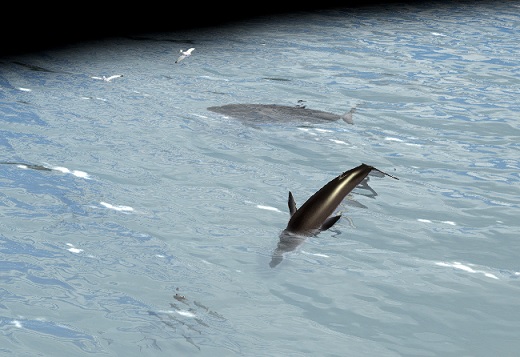
Yeah. I'm not a fan of the different fords that at least I can't differentiate by sight. On "Rivers" pedestrians can cross while ships can't, on "Gualdaquivir River" all units can. This ("Mediterranean") is not oceanic enough?
-
A proposed upgrade for Han houses: The Tower House +5 population bonus +5 vision range +1 projectile (short ranged attack added)
-
Yep! "Slave Trade" is another one of their techs/team bonuses: Effect: Allied Slaves -50% train time as long as the Scythians maintain a Market.
-
That would be hard, at most I know Schmitt has done plenty of work on the matter (https://www.iranicaonline.org/articles/scythian-language-2), but I doubt there's enough for all the words needed. But I didn't mean that, what I meant is alternatives for things like "Advanced Metallurgy", which is not clear to what it refers to, exactly. "Goldsmithing" comes from before, and many others had it, maybe I'd go with "Sophisticated Goldsmithing", referring to Stage 2 ("second half of the 6th to the first half of the 4th centuries BC") and Stage 3 ("mid-4th to 3rd centuries BC") Animal Style themes (just saying something like that would be too technical, but could be mentioned in its description). I'd call "Gorytos Bow-and-Quiver System" just "Gorytos", the rest is just part of the tech description, unnecessary for its title (at most adding "bow case"). You mention Goldsmithing as Market bonus, but in truth (from the book I mentioned) "what was traded and transported from the forest-steppe to the Greek colonies and possibly from there the Greek homeland is still an enigma, and thus any suggestion is (again) rather speculative. What is known more definitively is what was provided in return for these trade goods. Across temperate Europe and the Pontic forest-steppe and steppe, there was a growing demand for wine and Attic Greek drinking and serving equipment, including silver, gold, and black figured vessels, such as the rhyton and kylix. Nadezhda Gavrilyuk suggests that the wine trade with the inhabitants of the Pontic region, including the steppe and forest-steppe groups, was especially prolific and, as a result, highly profitable". So, wine was an import, not an export, that's why I'm not sure if to actually consider it for a tech. Regarding export speculation, slaves rank high in the time-frame of the game: https://antikmuseet.au.dk/fileadmin/www.antikmuseet.au.dk/Pontosfiler/BSS_1/BSS1_08_Gavriljuk.pdf. Honey seems to have been another export (https://www.cambridge.org/core/journals/classical-quarterly/article/abs/export-of-slaves-from-colchis/AF78278141AA9AA6877B702240B161F3), while grain is quite controversial, when comparing those links with https://www.iranicaonline.org/articles/black-sea.






-
Latest Topics
-