
All Activity
- Today
-
 Akhenatom joined the community
-
The discussion was never about its latter attested haimaz cognates not meaning some kind of settlement (are you getting confused with the þurpa discussion?), but if that was the case in Proto-Germanic times. That's why I agree with the quotes you bring up, but they are completely irrelevant to the point in question. By "early" and "late" I obviously meant in reference to the Germanic-Celtic split, bringing up the "late medieval" period is quite the misrepresentation. Your source (Brink) does address what you keep ignoring regarding Celtic by saying "in Old Celtic languages we find a related formation that demonstrates another interesting theme, namely the meaning 'love'", and as you quote, concludes his chapter with: This is exactly my point (yet again you are brushing off the actual conclusions of your own sources). He refers to one's home (one's "area and place"), this doesn't necessarily point to a type of settlement, and at no point he claims that in Proto-Germanic times it referred to anything outside one's own (as seems to happen in Gothic and later, but it's completely different in Proto-Celtic and later). I completely agree, since this is my exact argument regarding þurpa. I'm glad you brought up this point, since it's the one I was going to follow up with. Two characteristics are important to name a Phase: its "multiple dwelling" quality, and its development stage. Regarding Proto-Germanic haimaz, your source doesn't claim anything beyond that it referred to one's home, even if that could have indirectly referred (only to) one's own settlement, and we both agree it can be of any size. Regarding Proto-Germanic þurpa, I've already proven its "multiple dwelling" quality using your own sources, and we both agree that it's small. Simply put: no. Urban development is the actual point of Phase names, and you know it, that's why you are pre-emptively trying to dismiss this obvious conclusion supporting what I say (as you've tried to do before). You have reached, in good part by yourself, the conclusion that þurpa is more appropriate than haimaz for Phase I, according to each of both important characteristics mentioned (being multiple dwellings, but a few).
-
 Augustico joined the community
-
 It was supposed to also include the worldmap data for selecting the digital elevaiton area for terrain building from scratch. It also removes (now, after bug fixing) teh not needed part of the libraries so the exe goes down from 142 MB to 98 MB for mercator and for post-Atlas from 116 to 97 MB. For me the startup process of the exe files with the "onefile" option is still way too long. This is due to the need to unpack everything during each startup. I will instead now change that to "onedir" i.e. an exe plus a folder with runtime libs. These must stay next to each other at all times.
-

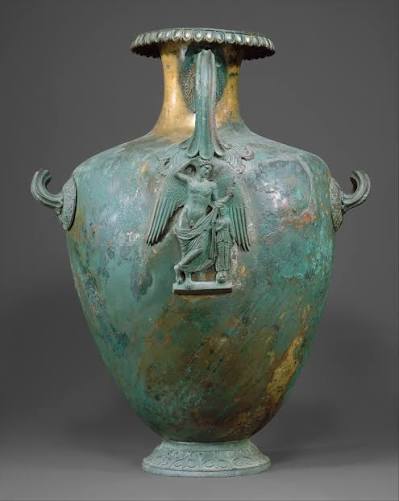
Ancient Greek pottery
Nicolaus_von_Kues replied to nifa's topic in Eyecandy, custom projects and misc.
Could we have bronze elements as well?
-
I believe I have defended my position several times regarding my suggestion. Cognates derived from “haimaz” that mean “village” or “settlement” have the advantage of being supported by the Gothic language, which is the attested language chronologically closest to Proto-Germanic. There are also clear examples of their use to mean “villages” and “hamlets” in Old English, Old High German and Old Frankish. Finally, place names ending in -heim, -hem, -ham, etc., are among the oldest Germanic place names, representing one of the earliest chronological layers of naming. But since my arguments have already been lost amid the recent debates, I will present a fresh set of arguments. To do so, I will begin by quoting at length from a scholar I already mentioned, Stefan Brink. In 1995, he wrote a chapter titled “Home: The Term and the Concept from a Linguistic and Settlement-Historical Viewpoint.” While it is not an exhaustive compilation of all the evidence, since it focuses on his extensive knowledge of the Scandinavian and Anglo-Saxon worlds, it serves as a very solid foundation from which to begin. 1. A collective meaning is part of the inherited Germanic evidence The modern meaning of home should not be projected backwards as though it exhausted the historical semantic range of “haimaz”. As Brink points out, ancient related Germanic words could refer not only to an individual dwelling or a farm, but also to an estate, a group of dwellings, or a village. This makes “haimaz” a plausible term for a primitive residential community rather than simply a private home. In this introductory excerpt from his article, he provides a few examples and makes it clear that the meaning of a collective dwelling is entirely valid: 2. Gothic and Lithuanian provide direct and ancient evidence of the meaning of the word “village” The Gothic evidence is especially important because it is considerably earlier than most of the surviving West and North Germanic material. Wulfila’s use of haims to translate Greek kōmē, “village” or “hamlet”, demonstrates that the collective settlement meaning was already established in a fourth-century Germanic language. The opposition between plural haimos, “countryside”, and polis, “town”, also places the word within a clearly rural settlement system. Stefan Brink considers these meanings derived from Gothic to be consistent and convincing. He even notes the similarities with two loanwords found in Lithuanian that have virtually the same meaning as in Gothic, conveying both the sense of a village and that of the countryside: 3. The toponymic evidence confirms that the word could designate an inhabited community The place-name evidence independently supports the collective use found in Gothic and Old English. Names in -ham are interpreted not only as references to farms or estates, but also to hamlets, villages and the territories occupied by particular communities. Formations such as Amersham and Gillingham show that the element could identify the settlement or district associated with a person and their followers, rather than merely that person’s individual home: 4. Specialists generally reconstruct an original meaning centred on settlement The Scandinavian material is particularly valuable because it preserves both the territorial and residential dimensions of the word. Despite continued debate over the precise scale of the referent, Brink observes that most scholars regard “settlement” as the original meaning of -he(i)m. The underlying concept is therefore not simply a house, but the place where a person or community has settled: 5. The settlement use is demonstrably ancient The collective or territorial interpretation cannot be dismissed as a late medieval development. Brink identifies a group of very old Scandinavian -he(i)m names that were probably formed around the beginning of the Common Era, including one securely dated to approximately AD 200. This places the use of haimaz and its descendants as settlement names within the chronological horizon relevant to early Germanic societies: 6. The word could include both the habitation and its surrounding resources Brink ultimately argues that the traditional opposition between “habitation” and “settlement district” is too rigid. His proposed meaning, “settlement or settlements with an area of resources”, accounts for both an individual farm and a wider community or territory. This is highly relevant to an early Germanic “village”, which need not have consisted of tightly clustered buildings but could instead have been a socially coherent settlement together with its fields, pastures, woodland and other resources, exactly what we have in the game: 7. The semantic core is an inhabited territory, not merely a building Brink’s conclusion brings the different strands of evidence together. The essential meaning of haimaz and its cognates was the place and surrounding area where a person or group lived. Depending on scale and context, this could be a farm, settlement, village, community territory, or settlement district. This semantic flexibility does not weaken haimaz as a phase name. On the contrary, it makes it particularly well suited to an early form of village whose identity rested on shared habitation, territory and belonging rather than on urban density. This concludes the excerpts from the chapter written by Stefan Brink. I will also highlight some other points that have already been mentioned. Here an excerpt of the description from the Deutsches Ortsnamenbuch (2017) about -heim place-names: I will also add two excerpts I already posted from the digital portal for place-name research in Switzerland: Another excerpt, this time from the German National Atlas: Taken together, these sources point to the same conclusion. Place names derived from haimaz belong to one of the oldest settlement-naming traditions of the Germanic world and are consistently associated with villages, hamlets, estates, and inhabited communities rather than isolated dwellings. In the Old High German sphere, -heim names are generally regarded as belonging to the earliest layers of settlement nomenclature, appearing at least during the Migration Period and possibly even earlier. The continuity of this evidence across Germany, Switzerland, and the wider Germanic-speaking world strongly supports the interpretation of haimaz as a term connected with settlement and community from a very early date. Similarly, Richard Jones, David N. Parsons, and Paul Cullen take the same position regarding England: place names related to the word “ham” date back to the earliest period: Albert Hugh Smith himself believed that place names derived from “ham” were part of the oldest layer of place names in England: Finally, there is also Old Frankish, which provides fairly strong evidence that words derived from haim often had a collective meaning. In addition to the fact that many linguists suspect this is the origin of the French word “hameau”, there is also ample evidence derived from an analysis of legal texts from the Frankish Empire. Maurits Gysseling’s analysis of the Germanic vocabulary preserved in the Lex Salica provides substantial evidence from the Frankish linguistic area. His reconstruction of haima- and his analyses of anði-haim-ja- and haima-þeuða- consistently support a collective sense equivalent to “village”. In several independent contexts, haima- clearly refers to an organized rural community rather than merely to a private household. This makes the collective meaning part of the Frankish evidence itself, not a later interpretation inferred solely from place names. To summarize, the strength of the argument does not rest on a single piece of evidence, but on the convergence of multiple independent lines of evidence, all pointing in the same direction: Taken together, the Gothic, Old English, Frankish, Baltic, Germanic, toponymic, and settlement-historical evidence converges on the same conclusion: haimaz was not simply a word used exclusively to refer to a house or a private residence. Across both language and place-name evidence, it consistently appears as a term that could denote a settlement, village, inhabited territory, or organized community. Moreover, the forms derived from it belong to some of the oldest naming traditions in the Germanic world, making haimaz not only linguistically defensible, but arguably one of the best-attested and most historically appropriate choices available.
-
Thanks for putting this survey together, @Atrik! Today we had the chance to play a 4v4 TG. The general impression was that cavalry was way too slow. I would try reducing it to 7.5/8%, half of what it is now, or 10% at most. If not, maybe get rid of acceleration (but i guess that would be a bigger change ) As for the other changes, it's difficult to draw any conclusions from just one match. I played as the Gauls and tried going for fanatics. My impression was that they were still strong (which is nice for the champion unit). However, perhaps the damage reduction is a bit too much, and we could try 10% instead. Regarding armor and HP, I think these changes are positive and might be the way to prevent fanatics from being permanently banned. I hope we can keep testing more games
-
If the mod has ignorecompatibilitychecks=true in mod.json, than nobody else needs it
-
1; accidentally voted as IDK, meant to vote yes 2, 3, and 4; yes to all, especially naked fanatics. They're probably the most powerful from the list. Immortals I'm less inclined to agree but then again when I play persians, which is rare already, i just amass a ton of axemen, spearmen, and archers. Not that that makes it an easy win. 5; Voted no, kind of feels a bit cheesy? Like IDK why, just a bit worried. 6; Yes, already too expensive for what it is, and it doesn't have any way to shoot arrows when garrisoned and doesn't expand territory. Will have to see whether the price is reduced enough though. 7; No; I agree with the change to aura range, but not to resistance changes. 8; Yes; axemen should always cost slightly less metal than a sword counterpart. 9; Overall yes, but disagree on the range reduction; Leave range as is, decrease bonus damage from 3 to 2, cost change is good. 10; Yes; foundations are too easy to destroy. 11; Yes; Cavalry does feel too fast, though maybe just a 10% instead of 15%? Could try and balance it on a civ by civ basis, though that would require more work. Eg, good cav civs have less of a nerf, like persians or gauls. Less cavalry centric civs like rome/sparta have a larger nerf. Mostly to try and give them a bit more flavour between different civs. 12; Yes; Champion cav can be way too strong (glares at persians), a nerf to their health would make them less overpowered (in general, not just persians). 13; Yes; Just brings wall towers more in line with how walls work in general. 14; Hesitant yes; I haven't played too much with catafalques, but when I have, especially when you have a high number of them, some of them can make things snowball quickly. 15; Indifferent yes; Isn't that more of a bug fix?
-
 That is a very smart approach, @Asher! Reusing the existing tribute code for the resource transfer and adapting a standard scenario trigger to spawn the allied units sounds like a much easier way to build a first prototype. Also, regarding your earlier ideas: making the Embassy act as a "lifeline" so an ally is only defeated once all their critical units/structures AND all Embassies are destroyed makes the system much cleaner—and it allows the host to simply send tribute resources to revive them! Having civilians automatically flee toward the nearest Embassy, Civic Center, or Fortress when a major building falls would also add amazing atmosphere and realism to sieges. Mentioning the existing survivors-mod is a huge help too! Looking at how that mod handles player defeat and resource/unit transfers could give you (and @Grautvornix) a great starting template for the scripts. Between your Embassy structure setup and @Grautvornix's ideas, we already have a great roadmap for a V1 test mod. Please take your time, and let me know whenever you would like to brainstorm further or test an early version! That is a very smart approach, @Asher! Reusing the existing tribute code for the resource transfer and adapting a standard scenario trigger to spawn the allied units sounds like a much easier way to build a first prototype. Also, regarding your earlier ideas: making the Embassy act as a "lifeline" so an ally is only defeated once all their critical units/structures AND all Embassies are destroyed makes the system much cleaner—and it allows the host to simply send tribute resources to revive them! Having civilians automatically flee toward the nearest Embassy, Civic Center, or Fortress when a major building falls would also add amazing atmosphere and realism to sieges. Mentioning the existing survivors-mod is a huge help too! Looking at how that mod handles player defeat and resource/unit transfers could give you (and @Grautvornix) a great starting template for the scripts. Between your Embassy structure setup and @Grautvornix's ideas, we already have a great roadmap for a V1 test mod. Please take your time, and let me know whenever you would like to brainstorm further or test an early version!
-
 A little, but probably not enough to get this working. Though, it may not be that hard, because you can already send tribute; if there is already a button to do that, then we could probably copy the code and use that, and, there is probably a trigger script or thing that we could modify to do the units. Maybe it wouldn't be that hard
-
Good plan! The intent of post-Atlas was to allow batch editing of map packages (well still editing one-by-one but you can step through the maps) and outputting everything into a mod.
-
Thank you very much for offering to help, @Grautvornix! To be completely honest, I have only been playing 0 A.D. for two weeks, so I do not have any experience coding for the game yet—my strengths are mainly game design, ideas, and playtesting. Having you set up the Embassy structure (and confirming that the survival rule already works in standard Conquest mode!) would already be a huge step forward for a first test version. @Asher, do you happen to have any experience with JavaScript scripting or triggers in 0 A.D. for the "Restore Fallen Ally" option (and @Grautvornix's resource transfer idea)? If not, maybe we could ask for a bit of help in the modding section of the forum, or I can also try to get some help drafting a basic script for us to test! Thank you very much for offering to help, @Grautvornix! To be completely honest, I have only been playing 0 A.D. for two weeks, so I do not have any experience coding for the game yet—my strengths are mainly game design, ideas, and playtesting. Having you set up the Embassy structure (and confirming that the survival rule already works in standard Conquest mode!) would already be a huge step forward for a first test version. @Asher, do you happen to have any experience with JavaScript scripting or triggers in 0 A.D. for the "Restore Fallen Ally" option (and @Grautvornix's resource transfer idea)? If not, maybe we could ask for a bit of help in the modding section of the forum, or I can also try to get some help drafting a basic script for us to test!
-
I'm not really that great at coding for 0 A.D., but I'd be willing to help. @Alber 0A.D, do you have experience with coding in 0 A.D.? I think I could help setup the embassy structure (unless someone else wants to), and the survival rule should already work (unless you are doing a different conquest mode). I am not sure how to do the Restore Fallen Ally, we would probably need a script for that
-
Atlas-Tools, a package combining Mercator and post-Atlas
Asher replied to Grautvornix's topic in Scenario Design/Map making
Is the .spec file like the build file, so everytime you build it, it runs that? -
Oh, you are right, of course! The reason I asked Claude to provide spec files was that I wanted ensure all documents and the additonal data set for mercator's world map (forms a possible basis for selecting terrain tiles from public DEM sources) are included. the result is ratehr complex and unpleasant to read while your script is straightforward and understandable. I prefer yours actually.
-
That is a very good idea, @Grautvornix! Transferring the defeated ally's remaining resources to their surviving ally fits the theme remarkably well. It also creates a great strategic synergy with @Asher's revival concept: those inherited resources can directly help the surviving player afford the high cost of restoring their ally at the Embassy later. We could even make it so that you inherit 100% of their resources if you already have an Embassy built (acting as a secure diplomatic treasury), or 50% without one.
-
Thanks a lot, @Grautvornix! Building a test mod around this with you and @Asher would be awesome! You make a great point about allied garrisoning already existing in the base game—turning that into a real, structured comeback mechanic is exactly what we are aiming for. If you're up for prototyping a mod for testing, we could start with a simple V1 to see how fun it feels in-game before adding complex rules: The Embassy building (unlocked in Town Phase, using an existing building model as a placeholder). Survival rule: As long as at least 1 allied citizen is garrisoned inside, that faction isn't defeated. "Restore Fallen Ally" option: A hefty flat resource cost (e.g., 500 food/wood/stone/metal) at the Embassy to spawn 4–5 allied citizens if they were eliminated. Mechanics like continuous resource upkeep, healer requirements, or XP gain could always be added later in a V2 once the core loop works. Let me know how I can help with the game design or playtesting!
-
Hi, I've known about 0ad for a long time, but I'm still a total beginner when it comes to actually playing the game. I play a little every few months—usually as Christmas approaches. Are there actually any pre-made Kamania maps out there that I can download and play? with best
-
Hi, I'd like to test ModernGUI R28. Right now, I'm only playing single-player against the AI. What will it be like later in online mode? Will all players need the same mod for it to work? with best
-
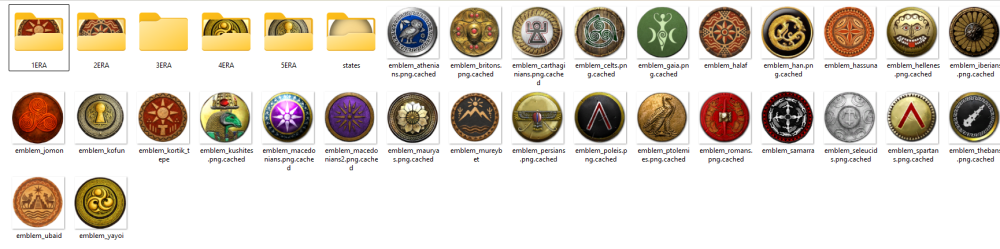
New cultures are already being implemented into World Rising! We're expanding our world even further, introducing new civilizations, buildings, units, and unique historical features. Each culture is being carefully developed with attention to historical detail, aiming to deliver an increasingly rich, immersive, and diverse gameplay experience. The world of World Rising continues to grow, and many exciting new features are still to come!
-
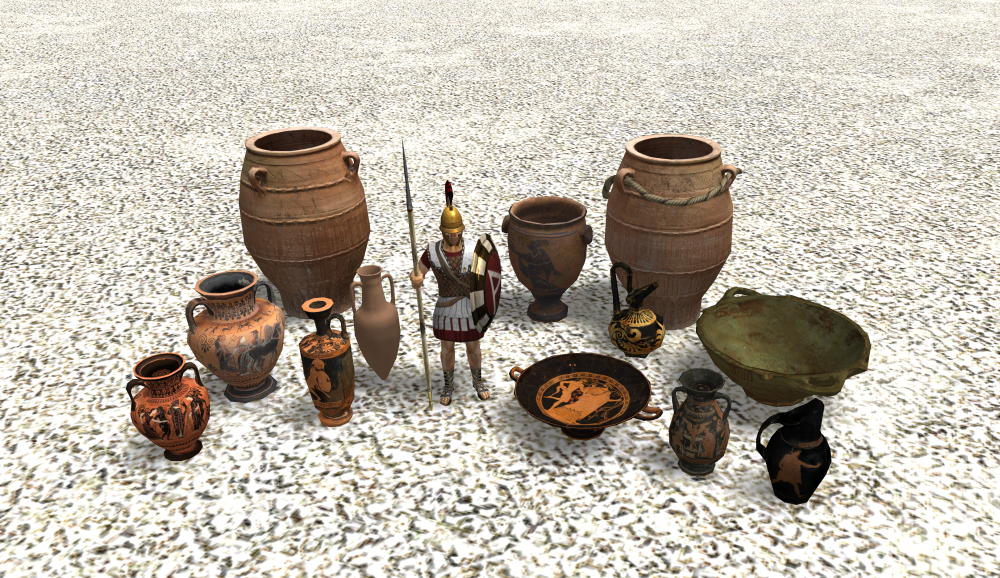
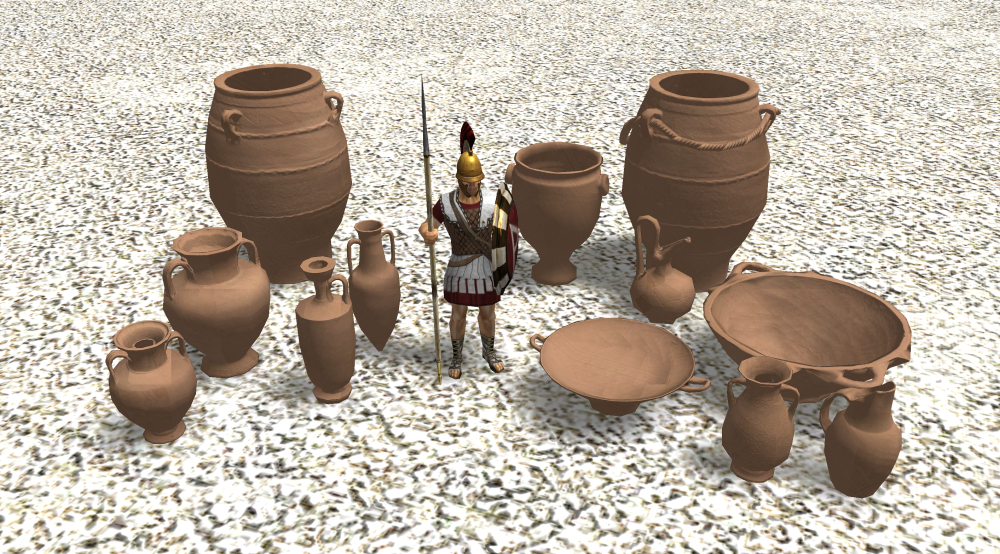
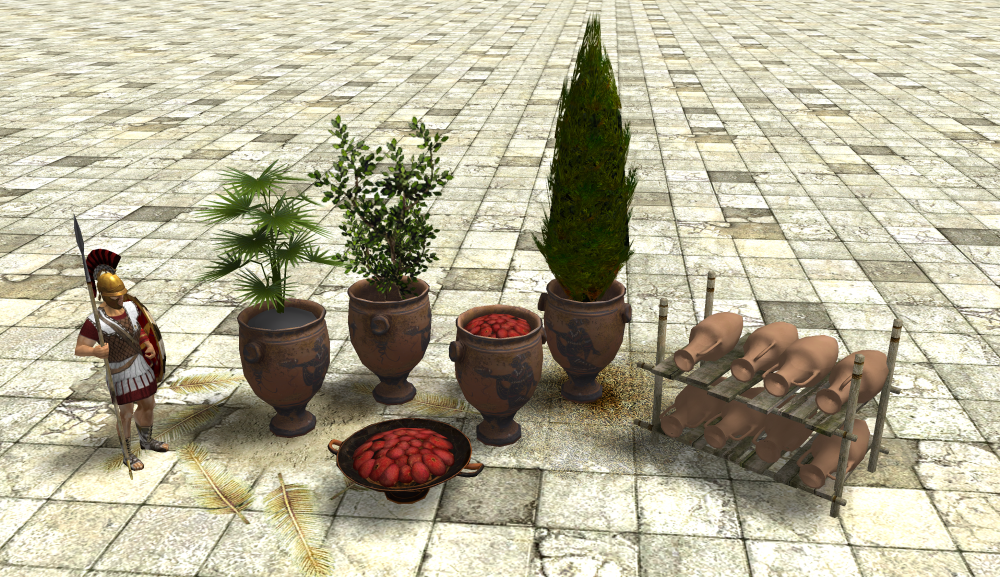
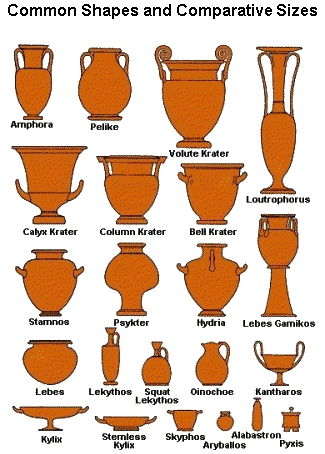
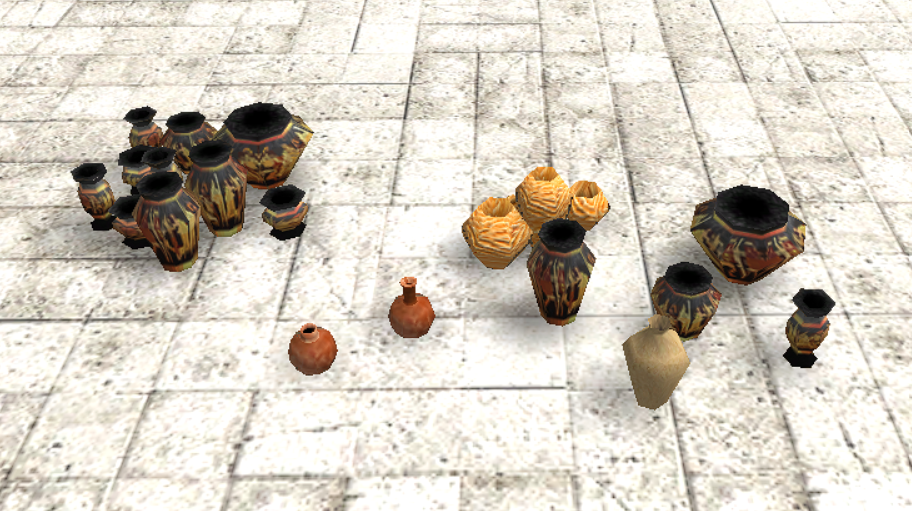
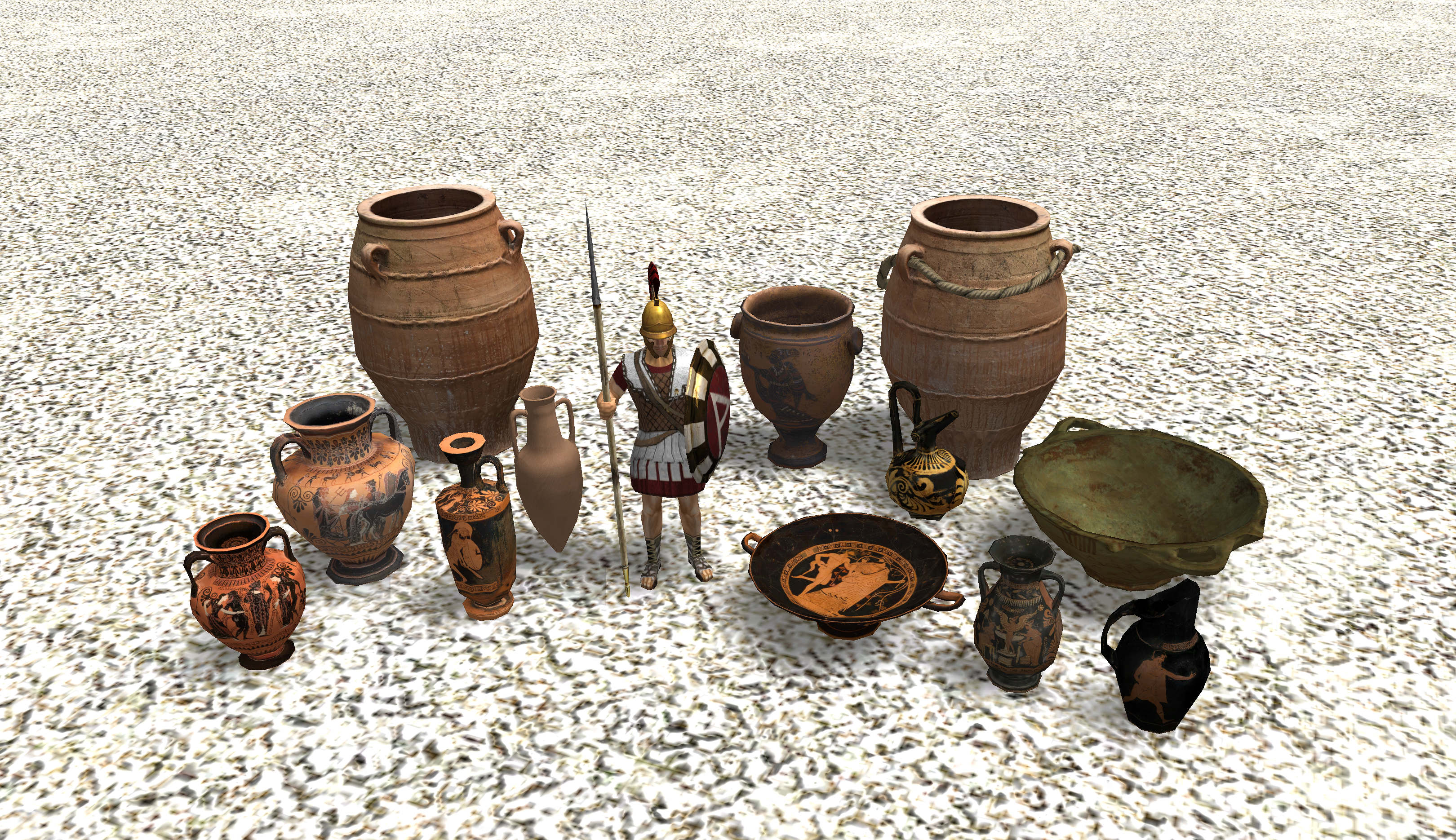
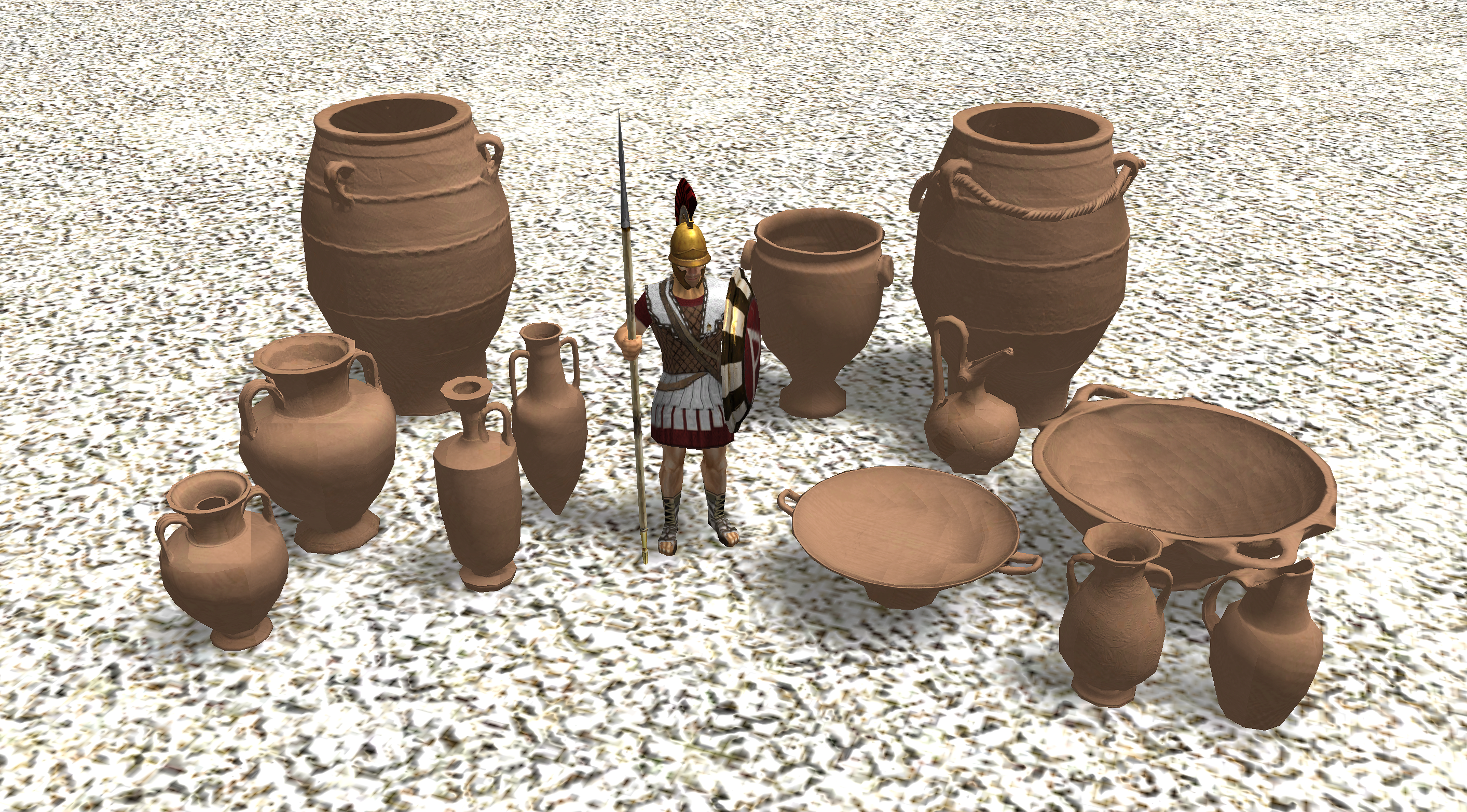
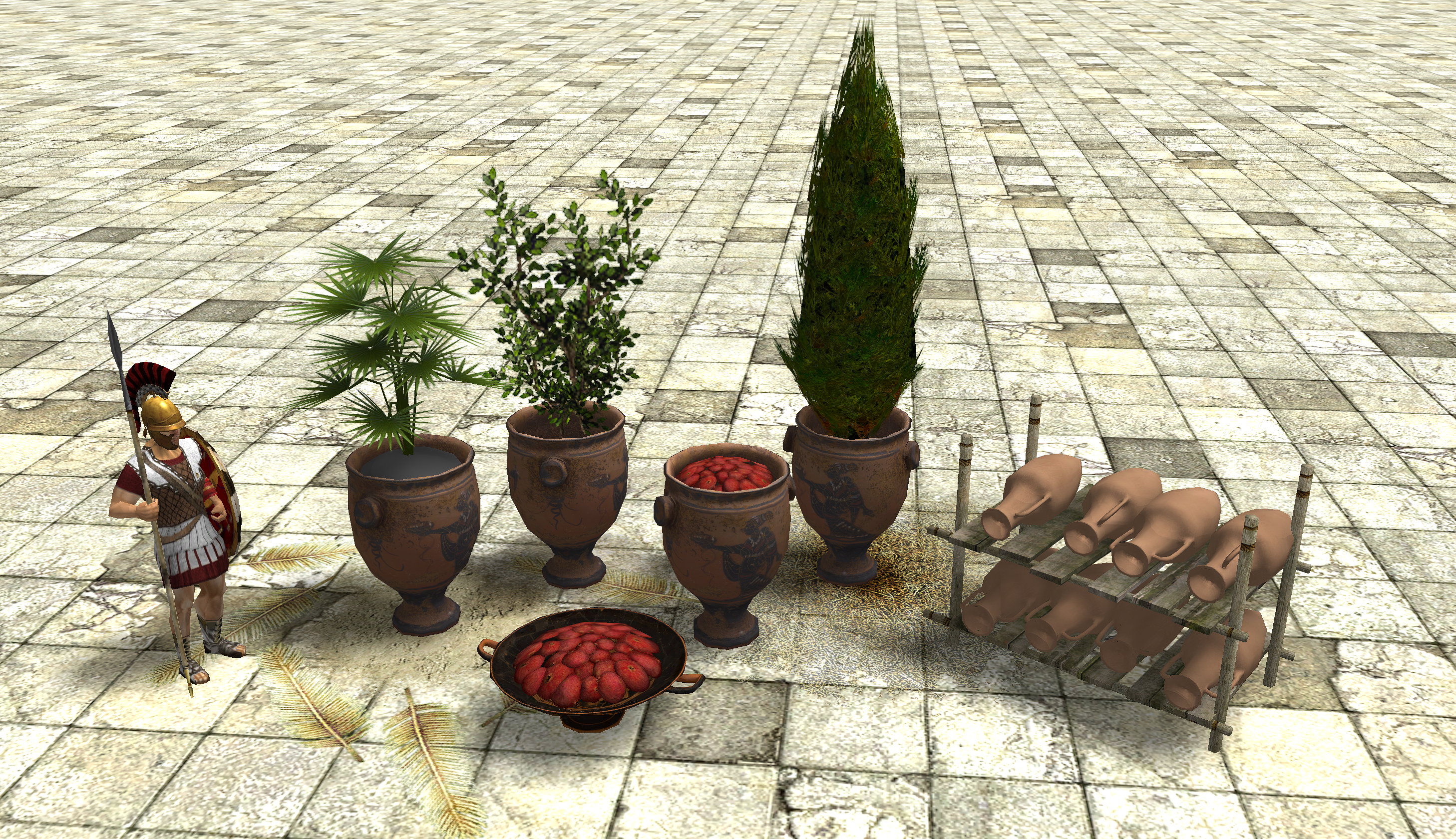
I've been working on including some ancient greek ceramics to the game, that I found and modified to work for 0 A.D. Everything is baked on the same texture. I'll add a mod for anybody wishing to test it. This is some of the current pottery in the game: We could use them for eyecandy objects with food, trees, plants, on shelfes etc: Normal Map: Some common pottery shapes as reference: Here are the sources for the highpolys. Except for the pithos (the large one) which uses CC-BY, all models are licenced under CC0. We might have to give attribution to the author or I would remodel it myself. I still need to make a procedural material to bake a proper diffuse for the terracotta amphora. The actors also need some editing. If there is an interest I'm thinking about adding more products to fill into it, which could be pomegranate, figs, pears, grapes, olives, onions, fish, grain, wine, water, dirt for the plants etc. heleprops.zip
-
 I'm going to test an existing mod to observe its behavior; indeed, I've noticed that the Atlas Tools Kit seems designed for mods built with the most recent versions. So I'd like to check whether it still works with an older mod or if it needs adjustments. I also have my own mod (made up of 20 files); @Grautvornix how will the output process work with my mod ?
-
Atlas-Tools, a package combining Mercator and post-Atlas
Asher replied to Grautvornix's topic in Scenario Design/Map making
I saw that you cannot use the -w flag with using the .spec files @Grautvornix, so I think just building from the .py files will be ok. Was there a specific reason you did the .spec files? Here is an update version of the build script: build-1.0.1.zip -
Cool! But does that script work? (shouldn't it be e.g. "pyinstaller mercator.spec" instead of "pyinstaller mercator.py" ?) Embarassingly stupid remark, apologies for that!. Now that is a challenge! No, I don't have any yet, possibly something like the attached (still ugly with the tongue hanging out)

-
Atlas-Tools, a package combining Mercator and post-Atlas
Asher replied to Grautvornix's topic in Scenario Design/Map making
build.zip (remove --onefile from build script so it doesn't take as long to run the program) -
@Alber 0A.D @AsherI like your proposals! If you have options to recover from an almost total defeat, this addds a nice twist to an otherwise straightforward win/loss result. Part of it seems possible already I keep seeing single ally's units garrisoning into my CC etc. It is just not a strategy I was using so far. Wonder if we can build that into a mod for testing...










-
Latest Topics
-