
All Activity
- Today
-
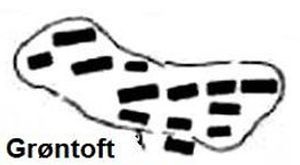
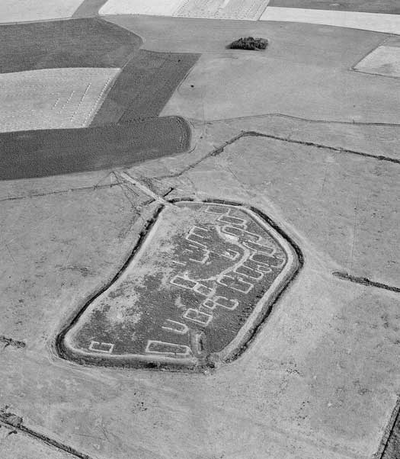
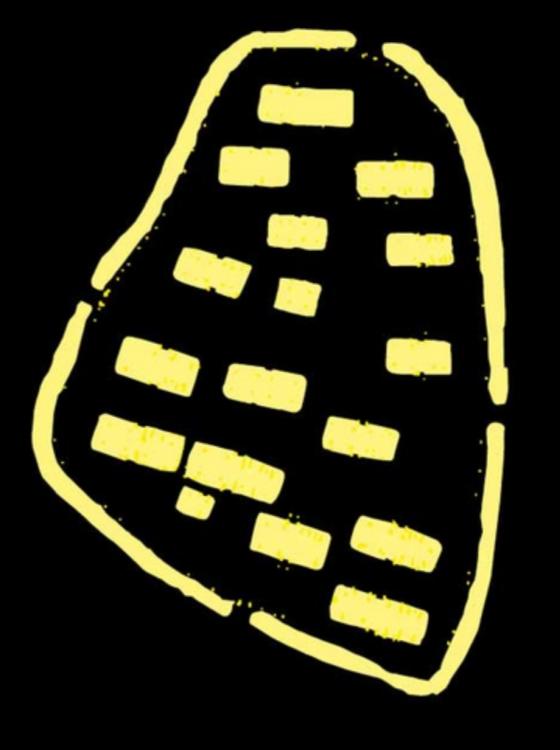
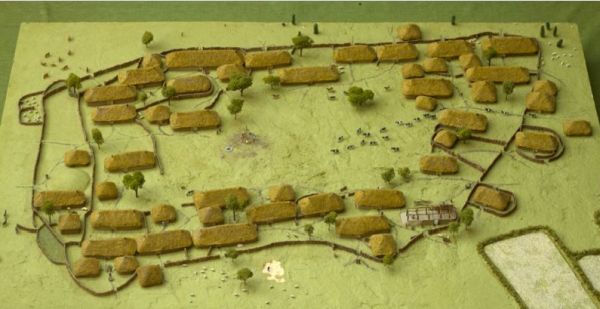
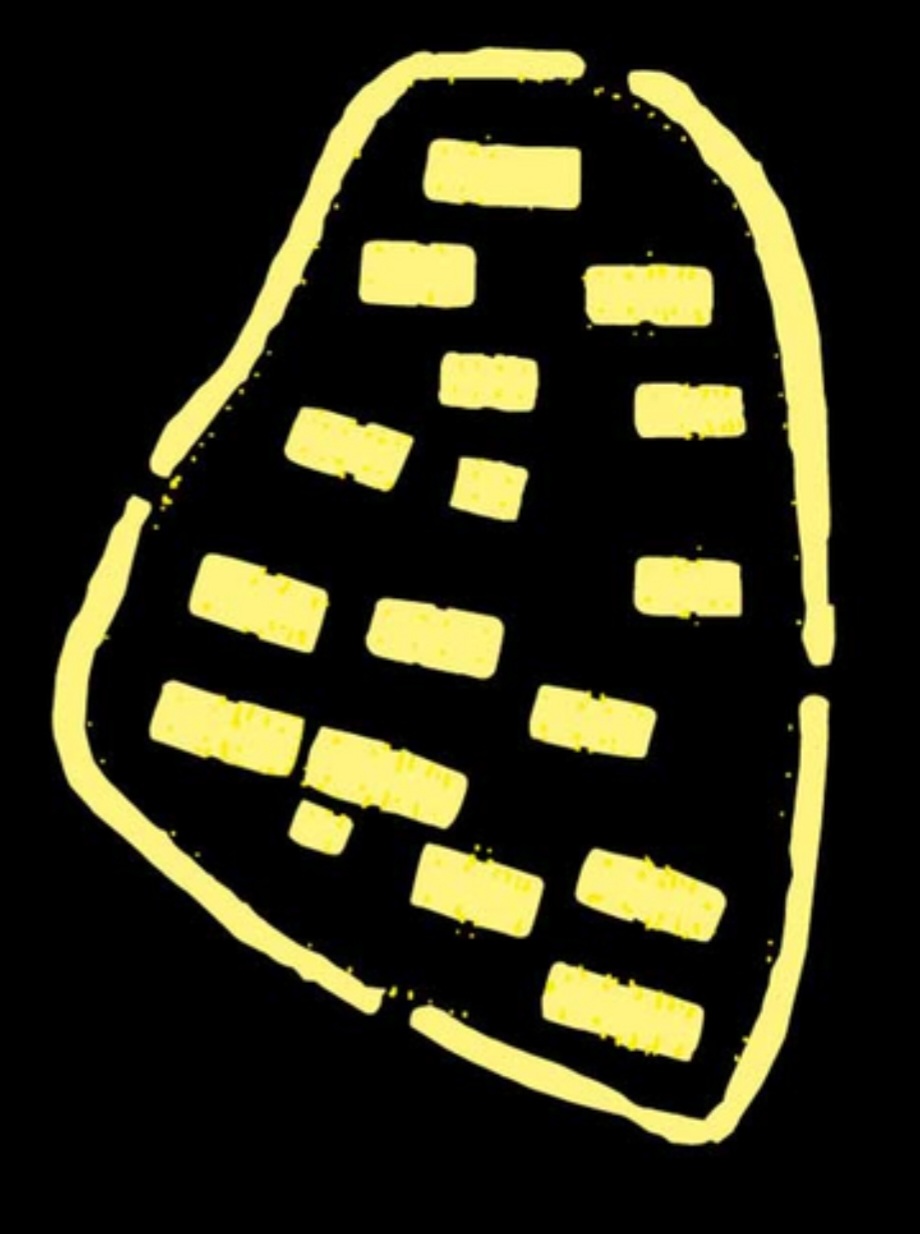
Ground plan for the village of Grøntoft in its last year. Grøntoft existed from around 450 to 150 BC. For most of the period it comprised of 12-20 buildings and accommodated around 50 people and 70-80 animals: Aerial photo of the fortified settlement in Borremose, Himmerland. Borremose is known for and identified with a former fortified settlement dating from the Pre-Roman Iron Age (400-100 BC). It was constructed during the 4th century BC, as one of the largest structures of its kind in Northern Europe, but was already abandoned during the 2nd century BC, when the houses were burned down and the whole site levelled to the ground. A plan showing the fortified settlement Lyngsmose, Ringkøbing. The rectangular houses are protected by a moat. There had been 15 long houses and two small houses. It is believed that around 8-10 people lived in each house, which means that there were around 120-150 people living in the village. The settlement was occupied between the 3rd century BC and the 1st century AD. Reconstruction of the Iron Age village of Hodde, which was located between Varde and Grindsted. As can be seen, Hodde was somewhat larger than Grøntoft. At its greatest extent it included 22 farms, blacksmiths and potters workshops. The village Hodde existed in the last century before the birth of Christ. It was a large village; at its peak, it included 27 farms with 53 houses and 200 to 300 inhabitants. Each farm was surrounded by a fence and the whole village was surrounded by a palisade as high as a person. But thanks for the effort.
-
I do check my info and make an effort I shouldn’t even do because I’m really not interested in arguing if the accepted Proto-Germanic reconstruction is wrong, which it isn’t, and what you have to check is your tone. Re-read my comments and realise that it’s not me stating you are “defending something weird that nobody talks about”, that’s you when for example called BS on the opinions I quoted from experts in the field. “Once again” it is you who acts like a condescending 12-year-old brat that feels the disgusting need to make pseudo-patronising “Brandolini's law” comments. It's not my fault if you can’t check info properly, just go to https://archive.org/details/diealthochdeutsc01steiuoft/page/n7/mode/2up, the column header meanings are on page 1. From there (and volume 3) you get the Sg. 911 and Sg. 242, which are dated from the very late 8th century (around 790 AD) and the 8th-11th centuries, respectively, as can be checked in https://www.e-codices.unifr.ch. It took me 20 minutes, no library needed (perfect place to make a condescending comment, I know, but lets have some class, shall we?). I only missed giving more span to the latter, because, again, I really don’t give a darn about spending time questioning the accepted reconstruction. I’m just giving evidence on why things are how they are, while you keep digressing towards centuries apart changes and ignoring any source that contradicts you regarding what matters: Proto-Germanic, from 500 BC to 1 BC. The only relevant thing is if haimaz is better or not for what is wanted. Nothing else. Luckily, I think I found exactly what’s needed: https://folksprak.org/common/material/pdf/A-Grammar-of-Proto-Germanic.pdf, which states that the Germans did not form villages but rather lived in isolated homesteads. Old Norse heimr, Old English hām and Old High German heim mean house or home, while Gothic uses haimos (only appearing in accusative plural) for village, and translates agrós 'land' to þaurp 'land, lived-on property', like Old Norse þorp 'farm, estate'. In West Germanic it means 'village', as in Old English þorp, Old High German dorf. In Gothic weihs 'village' also translates agrós. This is exactly what I meant with the demographic change, þurpą means what we need because there were no such things as proper villages, and both it and wīhsą seem to refer to whatever was there, call it land, property, farm, estate, with surely an extended family or more, and in the eyes of the Romans. I don’t see how any of them would be smaller or less appropriate than haimaz (taking from ON, OE and OHG). All this is exactly what the preferential reconstructions (are ordered entries important or not? Or is it just cherry-picking?) from the PGmc dictionary are telling us: haimaz is “house” first, “home” second, and “village” last, for þurpą the order is “village, settlement”, “gathering of people, crowd”, and “cleared land”, and for wīhsą it’s just “village, settlement”. All fits perfectly. If one travels in time it will look like a big farm or estate, conceptually it was the closest you could get to a village. They were not thinking in Phase I, II and III. And, as I said before, some branches kept it literal, while others kept the concept (which is what matters), and depending on each word. You are not going to convince me that the dictionary is wrong because, considering the source I cited and all the methodologies used that go way beyond your knowledge, it just isn't. If you have a problem with that, just take it to the ones that put it together, and use whatever word you want, I have better things to do honestly.
-
I was recently calculating whats a better investment for food trickle, a ice house or a farmstead and cows garrisoned. ICE HOUSE (Limit: 5) Base building: Cost: 100 stone, 100 wood Build time: 60 s Trickle: 1 food / 2 s (0.5 food/s) Aqueduct upgrade: Cost: 300 stone, 300 wood Research: 40 s Trickle: 2 food / 2 s (1.0 food/s) 5 ICE HOUSES (max): 5 × (100 stone + 100 wood) = 500 stone, 500 wood 1 × (300 stone + 300 wood) = 300 stone, 300 wood Total resources: 1600 Total trickle: 5 food/s Cost per 1 food/s: 1600 / 5 = 320 resources CORRAL + COWS (Limit: 50 cows) Corral: Cost: 100 wood Build time: 50 s Capacity: 8 cows Cows: Cost: 150 food Produce: 60 s Trickle: 3 food / 3 s (1.0 food/s) 7 CORRALS + 50 COWS (max cows): 7 × 100 wood = 700 wood 50 × 150 food = 7500 food Total resources: 8200 Total trickle: 50 food/s Cost per 1 food/s: 8200 / 50 = 164 resources Summary: Ice House: 320 resources per 1 food/s Corral + Cows: 164 resources per 1 food/s Corrals win by far. I think the ice houses should be better considering they are a civ specialty.
-
how fixed the issue?
-
@user1 My lobby name: roothopper Offender: Zyuba They left the game as I was following up on my rush and destroying their base. I even went to the lobby and pinged them to give them a chance to return and resign, but they never did. commands.txt
-
Iterated:
-

Mythos_Ruler's Playlist
Gurken Khan replied to Mythos_Ruler's topic in Introductions & Off-Topic Discussion
Where's haimaz, Johnny? -
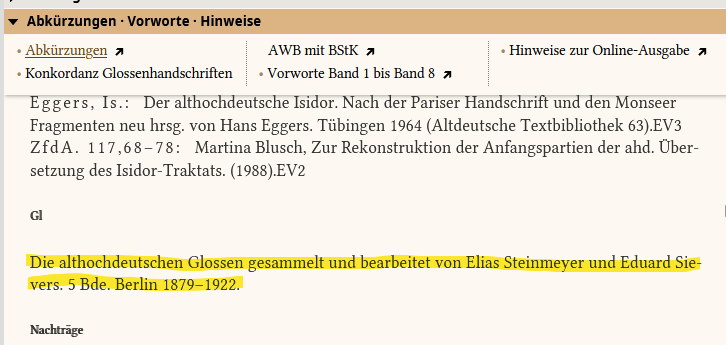
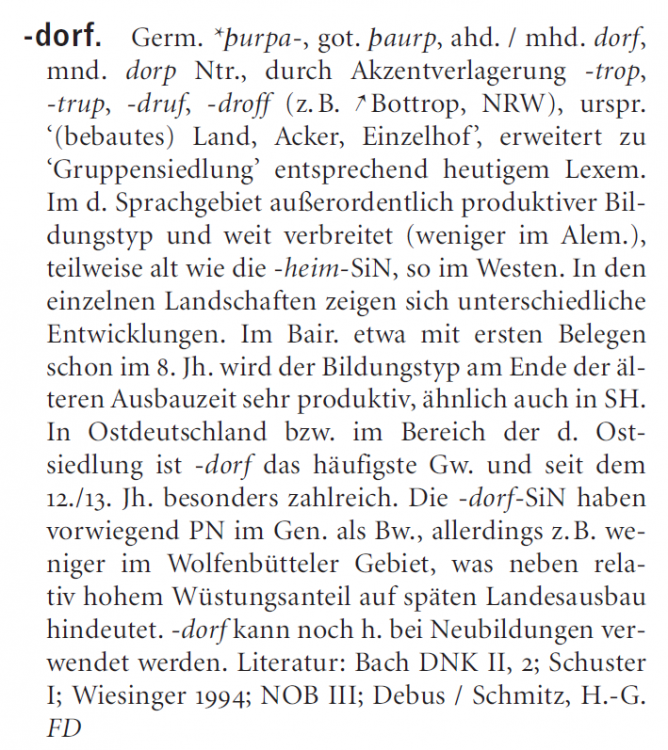
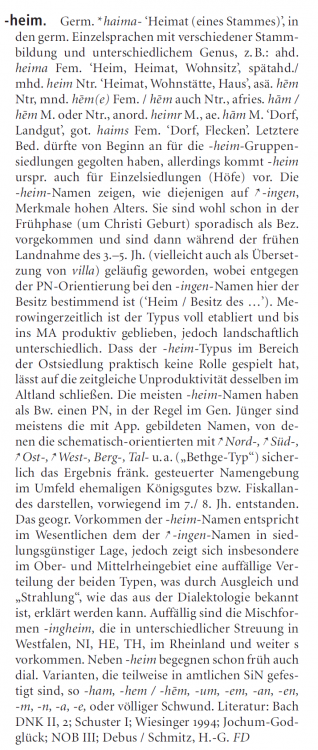
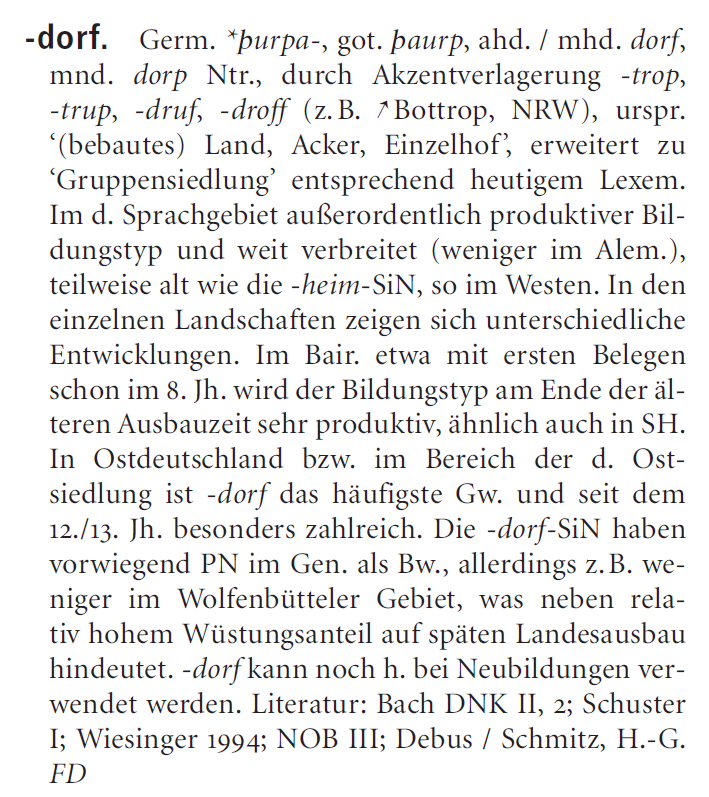
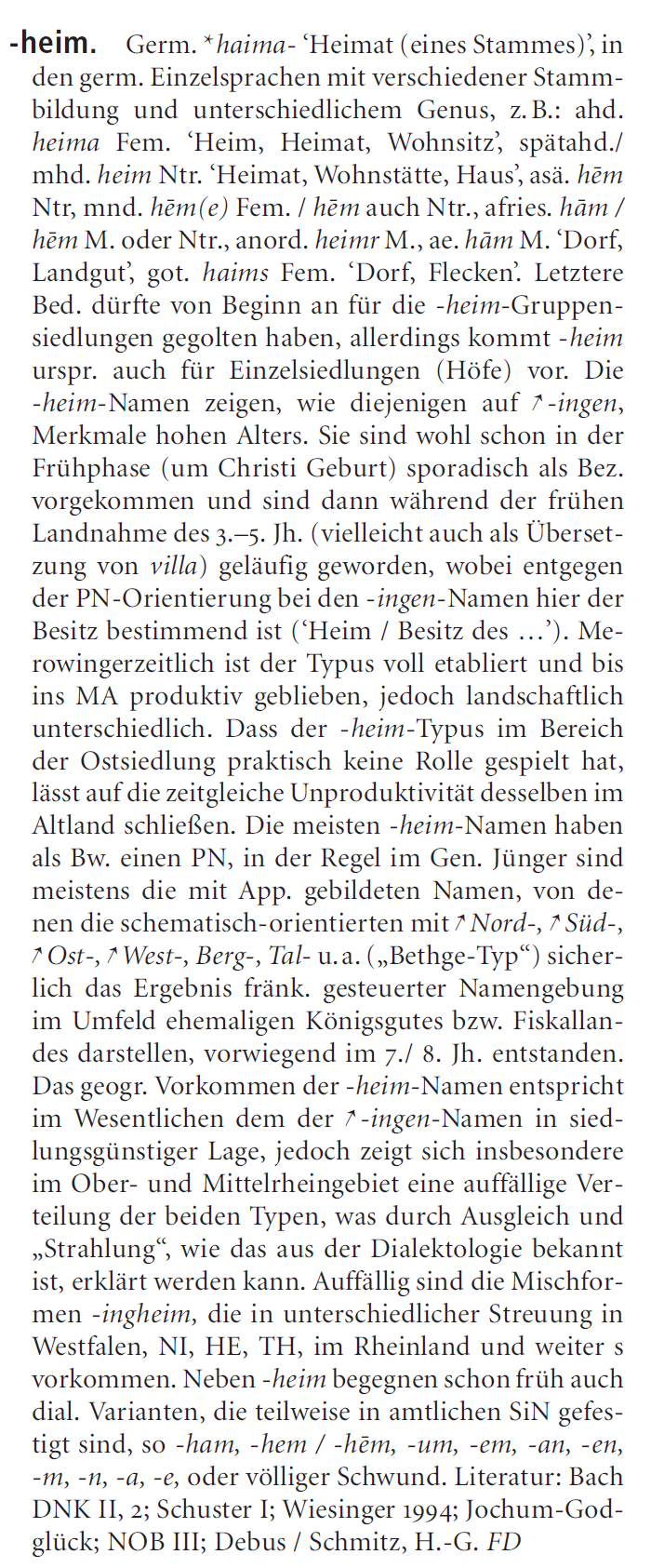
You don't seem to understand the abbreviation. Gl stands for Die althochdeutschen Glossen gesammelt und bearbeitet von Elias Steinmeyer und Eduard Sievers. 5 Bde. Berlin 1879–1922. For example Gl 1,242,35 means Volume 1 page 242, line 35... So once again you are arguing without knowing and without checking your info. Definition 1 uses Gl 1,242,35 which is the "Codex Sangallensis 911" from the 8th century AD. Definition 2 uses Gl 3,16,51 which is the "Codex Sangallensis 242" dated between the 9th to 10th century AD. Definition 2 uses Gl 3,209,19 which is from a version of the Summarium Heinrici dated to the 11th century AD. It should be noted that I had to go to the library and consult several encyclopedias to find these references. I would really appreciate it if you would make an effort before arguing from now on. It is important to understand that the "Althochdeutsches Wörterbuch" dictionary has a strict classification system and that the order of definitions for the same word follows a precise logic. The primary meanings are generally the oldest and/or most frequent. The aim is to provide a practical reading experience and to understand the evolution and diversification of meanings. This dictionary truly emphasizes this aspect and is known for its quality in this regard. Once again, I am right. The primary meaning in Old High German is indeed that of a farm or agricultural estate. It was the original meaning. I know I may sound like I'm defending something weird that nobody talks about, but it's actually something well-known in German when you're interested in the study of place names. Let's take a recent source on the subject, Deutsches Ortsnamenbuch (2017) by Manfred Niemeyer. On page 133, there is an entry for place names ending in -dorf. Here my translation: -dorf. Germ. *þurpa-, Goth. þaurp, OHG / MHG dorf, MLG dorp Neutr.; through metathesis (accent shift) -trop, -trup, -druf, -droff (e.g., Bottrop, NRW). Originally ‘(cultivated) land, field, isolated farmstead’, later extended to ‘group settlement’ in accordance with the modern lexeme. Within the German-speaking area, it is an extremely productive formation type and widely distributed (though less frequent in Alemannic); in the West, some instances are as old as the -heim settlement names (SN). Different developments can be seen in the individual regions. In Bavaria, for example, with the first evidence dating back to the 8th century, the type became highly productive at the end of the older expansion period (älteren Ausbauzeit). In Schleswig-Holstein there was also a similar pattern. In Eastern Germany, in the areas of the medieval Ostsiedlung (Eastern settlement), -dorf is the most frequent generic element (Gw.) and is particularly numerous since the 12th/13th century. The -dorf settlement names predominantly feature personal names (PN) in the genitive case as their specific element (Bw.). However, this is less common in the Wolfenbüttel region, for example; this fact, combined with a relatively high proportion of abandoned settlements (Wüstungen), points toward a late period of land development. -dorf can still be used today for new formations. I'm not making this up, it's something that's already known. No problem with that, I recognize that Old Saxon and Old English have kept mostly the collective meaning (village or hamlet). My point is that Gothic, which is oldest, only has the first meaning, as farmstead or farmland. You suggested that the Gothic language might be the one that deviated from its original meaning (this is already not very intuitive and rather inconsistent with what we generally observe in linguistics for the direction of the shift). I am disagreeing on this. And as I said, Old High German uses the first meaning in the oldest records. For me it is quite obvious that this is a change of meaning which is taking place at the beginning of the Middle Ages and which is not yet universal in all Germanic languages. There is also an interesting aspect to Old Norse þorp, a semantic analysis shows that it generally refers to a secondary or dependent hamlet, such as an isolated farm or a hamlet subordinate to a larger main village. Old Norse seems to have captured a different shift from Old English. But again, for me this is further evidence that this was a process underway during the early Middle Ages. The concept of home is not that simple and you are taking its historical dimensions too lightly. See the concept of Heimat for example, which is very difficult to translate in other languages. You seem to have a modern perception of the concept of home. I am just saying that during the pre-Roman Iron Age, this is a very different situation. Archaeologically, we observe the proximity of different families under the same roof. On the topic there are two interesting work: Adolf Bach, "Deutsche Namenkunde" (several volumes, 1952-1956). Bach explicitly categorizes -heim names as representing the oldest layer of communal village foundations (the Urdörfer). Henning Kaufmann, "Die Namen der rheinischen Städte" (1973). Here Kaufmann discusses how names like Mannheim or Bad Dürkheim reflect the Frankish Landnahme (land-taking), where a leader established a collective settlement for his entire retinue. But since they are old studies, I can simply cite the Deutsches Ortsnamenbuch (2017): Mannheim (page 390) III. It is a compound (Zuss.) with the generic element (Gw.) -heim; the specific element (Bw.) is based on the personal name (PN) Manno: ‘Settlement of Manno’. The dialect form Manm is likely influenced by the demonym (inhabitant name) Mannemer. -heim (page 254) -heim. Germ. *haima- ‘Home of a tribe’ (Heimat) ; in the individual Germanic languages with various stem formations and genders, e.g.: OHG heima Fem. ‘Home, homeland, residence’, late OHG/MHG heim Neutr. ‘Homeland, dwelling place, house’, OSax. hēm Neutr., MLG hēm(e) Fem. / hēm also Neutr., OFris. hām / hēm Masc. or Neutr., ON heimr Masc., OE hām Masc. ‘Village, estate’, Goth. haims Fem. ‘Village, small town’. The latter meaning likely applied from the beginning to -heim group settlements, although -heim originally occurred for individual settlements (farmsteads) as well. The -heim names, like those ending in -ingen, show characteristics of great age. They likely occurred sporadically as designations as early as the early phase (around the birth of Christ) and then became common during the early land acquisition (frühn Landnahme) of the 3rd–5th centuries (perhaps also as a translation of the Latin villa). In contrast to the PN-orientation (personal name) of -ingen names, the defining factor here is possession (‘Home / Estate of ...’). By the Merovingian period, the type was fully established and remained productive until the Middle Ages (MA), though varying by region. The fact that the -heim type played practically no role in the area of the Ostsiedlung (Eastern settlement) suggests its simultaneous unproductivity in the Altland (ancient lands). Most -heim names have a PN as the specific element (Bw.), usually in the genitive case. Younger names are mostly those formed with appellatives (common nouns), of which the schematically oriented ones with Nord-, Süd-, Ost-, West-, Berg-, Tal-, etc. (“Bethge-type”) certainly represent the result of Frankish-controlled naming in the vicinity of former royal estates or fisks; these predominantly arose in the 7th/8th centuries. The geographical occurrence of -heim names essentially corresponds to that of -ingen names in locations favorable for settlement; however, a striking distribution of the two types is evident particularly in the Upper and Middle Rhine regions, which can be explained by "compensation" and "radiation," as is known from dialectology. Notable are the mixed forms -ingheim, which occur with varying distribution in Westphalia, Lower Saxony (NI), Hesse (HE), Thuringia (TH), in the Rhineland, and further south. In addition to -heim, dialectal variants are encountered early on, some of which are fixed in official settlement names (SiN), such as -ham, -hem / -hēm, -um, -em, -an, -en, -m, -n, -a, -e, or total loss (elision). Literature: Bach DNK II, 2; Schuster I; Wiesinger 1994; Jochum-Godglück; NOB III; Debus / Schmitz, H.-G. FD In your opinion it doesn’t originally refer to a settlement, but that's the case for many linguists. I am doing it right now. Just consider the Brandolini's law and the time it takes to refute something. Here I took the time to construct a coherent and well-sourced argument.
-
I agree, that's kind of my point 9 of the 20 points I suggested a couple of weeks ago
- Yesterday
-
"This software is free speech, not free beer." Not sure how this is helpful.
-
It kinda useful because it gears your brain towards the freedom as in freedom from limitations not freedom from money.
-
I've always found this wording to be... unhelpful.
-
On the contrary, I'd make the rarer siege units (catapults, bolt shooters) capturable so those civs lacking them can use them.
-
Mod update: Added detailed description in the first post. Technologies for researching Phase 2 and 3 gradually increase the characteristics of units(resource gathering speed, attack, defense, etc.). CivCenters can be build closer together. The minimum distance has been reduced from 200 to 120. Rebalancing of siege units. The Arsenal is available from phase 1, but it takes much longer to build. Rams are available from phase 1, but they take longer to recruit and have lower stats. When moving to the next phase, the construction time for the Arsenal is reduced, and the stats of the Rams are increased. Capture is only possible for Rams, as these units are available to all factions. Other siege units on phase 3.
-
It would honestly be great if it was either an element in options, or a toggle button in-UI in-game (my preference), or both. EDIT To expand on what I mean by a toggle button, what I mean is a button that toggles between capture by default and attack by default. So, in a match, you can dynamically swap back and forth, as the situation dictates. I'd rather not have this be on a per-unit basis like a stance, but rather a broad policy for all units to toggle back and forth. The game already has a ton of micro as-is. Or, have both, where you can change it like a stance on a per-unit basis, but also have the big toggle button that changes it (overrides) for all units at once.(And, of course, hotkeys for both)
-
This sounds like just going with what the dictionary states, which is my position, mostly because in general it would be too much work to question what they say, and because things beyond our knowledge were also taken into account. In any case, I find using warją for the fortress a more pressing issue, I don’t think it is good to have repeated words if there are alternatives, all these situations deserve a second look given that @Vantha said “that's the case for some other civs too already”.
-

Replay Pallàs — A platform to share your replays
guerringuerrin replied to Stan`'s topic in Game Replays
I've just realized this was just here at page 3 l didn't remember -

Age of Mythology: Retold
wowgetoffyourcellphone replied to borg-'s topic in Introductions & Off-Topic Discussion
So, I just played the new Greek major god, Demeter. I have to say it's quite disappointing. Their decisions when creating this major god are baffling. Several pre-release fan-made concepts for Her were 10x better and more well thought out than what we received. If I were a Demeter acolyte, I'd be angry (lol). No female hero, which is a shame (No Medea? Circe?). No Hera minor god choice. Myth units are gangly and have odd abilities. No real Fortress UU (Amazons say hello!!!), just another bad Myth unit. I've also decided after several skirmish matches that 0 A.D. is just a plain better designed game in a lot of ways (especially with the DE mod, eh hem). Some of the animations in AOMR are just plain bad. Unit recognition at zoom is nonexistent. The environments are super cartoony and distracting. It's lacking several UX items that 0 A.D. has, like formation drawing, which is huge. I found myself frustrated that AOMR didn't have it. Whoever suggested the feature for 0 A.D. should get a gold star. AOMR's UI is bewildering. AOMR's unit and tech and building portraits are terrible. It's missing things like selection sounds for gaia objects (trees, mines, etc.) which are much appreciated in 0 A.D. That 0 A.D. has 'medallions' for heroes at the top of the screen is also sorely missing in AOMR. So useful for selecting heroes. AOMR's encyclopedia is pretty great. It also has a lot of game modes that 0 A.D. just doesn't have (yet?). I mean, does 0 A.D. even have any game modes yet, truly? lol AOMR has balanced strategies between rush, boom, and (now, after recent patches) defense. AOMR's textures and lighting engine are super nice. AOMR's expanding and contracting minimap is a great feature that 0 A.D. should have. But still, things are baffling, like boat sizes. Sure, 0 A.D.'s are too big, but AOMR's are the size of a battering ram and look cartoony as Hell, even more so than AOM's first release 25 years ago! In some ways, AOMR's water rendering is nicer (it has more features), but in other ways, 0 A.D.'s water looks nicer. Just, in general, I think 0 A.D. is heading in a good direction in a lot of ways when compared to a AAA game like AOMR. For all my criticisms and long wish list, 0 A.D. just plays more naturally and just feels like the player has more control over what's going on. I think I'll be playing 0 A.D. long after AOMR is dead. EDIT: And 0 A.D.'s music is just plain better! @OmriLahav -
Specific Phase names for the Germans
wowgetoffyourcellphone replied to Obelix's topic in Gameplay Discussion
Gurken is right. We are well-meaning amateurs doing the best we can with the information available to us. Let's not be too strict. If something is close and seems good enough, let's run with it until we have a better source. The game is constantly being iterated and translations/transliterations/scholarship are all constantly evolving. -
 That will be nice, thanks for the heads up. I’m still working through his videos, but I’m sure I’ll find some uses for this, mainly for the Wizzrobes and Twili.
 -
It should be possible (and patches are welcome) I used it as way to see that people were doing weird stuff
-
Do you have multiple sound outputs (headphones, speakers)? Could you try to unplug the current one before starting the game and plug again after it started?
-
I think this has been discussed somewhere. I did it at least in some of these python postanalysis scripts that fly around here. A general fix would be nicer imo. Maybe toggle the state of a building to ungarrision and once the key is released it toggles back to not do that. It's also not good for the network that more commands gets send than necessary. There is some potential to clean up and the work should be best done upstream.
-
Replay Pallàs — A platform to share your replays
guerringuerrin replied to Stan`'s topic in Game Replays
@Stan` would it be possible to exclude garrison/ungarrison actions (from buildings and towers) from the CPT/CPM calculation? Since some players use garrison/ungarrison as a way to move units, it can artificially inflate the numbers and arguably distort the spirit of the statistic. That said, I may be mistaken in this assessment and theres other POV to consider. -
The problem was that they were inpersonnating us and refused any communication. Then when they saw it wasn't going great they tried to sell it to do a grift.. Other than that there was no issue. We didn't know what version they uploaded, if they added malicious software in it or anything.
.thumb.jpg.b21ca1d0c15fb56b42c39b25a0a40815.jpg)










-
Latest Topics
-


