
.jpg.4d575d1d330147616620e755ddb4c44a.jpg)
Genava55
-
Posts
2.478 -
Joined
-
Last visited
-
Days Won
88
Posts posted by Genava55
-
-
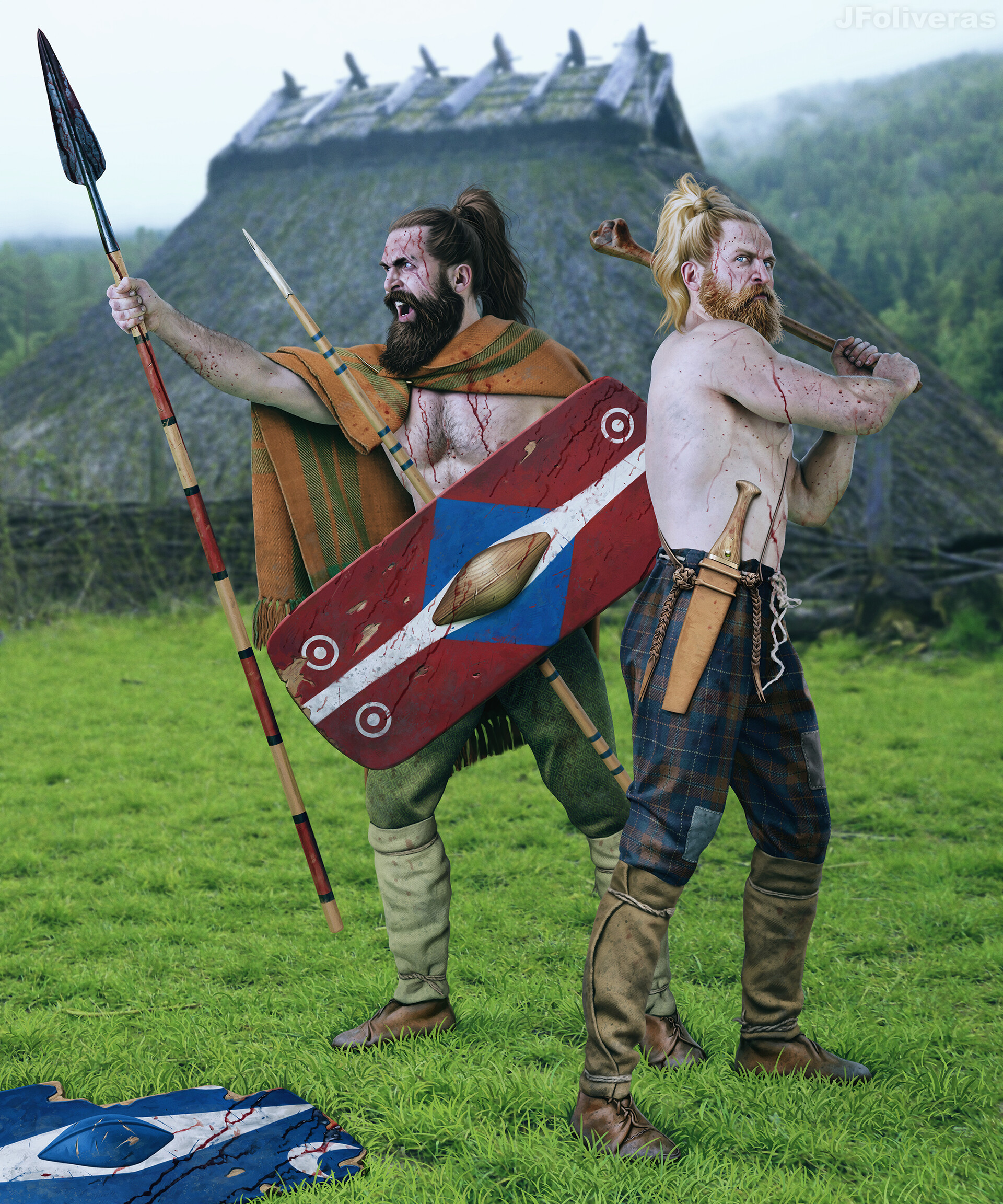
Here some schematic illustrations based on Celtic shields:
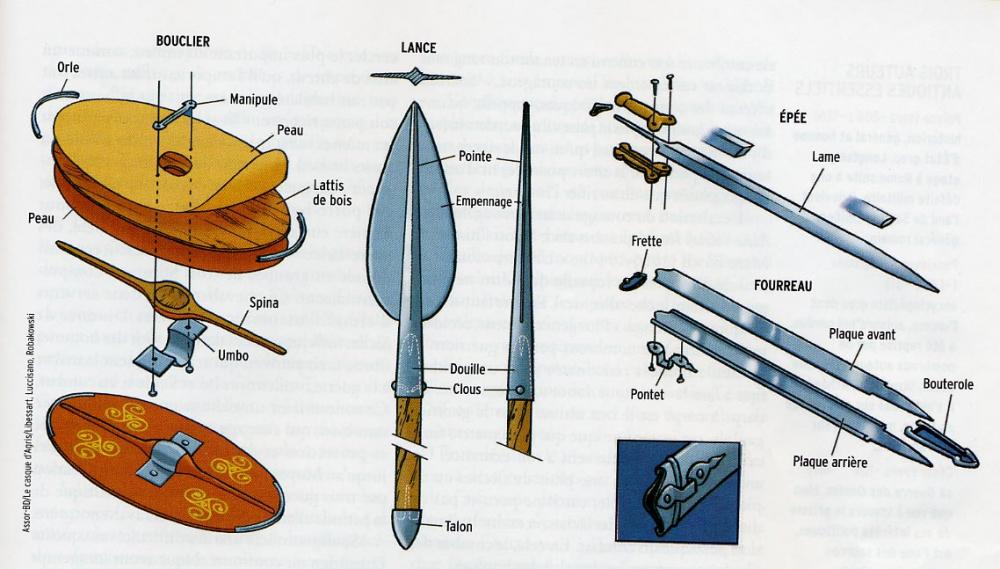
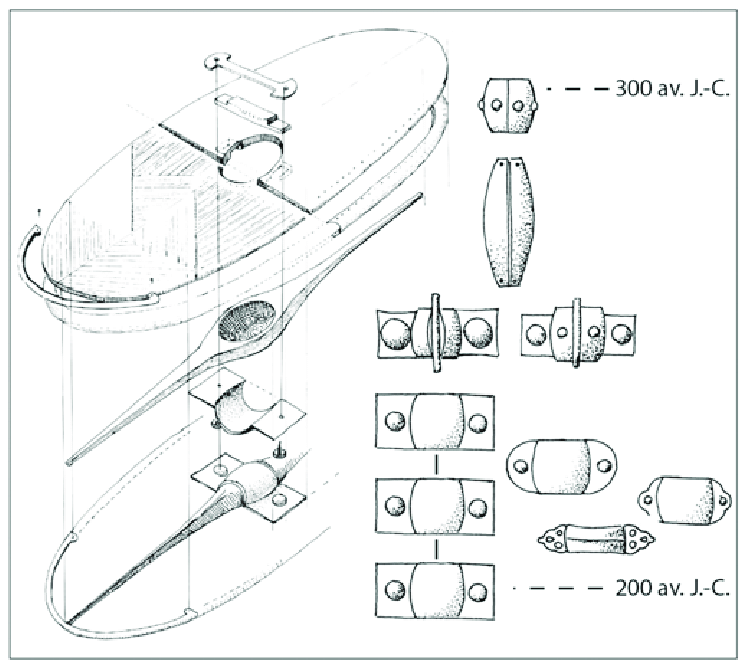
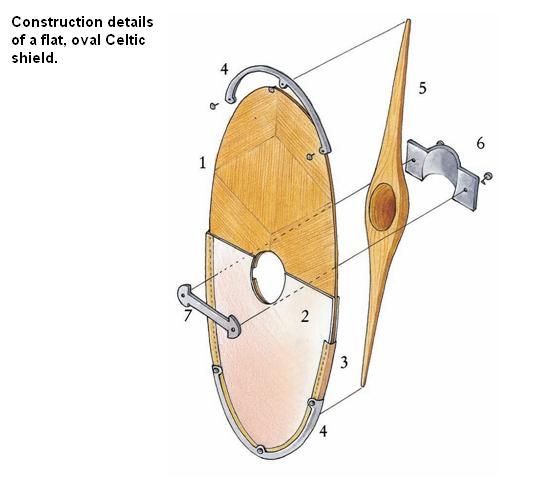
-
2 hours ago, real_tabasco_sauce said:
Are you talking about the shield boss?
@Obskiuras has a point in the sense a shield generally requires some volume for the handle.
-
 1
1
-
-
16 hours ago, real_tabasco_sauce said:
I like that design @Genava55 but I’d prefer to stick to the original gold form.
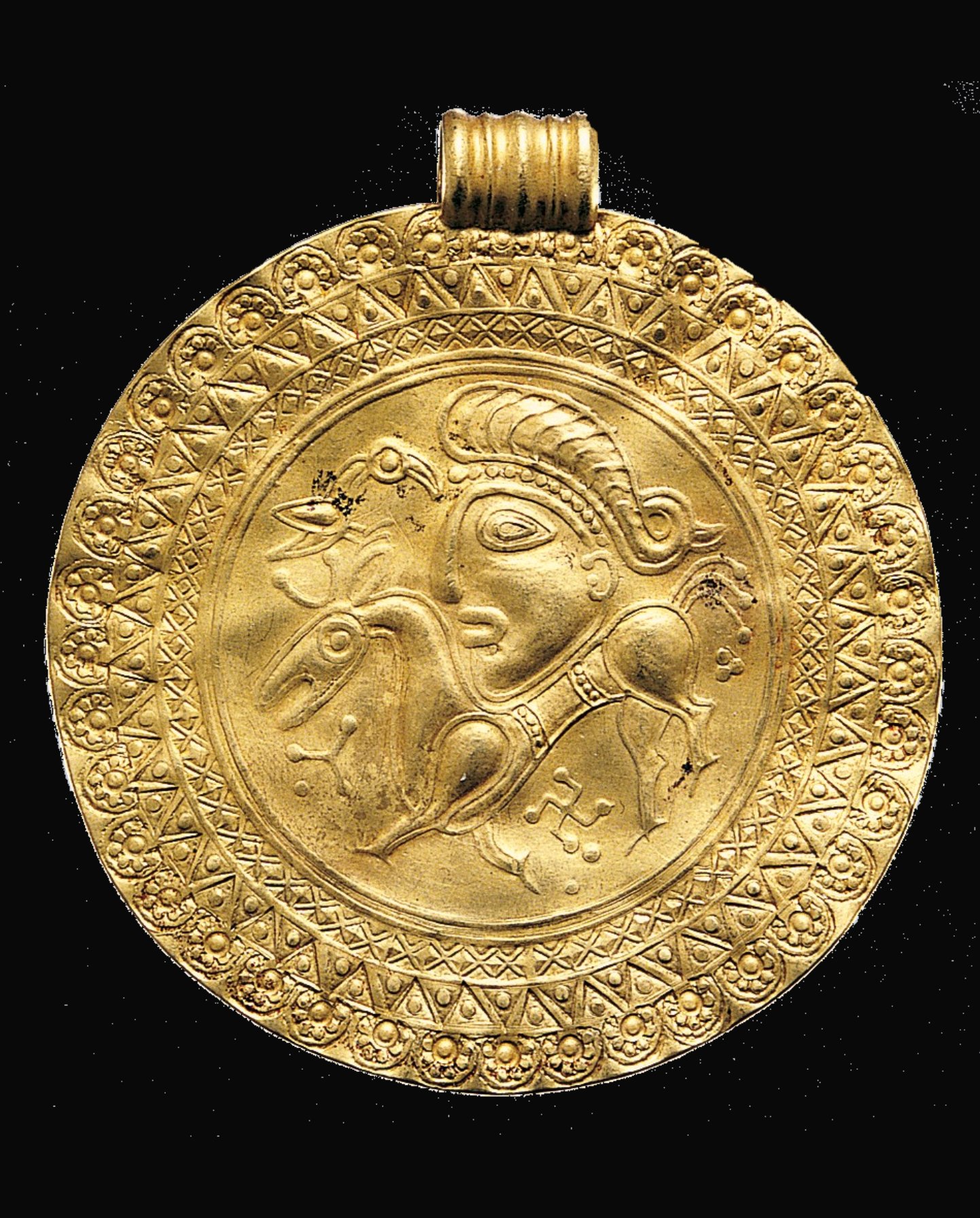
By the way the original:
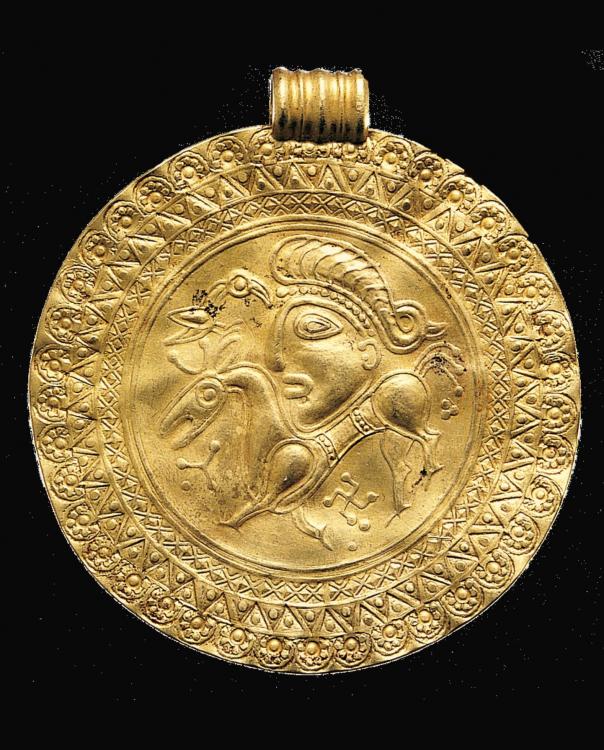
Edit:
You can find more info there: https://gelmir.com/compendium_item/gold-bracteates/
-
1
-
-
6 minutes ago, real_tabasco_sauce said:
I like that design @Genava55 but I’d prefer to stick to the original gold form.
I understand but the idea from EBII was to make a speculative simpler interpretation of a later design, trying to fit it into their timeframe. Since the golden bracteates are generally from the migration period.
7 minutes ago, real_tabasco_sauce said:If we use the face on the ritual pot, it would also make sense to use that dark gold hue.
It is from the Dejbjerg wagon.
-
1
-
-
22 hours ago, Stan` said:
What are the grounds for poison damage ?
-
1
-
-
The only way to test the GUI is to compile from a Git repo?
-
On 10/05/2025 at 6:51 PM, Genava55 said:
This is what Europa Barbarorum did for the Suebi, they took inspiration from one of these bracteate to make a simpler version (top right):
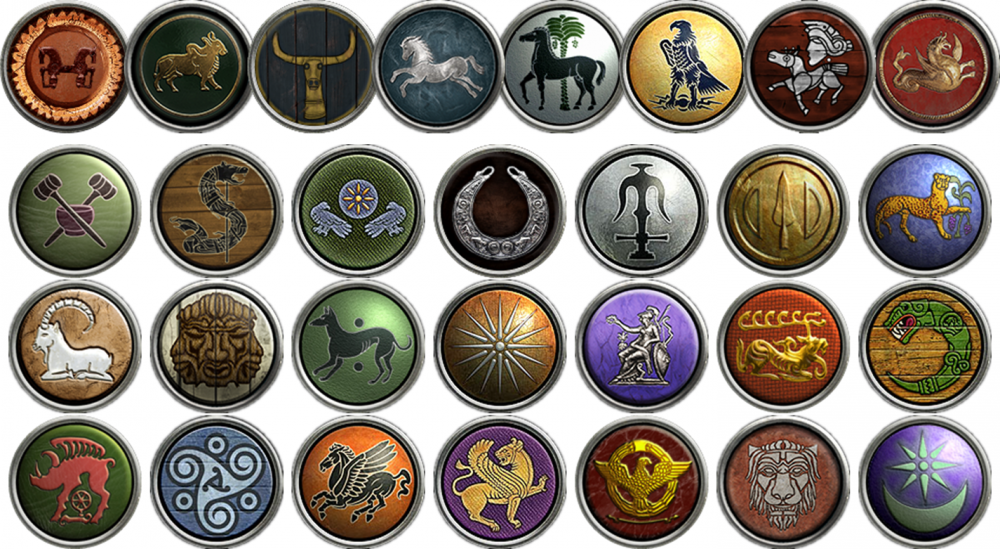
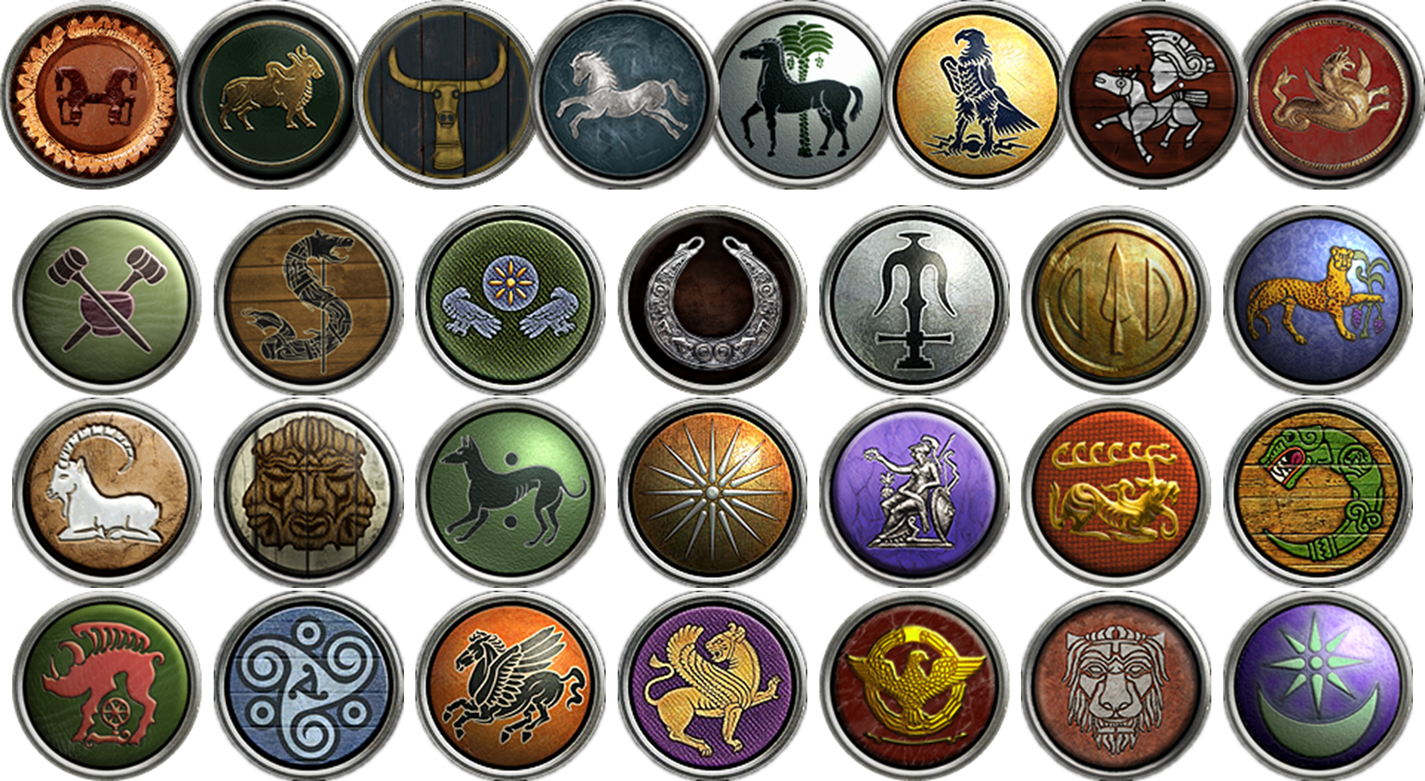
By the way, Rome 2 Total War also got its inspiration from EBII for the Suebi
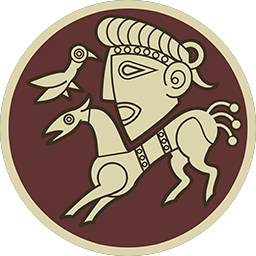
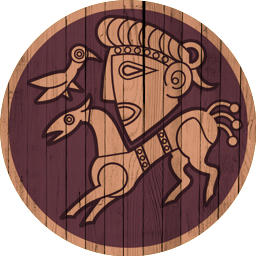
Edit: you can find more info and images there:
https://gelmir.com/compendium_item/gold-bracteates/
-
1
-
-
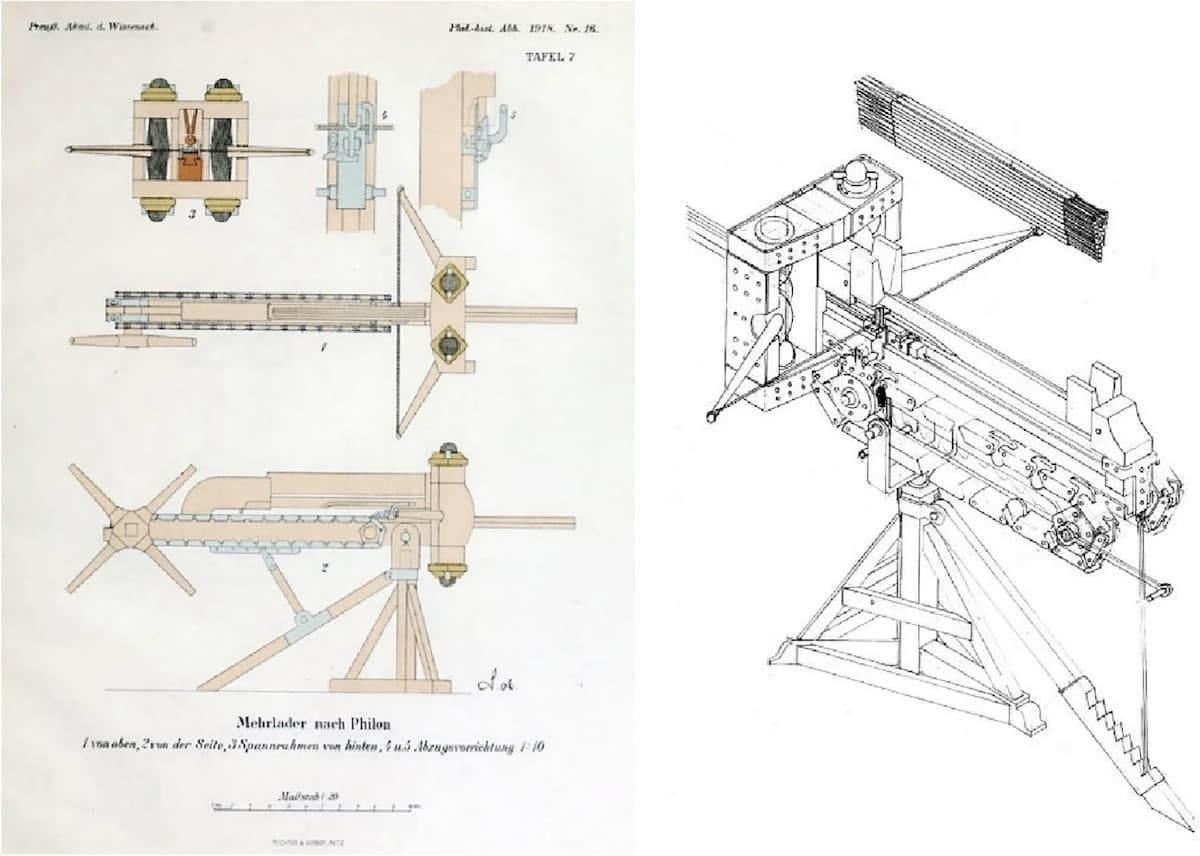
Evidence of the Use of a Polybolos, the Mythical Greek Repeating Weapon, at Pompeii in 89 BCE Discovered
A team of Italian researchers has discovered markings on the walls of Pompeii that could be the first known evidence of the use of an ancient and sophisticated weapon of war: the polybolos, a type of automatic crossbow capable of launching multiple arrows without needing to be reloaded, similar to modern machine guns.
Its invention is attributed to Dionysius of Alexandria, a Greek engineer who worked in the arsenal of Rhodes in the 3rd century BCE. It wasn’t a crossbow in the traditional sense but used a torsion mechanism based on bundles of twisted sinew, and we only know about it from the description left by Philo of Byzantium, who wrote between 280 and 220 BCE.
Philo recounts how one of these weapons was found and provided a detailed description of the gears that powered a chain drive to position bolt after bolt into its firing groove. This is the earliest known application of such a mechanism.
The study published in the Nexus Network Journal focuses on a section of the northern wall of Pompeii near the gates of Vesuvius and Herculaneum, where the researchers, led by Adriana Rossi from the University of Campania, found and analyzed small holes in the stones.
These marks are square or diamond-shaped and do not match the impact patterns of stones launched by conventional catapults. Instead, they appear to have been caused by arrows or metal projectiles.
They appear in groups of four or five, as if the projectiles that caused them had been fired in bursts, something difficult to achieve with handheld weapons or traditional crossbows.
The precision and frequency suggest the use of a repeating machine, the researchers assert, believing that they could be the work of a polybolos used during the siege of Pompeii in 89 BCE, when the troops of the Roman general Sulla conquered the city. Although no physical remains of the weapon have been found, the markings on the walls would match its historical description.
To confirm their theory, the team used 3D scanning techniques and digital reconstructions. Through virtual models, they calculated the speed and force of the impacts, estimating that the arrows that could have made the marks reached a speed of around 109 meters per second, a rather surprising speed for the time. They also confirmed that the depth and shape of the holes matched models of Roman arrowheads kept in European museums.
Why Shoot Arrows at the Walls?But why would the Roman army besieging the city have fired arrows at the stone walls instead of at the defenders? The researchers offer two fairly evident theories.
The first is that they simply missed their shots—that is, they were aiming at soldiers on top of the wall but missed, perhaps because the weapon was hard to handle or simply wasn’t as effective as it should have been.
And the second is that they were simply testing, practicing and calibrating the polybolos before using it against the enemy.
In this regard, an episode of the popular show MythBusters aired in 2010 built and fine-tuned a replica of the polybolos based on Philo’s description, concluding that its existence as a historical weapon was plausible, despite being prone to constant mechanical failures.
The team now plans to analyze more sections of the walls of Pompeii and collaborate with museums to cross-reference their findings. They also hope this discovery will attract interest to Pompeii not just as a city frozen in time, but also as a battlefield where Roman military engineering left its mark.
SOURCESRossi, A., Gonizzi Barsanti, S. & Bertacchi, S. Use of Polybolos on the City Walls of Ancient Pompeii: Assessment on the Anthropic Cavities. Nexus Netw J 27, 243–272 (2025). doi.org/10.1007/s00004-024-00803-x
Reconstruction of a polybolos. Credit: Diels and Schramm 1919 / AR and archives of Archeotecnica / archeotecnica.com
-
1
-
-
-
5 minutes ago, Fabius said:
I recently came across this video on Lanciarii, link below for interested parties, and I was curious as to whether this fell within the scope of the current 0 AD time frame.
Probably not, currently because 0 A.D. - Empires Ascendant is focusing on 500 BC - 1 BC.
6 minutes ago, Fabius said:I have two ideas for a Lanciari unit type, both assume a link with Marian Reforms. Eg unlocked by it and having the legionary keyword.
Have you watched the video? Nothing suggest a link to Marius. The first account of the Lanciarii is from the 1st century AD.
By the way, the Marian reforms are the result of a misconception. Qualified scholars generally don't support the existence of a huge reform enacted by Marius.
QuoteThe Reforms That Weren’t
We can then return to our list at the beginning:
- Cohorts: Experimented with before Marius, especially in Spain. Marius uses cohorts, but there’s no evidence he systematized or standardized this or was particularly new or unusual in doing so. Probably the actual breakpoint here is the Social War.
- Poor Volunteers Instead of Conscripted Assidui: Marius does not represent a break in the normal function of the Roman dilectus but a continuation of the Roman tradition of taking volunteers or dipping into the capite censi in a crisis. The traditional Roman conscription system functions for decades after Marius and a full professional army doesn’t emerge until Augustus.
- Discharge bonuses or land as a regular feature of Roman service: Once again, this isn’t Marius but Imperator Caesar Augustus who does this. Rewarding soldiers with loot and using conquered lands to form colonies wasn’t new and Marius doesn’t standardize it, Augustus does.
- No More equites and velites: No reason in the source to suppose Marius does this and plenty of reasons to suppose he doesn’t. Both velites and equites seem to continue at least a little bit into the first century. Fully replacing these roles with auxilia is once again a job for our man, Imperator Caesar Augustus, divi filius, pater patriae, reformer of armies, gestae of res, and all the rest.
- State-Supplied Equipment: No evidence in the sources. This shift is happening but is not associated with Marius. In any event, the conformity of imperial pay records with Polybius’ system of deductions for the second century BC suggests no major, clean break in the system.
- A New Sort of Pilum: No evidence, probably didn’t exist, made up by Plutarch or his sources. Roman pilum design is shifting, but not in the ways Plutarch suggests. If a Marian pilum did exist, the idea didn’t stick.
- Aquila Standards: Eagle standards pre-date Marius and non-eagle standards post-date him, but this may be one thing he actually does do, amplifying the importance of the eagle as the primary standard of the legion.
- The sarcina and furca and making Roman soldiers carry things: By no means new to Marius. This is a topos of Roman commanders before and after Marius. There is no reason to suppose he was unusual in this regard.
https://acoup.blog/2023/06/30/collections-the-marian-reforms-werent-a-thing/
QuoteMoving to the body of the text, Chapter 1 responds to Sallust’s statement (Iug. 86.2) that, in 107, Marius recruited volunteers from the capite censi; this has been central to most scholarly accounts of the first-century army. Cadiou is not the first to downplay the significance of these reforms, as he concedes, pointing especially to Rich.[2] In the first chapter, Cadiou reinforces these existing arguments against the Marian reform, presenting it rather in the context of Marius’s immediate need for haste. But if the “Marian reform” is no longer seen by specialists as the revolutionary act which ushered in the proletarian army, this does not seem to have diminished the scholarly consensus that a revolution took place. But that is precisely what Cadiou is arguing against.
Quote"He admitted for the first time to his army capite censi, men who failed to meet the normal property qualification for service. The numbers were small but, in later periods of crisis, Marius's imitators recruited from this area on a grand scale. [...] His enrolment in the army of capite censi was imitated by later commanders in the civil wars, which destroyed the Republic" - Yann Le Bohec, The Encyclopedia of the Roman Army, p.636
"The 2nd century BCE also saw the transition from the maniple to the cohort as the basic tactical unit. This change has often been attributed by modern scholars (Dobson 2008: 58) to Caius Marius, who is said to have introduced cohorts in order to counter the tactics of the Germans who were invading northern Italy toward the end of the 2nd century BCE. However, the sources, which do not explicitly refer to the change, suggest a change in the form of a long transitional process in which the Romans may have copied this formation from their allies (Livy 10.33.1 ; 23.17.11). The earliest reliable references to the Roman cohort date back to the Second Punic War (e.g., Livy 25.39.1 ; Polyb. 1 1.23.1-2), while maniples are last mentioned in field operation in the war against Jugurtha in 109 BCE (Sall. lug. 49.6). The fact that the sources frequently mention cohorts in war contexts in Spain also suggests that the change originated there and may have been due to a combination of factors peculiar to Spain." - Yann Le Bohec, The Encyclopedia of the Roman Army, p.525.
Modern historians have often assumed that Gaius Marius introduced wide ranging and long - lasting reforms that greatly transformed the Roman army and had a profound impact on Roman politics as well. The so - called Marian reforms supposedly involved both tactical innovations and significant reorganization of military recruitment and financing. These included: the elimination of the Roman cavalry (to be replaced entirely by foreign auxiliary cavalry), the disbandment of light - armed troops and the standardization of the weapons and kit of heavy infantry, the reorganization of legions into cohorts (replacing the earlier, manipular structure), and perhaps most significantly, the recruitment of landless soldiers who previously would not have met minimum property qualifications. These new recruits would be mostly volunteers and receive grants of land upon release. Lastly, it is often assumed that these reforms were permanent. Thus, according to the communis opinio, Marius permanently transformed the Roman military into a professional army that was mostly composed of landless citizens equipped uniformly. Yet, despite the widespread acceptance of this view, there is actually very little evidence for the “Marian Reforms.” - François Gauthier, The Changing Composition of the Roman Army in the Late Republic and the So-Called Marian-Reforms.
"The old view that Marius gave Rome a professional army can no longer be maintained (Brunt 1971, 406–11; Rich 1983). His enrolment of men without the property qualification in 107 was in all probability an isolated episode: the hostility which it aroused makes it unlikely that his successors followed suit. The traditional procedures of the levy, including the property qualification, probably ceased to operate in the chaotic conditions of the eighties." - John Rich & Graham Shipley, War and Society in the Roman World, p.4.
-
1
-
1 minute ago, Obskiuras said:
And maybe too a swordman elite unit, like this:
But it has to be consistent and coherent with other civilizations. Too often, there's the immature temptation to want to put everything in every new civ, and this quickly becomes absurd and unbalanced. The Kushites underwent a similar development.
9 minutes ago, Obskiuras said:I would add an elite unit of spearman, just like the Wodanaz spear from Rome 2 Total War.
I think it is something to keep for a later version of the Germans. Currently, it is based on the Cimbri. When there will be the later Germans, we could add the Cherusci pikemen. But in the meantime, let's focus on the Cimbri.
-
3
-
-
2 hours ago, real_tabasco_sauce said:
Ok @Genava55 do you have a possible idea for a raiding type unit? The gameplay design is somewhat focused on infantry mobility, so a faster, lightly armored, infantry unit is needed to replace the wolf warrior.
i suppose we could go fairly generic and call it Crimbri raider or something.
Cimbri/Teutones/Ambrones raiders could work. Marauders too.
Otherwise, axemen, clubmen... It is possible for some of them to have a bear skin as a cloak, just avoid the bear head.
Spoiler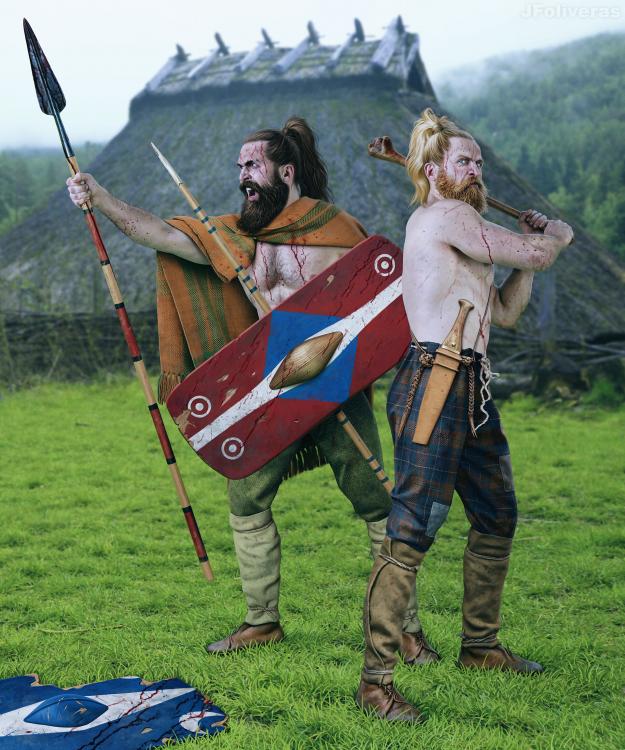


-
2
-
-
7 hours ago, Obskiuras said:
Historical accuracy is important, so i'll leave up to you.
I don't think there was a specific troop wearing wolf skin and wolf head. Tacitus, Cassius Dio and Caesar don't mention it. The only place with a depiction of a sort of warriors wearing such items is on the Trajan column, but it is unclear if those are Germans or not. Those men are Roman auxiliaries in full armor, while the actual Germans fighting in front of them with their native weapons are bareheaded. Furthermore the current design is focusing on the Cimbri and pre-roman period. The berserkir/ulfhednar is mostly attested during the viking and post-viking period, in the Norse mythology and Norse laws. And nothing suggest they were a specific battle unit.
So for the moment, leave them aside.
-
2
-
-
On 01/04/2025 at 4:36 AM, Obskiuras said:
Not really, i found some images that is supose to be germanic wolf warrior...
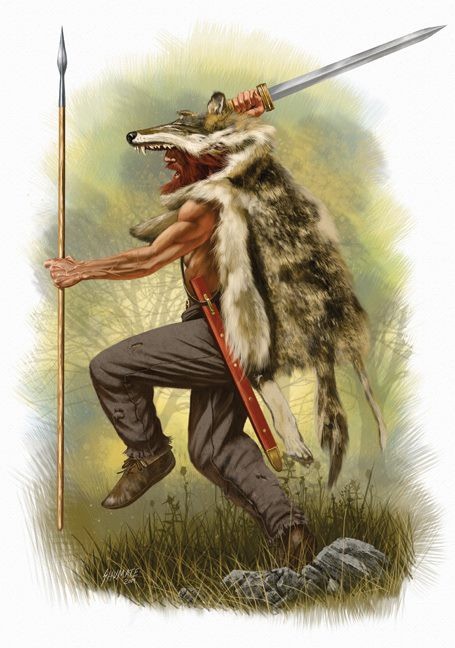
So what's the plan about it?
-
1 minute ago, real_tabasco_sauce said:
fish and scout ships can be rowed only. Merchant and maybe arrow ships get a sail.
Ok.
15 minutes ago, Obskiuras said:We can do both, one without sails and one with sails. The one with sails it would be arrow ship and the other would be ramming ship.
I don't think a ramming ship is mandatory
-
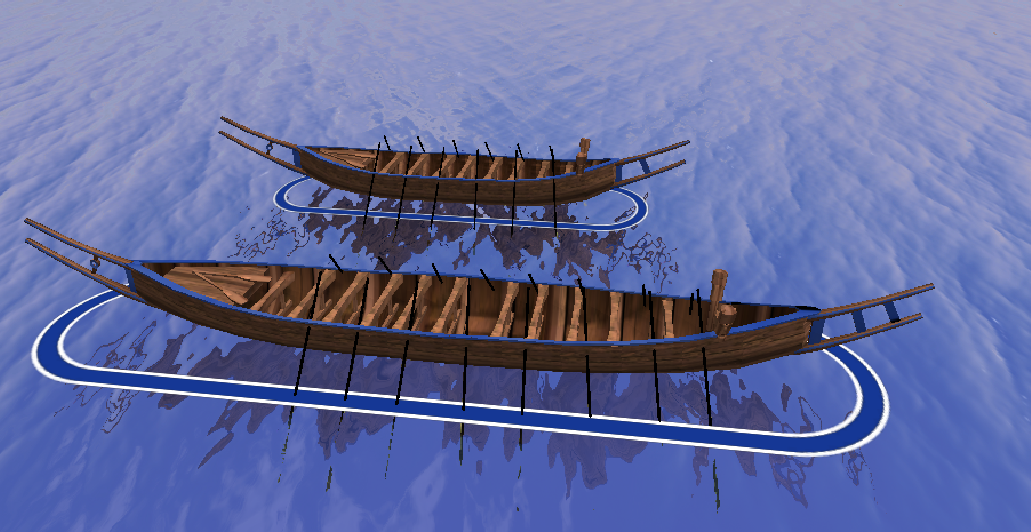
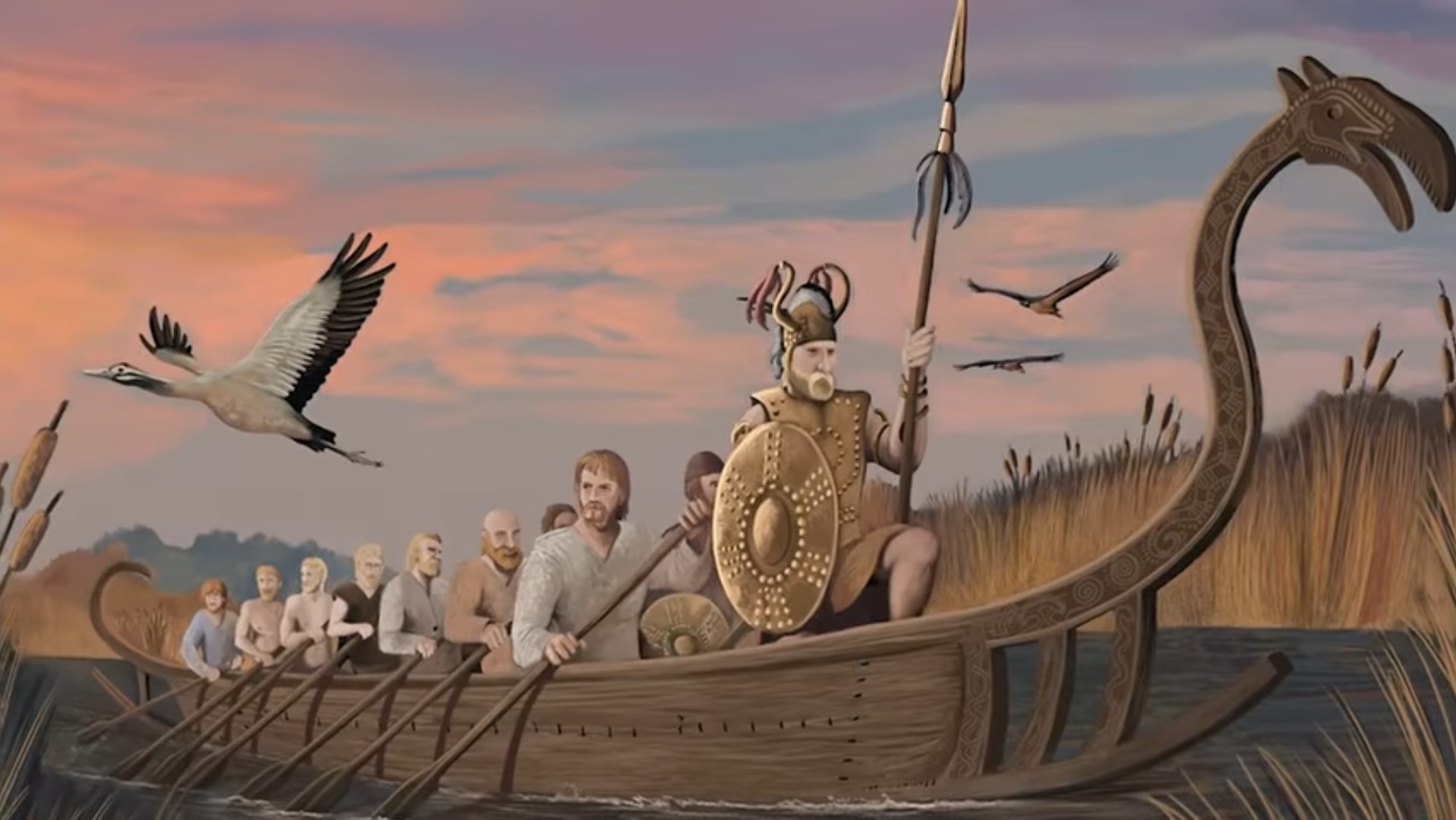
1 hour ago, real_tabasco_sauce said:
Ok, I got in touch with Dr. Bengtsson, who authored some of the works we discussed here and she gave some helpful feedback.
-
The Hjortspring boat was paddled, not rowed, but rowed vessels likely existed as well.
- I think its ok to keep the oars since we would have floating paddles otherwise.
-
radially split logs became used in the same time frame as the hjortspring boat is dated, and were used to build the nydam boats.
- so I think we could make use of a nydam style boat for some visual variety.
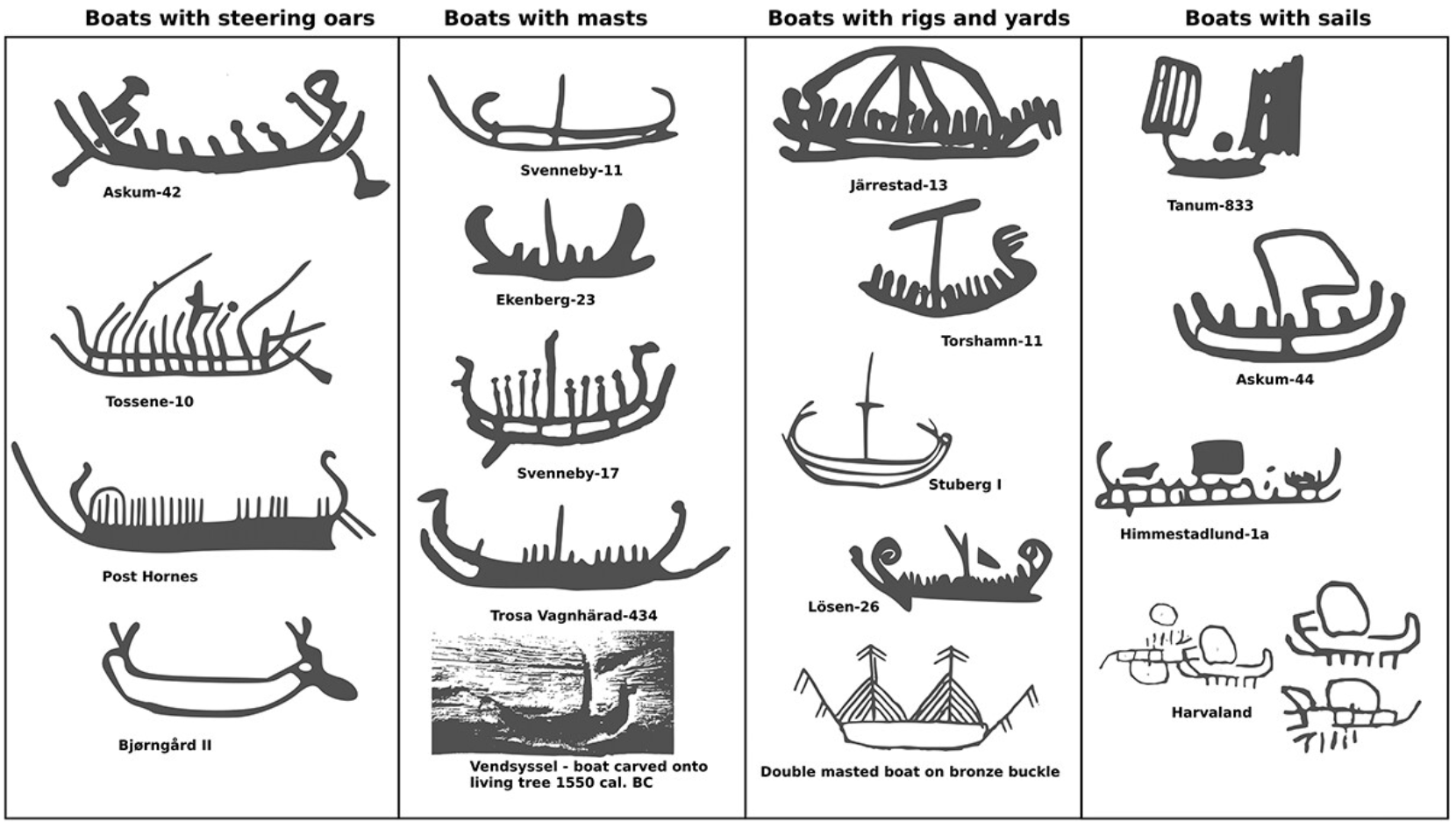
- Sails were used, likely square shaped and made out of varying materials. if sails are used on a boat, either a side rudder or double-steering oars should be used as well.
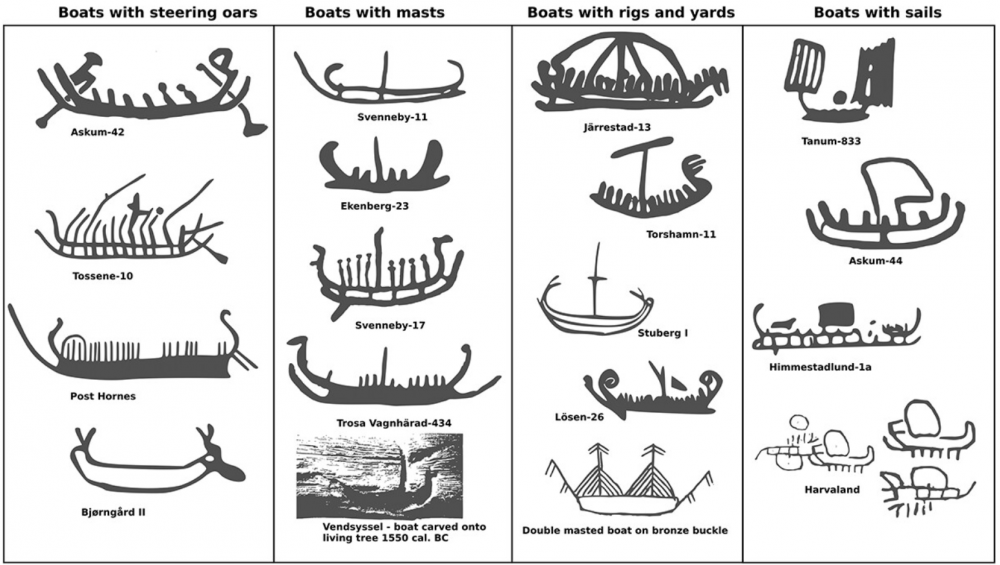
-
Single masts are supported by rock art and stone ship monuments, but bipod masts are also possible.
- Perhaps if we do more of a nydam style boat (merchant ship and maybe arrow ship), it could use a single square sail with a side rudder
- I personally think something like the Himmestadlund-1a could be a beautiful inspiration.
- Rock art and monuments suggest platforms at the stern like what @Lopess has on the hjortspring model.
- outriggers are not used outside of the pacific, so no boat should have an outrigger.
If we accept the rock art is sufficient enough evidence, we must at least accept it is a minority of the boats. Most don't have sails.
-
1
-
The Hjortspring boat was paddled, not rowed, but rowed vessels likely existed as well.
-
1 hour ago, Lopess said:
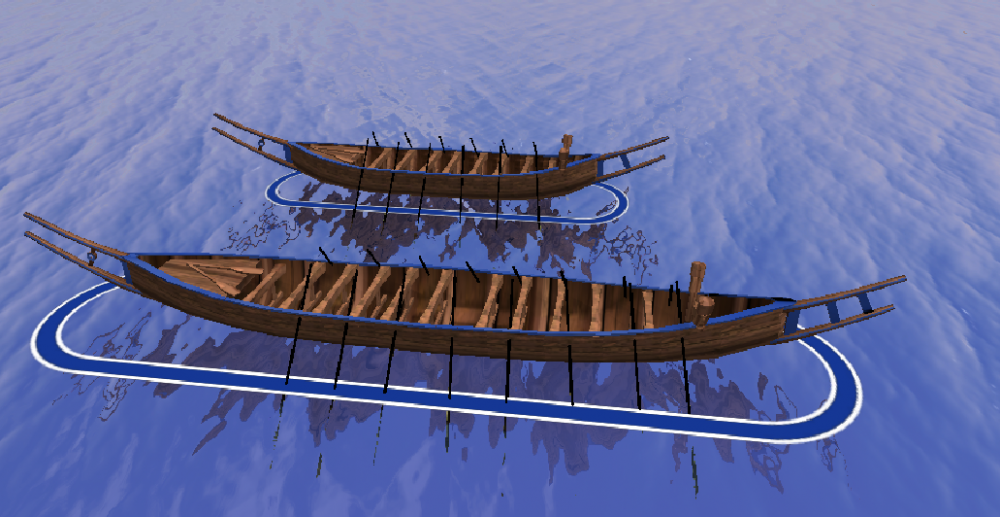
Well done. If we want more color, we can also add a few shields on the sides. Maybe on both ends.
-
3
-
-
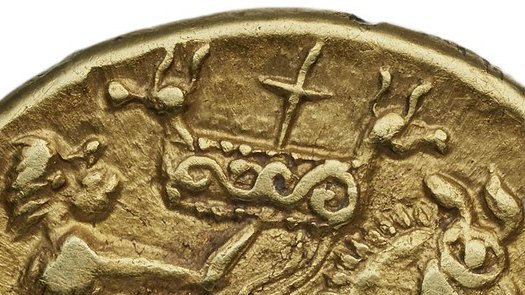
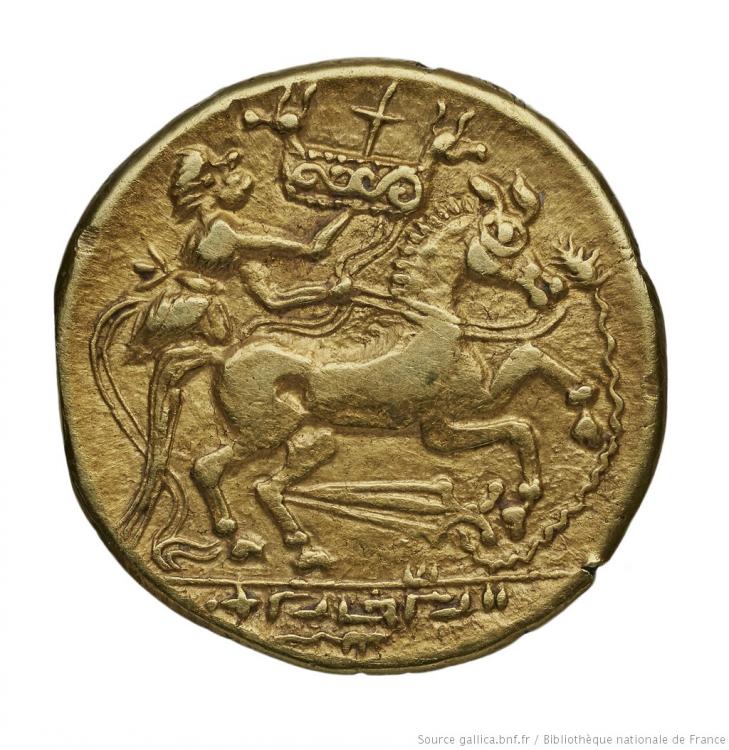
Hémistatère au « bateau glaive », série GRH 3f – classe III, groupe de Normandie (Calètes ?), 3e siècle av. J.-C.
-
Nydam boat also had a carved wooden beam:
-
1
-
-
34 minutes ago, real_tabasco_sauce said:
@Genava55 could you connect the dots for us?
This is simply to emphasize, based on historical references from the time period, what I explained earlier. The most appropriate designation for a civilization of the same rank as the Gauls or Britons would be the 'Germans'.
-
2
-
-
31 minutes ago, real_tabasco_sauce said:
Is that the problem? Their argument is that sails were implemented as a supplemental propulsion and that rowing remained the primary source of propulsion. Certainly the technological challenge would have prevented more effective rigging systems to arise.
I'm no specialist, but it seems to me that it's extremely difficult to do both at the same time. Sail is not viewed as a supplemental propulsion, it is something used for long distance.
My personal opinion is that Bronze Age and Iron Age warriors favored the mobility and portability of boats. It should not be forgotten that there are no indications that they had ports of any significant size.
38 minutes ago, real_tabasco_sauce said:maybe the trade ship can repurpose the existing scout ship, removing the sail, shields, and adding some barrels.
Maybe we can make an exception for the merchant ship, since it is a case really inappropriate for rowers.
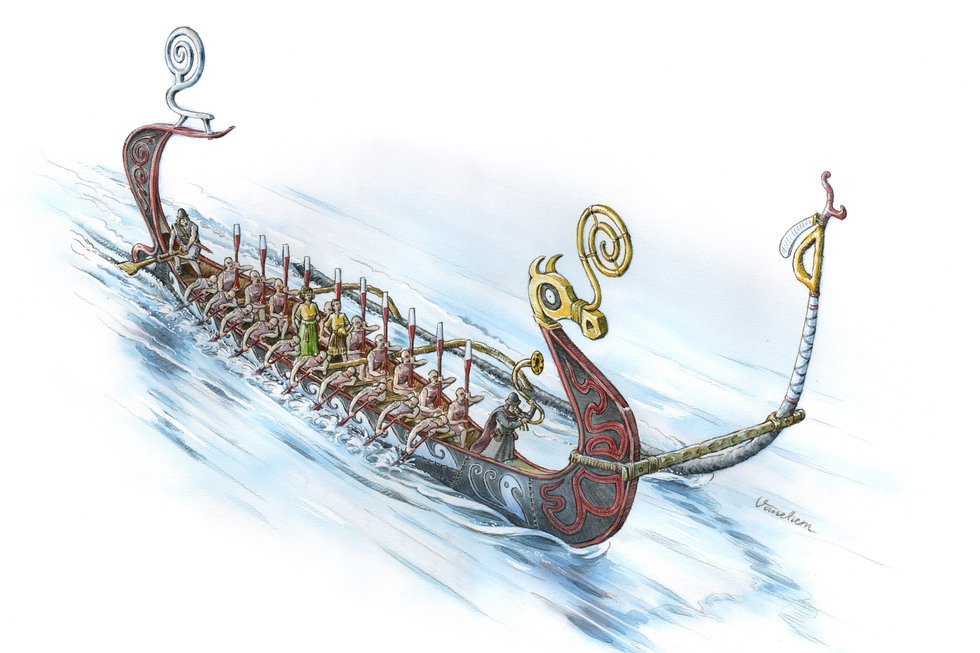
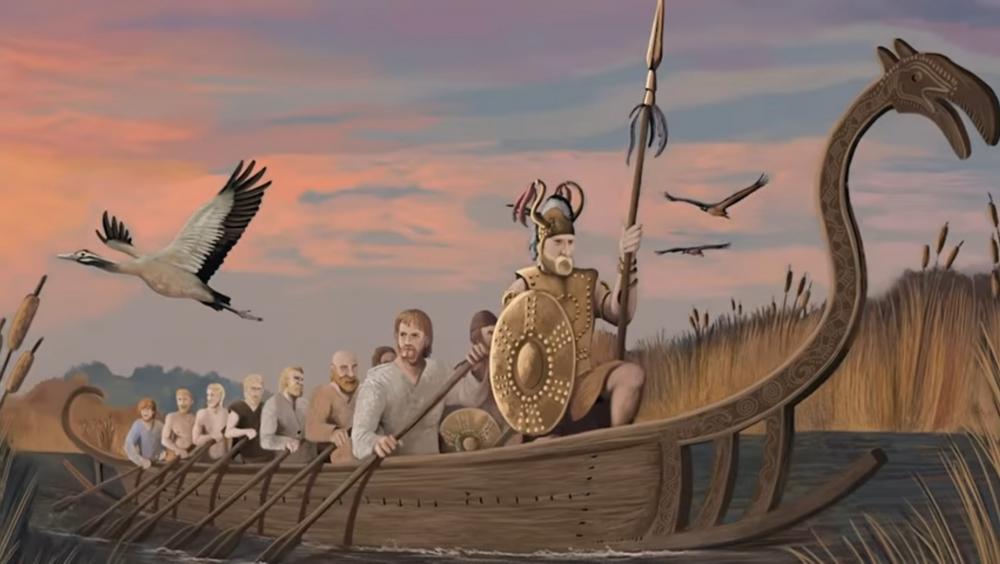
39 minutes ago, real_tabasco_sauce said:Sail or no sail, there will need to be some distinguishing features of the larger arrow ship.
Maybe decorations or stempost size? Here a few ideas (the outrigger is maybe a bit excessive but why not):
-
3
-
 1
1
-
-
Caesar, book 1, ch. 1:
QuoteAll Gaul is divided into three parts, one of which the Belgae inhabit, the Aquitani another, those who in their own language are called Celts, in our Gauls, the third. All these differ from each other in language, customs and laws. The river Garonne separates the Gauls from the Aquitani; the Marne and the Seine separate them from the Belgae. Of all these, the Belgae are the bravest, because they are furthest from the civilization and refinement of [our] Province, and merchants least frequently resort to them, and import those things which tend to effeminate the mind; and they are the nearest to the Germans, who dwell beyond the Rhine, with whom they are continually waging war; for which reason the Helvetii also surpass the rest of the Gauls in valor, as they contend with the Germans in almost daily battles, when they either repel them from their own territories, or themselves wage war on their frontiers. One part of these, which it has been said that the Gauls occupy, takes its beginning at the river Rhone; it is bounded by the river Garonne, the ocean, and the territories of the Belgae; it borders, too, on the side of the Sequani and the Helvetii, upon the river Rhine, and stretches toward the north. The Belgae rises from the extreme frontier of Gaul, extend to the lower part of the river Rhine; and look toward the north and the rising sun. Aquitania extends from the river Garonne to the Pyrenaean mountains and to that part of the ocean which is near Spain: it looks between the setting of the sun, and the north star.
Caesar, book 1, ch. 2:
QuoteAmong the Helvetii, Orgetorix was by far the most distinguished and wealthy. He, when Marcus Messala and Marcus Piso were consuls, incited by lust of sovereignty, formed a conspiracy among the nobility, and persuaded the people to go forth from their territories with all their possessions, [saying] that it would be very easy, since they excelled all in valor, to acquire the supremacy of the whole of Gaul. To this he the more easily persuaded them, because the Helvetii, are confined on every side by the nature of their situation; on one side by the Rhine, a very broad and deep river, which separates the Helvetian territory from the Germans; on a second side by the Jura, a very high mountain, which is [situated] between the Sequani and the Helvetii; on a third by the Lake of Geneva, and by the river Rhone, which separates our Province from the Helvetii. From these circumstances it resulted, that they could range less widely, and could less easily make war upon their neighbors; for which reason men fond of war [as they were] were affected with great regret. They thought, that considering the extent of their population, and their renown for warfare and bravery, they had but narrow limits, although they extended in length 240, and in breadth 180 [Roman] miles.
Caesar, book 6, ch. 24:
QuoteAnd there was formerly a time when the Gauls excelled the Germans in prowess, and waged war on them offensively, and, on account of the great number of their people and the insufficiency of their land, sent colonies over the Rhine. Accordingly, the Volcae Tectosages, seized on those parts of Germany which are the most fruitful [and lie] around the Hercynian forest, (which, I perceive, was known by report to Eratosthenes and some other Greeks, and which they call Orcynia), and settled there. Which nation to this time retains its position in those settlements, and has a very high character for justice and military merit; now also they continue in the same scarcity, indigence, hardihood, as the Germans, and use the same food and dress; but their proximity to the Province and knowledge of commodities from countries beyond the sea supplies to the Gauls many things tending to luxury as well as civilization. Accustomed by degrees to be overmatched and worsted in many engagements, they do not even compare themselves to the Germans in prowess.
Tacitus, Germania:
QuoteThe various peoples of Germany are separated from the Gauls by the Rhine, from the Raetians and Pannonians by the Danube, and from the Sarmatians and Dacians by mountains -- or, where there are no mountains, by mutual fear. The northern parts of the country are girdled by the sea, flowing round broad peninsulas and vast islands where a campaign of the present century has revealed to us the existence of some nations and kings hitherto unknown. The Rhine rises in a remote and precipitous height of the Raetian Alps and afterwards turns slightly westward to flow into the North Sea. The Danube issues from a gentle slop of moderate height in the Black Forest, and after passing more peoples than the Rhine in its course discharges itself into the Black Sea through six channels -- a seventh mouth being lost in marshlands.
As to the Germans themselves, I think it probable that they are indegenous and that very little foreign blood has been introduced either by invasians or by friendly dealings with neighboring peoples. For in former times it was not by land but on shipboard that would-be immigrants arrived; and the limitless ocean that lies beyond the coasts of Germany, and as it were defies intruders, is seldom visited by ships from our part of the world. And to say nothing of the perils of that wild and unknown sea, who would have been likely to leave Asia Minor, North Africa, or Italy, to go to Germany with its forbidding landscapes and unpleasant climate - a country that is thankless to till and dismal to behold for anyone who was not born and bred there?
In the traditional songs which form their only record of the past the Germans celebrate an earth-born god called Tuisto. His son Mannus is supposed to be the fountain-head of their race and himself to have begotten three sons who gave their names to three groups of tribes - the Ingaevones, nearest the sea; the Herminones, in the interior; and the Istaevones, who comprise all the rest. Some authorities, with the freedom of conjecture permitted by remote antiquity, assert that Tuisto had more numerous descendants and mention more tribal groups such as Marsi, Gambrivii, Suebi, and Vandilii - names which they affirm to be both genuine and ancient. The name Germania, however, is said to have been only recently applied to the country. The first people to cross the Rhine and appropriate Gallic territory, though they are known nowadays as Tungri, were at that time called German; and what was at first the name of this one tribe, not of the entire race, gradually came into general use in the wider sense. It was first applied to the whole people by the conquerors of the Gauls, to frighten them; later, all the Germans adopted it and called themselves by the new name.
The Germans, like many other peoples, are said to have been visited by Hercules, and they sing of him as the foremost of all the heroes when they are about to engage in battle. Ulysses also, in all those fabled wanderings of his, is supposed by some to have reached the northern sea and visited German lands, and to have founded and named Asciburgium, a town on the Rhine inhabited to this day. They even add that an altar consecrated by Ulysses and inscribed also with the name of his father Laertes was discovered long ago at this same place, and that certain barrows with monuments upon them bearing Greek inscriptions still exist on the borders of Germany and Raetia. I do not intend to argue either for or against these assertions; each man must accept or reject them as he feels inclined.
-
2 minutes ago, Obskiuras said:
Can we use it in the game? may be we could but some paint and shields on the front.
I don't think so...
https://blog.turbosquid.com/turbosquid-3d-model-license/#Games-Usage
QuoteIf you are redistributing something that includes actual 3D Model files, the 3D Model files must be incorporated into a larger creation and not in an open format that others can be downloaded. Most game engines, such as Unity and Unreal, handle this automatically. In general, to prevent your end-users from obtaining TurboSquid 3D Models, you should use proprietary formats that cannot be extracted, exported, or decompiled without reverse engineering.
-
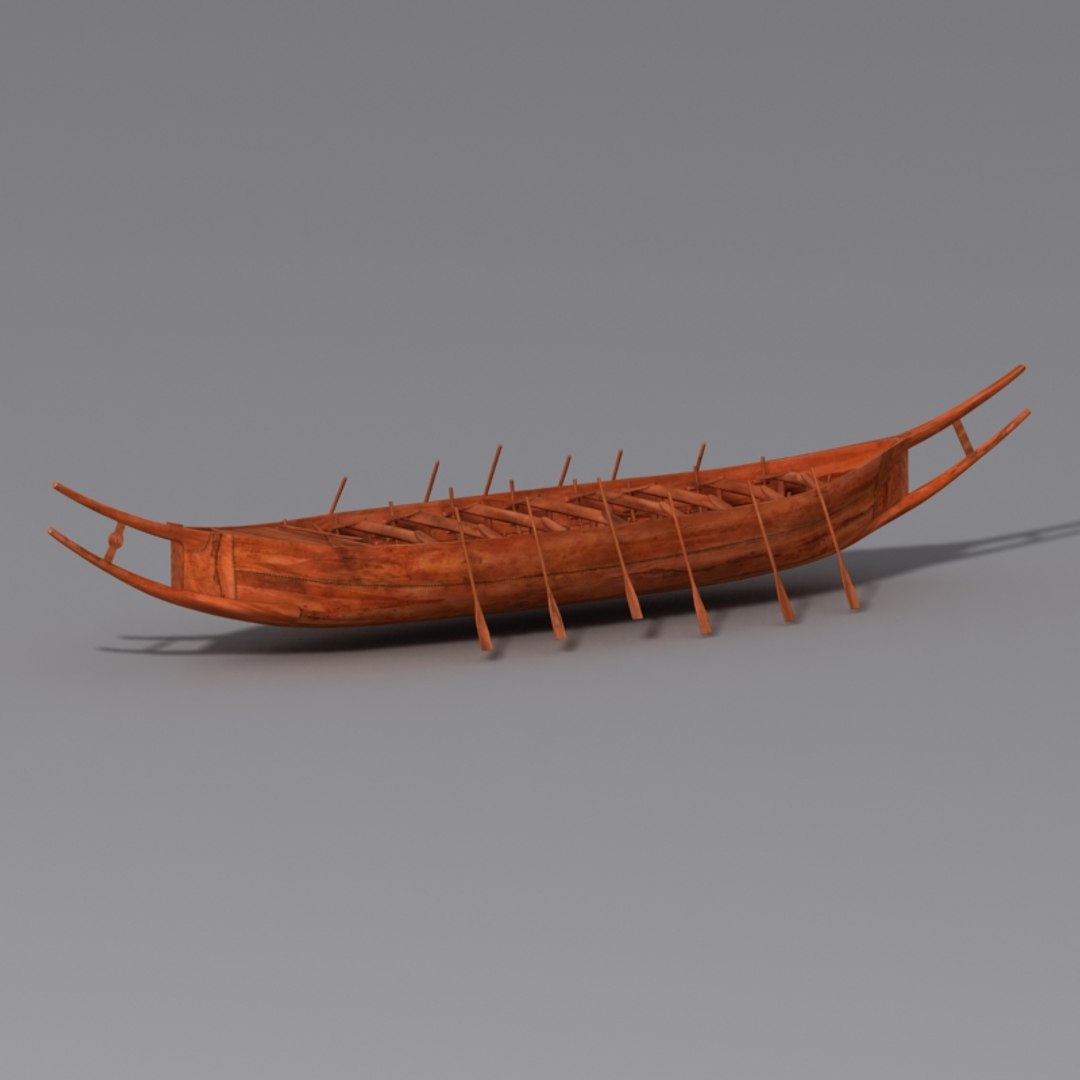
5 minutes ago, Obskiuras said:
https://www.turbosquid.com/3d-models/germanic-ancient-boat-max-free/589931
I found this example of germanic boat, in the page is a lot of photos
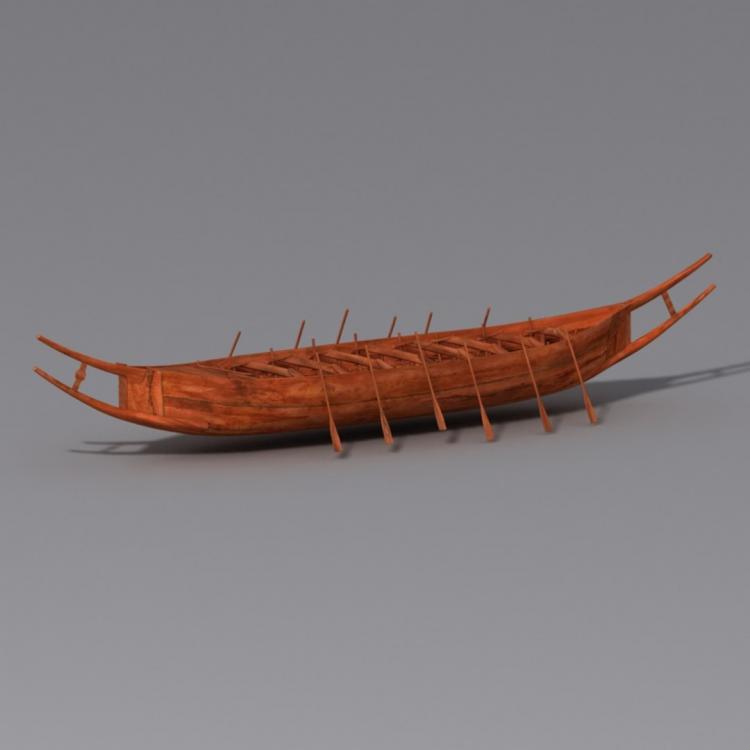
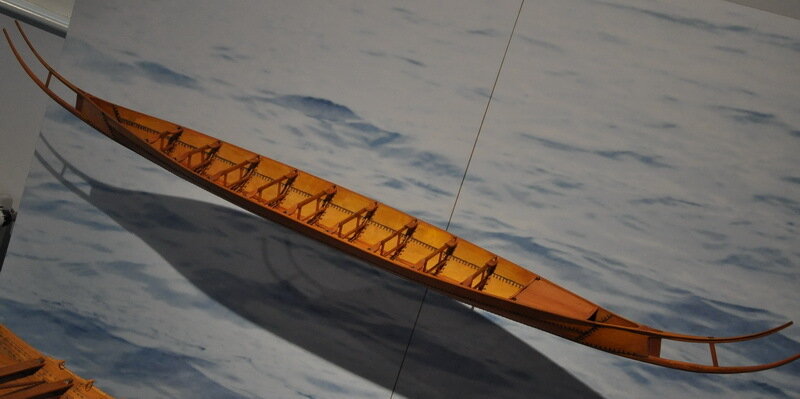
Yes, it looks good, that's similar to the miniature replica in the museum:
-
1
-
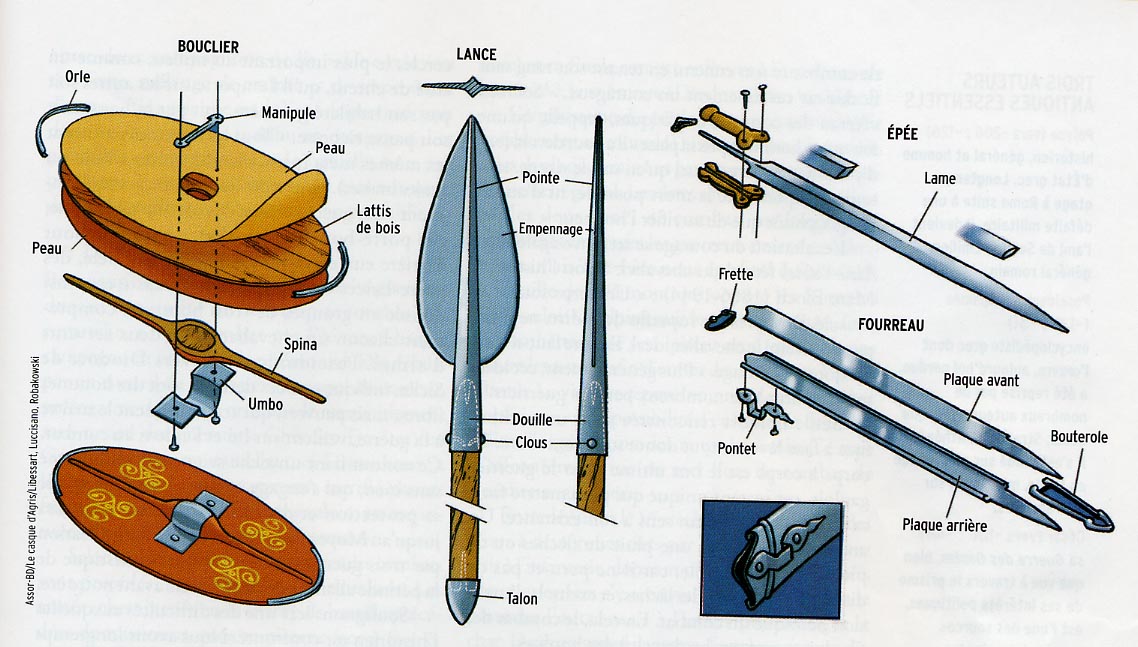


===[TASK]=== Roman Circus
in Official tasks
Posted · Edited by Genava55
@wowgetoffyourcellphone would be great for your Roman Principate civ in DE.