
.png.a9ae33b5e5ddb0eb2b142b612b99c428.png)
Lion.Kanzen
-
Posts
25.684 -
Joined
-
Days Won
302
Everything posted by Lion.Kanzen
-
Ya me di cuenta. lo siento. hahaha. ----question--- can you improved the onager in DE we need it later.
-
This is necessary, what you think @Alexandermb in order make animation. or using olders.. Nevermind. when they starting using wheels?
-
I agree with both, the best is a counter system, and reduce combat speed in those case. Hannibal suggestion can be nice if only if reach a % of same type. and proportional with high pop setting. Why reduce speed of damage, to make a some micro and planned better strategy. I prefer more AoE 2 or 1 attack speed dame even in counter less Moba or blizzard(competitive) and more Total war pacing. not too slow but not too faster as A15. speaking about counters. Were need more features guys, the options to create a tactics still limited.
-
.thumb.png.ce58cea22940c255f5b0a735d5abee36.png)
Using Comma key for unit creation doesn't work
Lion.Kanzen replied to minohaka's topic in Bug reports
@stanislas69 move as full topic thank you, you are great valuable help. @minohaka feel free open topics. -
Chinese Workshop, Range, Stable, Elephant Stable
Lion.Kanzen replied to wowgetoffyourcellphone's topic in Rise of the East
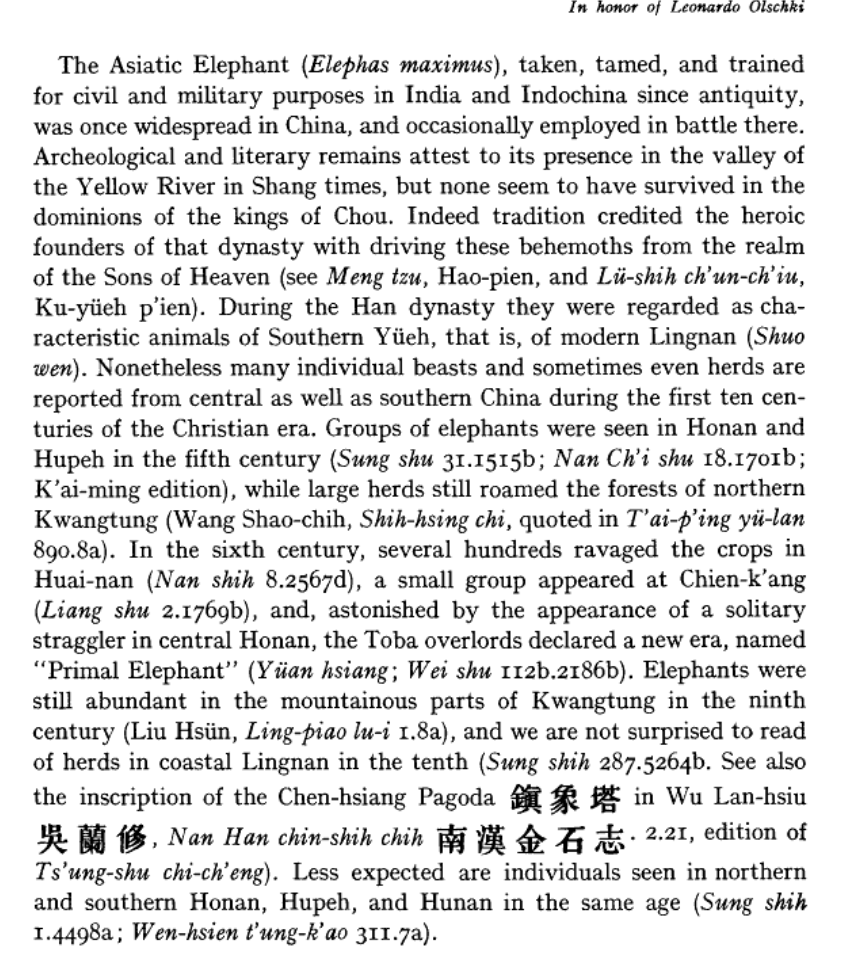
Shang Dynasty uses elephants. and Quin too. The existence of elephants in ancient China is attested both by archaeological evidence and by depictions in Chinese artwork. Long thought to belong to an extinct subspecies of Asian elephants, named Elephas maximus rubridens, they lived in Central and Southern China before the 14th century BC. They once occurred as far north as Anyang, Henan in northern China.[1] In December 2012, a study by a team of scientists from China reported that the elephant living in China in ancient times (Shang and Zhou dynasties) could not have been a subspecies of the Asian elephant, as previously thought, but probably belonged to the Palaeoloxodon genus.[2]P. namadicus were distributed among Asia, but it is unclear if the mysterious elephants of northern China were remnants of P. namadicus or a unique species of their own. This conclusion was reached after studying remains of Chinese elephant molars and tusks from the Holocene epoch, as well as examining ritual bronzes from the Shang and Zhou dynasties, which all depicted elephants with two 'fingers' on the tip of their trunk (whereas the Indian elephant only has one 'finger').[3] Fossil elephant experts Victoria Herridge and Adrian Lister disagree with the assignment, stating that the claimed diagnostic dental features are actually contrast artifacts, created due to the low resolution of the figures in the scientific paper, and are not evident in better quality photographs.[4] Elephants still survived in the southwestern provinces of China after the extinction of the Chinese elephant, but they are of a different subspecies, the Indian elephant, Elephas maximus indicus. A native population of these remains in Xishuangbanna, Yunnan province. https://en.wikipedia.org/wiki/Elephants_in_ancient_China First, Ancient China has lots of elephants. The Loess Plateau of China ,roughly before the Qin dynasty, was once a green land with forrests full of elephants and rhinoceroses。黄土高原 - 维基百科,自由的百科全书 Qin dynasty once set up a province called 象郡 - 维基百科,自由的百科全书 which literally means “the province of elephants” in the southern China in 214BC. Second, Chinese trained elephants as “ancient tanks” to fight in many battles. According to the book of historical records and politcal theories at the end of Warring States period 吕氏春秋 - 维基百科,自由的百科全书,“殷人服象,为虐于东夷” 。 It reads,”The Yin people handle the elephants, control them to defeat the Barbarians of the East successfully.” “Yin people” refers to the Chinese of Shang dynasty which is from 1766 to 1122 BC. Shang dynasty (Shang dynasty) In the work of Mencius, 《孟子·滕文公章句下》, “ 周公相武王,誅紂;伐奄,三年討其君;驅飛廉於海隅而戮之;滅國者五十;驅虎、豹、犀、象而遠之。天下大悅。” It reads, “Duke of Zhou assisted The King Wu, slayed the King Zhou, crusaded against the country Yan(a vassal state of Shang), used three years to overthrow the King(of Yan), chased Feilian(a traitor of Shang) to the seaside and killed him, destroyed the fifty vassal states (of Shang), expulsed the beast army of Shang composed of tigers, leopard, rhinoceroses, elephants. All people under the heaven were pleased Bronze war elephants of Shang dynasty. In the book《左传 - 维基百科,自由的百科全书·定公四年》, which was finished in the middle of 4th century BC(Warring States period), Army of Wu chased the Zhao King of Chu, Chu people “王使执燧象以奔吴师” which means they tied something like reeds to the tail of elephants and burned them, then forced the Panic elephants to attack the Wu soldiers. In the time of Three Kingdoms(AD 220–280), Zhuge liang once lead his army to put down the rebellion of minorities in the south of Shu Kingdom, the leader of the minorities, Menghuo, once drove the war elephants and other animals as an powerful army to defend. One interweb source, Carolus Chess, states that archeological evidence suggests the presents of wild CHINESE elephants in the Yellow River Region during the Shang Dynasty, circa 1600 -1100 B.C.E. It is also believed that the taming of wild elephants originated in china as well. Therefore the ancient chinese of that period would have been the first peoples to be able to adapt elephants for use as a “terror weapon”. However scant chinese historical sources indicate that chinese elephants were used by chinese armies or dynasties for “war elephants”. Later the chinese (and mesopotamian) wild elephant populations were in decline about 850 B.C.E. due to deforestation and human over-population there. https://www.quora.com/Did-the-Chinese-ever-use-war-elephants# Elephants have played an important part in many Asian civilisations since ancient times, for once they could be brought under control, their gigantic physical appearance and wild temperament were regarded as great assets. In China, war elephants appeared from at least as early as the Shang Dynasty (1723-1123 BC) (Kistler 2006: 8). They were respected both for their awe-inspiring size and for their difficult behaviour, which in turn helped to secure the position at the top of those kings who succeeded in controlling the beasts (Trautmann 2015: 68-69). In India, from as early as 1000 BC in the later Vedic period, elephants were domesticated and became a very valuable resource for kings and rulers in the northern states, especially for use in battle, and information on domesticating elephants was recorded in Gajasastra or elephant knowledge manuals. In Hinduism the pachyderms are regarded as sacred animals since the god Indra chose a celestial elephant named Airavana as his animal mount, or vahana (Trautmann 2015: 100). The idea of the royal use of elephants, war elephants and elephant training techniques gradually spread from India to the kingdoms of Southeast Asia. In Vietnam, as early as AD 40, the two Trưng sisters, Trưng Trắc and Trưng Nhị, led a victorious but short-lived rebellion against the Chinese Han ruler before they were suppressed in AD 42. The two Trưng sisters, who were killed in the war, have been depicted in Vietnamese history as warriors riding on elephants to fight against the Chinese Han. Since then they have become national heroines and a symbol of resistance against foreign rule and domination. https://www.jstor.org/stable/1579643
-
0AD popular among North Korean Elite
Lion.Kanzen replied to Sundiata's topic in Introductions & Off-Topic Discussion
How old are he? -
Where are you from?
Lion.Kanzen replied to Lion.Kanzen's topic in Introductions & Off-Topic Discussion
Better. -
undefined discussion subject
Lion.Kanzen replied to Lion.Kanzen's topic in Introductions & Off-Topic Discussion
My bad... -
Looks Carolingias both.
-
Where are you from?
Lion.Kanzen replied to Lion.Kanzen's topic in Introductions & Off-Topic Discussion
Can you pin this?- 335 replies
-
- 1
-

-
- localization
- country
- (and 1 more)
-
Try this. Try with this extra decoration.

-
undefined discussion subject
Lion.Kanzen replied to Lion.Kanzen's topic in Introductions & Off-Topic Discussion
Great soundtrack, great actors. but satirical (humor) based in comic Asterix and Obelix @OmriLahav what you think about the OST of this clip. -
Where are you from?
Lion.Kanzen replied to Lion.Kanzen's topic in Introductions & Off-Topic Discussion
Yes i saw those when was young. But I remember mostly the live action. -
Where are you from?
Lion.Kanzen replied to Lion.Kanzen's topic in Introductions & Off-Topic Discussion
How old are you? -
Where are you from?
Lion.Kanzen replied to Lion.Kanzen's topic in Introductions & Off-Topic Discussion
I remember the first time I hear about your country... 0 GMT what lucky. mine is -6 , so good morning Sundiata. @Alexandermb and @Skhorn are -4 Venezuela and Colombia.- 335 replies
-
- 1
-
-
- localization
- country
- (and 1 more)
-
Interesting.
-
More Seleucid layout both storehouse and farmstead because are so much cubic
-
Nomadic weak defenses but high garrison protection (wagon forts) antsy cavalry, basic siege and high capturing rate, weak units. Semi heroes Warlords, capturing militaring units with Lasso attack (Xiongnu, Huns Avars). The Seminomadic must be Goths, Sarmatians, others those are escaping from Nomadic wars.
-
0AD popular among North Korean Elite
Lion.Kanzen replied to Sundiata's topic in Introductions & Off-Topic Discussion
Sorry for the Spanglish familiar day(you know go to Supermarket....etc) . -
0AD popular among North Korean Elite
Lion.Kanzen replied to Sundiata's topic in Introductions & Off-Topic Discussion
Capitalismo is coming. -
0AD popular among North Korean Elite
Lion.Kanzen replied to Sundiata's topic in Introductions & Off-Topic Discussion
0 A.D o muerte -
0AD popular among North Korean Elite
Lion.Kanzen replied to Sundiata's topic in Introductions & Off-Topic Discussion
And open source they can mod the game for their necessities . -
Add nomadic to this system. and semi nomadic (immigrants).
-
We need gameplay leader, for me the best is @wowgetoffyourcellphone using some of DE philosophy and testing in Council of Modders mods. I don't want be a clone of aoe... even Empires Apart was worried about that. slave system can useful to differentiate factions.