
All Activity
- Past hour
-
Do you have multiple sound outputs (headphones, speakers)? Could you try to unplug the current one before starting the game and plug again after it started?
- Today
-
I think this has been discussed somewhere. I did it at least in some of these python postanalysis scripts that fly around here. A general fix would be nicer imo. Maybe toggle the state of a building to ungarrision and once the key is released it toggles back to not do that. It's also not good for the network that more commands gets send than necessary. There is some potential to clean up and the work should be best done upstream.
-

Replay Pallàs — A platform to share your replays
guerringuerrin replied to Stan`'s topic in Game Replays
@Stan` would it be possible to exclude garrison/ungarrison actions (from buildings and towers) from the CPT/CPM calculation? Since some players use garrison/ungarrison as a way to move units, it can artificially inflate the numbers and arguably distort the spirit of the statistic. That said, I may be mistaken in this assessment and theres other POV to consider. -
The problem was that they were inpersonnating us and refused any communication. Then when they saw it wasn't going great they tried to sell it to do a grift.. Other than that there was no issue. We didn't know what version they uploaded, if they added malicious software in it or anything.
-
 Victorzic joined the community
 -
If it's ambiguous I think we can still use it (better than nothing) - until a linguistic crowd proves us wrong.
-
I hope this is all that y'all need. Let me know if there's anything else that would help. crashlog.dmp crashlog.txt interestinglog.html mainlog.html system_info.txt userreport_hwdetect.txt
-
Hi @Auditry, welcome to the forums. If you'd attach your logs there are better chances someone can look into this. Link: %LocalAppData%\0ad\ E.g.: C:\Users\JohnDoe\AppData\Local\0ad\
-
Free Software can legally be sold (although I am not stating this is specifically the case of 0 A.D.) See this: https://www.gnu.org/philosophy/selling.en.html The word "Free" in "Free Software" can be misleading due to its ambiguous meaning. GNU and FSF clarify which interpretation should be given to the word "Free". Quoting from https://www.gnu.org/philosophy/free-sw.html.en: [...] think of “free” as in “free speech,” not as in “free beer.”
-
 @Perzival12soon in R29 there will be https://gitea.wildfiregames.com/0ad/0ad/pulls/8724 with examples, I know it is needed, because @The Undying Nephalim mentioned it many times in his videos about some factions.
 -
So, I just installed the game and every time I boot up the game, I get an error message. The game works fine I just get no sound. I already updated my drivers and tried looking into the issue but can't seem to find anything that helps. I'm also not the most tech savvy so I don't even know where to start on troubleshooting. Any help or advice is appreciated. I included a screenshot of the error message that pops up.
.thumb.png.ed915458d10201a44c754a26c2e69831.png)
-
 Auditry joined the community
 -
 Parcel Flow joined the community
 -
The license states that it is Free software. It legally can’t be sold.
-
As far as I know, the developers of 0ad themselves have allowed in their legal guidelines that anyone can sell it, as stated in the GPL2 and Creative Commons licenses. As long as the source code is publicly available, there is no legal or ethical impediment to selling 0ad with or without modifications. If they don't want it sold, then they should change the license; using the GNU GPL doesn't necessarily mean that you don't have to pay for the free version. I think people who install 0AD from Steam won't care if it's alpha or beta or has campaigns; as long as they can play a single-player game, that's enough. If you don't do it, someone else will, whether by changing the logo, name, and so on, but keeping the same engine and assets. People don't want perfection; they just want to play. And if the game is open source, then modifying and selling it is completely free and allowed. Richard Stallman must be turning in his grave because Steam prevented a game from being sold under his own license. If 0ad was removed from Steam it was only due to ignorance, but it is completely legal if the correct steps of Steam's guidelines are followed, and if the official studio doesn't do it, someone else will someday.
-
 whk joined the community
 - Yesterday
-
I’m just skeptical in ignoring what the Proto-Germanic dictionary says because of what Gothic says (which seems to have made choices opposite than the rest regarding this), when clearly this was already considered when the consensus was reached. It’s like reinventing the wheel. An interesting thing is that þurpą has been proposed to be related to the Latin turba, and for any Spanish speaker this is clearly related to a collective (meaning something like a mob). The Italic-Germanic split happened over 3000 years ago. Uncertain, but on the table, and shows that it is not generally assumed that þurpą was a singular unit early on. Only Gothic does that (as said, “in anderer Bed.”). With haimaz the Proto-Germanic reconstructions are home, house and village. I think there’s no way around that. It’s just like modern “home”, I could refer to my house, my hometown, or my homeland. That’s why I questioned it a bit, not that it can’t mean village (not from -heim though, but directly), but that it seemed too ambiguous. I don’t have a better alternative, I think we have exhausted what the PGmc dictionary has to offer. Alhs can mean settlement, but it seems too singular, and many other meanings are preferred https://kaikki.org/dictionary/Proto-Germanic/meaning/a/al/alhs.html.
-
-
-
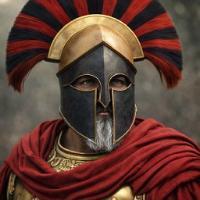
Civ: Achaemenid Persians
wowgetoffyourcellphone replied to wowgetoffyourcellphone's topic in Delenda Est
The skirmish cavalry has some weirdness, so needs another iteration. -
Antiochus III the Great Antiochus IV God Manifest
-
Seleucus I Nicator
-
-
This debate will never end, so what do you suggest? I am skeptical about *þurpą meaning village that early on. You are skeptical that *haimaz means village that early on. Is there an alternative?
-
@Genava55 Definitions 1 and 2 refer to Gl 1 and 3, both from the 8th century, so the meanings seem more simultaneous than sequential (one would need to believe the shift happened exactly there). The second line states "got. thaúrp (in anderer Bed.)", showing that in Gothic (the black sheep in all this) the meaning is different. Looking at the Old English lexicon: https://wehd.com/94/Thorp.html, the earliest reference, from 725 AD, treats conpetum, tuun, and þrop as equivalent, closer to a village than a single farm. The ending -heim doesn’t originally refer to a settlement, it’s the genitive ending of a singular personal name, as in Mannheim and Ingenheim meaning "Manne’s home" and "Ingo’s home" (or homeland), with the settlement meaning derived later.
-

3D Modeler and Texture artist Application - Emma Anufrij
Emma replied to Emma's topic in Applications and Contributions
@nifa sounds great At the moment I am doing some tests to get familiar with importing models and textures and so on. -
See this lexicum : https://awb.saw-leipzig.de/?sigle=AWB&lemid=D01106 It seems clear in the case of Old High German that farmstead and farmland are the first meaning. And it is even clearer that Old High German retained different meaning and different expression related to this root suggesting a general shift from the singular to the collection. The direction of the change is obviously from a singular farmstead to a collection. The entry breaks down the definition into four distinct historical layers: 1. The Estate or Farmstead (Hof, Landgut) In this earliest sense, thorf refers to private property—essentially a "manor" or a "ranch." a) The Reluctant Guest: One citation describes a man excusing himself from a banquet: "thorph coufta ih... inti gisehen iz" ("I bought a farm/estate... and I must go see it"). This uses the Latin villam as a reference, meaning a private country estate. b) The Prodigal Son: In the famous biblical parable, the master "santa inan in sin thorf, thaz her fuotriti suuin" ("sent him to his farm/estate to feed pigs"). Here, the thorf is clearly a specific agricultural property owned by an individual. 2. The Village or Rural Settlement (Siedlung) This is where the word starts to describe a collection of houses, often defined by what it isn't (i.e., it isn't a fortified city). a) The Unwalled Town: The text defines dorf as a "vicus"—a place that has streets but "sine muris" ("without walls"). b) The Contrast with Cities: One example says, "manige uuesen in demo dorf, unmanige in dero burg" ("many people are in the village, but few are in the [fortified] city"). This shows dorf becoming a category of settlement size. c) Specific Locations: The text mentions "thaz thorf thaz dar giquetan ist Gethsemani" ("the village that is called Gethsemane"). 3. The Neighborhood or Quarter (Stadtviertel) This is a more niche use where thorf describes sections of a larger urban area, often in the plural (thorphun). a) Public Display: A warning against hypocrisy: "so thie lihhazara tuont in dingun inti in thorphun" ("as the hypocrites do in the assemblies and in the [streets/neighborhoods]"). Here, it translates the Late Latin vicos, meaning the public blocks or quarters of a town where people gather. 4. The "Crowd" or "Peasantry" (Menge von Bauern) This is the most "abstract" evolution. The word for the place starts being used to describe the type of people found there. a) The Rustic Multitude: One entry notes a scribe used dorf to translate rusticam manum ("a rustic hand" or "a crowd of country-folk"). b) The "Village-Dweller": The text even mentions a derivative: uillanus dorphere (literally a "villager" or "peasant"), showing how the word was used to build new social categories. Old High German retained the direction of this change in various ways. There is no doubt about that. The Gothic Bible uses the word haims to translate the Greek kōmē (village). Place names ending in -heim (in Germany) and -ham (in England) appeared frequently during the Migration Period (5th-6th centuries). There are also runic inscriptions that make more sense if the root is interpreted as meaning village or community. At least the shift looks more ancient. The codex Abrogans is a glossary, for example it is simply written the equivalence between 'uilla' (villa) and 'thorf'.
-
@Genava55 The Codex Abrogans is from the 8th century. I shortened “villa worker” to “villager”, maybe changing the exact meaning, but the point remains that these things happened, even when they are later examples. I’m just trying to make sense of what the dictionaries actually say. Another issue could be how big these settlements are in context. You say the original meaning is farmstead, but what if a very small collection of farmsteads is also valid? At Proto-Germanic times this would have been the equivalent of a village (again, there has to be a reason why this has been reconstructed as such, besides commonality), and what meaning exactly had on the different branching languages could have turned out to be quite arbitrary and relative, Gothic could have retained a more farmstead position, while all the others considered the increased demographics. And related to this, coming back to the very beginning, what does say that þurpą has to be smaller than haimaz, which is primarily reconstructed as home? Maybe you can quote the relevant passages from the Codex Argenteus and Abrogans.
-
Again, as I said, in Codex Abrogans the meaning leans more towards a farmstead for Old High German. It is only later that the semantic shift happens for this branch. Your example with 'villain' is not correct. 'Villanus' doesn't mean 'villager' nor is equivalent for 'villager'. A villanus is a peasant or a worker in a farm estate, a villa rustica in the Roman perception. 'Village' is a semantic shift appearing much later during the medieval period and once again in the same direction: from a single farmstead to a collection of farmsteads. Villanus means 'villager' only in Middle English after a borrowing from French, where the semantic shift already happened. I don't see anything convincing for the moment to change my opinion.





.png.56940f573218312598d7c5a968938682.png)



.thumb.jpg.b21ca1d0c15fb56b42c39b25a0a40815.jpg)
-
Latest Topics
-


