

Nicolaus_von_Kues
-
Posts
340 -
Joined
-
Last visited
-
Days Won
3
Everything posted by Nicolaus_von_Kues
-
I just found this, I set the AI to track changes from 0 AD, it found this. These are interesting contents outside the main community.
-

0AD Diplomacy & Roleplay community discord.
Nicolaus_von_Kues replied to Bravado2020's topic in General Discussion
What is roleplaying all about? -
ships Naval Boarding - seizure of ships
Nicolaus_von_Kues replied to CheckTester's topic in Gameplay Discussion
Good point. That's why malfunctions and potential exploits should be addressed. PD: I need someone to give me perspectives I'm missing. Feedback is very welcome. That way I can develop my idea. -
ships Naval Boarding - seizure of ships
Nicolaus_von_Kues replied to CheckTester's topic in Gameplay Discussion
I forgot the greek name... Epibatai (?) My idea is to launch maritime invasion operations and carry out raids; I was thinking about that yesterday when I was showing you the riverboats. The ship trains troops on board before launching "Blitzkrieg" operations. I like that concept so that ships aren't so boring. I'm going to leave a channel I follow with a couple of thoughts. -
ships Naval Boarding - seizure of ships
Nicolaus_von_Kues replied to CheckTester's topic in Gameplay Discussion
I agree with that. It should be something that exists to provide greater immersion. +++ On the other hand, I've considered training marines on ships, similar to how the Athenian marines already operate, but aside from some bonuses, I don't know how to make it work. http://amodelcastillo.blogspot.com/2018/03/la-armada-imperial-de-roma-rangos-y.html?m=1 Milites Classiarii for example. We also have the Nautae They are ordinary sailors; they too participated in the combat.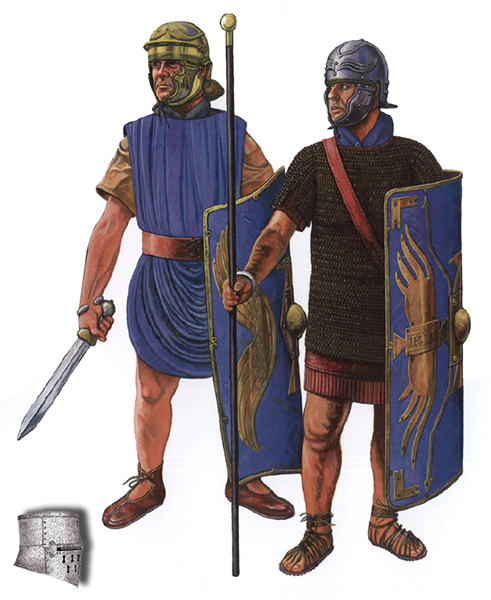
-
ships Naval Boarding - seizure of ships
Nicolaus_von_Kues replied to CheckTester's topic in Gameplay Discussion
It definitely needs to adapt to the role model of the ship. -
It also has an AoM influence. The game was still in its conceptual stage in 2002 when Age of Mythology was released.
-
Precisely because of the golf carts and other vehicles being used in the current war. That's why I said it.
-
What makes a game boring is the lack of variety and the repetition. That it would be more unpredictable, that it would be able to keep you from getting bored and immerse you with its dialogues. A human is capable of using a bunch of camels just because they look cool. Like Hannibal saying satirically: "I use elephants because they are big and look cool in my army, you know there are no elephants in Italy, now they will have them".
-
ships Naval Boarding - seizure of ships
Nicolaus_von_Kues replied to CheckTester's topic in Gameplay Discussion
As I said, the initial implementation should be simple; we'll see how it goes as we test it. That's how the data capture system was implemented—simple. Then we'll see what else can be done. The first layer of implementation will be interesting... -
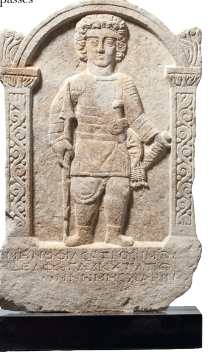
This was the most eastern archer I found. He's from Cyprus.

-
ships Naval Boarding - seizure of ships
Nicolaus_von_Kues replied to CheckTester's topic in Gameplay Discussion
I thought from the start that when you train the ship, it should already come with a basic crew. Let's think of something simple: a modest exploration ship with a couple of warriors and a basic naval commander.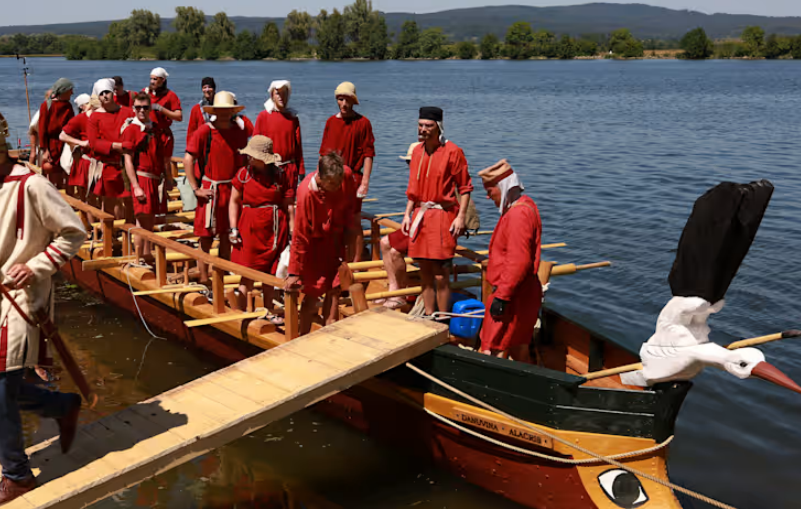
-
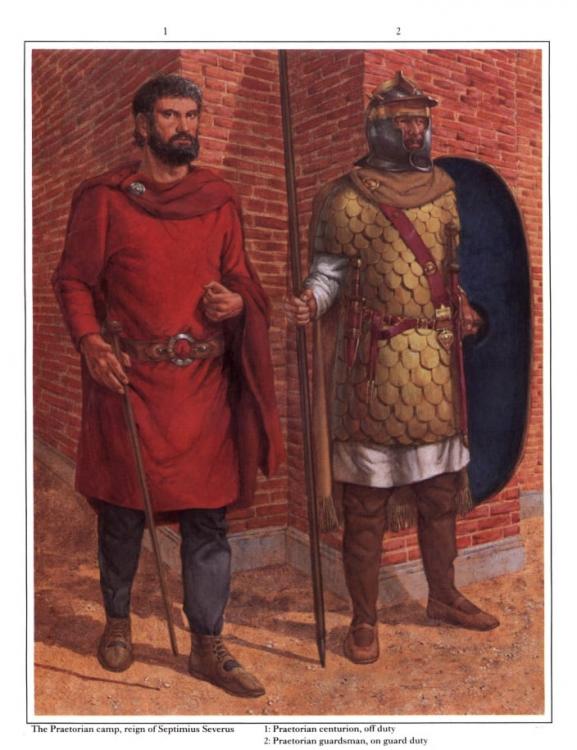
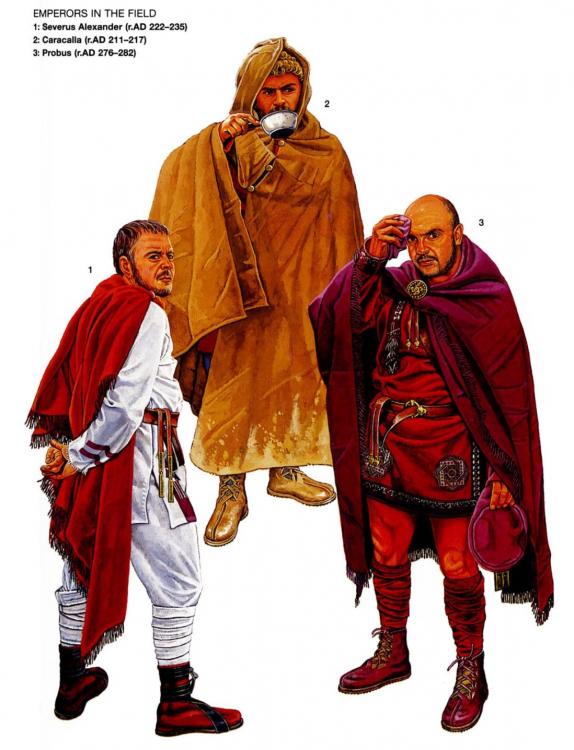
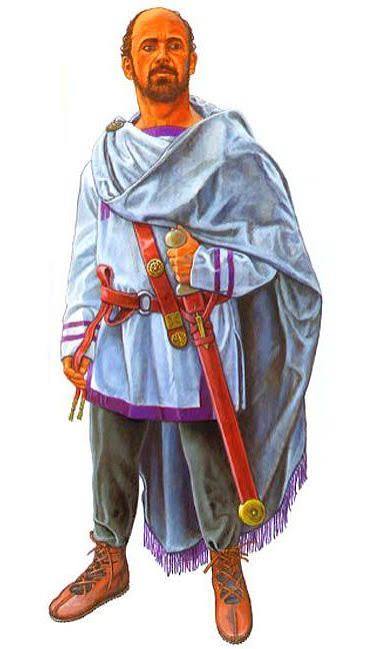
By searching for Julius Terentius you can find images of artistic recreations. By the third century, this seemed to be the standard.
-
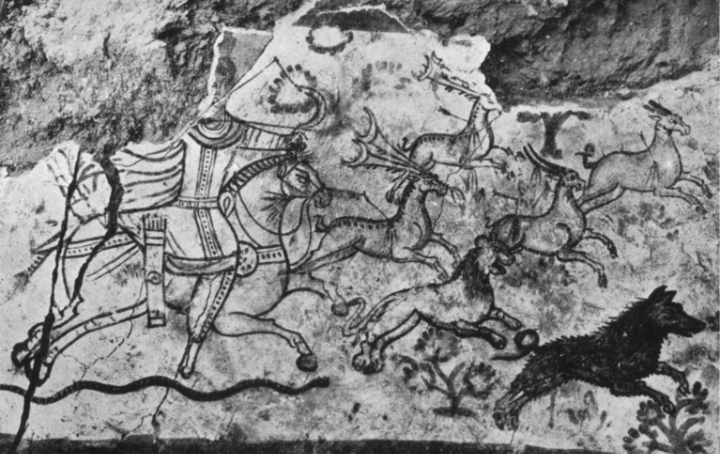
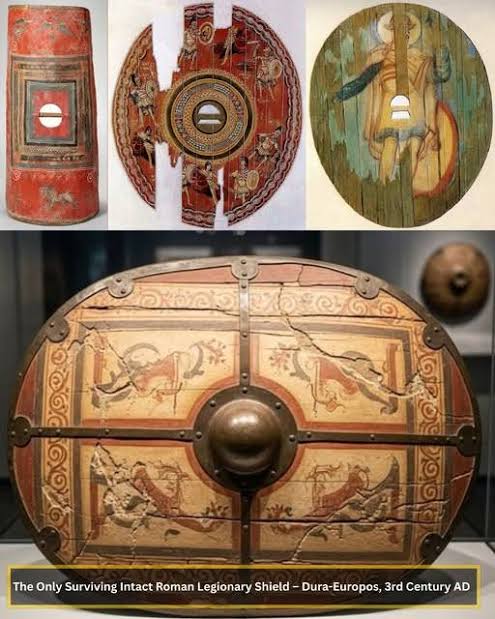
https://www.persee.fr/doc/syria_0039-7946_1986_num_63_1_6923 I will find Dura europos' discoveries useful.
-
look this.. i was not so wrong.
-
I found a copy...
-
ships Naval Boarding - seizure of ships
Nicolaus_von_Kues replied to CheckTester's topic in Gameplay Discussion
First draft: Naval Combat, Crew Experience, Boarding, and Ship Progression in 0 A.D. 1. Three Layers of Naval Combat The naval combat system should be divided into three interconnected layers: the base crew, embarked combat units, and naval officers. Layer 1: Base Crew The base crew consists of the personnel required to operate the ship, including rowers, the helmsman, and other essential sailors. These units do not necessarily need to fight individually. Their contribution can be represented through global ship statistics, including: - Speed and maneuverability. - Ability to maintain course during combat. - Propulsion efficiency. - Operational performance. If the crew suffers casualties, the ship should lose some of its capabilities. Layer 2: Embarked Combat Units These are the hoplites, swordsmen, archers, and other combat units transported aboard the ship. Their composition, statistics, experience, and upgrades should determine their effectiveness during naval engagements. - Hoplites provide a defensive line and resist enemy boarding attempts. - Swordsmen specialize in close-quarters combat. - Archers and other ranged units can inflict casualties before ships make contact. - Specialized units may provide additional advantages depending on the situation. These units should play a decisive role in determining the outcome of boarding actions and fighting on deck. Layer 3: Naval Officers Naval officers include the commander, helmsman, chief of rowers, and marine officer. Their role is to improve the performance of the crew and embarked combat units rather than replace them. For example, the marine officer could improve boarding effectiveness, while the commander could provide a general leadership bonus. 2. Global Ship Statistics When two ships engage in combat, their outcomes should depend on several factors: 1. Statistics: determine each ship's overall combat capabilities. 2. Crew and troop composition: determine the strengths and weaknesses of each vessel. 3. Experience and upgrades: improve combat performance over time. 4. Controlled randomness: represents unpredictable events, tactical opportunities, and battlefield confusion. If two ships have identical crews, combat units, experience, and upgrades, neither should have a permanent advantage. Both should have comparable chances of victory. Randomness should remain limited by the ships' actual capabilities. A significantly superior ship should not routinely lose to a much weaker opponent simply because of random chance. 3. Crew Experience and Progression Every naval engagement should provide experience to the participating crew, regardless of whether the ship wins or loses. Two separate experience systems could coexist: - Crew experience: represents collective coordination and naval proficiency. It could improve maneuverability, coordination, and overall naval performance. - Individual soldier experience: represents the combat experience of embarked units and improves their fighting abilities. An optional third system could provide experience to naval officers, allowing them to develop specialized leadership bonuses. Ship upgrades should remain distinct from experience. They could improve structural durability, speed, or other permanent characteristics. Experience gains should depend on meaningful participation and the difficulty of the engagement. Repeatedly fighting insignificant opponents should not provide an easy way to accumulate unlimited experience. 4. Capturing Enemy Ships Captured ships should have strategic value beyond simply removing an enemy vessel from the battlefield. An important design question is whether experience belongs to the ship itself or to its crew. One possible solution is to preserve part of a vessel's accumulated naval experience when it is captured, while introducing penalties or an adaptation period for its new crew. Capturing a veteran ship would therefore be rewarding, but it would not automatically provide a perfectly loyal and fully integrated crew. Boarding actions should also award experience to the units that participate in the fighting and successfully capture the vessel. 5. Experience for Capturing Buildings Capturing buildings should contribute to unit progression. - Units participating in an assault should receive experience for their combat contribution. - Units completing the capture should receive an additional capture bonus. - Defenders should gain experience for fighting attackers and successfully defending or recapturing the building. To prevent players from exploiting the system by repeatedly capturing undefended buildings, bonus experience should depend on the objective's importance and the resistance encountered. A similar principle should apply to capturing ships. 6. Loot and Rewards Successful captures could provide a small amount of loot, representing recovered supplies, equipment, or requisitioned resources. Loot should be an additional reward rather than the primary purpose of combat. For naval captures, the amount of recoverable resources could depend on the condition of the captured vessel and whether it survives the engagement. 7. Health, Casualties, and Recovery The system should distinguish between ship health and crew health. - Ship health: represents structural damage and should require repairs. - Crew health: represents injuries and combat exhaustion among individual soldiers and sailors. It should recover gradually over time. Crew members should not necessarily recover all their health at the same rate. Structural damage should generally require repairs at a port or through a dedicated repair mechanic. This would give retreats strategic importance and make ports valuable logistical assets. 8. Possible Implementation Models Two principal approaches could be considered for implementation in 0 A.D. Option A: Global Naval Combat The statistics of both ships determine the engagement and its casualties. Embarked units influence the outcome through their numbers, composition, experience, and bonuses. This approach would be comparatively straightforward to implement and would support large naval battles. Option B: Individualized Naval Combat When ships engage in boarding actions, soldiers physically fight on deck using individual animations, attacks, targets, and casualties. This approach would be more visual and tactical but would introduce significant technical challenges involving unit movement, navigation, and combat on moving platforms. Hybrid Approach A hybrid system could combine global calculations for most naval engagements with individualized combat during decisive boarding actions. This would preserve the importance of embarked combat units without requiring every naval engagement to simulate a complete land battle on a ship's deck. Provisional recommendation: use global ship statistics as the foundation of naval combat, while reserving individualized combat for boarding actions. The final implementation should depend on the capabilities and limitations of the existing 0 A.D. engine. 9. Main Design Question Should hoplites, swordsmen, and ranged units visibly fight individually on the deck, or should their statistics determine casualties while animations merely represent the engagement? This decision will determine much of the technical architecture of the naval combat modification.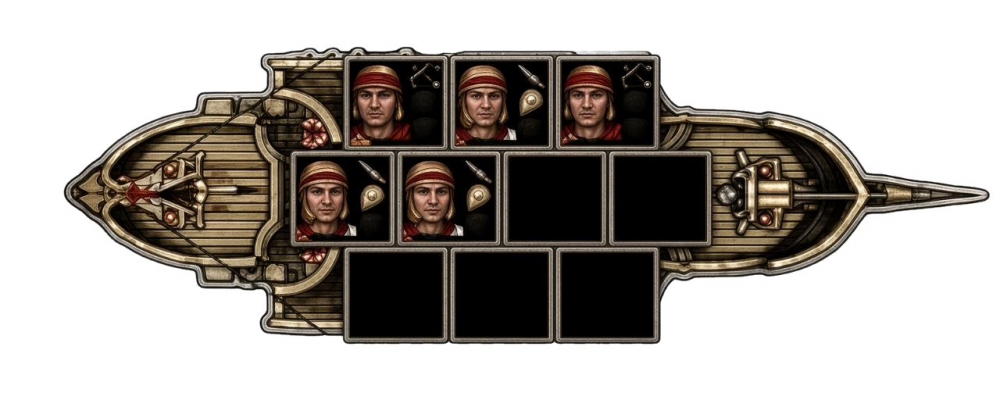
-
ships Naval Boarding - seizure of ships
Nicolaus_von_Kues replied to CheckTester's topic in Gameplay Discussion
Two concepts can form a new one.
-
ships Naval Boarding - seizure of ships
Nicolaus_von_Kues replied to CheckTester's topic in Gameplay Discussion
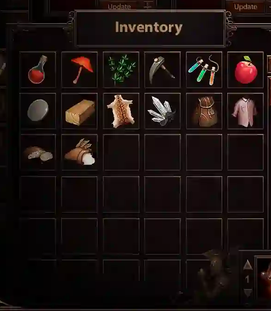
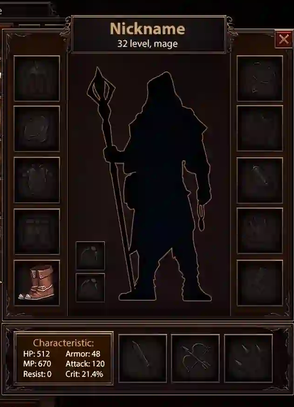
I'm currently reading about the topic and looking for appearance. First, I'll do a basic implementation — I'll probably use Greek or Hellenistic ships as the standard. For the first implementation, I'll only use the crew's controls. That's the thing I mentioned. Also, in theory, they should give bonuses to the ships. The boarding combat simulation will be important. It probably needs to render some troops as virtual, without a 3D graphical existence like their ground counterparts. It would work like an inventory system in RPGs; if you change something, it will change the ship's stats. -
ships Naval Boarding - seizure of ships
Nicolaus_von_Kues replied to CheckTester's topic in Gameplay Discussion
I'm creating some mock-ups Here I am placing the commander.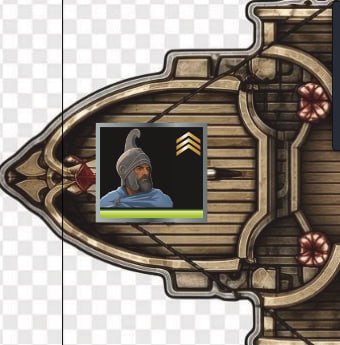
-
Gatehouses. I believe that mechanic exists in games like Stronghold and Caesar III. They can even function directionally. If they're oriented one way, it's input, and if they're oriented another way, it's output.

-
Why isn't 0ad on Steam?
Nicolaus_von_Kues replied to MisterPimmler319's topic in Introductions & Off-Topic Discussion
It was suggested before, but I don't know what decision was reached. -
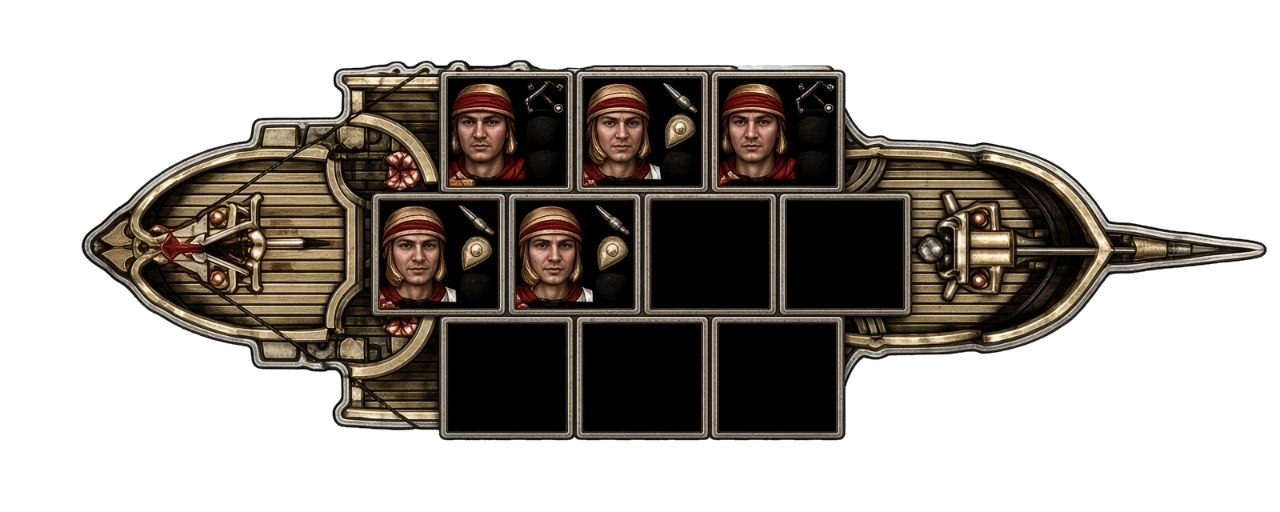
I had a staff lineup, but I need to develop the idea further. The staff needs to be upgradednor gain experience. Based on that personnel, the ship gains different stats.
-
We must try to break the symmetry of the game. There are the non-imperial civilizations, those of a tribal style. Celts, Germans, Iberians... Then there are those whose destiny is to conquer nations and bring civilization to others. There are others that seek to be in the middle, like certain Greek cities. Honestly, the game should change its gameplay according to the culture. There are some who want to live in the land of their ancestors, the land of their gods, to be free, and others who will seek to enslave everyone and demonstrate that their tribe and nation was the one that would bring order to others.
-
New To 0 A.D. But I'm Loving It!
Nicolaus_von_Kues replied to HELIOZAH's topic in Introductions & Off-Topic Discussion
The most beloved civilization.