
.png.a9ae33b5e5ddb0eb2b142b612b99c428.png)
Lion.Kanzen
-
Posts
25.684 -
Joined
-
Days Won
302
Everything posted by Lion.Kanzen
-
https://youtu.be/3POcblOFDLM
-
@wackyserious mentioned something.
-
It would be satisfying to burn. (Visual)
-
.thumb.png.ce58cea22940c255f5b0a735d5abee36.png) There are things that are changing. Those scenarios were helpful in the early alphas. Unused maps or ( or outdated) should go to community maps.
There are things that are changing. Those scenarios were helpful in the early alphas. Unused maps or ( or outdated) should go to community maps. -
You have to micro too much. Ctrl or Ctrl+Q. Not to mention that you can not put hotkeys to the stances. So the troops disperse quite a bit at the slightest deconcentration. Without mention in most cases they are cannon fodder for towers and Fortresses.
-
There are several problems. 1- Soldiers tend to be very incompetent and capture everything. 2- The second thing is the mechanics of capturing and deleting buildings.There should be an extra step. Like an assimilation process. Loyalty is fine. The damage depends... You have understand that a house is not the same as a barracks or a fortress. They must have different mechanics. Capturing 10 houses is a waste of time.
-
The scenarios are good for triggers. Mission-challenge based scenario.
-
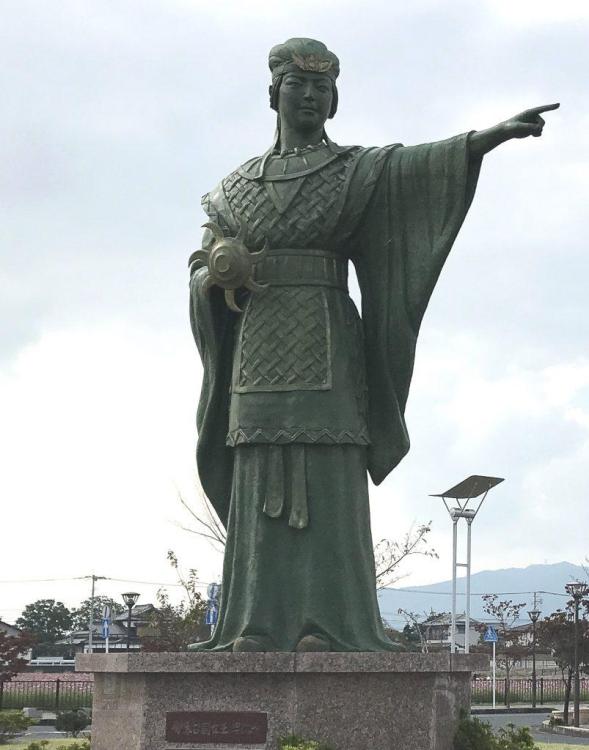
in any case the correct name is Wa. The terms Yayoi and Wajin can be used interchangeably, though "Wajin" (倭人) refers to the people of Wa and "Wajin" (和人) is another name for the modern Yamato people.[9] Wa (Jin means people in Japanese). Anyone who has seen a popular anime like DB in Spanish must be familiar with the term. Example. Saiya-jin. https://doyouknowjapan.com/history/yayoi/ it's problematic to just refer to as Yayoi.
-
in those cases Gaia should pass to allied property.
-
Estoy pensando en llamarlo Reino Yamatai.
-
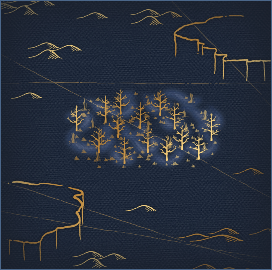
for example Lipany. forests in a valley with mountains around.
-
It's the worst, it's the most boring map. You have to fill some maps with eyecandy, or things to do. We need a gold rush map. I like the new AoE IV maps and the AoM ones. And the exotics from AoE III.
-
as long as you remove what is horrible (aesthetic), that will be fine.
-
Others RTS - Discuss / Analysis
Lion.Kanzen replied to Lion.Kanzen's topic in Introductions & Off-Topic Discussion
I love hybrid RTS games. Bronze era RTS Open World? -
I wasn't going to say it but I was going to say it.Always your mod has practical solutions. ------- @Stan` Delenda Est Solution; For as long as this problem problem is solved...It would be nice to implement not capturing all buildings, especially civilians, houses, and warehouse/farmstead.
-
The problem is that new players don't understand that mechanic. Not to mention is a suicidal move against with towers and fortresses. And No tutorial explain about this mechanics.
-
In the Argentine communities they are called Roberto. I never knew why. Sometimes it's part of the trolling. ------ (1 and 2 ) I don't understand the need to show the body on the internet. (Men and women). For some reason the new generations think that showing nudity is normal. I find it very bizarre how the internet creates certain behaviors. for a cleavage photo it is already scandalous. I know there is art, but most of the photos I see on the internet are not art. (3 ) it would be a poor security decision.
-
I've been asking for this for years. ITMS said no in those days. @Stan` Maybe you think differently. Capture must be a behavior that can be toggled on or toggled off.
-
I don't remember, I think it was a setting in the templates files.
-
Civ: Dominate Romans (late Rome)
Lion.Kanzen replied to wowgetoffyourcellphone's topic in Delenda Est
Rebellions of the poors. https://en.m.wikipedia.org/wiki/Bagaudae Bagaudae (also spelled bacaudae) were groups of peasant insurgents in the later Roman Empire who arose during the Crisis of the Third Century, and persisted until the very end of the western Empire, particularly in the less-Romanised areas of Gallia and Hispania, where they were "exposed to the depredations of the late Roman state, and the great landowners and clerics who were its servants".[1] The invasions, military anarchy, and disorders of the third century provided a chaotic and ongoing degradation of the regional power structure within a declining Empire into which the bagaudae achieved some temporary and scattered successes, under the leadership of members of the underclass as well as former members of local ruling elites. The name probably means "fighters" in Gaulish.[2] C.E.V. Nixon[3] assesses the bagaudae, from the official Imperial viewpoint, as "bands of brigands who roamed the countryside looting and pillaging". J.C.S. Léon interprets the most completely assembled documentation and identifies the bagaudae as impoverished local free peasants, reinforced by brigands, runaway slaves and deserters from the legions, who were trying to resist the ruthless labor exploitation of the late Roman proto-feudal colonus manorial and military systems, and all manner of punitive laws and levies in the marginal areas of the Empire. -
got me thinking about the emblem again.