
.png.a9ae33b5e5ddb0eb2b142b612b99c428.png)
Lion.Kanzen
-
Posts
25.684 -
Joined
-
Days Won
302
Everything posted by Lion.Kanzen
-
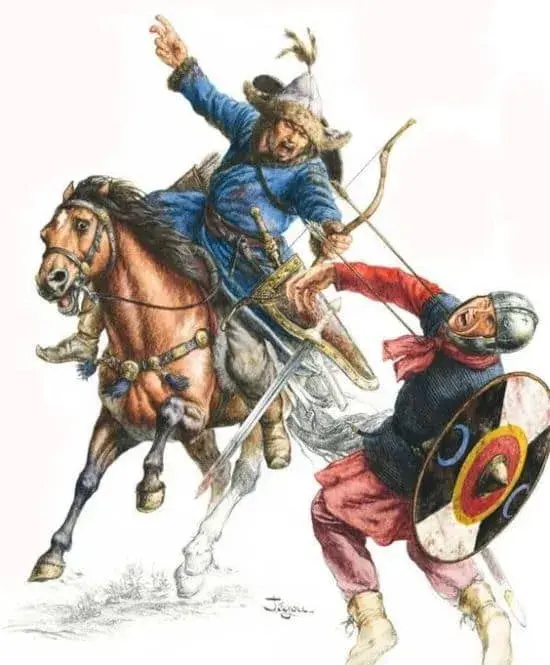
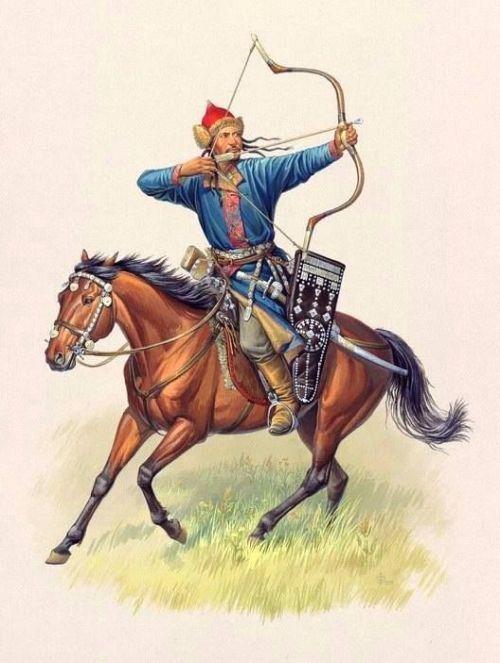
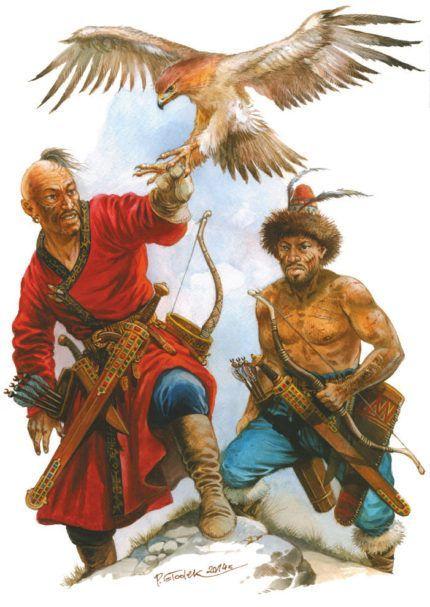
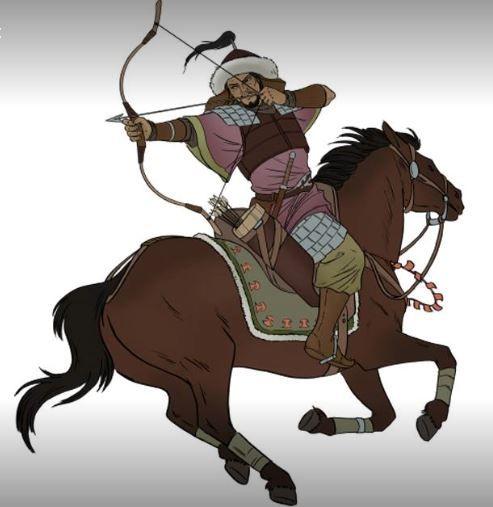
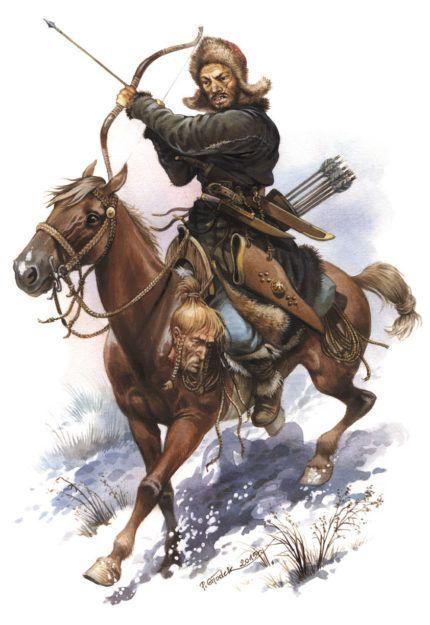
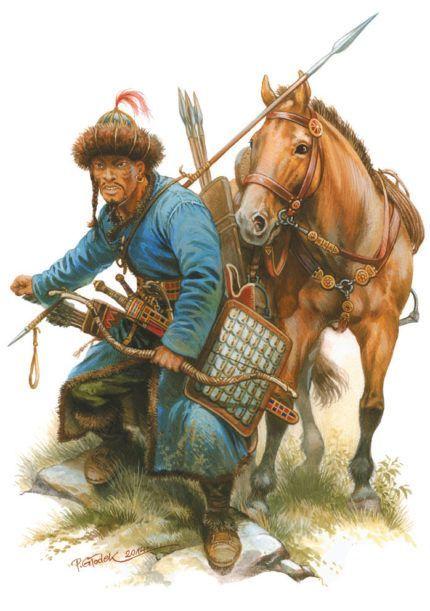
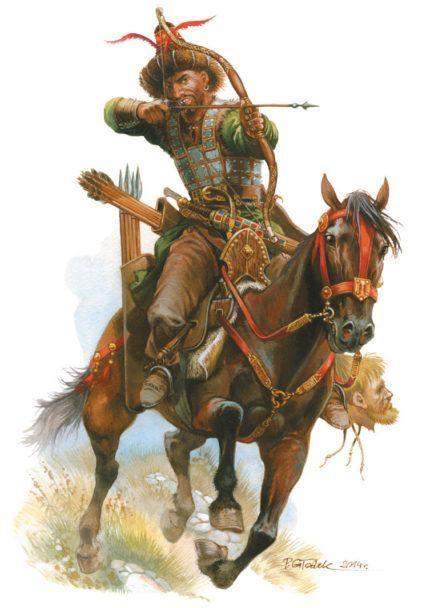
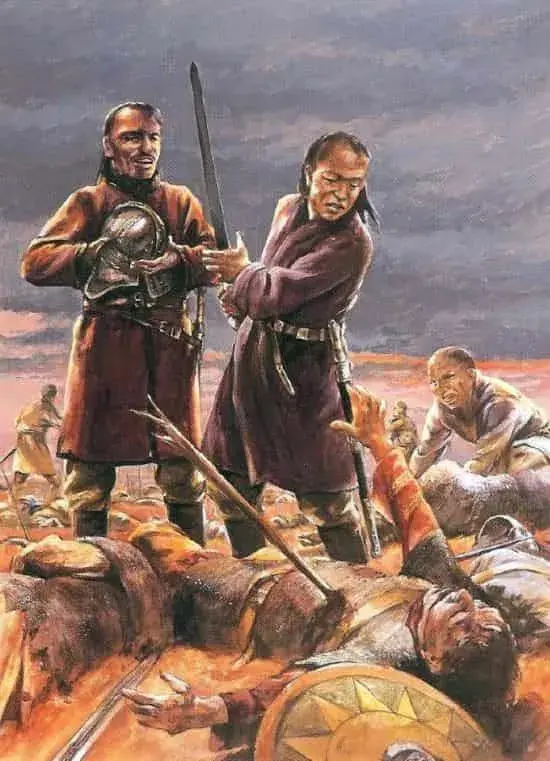
By its very nature, the design of a composite bow pertains to an elaborate arrangement of materials that can resist the forces of both stretching and compression. The steppe dwellers improved upon this design scope by incorporating ‘specialized’ animal materials that had apt mechanical properties. For example, sinew is known to have an almost four-times greater tensile strength than the wooden bow, while the complementary horn has enviable compressive strength. Furthermore, the Huns added notched extensions made of bone or horn (generally sourced from steppe longhorn cattle) to the limbs of the bows – thus endowing them with far greater rigidity than conventional wood can offer. These engineered extensions even had their tactical value, as they allowed the archer to bend and draw a heavier bow with lesser physical effort. And, since we brought up the action of drawing the bow, the Huns were also known for using different arrows for hunting and battles. In case of battles, they preferred to carry arrows with blades that were both stocky and broad, while their shoulders were kept hooked. This made the delicate process of extracting the arrow from an enemy’s body very difficult, which often resulted in extensive blood loss. Agility was the cornerstone of every steppe dweller’s battlefield tactics. The Huns improved upon this scope of flexibility by using their loose formations to surround the enemy. However, they tended to avoid melee combat as much as possible in the beginning stages of the conflict. Instead, their horse archer contingents relied on precise missile barrages that affected the foe both physically and psychologically. And to ‘complement’ such an intense scenario, the Huns intentionally made harsh and guttural sounds that caught the enemy unawares, thus endowing an illusion of Hunnish ferocity and ‘barbarism’. But where the Huns truly excelled was their execution of the seemingly disparate tactics that more than often confused the enemy forces. As Ammianus gave an account of how the Hunnish horsemen quickly divided themselves into scattered bands from an organized formation. Then they rushed forth into various directions of the Romans almost in a disorderly manner, which rather baffled the foe. But this was a trick that simply epitomized the ‘order in chaos’ dictum, and the Huns aptly overcame the Romans by their aptitude in archery and suddenness in charges. Agility was the cornerstone of every steppe dweller’s battlefield tactics. The Huns improved upon this scope of flexibility by using their loose formations to surround the enemy. However, they tended to avoid melee combat as much as possible in the beginning stages of the conflict. Instead, their horse archer contingents relied on precise missile barrages that affected the foe both physically and psychologically. And to ‘complement’ such an intense scenario, the Huns intentionally made harsh and guttural sounds that caught the enemy unawares, thus endowing an illusion of Hunnish ferocity and ‘barbarism’. While the Huns preferred to cut back their hair to the temple region, it was left to grow (usually dirty and unattended) along the back of their heads. However, such ‘hairy’ features were only limited to the head portion, since most Hun warriors shaved their cheeks. This served a ritual purpose, with the soldiers intentionally scarring their cheeks to conform to their societal warrior codes. In some cases, the wounds were made deep (according to Jordanes) to supposedly mourn the loss of their fallen brethren in battles – with the scars symbolizing the tears of blood. The interesting feature of the Hunnish warrior was their practice of cranial deformation – which was usually achieved by binding the head from childhood (when the skull tends to be soft yet growing). Similar practices were also observed in other ethnically different nomadic groups, like the Sarmatians. However, the historians are still puzzled by the Hunnish practice, since almost no contemporary record of such rituals are found from literary sources (which contradict the existing archaeological finds). This had led to the hypothesis that perhaps the practice was only prevalent in the elite groups of the Hunnish society. Mirroring the chaotic military and a rather complex political scenario in the 4th-6th-century Roman world and Eurasia, we know that tribal structures were gradually eroded and replaced by the mutual appreciation of security borne by confederations. To that end, we know of Goths fighting with Romans and yet also serving in Roman frontier armies. Similarly, few Huns (or associated horsemen) possibly took part in the ‘first’ Gothic incursion into Greece. Over time, the Romans also started to employ Hun mercenaries into their service, in spite of their general aversion (and fear) for the ‘horse barbarians’. There are accounts of the Huns being even inducted into the bodyguard units of Romans – as was the case with the bucellarii retinue of Flavius Stilicho, a magister of Vandal descent in the early 5th century. Even Western Roman Emperor Honorius possibly had 300 Hunnish warriors as part of his scholae palatinae (an elite military guard unit) stationed at Ravenna, in Italy. The very same Honorius possibly also employed over thousands of Huns as mercenaries for his war against Alaric, the first king of the Visigoths. https://www.realmofhistory.com/2019/09/19/8-incredible-facts-about-the-huns-you-probably-didnt-know-about/
-
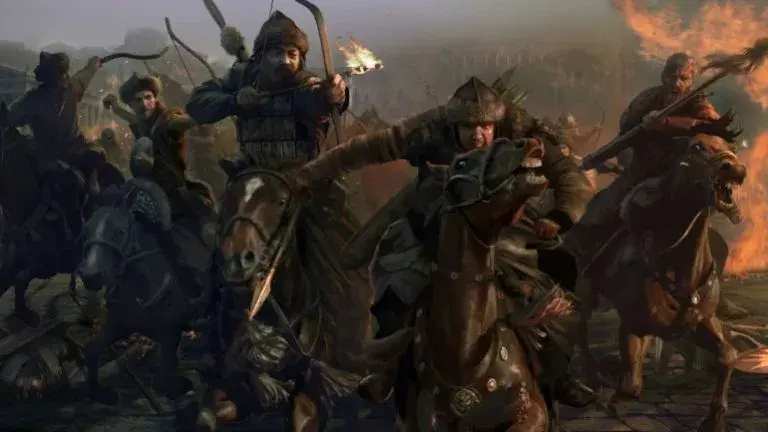
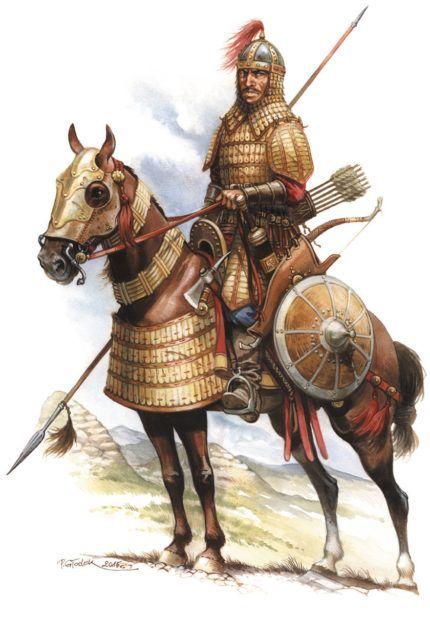
A clear distinction has to be made between the equipment and armor used by the Hunnish elite and the other sections of their army (comprising people from different ethnicities and tribal affiliations). Pertaining to the former, historian Nic Fields has surmised how the high-ranking ‘Huns’ probably favored the steppe-inspired lamellar armor – composed of an arrangement of narrow vertical plates (lamellae) of metal. And while such armor could be slightly inflexible, like the scale armor of the Scythians, modifications (like extending pteruges) over ‘ergonomic’ cuts were made along the armpit and groin regions. In stark contrast, the ‘regular’ Hun was content with the unadorned short-sleeved steppe tunic made of wool or goat hair. As for protective gear, the horsemen, especially the heavy horse archers were furnished with small circular shields made of wood or hide that could be attached to the forearm. These were complemented by helmets like the typical spangenhelm (made of multiple pieces that gave way to a conical form), many of which were acquired as booty from raiding and plundering enemy camps. Coming to weapons, like many contemporary armies, the spear and sword were preferred by the cavalrymen.
-
The death of Attila had huge ramifications for the burgeoning Hunnish Empire. Like we mentioned before, the Huns never really had a system of centralized government, but Attila’s effective rule (complemented by his dynamic personality) filled that administrative and political void. Furthermore, the Huns themselves (as Turkic elites) were a minority in their empire, outnumbered by folks from the eastern reaches of the Baltic and the Balkans. Consequently, after Attila’s untimely demise, many of these East Germanic subjects and their allies led various rebellions to fill the power vacuum, while at the same time the Hunnish confederacy broke into various singular tribes due to lack of senior leadership. Historical events rather mirror such a chaotic state – with the Gepids (an East Germanic people) dealing a crushing defeat on Attila’s eldest son Ellak in Pannonia in circa 454 AD, which led to the latter’s death. However, as opposed to popular opinion, the death of Attila (and many of his successors) didn’t completely signal the end of the Huns. Some of the major tribes, although fractured from the larger confederacy, migrated to the steppes, especially in and around what is now Ukraine, to continue their nomadic and semi-nomadic lifestyles.
-
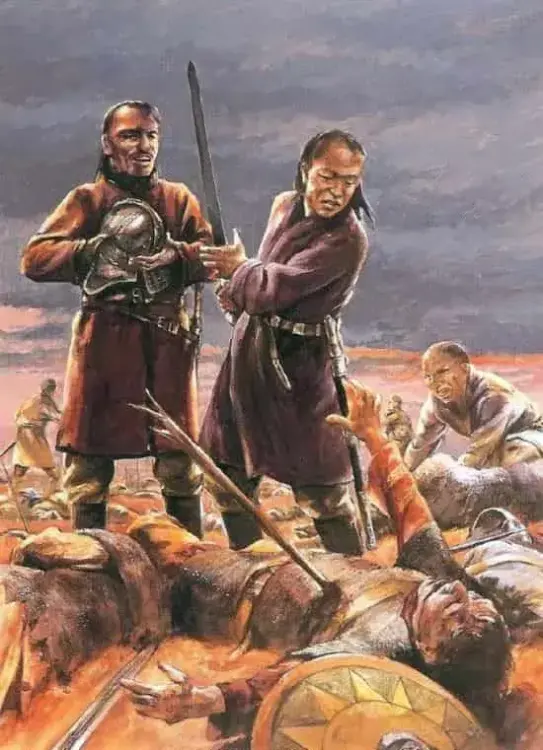
However, before the birth of Attila, the formidable onslaught of the Huns had already claimed the Alans, a probably Iranic (with Germanic elements) tribe as the first victim, by circa 370 AD. Their next target pertained to the Greuthungi Goths (who mainly resided by the Eurasian borders), with ancient sources mentioning how the pressure was so high on the Gothic king Ermanaric that he had to resort to suicide. Finally, the Huns approached near the borders of the Roman Empire and started to coerce the frontier Thervengi Goths (who mostly lived within Roman territories). This directly led to widespread chaos in the Western Roman Empire, with the desperate (and rebellious) Goths, in turn, delivering a crushing defeat on the Roman army at the Battle of Adrianople in 378 AD. The Hunnish incursions also afflicted the Eastern Roman Empire, so much so that by 398 AD, the Hunnish tribes were known to have devastated Thrace and even reached Syria. But instead of occupying and conquering territories, they were content with plundering – which in itself suggests that the Huns still didn’t have a fully centralized structure. Simply put, their disparate tribes, by virtue of their autonomous nature (within a larger super-tribe) made forays based on localized conditions – both political and economic
-
This, in turn, hints at their identity as a super-tribe or a confederacy (rather than a single tribe) with vast resources and manpower – who could manage to escape climatic conditions of their native lands (probably present-day Kazakhstan) and further effectively invade neighboring domains. Some scholars have conjectured that many tribes of this Hunnish confederacy were of possibly Turkic or mixed-Turkic origins. And as the super-tribe moved westward, it must have incorporated elements of other ethnicities, including the Germanic Goths and Iranic Alans, thus leading to an even more dynamic and complicated tribal structure.
-
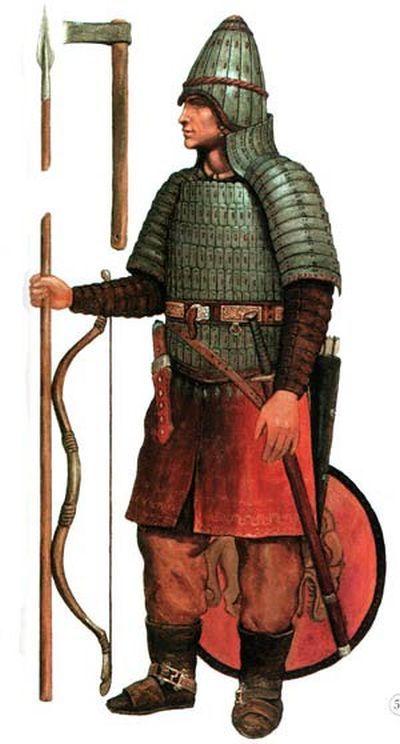
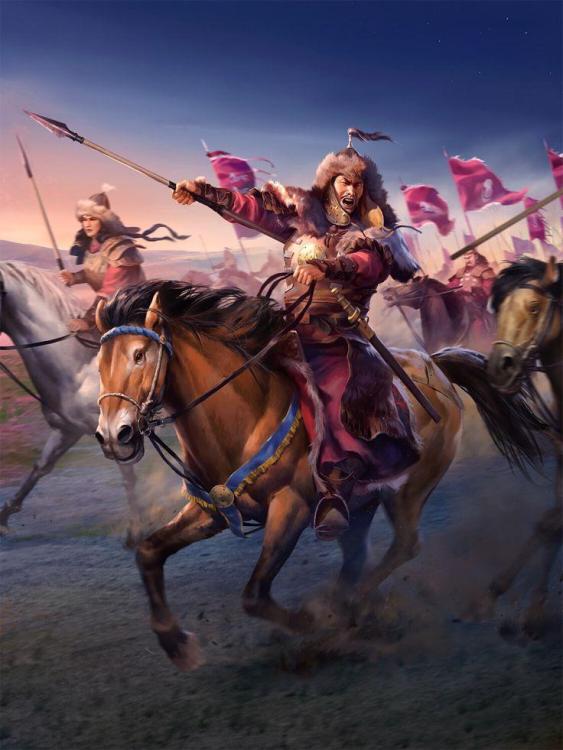
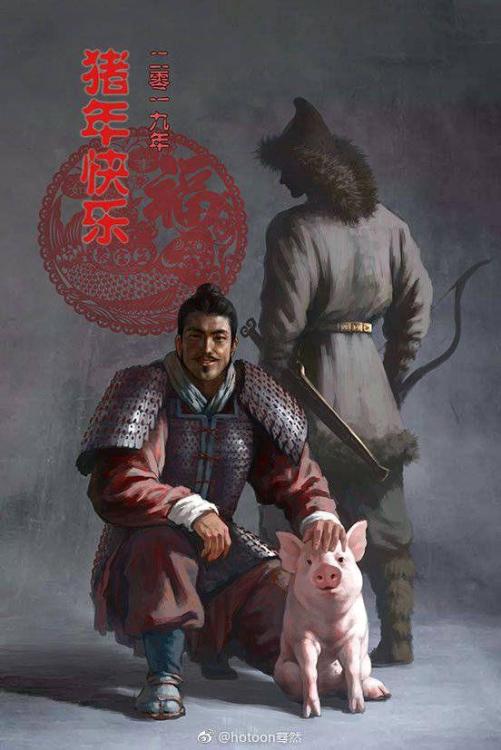
champion infantry would be like this. It has all the elements of Central Asia. Lamellar conic helmet. Lamellar pads. Neck protection. We have to take advantage of silk. For the colors.
-
-
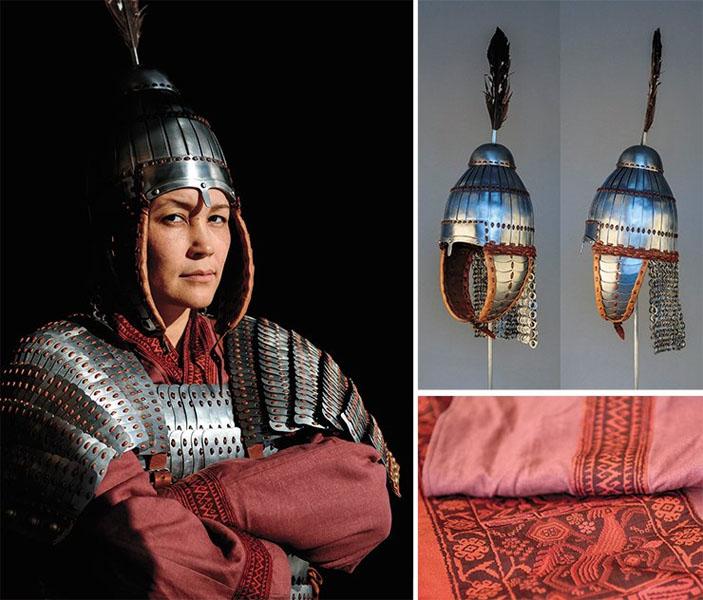
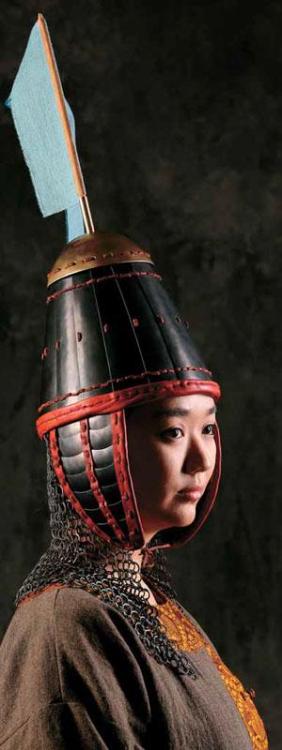
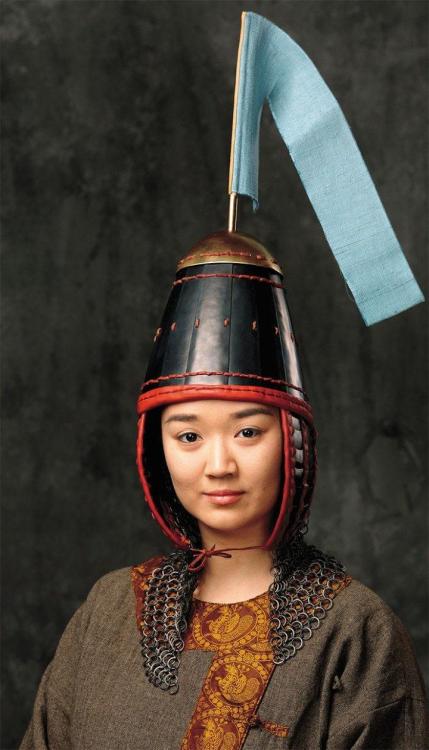
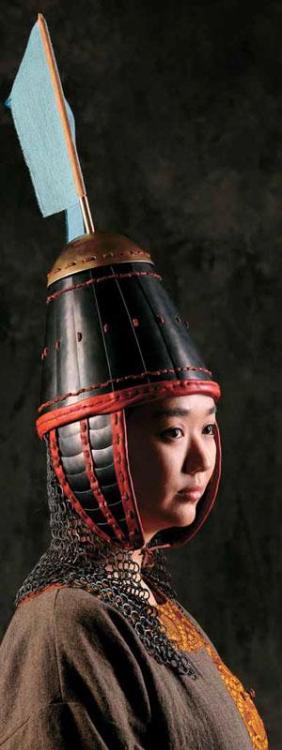
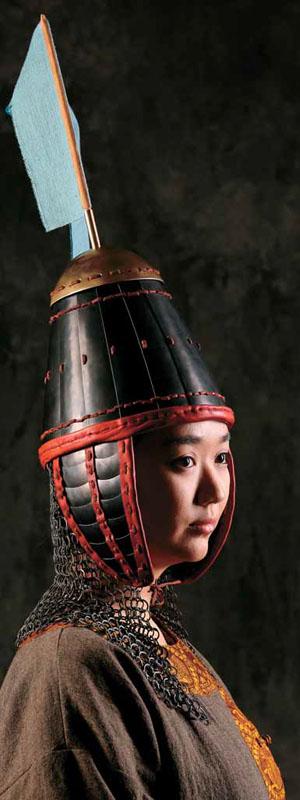
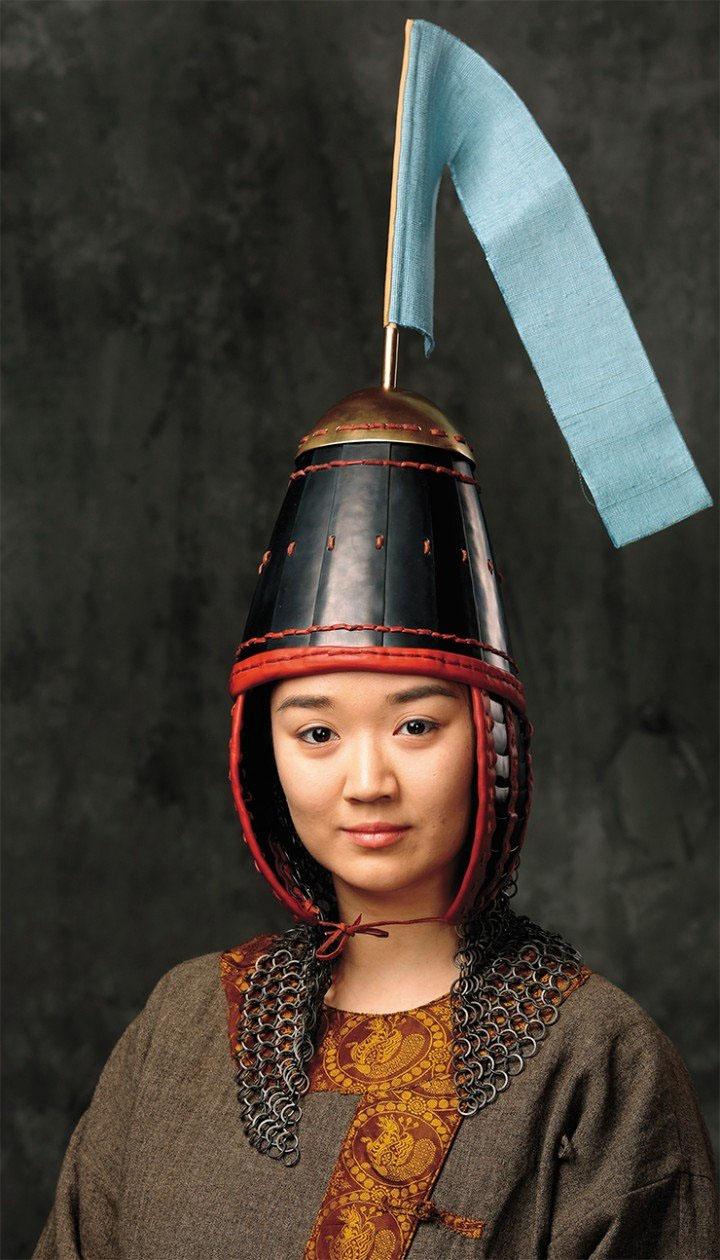
Among the warlike nomads, whose entry into the historical arena coincided with the collapse of the Xiongnu power and the "great migration of peoples", were the tribes of the Kenkol culture. In the first half of the first millennium, they ruled in the mountains and valleys of the Tien Shan and in the Semirechye. They were tall, strong and brave warriors with Caucasian features. Xianbi had a custom of putting a ring on the baby's skull so that the shape of the head became elongated, in the form of a conical helmet, and such deformation did not pass painlessly. Kenkoltsy warriors were heavily armed armored horsemen equipped with the most formidable, offensive and defensive weapons: long-range bows with conventional and armor-piercing arrows, shock pikes, long swords and broadswords. The body was protected by shells made of iron plates of various types: scaly, the surface of which consisted of spherical protrusions capable of weakening the blow of a sword or broadsword, of horizontal plates, as well as chain mail. Round-shaped shields with metal edging and spheroconic helmets were used, which could differ in details, as can be seen from the frescoes of Kyzyl dating back to this time. The dome of the helmet, as a rule, was plate-shaped, with a spherical pommel in the form of a crest, with a plate-shaped barmice pulled together on the chin.
-
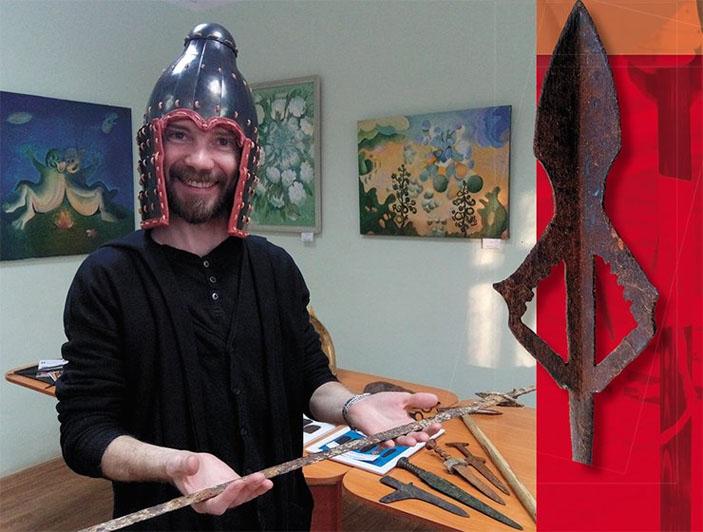
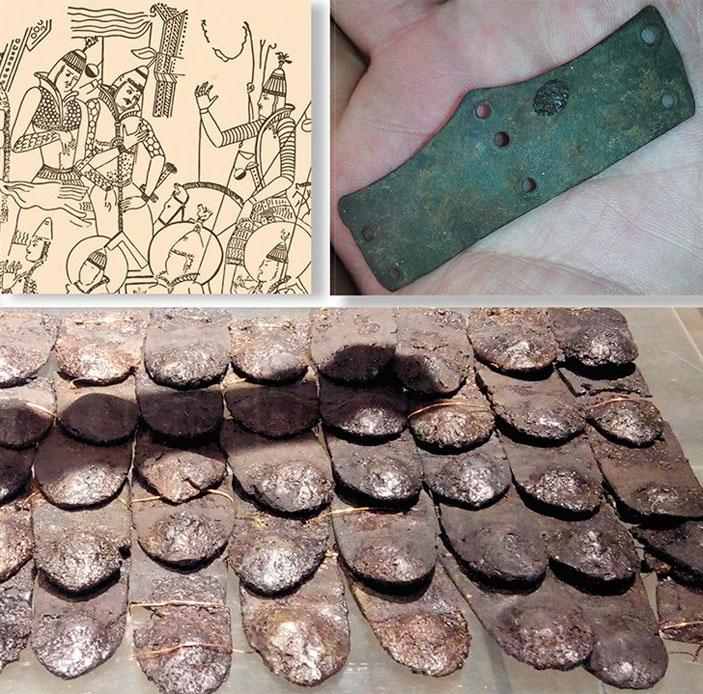
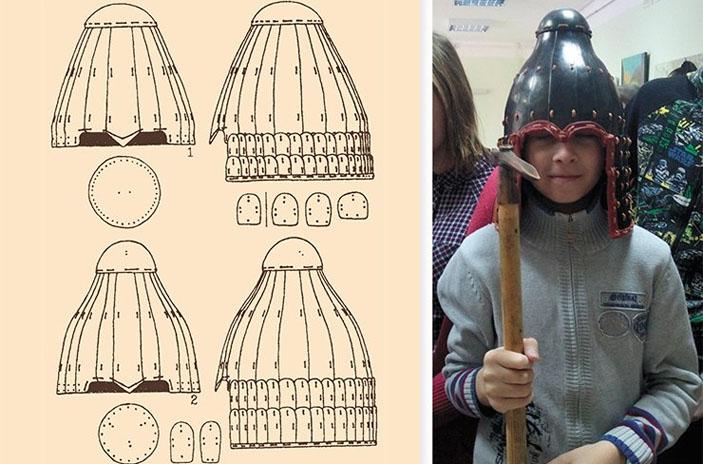
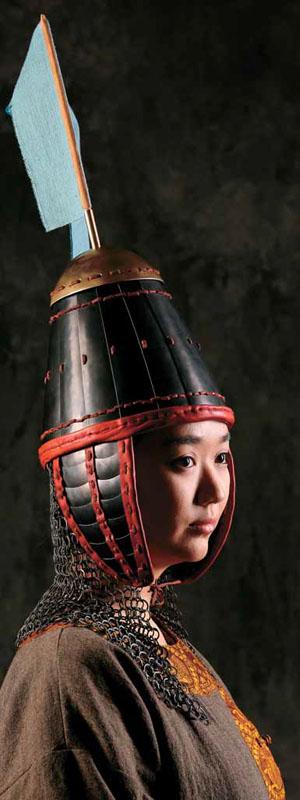
very similar to the Xianbian , Avar and Alan equipment. https://elementy.ru/nauchno-populyarnaya_biblioteka/435540/V_roskoshnykh_shlemakh_v_pyshnom_bleske_lat Xianbi - the successors of the Xiongnu As a result of continuous wars with Ancient China and civil strife in 57-55 BC, the Xiongnu were divided into northern and southern. The latter completely fell under the influence of the Chinese Han Empire, part of the northern Xiongnu went to the west, and the rest were soon assimilated by the Xianbi tribes who lived to the east. Subjugating the Huns, the Xianbis formed their own state association, which reached the peak of its power under the leader Tanshihuai (141-181 AD). The strength and power of the Xianbians was experienced by the Middle Chinese state, which for hundreds of years had been in a state of continuous war with its northern nomadic neighbors. However, already in the middle of the III century. the Xianbis broke up into a number of independent principalities, among which the largest were Toba Wei and Muyun, which existed within Southern Mongolia and Northern China. Xianbian warriors protected the body with a scaly shell made of iron plates connected by straps threaded through holes, and the head with a spherical helmet with a dome of long narrow plates, with a pommel and a scaly barmice. Although the Xianbians themselves were hardly the developers of a new progressive type of narrow-plate helmets, but their widespread spread from Korea to Eastern Europe occurred precisely in the Xianbian era. The first such samples, which appeared at the end of the I century, probably originated from similar Hunnic ones. The Hunnu —Hunnu, Xiongnu) are nomadic tribes who created a powerful tribal alliance in the steppes of Central Asia, which reached its greatest power under the supreme ruler Mode, who took this post in 209 BC. A huge territory appeared under the rule of the Hunnu: from Khingan to Tien Shan and from Baikal to the Gobi Desert. Although cattle breeding continued to play a leading role in the life of this people, their way of life was changing, becoming more settled, agriculture, metalworking and crafts began to develop Subject scientific and historical reconstruction of the helmet of the Kenkolsky warrior of the III-V century. It is made based on the images of warriors in the frescoes of East Turkestan and finds of helmet parts of a similar design in adjacent territories. Photo by A. Bolzhurov
-
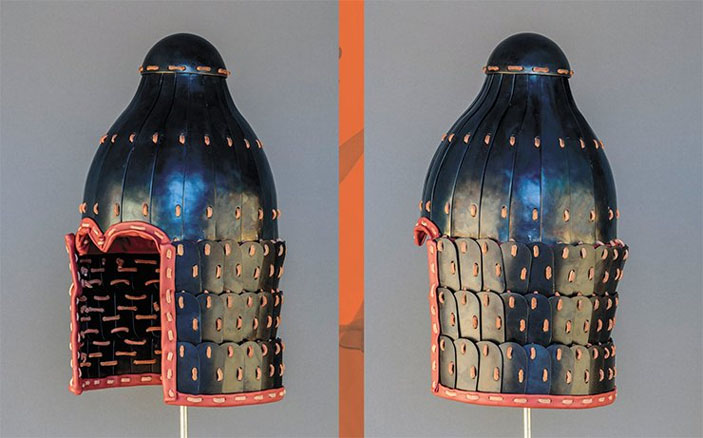
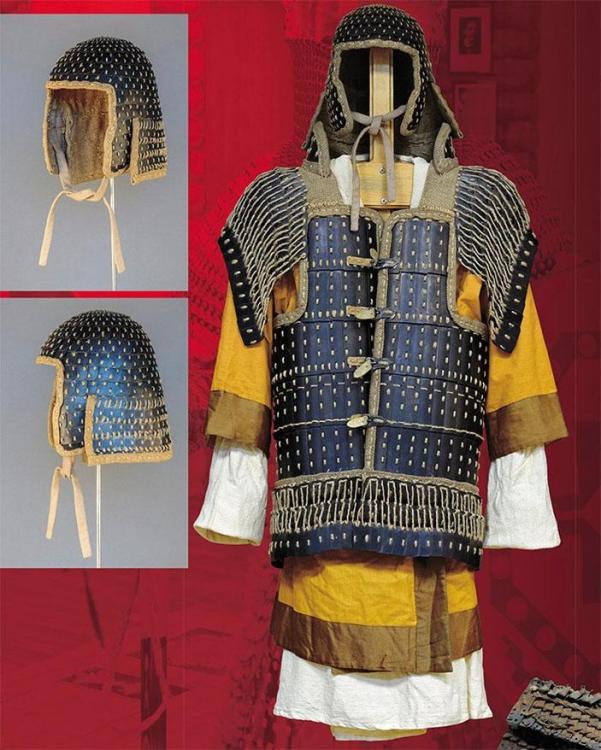
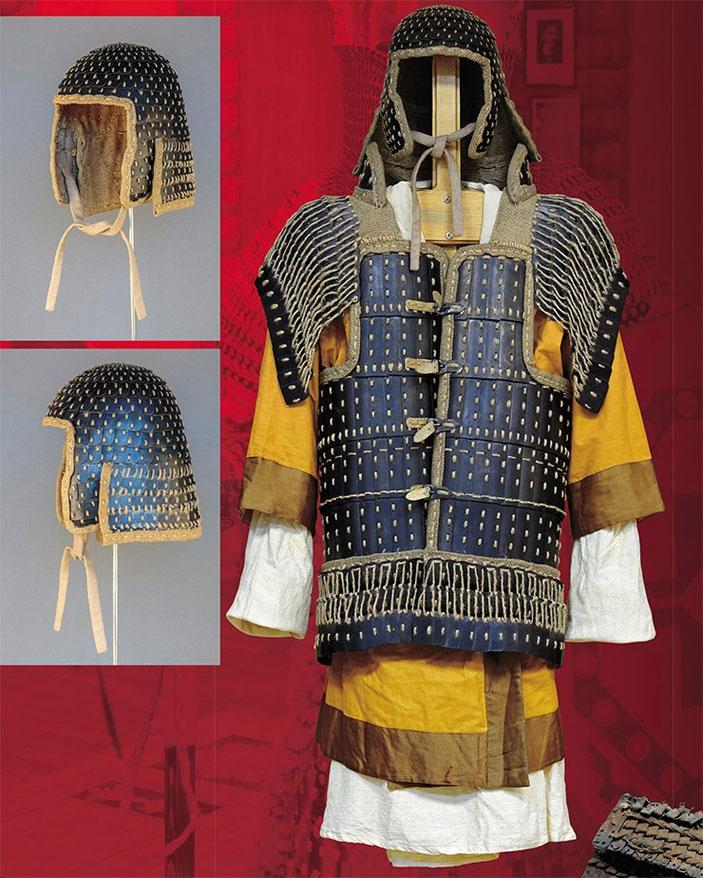
Subject scientific and historical reconstruction of the helmet of the Xianbei warrior of the II-III century. Based on materials from the Laoheshen burial ground (Jilin Province, China). Photo by S. Borisenko Three helmets from the Laoheshen burials (PRC) served as a model for reconstruction. The details of these helmets were connected to each other by leather straps or linen ribbons. Judging by the fabric prints on the underside of the shell plates from the burial, the armor had a lining of soft materials. Subsequently, helmets of this type with a stable set of features — a spherical set crown of vertical segments, brow notches, a disc-shaped or spherical pommel, with a barmice - were massively used in Central and East Asia. A special place in the state of the Xiongnu was occupied by military affairs. The warriors were armed with a complex bow with bone overlays, whistling arrows, a spear, a sword and a shell with a helmet. Iron helmets, which appeared in East Asia in the III century BC, first had a lamellar set structure. The reconstructed Hunnu helmet is the newest flexible lamellar-cord construction for its time, similar in shape to a hat with earflaps with a headpiece. It is obtained by connecting scaly steel plates with a hemp cord. The fabric hemp balaclava sewn from the inside represented a single whole with the helmet, serving both to soften the blows and ease of wear, and to strengthen the plate base of the dome. Similar structures were first used to reserve the corps of warriors, but then they were also used to protect the limbs and especially the head. The simplicity of manufacturing steel elements and the assembly itself contributed to the widest distribution of such heads. There are still many armor of the Xiongnu, Xianbi, Rouran (Avar) warriors https://elementy.ru/nauchno-populyarnaya_biblioteka/435540/V_roskoshnykh_shlemakh_v_pyshnom_bleske_lat [russian]
-
.thumb.png.ce58cea22940c255f5b0a735d5abee36.png)
Faction idea: Koreans (Silla, Gojoseon,Goguryeo)
Lion.Kanzen replied to Lion.Kanzen's topic in Rise of the East
-
Faction idea: Koreans (Silla, Gojoseon,Goguryeo)
Lion.Kanzen replied to Lion.Kanzen's topic in Rise of the East
-
Faction idea: Koreans (Silla, Gojoseon,Goguryeo)
Lion.Kanzen replied to Lion.Kanzen's topic in Rise of the East
-
Faction idea: Koreans (Silla, Gojoseon,Goguryeo)
Lion.Kanzen replied to Lion.Kanzen's topic in Rise of the East
Baekje Cultural Complex. Baekje Cultural Land, built over a period of 17 years, is nestled in Gyuam-myeon, Buyeo-gun, Chungcheongnam-do, providing a home to Baekje’s Cultural Heritages. The complex was used as a filming site for “Running Man”, in the episode starring Jeong Wooseong and Han Hyoju. The site is spread out over 3,276,000 square meters, filled with the trace of Baekje Culture. Sabigung Palace reproduces the scenery of a royal palace during the Three Kingdoms period, and Neungsa Temple, a royal temple representative of Baekje, has been recreated according to the real size at the historic site in Neungsan-ri, Buyeo-eup. The Five-story Stone Pagoda, prominently seen after passing through Daetongmun Gate and Wiryeseong Fortress during Hanseong Baekje Era, gives a different aspect of Sabigung Palace. To enjoy the entire view of the complex at once, get on the Jehyangnu ferry -
Faction idea: Koreans (Silla, Gojoseon,Goguryeo)
Lion.Kanzen replied to Lion.Kanzen's topic in Rise of the East
Along with Kongju and Iksan, sites in Buyeo were recently named Korea’s 12th UNESCO World Heritage Site. The small city in western South Korea is rarely visited by foreigners, and while the UNESCO bid should help tourism some, I wouldn’t hold my breath. Buyeo was once the capital of the mighty Baekje Kingdom (18BCE – 660CE), which was conquered and destroyed by Shilla in the 7th century. The world heritage nod is for a fortress wall, a stone pagoda, and some royal tombs outside of town. However, most impressive is the recently built Baekje Cultural Land, a recreation of some of the Kingdom’s most amazing gems, including the royal palace, and a huge 5-story pagoda with a golden spire at the top (pictured). Despite the incredible expense and scale of the project, only a handful of families are to be seen walking around on any given day.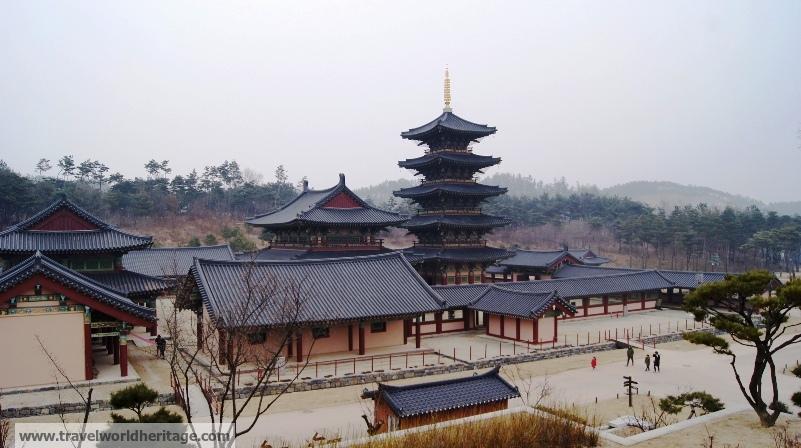
-
Faction idea: Koreans (Silla, Gojoseon,Goguryeo)
Lion.Kanzen replied to Lion.Kanzen's topic in Rise of the East
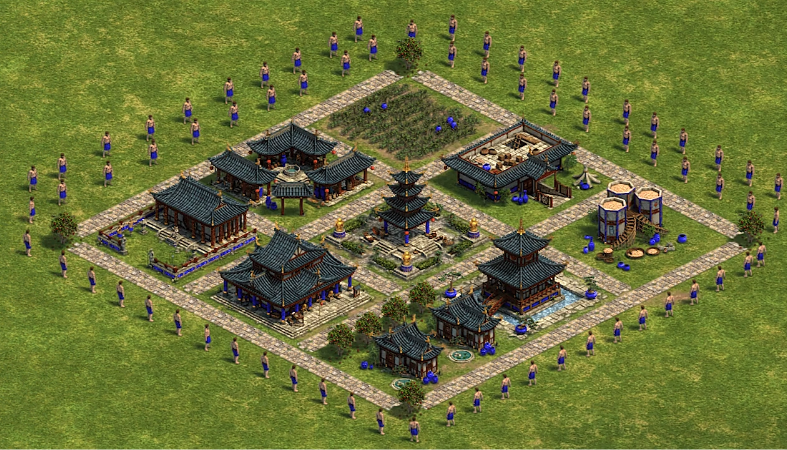
I get the impression that the AOE buildings are inspired by these cultures. https://youtu.be/mamed0fmyRY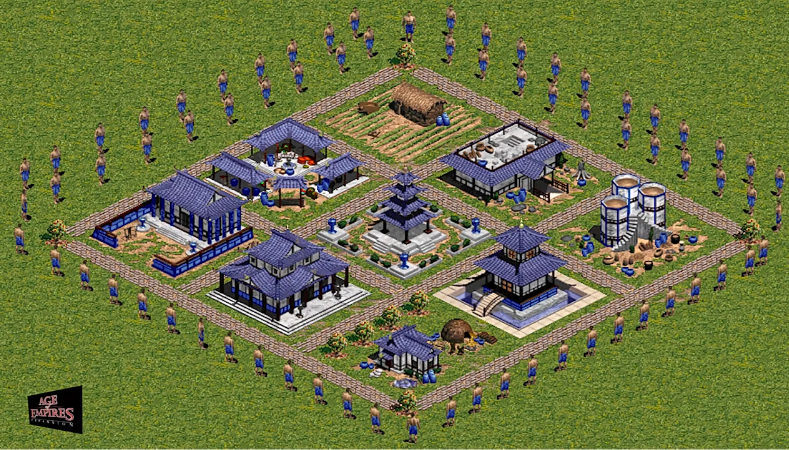
-
Faction idea: Koreans (Silla, Gojoseon,Goguryeo)
Lion.Kanzen replied to Lion.Kanzen's topic in Rise of the East
Buyeo, Chungcheongnam-do, was the 2nd capital of Baekje Dynasty (18 B.C. ~ 660 A.D.) where the country flourished the most in a variety of aspects. The dynasty is well-known for its exquisite architectural skills, delicate arts and highly advanced culture. Buyeo City has approximately 52 historic materials designated by the South Korean Government so in summary, the city is a complete conglomeration of Baekje's history and culture. It's been proved that some of the Japanese population in Osaka are the descendants of Baekje dynasty, mainly of those who moved to Japan to export Baekje's architectural techniques. Even though the dynasty collapsed due to the invasion by the union of Silla Dynasty (Korean) and Tang Dynasty (Chinese), the history and culture are still highly regarded as the most advanced one of the time. https://www.airvan.kr/blogs/Attraction/buyeo-where-the-history-of-baekje-dynasty-lies-sou/.jpg.fe99351007bfceec757ddc7b02a6c554.jpg)
.thumb.jpg.63c0cb0f90b0af1dc3318a5146cd9f34.jpg)
.jpg.6dd7f7b6936bc77dc9825e7d50b05a39.jpg)
-
Faction idea: Koreans (Silla, Gojoseon,Goguryeo)
Lion.Kanzen replied to Lion.Kanzen's topic in Rise of the East
The cavalry of Korea was first introduced during the ancient Korean kingdom Gojoseon. Since at least the 3rd century BC, there was influence of northern nomadic peoples and Yemaek peoples on Korean Warfare. By roughly the 1st century BC, the ancient kingdom of Buyeo also had mounted warriors. With contacts, military intercession, and sailed ventures to Korea, cavalry of Goguryeo were called Gaemamusa and were similar to tanks in the age of the Three Kingdoms of Korea. King Gwanggaeto the Great often led expeditions into Baekje, Gaya confederacy, Buyeo and against Japanese invaders with his cavalry. -
Yayoi period is named after the neighborhood of Tokyo where archaeologists first uncovered artifacts and features from that era. So Yayoi isn't an ancient name.
-
No horses until Kofun era (4th century AD). https://en.m.wikipedia.org/wiki/Horses_in_East_Asian_warfare Most Japanese horses are descended from Chinese and Korean imports, and there was some cross-breeding with indigenous horses which had existed in Japan since the Stone Age.[19] Although records of horses in Japan are found as far back as the Jōmon period, they played little or no role in early Japanese agriculture or military conflicts until horses from the continent were introduced in the 4th century.[20] The Kojiki and Nihon Shoki mention horses in battle.[21] https://nomadit.co.uk/conference/eajs2021/paper/56837 The introduction of the horse and objects linked to horse keeping and horse riding at the beginning of the middle Kofun period (late 4th/early 5th century CE), lead to profound changes in Kofun period society. The import of the horse and the introduction of techniques for horse riding and mounted combat are connected to an influx of highly specialised craftspeople arriving from the Korean Peninsula. In addition to the horse, these immigrants furthermore introduced a variety of new crafts and agricultural skills along with prestige objects to the Japanese archipelago. Tomb murals from North-eastern China and the Korean Peninsula as well as archaeological finds and written sources point to the spread of heavy cavalry throughout North-East and East Asia in the 4th century CE. Archaeologists therefore generally think the horse was introduced to the Japanese archipelago out of military necessity und was subsequently used for mounted warfare due to the Kofun people getting involved in military activities on the Korean Peninsula. On first glance the archaeological material seems to support this hypothesis as from the middle Kofun period on there is a noticeable increase of weapons, armour, horses and their equipment among the burial goods. Many of these objects show strong similarities to objects found in North-eastern China, the Korean Peninsula but also nomadic sites in Eurasia. However, there is a distinct lack of protective gear for horses and an equal scarcity of skeletons with traces of injuries that would indicate that mounted combat actually took place on the Japanese Islands. The lack of Kofun period seagoing vessels furthermore raises the question whether or not it was possible to ferry large contingents of mounted warriors to the Korean Peninsula. This paper will examine the role the horse and mounted warriors fulfilled in Kofun period Japan. It will furthermore analyse their representation and importance for Kofun period society and will show how objects as well as ideas and beliefs were hybridised to conform to local needs by examining exchange between the Eurasian mainland and the Japanese archipelago with a focus on the mobility of people, objects, innovations and techniques.
-
Stone arrowheads unearthed by archeologists suggest that bows and arrows have been used in Japan from as far back as 10,000 BCE, and it was used indeed as a weapon by the Yayoi period (c.300 BCE–300 CE), when fighting and war became frequent and widespread. Early bows were quite simple; they were called Maruki (丸木) and were made of plain wood like atalpa, zelkova, sandalwood, yew or mulberry and were lacquered or wrapped with bark thongs, to increase their durability in the Japanese climate. They were also straight bow. https://gunbai-militaryhistory.blogspot.com/2017/07/yumi-japanese-bow.html?m=1
-
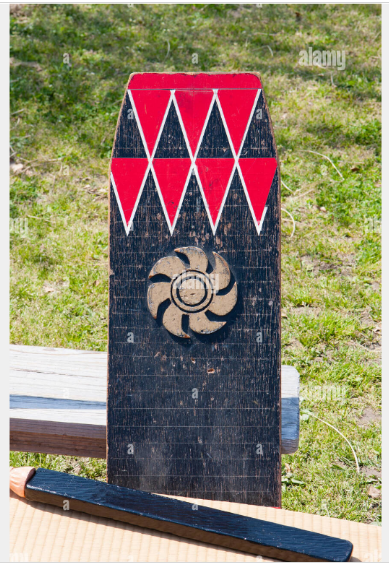
The Yoshinogari stone age park in Japan. A reconstructed Yayoi era, wooden shield, with central motif and black and red pattern at the top.
-
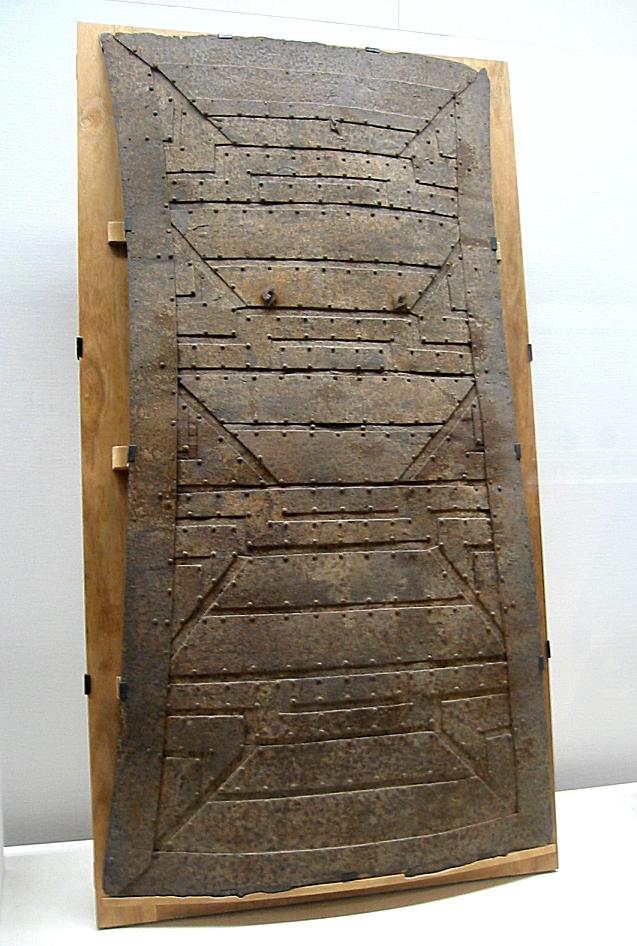
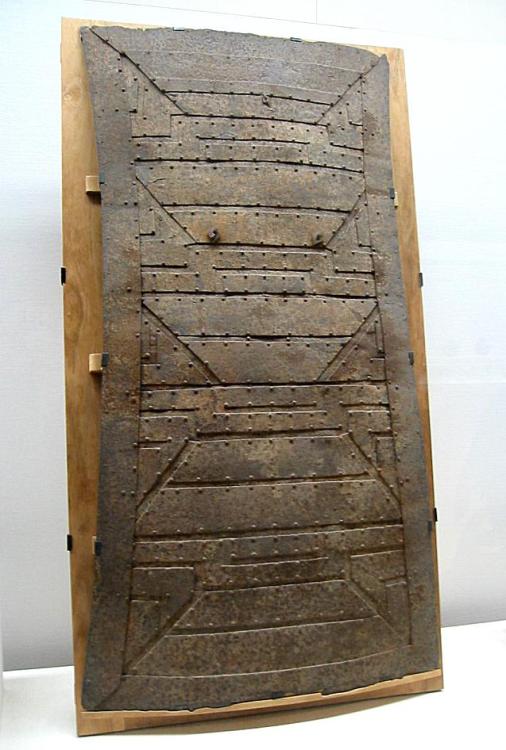
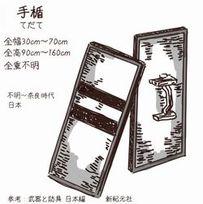
Tate & Tedate (盾 & 手盾) - Japanese Shields. From descriptions in Chinese dynastic record, archaeological evidences and surviving examples we have a lot of information about hand held shields (Temochi tate or Tedate - 手持盾 or 手盾 ) used from the third to the eighth century. These shields were either made of wood, iron plates riveted together or several layers of lacquered rawhide. They were almost all of the time rectangular in shape, 100 to 150 cm in length and 50 to 70 cm in width. Like all the types of Japanese hand held shield, they had a wooden handle in the centre. Hand held shield were used in combination with swords, spears or axes in close combat situation. A riveted iron plates Tate shield from the Kofun period These shields usually called Tate (盾) were either held by their pole or carried by hands by the soldiers. When retreating, they were usually "worn" or placed on the back of the soldiers to protect them. Typically, shields of this sort were lined up, sometimes overlapping like roof tiles, to form a portable wall that protected archers on foot. They were also placed atop the walls of fortifications and hung from the sides of boats. On occasion, they served as substitutes for other tools, such as benches or ladders. http://gunbai-militaryhistory.blogspot.com/2017/12/tate-tedate-japanese-shields.html?m=1
-
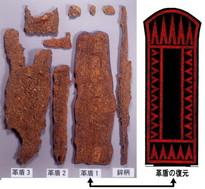
The use of hand shields dates back to the Yayoi and Kofun eras of Japan (300 BC to 538 AD). Many examples are excavated whole or in part along with their accompanying Bronze Age swords, bows, spears and armor. Along with that the clay figurines, Haniwa, exhibit shields exclusively among the “warriors” of the era. It can be assumed that from those examples that shields played a very important part in the early military of Japan. This kept up a steady pace until the warring states era in Muromachi (14th-16th century; early Sengoku era.) At this point, there were still a variety of shield sizes to be had, largely depending on what your job on the theater of battle was. The majority were longer, covering the body, hand held with a simple handle on the back. These were made a variety of ways and came in different sizes, long and short, small and large. Small shields could be easily carried on horseback and were popular for cavalry. Longer shields were for the front lines could have a propping leg to stand them up, and move them forward in advance when necessary. As war changed, popularity waned and they became “obsolete” (later examples of them still do exist as part of armor, however, just not the same.) https://ebadojo.weebly.com/125021252512464blog/-jidate-and-tedate-japanese-hand-shields
-
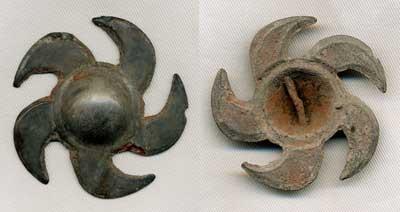
Whorl-shaped bronze shield ornament A whorl-shaped bronze ornament with five arms twisting to the left, and a dome-shaped central boss. A rod-shaped handle is housed within the boss. The state of preservation is exceedingly good, and red iron oxide has been detected on both the interior and exterior surfaces. Diameter 5.6 cm. http://archaeology.jp/sites/asahi/index.html



.jpg.aa0555e00a6b7627eb12df2e14505888.jpg)