Leaderboard




Popular Content
Showing content with the highest reputation on 2026-09-06 in Posts
-
When a wall is being attacked, the units positioned on it would defend it of course. They will be eventually killed by the attacker and replacing them feels a bit fiddly (to me at last). Would it be possible to move units laterally along a wall towards the actual attack replacing fallen units? (this could happen from segment to segment, we could e.g. even replenish from the barracks to auto-replace a fallen defender using some auto-queue mechanism). Not sure it would work as between wall segments there are turrets that have a different garrisoning scheme. Would "teleporting from wall segment to segment be a solution (using the rally point mechanism) ? Such a feature might strenghten defense and actual use of walls, but not in an unfair fashion- siege engines would still be much more powerful and eventually break the walling. This would be more a slightly better defense against infantry/cavalry troops attacking. A side note: the same pathfinding mechanism might be useful some time later when it comes to discussing (short) bridges again1 point
-
If you want your mod to be available in the 0 A.D. mod downloader, you need to follow these steps. 1) Prepare your mod as explained in the Modding Guide. You should end up with a .zip file. If you created a .pyromod file, copy it and rename the copy to modname.zip so it can be uploaded on mod.io. 2) Sign up or login on mod.io. Go to Mods > Add Mod, and specify 0 A.D. in the field Game. Add all the information you want to make available for visitors. Complete the submission steps until your mod is shown as waiting for moderator approval. 3) When you are ready, send me a PM here on the forums, or an email. I will get the mod from mod.io, test it and take a look at its code. When I have checked the mod is not dangerous, I will sign the file. I will answer the PM/email with the signature. I can also report bugs in the mod, and mistakes you may have made when uploading the file on mod.io. I try to consistently dedicate Wednesday afternoons to mod signing. Important Notice: Wildfire Games signs mods in order to mitigate the attacks that can be conducted against file repositories and the clients that download from them. Signing a file does not imply that the mod is official, nor that Wildfire Games participated in its creation in any way. It does not mean that it is exempt of bugs or oversights either. The only guarantee signing brings is that the file you are downloading is exactly the one that the signatory tested. 4) I will put the signature in the metadata of the file on mod.io, then make the mod live. Right after this is done, your mod will appear in the mod downloader! Happy modding1 point
-
It needs to be in the zip but that's it.1 point
-
I had a similar problem, it looks like building spidermonkey requires huge amount of RAM, and if you don't have enough of it some build process crash. If you are building with -jX (with X which works fine for 0ad and the other libraries), you may want to decrease X when running build-source-libs.sh , so there are less simultaneously build processes and maximum RAM usage decrease.1 point
-
The same is true for other game settings, be it activated cheats, relics win, last survivor or something else. For everybody unsure there is already the game settings page, which can be opened with a single click in the game. In my opinion that's absolutely sufficient (although the information could be provided in a nicer way on that page). There is no place for that with the smaller resolutions we support. Just have it show up when you take a screenshot. Aside from the mentioned problem that players might take screenshots using other tools, there is also a problem when players want to make screenshots documenting visual bugs where dynamically adding something to the taken screenshot might affect the shown bug. It's also potentially confusing or annoying for players who just want to take a screenshot of what is shown on the screen. The panel can be made wider but you cannot take account of the length of usernames You can dynamically (re)size it, based on its content. No matter what, I believe that'd be a nice improvement in terms of UI consistency. This might be over-engineering the screenshot functionality. Mind that 0ad is a game and not a screenshot taking utility. On the other hand I like the possibilities of that. I kind of like the wonder notifications, so right now I'd vote for showing the ceasefire information there as well.1 point
-
https://gitea.wildfiregames.com/0ad/0ad/wiki/Mod_Verification_Process The game does copy the mod.json automatically next to the zip for faster access.1 point
-
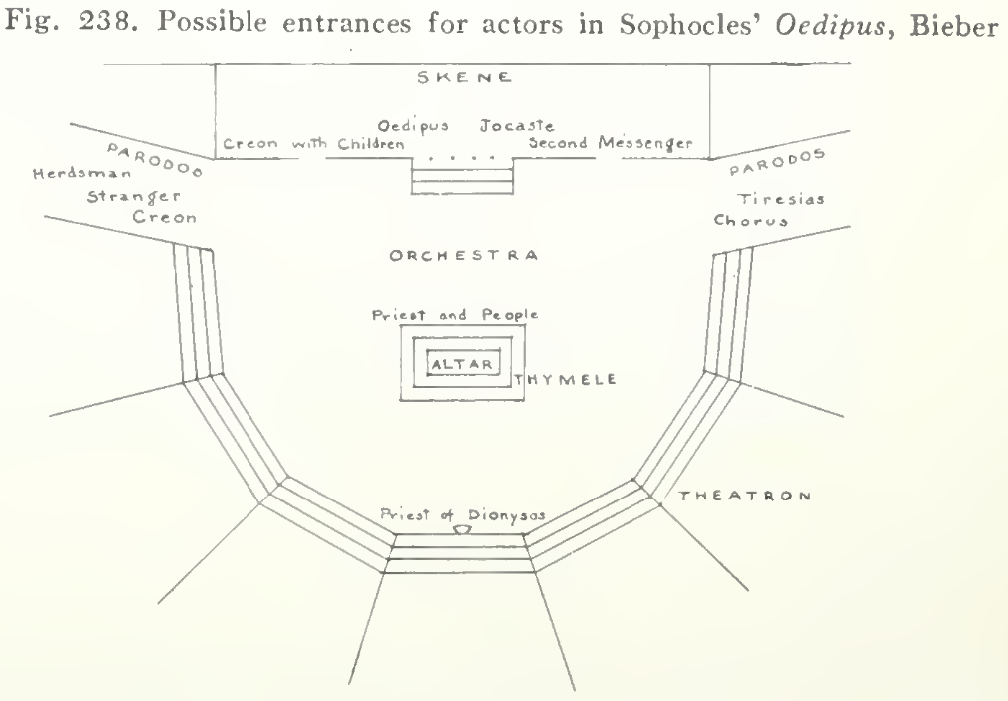
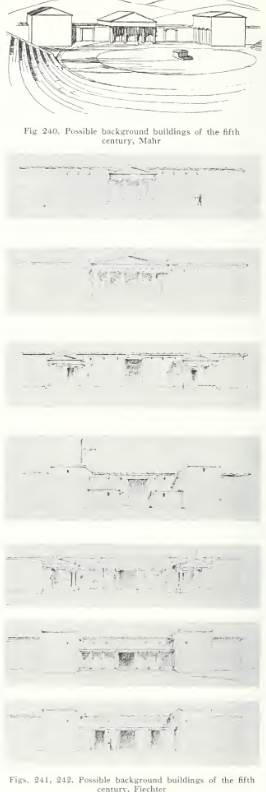
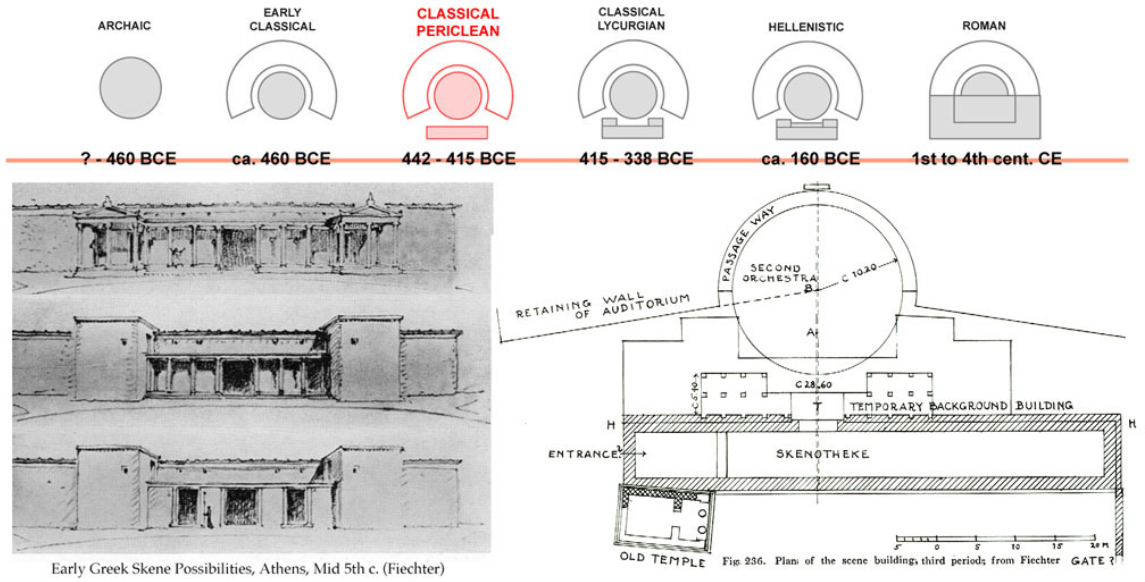
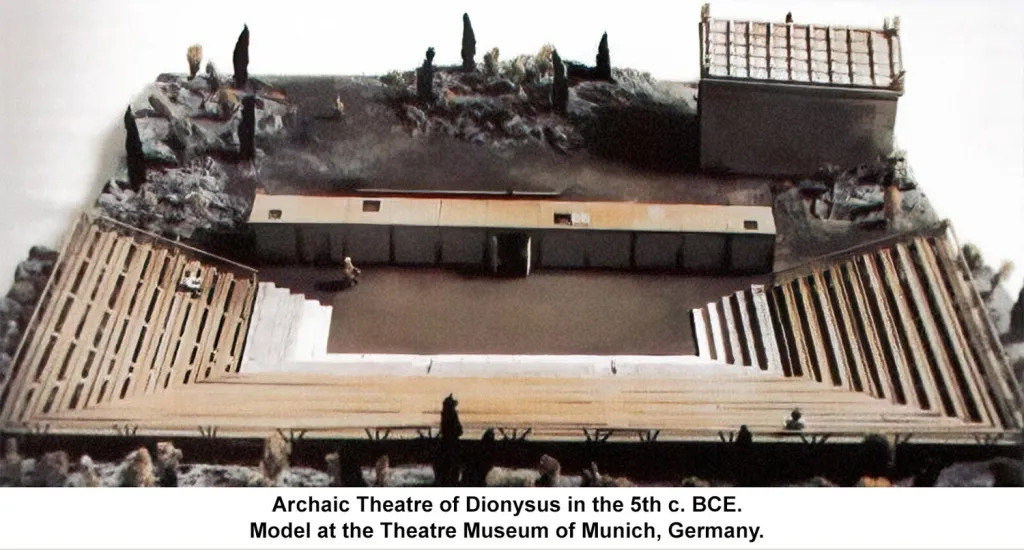
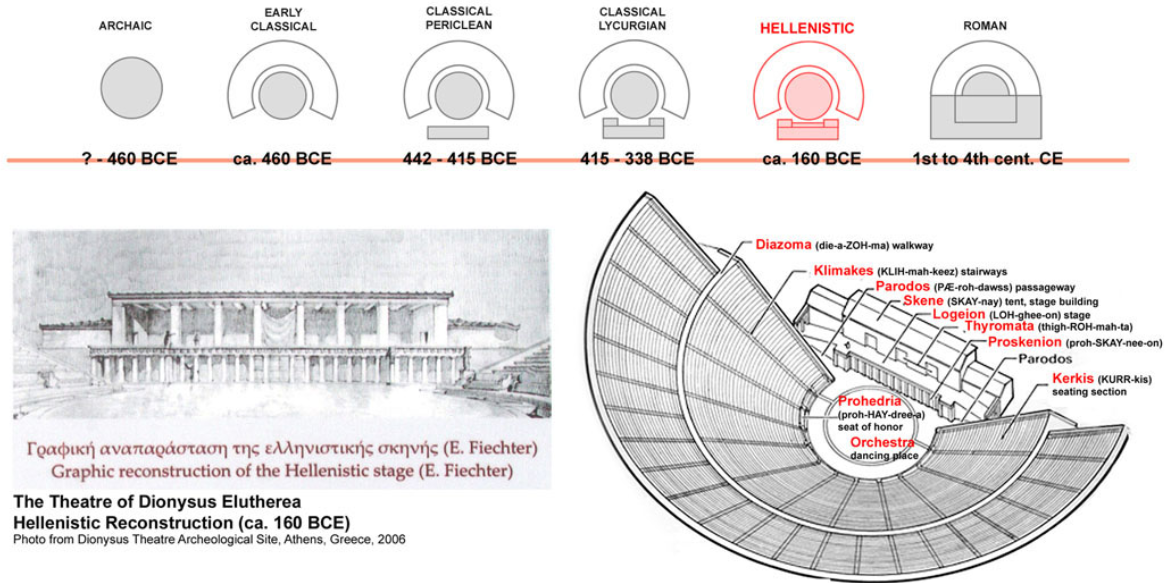
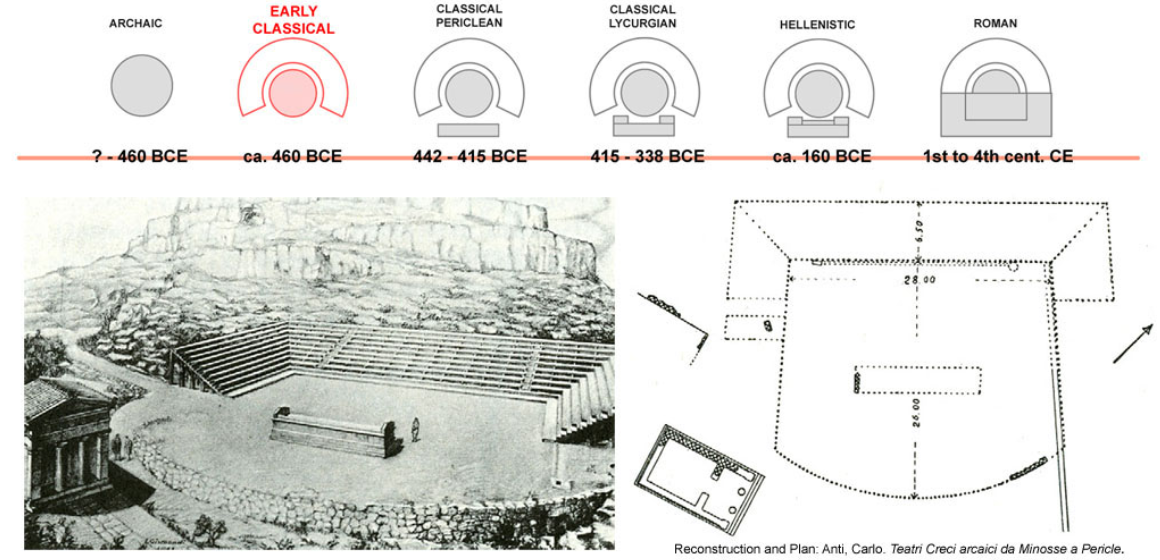
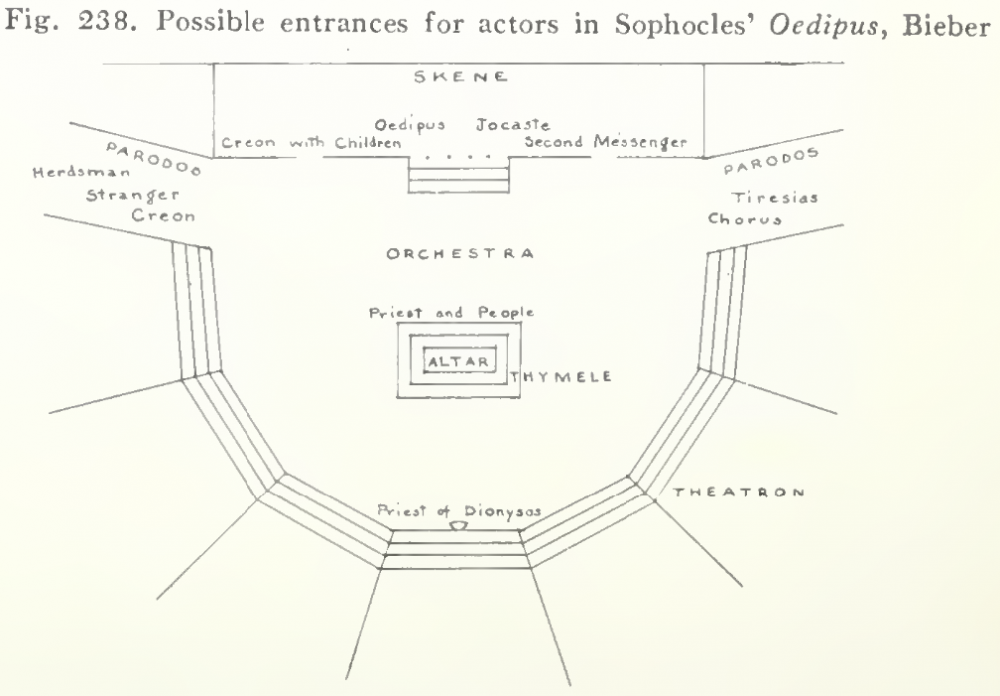
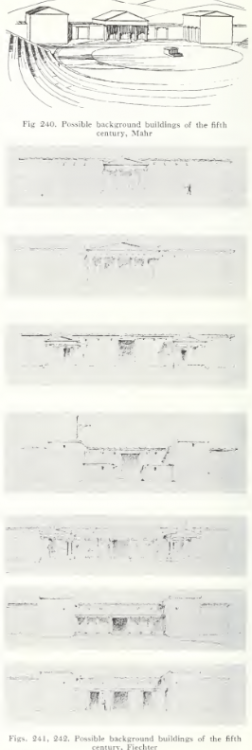
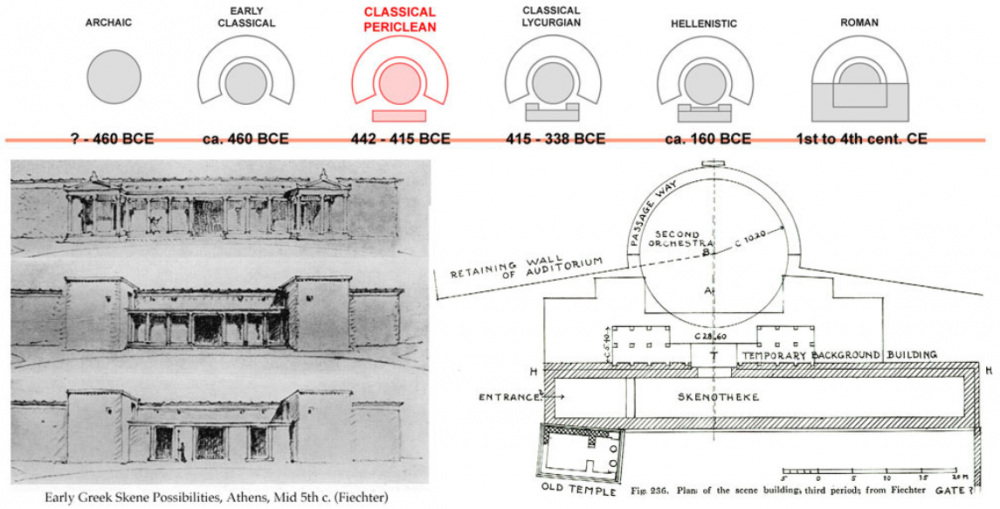
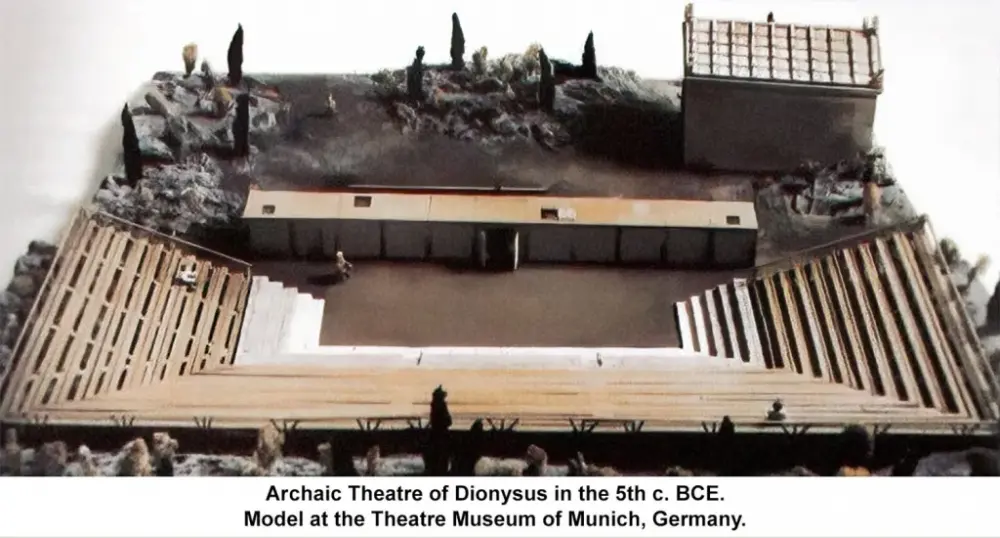
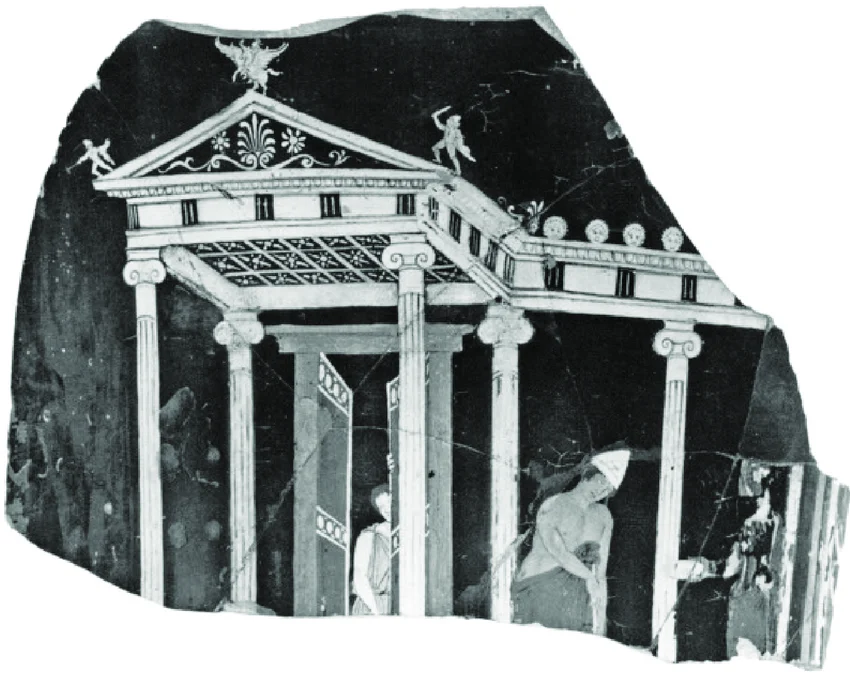
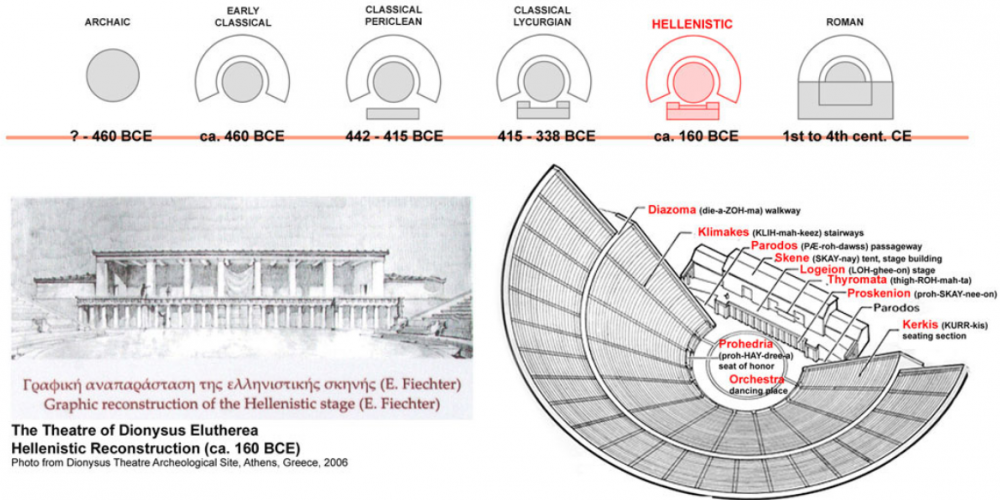
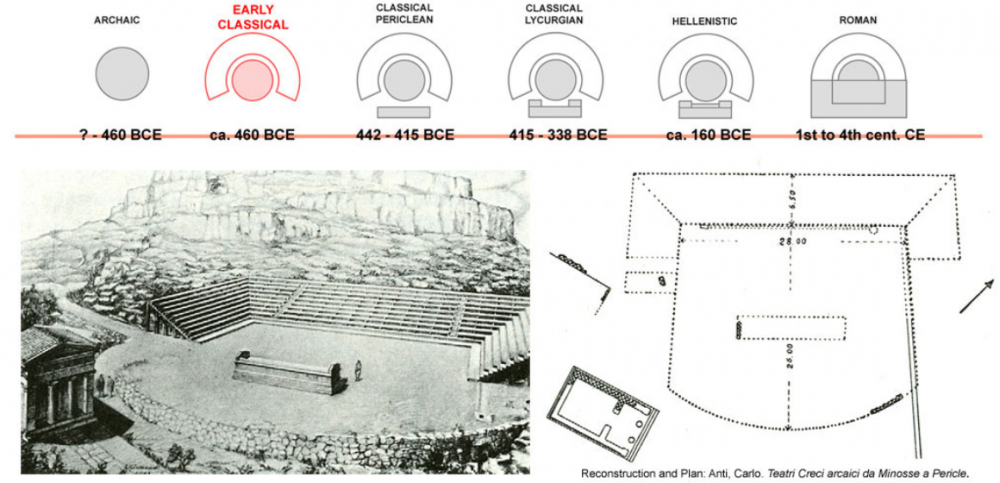
Probably the whole theatre needs to be removed because it's inspired in its Roman phase. But many reconstructions of the Hellenistic phase show a tiled rooftop, maybe because it was too high by then, and after all the theologeion (stage for the gods) is just some "raised platform or upper level where gods and divine beings could appear and speak", not necessarily the roof of the skene. It could also be that they found tiles and reconstructed it like that, but maybe not the whole roof was tiled. One has to be careful with these reconstructions anyway. That buildings must be the same size as their upgrades is something that I think needs to be reconsidered at some point. The aesthetics you have used seemed fine to me, it's just to change the configuration of things, and then keep fine tuning. Regarding the theatre of Dionysus, I mentioned that the Oxford Dictionary states that "vases with scenes from Attic comedy from the late 5th and early 4th cents. suggest that by this time the stage was about a metre high with a flight of steps in the centre communicating with the orchestra", yet I never see this on reconstructions. With that in mind, there are the most complete and graphical sites I've come across: https://ancienttheatrescom.wpcomstaging.com and https://www.whitman.edu/theatre/theatretour/dionysos/Dionysus Evolution/html files/Home.htm. I'll be taking images and quotes from them and from The History of the Greek and Roman Theater, by M. Bieber, if I don't state the source. Starting with Athens, for an early theatre, the trapezoidal seat plan might be too early, as shown in https://www.whitman.edu/theatre/theatretour/dionysos/Dionysus Evolution/html files/Dionysus.Early.Classical.htm, where one can choose the different phases (again, just reconstructions): While this model I found around would be from a bit later (notice the crane resting behind): But regarding the bench configuration, "Dinsmoor and Caputo believe that it was polygonal", so an alternative is this: Bieber states that "Dinsmoor has given this form to the auditorium of the time of Nicias" (a peace treaty from 421 BC, somewhat early for the time frame of the game). "The spectators sat on wooden benches which, of course, had to be straight, but could be arranged as a polygon. The seats of honor (proedria) were of stone". Also, the skene "was transformed in time from a temporary building, a tent or log cabin, to a permanent stone building, beginning in the period of the peace of Nicias". The following reconstructions are for the 5th century BC (not much can be seen, it's just to have an idea to see how much they vary, and don't want to keep searching sources): Some of those are shown with better quality here: Where there's some debate if the skenotheke (long storehouse behind the skene) was made of wood or stone. This vase fragment shows how the skene would have looked like: So for the early stage, somewhere in the middle of what I've just shown could be considered. For a later stage, the Hellenistic phase should be used: And who knows where the theologeion is now. Bieber states about them that they "may have been occasionally a high platform built of wood", or "over a side building". Regarding Thebes (the Theatre of Phthiotidai Thebes refers to another city-state) there's the theatre at the The Sanctuary of the Kabeiroi, which is 8 km from the city (https://www.mthv.gr/en/beyond-the-museum/tour-in-boeotia/the-sanctuary-of-the-kaviroi), and was built between the 3rd and 1st c. BC (Hellenistic), and had no skene, but an altar in the middle of the orchestra, and it was more religious in nature (https://www.gtp.gr/TDirectoryDetails.asp?ID=14695). In the city itself, Pausanias in his Description of Greece states that "near the Proetidian gate is built a theater, and quite close to the theater is a temple of Dionysus surnamed Deliverer". Luckily I found The Topography of Thebes from the Bronze Age to Modern Times, by S. Symeonoglou, which states that "the only theater of Thebes was, in fact, 600 m north of the gates", but remains are hard to find because stone buildings were "stripped for reuse during the Early Christian and medieval periods", "the theater, which must have been quite large, has so completely disappeared that we can identify no more than its approximate location", "judging from the size of this space, the theater was quite large", "regarding the date of the original construction, the literary record provides no clue. It is likely that it was built at the same time as the temple of Dionysos Lysios, that is, in the Classical period. I can only speculate that the construction of a very large theater with stone seating would not have been possible before 446 B.C., though this does not exclude the possibility that there was an earlier theater built of less permanent material". Then he explains that the reason Pausanias "refers to it as "near" must be that, standing before the Proitides Gates, the theater was the largest, most important, and most easily visible monument in Greater Thebes". Also he mentions that (stone) theatre seats were found when excavating later monuments (supposedly built using them). All this would indicate an evolution similar to Athens, but now I wonder if for them it's necessary to have a wooden version (would be focusing too much on this, while ignoring other things). Regarding Sparta, the theatre "held mostly non-scenic contests and games in honor of Leonidas and other heroes. It had a Hellenistic high stage introduced at a late date and that only in the form of a wooden rolling stage which was stored in a skenotheke, a shed in the parodos, and wheeled out over tracks on play days. This happened probably not before the first century B.C.", so in the Late Hellenistic or Roman period, as I mentioned in my previous post, making it too late for inclusion. Still, Herodotus in his Histories states "it was the time of the Gymnopaidiai; and as Demaratos was a spectator of them", indicating that in 500 BC there was some kind of theatre. Untersuchungen an Griechischen Theatern by H. Bulle states that "ist schon aus der Überlieferung zu entnehmen, daß das Theater ursprünglich nur für nichtszenische Feste bestimmt war, die Gymnopädien, das Ballspiel der Knaben, die Pompe der Hyakinthien u. ä.", confirming a tradition of not having plays, but martial festivals. If wanted (and given that it would be the only choice), a simple wooden theatre could be considered, although it's impossible to guess how it would have looked like. Given that it's Sparta, and how it was used, I would make it at simple as possible, no stage of any kind, and maybe decorated with some weaponry. Anyway, given that the original point was to discuss a wooden Spartan theatre...
 1 point
 -
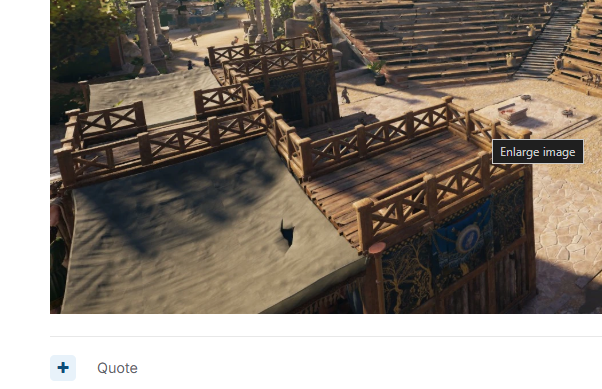
I think the railing here gives some nice detail: And then you can do some UV mapping creativity to make the walls look not-plain. Perhaps along the backside there can be hanging shields.
 1 point
 -
Just to be clear, I'm not strictly against it. My point is that you can't assume how people will take screenshots. And so if the presence is conditional then it might not be here1 point
-
I just thought that it would possibly suck terribly on maps like Hyrcanian Shores if you don't have the proper spawn position. I can't say anything on the other stuff.1 point