
.jpg.4d575d1d330147616620e755ddb4c44a.jpg)
Genava55
-
Posts
2.478 -
Joined
-
Last visited
-
Days Won
88
Posts posted by Genava55
-
-
On 19/04/2026 at 2:23 AM, wowgetoffyourcellphone said:
@Stan` and I have actually started a repo for Empires Besieged here: https://gitea.wildfiregames.com/0ad/empires_besieged.
I know, I saw it. And it is really a great idea you had.
On 19/04/2026 at 2:23 AM, wowgetoffyourcellphone said:So, whether EB becomes it's own "game" or an "era" or an "expansion" or a "release" is up for debate. I personally advocate for a "0 A.D. Eras" concept, where players can swap between eras (Empires Ascendant, Empires Besieged, Masters of Bronze, Millennium AD) and only play those civs, or choose to play with all civs available at once.
The idea is good. You are pointing out the issue about the Persians, but we could have the same issue with other civs no? Romans and Germans notably.
-
 1
1
-
-
1 hour ago, Thalatta said:
Yeah, but in my opinion a Wonder should ideally be a particular structure, which should be the name of the Wonder, instead of a generic "Kurgan" (if regarded as more inspiring, which I can see why). This also would guide better how it should look like.
The only issue with Neapolis is that it is a very Hellenized town. There are some similar situations with the Saka (Eastern Scythians), notably Chirik-Rabat, a fortified town with Chorasmian architecture.
-
I don't think this is a problem to have various designs, and I believe the proposal of @wowgetoffyourcellphone is justified. We need to have a flexible concept, sometimes we'll want to represent a people or a civilization from a specific period, sometimes a nation, sometimes an empire, and sometimes a dynasty. We just need to be clear about it and explain it well in the civ's design.
Edit: And it’s really good to finally start thinking about what comes next. I felt like this 'Empires Besieged' expansion was constantly being put off until tomorrow, and that people were refusing to give it any thought. It’s clear that not thinking about it creates problems for the expansion’s design, and that we really need to lay the groundwork now, despite the lack of leadership.
-
2
-
-
5 hours ago, Thalatta said:
But if earthquakes distract you so much, then another example more aligned to the grass issue: should the Statue of Liberty (assuming a game reaching the modern age) be built with the green patina already on it? Might look familiar, but it's inaccurate, which has been the point all along.
This is indeed a better example and a good question/remark.
Just adding food for thought, the Gallic Wonder based on the Sanctuary of Corent is not clean and fresh:
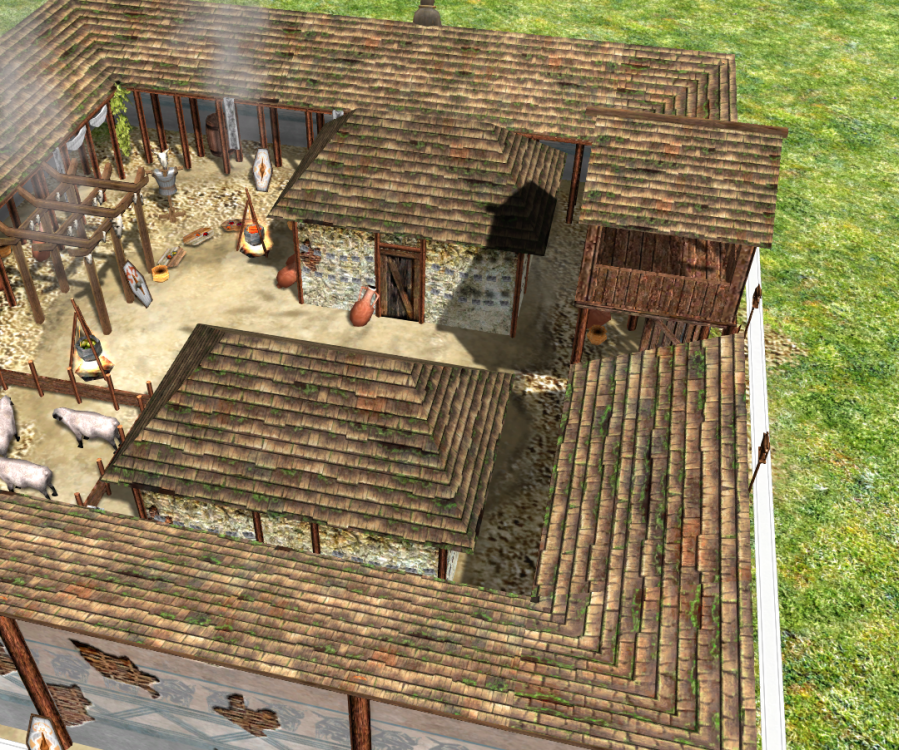
So maybe it is a general issue in how 0 A.D. portrays the ancient civilizations.
-
1
-
-
19 minutes ago, Thalatta said:
I agree with this. Green mounds would be like building a destroyed Colossus of Rhodes because it stood upright for only 54 years after completion (took 12 to build), and remained on the ground for over 8 centuries.
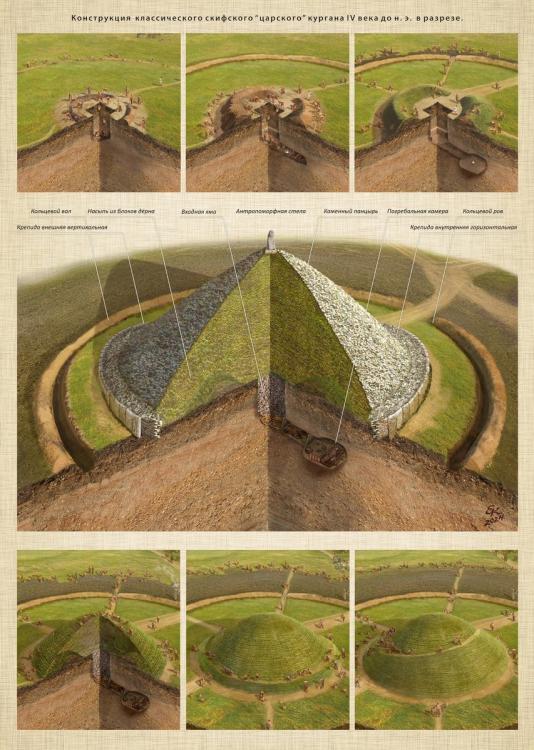
This is an absurd comparison and you know it. On one hand, the Colossus of Rhodes fell due to an earthquake, and the Rhodians refused to rebuild it because of an oracle. On the other hand, the overgrowth of a kurgan with grass is a natural process that occurs in all cases if the monument is not maintained several times a year. In your example, the Colossus of Rhodes is completely destroyed. In the case of the kurgan modeled with grass covering it, it is still functional. We are comparing a natural disaster with an ordinary process. Furthermore a process that was difficult to stop.
A kurgan is not something similar to a Greek monument. First of all, this stone covering is not found on all kurgans. Multiple kurgans are simply covered with clumps of earth. One should not assume that it was standard practice to cover a kurgan with a stone shell. In fact, this is most common in certain regions. But even when vegetation had overgrown the gravel surface, this was a common occurrence in the Scythian landscape. Most of the kurgan mounds still standing were in this condition.
In any case, I’m not opposed to using a gravel surface. I also think it will look better. Once again, I’m criticizing a specific line of reasoning.
-
3
-
-
33 minutes ago, ittihat_ve_terakki said:
You seem to have missed the finished state of the kurgan in the video you shared.
I didn't.
33 minutes ago, ittihat_ve_terakki said:If you look closely, there is no green mound there, the kurgan is completed with a stone-covered structure. In the next shot, it appears as a green hill because time has passed and the scene has shifted to a later period (you can tell from the clothing details, the buildings behind and even the visible wear and deterioration on the structure).
If you look closely the other mounds are green. That's my point, after a few generations it look like this.
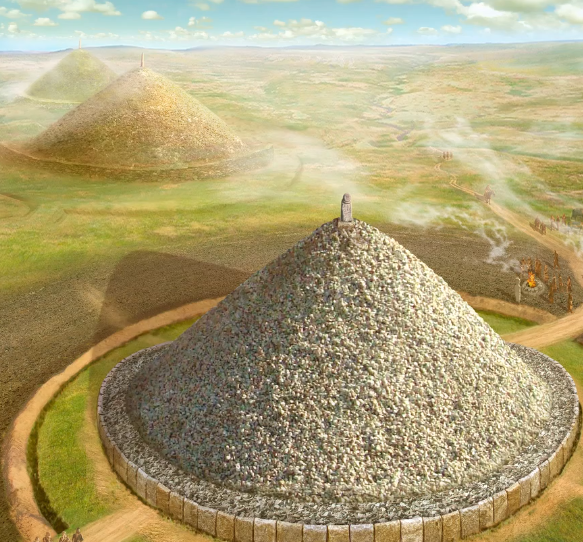
I am not against a pebbles/stones covering. I am just saying your reasoning, claiming that the people of one's 'civilization' were necessarily maintaining such structures in the long term, is wrong.
33 minutes ago, ittihat_ve_terakki said:Still, I stand by my point: if one of two historically inspired designs creates a stronger visual atmosphere, I would choose that one.
Only one of the design is historically inspired.
-
1
-
-
On 09/11/2025 at 9:34 PM, Genava55 said:
 On 22/01/2026 at 6:33 PM, Genava55 said:
 -
1 hour ago, ittihat_ve_terakki said:
Most of the buildings in the game are fictional. Most of the decorations are fictional. The soldiers clothing in the game is also fictional and it has to be, even if you take inspiration from examples in various museums you still have to design it fictionally because there’s no other choice. Historically, we don’t have precise knowledge about things from thousands of years ago. That’s why I strongly disagree with the statement, “If we want to add objects and decorations, there has to be a meaning to it.” It’s completely incorrect.
1 hour ago, ittihat_ve_terakki said:If historical accuracy is a concern, then it’s a problem for both cases anyway because we simply don’t have enough historical data to achieve complete accuracy. If I’m playing a game and I have to choose between a visually engaging example and a boring one, I will definitely choose the first.
https://en.wikipedia.org/wiki/0_A.D._(video_game)
"The historical accuracy of game elements has been the highest development priority. Unit and building names are shown in the original language of the civilization they belong to, and they are also translated into the language in which the user is playing the game. There is also a strong focus on attempting to provide high visual accuracy of unit armor, weapons, and buildings."
-
11 hours ago, ittihat_ve_terakki said:
So representing this as just a hill while the civilization is still active may not make much sense. For this reason, the latest example is not only visually underwhelming but also historically less grounded.
A kurgan is a tomb. I understand your reasoning, but it's not supported by evidence. It was very common for tombs and burial sites to be looted or damaged a few generations after their construction. These kinds of monuments weren't venerated by the whole of society; it was a form of ancestor worship. It is, in a way, an expression of power. If the ruling clan changed, the monuments associated with the previous clan weren't maintained.
I understand the criticisms regarding the aesthetic aspects; they are valid. However, any historical or sociological interpretation must be supported by facts and observations.
If we want to add objects and decorations, there has to be a meaning to it.
-
6 hours ago, wowgetoffyourcellphone said:
I'd honestly like to have both styles in the game. The more exciting one as a Scythian wonder and the "boring" one as a map object.
The first one doesn't seem to be based on real-world examples from the Scythian period. But in your mod, you can do whatever you want. Do you have any suggestions for improving the second one?
-
1 minute ago, Thalatta said:
Indeed, but how historical seem to you many of these fortresses, and how much just a product of nostalgic AoE2 cloning? (something that I've seen discussed many times already). I don't think removing them from some civilisations, not only to make it more historically accurate, but to differentiate civilisations more, should necessarily mean to unbalance the game, but that balance should be found in their differences, otherwise is just "similar vs similar" (agreed that it would take more work).
Several civilisations had fortresses, notably the diadochi. The Greeks seem to practice the epiteichismos, which was about fortifying key settlements and outposts. In some cases, we can truly speak of fortresses, so much have the sites been modified by the process. However the Romans do not seem to have proper forteresses, with permanent structures, during the Punic Wars. Regarding the Celts, the boundary between fortresses and fortified settlements is rather blurred. Hillforts and oppida sometimes have relatively few civilian structures and seem to have specialized in a military function.
The alternative I can imagine would be to have specialised CC. Some CC could be converted in a more military or defensive structure.
The issue with the current system of walls and gates is that the IA is not using it really and it is quite a challenging project to improve the IA in this aspect. A single massive defensive building is far easier to handle.
50 minutes ago, Thalatta said:On a somewhat different note: shouldn’t Germans not have stone walls? At least less so than Sparta (which eventually had, but late, and still this doesn't appear in the game).
The Germanic faction currently lacks historical depth. It's actually an initiative that started as a mod and then spilled over into the game.
Many buildings were designed without necessarily having an archaeological or historical basis to rely on.
-
2
-
-
8 hours ago, Alexandermb said:
Capture mechanic's could be related to specific buildings only:
Military: Fortress, Towers, Gate's.
Civilian: Civ Center, Wonders, Temples.
Other structures should have a territory dependency like houses could be automatically captured if a city civ centre is captured.
In that way, city siege could have two objectives:- Destroy everything at glance.
- Capture primordial structures to take over the city if the defenses aren't prepared enough to defend the city avoiding turtling.
Capturing fortress could gather small area of effect over the nearby buildings.
Capturing city could have strong area of effect of nearby buildings.I entirely agree. Capturing buildings should be difficult but rewarding. And the buildings should be tied to the territory. I find it absurd when someone loses his CC and he destroy every buildings before the capture.
A fortress should be also able to create a new territory but smaller than the CC, to have a territorial anchor.
9 hours ago, guerringuerrin said:Building capture itself is not a flaw; it just needs refinement. It’s one of the game’s original mechanics, and we should stop trying to homogenize the game with others. Instead, polishing its unique aspects will make 0 A.D. even more distinctive.
True. We don't want a bland AoE clone.
8 hours ago, Thalatta said:That's why I still swear on having a non-controllable default garrison on buildings, ships and siege engines against which one has to enter in "virtual combat" that would act as capture resistance and turn around limiter, and would made boarding and siege make more sense

The difficulty behind virtual combat is how to make it good with only calculation because the player would not control which unit are getting the hits. People can get frustrated if the damage are distributed evenly and they would get frustrated as well if we give the damages preferentially to specific types of unit. There is also the issue of calculating the damaged of ranged and mounted units. People will complain.
-
1
-
On 03/04/2026 at 4:09 PM, Thalatta said:
The next attested instance of a þurpą cognate is in 725 OE, meaning village.
It doesn't seem correct. The earliest account is in the Épinal-Erfurt glossary. Which is generally dated to the end of the seventh century.
https://en.wikipedia.org/wiki/Épinal-Erfurt_glossary
"From the foregoing, it should be clear that Épinal-Erfurt Glossary was compiled in the last quarter of the seventh century, likely at St. Peter and Paul’s Abbey (later St. Augustine’s Abbey) in Canterbury, where the school of Theodore and Hadrian was established." - Herren & Sauer
In Épinal-Erfurt glossary the mention I am referring to is the following: ‘conpetum, tuun uel ðrop’
So in this glossary: Compitum = Tūn = Throp. The three terms are equivalents.
The Latin compitum was generally used to designate a cross-road during the Roman period, but Isidore of Seville explained that in his day, it referred to a place where people from the countryside gathered. And tūn/tuun at this time still meant enclosure, farmland or yard: the Laws of Æthelberht (L. Ethb. 17) show that "running into a man's tún" (breaking into his yard) was a punishable offense. At the best, it was used for estate. In this case tūn would have the same meaning that the Gothic thaurp. The meaning of throp in the Épinal-Erfurt is obviously not of village.
So in the end, the earliest account for throp in Old English doesn't seem to designate a village but a gathering place.
-
18 hours ago, Thalatta said:
Not my point, but that þurpą not meaning village could have been, although I don’t think much can be said about that, since it only appears once.
Well if it was an innovation from the Gothic language, why the meaning as a farm or an estate is observed in other Germanic languages?
It is the case in Old High German with the word Dorf, which referred to both a farm and a village, furthermore it appears that early glossaries translated it primarily as 'farm' or 'estate' rather than 'village'.
It is also seen in Norse languages as well. It is not like þorp meant only 'village' or 'hamlet', it was applied to a farm and to an estate as well. And in Old Swedish, it seems to have retained only its meaning as a farm and not its meaning as a village, see again:
On 01/04/2026 at 9:08 PM, Genava55 said:The word þorp, thorp is only found in Danish and Swedish laws. It has been very productive as a place-name suffix since the late Viking Age, with around 10,000 names ending in þorp, thorp, whereas in Norway only a handful of names of this kind is found.
In Danish laws thorp refers to a new settlement (‘outlying village’) created from the main (old) village (athelby), and the laws regulate terms between the old and the new village, boundaries, size and the use of deserted settlements.
In the Swedish laws þorp seems to refer to a single (often small) farm, possibly moved out from a village.
Source: https://books.openbookpublishers.com/10.11647/obp.0188/appendixB.xhtml
In ODan thorp refers to a new settlement (‘outlying village’) created from the main (old) village (ODan athelby, see oþolby) , and the laws regulate the relationship between the old and the new village, boundaries, size and the use of deserted settlements. In OSw þorp seems to refer to a single (often small) farm, possibly moved out from a village.
Source: https://www.dhi.ac.uk/lmnl/nordicheadword/displayPage/6270
So again, not an innovation peculiar to Gothic. There is a body of evidence suggesting that the word came to be used to refer to a village over time.
On 31/03/2026 at 6:02 PM, Thalatta said:7) It is not true that the “oldest writings in Germanic languages” (as if that goes beyond Gothic) support your point, as B and D prove. As mentioned in E, with OHG you are a millenia off already, any shift happening right there means nothing. Points 2, 3, 5, 6 and 7 are just milking the same cow over and over again with Gothic and OHG, while completely ignoring the rest, which as I’ve said an infinite amount of times, has been taken into account for the PGmc reconstructions we have. As I explained in B, I did not contradict myself, you just fell for a clear mistake in that source (about something I wasn't even pointing out).
As you can see, I have no problem using another Germanic language. As I said, there are also elements in the Nordic languages that support my criticism of your viewpoint.
It is clear that the old Swedish þorp has retained its original character as a single farm. I have shown you the evidence.
But I’d like to quote an expert in the field to show that my point of view isn’t some oddity that only I share. Stefan Brink, a renowned philologist on Norse studies, said the following in the book The Viking World (2011):
"The medieval element torp, however, must be seen in a context of the huge colonisation in northern Europe during the high Middle Ages, within a new ‘feudal’ agrarian system with a ‘manor’ and dependent tenant farms within an estate. In Germany these tenant farms often had the name dorf (< þorp), and the word for such a dependent farm was spread with the new colonising strategy to Scandinavia. Early on, the element torp must have developed into a meaning of secondary farm, a farm detached from a hamlet etc., hence not always denoting a tenant farm within an estate."
Once again, I feel like I’m the only one taking into account the evolution of Germanic society, which underwent profound changes as a result of the great migrations. The Germanic peoples inherited urbanized territories and institutions that were foreign to their customs; century after century, they had to adapt to their new reality. Stefan Brink emphasizes once again that significant shifts took place that altered the meanings of various words. The Deutsches Ortsnamenbuch and the other works dedicated to the study of place-names demonstrated the same. These semantic shifts were related to important changes in laws and in institutions. The naming of the settlements followed different periods of naming, with clear preference from a period to the other. These different naming dynamics are a reflection of the changes in the meaning of words.
18 hours ago, Thalatta said:Not true (if you keep referring to it as a single farm), þurpą appears only once in Gothic, and, yet again, ON states the opposite, why dismiss my ON dictionary quote?:
The entry from Cleasby & Vigfusson Old Norse dictionary (1874) you are referring to says exactly what I said, in Old Norse the meaning as 'farmland' or 'estate' remained. Once again, it is not an innovation from Gothic.
And if þurpą is mentioned only once in the entire Gothic bible, this shows that it wasn't a term that was used very often by ancient Germans. It appears only in an agricultural context, referring to the ownership of a farmland.
18 hours ago, Thalatta said:“turba is taken to be the same word, this word, we think, was originally applied to the cottages of the poorer peasantry crowded together in a hamlet, instead of each house standing in its own enclosure”, “the etymological sense being a crowd”, “a hamlet, village, rarely of an isolated farm”.
On 31/03/2026 at 6:02 PM, Thalatta said:Many things I've said can be nicely wrapped up with what the (largest) ON dictionary says regarding þorp (https://cleasby-vigfusson-dictionary.vercel.app/word/thorp): “turba is taken to be the same word, this word, we think, was originally applied to the cottages of the poorer peasantry crowded together in a hamlet, instead of each house standing in its own enclosure”, “the etymological sense being a crowd”, “a hamlet, village, rarely of an isolated farm”.
It would be good to be consistent throughout your argument. You went on at length over several paragraphs to explain that the Germanic peoples lived in scattered dwellings surrounded by fields that separated them, only to now argue that the term þurpą refers to settlements where houses are clustered together and built side by side without their own enclosure.
You initially assumed that þurpą referred to the scattered dwellings of the Germanic peoples; are you still able to defend that view by arguing that þurpą refers to a cluster of closely spaced buildings? I am referring to this message you posted:
On 13/02/2026 at 9:53 PM, Thalatta said:The only relevant thing is if haimaz is better or not for what is wanted. Nothing else. Luckily, I think I found exactly what’s needed: https://folksprak.org/common/material/pdf/A-Grammar-of-Proto-Germanic.pdf, which states that the Germans did not form villages but rather lived in isolated homesteads. Old Norse heimr, Old English hām and Old High German heim mean house or home, while Gothic uses haimos (only appearing in accusative plural) for village, and translates agrós 'land' to þaurp 'land, lived-on property', like Old Norse þorp 'farm, estate'. In West Germanic it means 'village', as in Old English þorp, Old High German dorf. In Gothic weihs 'village' also translates agrós.
This is exactly what I meant with the demographic change, þurpą means what we need because there were no such things as proper villages, and both it and wīhsą seem to refer to whatever was there, call it land, property, farm, estate, with surely an extended family or more, and in the eyes of the Romans. I don’t see how any of them would be smaller or less appropriate than haimaz (taking from ON, OE and OHG). All this is exactly what the preferential reconstructions (are ordered entries important or not? Or is it just cherry-picking?) from the PGmc dictionary are telling us: haimaz is “house” first, “home” second, and “village” last, for þurpą the order is “village, settlement”, “gathering of people, crowd”, and “cleared land”, and for wīhsą it’s just “village, settlement”. All fits perfectly. If one travels in time it will look like a big farm or estate, conceptually it was the closest you could get to a village. They were not thinking in Phase I, II and III. And, as I said before, some branches kept it literal, while others kept the concept (which is what matters), and depending on each word.
-
3 hours ago, guerringuerrin said:
One thing 0 A.D. lacks is a diversity of archer types.
The issue with building a system revolving on different archer types, is that for balancing, it would be necessary to give it to most civs. No matter what historical justifications one might find.
Personally, I feel like the current system, with archers, slingers, and javelineers, isn't being used to its full potential.
-
3
-
 1
1
-
-
On 31/03/2026 at 6:02 PM, Thalatta said:
C. You complain that, centuries later, Gothic þaurp translates as “farmland” (only once, which is not very useful), but disregard that the same can happen for weihs (at least twice). In fact, it also even happens with haimom. Now I see you addressed that “it seems Weihs was equivalent to Haims”, but sometimes looks even worse, in Mark 6:56 one has haimos as “villages” and weihsa as “country”, exactly the other way around of your proposal. Again, luckily Gothic is not the only thing used to reconstruct PGmc, if we rely too much on it no decision could be taken.
I think there is a misconception here. Country (or countryside) doesn't equate to farmlands.
The semantic flexibility of the Greek ἀγρός (agros) hinges on the shift from a functional unit to a geographical zone. The meaning diverges based on the narrative focus: it either refers to "farmlands" as a collection of tangible assets and wealth (emphasizing what a person owns), or it refers to the "countryside" as a rural region (emphasizing where a person is, which is often the case in the New Testament).
This distinction is most visible when the singular is used to describe the "open country" surrounding a settlement; in these instances, the word ceases to be about farming specifically and instead serves as a spatial contrast to the urban center. Essentially, the word transitions from a private asset (singular field/plural estates) to a public landscape (the rural surroundings).
See:
https://www.perseus.tufts.edu/hopper/text?doc=Perseus:text:1999.04.0057:entry=a)gro/s
In the Gothic Bible, there are several references to fields, contexts that unambiguously refer to fields in an agricultural sense, whether in the plural or singular.
For example, in Matthew 6:28:
"And why do you worry about clothes? See how the flowers of the field grow. They do not labor or spin."
In this passage, the Gothic Bible uses haiþjos, the singular genitive of haiþi. It is the ancestor of the English heath and heathen.
https://www.wulfila.be/gothic/browse/text/01/06/28.html#S1097
Therefore, I insist, weihs designates either a village or the country in its geographical sense. Not farmlands. If weihs was translating the word 'farmland' or 'field', it would have been used at least once in that sense. There are about ten instances where the Bible unambiguously mentions one or more fields.
Similarly, that's why current translations of the Bible distinguish between country and fields.
-
On 31/03/2026 at 6:02 PM, Thalatta said:
A. Starting with Proto-Indo-European, according to Ringe, haimaz, “settlement”, comes from ḱóymos, “resting place”, while þurpa, “farmstead, village”, comes from treb-, “building” (this is your own source), which fits with the first Proto-Germanic dictionary entries for haimaz, “home”, and þurpa, “village, rural settlement”. Even in PIE my main concern is reflected: haimaz appears mainly as an ambiguous term, not necessarily structural, while þurpa appears mainly as a physical place, and not preferentially reconstructed as a single unit.
I don’t see any relevance in this line of argument. Proto‑Indo‑European dates back to the Neolithic; its origin is probably around 4000 BC, which means it is even further removed from Proto‑Germanic than Proto‑Germanic is from our modern languages. In this situation, we’re comparing things that simply can’t be compared anymore. The purpose of this discussion is to try to understand what vocabulary speakers of Proto‑Germanic might have used to refer to their settlements. The Cimbri migrations took place around 100 BC. I don’t see the point of going back that much further.
And if you want to talk about the reconstructed PIE form *ḱóymos, it did indeed yield *haimaz in Proto‑Germanic, but it also produced κώμη (kōmē) in Ancient Greek and káimas in Lithuanian, both of which can be used to refer to a village. Kōmē is precisely the form chosen to designate the first phase (village) for Greek civilizations in the game… So it’s a bit inconsistent to criticize that choice on the grounds that the older PIE form doesn’t necessarily refer to a settlement. That’s really stretching the argument, and I don’t see the point of it.
In your message, you criticize me several times for relying on place names that date from a few centuries after the Cimbri period, but in the end, you are constructing an argument based on reconstructions of a language that predates Proto-Germanic by several millennia.
On 31/03/2026 at 6:02 PM, Thalatta said:5) Again, centuries after the fact, and doesn’t add anything to the issue of multiple and ambiguous meanings of haimaz.
The fact that a word’s etymology can have multiple meanings does not mean that the word itself is ambiguous.
In the case of the Proto-Germanic word *haimaz, it is clear that the meaning as "village" has been preserved in several Germanic languages. We saw it is the case in Gothic, but it is also the case in Old English with hām, in Old Saxon with hēm and in Old Franconian with the word haim which gave the French "hameau" (hamlet). This is also visible in German place-names and it is an undisputed view that Heim was also used for collective dwellings. See the excerpt from the Deutsches Ortsnamenbuch. There is no reason to believe that this is an innovation of the Gothic language. This is an original meaning that has lost its significance over the centuries and with the evolution of Germanic societies. A process similar to the one I advocate for þurpą but in the other direction.
On 31/03/2026 at 6:02 PM, Thalatta said:B. Regarding your “6.3. The Household” screenshot of my source (Lehmann), you fell for a mistake there. It states that in Old Norse þorp means “farm, estate”, and that only in later West Germanic texts it means village. But ON texts are not earlier than OE, and you can check that ON þorp translates as village (this is something I’ve mentioned before, that basically only Gothic and Old High German support your view). The whole point of the discussion is, taking (the cognates of) haimaz, þurpa and wīhsą, how would they be urbanistically ordered? Both PGmc sources I cited (Lehmann and the dictionary) state that þurpą and wīhsą are more similar to each other than to haimaz (as can be read in your screenshot of my source, and from others). The only outlying source I find is Kroonen, who gives haima- as “village, home” and þurpa as “crowd”, which anyway blatantly contradicts your “singular first” interpretation (making all 4 sources mentioned against it), and what is a crowd of either houses or people anyway? Maybe he went for something figurative (I then found that the ON dictionary alings with this, more later on).
Once again, I don’t understand the point of your message. I never said that Old Norse or Old English was older than the other. I’m simply saying that the source you used (Lehmann) suggests that the word þurpą originally referred to a farm, and that the meaning “village” appeared later. In this discussion, the only reason to use medieval Germanic languages is to understand the semantic evolution of words from Proto‑Germanic onward. The context we’re interested in is Proto‑Germanic. In Old Norse, as in Gothic, the word derived from þurpą seems to have preserved its original meaning, that of a farm or agricultural estate. This supports my initial point: the meaning of þurpą in Proto‑Germanic must have been “farm.”
And there is no doubt that Old Norse preserved the meaning of “farm” or “agricultural estate.” This is very clear in the poems of the Edda, especially in Hávamál and Vafþrúðnismál.
In the Danelaw and in the earliest written records from Denmark, we see that þorps refers exclusively to secondary settlements that depend on a larger primary settlement. In those cases, þorps can refer both to hamlets and to isolated farms.
We see the same thing in medieval Scandinavian law codes: þorp retains the meaning of “farm” as well as “village.” There is, however, a notable case in medieval Swedish law where þorp still means specifically “farm” in Old Swedish, which seems to have preserved this original meaning even longer.
SpoilerThe word þorp, thorp is only found in Danish and Swedish laws. It has been very productive as a place-name suffix since the late Viking Age, with around 10,000 names ending in þorp, thorp, whereas in Norway only a handful of names of this kind is found.
In Danish laws thorp refers to a new settlement (‘outlying village’) created from the main (old) village (athelby), and the laws regulate terms between the old and the new village, boundaries, size and the use of deserted settlements.
In the Swedish laws þorp seems to refer to a single (often small) farm, possibly moved out from a village.
Source: https://books.openbookpublishers.com/10.11647/obp.0188/appendixB.xhtml
In ODan thorp refers to a new settlement (‘outlying village’) created from the main (old) village (ODan athelby, see oþolby) , and the laws regulate the relationship between the old and the new village, boundaries, size and the use of deserted settlements. In OSw þorp seems to refer to a single (often small) farm, possibly moved out from a village.
Source: https://www.dhi.ac.uk/lmnl/nordicheadword/displayPage/6270
The evolution of the Germanic languages clearly shows this semantic shift from “farm” to “village.” It’s an understandable shift, since it follows the same pattern as Latin villa, which eventually gave the word “village.”
I have taken the time to demonstrate that studies of place names generally indicate that -Heim was used in the oldest layer of place names. Without exception, these studies show that there were several periods characterized by different dynamics in the rules governing the naming of new settlements. It is clear that the trend involving -Dorf emerged relatively late, and this precisely explains what we observe in the various Germanic languages. There was a semantic shift that accompanied the social changes that transformed Germanic societies.
-
-
New anthem?

-
 1
1
-
-
-
3 minutes ago, Duileoga said:
Caledonios
23 minutes ago, Duileoga said:2.¿Los actuales Britones representan a los caledonios o habría que crear la facción como tal?¿También los Britones representan a los antiguos irlandeses (Hibernia) ,o es más viable crear una facción sobre la isla esmeralda?
The Caledonians are considered to be part of the Britons. Besides Brochs and Crannogs, there isn't a lot of information. There is a book called Celtic Scotland by Ian Armit.
11 minutes ago, Duileoga said:Para los "Nórdicos" había pensado en investigar y representar a los "Rugii" (Noruega) ,a los "Sitones" (Suecia) a los "Suiones" (Suecia) y a los Gautas (Suecia) ¿Es viable? o ¿Es mejor hacer a los "Godos"?Creo que eran originarios de Suecia (Gotaland?*)
During the period 500 BC - 1 AD ? I don't know much about Pre-Roman Sweden. I don't think I can help you with those.
-
1
-
-
2 hours ago, nifa said:
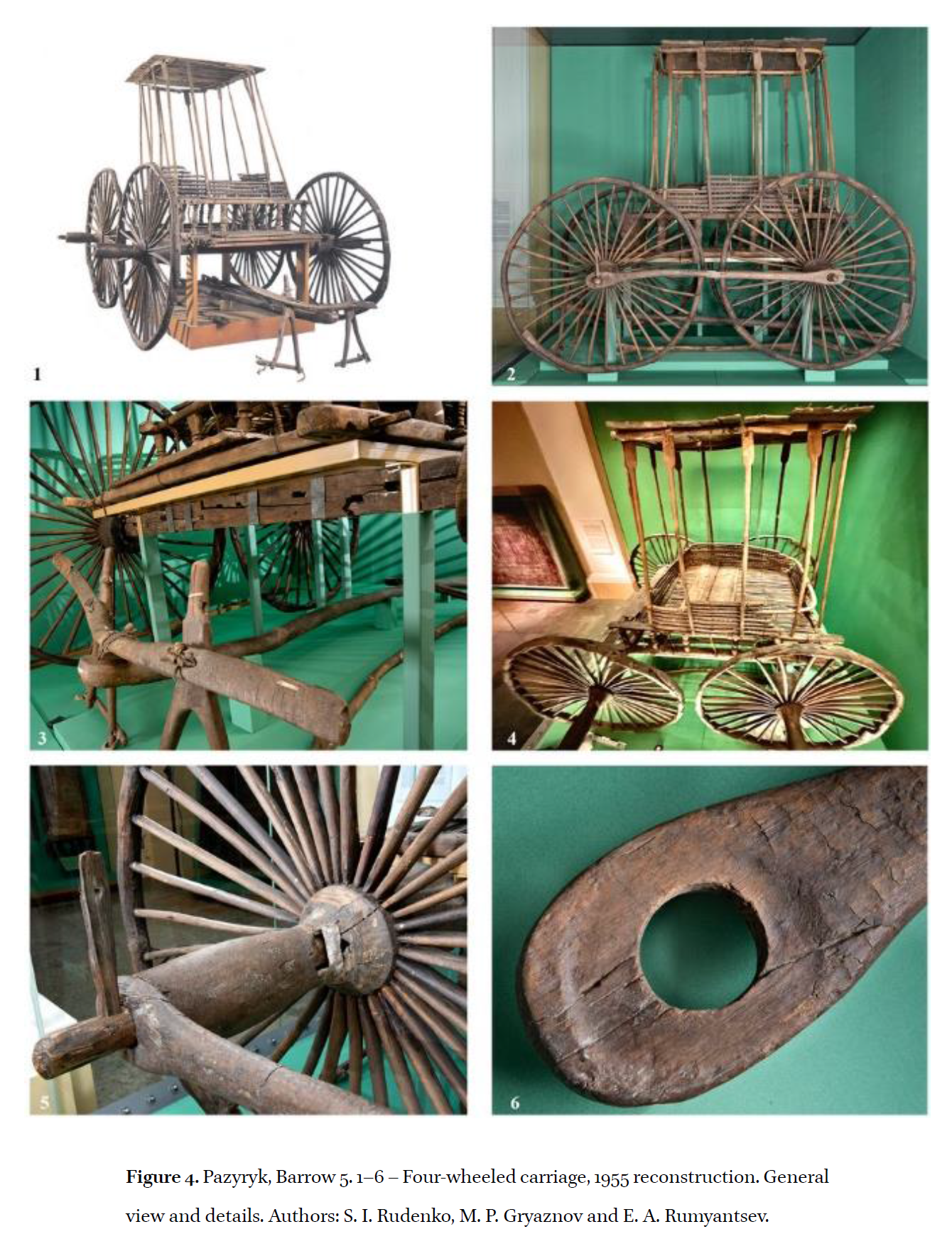
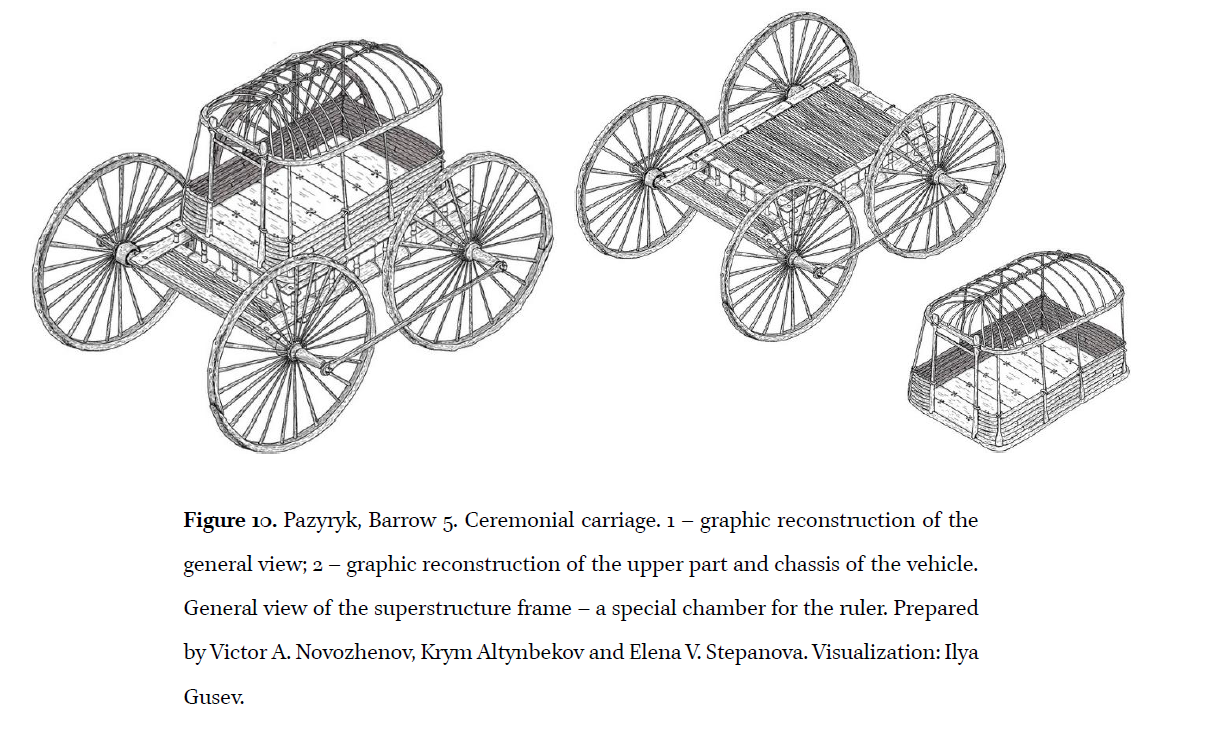
Do you by chance have further references for that wagon in this picture?
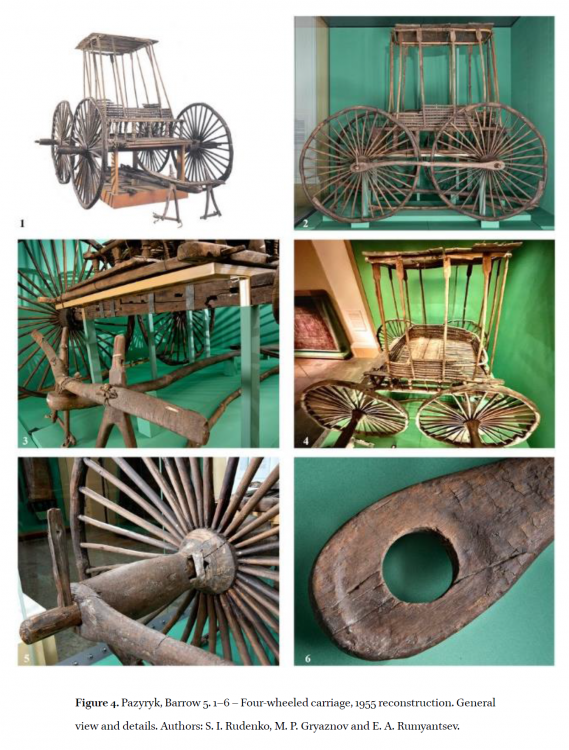
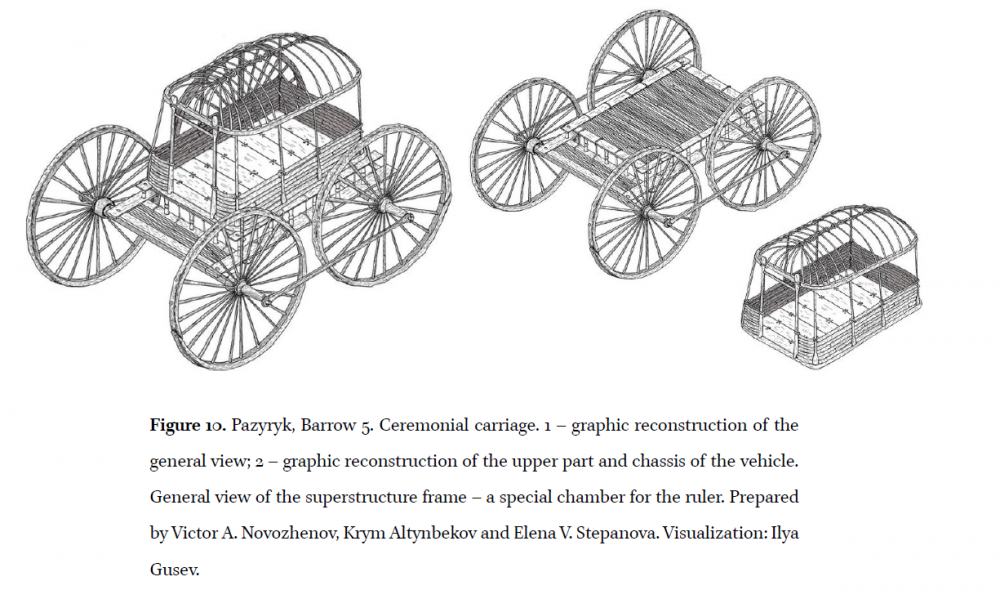
-
2
-
-
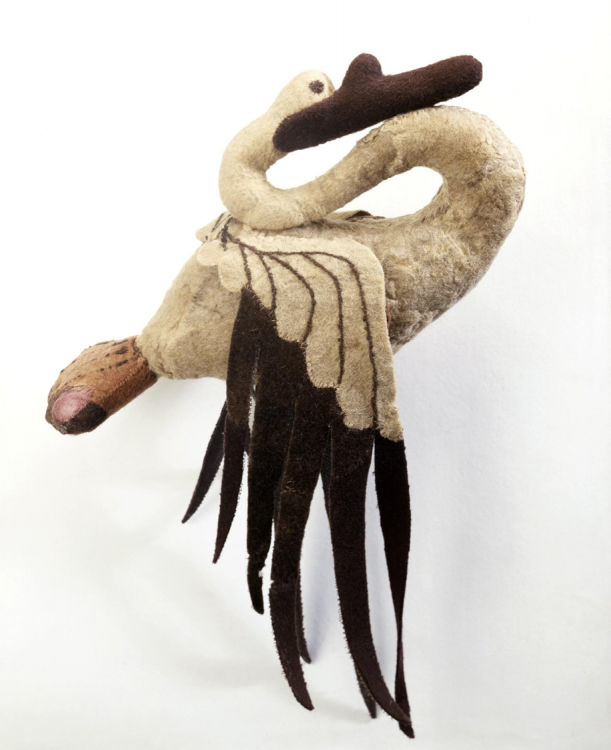
for inspiration
-
3
-
-
What place names can tell us (Was Ortsnamen uns erzählen können)
Selected excerpts from this article: https://nationalatlas.de/nadbeitrag/was-ortsnamen-uns-erzaehlen-koennen/
I translated them from German to English. Here:
The oldest settlement names in Central Europe date back to pre‑Germanic times. They are of Celtic or Romance origin and appear above all in the western and southern Germanic regions of the Germania Romana. The earliest Germanic names occur somewhat more frequently; they often end, for example, in ‑lar or ‑mar. After the Migration Period, beginning in the 4th century, the first major wave of land appropriation took place, during which fertile and easily cultivable areas were settled. Typical place‑name endings from this period include ‑heim, ‑ingen, ‑stedt, and ‑stetten. In the Merovingian era (6th–8th century), the settlement area was expanded (early period of development). Settlement names ending in ‑dorf, ‑hausen, and ‑weiler generally date from this time. The greatest expansion of settlement in Central Europe occurred during the clearing periods beginning around the 8th century. The old settlement landscapes were largely populated; people then began to push into the low mountain ranges. At first, the edges of the mountains and the valleys were settled (e.g., ‑bach, ‑born, and ‑brunn). From about the 10th century onward, and throughout the High Middle Ages, the forest was increasingly pushed back and new settlements were established. Typical place‑name endings from this period indicate the clearing process, such as ‑roth, ‑rieth, ‑reut, ‑brand, ‑schwand, ‑hau, ‑schneid.
– dorf
The most common place‑name ending of the Middle Ages is likely ‑dorf (in northwestern Germany also ‑trup and ‑drup). Settlements of this name type first appeared during the early development phase (5th/6th century) in the Rhine–Moselle region. They then spread throughout the entire German‑speaking area and remained in use throughout the Middle Ages. As in most early place names, the determining element is usually a personal name or the name of a kin group.
– ingen
Place names ending in ‑ingen are, alongside the ‑heim names, among the typical settlement names of the Germanic land‑taking period (from around the 4th century). Although modern scholarship rejects the earlier ethnic interpretation—‑ingen in Alemannic areas, ‑heim in old Frankish regions—the distribution map clearly shows a strong spatial concentration of ‑ingen names in the southwestern German Alemannic‑Swabian area. In the Bavarian region, the corresponding ending is ‑ing. The linguistic adaptation in French is ‑ange.
Place names as sources for settlement history using the example of Northwest Switzerland (Ortsnamen als Quellen für die Siedlungsgeschichte am Beispiel der Nordwestschweiz)
I'm posting a translated excerpt from the article; the original is available here: https://toponymes.ch/Texte/Siedlungsgeschichte.pdf
6.6. ‑heim and ‑dorf Names, Other Alemannic Settlement Names
The ‑heim and ‑dorf names in northwestern Switzerland are not entirely easy to interpret. ‑heim names are usually assigned to the oldest naming layer. In our region they occur only twice (Arlesheim and Riehen) and are generally regarded as outliers of the numerous Alsatian ‑heim names. ‑dorf names are likewise rare here; apart from Rodersdorf, all of them lie near the Hauenstein route. Niederdorf and Oberdorf are clearly secondary. They were introduced in 1285, after a massive landslide, to designate the remaining parts of the village of Onoltzwil. Frenkendorf, Füllinsdorf, and Arisdorf—since they lie in the middle of a zone with demonstrably unchanged Romance names—are hardly to be counted among the oldest Alemannic layer either, but should rather be attributed to the period of territorial expansion in the 7th and 8th centuries. The remaining Alemannic settlement names, which all belong at the earliest to the period of Alemannic territorial expansion, are distributed fairly evenly across our region.
Gothic Online - Lesson 6 - Todd B. Krause and Jonathan Slocum
https://lrc.la.utexas.edu/eieol/gotol/60
Interesting article on the Gothic Social Organization, using both etymology and semantic analysis of the Gothic bible to interpret the structure of the Gothic society. The introduction explains correctly why etymology alone is not a solution to understand ancient societies.
SpoilerDetermining the social structure of the Goths during the first centuries in which they come into history is particularly difficult because few sources have any direct knowledge of the Goths -- and those that do, unfortunately, do not treat the topic directly or in any depth. The majority of sources in the fourth century discuss the Tervingi, Goths located in the area of the Danube, to the west of the Greuthungi. An important source, albeit an indirect one, is the translation of Wulfila: the Bible offers a wealth of social and political institutions of Jewish society of a few centuries earlier, and their interaction with Roman political institutions. Comparing our understanding of these institutions with how Wulfila chose to translate the Greek text offers a window into the societal structure of the audience of Wulfila's translation.
Etymology offers a picture of the long-term survival and development of cultural institutions as preserved in a language; but this picture is generally coarse-grained because of the timespan over which regular and specifiable linguistic changes occur. In addition, the vagaries of cultural change and idiomatic language habits imply that at any given moment a term may be applied to a thing or circumstance which is not predictable as the accumulation of the linguistic history of the word up to that point: for example, English broadcast, though a sensible compound for the intended purpose, is not predictable in its current use for 'radio or television program' as a result of the combination of meanings 'wide' and 'throw (a net)'. This unpredictability may occur for no other reason than that the required apparati, the radio and television, did not exist in any prior period: references to new technology may make novel use of old vocabulary.
Specifying through solely etymological methods precisely how a word was used at any specific point in its history generally requires knowing both its history before and after the period in question, so that a sort of triangulation method may be applied to refine possiblities for the meaning of the word in any given intermediate period. Such methods are limited when attempting to discover how the Gothic language, as found in Wulfila's translation, is applied by its speakers to their current social institutions for the simple reason that Wulfila's translation is the terminus of our information about the Gothic language.
To complement the results of etymological investigation, scholars may thus turn to methods of textual comparison. Specifically, they may focus on how Wulfila translated elements of Biblical culture, and estimate how these would be understood by Wulfila himself, and how these are mapped onto Gothic social structure. Combining this with the history of the terms involved provides another method of triangulation in order to pinpoint Gothic social institutions concurrent with Wulfila's translation. This may be further compared with other socio-cultural depictions found in contemporary literature.
The following are estimates of the meaning of various Gothic terms at the time of the Biblical translation, based on the above method of textual comparison, coupled with crossreferencing from contemporary sources. These are necessarily imperfect and tentative. To limit their inaccuracies further, it must be said that this only necessarily applies to the Tervingi, and extension to the social structures of other Goths such as the Greuthungi, for whom there is scant cultural information, is precarious at best.
- háims: the organized village. This is the basic center of agriculture and commerce.
- weihs: essentially equivalent to the háims as the organized village and basic center of commerce.
Schwarz, Ernst (1952). Die namenkundlichen Grundlagen der Siedlungsgeschichte des Landkreises Regensburg. Verhandlungen des Historischen Vereins für Oberpfalz und Regensburg 93, 25–64. PDF: https://www.heimatforschung-regensburg.de/1636/1/1355091_DTL1354.pdf
Ernst Schwarz’s 1952 article offers one of the most detailed onomastic analyses of early Bavarian settlement in the Regensburg region. It pays particular attention to the rare and archaic suffix -weichs, documenting its limited survival in the oldest settlement zones south of the Danube and its rapid replacement by more productive suffixes.
Here is a summary of the information concerning the toponyms in -wihs or -weichs in Ernst Schwarz’s document:
- Etymology and meaning
- Linguistic origin: The suffix derives from Old High German (OHG) wihs meaning “village” (compare Gothic weihs, which means “hamlet” or “settlement”).
- Link with Latin: The text specifies that this term is cognate with Latin vicus (“village”), but stresses that it is not a borrowing from Latin; it is a native Germanic root.
- Semantic distinction: This root must not be confused with the word wih meaning “sacred” (as found in Weillohe or Weihenlinden).
- Chronology and period of colonization
- Oldest layer: Names in -weichs are classified among the earliest foundations, dating from the initial colonization period (Landnahmezeit) in the 6th century and the expansion phase of the 7th century.
- Reference group: They are systematically associated with toponyms in -ing, -inghofen and -heim as evidence of the primitive Bavarian settlement in the Regensburg region.
- Specific examples identified to illustrate this type
- Weichs: Mentioned around the year 881 in the form ad Uuihsfo.
- Schwabelweis: Attested since 821 in the form Suabiluuis. The text explains that this name is a compound of the root -wihs and the personal name Swäbilo.
- Geographical distribution and decline
- Geography: These names are found in the oldest settlement zones, notably along the Danube and south of the river.
- Disappearance of the suffix: The use of wihs remained very localized and ceased early. It is not found in later colonization areas (such as the Upper Palatinate or Austria).
- Linguistic competition: The term eventually disappeared in favor of other synonyms or semantically related words such as bur, heim, hofen, hausen and especially dorf, which became far more common for designating villages in the subsequent phases of settlement history.
-
1
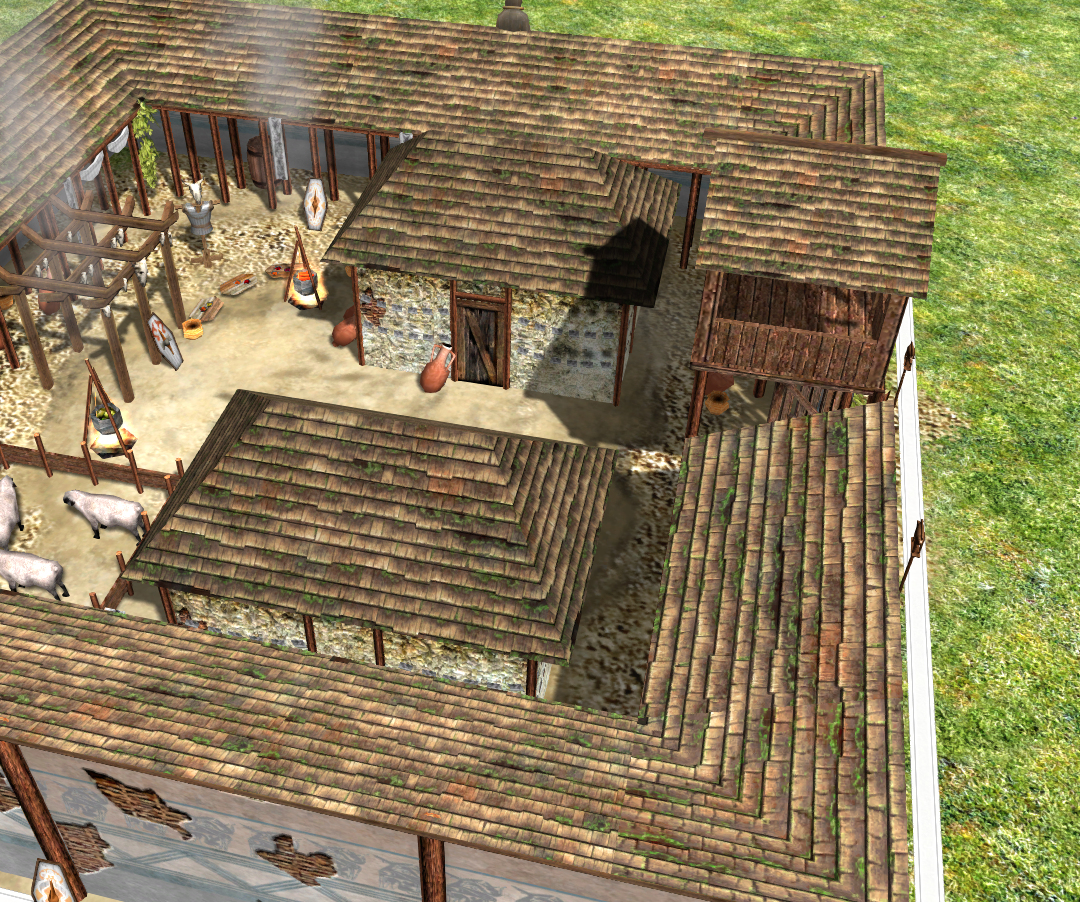
Civ "Pers" -> "Achae"
in Game Development & Technical Discussion
Posted
I proposed something similar with coalitions:
Personnally I would prefer something enabling the possibility to have unique units, techs and buildings through the tribes chosen.
Coalitions are how historically the "barbarians" and the small nations were able to defeat massive empires.