-
Who's Online 7 Members, 1 Anonymous, 808 Guests (See full list)
-
Topics
-
-
Posts
-

By Nicolaus_von_Kues · Posted
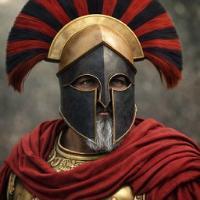
Other options include the conical helmet. Other options are that they are already transposing the helmets before the intercisa and with Sasanian influence. Basically a 2-piece metal helmet but adapted for infantry. -
 It's possible, but it requires more work. so far we don't really need it. (You should have access now)
-
 @Stan` I cloned the project this morning, and when I returned to the Githuba few moment ago it was gone xD If you need any help, I will glad to help
-

-
By Nicolaus_von_Kues · Posted
Apparently, the Intercisa is several decades after Palmyra, so it could be ruled out. Nor is it a closure. Intercisa appears as a response to the economic collapse of the Roman state and the adoption of new manufacturing techniques. https://imperiumromanum.pl/en/curiosities/fabricae-roman-armory/ Intercisa is definitely out. It is due more to the financial collapse of Diocletian's time. Forging a spherical bowl in a single piece required highly skilled artisans and many hours of work. • In contrast, the Intercisa design allowed less experienced workers to cut prefabricated iron sheets, join them with a central riveted band, and assemble a functional helmet in a fraction of the time. "With the third century A.D. and the growing threats at the borders, the design of Roman helmets evolved towards simplicity, pragmatism and low cost of production. The steppe and Sassanid Persian influences began to be noticeable, especially with the reorganization of the army and the appearance of government armor factories". Regarding Eastern archers: The lighter archer levies, or those raised in emergencies, used caps of pressed felt or hardened leather.[[Here I will need a source to validate this] The movement of the bow: When drawing an Eastern composite bow, the string is pulled back brushing against the cheek or the ear. If the archer were wearing the enormous metal cheek-pieces of a Roman legionary, the string would constantly strike against the helmet, deflecting the arrow and ruining the shot. This is my dilemma with the evolution of helmets. [Context the Siege of Dura Europos] Inside the Roman tunnel were found a pile of dead Roman soldiers, and nearby a Sasanian. His iron helmet (left) shows signs of Roman influence (mail, reinforcing plates), and in turn was a prototype for Roman helmets of the following century. This illustrates convergence in military technology and practices across this frontier, seen also in the shared methods of siege warfare exhibited at the site. Simon James, after Du Mesnil. https://erenow.org/ww/the-oxford-handbook-of-warfare-in-the-classical-world/9.php https://www.romanarmytalk.com/rat/showthread.php?tid=17085
-