All Activity
- Past hour
-
What makes a game boring is the lack of variety and the repetition. That it would be more unpredictable, that it would be able to keep you from getting bored and immerse you with its dialogues. A human is capable of using a bunch of camels just because they look cool. Like Hannibal saying satirically: "I use elephants because they are big and look cool in my army, you know there are no elephants in Italy, now they will have them".
- Today
-
I managed a few days ago, I'll mention it after doing another one to completely address one of my Issues, but have not gotten around it yet.
-
I think it would be fun if the AI had more personality and used unexpected strategies. It would make the game more interesting if Petra sometimes retreated, tried different tactics, or even made funny comments during battles. That would make every match feel a little different.
-
I think adding more difficulty levels would be a good idea. That way, new players could enjoy the game without getting frustrated, while experienced players would still have a real challenge. It would be nice to have more options instead of making Petra simply easier or harder for everyone.
-

On the usage of AI to generate 0 A.D. content
Supermoon replied to wowgetoffyourcellphone's topic in Official tasks
I agree! The overall style is a big part of what makes a game special. As long as AI content fits the original atmosphere and doesn’t feel out of place, I don’t see a problem with it. -
Thanks for explaining! Hopefully you can figure out the PR issue soon. At least you can still report things through Issues for now.
-
That’s an interesting question! I think the main difference is how the engine handles unit behavior and game logic, not just how many models it can display. The actual limit probably depends on things like pathfinding, AI calculations, and how the game updates each unit. It would be interesting to see some stress tests showing how many units Pyrogenesis can handle before the engine itself becomes a bottleneck.
-
I think Wi-Fi stability can make a big difference in multiplayer games, especially when there are lots of units on the screen. Using a separate access point sounds like a good idea, but I’d also test a wired Ethernet connection to see if the desyncs still happen. That would help you figure out whether the problem comes from the wireless network or the game itself.
-
I think it’s a bit of both. AI decompilation can save a lot of time and help developers understand old or complicated code, but it can also make mistakes. It’s a useful tool, as long as people check the results instead of trusting everything AI produces.
-
Supermoon joined the community
-

ships Naval Boarding - seizure of ships
Thalatta replied to CheckTester's topic in Gameplay Discussion
Also, the specialists used shouldn't be exactly as attested, otherwise one would need catapult operators for somewhat small ship types, for example. That's why in the naval combat system I proposed I moved those thresholds up, while lowering other things like number of catapults or garrison slots (otherwise one would quite quickly reach hundreds of embarked troops), the latter of which I didn't even specify and, as with other details like which specialists would correspond to which ship types, is open for gameplay recalibration. -
Could you briefly explain how it works so it's included in this discussion? (Also, I'll play DE after I'm done going though all civs in vanilla, so won't know for a while :P).
-
.thumb.jpeg.67ef5b5dc6d918163efa04cd5336830d.jpeg)
ships Naval Boarding - seizure of ships
Nicolaus_von_Kues replied to CheckTester's topic in Gameplay Discussion
As I said, the initial implementation should be simple; we'll see how it goes as we test it. That's how the data capture system was implemented—simple. Then we'll see what else can be done. The first layer of implementation will be interesting... -
ships Naval Boarding - seizure of ships
Thalatta replied to CheckTester's topic in Gameplay Discussion
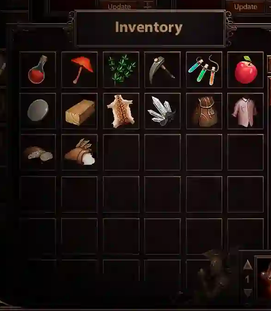
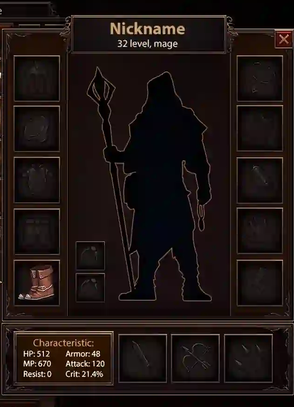
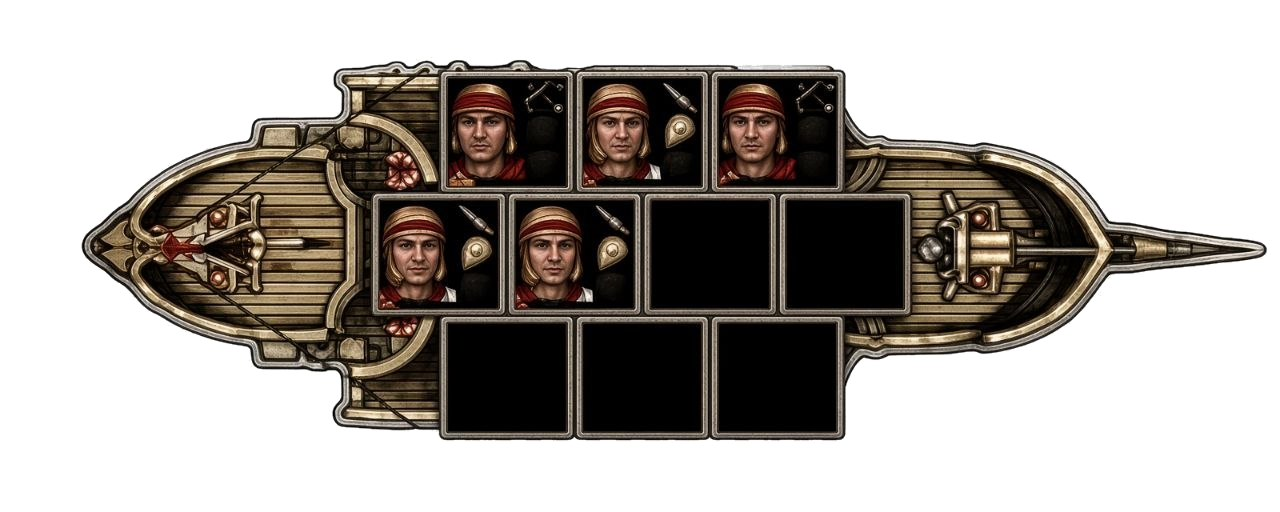
Of course, it should come with all needed. I was referring to the diagrams you showed, seemed too complicated. The only UI additions should be numbers (maybe as a bar, like capture points right now) and icons indicating what is present and what is absent. A very fast example for a Triērēs (after doing everything I realise it says Tetrērēs, but the game represents them quite wrongly as Triērēs anyway, just with sails set) to show some ideas: I've added, on the right of the sword and shield, very preliminary icons for the trierarch, helmsman (low quality ancient rudder), rowing master, and bow officer, with the latter having died in some recent engagement. On top of them, capture points are not used any more, but the 170 rowers and 24 deck troops. On top of that, icons for the shipwright and purser specialists, and the piper should be there also for a total crew of 201 (and there are 3 extra embarked units). I'm just testing possibilities, not sure what the standard should be, maybe all could be on that higher placement (around 9 icons seem to fit there), or maybe on the lower one, but with smaller icons. Maybe all specialists could be included for each ship type, and only the absent ones shown, with a red cross. The simpler the better I'd say.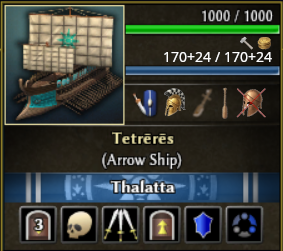
-
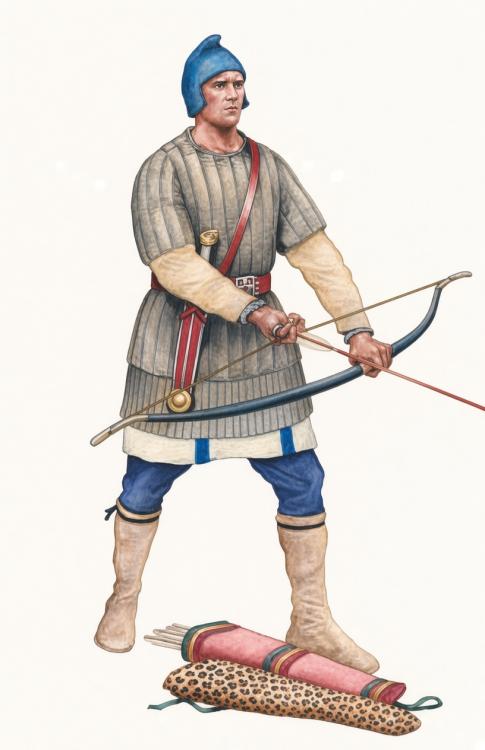
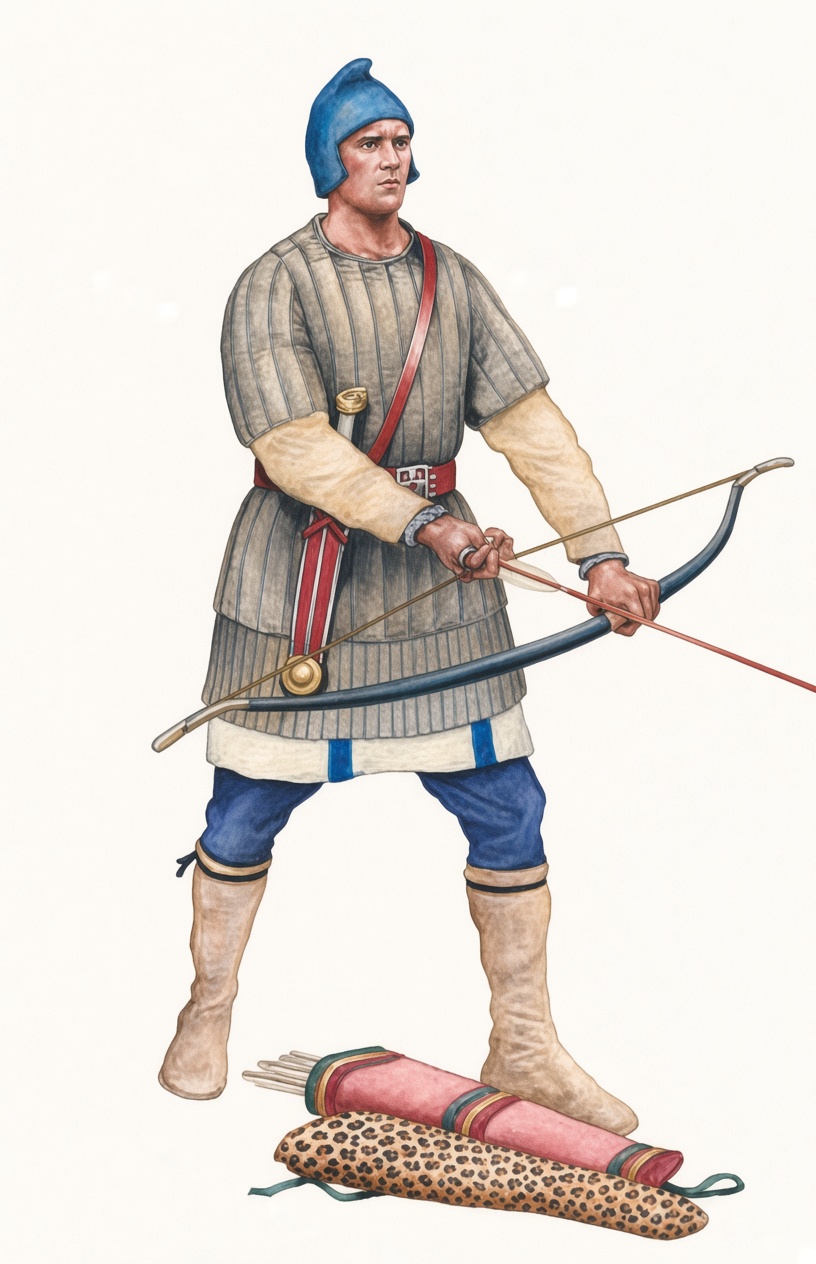
This was the most eastern archer I found. He's from Cyprus.
-
ships Naval Boarding - seizure of ships
Nicolaus_von_Kues replied to CheckTester's topic in Gameplay Discussion
I thought from the start that when you train the ship, it should already come with a basic crew. Let's think of something simple: a modest exploration ship with a couple of warriors and a basic naval commander.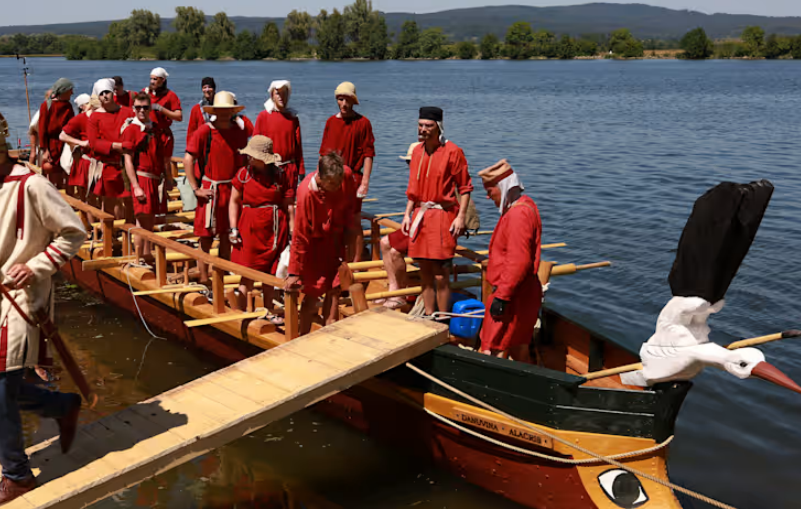
-
 Currently there is only one artificial limitation - silhouettes system. It stores occluders as 16-bits indices to save memory. So we can have at most 65k units with silhouettes enabled. Without it's limited only by hardware as @Stan` said. But the silhouettes system is very easy to improve to not have that limitation.
 -
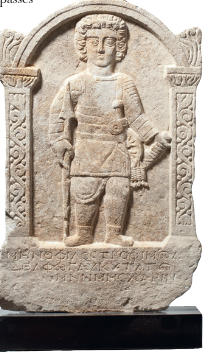
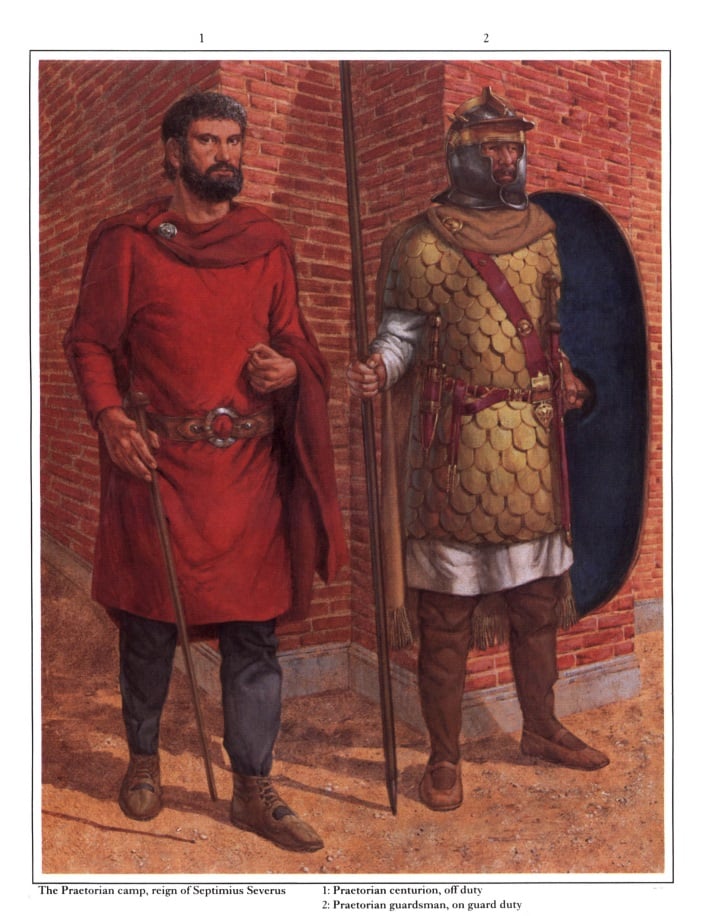
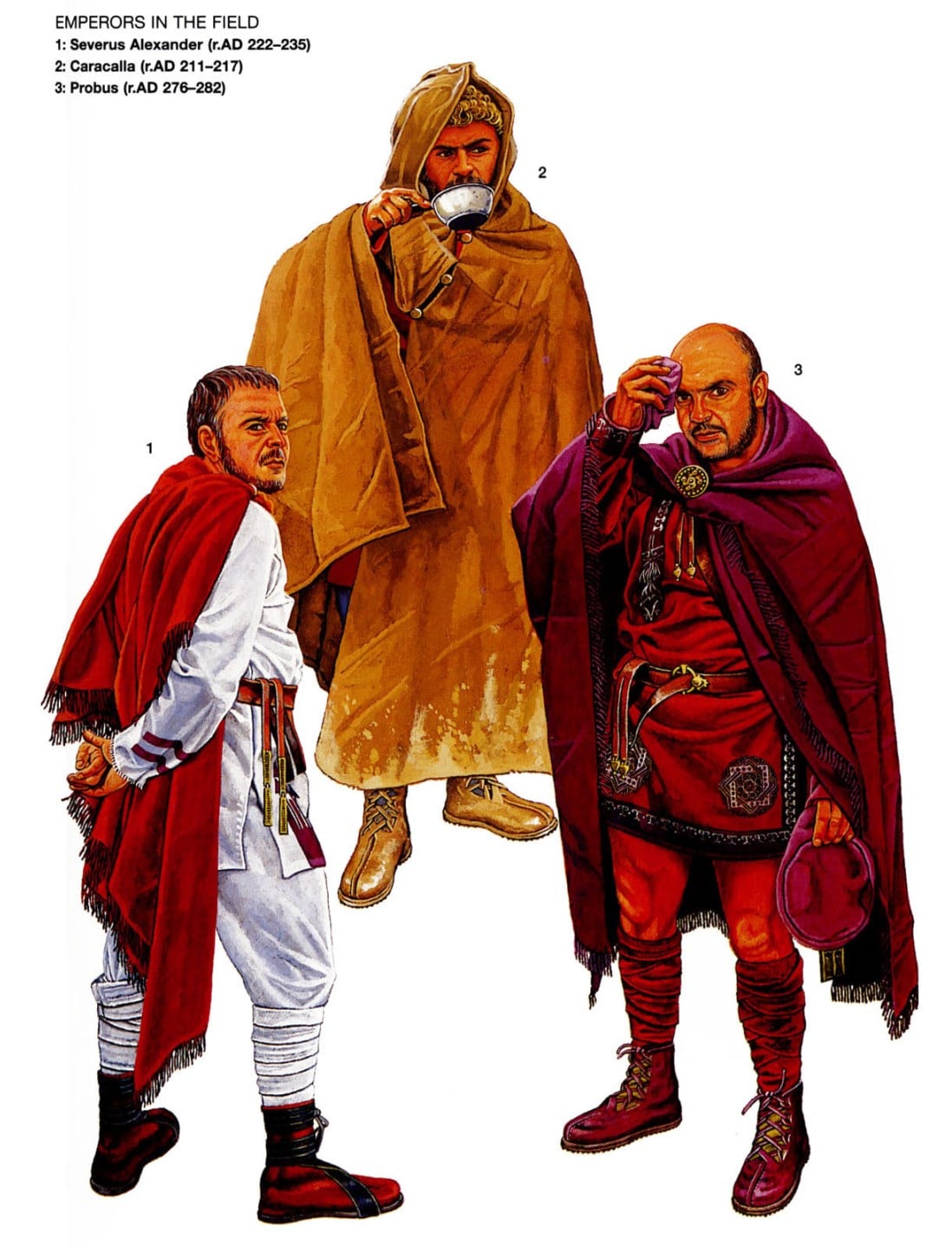
By searching for Julius Terentius you can find images of artistic recreations. By the third century, this seemed to be the standard.
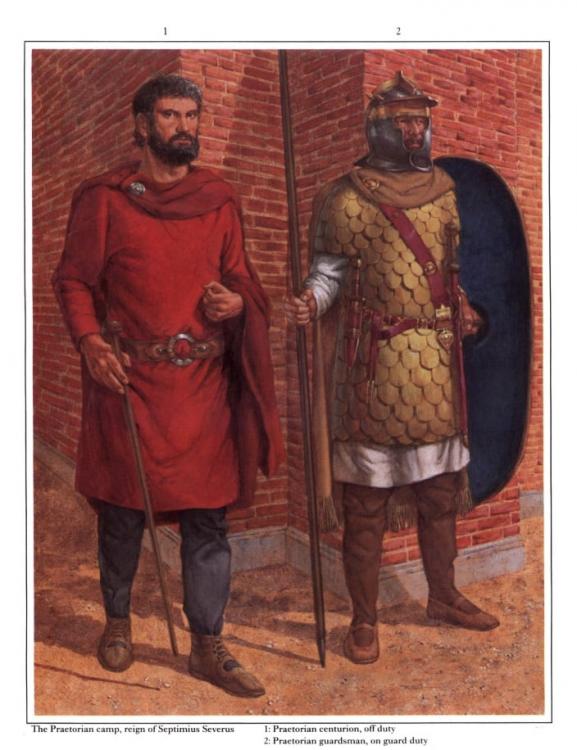
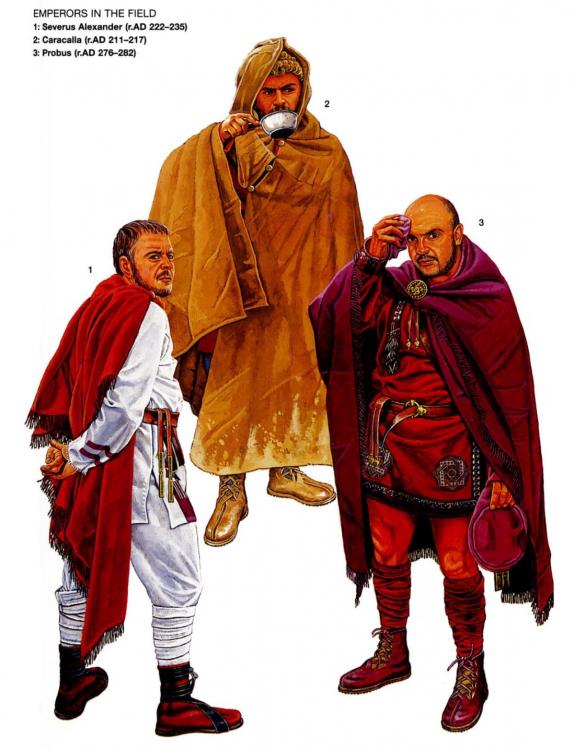
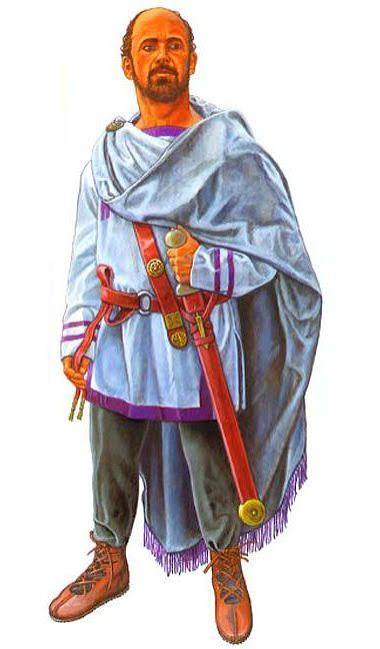
-
ships Naval Boarding - seizure of ships
Thalatta replied to CheckTester's topic in Gameplay Discussion
I think this is too complicated, having to handle that for every ship you have will drive people nuts. Has to be simplified. Yes, the first would be the base garrisons I've mentioned in the past. That's why I proposed an Athenian Tachunautousa Triērēs with no garrison slots (which could then be considered a "champion" machine) for "embarked combat units", just with crew and officers it would be optimised for its function. Well the helmsman would be an officer. Along with "global ship statistics", they could fight only if the ship is being boarded (although not all oarsmen need to be killed for that action to be successful), at least that was the initial idea for base garrisons: not to have capture points and weird capture dances any more, but this and virtual combat. Ranged units being able to inflict damage and casualties on garrisoned units is something I'd like to see. Inflicting damage to the structure they are garrisoning in should be the job of some siege engines (while some would also affect garrisoned units). I guess you mean, in Greek terminology, trierarch, helmsman, rowing master, and bow officer. Returning to simplification, while these officers could be represented as default units (like are siege operators currently), a simple icon in the unit panel should indicate their presence (as mentioned, you could also have other specialists like a purser for some loot bonus, a shipwright for automatic repair bonus, a piper for an extra mobility bonus, and there were others for larger types). Rowers and the default deck troops (170+24 for the Athenian triḗrēs example) should be indicated just as numbers (the latter also units, but with this amount they are not really designed for boarding, that'd be for the embarked combat units), the first related to mobility, while all add to boarding resistance, that's why it'd be easier to defend than to attack, preventing annoying situations. To take a ship, embarked combat units should kill all defending combat units, and a proportion of rowers to be decided. Then all rowers would redistribute over the ships involved (there are reports that ships would have less than 1/3 of recently captured rowers, to avoid rebellions), incurring then in a mobility penalty to the winner, preventing snowballing. Depending on the nature of the loss. For a takeover, all combat units would be killed (maybe some captured, this related to the slavery discussion, or to have some valuable prisoner, like a Hero), but it could be that the action is becoming too costly (although rowers would be weak, they would defend themselves, virtually) and the action has to be aborted. All in all, things would end behaving similar to naval combat in Shogun 2 TW. These should come from facts from the period (not the usual "equip random @#$%" when there's a lack of historical knowledge, which cheapens the game). I've mentioned in Thoughts on the Athenians things like epotides, parablemata or cataphracts, but some of these basically already come with certain civs or ship types. Not the ship, that would be unrealistic and snowbally. And the taken rowers won't be very happy, so their experience could actually be reset, and one could assume they get diluted with time with actually loyal rowers. Capturing a good type of ship (maybe some even the civ doesn't have) would be the reward in itself. Sure, it should come from the actual virtual combat. The option of doing all this but in the end not capturing the ship (thus no rower redistribution, but killing all of them) should also be possible. Back to specialists, for the Rhodian Four I mentioned you would additionally have a masseur and a doctor, which could provide a bonus on health regeneration. The "repair mechanic" is the shipwright. I proposed in Thoughts on the Spartans to replace the Shipwright tech with Shipsheds, since they were more seriously built at this time, while shipwrights come from way before, while for all this stuff it makes more sense to "equip" them (again, techs shouldn't be like that, but actual developments from the period). Sure, everything would be properly regenerated close to a port, while at sea a very small regeneration could come from the bonuses associated with each specialist. For example, actual numbers (of rowers, etc) could slowly regenerate if the trierarch is present (he's the one hiring people, so losing him would be a blow), also because one can assume that naval activity is more than what's being explicitly represented. This should slowly evolve, starting from the less ambitious. Boarding details are not that necessary for tactics, but different kinds of ships with distinct roles, already developed in Thoughts on the Athenians based mainly in Morrison's book (and others, of course). In fact, all that system had in mind the implementation of boarding as it's being discussed right now. -
 There is no limit per se. Just depends on your hardware. At some point you'll probably run out of VRAM.
 -
https://www.persee.fr/doc/syria_0039-7946_1986_num_63_1_6923 I will find Dura europos' discoveries useful.
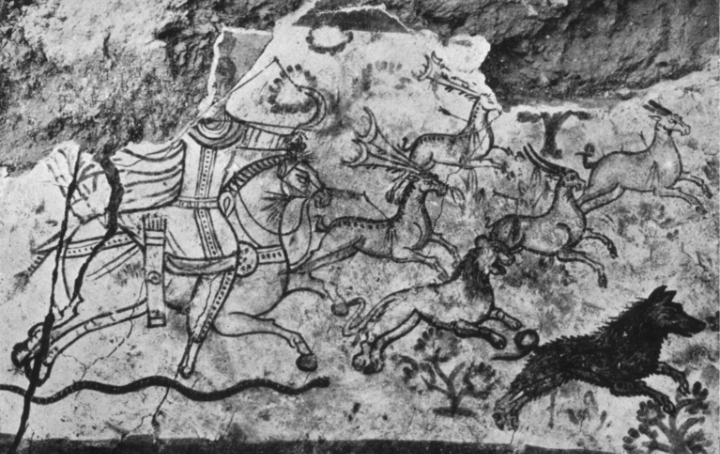
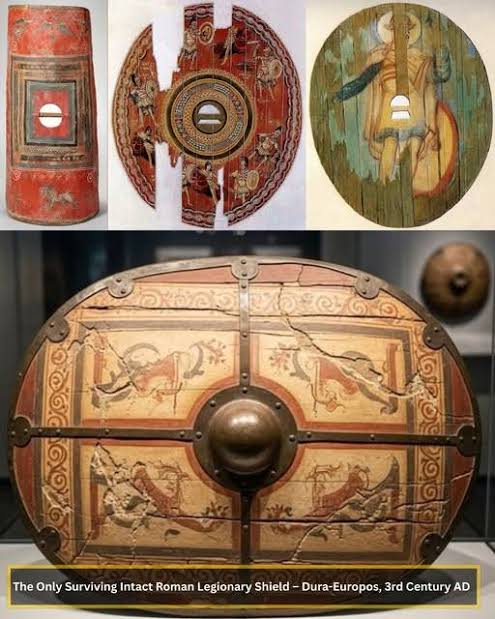
-
look this.. i was not so wrong.
-
https://tenor.com/fGW1ncEOmbc.gif
-
I found a copy...
-
ships Naval Boarding - seizure of ships
Nicolaus_von_Kues replied to CheckTester's topic in Gameplay Discussion
First draft: Naval Combat, Crew Experience, Boarding, and Ship Progression in 0 A.D. 1. Three Layers of Naval Combat The naval combat system should be divided into three interconnected layers: the base crew, embarked combat units, and naval officers. Layer 1: Base Crew The base crew consists of the personnel required to operate the ship, including rowers, the helmsman, and other essential sailors. These units do not necessarily need to fight individually. Their contribution can be represented through global ship statistics, including: - Speed and maneuverability. - Ability to maintain course during combat. - Propulsion efficiency. - Operational performance. If the crew suffers casualties, the ship should lose some of its capabilities. Layer 2: Embarked Combat Units These are the hoplites, swordsmen, archers, and other combat units transported aboard the ship. Their composition, statistics, experience, and upgrades should determine their effectiveness during naval engagements. - Hoplites provide a defensive line and resist enemy boarding attempts. - Swordsmen specialize in close-quarters combat. - Archers and other ranged units can inflict casualties before ships make contact. - Specialized units may provide additional advantages depending on the situation. These units should play a decisive role in determining the outcome of boarding actions and fighting on deck. Layer 3: Naval Officers Naval officers include the commander, helmsman, chief of rowers, and marine officer. Their role is to improve the performance of the crew and embarked combat units rather than replace them. For example, the marine officer could improve boarding effectiveness, while the commander could provide a general leadership bonus. 2. Global Ship Statistics When two ships engage in combat, their outcomes should depend on several factors: 1. Statistics: determine each ship's overall combat capabilities. 2. Crew and troop composition: determine the strengths and weaknesses of each vessel. 3. Experience and upgrades: improve combat performance over time. 4. Controlled randomness: represents unpredictable events, tactical opportunities, and battlefield confusion. If two ships have identical crews, combat units, experience, and upgrades, neither should have a permanent advantage. Both should have comparable chances of victory. Randomness should remain limited by the ships' actual capabilities. A significantly superior ship should not routinely lose to a much weaker opponent simply because of random chance. 3. Crew Experience and Progression Every naval engagement should provide experience to the participating crew, regardless of whether the ship wins or loses. Two separate experience systems could coexist: - Crew experience: represents collective coordination and naval proficiency. It could improve maneuverability, coordination, and overall naval performance. - Individual soldier experience: represents the combat experience of embarked units and improves their fighting abilities. An optional third system could provide experience to naval officers, allowing them to develop specialized leadership bonuses. Ship upgrades should remain distinct from experience. They could improve structural durability, speed, or other permanent characteristics. Experience gains should depend on meaningful participation and the difficulty of the engagement. Repeatedly fighting insignificant opponents should not provide an easy way to accumulate unlimited experience. 4. Capturing Enemy Ships Captured ships should have strategic value beyond simply removing an enemy vessel from the battlefield. An important design question is whether experience belongs to the ship itself or to its crew. One possible solution is to preserve part of a vessel's accumulated naval experience when it is captured, while introducing penalties or an adaptation period for its new crew. Capturing a veteran ship would therefore be rewarding, but it would not automatically provide a perfectly loyal and fully integrated crew. Boarding actions should also award experience to the units that participate in the fighting and successfully capture the vessel. 5. Experience for Capturing Buildings Capturing buildings should contribute to unit progression. - Units participating in an assault should receive experience for their combat contribution. - Units completing the capture should receive an additional capture bonus. - Defenders should gain experience for fighting attackers and successfully defending or recapturing the building. To prevent players from exploiting the system by repeatedly capturing undefended buildings, bonus experience should depend on the objective's importance and the resistance encountered. A similar principle should apply to capturing ships. 6. Loot and Rewards Successful captures could provide a small amount of loot, representing recovered supplies, equipment, or requisitioned resources. Loot should be an additional reward rather than the primary purpose of combat. For naval captures, the amount of recoverable resources could depend on the condition of the captured vessel and whether it survives the engagement. 7. Health, Casualties, and Recovery The system should distinguish between ship health and crew health. - Ship health: represents structural damage and should require repairs. - Crew health: represents injuries and combat exhaustion among individual soldiers and sailors. It should recover gradually over time. Crew members should not necessarily recover all their health at the same rate. Structural damage should generally require repairs at a port or through a dedicated repair mechanic. This would give retreats strategic importance and make ports valuable logistical assets. 8. Possible Implementation Models Two principal approaches could be considered for implementation in 0 A.D. Option A: Global Naval Combat The statistics of both ships determine the engagement and its casualties. Embarked units influence the outcome through their numbers, composition, experience, and bonuses. This approach would be comparatively straightforward to implement and would support large naval battles. Option B: Individualized Naval Combat When ships engage in boarding actions, soldiers physically fight on deck using individual animations, attacks, targets, and casualties. This approach would be more visual and tactical but would introduce significant technical challenges involving unit movement, navigation, and combat on moving platforms. Hybrid Approach A hybrid system could combine global calculations for most naval engagements with individualized combat during decisive boarding actions. This would preserve the importance of embarked combat units without requiring every naval engagement to simulate a complete land battle on a ship's deck. Provisional recommendation: use global ship statistics as the foundation of naval combat, while reserving individualized combat for boarding actions. The final implementation should depend on the capabilities and limitations of the existing 0 A.D. engine. 9. Main Design Question Should hoplites, swordsmen, and ranged units visibly fight individually on the deck, or should their statistics determine casualties while animations merely represent the engagement? This decision will determine much of the technical architecture of the naval combat modification.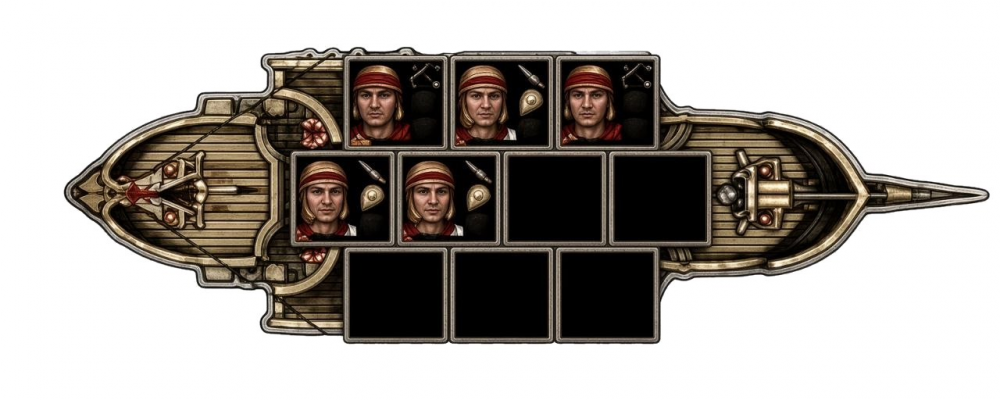
-
ships Naval Boarding - seizure of ships
Nicolaus_von_Kues replied to CheckTester's topic in Gameplay Discussion
Two concepts can form a new one.


-
Latest Topics
-