
All Activity
- Today
-

New 0 A.D. player, hardware question
leopard replied to jamedavid's topic in Introductions & Off-Topic Discussion
You'll need a better CPU, GPU, more RAM, and faster storage, preferably an SSD. 0 A.D. might look like a game with tiny creatures and buildings on the screen, but they're actually 3D models, and every unit has its own AI. All of that takes quite a bit of CPU power and memory. I don't know all the technical details, but this game can be pretty demanding. However, the developers have done a good job of optimising it so that it can run even on older, low-end PCs. You'll be fine playing single-player matches against AI, but if you're planning to play multiplayer, you'll need a PC that can run the game at a speed comparable to that of other players. Most multiplayer players have gaming PCs. If your PC lags, some of them will get annoyed and might even start a smear campaign against you. I used to have a slower PC (I have a mid-range PC now, because I'm a poor guy), and some of the people who hated me back then still hate me. They kick me out of games, insult me, and so on. I don't really care about them anymore. I just enjoy this game, and that's why I'm still playing. I've been playing it for almost a decade now, I think. -
New 0 A.D. player, hardware question
Asher replied to jamedavid's topic in Introductions & Off-Topic Discussion
So, it is ram that slows late game matches down? not the cpu getting overloaded? -

New 0 A.D. player, hardware question
Perzival12 replied to jamedavid's topic in Introductions & Off-Topic Discussion
I would recommend upgrading your RAM instead of/as well as your CPU. I did so and my computer went from lagging and burning up (16 gb) to able to run massive matches fine (42 gb). - Yesterday
-
New 0 A.D. player, hardware question
Asher replied to jamedavid's topic in Introductions & Off-Topic Discussion
Welcome @jamedavid! My gpu is integrated, so that probably won't help much. What cpu do you have? -
 Hey, I’m new here. I’ve been playing 0 A.D. for a few months and love it. Thanks to the devs for making a free game this good. My PC is old and the game lags in big late-game fights. I’m looking at a graphic card for gaming that won’t cost too much. What GPU do you use, and how does 0 A.D. run on it? For big team games, does the CPU matter more?
-
jamedavid joined the community
-

Specific Name Review: Units
Genava55 replied to Doktoreus's topic in Game Development & Technical Discussion
The suffix -an is the standard plural suffix in Modern Persian. Example with mard => mardan for "men" in Modern Persian. While in Old Persian, it seems to be martiya => martiyā -

Specific Name Review: Units
wowgetoffyourcellphone replied to Doktoreus's topic in Game Development & Technical Discussion
Sparabaran is plural, iirc. Like Thanvabaran for archers. -

Photocraft : The opensource Photoshop
Nicolaus_von_Kues replied to Nicolaus_von_Kues's topic in Art Development
I'm also seeing that Affinity, Adobe's competitor, is going to launch an official Linux app. And that the people behind Artcraft have professional people correcting the project. -
I know a lot of it is junk software. I don't know if this project is like that. But with so many games appearing out of nowhere... Ideally, it is like a mass of mud or clay that is transformed into pottery by human hands. AI is meaningless without humans. It's interesting for entertainment and a weekend project.
-
Specific Name Review: Units
Genava55 replied to Doktoreus's topic in Game Development & Technical Discussion
I think it is sparabara in the singular and sparabarā in the plural -

Golden Age : AOE II New Godot port.
scr0llbaer replied to Nicolaus_von_Kues's topic in Introductions & Off-Topic Discussion
be wary though, in the age of AI vibe-coding and "decomps", a lot of people who know little about software development start with a lot of enthusiasm with such projects but then lose interest and let it die and move on to the next thing. and often no one else would pick it up either as it often was in open source, there's just too many things going on and too many possibilities now. not saying this is what will happen with this project specifically, "AI" is not a black-and-white thing the way most people see it and feel about it (a general problem in society, people are hopelessly polarized, "if you're not with us then you're against us", as if they've never heard that nuances are a thing), but what's definitely needed in this and other areas is some sort of curating. either way, i think for one's own sanity, for everything new shiny thing that comes out, first assume it's vibe-coded AI slop. pay closer attention to things only when there's a somewhat proven track record of dedication over some period of time, i guess that's the way to handle this nowadays. -

Golden Age : AOE II New Godot port.
lilypoppy replied to Nicolaus_von_Kues's topic in Introductions & Off-Topic Discussion
Painting is something that is necessary in 0ad -
As you may know, Vibe Coding and other tools have accelerated and created new projects. I can't say that it's just AI without human ideas. Many Total War-style games are being released, but also AoE-style games. Everything's coming out, but I like that there are people bringing interesting concepts.
-
Not yet. But it has a Discord server. It's in the video description. There are a lot of clones of classic games coming out lately.
-
Golden Age : AOE II New Godot port.
Asher replied to Nicolaus_von_Kues's topic in Introductions & Off-Topic Discussion
Do you know if there is access to the source code, @Nicolaus_von_Kues? - Last week
-
There's the discussion regarding þurpą reconstruction, and there's the later discussion regarding the attested cognates. Regarding the latter, you have been trying to argue that one can see the earliest attested cognates refer to a farmstead, or according to you, a single dwelling, first with OHG, but then I've shown that OE is attested earlier. Concerning that latest discussion, "original meaning" can only refer to the time of the EE glossary. Then, although "the study is mainly concerned with the period from around 850 to 1250", it's not correct to say that "they are not claiming that the word thorp had always denoted such a cluster, nor that several buildings were necessarily part of its original meaning", since I've shown they do claim this when they stated that compitum in the EE must have also been interpreted as a "small rural settlement" (conclusion I arrived at independently, in part considering they would emerge right there) by "unsophisticated people". But you know this, since later you dismiss this evidence by saying that It's not reasonable to suppose that more exploration would have led to the conclusion that "thorp" was actually a single dwelling at the time of the EE glossary, which was your claim. That would be basically the opposite of what they are already claiming, which aligns with the current EE translation (published a few years later), as I've already explained. But maybe focusing on þurpą in what follows will clarify this even further. Concerning þurpą reconstruction (the other interpretation of "original meaning"), my claim is not exactly that "Proto-Germanic þurpą already referred to a village or hamlet", that's semantically charged, but that þurpą probably didn't restrict itself to a single farmstead. Then I guess you could call this collection of farmsteads a settlement, a hamlet, or small village, but none of that is my original claim (just approximate terms to emphasise a contraposition with your single dwelling claim). My claim is based on that (new relevant information is added in the last point): -The Germanic cognates you tried to use to further your claim actually support mine, as demonstrated from your sources. The rare unique instance in Gothic cannot be reliably used, and could have treated a collection of farmsteads as "farmland", like Ekwall seems to do. -The Celtic cognates also refer to a settlement larger than a single farmstead, further reinforcing the view that, if that was the actual meaning in Gothic, it was indeed the exception. This is way more parsimonious than thinking that the "earliest meaning was closer to the one preserved in Gothic" and everything else changed. -The Proto-Germanic reconstruction is often associated with "crowd" and "settlement". While you pointed out that the latter is ambiguous, Kroonen's student states, when questioning if Latin trabs is also a cognate, that "while all the other comparanda refer to dwellings, settlements, and communities, Lat. trabs sometimes refers to part of a building". Through his thesis he consistently uses the word "settlement" to describe multiple dwellings, and small "communities" is exactly what I've been talking about (conclusion I arrived at independently, in part considering the association with "crowd"). Notice how, even when listing in the previous page that in Gothic it meant "farmland", absolutely nothing is said about that for Proto-Germanic. Regarding the quotes from the book towards the end, I know them, they either align with my claim or don't go against it, and certainly don't support a single dwelling interpretation. Many specific characteristics regarding thorps is why I said to bear in mind they "don't necessarily apply to þurpą, being a cognate many centuries after the fact". The relevant claims in question are the ones I just restated in this post.
-
 Jumper14 joined the community
-
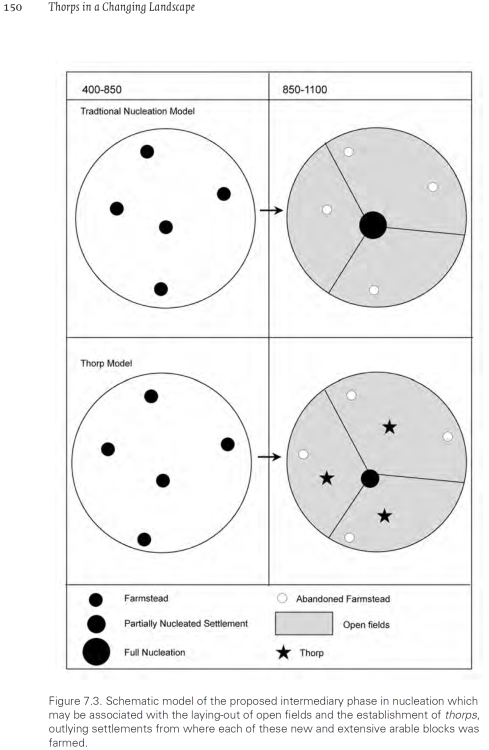
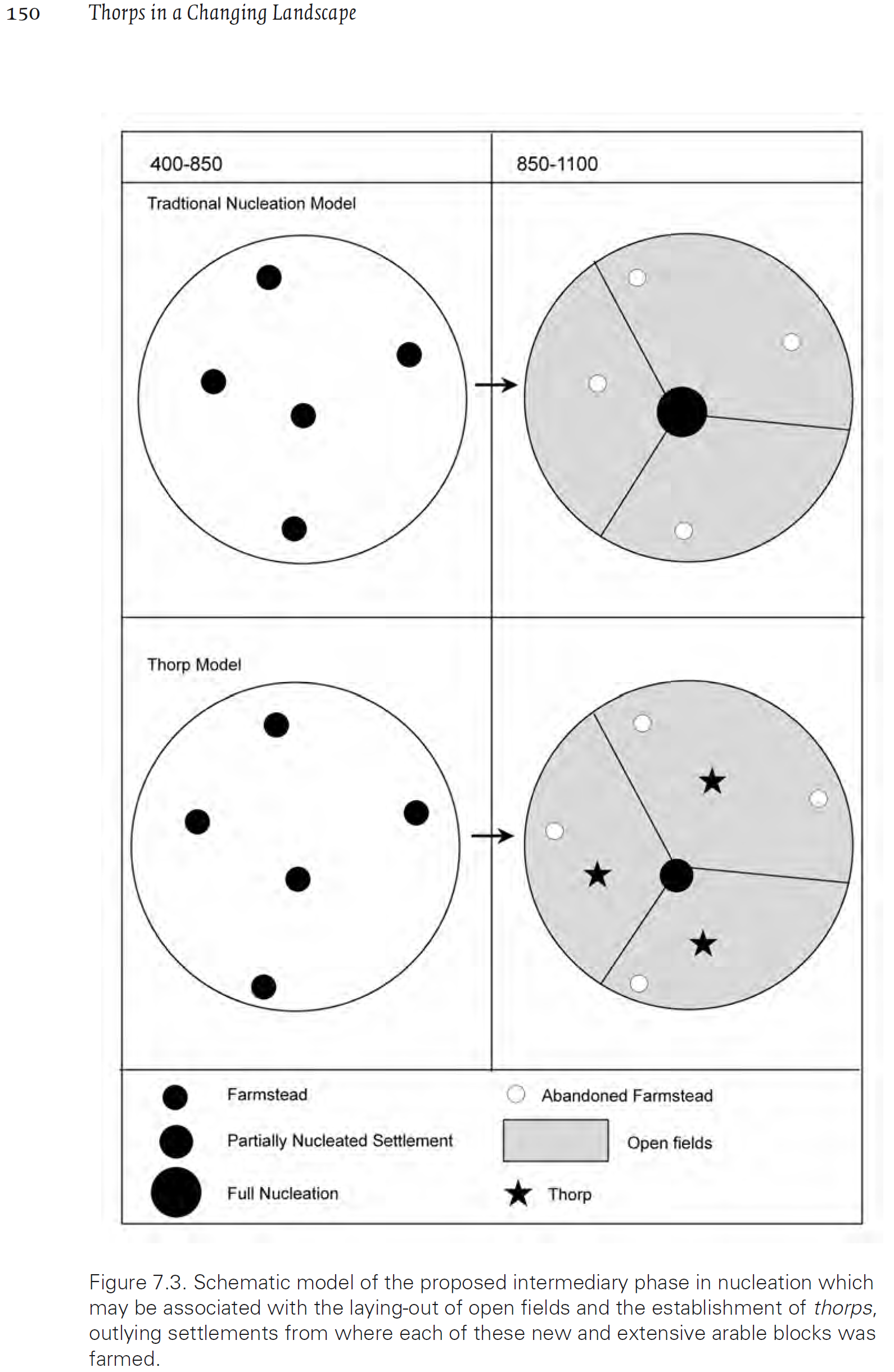
I found this study fascinating. It is exactly the kind of research I enjoy, much like the studies of German and Swiss place names that I mentioned earlier. However, there is a reason why I have not placed too much weight on it in this discussion: the study is mainly concerned with the period from around 850 to 1250. The authors state this chronological focus several times. They examine that period because it was then that thorp and throp became highly productive in place names, during a major transformation of agriculture and rural settlement. But that is not the central issue in our debate. We are trying to determine what these words may have meant much earlier, before the medieval period. Your claim is that Proto-Germanic þurpą already referred to a village or hamlet. That is what I am disputing. I challenged this interpretation using the Gothic evidence for two reasons. First, þaurp is never used to translate "village" in the Gothic Bible, despite the fact that villages are mentioned repeatedly. Second, its only occurrence refers to a field or agricultural estate. Gothic is the only Germanic language for which we have substantial evidence from before the medieval period. You responded that Gothic may have undergone its own semantic innovation and lost an earlier village sense, while other Germanic languages later used cognates of þurpą for villages. I do not deny the medieval evidence. At some point, these words clearly did come to designate villages. What I dispute is the assumption that this was their original meaning. My hypothesis is that the earliest meaning was closer to the one preserved in Gothic, and that the village sense developed during the later reorganisation of the agricultural landscape, when forms such as thorp and dorf became especially productive in place names. I am restating this because our discussion seems to be drifting further into the Middle Ages, while the disputed question concerns a much earlier semantic stage. The excerpt you quoted must also be understood within the chronological limits of the study. It comes from an archaeological analysis centered on the period from approximately 850 to 1250. When the authors refer to the "earliest phases" of thorps, they mean the earliest phases of the medieval settlement phenomenon they are reconstructing, the "thorp moment". To make this more explicit and clearer, I recommend looking at figure 7.3 on page 150 that I posted below. They are not making a statement about the original Proto-Germanic meaning of the word. "In their earliest phases" refers to the earliest archaeologically recoverable phases of the thorp settlements examined in the study. It does not refer to the earliest history of the word in Old English or the Germanic languages. The compact and linear organisation described in the passage characterises the period when many thorps had become small villages or nucleated settlements. It cannot simply be projected backwards to prove that thorps had always denoted a settlement composed of several households. The authors themselves do not claim that thorps appeared suddenly as fully formed villages. They consider the possible regrouping of earlier farmsteads and leave aspects of the preceding nucleation process unresolved. Their medieval reconstruction therefore cannot be treated as evidence that "village" or "hamlet" was already the word’s original meaning centuries earlier. This is notably what they are discussing at the pages 148, 149 and 150 of their book. The passage actually describes a three-stage model: dispersed farmsteads, followed by small clusters of farmsteads, and only later by fully nucleated villages. The authors begin from an "archaeologically attested pre-open-field landscape of dispersed farmsteads" and question the conventional assumption that "full dispersion gave way to full nucleation" without any intermediate stage. Their alternative is explicit: "Might a first stage towards full nucleation not have been the grouping of individual farmsteads into a number of small hamlet clusters?" In this model, thorps are precisely that intermediate stage. They are not necessarily settlements inserted into a landscape that had already been reorganised. Instead, the authors ask whether they "played [a role] in that reorganisation itself". A thorp could therefore emerge when previously dispersed farmsteads were brought together into a small secondary cluster associated with the laying out of new fields. This helps clarify what the authors mean elsewhere when they describe the "earliest phases" of thorps as compact settlements with several building plots. They are describing the earliest archaeologically recognisable phase of the thorp moment, after individual farmsteads had begun to be grouped together. They are not claiming that the word thorp had always denoted such a cluster, nor that several buildings were necessarily part of its original meaning. The authors are also careful to call the resulting settlement "a secondary or subsidiary or outlying hamlet," rather than a primary village. Their model is therefore not simply "thorp means village". It is a historical process: Dispersed farmsteads → Small subsidiary clusters → Fuller village nucleation. This passage consequently supports the idea that the characteristic medieval thorp could have resulted from the reorganisation of earlier individual farms. It does not allow the later clustered form to be projected backwards as the original and permanent meaning of the word. It is truly a new meaning that is emerging along with a new phenomenon. This distinction is especially important because the authors themselves question whether the known English throp-names really belong to the earliest Anglo-Saxon centuries. They write that "it is not as clear to us as it was to Smith that the known place-names in þrop date from the earliest centuries of Anglo-Saxon settlement," and they describe Smith’s proposed pre-eighth-century chronology as "coherent, but […] far from conclusive." They also observe that þrop-names "tend to be recorded late" and lack the archaic or obscure first elements found in name-types believed to belong to the earlier Anglo-Saxon period. They propose that thorps and throps played a part in the agricultural transformations of approximately 850 to 1250, involving open-field farming and increasing settlement nucleation. The "thorp moment" is presented as an "intermediary stage of nucleation". The compact plans and multiple plots described in the disputed passage belong to that medieval process, not necessarily to the original lexical history of the word. We cannot say that the definition of thorp between 850 and 1250 was the same much earlier. On the contrary, the authors dispute the existence of thorps before the 9th century. Therefore, you are misrepresenting their argument by twisting their conclusion to project it onto a different chronological period. Furthermore, the example of a compact cluster of farmsteads should not be treated as the only possible model. It is mostly an ideal case. Elsewhere in the study, the authors discuss places called thorps that were represented by individual farmsteads or dependent agricultural holdings. This is why I think their use of the broad term settlement should be understood flexibly: it does not, by itself, specify a minimum number of houses, farms or households. A few quotes from their book and their article I find appropriate to highlight the previous points: Isidore of Seville writings are from the 6th century. The Épinal-Erfurt Glossary is from the 7th century. So once again, this is a chronological period much earlier than that observed archaeologically by the authors of the book we have just discussed. The authors do not address glosses directly in their study but in an appendix, and they express legitimate doubts. However, a large part of their criticism is directed at the concept of a crossroads associated with the word conpetum. Personally, I agree with them and I absolutely do not support this interpretation, which derives more from classical Latin than from the Middle Ages. Isidore of Seville, on the other hand, emphasizes the agricultural nature by saying it is a gathering of peasants. I really think it's important to gather all the early elements related to the cognates of þurpą. We see that the word thorp can be associated with the notion of gathering, both with its comparison to concetum and thing-stow, but also by looking at other cognates in German and Old Norse that can also be used in a context of gathering. This is why I said that 'þrop' referred to an estate acting also as a gathering place for peasants who collectively managed land, and that there was a semantic shift in its meaning to refer first to the entire community and then to a village. In my opinion, the comparison with tuun is more logical in this sense because this word has also undergone a similar semantic shift, with the notion of a physically delimited space to then designate the notion of property, of domain and then the buildings which are contained in the domain. I agree with the authors when they say that these are "settlements" but I insist that this could derive from a semantic shift, first starting with the idea of bringing together peasants initially, then bringing together farms and agricultural holdings in a second stage. The authors closed the debate too quickly by assuming that "tuun" must refer to a settlement and that, therefore, "throp" necessarily referred to the same thing even then. I think they should have explored this question more deeply than it might seem, beyond a simple appendix, as I believe it would have lent even more weight to their concept of community-based agricultural land management. Looking at the problem from the perspective of a delimited space dedicated to agriculture can help to unify the different definitions given in the different glossaries. I will respond to the rest of the arguments in due course. I want to respond properly to your arguments.
-
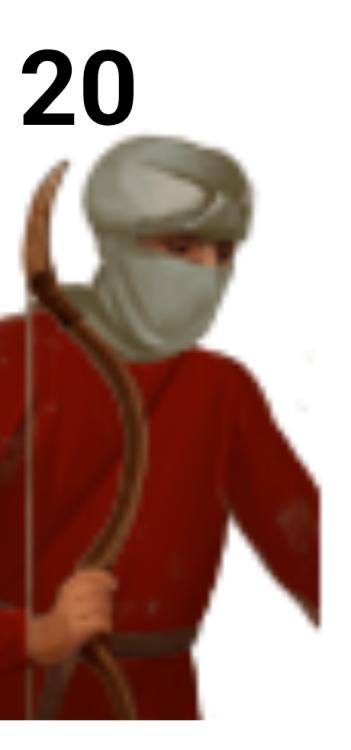
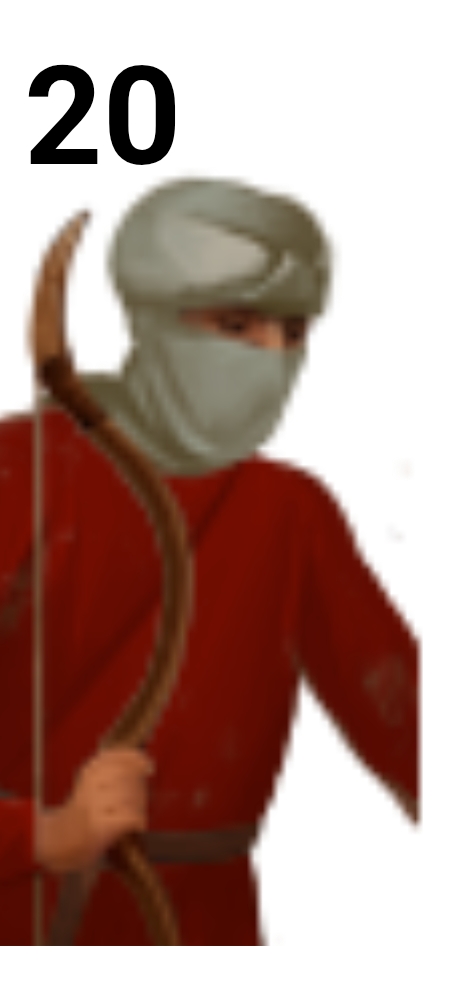
https://orca.cardiff.ac.uk/id/eprint/17728/1/2011beattiemphil.pdf.pdf?utm_source=chatgpt.com I asked chat gpt for more sources that could give me Middle Eastern clothing. The AI gave me that source above. He gave me advice that I already knew from my experience: look at the helmets of neighboring civs and observe their clothing.

-
It will be available on Linux and Mac OS.On Windows too, obviously.
-
@Genava55 your first post is clear and I agree with most of it, except what you seem to actually stand for, which seems confirmed in your second post. Yes, "settlement" can be ambiguous, but many times it's clear what's being said from context, or even explicitly explained. When that book says "small settlements", it's clear that they refer to a few dwellings and not to the size of a single one. You argue against thorps usually "being more than a single farmstead" by referring to my quote as an "isolated example", but use a couple of isolated examples to say there's no "sufficient basis for attributing to the authors a conclusion they do not themselves formulate", when they actually conclude: Which has been my point all along. I wouldn't say an "unambiguous synonym for 'village'" is intended to be attached by current sources. As I've said many times, this association doesn't have to refer to a full-blown village, that might well be an exaggeration, it's just a matter of resemblance. When "hamlet or village" is used, what is meant is that there are multiple dwellings (or farmsteads, if you will), and not just a single one, and after all, all this kind of started when you said: Even when that might be an exaggeration and "hamlet is a very few dwellings" should be put in-between. The central issue is clear and I've mentioned it many times: are we dealing with a single farmstead or a group of them? I think it's clear most of the current evidence points to the group, and why it's no big issue that the current EE translation uses "hamlet or village", not in the spirit of saying thorps were proper villages, but that they were "small settlements" made up from a "collection of dwellings". Maybe Ekwall (who, again, died over 60 years ago) wanted to call all that just "farm", possibly "hamlet", but not "village", but taking that old sentence literally is misleading, considering what the current evidence tries to imply. And still, all that is only half of the argument. You still have not commented on Celtic cognates of haimaz having no relation with any kind of settlement, while þurpą cognates are consistently more settlement-like, showing it's doubtful to think haimaz mainly referred to some kind of settlement early on, while þurpą likely did. I still think you got too focused on Gothic and later (we are still talking about OE thorps after all) instead of the bigger picture provided by both branches and explaining why the accepted reconstructions are what they are.
-
One has to bear in mind that certain thorp characteristics don't necessarily apply to þurpą, being a cognate many centuries after the fact. All this focuses only on supporting the EE translation being a small settlement. I do not think that an isolated example, removed from its immediate context, provides a sufficient basis for attributing to the authors a conclusion they do not themselves formulate. Other passages in the book show that their use of thorp does not necessarily presuppose a settlement composed of several houses or farms. A particularly relevant example occurs in their discussion of minor place-names in Leicestershire, where they observe that "at least one was a farmstead in the thirteenth century". The reference is to Thorp on le Toftis, identified in a source from 1278 as "a lost farmstead described in 1278 as a tillage". This demonstrates that, within the authors' own analysis, a place called a thorp could correspond to a farmstead or agricultural holding. It does not establish that every thorp had this form, but it does rule out the claim that the term necessarily referred to a group of several houses or farms. Upthrop provides a comparable example. The authors treat this throp as a distinct unit in a landscape containing several dispersed settlements. Drawing on the charter of 869, they describe it as a 'little estate' incorporated into a larger estate complex. That description is entirely compatible with a small dependent agricultural establishment and does not, by itself, imply a village composed of several households. This is consistent with their wider discussion of dependency. Some thorps recorded in the Domesday Book were classified as berewicks, meaning outlying farms or estates attached to larger centres. In another document, the dependent estates or appendices of Peterborough were translated as "þa þorpes". The category could therefore encompass subordinate agricultural or estate units, rather than only nucleated communities. The same caution applies to the linguistic evidence. The surviving record of the Old English word is extremely limited, and the authors explicitly acknowledge how little is known about its early form and usage. Nothing in their analysis establishes that thorp originally had to designate a settlement containing several households. Consequently, the possibility that it could initially refer to a single farm, agricultural establishment, estate unit, or even a building at the centre of such a holding is not excluded. The last possibility is not directly demonstrated by the evidence, but neither is it contradicted by the authors' argument. It is also important not to confuse the possible original meaning of the word with the particular historical form adopted by many medieval thorps. The authors' main concern is not the meaning of thorp at the beginning of the Anglo-Saxon period. Their analysis focuses primarily on the profound reorganisation of settlement and agriculture from the ninth century onwards, especially the spread of open-field farming and the movement from dispersed occupation towards more nucleated forms. This is the context of the 'thorp moment'. The term describes an intermediate stage in the reorganisation of the medieval countryside, when small dependent units or satellite settlements helped bridge the gap between earlier dispersed farmsteads and later, more concentrated village territories. As the article puts it, 'Þorps and þrops represent an intermediate stage in the nucleation process, as farming communities sought the best way to run new field systems from the developing centres of population.' The regular and sometimes nucleated layouts identified by the authors therefore belong to this medieval process of transformation. They do not prove that thorp had always meant 'hamlet' or 'village', still less that this was its only possible meaning in early Old English. A term that may originally have designated a farm, estate unit or agricultural establishment could later have been applied more specifically to the small dependent settlements created or reorganised during the thorp moment. Projecting that later medieval morphology backwards would turn the authors' historical hypothesis into a timeless lexical definition that they themselves never formulate.
-
Hello everyone! I'm excited to share more updates on the development of World Rising! This time, I've implemented two major improvements that bring even more realism and immersion to the battlefield. The first new feature is the burning and fire damage system! Archers can now use flaming arrows to set enemy units and buildings on fire, causing damage over time and making battles more intense and strategic. The second improvement is the visual injury system! When units lose more than 50% of their health, visible wounds and battle damage begin to appear on their bodies, reflecting the damage they've suffered during combat. This adds another layer of realism and makes battles feel more dynamic. I've also made several improvements to the game's main menu and interface, giving World Rising a more polished and refined appearance. Development continues to move forward as we introduce new mechanics, improve existing systems, and bring our beloved project further to life! There's still a lot of work ahead, but every new improvement brings us one step closer to the experience we want to create. I hope you enjoy these latest updates! Thank you to everyone who continues to follow and support the development of World Rising! 20261108-0752-10.0366960.mp4
-
Another concept that is present in Rome2 and the Wargaming figures. I requested a version with better resolution.
-
LEGAL WAIVER: Please read this before contributing
Nicolaus_von_Kues replied to Jeru's topic in Art Development
I've done this before. But I know I should do it again. I am the copyright holder of original works I post in the Wildfire Games 0 A.D. Art Development forum. I hereby release all original works I uploaded to this forum in the past, and those I will upload in the future, under the Creative Commons Attribution-Share Alike 3.0 Unported license -

Specific Name Review: Units
Ultimate Aurelian replied to Doktoreus's topic in Game Development & Technical Discussion
https://en.wikipedia.org/wiki/Sparabara Is Sparabara actually plural? If so, is there a singular form that could replace it?




-
Latest Topics
-
