.jpg.4d575d1d330147616620e755ddb4c44a.jpg)
Genava55
-
Posts
2.560 -
Joined
-
Last visited
-
Days Won
96
Everything posted by Genava55
-
Beotian, Attic and Pseudo-Attic helmets?
-
.thumb.jpg.b21ca1d0c15fb56b42c39b25a0a40815.jpg)
===[COMMITTED]=== Gallic Naked Warrior (Re-design)
Genava55 replied to wackyserious's topic in Completed Art Tasks
It could be a good idea, lets try it. -
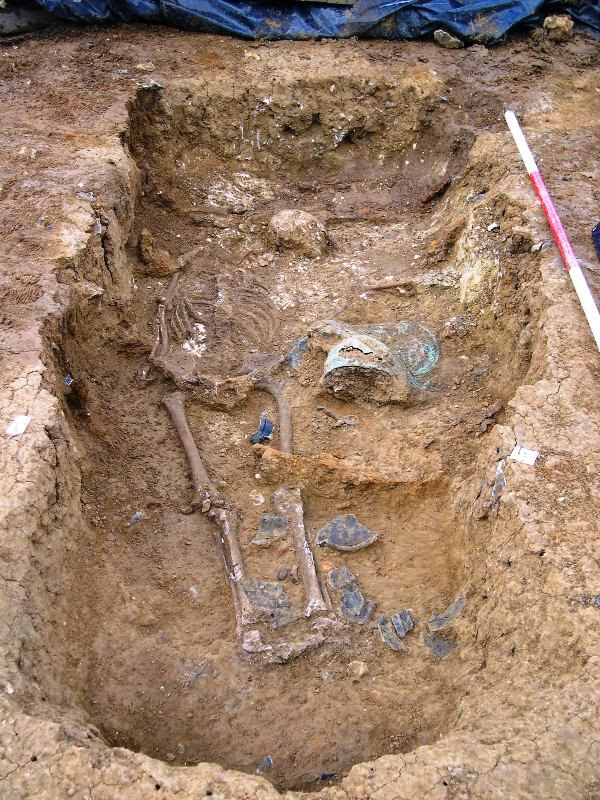
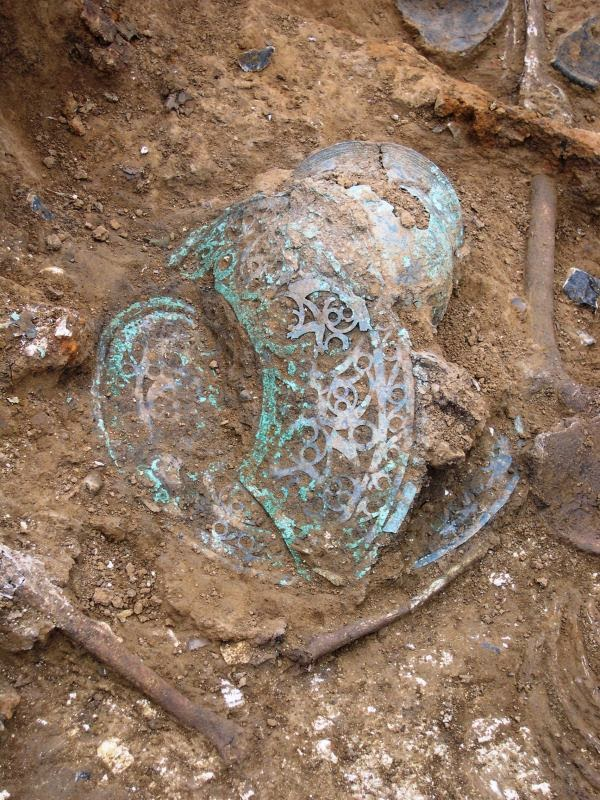
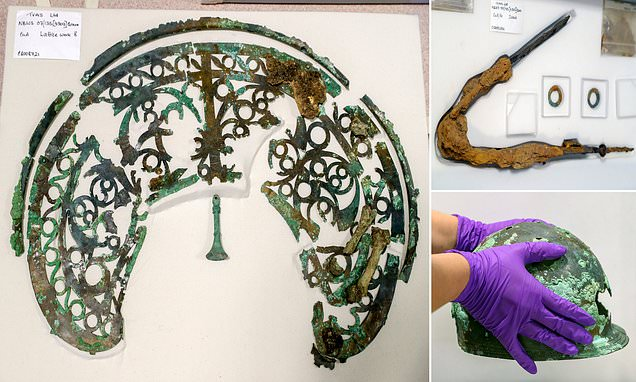
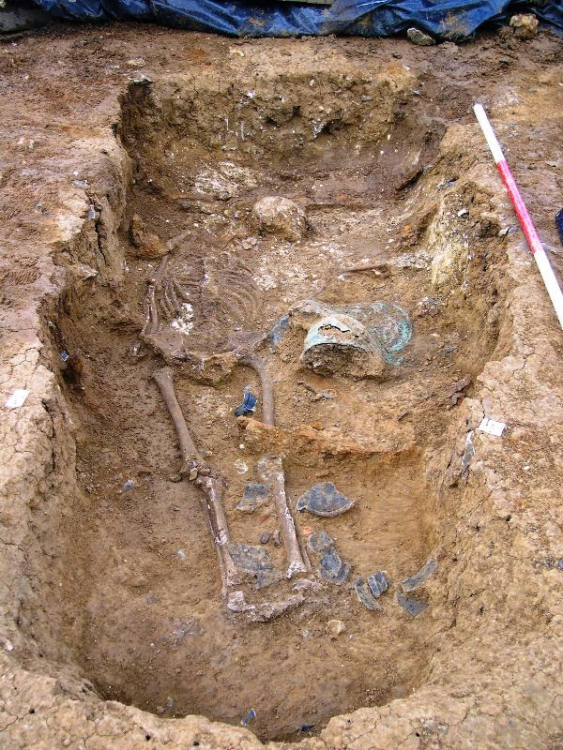
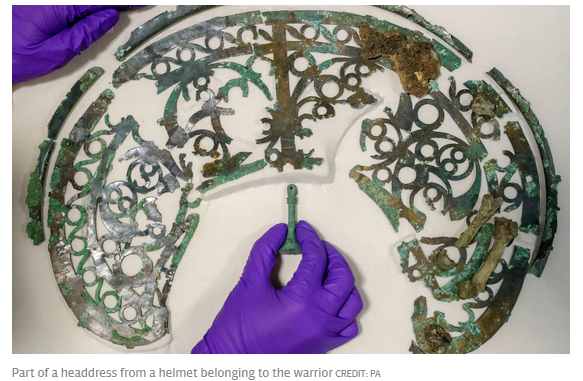
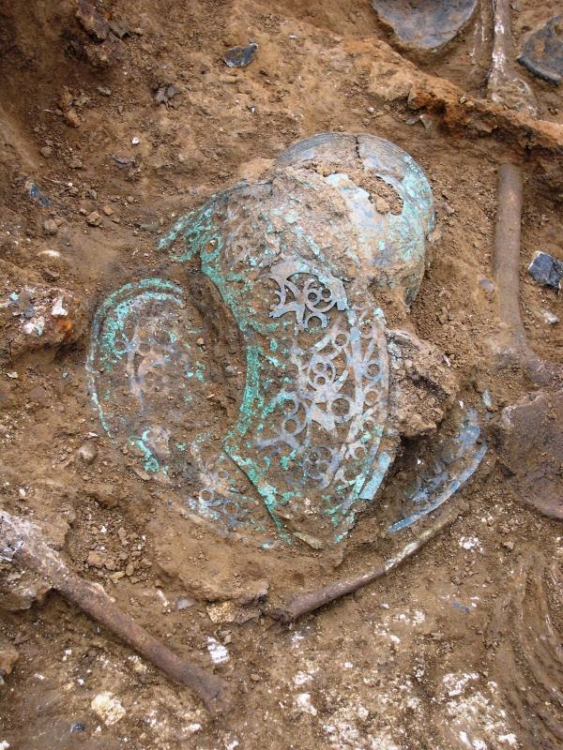
https://www.telegraph.co.uk/news/2019/07/22/real-life-asterix-fought-caesar-found-amid-trove-weapons-possessions/ https://www.dumbartonreporter.co.uk/news/17786239.grave-real-life-asterix-discovered-building-site/ https://archaeologynewsnetwork.blogspot.com/2014/06/iron-age-warrior-burial-discovered-in.html#5dwSBDHBd19ul86b.97 Grave of 'real-life Asterix' who fought Caesar found amid trove of weapons and possessions in West Sussex The grave of a real-life Asterix containing what is believed to be an ancient Gallic warrior who came to Britain and fought Julius Caesar has been discovered, archaeologists have announced. The unique and highly-elaborate resting place was found on a West Sussex building site. The Iron Age warrior, buried with his glamorous and ornate head-dress, is thought to have been a refugee French Gallic fighter who fled Julius Caesar's legionnaires as they swept across continental Europe in about 50BC. Archaeologists have described the discovery, which will go on display at Chichester's Novium Museum in January 2020, as "the most elaborately equipped warrior grave ever found in England". The grave was found during excavations ahead of a Berkeley Homes housing development in North Bersted in 2008, but it has taken years of conservation and scientific analysis to prepare the artefacts for display. Dr Melanie Giles, senior lecturer in archaeology at the University of Manchester, said: "It really is absolutely a unique find in the British Isles and in the wider continent, we don't have another burial that combines this quality of weaponry and Celtic art with a date that puts it around the time of Caesar's attempted conquest of Britain. "We will probably never know his name, what we know from the archaeology is that he is either someone from eastern England who may have gone and fought with the Gauls that we know was a problem for Caesar, we were allies with the French, helping them with their struggle against him. "Or he might be a Frenchman himself who flees that conflict, possibly a real-life Asterix and coming to us, just as in Asterix in Britain, to lend us aid in terms of the knowledge he has about strategy, tactics, he knows Caesar is going to try to divide and rule." "Also he brings with him his kit, extraordinary weaponry, a beautiful sword which is not like the swords we have, a new technology, style and design and helmet which is absolutely unique with these wonderful Celtic openwork crests which exaggerate his height and make him absolutely fabulous."
- 264 replies
-
- 3
-

-
- britons
- east celtic
- (and 2 more)
-
The discovery tour for AC: Odyssey will be available this fall. There are some videos about missions in interior places but... I don't think you will like it:
-
===[TASK]=== African minifaction buildings
Genava55 replied to Lion.Kanzen's topic in Official tasks
-
Hi, 0 A.D. is focusing on a different time frame: https://play0ad.com/game-info/project-overview/ "We intend to portray some of the major civilizations over the millennium of 500 B.C. to 500 A.D. (Hence the midpoint, zero.) That is an ambitious prospect, so in the first edition of 0 A.D. we focus on the last five centuries B.C. Perhaps in future expansion packs, more civilizations will be added, along with additional gameplay features." However, some mods are focusing on the early medieval period: https://wildfiregames.com/forum/index.php?/forum/297-1000-ad/
-
Your welcome, this is a pleasure to help.
-
Sent you a message, I included you in a talk about this issue
-
There are "A Phoenician-Punic Grammar" and "Phoenician-Punic Dictionary" both by Charles R. Krahmalkov, "A Comparative Semitic Lexicon of the Phoenician and Punic Languages" by Richard S. Tomback and "Latino-Punic Epigraphy: A Descriptive Study of the Inscriptions" by Robert M. Kerr.
-
Why it has been moved? Ok I know the Romans fought them mostly during the Imperial Era but the Parthians were fierce opponents to the Seleucids and got most of their territory before 129 BC.
-
Currently I am at the Hellfest festival. I will answer later.
-
The Role of Women in 0 A.D.
Genava55 replied to Thorfinn the Shallow Minded's topic in General Discussion
Women were better considered in Celtic societies but it is mostly about property right, divorce and inheritance. I do not know how it could be included in the game. And even like this, it is still an inequalitarian society. However, there is a debate about the Druids, Irish mythology saying the women cannot be Druids but the Roman accounts talk about some women as Druids. Some scholars argue that the Romans could have misinterpreted the diversity of the religious class and labeled every priest and priestess as a Druid, other scholars argue that the Irish connection with the La Tène is problematic and that we should not accept anything from the mythology as truths in application everywhere a Celtic language was spoken. For me there is no trouble to take a side in this debate and to portray female Druid. Finally, there are some burials of rich women and some accounts of ruling women in La Tène and British Iron Age culture. So it could be possible to have some females as nobles or officers, however I do not know which purpose they could serve in the game for the moment. There is no proof of female warrior in the Celtic culture, therefore these nobles were in place for different reasons. -
Something has been working on my mind for some time, mainly because I'm not a big fan of systems based on rock-paper-scissor. The case of the overwhelming advantage of the ranged units in the recent alphas released stresses the difficulty in balancing different type of units while keeping the game history-friendly. I see often people suggesting balancing changes or different gameplay based on historical facts (or according to their understanding of the history). This makes me wonder if this is possible to satisfy people with both historical accuracy and a balanced gameplay with depth and diversity. Ideas like spearman and swordsman having distinctive efficiency against different units are themselves not very historical. Even the idea that the cavalry is the best counter against ranged infantry is itself contradicted by numerous accounts on the battlefields where the later was often used against the former. This is not a mean criticism, most of the RTS falls in these simplifications to ease the gameplay, even the Total War games. This is understandable. Age of Empire 2 has reached a very high level of gameplay mechanics with this system. Even StarCraft 2 has several aspects from rock-paper-scissor systems. However I wonder if the inclusion of battle formation could be an opportunity to innovate in the gameplay. Historically, the battlefield was unbalanced from a game point of view, mostly filled with infantrymen and this across all continents and across all the time periods. The only exception being the nomads. Therefore why not consider an unbalanced system working around battalions of infantrymen? If the gameplay is unbalanced in purpose in favor of the infantrymen, with the other type of units working as support and counter around them, it could be easier to balance. This is kinda a heretic way to think in RTS games but I throw this idea to encourage further thinking. Even for mods, not only for the vanilla. To sum it up my mind, winning an encounter could be based on obvious parameters like the quality of the infantrymen and the numbers but also on parameters strongly related to the battle formation. For example, the battalion could gives a bonus to all the units (obviously) but this bonus could varies according to the depth of the formation. Like this players should consider both the width of the formation in comparison with the enemy's formation (because it will impact how much units will hit your unit in the same time) and the depth of the formation because each additional rank will increase the bonus. Clearly this is favoring the numbers of units, so outnumbering strategies will often win. But it could be counter by flanks attacks where each units attacked by enemy's melee units while being on the sides will lose all the bonus from the formation. Which will give an interesting tactical advantage for the cavalry. Moreover, this could also be countered by ranged infantry raining their missile on the infantrymen. Not only to cause damages and kill the units but in decreasing the bonus or even causing malus for the units hit. It could even slow down the movement of the whole formation and slowing their rate of attack (DPS). It could also be counter by forcing the player to split his army and to use clever strategies to destroy quickly the army with a smaller force, see this. In my mind, the ranged units and the cavalry should work as support and counter against each other to weaken the enemy main forces (which is the infantry). For the moment, I do not know how it could include the champions cleaverly but I wanted to share my thoughts. This is could be tested in a mod maybe.
-
Age of Empires 2 Definitive Edition
Genava55 replied to Lion.Kanzen's topic in Introductions & Off-Topic Discussion
-
Others RTS - Discuss / Analysis
Genava55 replied to Lion.Kanzen's topic in Introductions & Off-Topic Discussion
-
Age of Empires 2 Definitive Edition
Genava55 replied to Lion.Kanzen's topic in Introductions & Off-Topic Discussion
-
Artificial islands older than Stonehenge stump scientists+ A study of crannogs in Scotland's Outer Hebrides reveals some were built more than 3,000 years earlier than previously thought. But what purpose did they serve? When it comes to studying Neolithic Britain (4,000-2,500 B.C.), a bit of archaeological mystery is to be expected. Since Neolithic farmers existed long before written language made its way to the British Isles, the only records of their lives are the things they left behind. And while they did leave us a lot of monuments that took, well, monumental effort to build—think Stonehenge or the stone circles of Orkney—the cultural practices and deeper intentions behind these sites are largely unknown. Now it looks like there may potentially be a whole new type of Neolithic monument for archaeologists to scratch their heads over: crannogs. Artificial islands commonly known as crannogs dot hundreds of Scottish and Irish lakes and waterways. Until now, researchers thought most were built when people in the Iron Age (800-43 B.C.) created stone causeways and dwellings in the middle of bodies of water. But a new paper published today in the journal Antiquity suggests that at least some of Scotland’s nearly 600 crannogs are much, much older—nearly three thousand years older—putting them firmly in the Neolithic era. What’s more, the artifacts that help push back the date of the crannogs into the far deeper past may also point to a kind of behavior not previously suspected in this prehistoric period. https://www.nationalgeographic.com/culture/2019/06/neolithic-island-older-than-stonehenge-crannog-scotland/ https://www.cambridge.org/core/journals/antiquity/article/neolithic-crannogs-rethinking-settlement-monumentality-and-deposition-in-the-outer-hebrides-and-beyond/41A5D2F1C5E678B9EABB50BB17F7990E/core-reader
- 264 replies
-
- 3
-
-
- britons
- east celtic
- (and 2 more)
-
===[TASK]=== Greek Unit Texture (General Thread)
Genava55 replied to wackyserious's topic in Official tasks
https://www.facebook.com/HellenicArmors/ http://www.hellenicarmors.gr/armor/great-alexander-linothorax-2nd-version/ -
I like the idea. This gives more depth to strategy in general. It could be also something unlocked through the choice of a hero in the third phase.
-
==[Brainstorming]== for cheats units
Genava55 replied to Lion.Kanzen's topic in Eyecandy, custom projects and misc.
Thanks for moderating my message. You should have moved the topic there: https://wildfiregames.com/forum/index.php?/topic/22983-brainstorming-for-cheats-units/ Moderation: Good idea. Done.- 196 replies
-
- 1
-
-
- brainstorming
- art
- (and 2 more)
-
The Role of Women in 0 A.D.
Genava55 replied to Thorfinn the Shallow Minded's topic in General Discussion
Yes I know. I tried it. If I remember, they are losing life through time. -
The Role of Women in 0 A.D.
Genava55 replied to Thorfinn the Shallow Minded's topic in General Discussion
I am in favor of females for religious units, military units among specific cultures (nomads, Mauryan etc.) and as heroes (Boudicca). But as the main "productive" unit, no. Really the game is skipping the most important feature of the ancient times: slavery. Free women were not working as miners or as lumberjacks. Enslaved women were mostly working in shops, in houses and in fields (and in brothels...). This is sad that women didn't have a more prominent role in history, but it is like that and we cannot change the past (only change the present and the future). -
Age of Empires 2 Definitive Edition
Genava55 replied to Lion.Kanzen's topic in Introductions & Off-Topic Discussion
Oh @#$% the building collapsing animation, beautiful. -
==[Brainstorming]== for cheats units
Genava55 replied to Lion.Kanzen's topic in Eyecandy, custom projects and misc.
- 196 replies
-
- 1
-

-
- brainstorming
- art
- (and 2 more)
-
==[Brainstorming]== for cheats units
Genava55 replied to Lion.Kanzen's topic in Eyecandy, custom projects and misc.
Totally in favor of this alien thing. Nice work Lion. Another idea that could be cool: A modern Roman. There are several concepts like this on the web.- 196 replies
-
- 3
-
-
- brainstorming
- art
- (and 2 more)