
.png.a9ae33b5e5ddb0eb2b142b612b99c428.png)
Lion.Kanzen
-
Posts
25.684 -
Joined
-
Days Won
302
Everything posted by Lion.Kanzen
-
.thumb.png.ce58cea22940c255f5b0a735d5abee36.png)
Narrative Campaign General Discussion?
Lion.Kanzen replied to Lion.Kanzen's topic in Gameplay Discussion
Context of Egypt under the Saite dynasty. -
-
Narrative Campaign General Discussion?
Lion.Kanzen replied to Lion.Kanzen's topic in Gameplay Discussion
[...]After being chased from Memphis, Psamtik I received another similar prophecy from the goddess Wadjet of Buto, who promised him the rule over all Egypt should he employ bronze men from the sea. Beginning in 662 BCE, Psamtik I formed contacts with Gyges, the king of the Anatolian kingdom of Lydia, who sent to Egypt the Ionian Greek and Carian mercenaries that Psamtik I used to reconquer Memphis and defeat the other kinglets of the Dodecarchy, some of whom fled to Libya. Psamtik I might have been also aided in these military campaigns by Arabs from the Sinai Peninsula. After having eliminated all his rivals, Psamtik I reorganized these mercenaries and placed them in key garrisons at Daphnae in the East and Elephantine in the South to prevent a possible Kushite attack and to control trade.[11] This military aid from Lydia lasted until 658 BCE, at which point Gyges faced an impending Cimmerian invasion.[14] By Psamtik I's 4th regnal year, he completed the forging of an alliance with the powerful family of the Masters of Shipping from Heracleopolis, and by his 8th regnal year in 657 BCE, he was in full control of the Delta.[11] Psamtik II led a foray into Nubia in 592 BC, marching as far south as the Third or even the Fourth Cataract of the Nile, according to a contemporary stela from Thebes (Karnak), which dates to Year 3 of this king's name and refers to a heavy defeat that was inflicted upon the kingdom of Kush.[4] A well-known graffito inscribed in Greek on the left leg of the colossal seated statue of Ramesses II, on the south side of the entrance to the temple of Abu Simbel, records that: "When King Psammetichus (i.e., Psamtik II) came to Elephantine, this was written by those who sailed with Psammetichus the son of Theocles, and they came beyond Kerkis as far as the river permits. Those who spoke foreign tongues (Greek and Carians who also scratched their names on the monument) were led by Potasimto, the Egyptians by Amasis". https://en.m.wikipedia.org/wiki/Psamtik_II Under Apries: According to classical historians, Apries campaigned in the Levant, took Sidon and so terrified the other cities of Phoenicia that he secured their submission.[7][8] However, this supposed submission was likely short lived.[9] A recently uncovered stela from Tahpanhes records that Nebuchadnezzar II attempted to invade Egypt in 582 BC, but Apries' forces were capable to repel the invasion.[10] In Cyrenaica to the west, Battus II of Cyrene had encouraged further Greek settlement in his city, especially from the Peloponnese and Crete. This sparked conflict with the indigenous Libyans, whose king Adicran appealed to Apries for help around 570 BC. Apries launched a military expedition against Cyrene, but was decisively defeated at the Battle of Irasa. When the defeated army returned home, a civil war broke out in the Egyptian army between the indigenous troops and the foreign mercenaries. The Egyptians threw their support to Amasis II, a general who had led Egyptian forces in a highly successful invasion of Nubia in 592 BC under Pharaoh Psamtik II, Apries' father.[1] Amasis quickly declared himself pharaoh in 570 BC, and Apries fled Egypt and sought refuge in a foreign country. When Apries marched back to Egypt in 567 BC with the aid of a Babylonian army to reclaim the throne of Egypt, he was likely killed in battle with Amasis' forces.[13][4][14] Alternatively, Herodotus (Histories 2.169) holds that Apries survived the battle, and was captured and treated well by the victorious Amasis, until the Egyptian people demanded justice against him, whereby he was placed into their hands and strangled to death.[15] Amasis thus secured his kingship over Egypt and was then its unchallenged ruler. Amasis, however, reportedly treated Apries' mortal remains with respect and observed the proper funerary rituals by having Apries' body carried to Sais and buried there with "full military honours."[4] Amasis, the former general who had declared himself pharaoh, also married Apries' daughter, Khedebneithirbinet II, to legitimise his accession to power. While Herodotus claimed that the wife of Apries was called Nitetis (Νιτῆτις) (in Greek), "there are no contemporary references naming her" in Egyptian records. https://en.m.wikipedia.org/wiki/Apries -
Narrative Campaign General Discussion?
Lion.Kanzen replied to Lion.Kanzen's topic in Gameplay Discussion
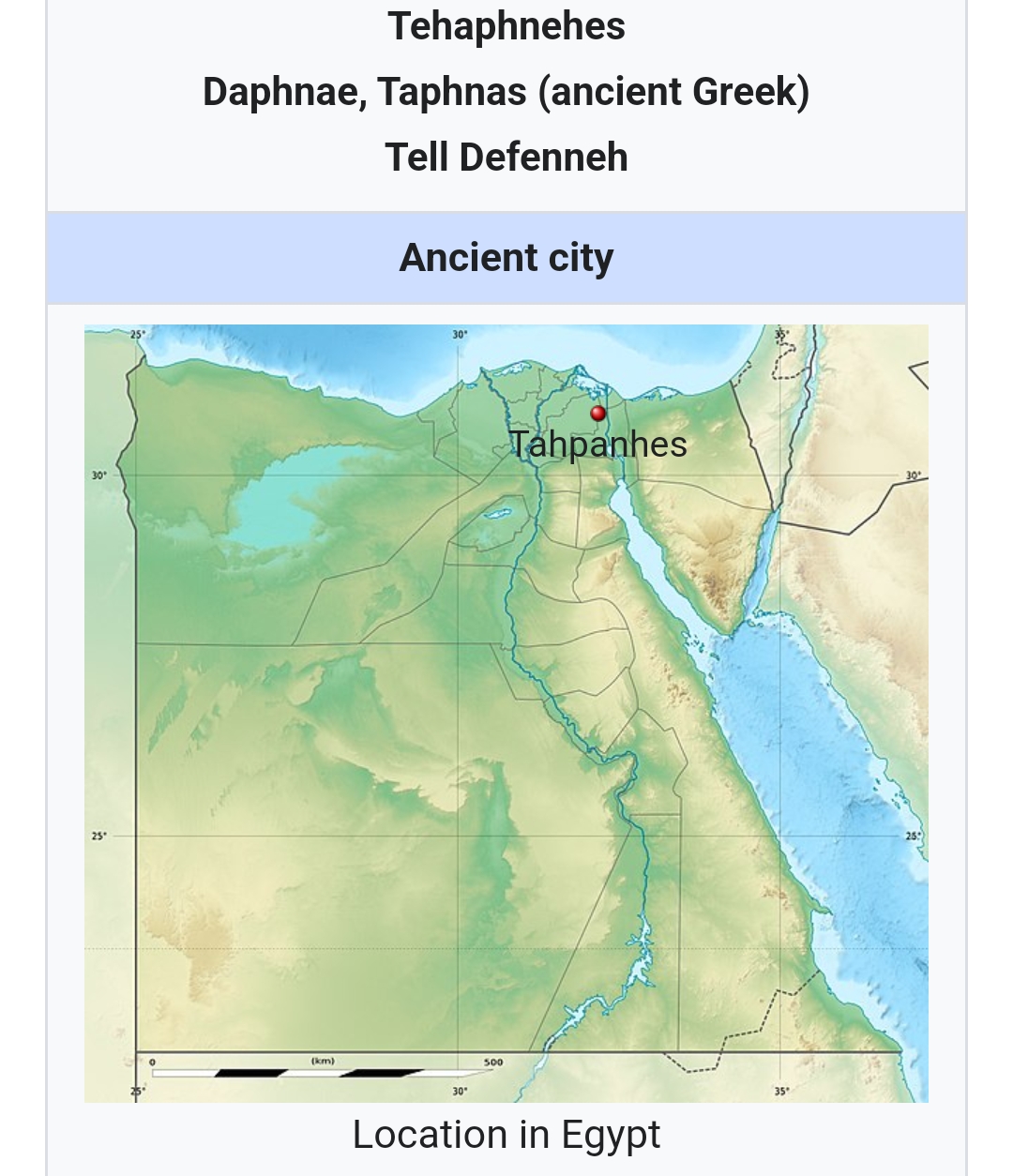
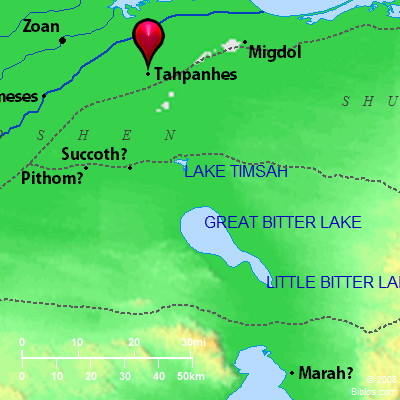
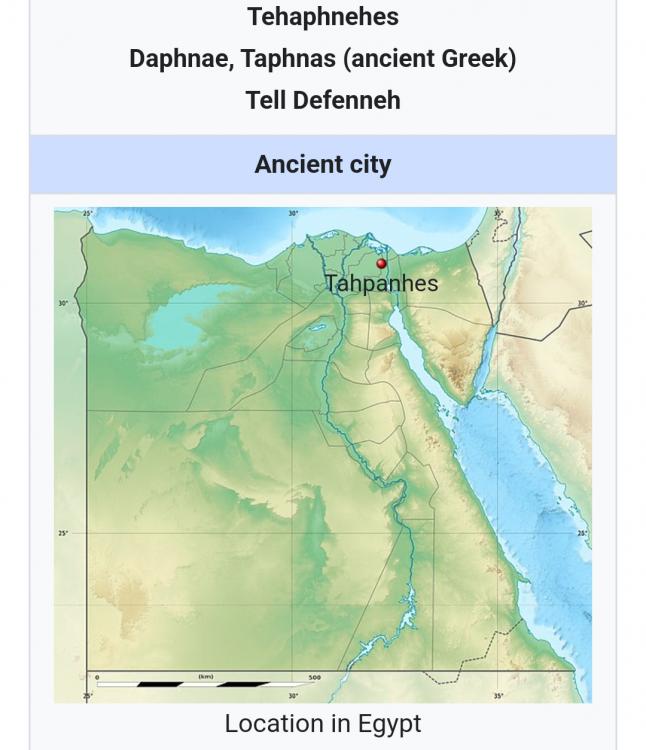
Tehaphnehes (Eze 30:18), while an Egyptian queen (XXIst Dynasty) is named Tahpenes (1Ki 11:19-20). Tahpanhes was a city on the eastern frontier of Lower Egypt, represented today by Tell Defenneh, a desert mound lying some 20 miles Southwest from Pelusium (Biblical "Sin") and a little North of the modern Al-Kantarah ("the bridge"), marking the old caravan route from Egypt to Palestine, Mesopotamia and Assyria. Its Egyptian name is unknown, but it was called Daphnai, by the Greeks, and by the modern Arabs Def'neh. The site is now desolate, but it was a fertile district when watered by the Pelusiac branch of the Nile. [...]The pottery found at Tahpanhes "shows on the whole more evidence of Greeks than Egyptians in the place. .... Especially between 607-587 BC a constant intercourse with the Greek settlers must have been going on and a wider intercourse than even a Greek colony in Palestine would have produced. .... The whole circumstances were such as to give the best possible opportunity for the permeation of Greek words and Greek ideas among the upper classes of the Jewish exiles" (Petrie, Nebesheh and Defenneh, 1888, 50). This was, however, only one of many places where the Greeks and Hebrews met freely in this century (see e.g. Duruy, History of Greece, II, 126-80; Cobern, Daniel, 301-307). A large foreign traffic is shown at Tahpanhes in which no doubt the Jews took part. Discoveries from the 6th century BC included some very finely painted pottery, "full of archaic spirit and beauty," many amulets and much rich jewelry and bronze and iron weapons, a piece of scale armor, thousands of arrow heads, and three seals of a Syrian type. One of the few inscriptions prays the blessing of Neit upon "all beautiful souls." There was also dug up a vast number of minute weights evidently used for weighing precious metals, showing that the manufacture of jewelry was carried on here on a large scale. One of the most pathetic and suggestive "finds" from this century, which witnessed the Babylonian captivity, consisted of certain curious figures of captives, carved in limestone, with their legs bent backward from their knees and their ankles and elbows bound together (Petrie, op. cit., chapters ix-xii). https://www.internationalstandardbible.com/T/tahpanhes.html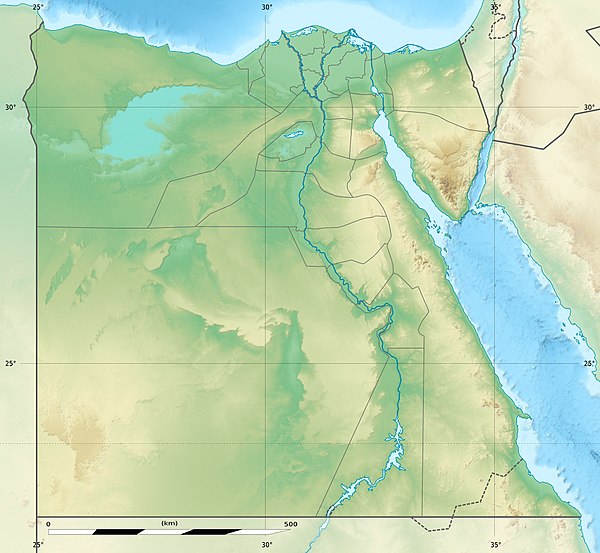
-
Narrative Campaign General Discussion?
Lion.Kanzen replied to Lion.Kanzen's topic in Gameplay Discussion
The site was discovered by Sir William Matthew Flinders Petrie in 1886; it was then known by natives as Qasr Bint al-Yahudi, the "Castle of the Jew's Daughter".[10] There is a massive fort and enclosure; the chief discovery was a large number of fragments of pottery, which are of great importance for the chronology of vase-painting, since they must belong to the time between Psammetichus and Amasis, i.e. the end of the 7th or the beginning of the 6th century BC. They show the characteristics of Ionian art, but their shapes and other details testify to their local manufacture.[11] Egyptologist Noël Aimé-Giron proposed to identify Tahpanhes with the biblical location of Baal-zephon based on the Saqqara letter. When Naucratis was given the monopoly of Greek traffic by Amasis II (570–526 BC), the Greeks were removed from Daphnae and its prosperity never returned; in Herodotus' time the deserted remains of the docks and buildings were visible. In addition to his temple at Jebel Aqra and Ugarit, Baʿal Zaphon is known to have been worshipped at Tyre and Carthage and served as the chief god of the colony at Tahpanes. According to the Phoenician papyrus letters, Phoenicians settled in the site. https://en.m.wikipedia.org/wiki/Tahpanhes
-
Narrative Campaign General Discussion?
Lion.Kanzen replied to Lion.Kanzen's topic in Gameplay Discussion
We will need Carian mercenaries for this mission. -
Narrative Campaign General Discussion?
Lion.Kanzen replied to Lion.Kanzen's topic in Gameplay Discussion
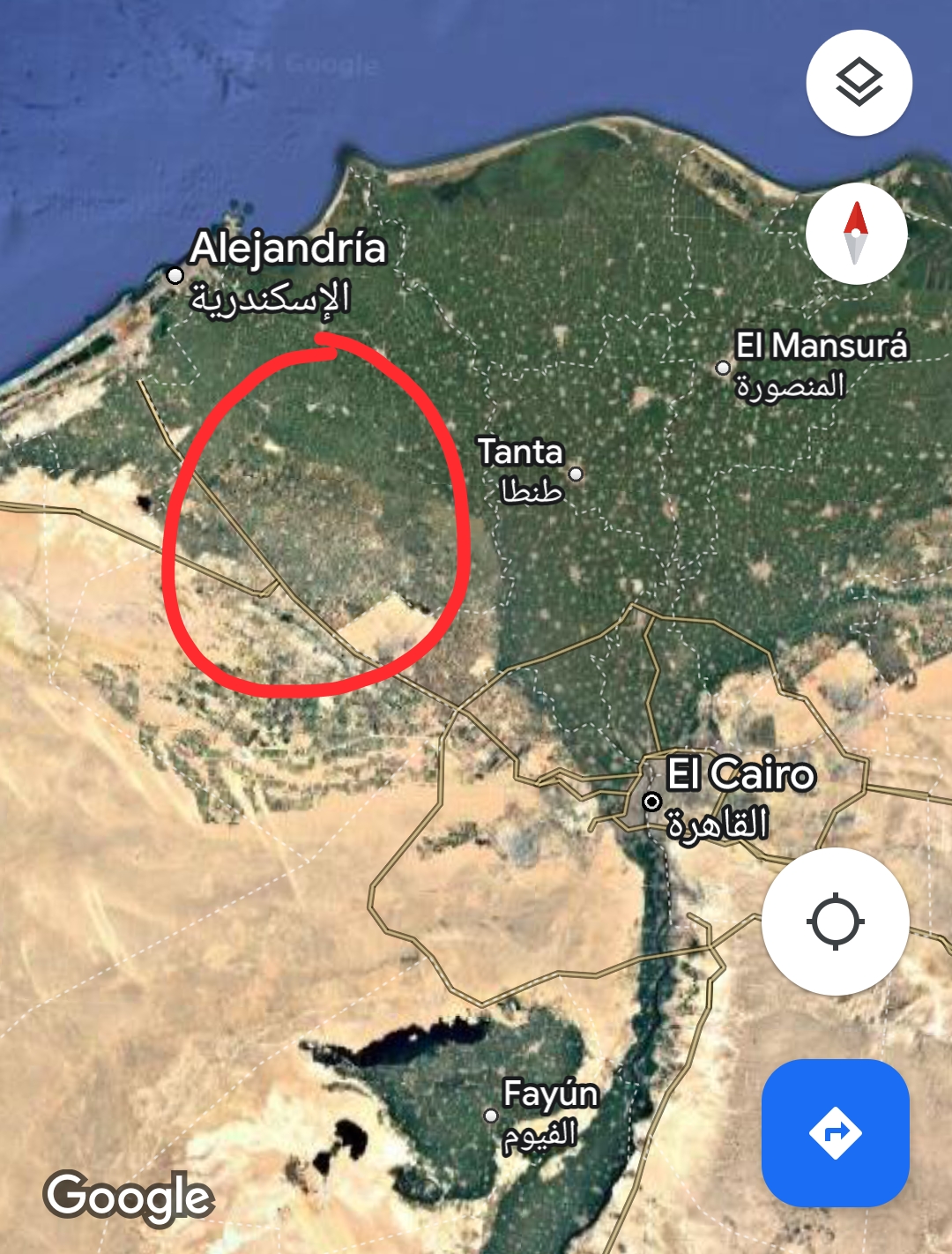
Daphnae, ancient fortress town (Fortress of Penhase), situated near Qanṭarah in northeastern Egypt. Excavations by Sir Flinders Petrie in 1886 uncovered a massive fort and enclosure surrounded by a wall 40 feet (12 metres) thick, built by Psamtik I in the 7th century bce. A garrison of mercenaries, mostly Carians and Ionian Greeks, was established in the fort. After the Babylonian destruction of Jerusalem (587 bce), many Jewish fugitives, including the prophet Jeremiah, fled to Tahpanhes. Its decline began in the 6th century bce when Amasis gave Naukratis the monopoly of Greek trade. https://www.britannica.com/place/Daphnae -
Narrative Campaign General Discussion?
Lion.Kanzen replied to Lion.Kanzen's topic in Gameplay Discussion
The first map would therefore be the defense of Daphne's fortress. -
Narrative Campaign General Discussion?
Lion.Kanzen replied to Lion.Kanzen's topic in Gameplay Discussion
But the history of Neukratis is older. At least we already have 2 maps thought out. https://historia.nationalgeographic.com.es/a/naucratis-colonia-griega-antiguo-egipto_18517 The foundation of Naucratis dates back to the time of Pharaoh Psametic I (664-595 B.C.). It was the same monarch who, after employing Greek mercenaries from the Egyptian fortress of Daphnae to fight against the Ethiopians, decided to compensate them by allowing a group of them to settle in the eastern delta. The colony, which may have been established over an Egyptian settlement, Per-Meryt, of which little remains today, flourished rapidly. Egypt's commercial port According to the Greek historian Herodotus, it was Pharaoh Amosis II (570-526 BC), described as a "great friend of the Greeks," who really boosted the city and transformed it into an emporium. Amosis handed over the colony to a confederation of twelve Greek cities, including Corinth, Rhodes, Samos, Cnidus, Aegina and Miletus, and granted them a monopoly on maritime trade from Egypt. The resulting commercial boom of Naucratis attracted a large number of new settlers with the most diverse professions (soldiers, merchants, administrators, craftsmen, sailors, writers, philosophers...) and from the rest of Egypt as well as from Greece, Cyprus, Persia or the Phoenician cities. Naucratis thus became one of the richest and most dynamic centers of Antiquity. At the end of the Saite dynasty, the power of Naucratis was threatened by the instability of Egypt, which led to the Persian conquest in 525 BC. During the first Persian domination, until 404 BC, the city was favored by the policies of monarchs such as Cambyses and Darius I; the latter even had some of its temples rebuilt. Naucratis continued to be a very active port in the later period, as manifested by the so-called Decree of Naucratis, promulgated by Pharaoh Nectanebo I during the first year of his reign (378 BC), which fixed the tribute that every foreign merchant in the Delta had to pay to the temple of Neith at Sais. The law was engraved on a stele found by archaeologist David G. Hogarth in 1899, now on display in the Egyptian Museum in Cairo. The conquest of Egypt by Alexander the Great and the foundation of Alexandria in 331 BC meant the end of the hegemony and many of the privileges of Naucratis, which became a secondary port. Despite this, the city did not decline completely. It is significant that Naucratis, which had been the only Egyptian city of the Pharaonic period that had minted its own coinage, continued to do so even in the Hellenistic period. -
Narrative Campaign General Discussion?
Lion.Kanzen replied to Lion.Kanzen's topic in Gameplay Discussion
We have 2 possibilities. Start peacefully with Battus II and his expansion. The scenario would be to build a CC on Libyan lands. This would be tutorial scenario 1. The mission would be to build a CC, create some things, collect X amount of resources, pass the phase and build a trade route. By connecting the route, the Libyans would become aware of the Greek expansion into their lands. That would lead to the next scenario: we will have to prepare to face two forces, the Egyptians and the Libyans. We will command the main Greek army and receive supplies from the settlement we created in the previous scenario. 2 v 2 battle. -
Narrative Campaign General Discussion?
Lion.Kanzen replied to Lion.Kanzen's topic in Gameplay Discussion
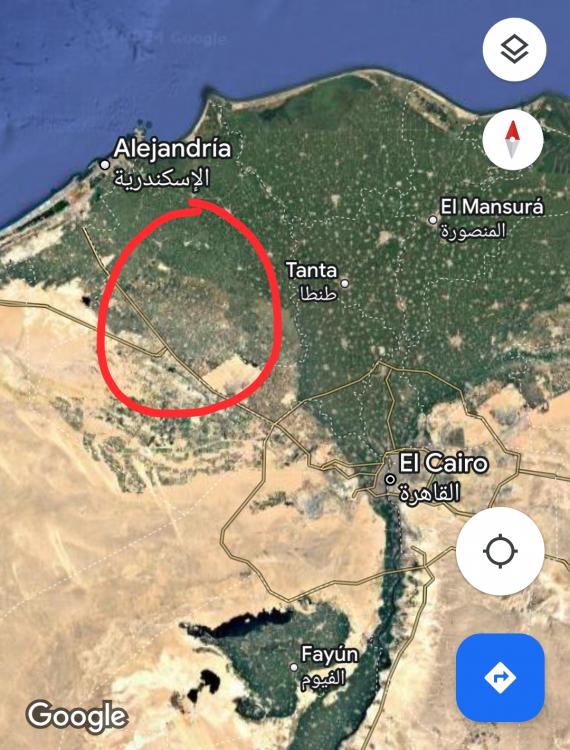
The mercenaries began with the colonists of Cyrene. In Cyrenaica to the west, Battus II of Cyrene had encouraged further Greek settlement in his city, especially from the Peloponnese and Crete. This sparked conflict with the indigenous Libyans, whose king Adicran appealed to Apries for help around 570 BC. Apries launched a military expedition against Cyrene, but was decisively defeated at the Battle of Irasa. ----I don't know whether to start from here or before here.---- On the one hand we could start with a lot of action.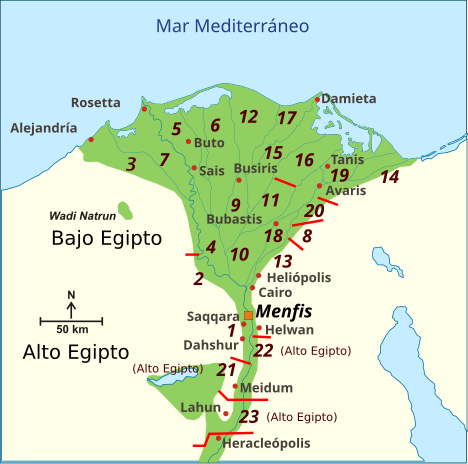
-
Narrative Campaign General Discussion?
Lion.Kanzen replied to Lion.Kanzen's topic in Gameplay Discussion
Design of first map. Neukratis is around 3-7 Naucratis was the first commercial colony established in Egypt by the Greeks. It was granted to them, according to different versions, either by Pharaoh Psammetius I in the 7th century BC or by Amasis in the 6th century BC (according to Herodotus),[1] although it is believed that there was previously a factory occupied by colonists from Miletus on the same site. Many of the early inhabitants of the city were Greek mercenaries serving until then in the neighboring Egyptian fortress of Daphnae, at the eastern end of the Delta. However, the colony was handed over to a confederation of mainly Ionian cities, headed by Miletus, Corinth and Aegina. Therefore, Naucratis was a truly international city, and an attractive cultural center visited by figures such as Solon or Thales of Miletus.
-
Narrative Campaign General Discussion?
Lion.Kanzen replied to Lion.Kanzen's topic in Gameplay Discussion
https://ageofempires.fandom.com/wiki/Campaign-only_civilization_(Age_of_Empires_IV)#Ayyubids -
Narrative Campaign General Discussion?
Lion.Kanzen replied to Lion.Kanzen's topic in Gameplay Discussion
Me and wow would design the maps. Some research is required. Special factions will be used or created like AoE4.They put modified factions in their campaigns. As the game is still in alpha, new mechanics will need to be tested to be included. Special campaign units should be created. It would be interesting to ask the community what they would add to the maps and the story. According to Wikipedia: Greek culture had a long but minor presence in Egypt long before Alexander the Great founded the city of Alexandria. It began when Greek colonists, encouraged by many Pharaohs, set up the trading post of Naucratis. As Egypt came under foreign domination and decline, the Pharaohs depended on the Greeks as mercenaries and even advisors. When the Persians took over Egypt, Naucratis remained an important Greek port and the colonist population were used as mercenaries by both the rebel Egyptian princes and the Persian kings, who later gave them land grants, spreading Greek culture into the valley of the Nile. https://en.m.wikipedia.org/wiki/Ptolemaic_Kingdom#:~:text=Greek culture had a long,the trading post of Naucratis. This will be the main story, that is, the plot with which it begins. The Greeks settled in Cyrene and from Cyrene they began to arrive in Egypt. Even from Crete. I don't know if I should create characters for this story based on our narrative novel model. I need to study what Microsoft does with its narrative DLC. -
Narrative Campaign General Discussion?
Lion.Kanzen replied to Lion.Kanzen's topic in Gameplay Discussion
Leave examples and links above. https://en.m.wikipedia.org/wiki/Oikistes -
-
-
[Updated 2022] List of Buttons[Commands] for GUI session
Lion.Kanzen replied to Lion.Kanzen's topic in General Discussion
Drop off resource? Seek Shelter? Back to the work is already in the game. -
[Updated 2022] List of Buttons[Commands] for GUI session
Lion.Kanzen replied to Lion.Kanzen's topic in General Discussion
Chat log button is missing. -
gameplays Age of Empires 2 stuff
Lion.Kanzen replied to Lion.Kanzen's topic in Introductions & Off-Topic Discussion
I think they relate the team that made that mod with 0 AD or with some mod that inspired that development. I don't remember that mod. But the original Wildfire Games team made a mod called Rome at War, which is what modern AoE II mods are inspired by. This isn't the first time we've been linked to that team of modders. It's called the same as the one from Wildfire games. It's normal that they think of us with this DLC. The mod is inspired by the mod that brought 0 AD to life. WildFire Games has released quite possibly the largest mod for "Age of Empires II: Age of Kings", featuring the replacement of the Mesoamerican civilisations of the Aztecs and the Mayans with the Romans and Greeks. With over 13,000 downloads and featured on the cover disks of PC Powerplay from Australia and GameStar from Germany. Both are leading gaming magazines. Now you too can build an empire on the backs of your enemies! March your soldiers up and down the Rhine, across the sands of North Africa, through the Grecian city-states, along Hadrian's Wall, and patrol the shores of the Mediterranean Sea as you subdue all who stand in your path. Can you build an empire to equal Augustus and Caesar? Will your name be immortalised on busts of marble and triumphal arches? https://steamcommunity.com/sharedfiles/filedetails/?id=2404179025 ++++ Rome at War' is the oldest mod on the list (dating from 2001), being one of the most complete in its day. It draws attention, more than for its content, for its origin, since from here came the Wildfire Games team, to whom we owe the best spiritual heir of the saga: '0 A.D.', the free 'Age of Empires'. https://www.google.com/amp/s/www.vidaextra.com/listas/mejores-mods-age-of-empires-ii-vampiros-senor-anillos-star-wars/amp The team of the new game(mod) is different. Romae ad Bellum ("Rome at War") is a fan-made total conversion mod for Age of Empires II: Definitive Edition developed by TheConqueror753 and Caesar3842, first released on September 11, 2021. Though it shares the name of the "Rome at War" mod for Age of Empires II: The Conquerors, it is independently created and has a greater scope. It is based on civilizations of the classical antiquity period, spanning roughly from 500 BC to 500 AD. The authors of this mod were also a part of the CaptureAge team who worked on Chronicles: Battle for Greece, which was inspired by this mod. https://ageofempires.fandom.com/wiki/Romae_ad_Bellum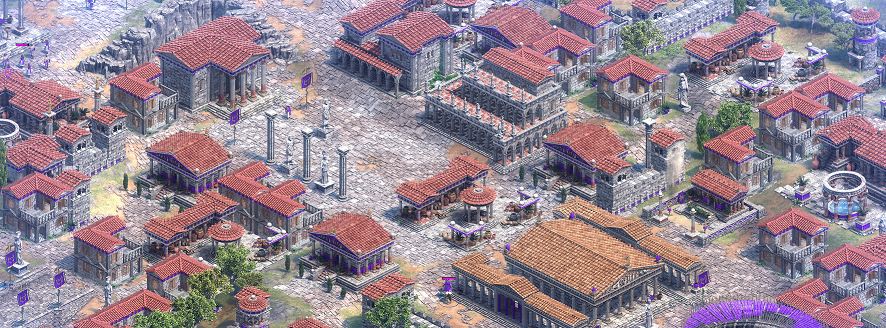
-
gameplays Age of Empires 2 stuff
Lion.Kanzen replied to Lion.Kanzen's topic in Introductions & Off-Topic Discussion
I don't like that animation. It looks like he's punching him. -
How slow is it?
-
gameplays Age of Empires 2 stuff
Lion.Kanzen replied to Lion.Kanzen's topic in Introductions & Off-Topic Discussion
The final thought is very good They are putting these stories because the game ended its cycle, they are trying to keep it alive. We can say that we do that too We are going to introduce a campaign mode to continue growing. Currently 0A.D grew as much as it could with the help multiplayer player. But we need more attention and there are many youtubers who bring single player content. -
gameplays Age of Empires 2 stuff
Lion.Kanzen replied to Lion.Kanzen's topic in Introductions & Off-Topic Discussion
I didn't expect this. Yes, 0AD has that reputation of being the AoE I that never was.
-
gameplays Age of Empires 2 stuff
Lion.Kanzen replied to Lion.Kanzen's topic in Introductions & Off-Topic Discussion
The comments are hot. It looks like a barbecue from so much roasting. That's what I said, they are skins and from old games. (aoE II). And they're also playing on nostalgia with AoE mobile.