All Activity
- Past hour
-
I'm using a standard 42 NEMA stepper motor. After running for a while, the casing gets very hot; I can't even put my hand on it for long. The torque and speed are normal, but the temperature is too high. I'd like to ask if this overheating of stepper motors is a common phenomenon? What temperature range is considered normal?
-
Gilbert joined the community
- Today
-
SlimSana: Die fortschrittliche Wissenschaft für nachhaltigen Gewichtsverlust und ein ausgeglichenes Stoffwechselgleichgewicht SlimSana In einer Welt voller Schnelldiäten und Wundermittel kann nachhaltiger Gewichtsverlust überfordernd wirken. Viele Produkte versprechen dramatische Ergebnisse, halten aber den langfristigen Erfolg nicht. Hier setzt SlimSana an. Entwickelt mit wissenschaftlicher Präzision von Ernährungsexperten, ist SlimSana ein fortschrittliches Nahrungsergänzungsmittel, das ein gesundes Gewichtsmanagement durch einen ganzheitlichen Ansatz unterstützt. SlimSana Anstatt auf kurzfristige Appetithemmung oder aggressive Stimulanzien zu setzen, zielt SlimSana auf die grundlegenden Mechanismen ab, die die Körperzusammensetzung beeinflussen: Stoffwechsel, Appetitkontrolle und natürliche Fettverbrennung. Das Ergebnis ist eine umfassende Formel, die einen stetigen, nachhaltigen Fettabbau fördert und gleichzeitig die allgemeine Stoffwechselgesundheit unterstützt. Erfahren Sie, was SlimSana so besonders macht und warum es die intelligente Lösung für alle sein könnte, die eine dauerhafte Veränderung anstreben. Die Wissenschaft hinter SlimSana Slim Sana Gewichtsmanagement bedeutet mehr als nur weniger essen und sich mehr bewegen. Es beinhaltet ein komplexes Zusammenspiel von Hormonen, Stoffwechselrate, Appe@#$%ignalen, Energieproduktion und Verhaltensmustern. SlimSana wurde entwickelt, um diese miteinander verbundenen Systeme zu berücksichtigen, anstatt sich auf einen einzelnen Stoffwechselweg zu konzentrieren. 1. Stoffwechseloptimierung Slim Sana Der Stoffwechsel spielt eine entscheidende Rolle dabei, wie effizient Ihr Körper Nahrung in Energie umwandelt. Verlangsamt sich der Stoffwechsel, werden Kalorien eher als Fett gespeichert. SlimSana wurde wissenschaftlich entwickelt, um die Stoffwechseleffizienz zu unterstützen und dem Körper zu helfen, gespeichertes Fett als Energiequelle zu nutzen. Durch die Förderung der Thermogenese und die Steigerung der zellulären Energieproduktion regt SlimSana den Körper an, Kalorien effektiver zu verbrennen. Dies kann helfen, Stoffwechselplateaus zu überwinden – eine häufige Herausforderung beim Abnehmen. 2. Appetitregulierung Slim Sana Unkontrolliertes Verlangen und emotionales Essen gehören zu den größten Hindernissen beim Abnehmen. SlimSana enthält sorgfältig ausgewählte Inhaltsstoffe, die eine gesunde Appetitregulation unterstützen. Indem SlimSana hilft, die Hungerhormone zu regulieren und ein Sättigungsgefühl zu fördern, ermöglicht es Anwendern, bessere Ernährungsentscheidungen zu treffen, ohne auf etwas verzichten zu müssen. Diese ausgewogene Appetitkontrolle reduziert unnötiges Naschen und unterstützt auf natürliche Weise die Portionskontrolle. 3. Natürliche Fettverbrennung Slim Sana Fettverbrennung bezeichnet den Prozess, bei dem der Körper gespeichertes Fett abbaut und in nutzbare Energie umwandelt. SlimSana wurde entwickelt, um diesen natürlichen Prozess zu fördern und den Körper dabei zu unterstützen, Fettreserven effizienter zu nutzen. Anstatt einen schnellen Gewichtsverlust zu erzwingen, unterstützt SlimSana eine allmähliche und nachhaltige Fettreduktion, die entscheidend für den langfristigen Erfolg ist. Ein ganzheitlicher Ansatz für die Gewichtskontrolle Lipo Lift Was SlimSana wirklich auszeichnet, ist sein umfassender Ansatz. Viele Nahrungsergänzungsmittel konzentrieren sich ausschließlich auf die Thermogenese oder die Appetitzügelung. SlimSana berücksichtigt sowohl physiologische als auch verhaltensbedingte Faktoren, die das Gewicht beeinflussen. Unterstützung des Hormonhaushalts Lipo Lift Hormone spielen eine wichtige Rolle bei der Fettspeicherung, dem Hungergefühl und dem Energieniveau. Wird der Hormonhaushalt gestört – beispielsweise durch Stress, Schlafmangel oder eine ungesunde Ernährung –, kann es zu einer Gewichtszunahme kommen. Die wissenschaftlich abgestimmte Formel von SlimSana unterstützt die hormonelle Harmonie und fördert so ein stabiles Energieniveau und kontrolliertes Verlangen nach Süßem. Mehr Energie ohne Leistungseinbrüche Lipo Lift Energielosigkeit führt oft zu Inaktivität und kann so die Gewichtsabnahme erschweren. SlimSana unterstützt eine anhaltende Energieproduktion und hilft Ihnen, den ganzen Tag über aktiv und motiviert zu bleiben. Wichtig ist, dass dies ohne die Nervosität oder Leistungseinbrüche geschieht, die bei stark stimulierenden Präparaten häufig auftreten. Gesunde Gewohnheiten fördern Lipo Lift SlimSana ist kein Ersatz für einen gesunden Lebensstil, sondern ergänzt ihn. In Kombination mit einer ausgewogenen Ernährung und regelmäßiger Bewegung verstärkt SlimSana die Ergebnisse, indem es die Beibehaltung gesunder Gewohnheiten erleichtert. Warum nachhaltiger Fettabbau wichtig ist Lipo Lift Schneller Gewichtsverlust mag verlockend sein, hat aber oft seinen Preis. Extreme Kalorienreduktion und aggressive Stimulanzien können den Stoffwechsel mit der Zeit verlangsamen und zu einer erneuten Gewichtszunahme führen. Nachhaltiger Fettabbau hingegen unterstützt die langfristige Stoffwechselgesundheit und eine stabile Körperzusammensetzung. MounjaFlow SlimSana wurde mit Blick auf ein langes Leben entwickelt. Der sanfte, wissenschaftlich fundierte Ansatz von SlimSana fördert: · Stetigen Fettabbau · Erhalt der Muskelmasse · Verbesserte Stoffwechseleffizienz · Geringeres Risiko einer erneuten Gewichtszunahme Durch die Priorisierung nachhaltiger Veränderungen unterstützt SlimSana Anwender dabei, dauerhafte Ergebnisse zu erzielen. Für wen ist SlimSana geeignet? SlimSana ist ideal für alle, die: · trotz Diäten mit hartnäckigem Fett zu kämpfen haben · häufig Heißhungerattacken und sch@#$%enden Appetit haben · ein Gewichtsplateau erreicht haben · ein natürliches, wissenschaftlich fundiertes Nahrungsergänzungsmittel suchen · einen nachhaltigen Ansatz anstelle einer extremen Diät bevorzugen Ob Sie Ihre Reise zu mehr Wohlbefinden beginnen oder Ihre bestehende Routine optimieren möchten – SlimSana bietet Ihnen strukturierte Unterstützung für ein gesundes LebenGewichtsmanagement. Wichtigste Vorteile von SlimSana SlimSana Hier die wichtigsten Vorteile im Detail: Unterstützt einen gesunden Stoffwechsel Fördert eine effiziente Kalorienverbrennung und Energieverwertung. Fördert die natürliche Fettverbrennung Hilft dem Körper, gespeichertes Fett in nutzbare Energie umzuwandeln. Hilft bei der Appetitkontrolle Slim Sana Reduziert Heißhungerattacken und unterstützt die Portionskontrolle. Fördert nachhaltige Ergebnisse Entwickelt für langfristige Verbesserungen der Körperzusammensetzung. Steigert die tägliche Energie Unterstützt ein gleichmäßiges Energieniveau ohne aggressive Stimulanzien. Der SlimSana-Vorteil: Wissenschaft trifft auf Einfachheit Slim Sana Eine der größten Herausforderungen beim Gewichtsmanagement ist die Kontinuität. Komplizierte Programme führen oft zu Frustration. SlimSana vereinfacht den Prozess, indem es sich nahtlos in Ihren Alltag integriert. Die wissenschaftlich entwickelte Formel wirkt im Hintergrund – sie unterstützt den Stoffwechsel, reguliert den Appetit und fördert die Fettverbrennung – sodass Sie sich auf einen gesunden Lebensstil konzentrieren können, anstatt jede Kalorie zu zählen. Maximale Ergebnisse mit SlimSana Slim Sana Für optimale Ergebnisse sollte SlimSana mit Folgendem kombiniert werden: · Einer ausgewogenen, nährstoffreichen Ernährung · Regelmäßiger Bewegung · Ausreichender Flüssigkeitszufuhr · Regelmäßigem Schlafrhythmus · Stressmanagement Dieser ganzheitliche Ansatz entspricht perfekt der Philosophie von SlimSana. Versprechen von Qualität und Expertise Slim Sana wurde von Ernährungsexperten entwickelt, die die Komplexität des Gewichtsmanagements verstehen. Jeder Inhaltsstoff wird sorgfältig auf Basis wissenschaftlicher Forschung ausgewählt und so formuliert, dass er die anderen optimal ergänzt und maximale Synergie und Wirksamkeit gewährleistet. Qualitätssicherung, Sicherheitstests und evidenzbasierte Formulierungsprinzipien bilden den Kern des Entwicklungsprozesses von SlimSana und geben den Verbrauchern Vertrauen und Sicherheit. Fazit: Ist SlimSana das Richtige für Sie? SlimSana Abnehmen ist individuell. Es erfordert Geduld, Ausgewogenheit und die richtige Unterstützung. SlimSana bietet diese Unterstützung durch eine wissenschaftlich fortschrittliche, umfassende Formel, die Stoffwechsel, Appetit und Fettverbrennung gleichzeitig anspricht. Anstatt schnelle, nicht nachhaltige Ergebnisse anzustreben, konzentriert sich SlimSana darauf, Menschen langfristig zu einer gesünderen Körperzusammensetzung zu verhelfen. Bei regelmäßiger Anwendung und dem Engagement für einen gesunden Lebensstil kann SlimSana ein wertvoller Partner auf Ihrem Weg zu mehr Wohlbefinden werden. SlimSana Wenn Sie bereit sind, kurzfristige Lösungen hinter sich zu lassen und einen intelligenteren, wissenschaftlich fundierten Ansatz zur Gewichtskontrolle zu verfolgen, könnte SlimSana die Lösung sein, nach der Sie gesucht haben. Offizielle Website: https://slimsanakapseln.de/ https://slimsana-kapseln.de/ https://slim-sana.de/ https://slim-sana.net/ https://slimsana.at/ https://slimsana.ch/ https://lipo-lift.net/ https://lipo-lift.com.de/ https://lipoliftkapseln.de/ https://lipo-lift.com.at/ https://lipo-lift.ch/ https://mounjaflow.de/
-
SlimSanaRezension joined the community
-
Parcel Flow joined the community
-
The license states that it is Free software. It legally can’t be sold.
-
As far as I know, the developers of 0ad themselves have allowed in their legal guidelines that anyone can sell it, as stated in the GPL2 and Creative Commons licenses. As long as the source code is publicly available, there is no legal or ethical impediment to selling 0ad with or without modifications. If they don't want it sold, then they should change the license; using the GNU GPL doesn't necessarily mean that you don't have to pay for the free version. I think people who install 0AD from Steam won't care if it's alpha or beta or has campaigns; as long as they can play a single-player game, that's enough. If you don't do it, someone else will, whether by changing the logo, name, and so on, but keeping the same engine and assets. People don't want perfection; they just want to play. And if the game is open source, then modifying and selling it is completely free and allowed. Richard Stallman must be turning in his grave because Steam prevented a game from being sold under his own license. If 0ad was removed from Steam it was only due to ignorance, but it is completely legal if the correct steps of Steam's guidelines are followed, and if the official studio doesn't do it, someone else will someday.
-
whk joined the community
- Yesterday
-
I’m just skeptical in ignoring what the Proto-Germanic dictionary says because of what Gothic says (which seems to have made choices opposite than the rest regarding this), when clearly this was already considered when the consensus was reached. It’s like reinventing the wheel. An interesting thing is that þurpą has been proposed to be related to the Latin turba, and for any Spanish speaker this is clearly related to a collective (meaning something like a mob). The Italic-Germanic split happened over 3000 years ago. Uncertain, but on the table, and shows that it is not generally assumed that þurpą was a singular unit early on. Only Gothic does that (as said, “in anderer Bed.”). With haimaz the Proto-Germanic reconstructions are home, house and village. I think there’s no way around that. It’s just like modern “home”, I could refer to my house, my hometown, or my homeland. That’s why I questioned it a bit, not that it can’t mean village (not from -heim though, but directly), but that it seemed too ambiguous. I don’t have a better alternative, I think we have exhausted what the PGmc dictionary has to offer. Alhs can mean settlement, but it seems too singular, and many other meanings are preferred https://kaikki.org/dictionary/Proto-Germanic/meaning/a/al/alhs.html.
-
-
-
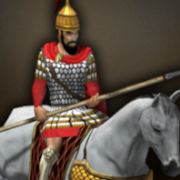
Civ: Achaemenid Persians
wowgetoffyourcellphone replied to wowgetoffyourcellphone's topic in Delenda Est
The skirmish cavalry has some weirdness, so needs another iteration. -
Antiochus III the Great Antiochus IV God Manifest
-
Seleucus I Nicator
-
-
This debate will never end, so what do you suggest? I am skeptical about *þurpą meaning village that early on. You are skeptical that *haimaz means village that early on. Is there an alternative?
-
@Genava55 Definitions 1 and 2 refer to Gl 1 and 3, both from the 8th century, so the meanings seem more simultaneous than sequential (one would need to believe the shift happened exactly there). The second line states "got. thaúrp (in anderer Bed.)", showing that in Gothic (the black sheep in all this) the meaning is different. Looking at the Old English lexicon: https://wehd.com/94/Thorp.html, the earliest reference, from 725 AD, treats conpetum, tuun, and þrop as equivalent, closer to a village than a single farm. The ending -heim doesn’t originally refer to a settlement, it’s the genitive ending of a singular personal name, as in Mannheim and Ingenheim meaning "Manne’s home" and "Ingo’s home" (or homeland), with the settlement meaning derived later.
-
3D Modeler and Texture artist Application - Emma Anufrij
Emma replied to Emma's topic in Applications and Contributions
@nifa sounds great At the moment I am doing some tests to get familiar with importing models and textures and so on. -
See this lexicum : https://awb.saw-leipzig.de/?sigle=AWB&lemid=D01106 It seems clear in the case of Old High German that farmstead and farmland are the first meaning. And it is even clearer that Old High German retained different meaning and different expression related to this root suggesting a general shift from the singular to the collection. The direction of the change is obviously from a singular farmstead to a collection. The entry breaks down the definition into four distinct historical layers: 1. The Estate or Farmstead (Hof, Landgut) In this earliest sense, thorf refers to private property—essentially a "manor" or a "ranch." a) The Reluctant Guest: One citation describes a man excusing himself from a banquet: "thorph coufta ih... inti gisehen iz" ("I bought a farm/estate... and I must go see it"). This uses the Latin villam as a reference, meaning a private country estate. b) The Prodigal Son: In the famous biblical parable, the master "santa inan in sin thorf, thaz her fuotriti suuin" ("sent him to his farm/estate to feed pigs"). Here, the thorf is clearly a specific agricultural property owned by an individual. 2. The Village or Rural Settlement (Siedlung) This is where the word starts to describe a collection of houses, often defined by what it isn't (i.e., it isn't a fortified city). a) The Unwalled Town: The text defines dorf as a "vicus"—a place that has streets but "sine muris" ("without walls"). b) The Contrast with Cities: One example says, "manige uuesen in demo dorf, unmanige in dero burg" ("many people are in the village, but few are in the [fortified] city"). This shows dorf becoming a category of settlement size. c) Specific Locations: The text mentions "thaz thorf thaz dar giquetan ist Gethsemani" ("the village that is called Gethsemane"). 3. The Neighborhood or Quarter (Stadtviertel) This is a more niche use where thorf describes sections of a larger urban area, often in the plural (thorphun). a) Public Display: A warning against hypocrisy: "so thie lihhazara tuont in dingun inti in thorphun" ("as the hypocrites do in the assemblies and in the [streets/neighborhoods]"). Here, it translates the Late Latin vicos, meaning the public blocks or quarters of a town where people gather. 4. The "Crowd" or "Peasantry" (Menge von Bauern) This is the most "abstract" evolution. The word for the place starts being used to describe the type of people found there. a) The Rustic Multitude: One entry notes a scribe used dorf to translate rusticam manum ("a rustic hand" or "a crowd of country-folk"). b) The "Village-Dweller": The text even mentions a derivative: uillanus dorphere (literally a "villager" or "peasant"), showing how the word was used to build new social categories. Old High German retained the direction of this change in various ways. There is no doubt about that. The Gothic Bible uses the word haims to translate the Greek kōmē (village). Place names ending in -heim (in Germany) and -ham (in England) appeared frequently during the Migration Period (5th-6th centuries). There are also runic inscriptions that make more sense if the root is interpreted as meaning village or community. At least the shift looks more ancient. The codex Abrogans is a glossary, for example it is simply written the equivalence between 'uilla' (villa) and 'thorf'.
-
@Genava55 The Codex Abrogans is from the 8th century. I shortened “villa worker” to “villager”, maybe changing the exact meaning, but the point remains that these things happened, even when they are later examples. I’m just trying to make sense of what the dictionaries actually say. Another issue could be how big these settlements are in context. You say the original meaning is farmstead, but what if a very small collection of farmsteads is also valid? At Proto-Germanic times this would have been the equivalent of a village (again, there has to be a reason why this has been reconstructed as such, besides commonality), and what meaning exactly had on the different branching languages could have turned out to be quite arbitrary and relative, Gothic could have retained a more farmstead position, while all the others considered the increased demographics. And related to this, coming back to the very beginning, what does say that þurpą has to be smaller than haimaz, which is primarily reconstructed as home? Maybe you can quote the relevant passages from the Codex Argenteus and Abrogans.
-
Again, as I said, in Codex Abrogans the meaning leans more towards a farmstead for Old High German. It is only later that the semantic shift happens for this branch. Your example with 'villain' is not correct. 'Villanus' doesn't mean 'villager' nor is equivalent for 'villager'. A villanus is a peasant or a worker in a farm estate, a villa rustica in the Roman perception. 'Village' is a semantic shift appearing much later during the medieval period and once again in the same direction: from a single farmstead to a collection of farmsteads. Villanus means 'villager' only in Middle English after a borrowing from French, where the semantic shift already happened. I don't see anything convincing for the moment to change my opinion.
-
@Genava55 But Euler’s work comes after Ringe’s. Downgrading happens particularly with things perceived as "less than": ‘villain‘ comes from Latin ‘villanus‘, meaning ‘villager‘ (which would give credence to ‘village‘ being downgraded to ‘farmstead‘ and not the other way around), or ‘sinister‘, coming from Latin ‘left-handed‘, obvious for Italian speakers. So, what happened? A downgrading for Gothic or a collection for West and North Germanic languages? Even if Gothic was the more conservative, a consensus considering many other variables was reached and written down in Proto-Germanic dictionaries. If we grab a time machine we might find out that this was the wrong call, but it wouldn’t be an error on our part, but the academic consensus, and what can one really do about that but guess.
-
nssgfm joined the community
- Last week
-
Euler and Maurer are certainly respected, but they represent the 'divergence' school of the mid-20th century. Modern computational phylogenetics (like the Ringe work I cited) suggests a much tighter 'Germanic Core' than Maurer’s 1940s theories allowed for. Regarding the 'Elephant in the Room': Gothic is likely conservative because of the direction of semantic change. It is a documented linguistic trend for words describing land or enclosures to expand into words for settlements (think of English 'Town' from *tuną 'fence/enclosure'). It is almost unheard of for a word meaning 'village' to suddenly be downgraded to mean 'dirt field' in a single branch. As for why dictionaries list it as 'village': Dictionaries are tools of commonality. Since the West and North Germanic branches (which cover 90% of our surviving texts) use 'village,' dictionaries list that for the sake of the user. But if you look at the etymological root *treb-, the meaning is clearly 'to build' or 'a dwelling.' A village is a collection of dwellings; a farmstead is a single dwelling. Gothic, being the earliest snapshot we have, simply catches the word before the 'collection' phase took over the West Germanic dialects.
-
Is there a mod to change it back? and if yes, how do you install it?
-
3D Modeler and Texture artist Application - Emma Anufrij
nifa replied to Emma's topic in Applications and Contributions
Maybe a new olive tree is something you would be interested in? There's already one in the game that you could use as a reference. We could use it for an ochard and for the erechtheion and the olive mill. https://wildfiregames.com/forum/topic/138517-erechtheion https://wildfiregames.com/forum/topic/125638-athenian-olives -
deliriu0m joined the community
-
The difference between the Persian women in the game & in the reality
deliriu0m replied to shiraz's topic in Help & Feedback
These are Zoroastrian priests or Magi depicted on the reliefs of Persepolis from the Achaemenid empire. These are not women. -
Early access for players testing versions R28 or R29 of the game. It's basically Petra, but with customization options and for game >= R28. Some features from Petra_Expert have been added. Added the ability to customize the bot before starting the game. Values are not saved when exiting the game or returning to the previous menu. More detailed description of parameters: Added the ability to recruit support units from houses. The number of barracks has been increased to 5. The Research Manager has been slightly redesigned (instead of searching for technologies in a cycle, all technologies are stored in the cache and selected by a direct key: name or modifier by 1 step, the cache is updated when moving to the next phase or after the construction of a building is completed). Technologies from the Storehouse, Forge, and Champions remain in place, while the rest are currently disabled. With certain settings, the bot can reach up to 200 units in 11-12 minutes of play. Mod support: r28-bot.zip
-
@Genava55 those books are over 20 years old (almost 40 in the first case), studies now support the notion that they were mutually unintelligible, for example linguist Wolfram Euler’s (curiously, yes, related to the famous mathematician) Das Westgermanische summary, https://www.verlag-inspiration.de/euler-das-westgermanische, already states “by the time of the Gothic translation of the Bible, Western and Eastern Germanic were already so dissimilar that Gothic and for example Frankish people could not have held a fluent conversation”. He got his PhD in 1979 but maybe you can send him an email stating that his work is BS anyway :P. Philologist Friedrich Maurer states that Old English, Old Dutch, Old Saxon, Old Frisian and Old High German (which has the word dorf) were already quite different early on, instead of just branching off from a common Proto-West Germanic, and for all those languages the meaning is village. In any case, even if we are dealing with scholars not agreeing among themselves (and we can cite their books ad infinitum), the elephant in the room is still the same: why not to think that Gothic was the one that suffered the semantic shift? And, more importantly, why has þurpą been reconstructed in PGmc dictionaries as village? (https://kaikki.org/dictionary/Proto-Germanic/meaning/%C3%BE/%C3%BEu/%C3%BEurp%C4%85.html).
-
I don't see it that way. It is mainly Old Saxon and Old Norse from the 8th century that show this semantic shift, while Old High German shows an interpretation closer to that of Gothic. And languages do not always diverge abruptly; Germanic languages continued to interact for a very long time, and certain semantic shifts can become popular in one language or another depending on the context of the time. And your claim that Gothic was already unintelligible to West and North Germanic languages is BS. I can suggest you the following readings: Hans Frede Nielsen: The Germanic Languages: Origins and Early Dialectal Interrelations (1989). He explicitly argues against early, sharp divisions. Don Ringe: From Proto-Indo-European to Proto-Germanic (2006). He supports a rather slow and gradual divergence and considers Gothic to be very close to Proto-Germanic as it has been reconstructed. This is the "gold standard" for the timeline of Germanic divergence. The Cambridge Handbook of Germanic Linguistics: Specifically chapters on "Proto-Germanic" and "Early Runic," which describe the 1st–3rd centuries as a period of relative linguistic unity.
-
Latest Topics