
Thalatta
Community Members-
Posts
381 -
Joined
-
Last visited
-
Days Won
10
Everything posted by Thalatta
-
@Atrik@guerringuerrin I tried many times, but can't reproduce it. Once I thought I did it, but in the replay I saw that a couple of "farmers" weren't farmers, just standing on farms. I wonder if this what happened to me 2 or 3 times before, and since most other workers were chopping wood, I assumed that's where the "missing farmers" went (when actually they were idle somewhere, as before the alarm).
-
But, if I understand correctly, that doesn't seem to be the issue @Atrik, the issue is having less people in farms at the end of the alarm because they go to the trees instead.
-
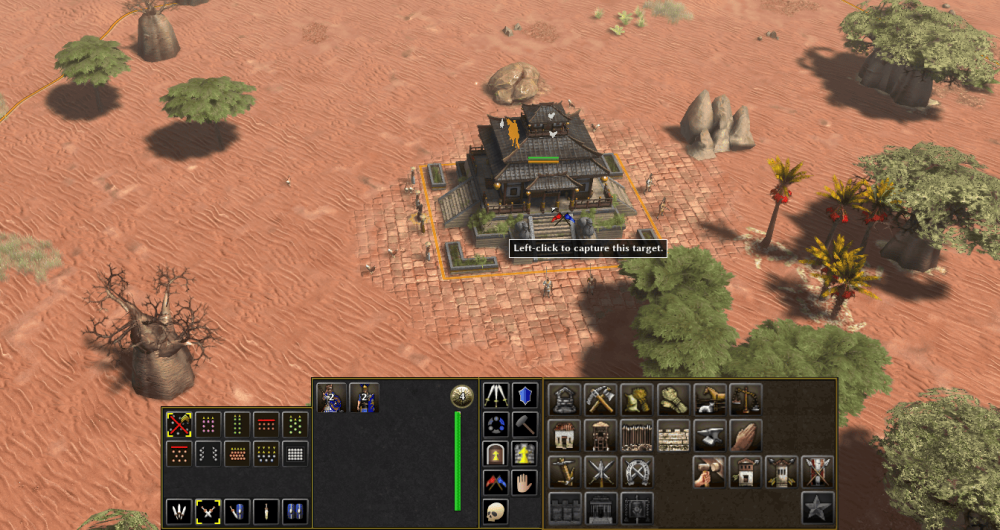
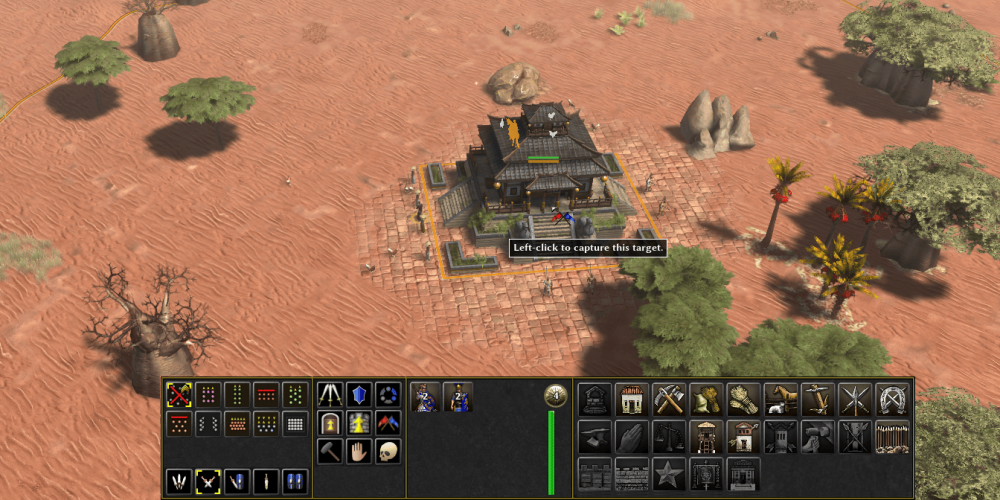
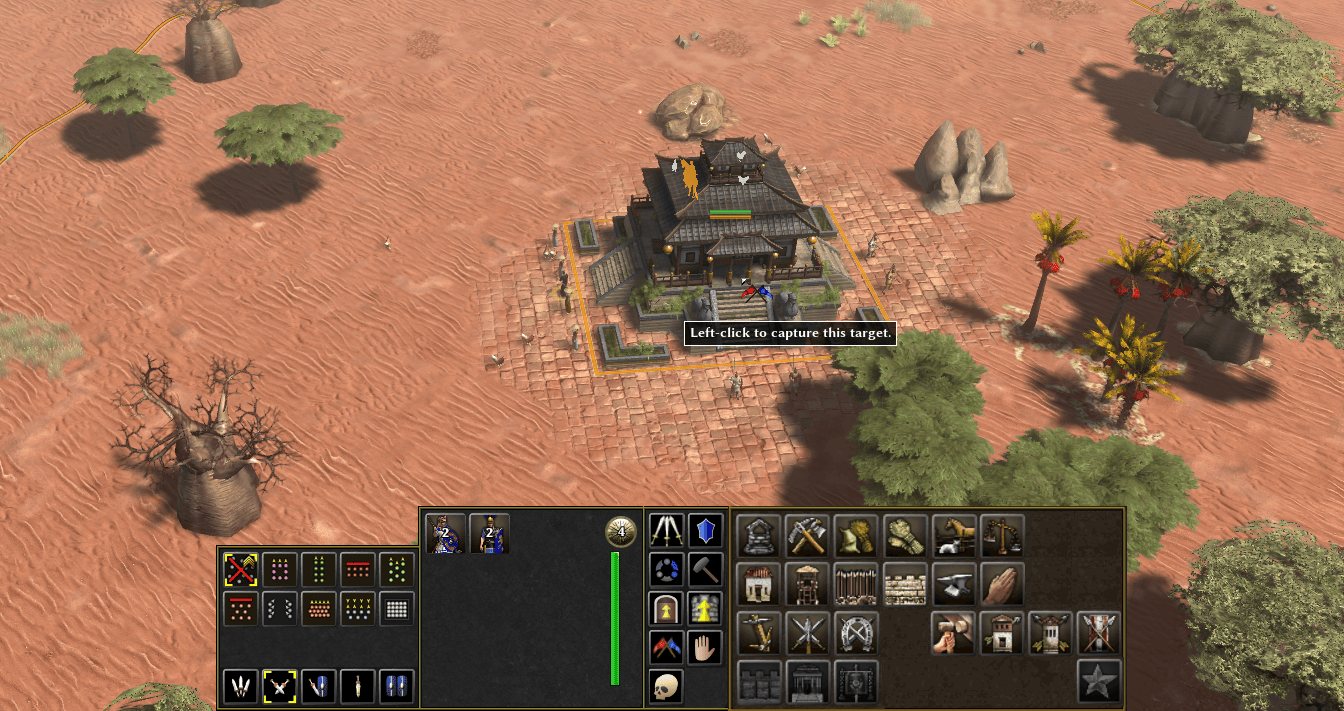
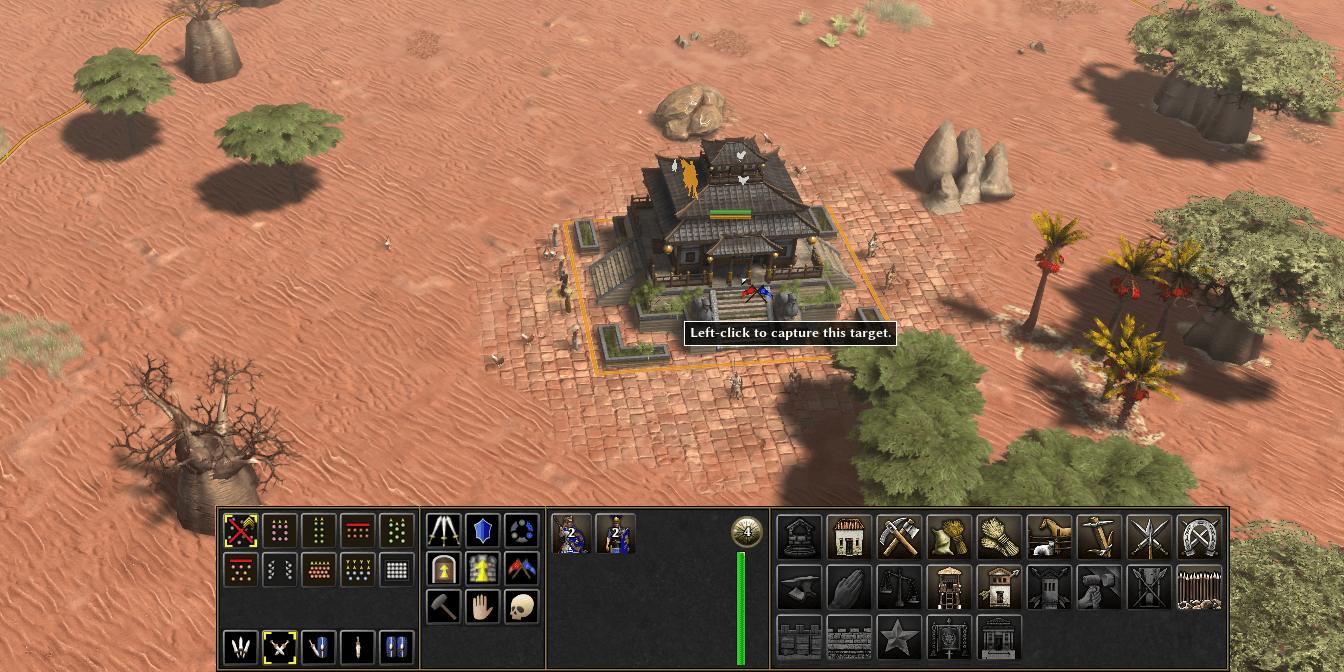
Is there any reason for the construction panel to be basically 2 long lines of 10 icons, a 3rd line with a few icons, and a last empty line, all with no apparent organisation? It doesn’t look good for someone new to the game (that was my first impression). Maybe the first 3 rows could be used for “normal” structures (those that civs tend to have in common), where icons would have a fixed place, and the last row for “special” ones (unique, or almost, and the wonder). The 1st row could be (mostly!) economic structures (resource oriented), the 2nd civil (what's left at the end, even when techs can influence military things, etc), and the 3rd military (that produce units that do damage, or do damage themselves). The 4th row would be ordered first with economic, then civil and then military structures. This looks better and also the fixed places on the first 3 rows help noticing fast what a civilisation has or lacks, in combination with checking the last row. Here I’m showing an image with the “template” on the upper left, and 8 civilisations as examples (did it weeks ago, so for R27).
-
@Emacz was asking me about slinger's shields, this is my answer, which could be interesting for some: Most people who could carry some sort of shield did, even animal hides, but it's a matter of how much stats would change. Besides, units were never as uniform as in a game, one just simplifies the most common ideas on them. Strabo (writing at the time of the game) says: "Although naturally disposed to peace, they bear the reputation of being most excellent slingers, which art they have been proficient in since the time that the Phoenicians possessed the islands. It is said that these were the first who introduced amongst the men [of the Baleares] the custom of wearing tunics with wide borders. They were accustomed to go into battle naked, having a shield covered with goat-skin in their hand, and a javelin hardened by fire at the point, very rarely with an iron tip, and wearing round the head three slings of black rush, hair, or sinew. The long sling they use for hitting at far distances, the short one for near marks, and the middle one for those between. From childhood they were so thoroughly practised in the use of slings, that bread was never distributed to the children till they had won it by the sling." Slingers could use a shield, having one hand mostly free, but that's useful when skirmishing close to the enemy, which is a role already taken by the javelineers (although one does more crush damage, the other pierce). In a simplified game, you want the slingers to do something else: slinging from the longest range. You can always just move the slinger closer for shorter range, but because of that would you want to add some shields in the animations to be that historically accurate? And also the javelin as a secondary weapon? Maybe, but stats shouln't change that much, and you also want to make units as differentiated as possible, not to confuse the player. It's also a matter of looking at the whole equipment: -Slingers: could have carried small shields, but couldn't use much armor (because of how the weapon is operated), slings are the easiest to carry, and munitions you can get easily (less so for lead). -Javelineers: most probably carried small shields, given their shorter range, but they also needed to be mobile because of that, so didn't carry much armor. -Archers: some apparently carried small shields, but coud use more armor, so makes sense to make them a bit slower. Not all javelineers were the same, not all archers were the same, each had what they could afford. -Crossbowmen: not necessarily all used large shields in all situations, but you either simplify and choose some representative units, or will have a plethora of options, most of which won't be convenient to even train.
-
I could be wrong, but it could be that they garrisoned on buildings that were closer to trees than to farms.
-
No inconsistencies there, since κώμη doesn't translate preferentially as home and house. Not my point, but that þurpą not meaning village could have been, although I don’t think much can be said about that, since it only appears once. Then you say (or repeat) that, because Lehmann point rests entierly on his incorrect ordering of ON and OE, and, again, from the ON incorrect meaning he states. Not true (if you keep referring to it as a single farm), þurpą appears only once in Gothic, and, yet again, ON states the opposite, why dismiss my ON dictionary quote?: So, your whole argument seems to rest on two quite weak points: 1. For Gothic, þaurp appears only once, thus not much can be really concluded. Haimaz appears multiple times as village and at least once as country, and wīhsą at least 6 times as village and at least 4 times as country. The country/countryside/farmlands discussion is totally irrelevant and not even the point (for a change). It’s not about farmland/country, but about how rural they are with respect to villages. I don’t care about wīhsą, the point is that you can’t rely just on Gothic, otherwise wīhsą would seem even more rural than haimaz, according to your own criteria and opposite of your own proposal. 2. The next attested instance of a þurpą cognate is in 725 OE, meaning village. Later on in OE and OHG it kept being used for “hamlet, village, farm, or estate”. For OHG, any spurious dictionary shift right in the 8th century cannot be just extrapolated back a thousand years supposedly unchanged. Heim being an older ending doesn’t mean it didn’t also mean all the other things every source states it meant, nor does it imply that the ancestor of dorf was an individual farm because it wasn’t used earlier as a place ending, as the multiple sources I’ve mentioned previously clearly state (just quoted one yet again explicitly stating how it was originally applied, and its etymological sense). Thus, sources show that haimaz was used in many different ways, while þurpą and wīhsą were more similar between them. And it’s clear already that Germanic hamlets were a bunch of cottages, farmsteads, estates, whatever one wants to call them, nitpicking on this point is a useless byzantine discussion. Those who put together the Proto-Germanic dictionary knew their sources, including (especially) the Gothic Bible, and heim/dorf/whatever endings. You have to explain why you think they didn’t.
-
That's what I do, and some of my farmers ended chopping wood. @wowgetoffyourcellphone, I don't think it's because of the rally point, because most of my farmers continued farming, while just some ended chopping wood, and had to put them on farms again. Seems something weird is going on.
-
Well, I don't know exactly how the code works, but when workers are done building, they keep building other stuff, when the are done cutting a tree, they keep cutting other trees... can't tasks also be kept when garrisoned? After all, their HP is kept, so there's some sort of memory going on... EDIT: what I mean is, tasks at the time of sounding an alarm should override rally points. Or at least for that to be an option.
-
I see, but I don't see that as a desirable feature. My rally point is supposed to be for the units created from then on, not for the ones already having a given task and just garrisoning because of an alert. It adds unnecessary micro to rearrange things as they were before the alert.
-
Some time ago I posted 20 points with: Now I've compiled another 20 points of maybe not so trivial (or even controversial ) things, some that have been discussed around. Maybe the first two have already been discussed and decided, since I was surprised when I came across them: 21) Free repair seems too simplistic. Maybe for HP below 50% it should cost 50% of resources. That way, by not letting it go below 50% repairs would be free, and repairing an almost destroyed building would take around 25% of its total cost. Or something along those lines. 22) Same with fields giving infinite food. I’d give them a small food cost (the seeds), maybe wood cost (the tools), and the time it takes to sow again would seem important. They could be set on automatic sowing. I think their allowed superposition maybe should be removed (if there's no penalty for that already). I'm not sure if there are fertility considerations with terrain and weather already. 23) When ending an alert, everyone should return to what they were doing. My farmers end up chopping wood often. 24) Land workers should be able to fish near the coast, and hunting seems a bit too easy, prey barely escapes and predators are slow and weak. I would make the fauna a bit more dynamic in general. 25) Dead animals should slowly rot. Lately there was a post about this, and resource regeneration. It would be a nice addition, the same with growing trees or berries. Overexploitation or sustainability would then become part of the gameplay. 26) Units seem to go through each other, most noticeable with ships, which doesn't seem very nice. 27) Showing 2 charts in the Summary seems a bit arbitrary. Maybe one could choose how many rows and columns of charts to see (at most a couple of rows and 3 or 4 columns), including 1x1. Could choosing the time interval be implemented? 28) Regarding the charts, it seemed to me that an “at any time” option was missing when counting numbers of units, structures, etc. Then “population” would be redundant with “units” “at any time” and could be removed. 29) Maybe a complete interactive tech tree from where one can decide and perform research would be nice, one wouldn’t have to go through each and every building (maybe some are just into that). 30) Ships should have a button and indicator to dock or beach them so for sure troops would be able to (un)garrison (which should happen gradually, faster near a port, maybe only for certain big units). 31) Often threaded paths could show wear, creating roads that make movement a little bit faster. Paths on a field should make it less efficient. 32) Units reaching full experience when garrisoned cheapens experience. Training and battle experience should be quite different. Either there should be a cap for experience learned through garrisoning, or they could garrison only to learn proper complex formations (or abilities, if introduced at some point). 33) Battle mode: this has been asked and it’s a good idea for both SP and MP. There could be scenarios reproducing famous battles. Also, after setting resource values, players could make up an army spending them. Then each places their army, and goes to battle. 34) After winning, don’t keep repeating the short victory music over and over. Maybe some people want to continue playing to check some things, but the music gets too repetitive after a bit. 35) Portraits in the panel of multiple units of a single unit type should do much more. I double click them and nothing happens, the view should center on the selection (something I haven’t been able to do when having more than one unit selected). And why not, the icons could be expanded on a per unit portrait (don’t be afraid of sidebars), where their individual info could be displayed when hovering over them (a small HP bar would be helpful). 36) Siege units should be capturable, but one could only move them (no attack) until an arsenal is built for the first time. I still think that they, together with ships and buildings, should have an inbuilt base garrison acting both as capture resistance and turn around limiter. 37) As has been mentioned lately: night, day, seasons, weather and natural phenomena. Empire Earth had the later ones, but caused by the priests, which I didn’t like. They should be random events. 38) Stealth, for spying, ambushes, and to make use of the night. Important as possible abilities of certain units or possible scenarios like the Battle of Lake Trasimene. 39) Better to use interesting historical names, like "Kripteia" and "Agoge", instead of things like "Unlock Neodamodeis". 40) Better to use technologies actually developed at the time of the game (500 BC - 1 BC), instead of generic things that have existed for thousands of years. Regarding the last 2 points, along with other things, I’ve been preparing a post about the Spartans.
-
As mentioned, slingers are indeed good offensively (the Inca would split swords and kill horses of the Spaniards), but weak defensively, take a lot of time to train, and not being benefited by many techs (quite the opposite regarding training time, should get worse).
-
Maybe this got lost, but is everyone having this issue? Or is there a reason for it to have happened?
-
Movement speed: slinger > javelineer ~ archer > crossbow, given their equipment and armor, which would be ordered the other way around (Chinese crossbowmen would use large shields, at least sometimes). As mentioned, depends. Certainly not for the Rhodians (historically I mean).
-
No clue, never read about their archers :P. Would need to find sources... They should. That's why I also gave them a large dodge defence.
-
I misread this, since before you said more damage and shorter range. You can't separate things like that. Some Asiatic recurved composite bows were way shorter than longbows, yet had longer maximum range (although what matters is effective range, but they didn't differ much on that). It's about the materials and complexity. They were indeed harder to build, but were necessary when going on horseback. Anyway, a fast ranged weapon with short range and less damage could be a repeating crossbow (the famous chu-ko-nu), supposedly invented at the time of the game, in the Warring States period, with the Han being involved. A slow ranged weapon with more range and damage would be the gastraphetes, but the game gives it a range of just 45m, which seems wrong to me. Then there's the Chinese crossbow, which maybe in the late Warring States period outranged their bows*, even when for the Han the game has the range for the Infantry Crossbowman as 45m, and for the Archer as 60m. I think this is wrong if we consider effective range (bolts lose less kinetic energy in flight than arrows). I haven't checked about other crossbows around that time, which weren't many, and probably weren't superior to the Chinese. Another interesting disadvantage of the crossbows not usually talked about is that ammunition was reused by the enemy, although you can't use arrows on crossbows (too much power) and bolts on bows (too short), but some cultures had a guide to use baby-arrows on bows that would allow them to also reuse bolts from the enemy. *Source: https://dn720004.ca.archive.org/0/items/science-and-civilisation-in-china-volume-5-chemistry-and-chemical-technology-par_20210927_1445/Science and Civilisation in China Volume 5%2C Chemistry and Chemical Technology Part 6%2C Military Technology Missiles and Sieges by Joseph Needham%2C Robin D. S. Yates (z-lib.org)_text.pdf, page 137. In other parts it's mentioned that the bows of the Huns and the Xiongnu couldn't outmatch the Chinese crossbows, although I haven't read enough to check if this means outrange (I'd guess effective range).
-
Indeed, I was talking for a given bow. And for example, slings lose less kinetic energy in flight. Same with crossbows, given that darts are heavier. But for short distance and high damage, it's basically javelineers (in all its variants like pilum, etc). And the Kestrophendone if you want to get fancy. I thought people were always complaining that archers were OP. They should be a support unit, melee should reign supreme (at least until gunpowder :P). But I'm all in for variety, and as I mentioned before, giving all those archers the same range doesn't seem the right decision to me (not even counting that things are the other way around). You should have, regarding range, Persian Archers > Cretan Archers > Other Greek Archers. Regarding damage, I've seen discussions if Cretan archers used anti-armor arrow points, but have to look into it again. I do care about history because there's basically one of it, while one could achieve in many ways a balanced gameplay.
-
Well, it's not to completely negate, but acts as a modifier. Thus, you have values of pierce (p), hack (h), crush (c), block (b), parry (a) and dodge (d), both for attack (A) and defense (D): pA, hA, cA, bA, aA, dA, pD, hD, cD, bD, aD, dD. For example, aA is how hard is to parry its attack, aD is how easily it parries attacks. The better for the unit the bigger the values are. As a proof of concept, a naive formula for the damage the attacker deals to a defender could be (pA/pD+hA/hD+cA/cD)(bA/bD)(aA/aD)(dA/dD), meaning that all damage, after being divided by each corresponding defender's resistance, is added up, and then multiplied by factors related to the probability (it's NOT directly a probability) of the attack being either blocked, parried or dodged (just adding them up is problematic). Here I'm showing the (rounded) results, with 10 taken as an average value, and other parameters like rate of fire, movement speed and range not yet taken into account: This means that the damage ratio for spearmen:cavalry is 3:1 (as wanted), for cavalry:archers is 6:4 (which makes sense, cavalry would get destroyed by archers if they don't close in, like in Agincourt), and for archers:spearmen is 2:5 (which makes sense, the advantage of archers being not this but keeping their distance). Remember that rate of fire, movement speed and range not yet taken into account, which would incline more the scales to what is wanted. Also, archers:archers is 4 times more destructive than cavalry:cavalry, which is twice as destructive as spearmen:spearmen, which makes sense considering how long these kind of engagements last. Would be nice to keep adding units.
-
Well, I just wanted to nerf them a bit, maybe I went too far Regarding "short-range ranged unit with higher damage", wouldn't/shouldn't that be the javelineers? Longer (effective) range should be some slingers. I see that the Macedonians already have quite some specific units, but an interesting one is the Kestrophendone, which would enter late in the game, it's a heavy dart thrown with a sling, and it was really devastating (but apparently hard to make). Ranges are debated, but tests indicate shorter than a bow. Also, I just noticed that Rhodian Slingers have 45m range, while Cretan Archers have 60m range, I guess this comes from myths put forward by other games regarding Cretan archers... For the Persians, I see that Sogdian Archers and Immortals have also 60m range. Xenophon's Anabasis states: "For at present the enemy can shoot arrows and sling stones so far that neither our Cretan bowmen nor our javelin-men can reach them in reply" and "the barbarians were no longer able to do any harm by their skirmishing at long range; for the Rhodian slingers carried farther with their missiles than the Persians, farther even than the Persian bowmen", thus ranges were: Cretan archers < Persian slingers < Persian bowmen < Rhodian slingers. Cretan archers were good for the Greek world, but were outranged by other specialised range units. Also: "Now I am told that there are Rhodians in our army, that most of them understand the use of the sling, and that their missile carries no less than twice as far as those from the Persian slings. For the latter have only a short range because the stones that are used in them are as large as the hand can hold; the Rhodians, however, are versed also in the art of slinging leaden bullets. If, therefore, we should ascertain who among them possess slings, and should not only pay these people for their slings, but likewise pay anyone who is willing to plait new ones, and if, furthermore, we should devise some sort of exemption for the man who will volunteer to serve as a slinger at his appointed post, it may be that men will come forward who will be capable of helping us". This is interesting because Rhodians weren't even hired as slingers, they were hoplites, who happened to have slings and were extremely good at it.
-
I have no idea how formulas work in this game (would like to know though), but along the “simplified realism argument”, I think bonuses should be avoided, they seem to me a sign that the parameters used to reproduce reality are either not enough or are being inefficiently used. I rather have a couple more parameters than who knows how many random bonuses here and there. This keeping in mind that it would be nice to eventually show the relevant info not as a bunch of text like it’s now, but as a given set of icons and values that is as simple and standard as possible. It seems to me that with hack, pierce, crush, block (with a shield), parry (with a weapon) and dodge values, both for attack and defense, most things should be achieved (I don’t see any advantage to organic/metallic armor types, it’s just setting hack/pierce/crush defence values). Also, causing low damage should do very little, as a measure of actual penetration of defenses, to enhance differences, and penalising massing up the wrong kind of counter. Going through some of what has been said, and just as a first approximation: Spearmen: high pierce attack, hard to block, low dodging. Archers: pierce attack, easy to block, basically impossible to parry, hard to dodge. Cavalry: low blocking, high dodging. Maces: high crush attack, hard to block. Axemen: high hack attack, hard to parry. Swordsmen: high hack attack, hard to dodge, high parrying, high blocking if they have a shield. Javelineers: high pierce attack, low crush defense, high dodging. Elephants: very high crush attack, high hack and crush defense, can’t be dodged, can’t dodge. Rams: extremely high crush attack, very high pierce defense, high crush defense, extremely easily dodged, can’t dodge. Buildings: extremely high pierce and hack defense, very high crush defense, can’t dodge. Slingers: high crush attack, low defenses. Slingers should be good against troops that don’t have crush defense, cheap, sling faster and farther than bows (bow damage should decrease more with distance), but have no armor, be unable to form close formations when slinging, should have a straight line of sight (slinging over friendly troops was too risky, iirc), and, most importantly, take a lot of time to train. Regarding their slow demise (they would be around up to the Middle Ages though), certain late agricultural technologies should drastically increase how much their training takes, since they came from a more agrarian background, and besides some early “biconical lead projectiles” tech to increase their pierce damage, they should not be improved much by other techs (around the middle to late timeframe of the game sling technology was historically at its peak, while others kept improving). Going back to unit’s values: archers’ arrows should be somewhat easy to block with shields, they would lose against cavalry, who should lose against spearmen, who should lose against swordsmen (here I wasn’t sure if they should win or lose against archers, I guess it should depend on how much their shield can block). I like the hard to block/parry/dodge dynamic of the mace/axe/sword, going along with the reality that crush damage transfers more through shield and armor, axes are hard to parry, and swords have faster attacks. I have not emulated all possibilities in my head though, all remains to be tested. Javeliners are good against elephants (from a distance), which along rams are good against buildings. It’s a matter of fine tuning to get what one wants, as Enrico Fermi told Freeman Dyson: “with four parameters I can fit an elephant, and with five I can make him wiggle his trunk". No bonuses should be needed!
-
Is this work around because of some coding limitations? Naively, I would think of normal bridges (the Persian was a particular case) as a structure that behaves like the port and the wall: start on one shore, finish on another (under certain depth/lenght limits), and the construction animation doesn't have to be that accurate (none is)... maybe there's some problem about walking on top of it if done in this way?
-
Ok, I just installed this and have a few questions: -Regarding "new quotes and tips" in the game load screen, it goes away too fast for me, I can't read it. As suggested at some point, "press any key to continue" could be implemented. -I have no Scenarios under Campaigns anymore, like I had with R27. And as suggested at some point, I'd remove the redundant "Continue Campaign" option from the main menu and leave only the one under "Single-player". -I like that civilians are both men are women now, but has there been any discussion regarding gendered roles according to each civilisation? I'd like to see more female priestesses for the Greeks for example.
-
These could be considered: -Artemisia I for Persians (or Carians, if part of the game at some point): naval commander. The one from the battles of Artemisium and Salamis. -Artemisia II for Persians (or Carians): naval strategist and medical researcher. Sister/wife of Mausolus, ordered the construction of his tomb: the Mausoleum at Halicarnassus. -Lǚ Mǔ for Han: rebel leader that played a role in the restoration of the Han dynasty. -Teuta for Illyrians: not a playable faction still (eventually?), but since Gaia's units being more challenging has been mentioned, they could even have Heroes, and Teuta would be compatible with Gaia's piracy units (although I'd name them differently than Gaia, and reserve that for basically abandoned things).
-
Probably not, but I think better not to drift towards the unrealistic direction. The big ships are one of the things I liked about the game the first time (and many have commented the same). I think it would be the wrong call to make things look more and more like any other RTS. I hope this is done at some point, would also solve the issue of strategising against ships with modified stats because of the troops being carried. Maybe. Personally I prefer battles that look closer to the Shogun 2 Total War ones, not so much on the side of numbers, but tactics. Although numbers is also good. On a side note, maybe different water depths could be considered, differentiated by color, which would be important the more relevant the bodies of water become: -Shallow: for the transit of most land units (except siege for example) and small boats. -Moderate: for small and normal boats, but not the largest ones. -Deep: for all boats. Maybe eventual bridges should not be built over it (except for the Persians, who could have also bridges made of ships).
-
Instead of making the ships unrealistically smaller, why not make the bodies of water realistically bigger? And then one would zoom out a bit for a proper naval battle.
-
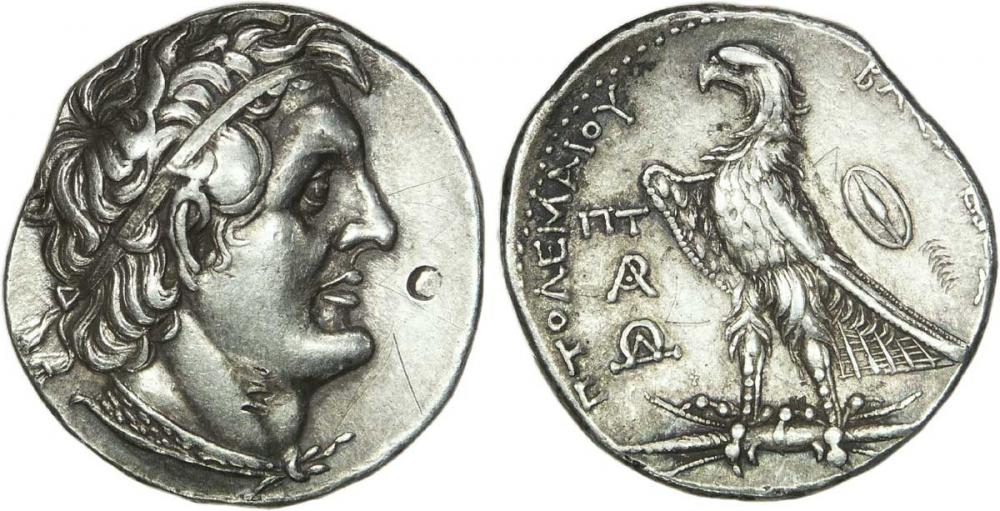
I was thinking about this wonder issue some weeks ago. I think all wonders should have different effects, to enhance how each faction plays differently, while keeping it historically accurate. I agree that the "wonder tech" should be merged with the wonder, if that's the only thing they'll do. Also, I don't think the 7 Wonders of the Ancient World have the prominent role they should have, considering the time span of the game: 3 were built before 500 BC, the other 4 being built before 280 BC. The Persians have the Hanging Gardens of Babylon, when they should build the Mausoleum at Halicarnassus. I think they should start with the Gardens, thus working as a civ. bonus that could be captured or destroyed. Worse is the case of the Ptolemies, they have the Pharos (I would add “of Alexandria”, for everyone to get it just in case), yet it’s not even their wonder, but the temple of Horus (a bigger version of the temple of Isis). I would make the Pharos of Alexandria the wonder, and put the Great Pyramid of Giza close to them for capture, kind of another civ. bonus for the player to decide if and when to get it. This would make the wonder play of these 2 civs quite particular (historical ideas first, balance later). Their mentioned civ. bonuses could be called Echoes of Babylon (a known phrase, used in a book title, and a shoot out to the Voices of Babylon AoE campaign) and Sands of Time (another known phrase, the Pyramid is by far the oldest of the 7, the only one remaining, and hints at the race against time for capturing it). The remaining 3 of the 7 Wonders (not belonging to any playable faction) could be included in different game modes: the Temple of Artemis at Ephesus to be “rebuilt” at a specific location to win, while the Statue of Zeus at Olympia, if the map is continental, or the Colossus of Rhodes, if it’s on an island, could be captured to win (the scenario could start with Gaia building the wonder, preferably finishing it before a reasonable time to capture it after it’s finished).