
ittihat_ve_terakki
-
Posts
36 -
Joined




ittihat_ve_terakki's Achievements

Discens (2/14)
27
Reputation
-

Civ "Pers" -> "Achae"
ittihat_ve_terakki replied to wowgetoffyourcellphone's topic in Game Development & Technical Discussion
@wowgetoffyourcellphone If the goal is to capture the genuine opinion of the playerbase, rather than relying on 15–20 people who may have voted simply because they happened to be browsing the forum, then the poll should be conducted inside the game where it actually reaches hundreds of active players, if democracy is truly the intention. But from what I can tell, the poll feels more like an excuse. There already seems to be a group here that supports each other, passes ideas back and forth internally and pushes whatever they want into the game anyway. Instead of focusing on real issues, they act more like people tinkering with personal hobbies. The game still has plenty of bugs, unit movement is awkward, pathfinding is problematic, ships constantly block each other, Petra is bad, there’s lag, multiplayer has issues, there’s no campaign and so on. Yet instead the discussion keeps revolving around trivial, unnecessary changes, none of which reflect the major concerns or widely voiced complaints of any significant portion of the playerbase. At some point, it’s fair to ask whether improving the actual player experience should come before reinventing things that were never serious problems to begin with. -
Civ "Pers" -> "Achae"
ittihat_ve_terakki replied to wowgetoffyourcellphone's topic in Game Development & Technical Discussion
This is honestly one of the worst change ideas I’ve ever heard here. The only other one that comes close was removing the “woman” unit and replacing it with that weird unisex version. People still call it woman anyway. The same thing would happen here, don’t change something people are used to and that already works. If you really want it that badly, you can always recreate every historical detail on your own with a historical mod. There’s no need to constantly tamper with a game people are already comfortable with. -
Regarding fields and storage facilities
ittihat_ve_terakki replied to Eilat's topic in Gameplay Discussion
From a gameplay perspective I don’t find it disturbing. However considering that many players are passionate about historical authenticity, having farmland surrounding the governors building feels unrealistic. Once again, this raises the dilemma of whether some compromises should be made in the name of historical accuracy. -
"Another potential solution" is the opening of my text, and it’s perfectly clear to any English speaker that it’s meant as an additional idea. It doesn’t replace anything, it literally says “another.” It could have been “instead,” but it isn’t. You seem to enjoy these little internet arguments, don’t you? lol The Roman Army Camp can hold 20 units. Strangely enough, when you destroy it, an additional capacity of 30 units appears.
-
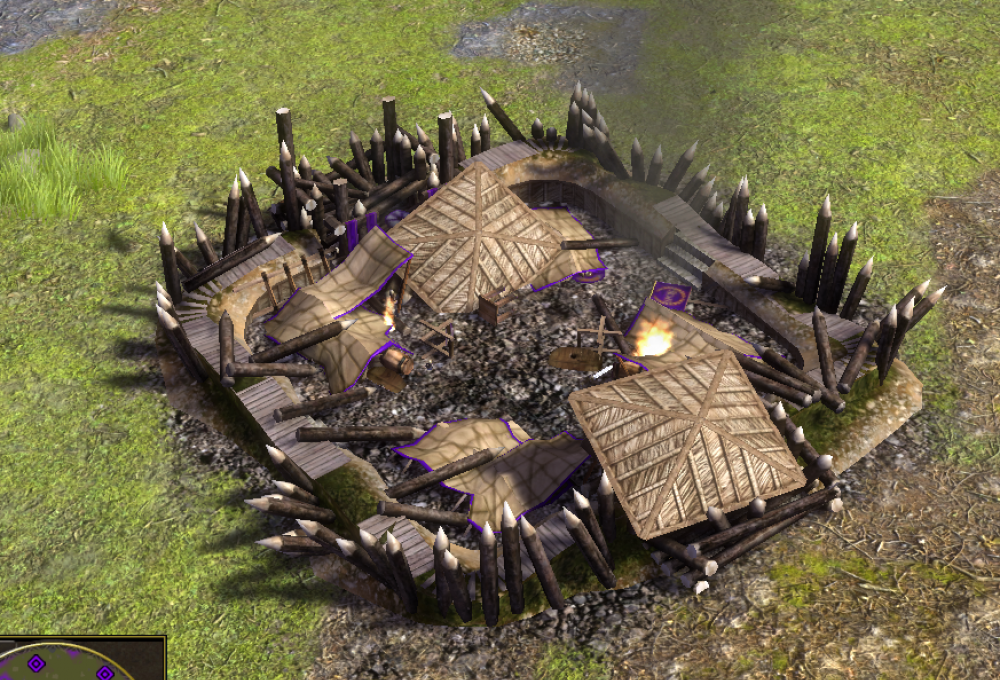
Calling the fortress just a single building overlooks how central it can become in many matches. There are moments when players feel like they’ve lost the match the instant they lose it. Historically too, it is far from a simple building. It is a defensive structure placed in strategic locations, capable of shaping and altering the course of events. Whether I choose to implement it or not is another matter but it would make perfect sense for such a defensive complex to be able to hold 40 or 50 units especially in a game where the single building Wonder can already accommodate up to 50. Here is The German Wonder, which is just a ruined Roman camp, can still garrison 50 units, roughly 33% of a 150 soldiers. P.S. I’m not against the idea of increasing capture resistance.
-
That’s a nice move. 35 and 50 with an upgrade sounds good. I’m not exactly sure which issue you’re referring to, but in any case, 20 is a low number. Increasing it would make sense. Let’s say it’s better not to stack all your hopes behind one fortress.
-
Another potential solution that came to mind is increasing the number of units that can be garrisoned inside a fortress. Isn’t 20 soldiers too few for a fortress? Historically, 20 soldiers is already a very small number, it feels the same in game as well. A temple can hold 20 soldiers too. A fortress and a temple having the same capacity doesn’t feel right, maybe this could be adjusted. (It’s also interesting that theaters, which historically hosted performances for thousands of people in ancient times, can only hold 5 units.)
-
ittihat_ve_terakki changed their profile photo
-
I think this is a good and valid point. The only way I can make sense of it is by normalizing it in the following way: the game also tells you, “Notice: This game is under development.” Therefore combining these two statements, I conclude that the AI difficulty levels are simply not fully settled yet. And that is exactly what our discussion is about. I agree that new players struggle with Petra. Two of my real-life friends whom I recommended the game to told me exactly this. The first one said something like, “The game looks interesting but I’m getting absolutely destroyed!” After that he never mentioned the game again, so I assume he stopped playing. The other friend told me, “I’m playing on Medium and I haven’t managed to beat it yet.” I then had to respond with something like, “Try Easy or Very Easy, then increase the difficulty as you win.” However, I suspect that a 30year old man who has played many computer games might feel some embarrassment playing on Very Easy. So I assume he stayed on Medium. Also, what I would like to emphasize is that what makes the game hard for beginners is not the game’s core mechanics themselves. A new player can easily understand what building a stable means or the difference between archers and spearmen. They can easily build towers, chop wood, and so on. The real issue is that they don’t understand the need to race against time. They don’t seem to care that their units spend a long time walking between distant wood lines and the storehouse. Or rather, they haven’t yet developed that sense of urgency. Petra behaves almost robotically in that sense, it is programmed to be. But what I’ve also observed from my beginner friends is that, they take their time. They’re basically on a picnic. They build a barracks, maybe produce a few units and then their attention drifts elsewhere. They think one barracks is enough: “I need soldiers, I built a barracks, done.” The idea of building 2, 5, or 7 barracks doesn’t even occur to them, which is understandable. They wander around, enjoy the map and the atmosphere, until they get attacked around the 10-minute mark and lose. Therefore since the root of the problem with beginner guy vs. Petra is the eco race, I think some features could be added to easier modes to simplify eco management. For example, in Very Easy, passive resource generation could be the case. There could be reminder-like visual cues for barracks such as: “produce soldiers.” These are just rough ideas, not actual suggestions. It also takes time for a new player to understand what they are supposed to do against the enemy’s CC and buildings. Some end up attacking it with 10–15 units, slowly die, while others (if they have discovered the capture mechanic) might try to capture it with too few troops. It seems like they could really benefit from some kind of guidance in this area. As I mentioned above and also visible in the replays, Very Hard needs improvement as well. For me, playing against Petra is almost a claustrophobic experience. It feels closed off and small scale, against a predictable opponent whose “soul” I can’t really feel. I don’t have this feeling in other single-player games I guess. A close example in terms of style would be "Praetorians". I’m not sure what the exact difference is, but I suspect the lack of an economy plays a major role. When there’s no economy, the game becomes much more strategic. For those unfamiliar: Praetorians is an RTS game without resources like wood or gold. Instead, it uses other mechanics, such as capturing villages that determine population limits and gaining experience points through combat, which unlock stronger units. The campaign experience on Very Hard was one of the best gaming experiences ever. The campaign itself was solid, personally, I find the game excellent. However it is probably weak in multiplayer. I’m not sure what to say about “AI cheating.” I guess at some point you have to do it. In Call of Duty, for example, enemy bullets become stronger and more accurate as difficulty increases. It’s worth examining what actually changes between difficulty levels in different games. Basically what I expect from Very Hard is improved tactical depth, better decision making, more varied options and stronger map analysis. - @Deicide4u If Petra only attacks me with cavalry, I will respond with a pikeman heavy army. Because I know Petra will always do that and that’s exactly the problem: predictability, robotic behavior, monotony. I have also won 2v1 VH matches without using slingers at all, as shown in the Macedonian examples of my replays above. You can do this with any civilization. I don’t want to fill here with replays anymore (I can share them if specifically requested). The main point is not why I win, but why the Very Hard loses so easily even in 2v1 or 3v1 scenarios. It’s about its tactical limitations, its predictability and its simplicity to defeat.
-
I can interpret the moment when a production decision is made, such as clicking on a barracks and queueing up units, as a player action, and this doesn’t necessarily have to involve camera movement, it could be done using shortcuts assigned to numbers on the keyboard. However, I’d be inclined not to classify the units that are automatically produced from that queue as player actions. 1 unit queued in each of 10 barracks can create quite a bit of noise, especially when combined with losses during combat. In terms of terminology, something like “Follow Development” might make sense. But “Follow Player” doesn’t seem entirely accurate, since the player isn’t actively clicking on or engaging with those units at that moment. The player might not even be aware of how many barracks are doing what, which ones are still producing or which ones have run out. Therefore, I think this complex tracking experience causes this feature to lose its meaning. Thanks Atrik. You’re like a roofer who finds and fixes leaks. Although I don’t approve of some mods that can introduce hidden unfairness in games like autotrain, these are still valuable touches. That said, I would have preferred if we could all play a single, shared version of the game, an improved common experience that doesn’t rely on various mods. Rather than insisting on keeping flaws, it would be a better approach to address and fix them.
-
I didn’t say anything like that. I’m not sure this is being understood in the way I clearly meant it. What I’m saying is that depicting this freshly built structure with green grass doesn’t make sense. Therefore the version you proposed is also not historically accurate. Grass like that typically appears later, when a structure is abandoned or poorly maintained over time. In that sense, it’s similar to depicting the Colosseum in its current partially ruined state as if that were its original form. If you are going to replicate the example exactly, then it should be the stone-covered version. The green hill depiction is inaccurate. And “inspired” doesn’t mean copying. One just aims to be a boring (and false) replica while the other tries to create a more visually engaging interpretation.
-
Hello. I’m not sure if this topic has been brought up before. When we observe a player and select the “Follow Player” mode, my expectation is to get a perspective that closely reflects the player’s actual experience. However all queued units produced from buildings like barracks constantly draw focus to themselves. The camera shifts there and the selection jumps to the newly created unit. After a while this starts to feel like a bug. This becomes especially real during combat moments when I’m trying to follow the player’s micro. As units are being lost, the queued new ones are constantly being produced and the camera keeps getting pulled away, disrupting the viewing experience. I think this is something that needs to be fixed.

-
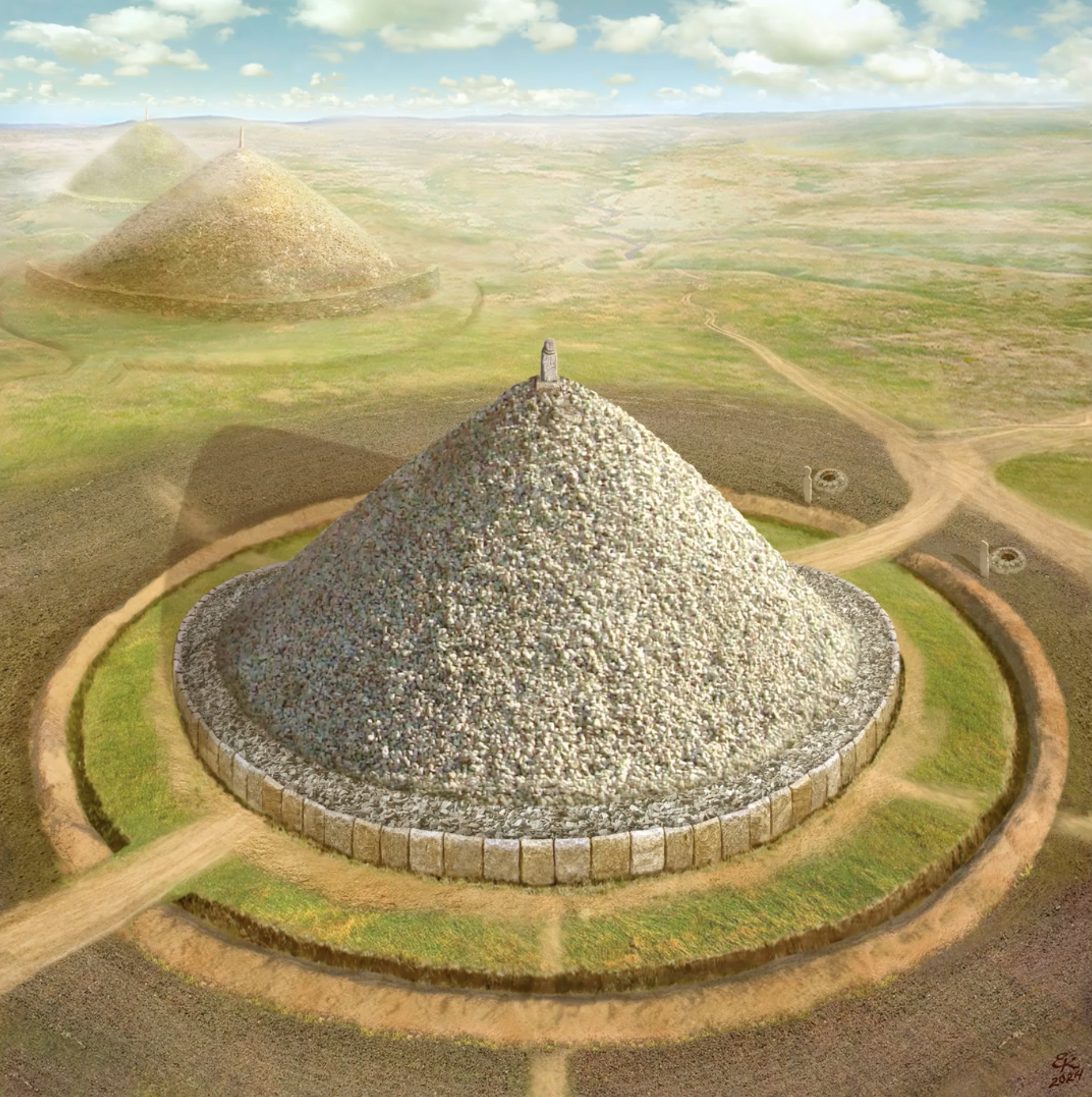
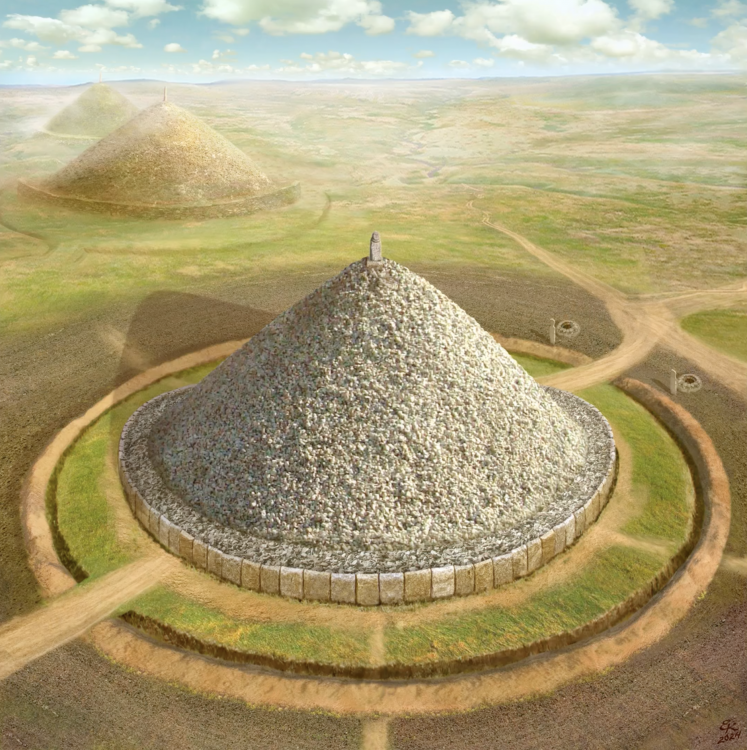
You seem to have missed the finished state of the kurgan in the video you shared. If you look closely, there is no green mound there, the kurgan is completed with a stone-covered structure. In the next shot, it appears as a green hill because time has passed and the scene has shifted to a later period (you can tell from the clothing details, the buildings behind and even the visible wear and deterioration on the structure). At some point, you have to adapt or create things. For example, who really knows what Germans barracks looked like 2000 years ago? Most likely, no such standardized structure even existed. But for the sake of the game you still have to design something. I understand the effort to stay historically grounded, like having a unit fighting with a lightsaber would obviously break the mood. Still, I stand by my point: if one of two historically inspired designs creates a stronger visual atmosphere, I would choose that one. In any case, the green mound version is historically inaccurate. The video you shared clearly demonstrates that. In my opinion, stone stelae should be more prominent in design, they are the most striking remains that have survived from that period to the present, rather than a green hill. - Historical accuracy is not to be a burden to the gameplay but a means to improve, diversify and enrich it.
-
I didn’t fully understand your message, what exactly is not supported by evidence? Most of the buildings in the game are fictional. Most of the decorations are fictional. The soldiers clothing in the game is also fictional and it has to be, even if you take inspiration from examples in various museums you still have to design it fictionally because there’s no other choice. Historically, we don’t have precise knowledge about things from thousands of years ago. That’s why I strongly disagree with the statement, “If we want to add objects and decorations, there has to be a meaning to it.” It’s completely incorrect. If we are going to make a historical correction about the Kurgan above, first of all, the grassy green hill is not accurate. That vegetation is something that formed naturally over time due to neglect after these structures were abandoned. When you look at them today, that’s what you see now but they were not like that when they were originally built. If a mound was constructed while the structure was in use, it would likely have been covered with stones or decorated in a way that gave it a more structured appearance. If historical accuracy is a concern, then it’s a problem for both cases anyway because we simply don’t have enough historical data to achieve complete accuracy. If I’m playing a game and I have to choose between a visually engaging example and a boring one, I will definitely choose the first.
-
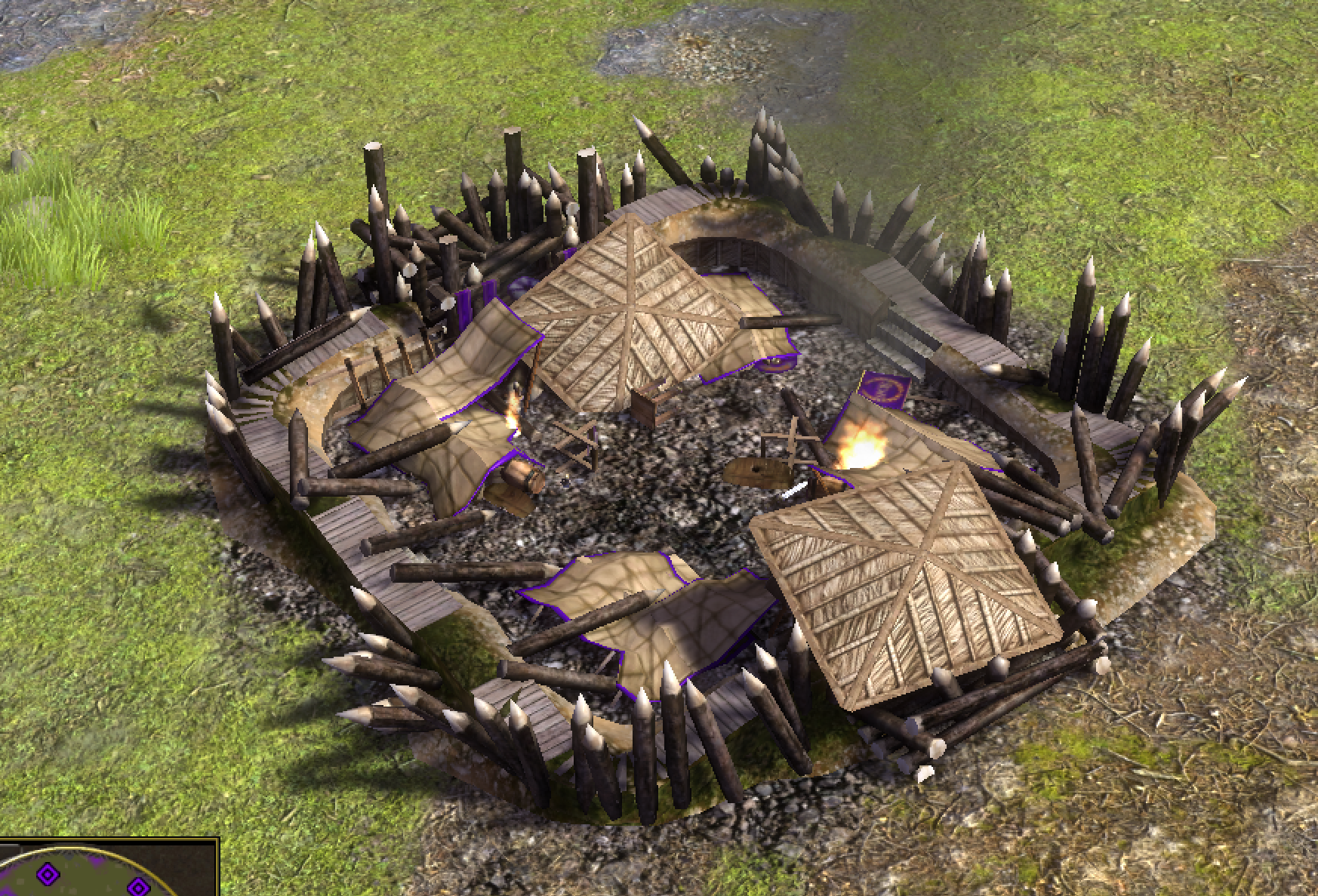
Hello. Kurgan stelae have recently caught my attention as well. They seem like remnants of a much older, shared cultural tradition. We see very similar examples across a vast geography, from Central Asia to Western Europe. I recall that there are many examples found in Ukraine and its surroundings. Using these in a wonder is definitely a great idea. I should say that I really like this original design and the overall concept. It conveys the organic, human-made nature of the period very well. It’s not perfect and that’s a strength. It’s rich in texture and detail. The variation in the curvature of the ground, the torches, the scattered rocks. All of these make it much better than the new model. The new model feels quite lifeless and frankly, boring. There’s no sense of a sacred space, no visual grandeur. Just a hill. It’s also important to keep in mind that these grassy mounds form over time as monuments, graves, or structures like amphitheaters are gradually covered by soil and vegetation when they are abandoned. That doesn’t mean there shouldn’t be a hill, on the contrary, it adds a sense of depth. The issue is that it shouldn’t be "just a hill". A similar situation can be seen at Göbekli Tepe (Potbelly Hill in Turkish). It was discovered as a hill because the structures there were either naturally or deliberately buried (For Göbekli Tepe, there are also theories that the structures may have been deliberately covered either as people left the area or to protect them from the threat of war. However, they were not buried while they were in active use.) So representing this as just a hill while the civilization is still active may not make much sense. For this reason, the latest example is not only visually underwhelming but also historically less grounded. In the end, this is a game, not a documentary. So the priority should be strengthening the visual impact and overall atmosphere without making major historical mistakes. That’s why drawing from diverse references or adding creative elements shouldn’t be a problem. After all, our knowledge of thousands of years ago is limited and without imagination we wouldn’t get very far. Well done.
-
I wonder if people who use this Counter-Strike mod also come up with those familiar excuses? "Okay, but this is available on the internet and open to everyone. That means it’s not cheating. Go download it yourself." "A lot of other people use it too. Why are you criticizing me? That means you have a personal problem with me." "Aiming is repetitive and unnecessary anyway. I’m actually improving the game. I help new players get used to the game faster." "This isn’t a cheat, it’s a mod." "You can aim with a mouse too, there’s not much difference. In fact, the other day someone killed me just by aiming normally with a mouse."