Leaderboard



Popular Content
Showing content with the highest reputation on 2026-09-25 in Posts
-
The first helicopter has entered full operational status. It features a full range of unique flight capabilities, such as lateral tilting and short range backward movement, and gains altitude during long distance flight. It is also capable of firing rockets and anti tank missiles, and deploying heat decoys. Recording 2026-09-26 005347.mp46 points
-
I needed dedicated server for 0ad and I built it: Veredus is an unofficial dedicated server for 0 A.D. and it's out now. No player hosts the match, so it keeps going when someone leaves or has a bad connection(with a timeout). Dropped players get their slot back when they reconnect, and matches carry on after a server restart or killed. Players join with vanilla 0.28 game. An optional companion, the "sidecar", runs AI opponents on the server, lets players rejoin without asking state from player, and records results and replays. The server is free and open source. Code and setup instructions here: https://github.com/victorcrimea/veredus I only have Linux, so I'd really like to hear from anyone who can try it on Windows or macOS: does the server start, can players connect, and does the sidecar build and run? Please post bug reports, suggestions and questions here or as a GitHub issue. Veredus is not affiliated with Wildfire Games. Basically any feedback is welcome.3 points
-
I’ve looked at your profile, and I realize that I, an amateur, have been giving instructions to an expert.3 points
-
In the meantime would it be acceptable for WFG to host one of those dedicated servers ? I'll see if I can try on macOS. Some ideas on top of my head: - Would be nice to have an ansible or docker setup for it so one can create it with all the needed dependencies. - Would also be nice since I assume you set up your own lobby to test to provide a mod that allows switching lobbies. It will split the player base though.2 points
-
Awesome work @victorcrimea! However, everybody please keep in mind, that we don't allow third-party bots in the official multiplayer lobby, so to use this dedicated server, please either use the direct connection option or a separately hosted multiplayer lobby. Ultimately it'd be great to have such functionality integrated into 0ad itself, so players don't have to go through additional hops to use it.2 points
-
Turns out it was true they actually existed... I love this work, @Eilat. It looks really good!! The dust blowing around when the helicopter takes off is a great detail. Looking forward to seeing the next updates!
 1 point
 -
Here are a couple of older maps I was able to collect form the forum. Some (that I played in the past already) are pretty awesome like Fall of Constantinople, Alesia, or TheLegendofMali. The others will most probably also be interesting. I'd suggest you look into one map and verify if it can be converted and is still palyable, if you like. That would be very helpful!!! Thank you so much! alesia.zip Athens.zip Alpine Settlement 0,1.zip Epiphany_v5.pmp Epiphany_v5.xml Fall Of Constantinople.pmp Fall Of Constantinople.xml Halicarnassus.pmp Halicarnassus.xml TheLegendofMaliSecondVersion.pmp TheLegendofMaliSecondVersion.xml1 point
-
Ok nice! You could also bake from highpoly to lowpoly to keep the details in a normal map or bake ao into the diffuse1 point
-
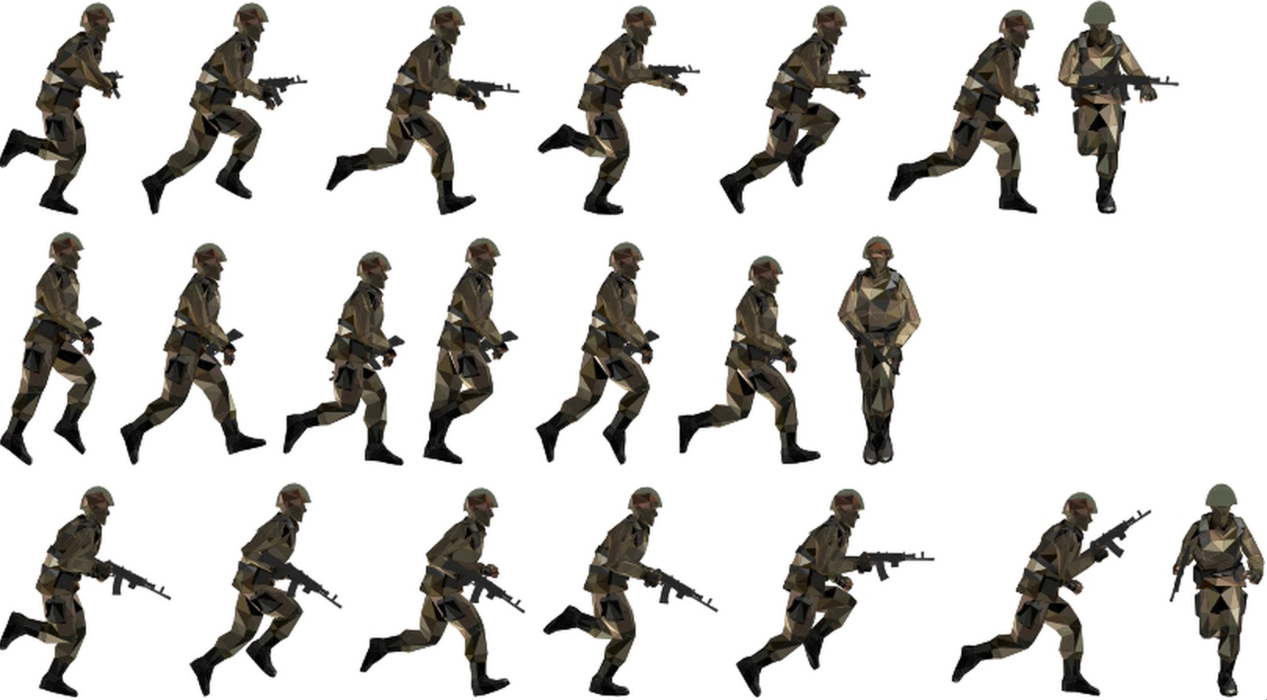
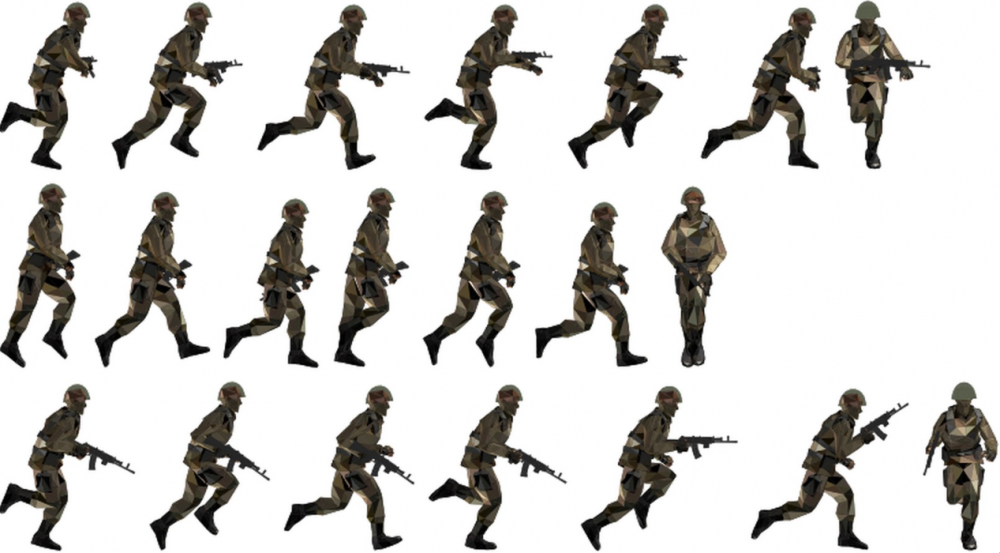
soldier's movement posture
 1 point
 -
Turning a fairy tale into reality, humanity has taken to the skies in 0 A.D. (apologies if someone has already done this). Drawing inspiration from World in Conflict, I am adding more realistic helicopter movement, though the takeoff/landing key is my own idea, as World in Conflict required rappelling to disembark. Recording 2026-09-24 231717.mp41 point
-
@Atrik! I’ve been testing the PR. I haven’t noticed any functional bugs. Everything I’m noticing is related to tweaks for the units values. So I’ll share my impressions of their current behavior. In general, the units feel more “heavy” to me. I find it somewhat appealing, but I think it will all depend on the fine-tuning that’s done. I think some degree of overlapping could also be fine to make unit bumping feel less noticeable. I don’t think civilians and infantry should have such a gradual rotation, at least not when they’re moving individually. I hope I can explain what I mean. I don’t know anything about crowd movement, but I have the feeling that their turns should become wider as the size of the group increases, with this being more of a consequence of them bumping into each other. Maybe civilians could also be allowed to overlap with each other a little more. I’m sharing a few videos showing different situations. Unfortunately, we still can’t test multiplayer, so I did my best to simulate a battle. Woodcutting. Notice the woman on the left who gets stuck and can’t reach her destination, around the end of the video. I’ve never tested this with the vanilla version, so I can’t really compare whether this happens there as well.. Mining brothers: Here I get the feeling that the elephants are trampling the horses. Some horses appear to be standing still while being pushed around, or simply remain stationary, as if they can’t find a path to their targets. The trampling looks interesting, but the horses remain stuck for too long. And the elephants seem to have this infinite pushing loop. I assume you’ve already noticed it. Chopping Wood.mp41 point
-
You can see how "solid effect" of "stiffness" impact the boats in the video. You get super cool effects when there are a few ones, but a lot of them result in them taking a lot of time to settle. It's fine for boats as you rarely think of crowds of boats, and I just made a scene for this in the video to show that it works, and still look good for them. But if you have a crowd of infantry constantly wiggling and taking forever to settle, this would look very bad. Hence the spring. Inertia and pushing aren't the same thing. But for navigating on open terrain, this wouldn't change much. However if you try to funnel "solid" physical bodies into a choke-point, they obviously take a while more to achieve the same movement. So if ever we wanted to make cavalry "solid bodies", with this PR it's only just one tweak in their template. But because big crowds of them cost more to simulate and that moving them around take longer if they are in high number, it should be accompanied by an increase of cost/population for example. The pros are that they will have much more realistic charge effects, like you see with elephants, but cavalry have less contact area and are moving much faster, the physic outcome would be different too (like a cavalry can trow fewer infantry units away but at higher velocity). So this is just a balancing change, out of scope. Even without proper "charge", -so just using the old pushing pretty much as it was, the inertia improves physics for cavalry fighting at no additional cost. The cavalry can push away other spread units thanks to it's superior weight, and also push its target by a little - even if ideally it would be more, and the cavalry would be smart enough to take more advantage of it instead of stopping once in front of it's target. Screencast from 2026-09-22 18-44-41.webm1 point