-
Who's Online 4 Members, 0 Anonymous, 166 Guests (See full list)
-
Topics
-
Posts
-
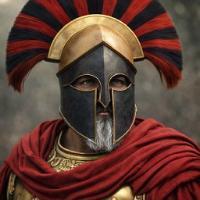
yeah, i can actually handle the actors OK... it just a little bit of work, but portriats is where im struggling the most.
-
By ittihat_ve_terakki · Posted
Hello. Kurgan stelae have recently caught my attention as well. They seem like remnants of a much older, shared cultural tradition. We see very similar examples across a vast geography, from Central Asia to Western Europe. I recall that there are many examples found in Ukraine and its surroundings. Using these in a wonder is definitely a great idea. I should say that I really like this original design and the overall concept. It conveys the organic, human-made nature of the period very well. It’s not perfect and that’s a strength. It’s rich in texture and detail. The variation in the curvature of the ground, the torches, the scattered rocks. All of these make it much better than the new model. The new model feels quite lifeless and frankly, boring. There’s no sense of a sacred space, no visual grandeur. Just a hill. It’s also important to keep in mind that these grassy mounds form over time as monuments, graves, or structures like amphitheaters are gradually covered by soil and vegetation when they are abandoned. That doesn’t mean there shouldn’t be a hill, on the contrary, it adds a sense of depth. The issue is that it shouldn’t be "just a hill". A similar situation can be seen at Göbekli Tepe (Potbelly Hill in Turkish). It was discovered as a hill because the structures there were either naturally or deliberately buried (For Göbekli Tepe, there are also theories that the structures may have been deliberately covered either as people left the area or to protect them from the threat of war. However, they were not buried while they were in active use.) So representing this as just a hill while the civilization is still active may not make much sense. For this reason, the latest example is not only visually underwhelming but also historically less grounded. In the end, this is a game, not a documentary. So the priority should be strengthening the visual impact and overall atmosphere without making major historical mistakes. That’s why drawing from diverse references or adding creative elements shouldn’t be a problem. After all, our knowledge of thousands of years ago is limited and without imagination we wouldn’t get very far. Well done. -
For similar civs, could you use the texture from a different civ? (like if you are adding a cav to Spartan, you could use a Athenian cav texture) It might not work for all civs though
-
I like the idea, one of the hardest things with "new" units though is actors and portraits, so you don't confuse them with the original units.
-
Probably for all civs. Maybe the scout cav also have a big vision range
-