-
Who's Online 5 Members, 1 Anonymous, 550 Guests (See full list)
-
Topics
-
Posts
-
I'm working on a 3-scenario campaign with the Iberians. Little known and a story to highlight I think it could be fun and original. The Fire of Freedom or (The Eagle's Shadow) You play as Viriatus, a Lusitanian chief fighting against Rome. Scenarios : i. Unite the tribes – build your base, defend, convince villages to join ii. Ambush a Roman supply column in the mountains iii. Final siege – hold your fortress against Roman waves I'm still learning the Atlas editor so if anyone has tips or knows good tutorials, I'd appreciate it. Any feedback or suggestions! Thanks
-
Yes, I think I could just have the AI scan the manual to update the site
-
I think I just assumed that was the case, because it says "loot" and how ever many resources. I just assumed you got those, but I guess you have to destroy an enemy build/unit to get that
-
By Average Concept Enjoyer · Posted
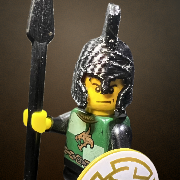
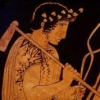
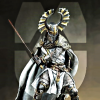
The Etruscans were a loose collection of city-states on the Italian Peninsula. Although together in battle and native to the region, the Etruscan city-states were more like dysfunctional family members than they were brothers, constantly fighting with each other when not under attack by their neighbors. Nevertheless, the Etruscans were a light in the dark that engulfed the peninsula, as they were greatly enlightened and sophisticated compared to their tribal neighbors like the Samnites. By the iron age, the Etruscans were close to being fully Hellenized in both culture and military, though certain aspects remained Etruscan. The Etruscans were one of the first people to become subjugated by Rome, though the Etruscans remained a unique identity well after their defeat, only being fully absorbed into Rome by 27 BC. In 0ad, the Etruscans are an infantry civ that benefit greatly in team games, and this is not more apparent than their team bonus: Integrated forces, which allows the Etruscans and their allies to recruit each other's units. This is a multi-faceted bonus so I'm going to explain this as simply as I can. The Etruscans and their allies can recruit each other's civilian units, allowing civs to have options they normally wouldn't have. For example, The Mauryas do not have a ranged option other than archers, but by being in a team with the Etruscans, they could get Etruscan slingers, and the Etruscans can get Mauryan elephant archers. The unit exchange is a two-way street; if a third team mate is using the Han, the Etruscans can use Han units but the Mauryas cannot. None of them get access to each others champion units, and neither are technologies, which is important for a reason I will explain later. Their civ bonuses include wealthy citizens, which reduces the total resource cost down to only 10 but costs metal instead of food, and Etruscan bronze, which improves the crush protection by +1. The Etruscan roster, although balanced, is quite small compared to other civs. Their village phase units are the Etruscan Hoplite, Etruscan archer, and Etruscan cavalry, a spear cavalry. Their only town phase unit is a slinger. These are their only citizen units. Their champions include an elite hoplite and an elite archer. Their ships are Greek and consist of a ramming ship and an arrow ship. Their only siege equipment is a ram. The Etruscans get no unique buildings but do get houses with 10 population. Their technologies consist of Irrigation network, which is an improved city phase grain technology, and Etruscan Ironworks, which improves the rate of metal gathering. Despite being a Hellenized civ, the Etruscans do not get technologies usually available to Greeks, such as hoplite tradition and Hellenic architecture. Their heroes are Lars Porsena, Lars Tolumnius, and Aulus Vibenna. The appearance of the Etruscan units would appear very much like one would see in Athens and Sparta, to the point that there would not be many differences, if any at all. The biggest difference is the variety of equipment; Greeks would use mainly the muscled bronze armor or linen armor, the linothorax. By comparison, the Etruscans did use these, but would also combine scale and disc armor native to the Italian Peninsula. The Etruscans also used Celtic scutum shields as opposed to the Aspis, and would not have commonly worn greaves. While the Etruscans had a slightly modified corinthian helmet, towards the end of their existence the Etruscans also used Celtic helmets. -
Looks pretty OP! I will have to PM you to see how you are using AI. Wondering if I can share the updated manual with you when we make changes and if that can change stuff on the website. For example, currently Legacy of Marathon is not an Athens tech. But if we bring it back you would just have AI scan that manual and make changes?
-