

Thalatta
-
Posts
604 -
Joined
-
Last visited
-
Days Won
15
Everything posted by Thalatta
-
Implementing forces in Unit Motion (HELP WANTED)
Thalatta replied to Atrik's topic in Game Development & Technical Discussion
I'm using the latest b53b24adc2 now. I think an issue now is that they are really stubborn to turn , and that can block paths or cause them to be dragged sideways somewhat easily (see the 1v1 after 0:15): video.mp4 I guess some turning would be more realistic than being pushed sideways like that, imagining it's on their own accord, which makes me think if there shouldn't be a difference between how enemy and own units react. -
"Primitive man" is not a nice name (these pejorative terms when referring to peoples and cultures are quite outdated in academia). Is this a Yayoi? That term is also used for the people and culture, not just the period. It would also be more indicative of who that person is supposed to be. One comment on Reddit summarises the situation quite well: "Besides the issue of racism and colonialism, it is a term that is so vague as to be useless".
-
The lack of culture and religion, a loyalty or morale systems, and separating priests from healers are things that have been floated around, and I agree with those, in fact I thought I already posted it in my suggestions, but just checked and it's coming in the next batch, along with a rethinking of how Markets work, which right now it's just a copy of AoE and I think it's a pretty uninteresting system.
-
Implementing forces in Unit Motion (HELP WANTED)
Thalatta replied to Atrik's topic in Game Development & Technical Discussion
Maybe it would be nice to have some custom scenario with all put in place to test everything (elephants going around tight spaces, them and cavalry charging infantry, ship collisions, etc), while knowing what the idea for each should be. Then we can compare different implementations in many particular situations. -
Written down in their present form in the High Middle Ages. Even if they refer to supposed events from a millennium earlier, it's hard to know by then what external influences and other anachronisms could have crept in in the story (as I've recently mentioned happens with funerary practices in the Iliad, where half that time passed).
-
Puede significar muchas cosas. Como verbo es "seleccionar" (lo que tal vez te indica primero el traductor). Como sustantivo puede ser desde la "púa" para tocar la guitarra, hasta la herramienta "pica", o el arma "pica" (ambas similares, pero una optimizada para minar, la otra para combatir). No te quedes solo con lo primero que devuelve un traductor. I think it hasn't been mentioned, but apparently British horses were smaller (yet sturdy), enhancing the utility of chariots when compared with just mounting them (https://www.shadow-of-the-wall.co.uk/bone_evidence.html). There's also the idea of that being ritualistic for elite warriors. On top of all this, Celtic vehicles seem advanced, since "the Roman Empire benefited from the contributions of Celtic technology (Schonfelder 2002), as the specialized Latin vocabulary tends to show. A rich terminology for land vehicles borrowed from Celtic-including henna, carpentum, carruca, carrus, cisium, covinus, currus, petoritum, pilentum, plaustrum, sarracum, and triga-is indicative of the growing functionality of Roman vehicles", from The Oxford Handbook of Engineering and Technology in the Classical World, by J. P. Oleson, and "the Latin word carpentum mentioned in Isidore – from which the English word "carpenter" descended – in fact was borrowed by the Romans from the Celtic word for a special type of cart. Perhaps because of the plentiful supplies of high-quality wood in Gaul, the Gallic woodworkers were particularly skilled in the production in wood of sophisticated vehicles and machinery such as force pumps and water mills", from Greek and Roman Technology, by A. N. Sherwood.
-
Implementing forces in Unit Motion (HELP WANTED)
Thalatta replied to Atrik's topic in Game Development & Technical Discussion
Yes, I've seen lots of forces involved, but my change removing the bouncing shows "where I think the problem comes from". Thus, all other forces don't seem to have a noticeable role in that. I know it's more permissive to overlapping, that's why I said maybe it should be further modified to "better handle any unwanted increased overlapping", it was just a first approximation. I think an intermediate solution where in this situation there's some force but no bouncing might be possible. Probably not, I still don't have much experience with any of this since I built it yesterday (had some x32/x64 incompatibility issues) and tested it this morning. I used: I see. If it's still too much (as mentioned for ships at the beginning), consider that friction against the ground (or water) wouldn't allow such turns. I guess you already somehow emulate static and kinetic friction (weight dependent threshold and damping, respectively), which should moderate spinning and bouncing. -
Implementing forces in Unit Motion (HELP WANTED)
Thalatta replied to Atrik's topic in Game Development & Technical Discussion
@Atrik, bouncing is expected since you are using linear pushing, and that's how springs work. A simple "fix" (or at least to show where I think the problem comes from) I just tried is not to keep pushing when the object is already moving away. In these test videos, I split all elephants in two groups and make them move against each other, press abort, make them go through a narrow path to attack a structure, and when they are concentrating on top of where that was, press abort. Notice the lack of bouncing in the second video (the one with my change) after pressing abort: Recording 2026-09-30 104423.mp4 Recording 2026-09-30 104650.mp4 The code I added to UnitCollision.cpp before the last line shown: const CFixedVector2D relativeVelocity = a.velocity - b.velocity; const fixed separatingVelocity = relativeVelocity.Dot(offset); if (separatingVelocity >= fixed::Zero()) distanceFactor = entity_pos_t::Zero(); CFixedVector2D pushingDir = offset.Multiply(distanceFactor); The fix doesn't have to be exactly like this, it could be a function depending on the relative velocity vector for example (to better handle any unwanted increased overlapping), but I think that's a simple way to add non-linearity, besides being realistic: a push is a force applied in a certain time interval (impulse), and this process is usually more inefficient if during this time the object moves away, because what's pushing falls behind of what's pushed. This is related to mechanical impedance, and that's why springs react more when pushed at their resonance frequency, since that timing doesn't fall behind, nor gets past, the points of most efficient energy transfer. I didn't notice a big difference when they went through the narrow path, but the unit's rotation when pushed seems to be quite a problem. I'd make torque effects more inefficient by, quite obviously, either making them more spherical or changing their moment of inertia, if that's how things are implemented (I haven't checked that). -
Well these are the most interesting. The first are, from left to right, Athena, Hera, Aphrodite, Paris (with a Phrygian hat) and Hermes (with the Caduceus, or staff of Hermes, which many pharmacists use instead of the Rod of Asclepius as their symbol, tragicomically indicating commerce instead of medicine). The orb in that case is just the golden apple he gives to Aphrodite to declare her the fairest goddess (she promised him the most beautiful mortal, and we all know how that ended). The second is Mithras grabbing Helios crown. Both are solar deities, Mithras coming from the East, and I don't know much about this situation in particular, but it does seem like he's taking rulership over the Sun. Apparently this image comes from a Mithraeum, underground temples dedicated to him (I remember seeing at least one, in Ostia Antica). In principle everything was chill between these deities after that, somehow.
-
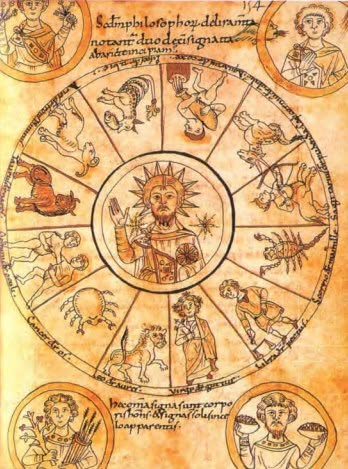
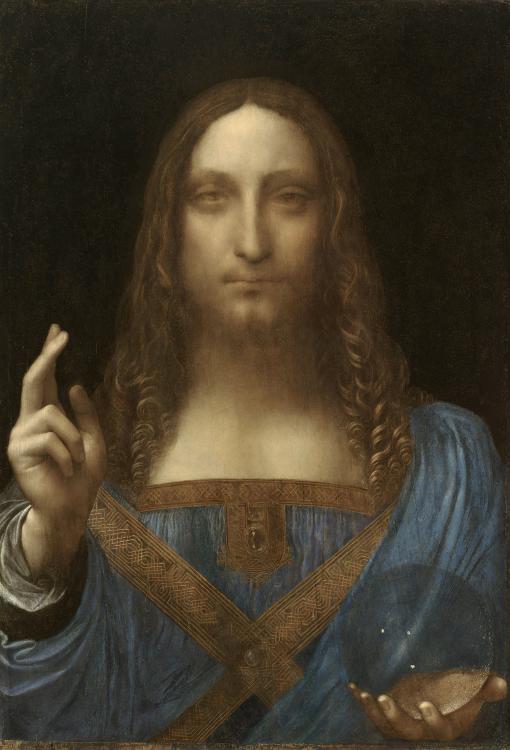
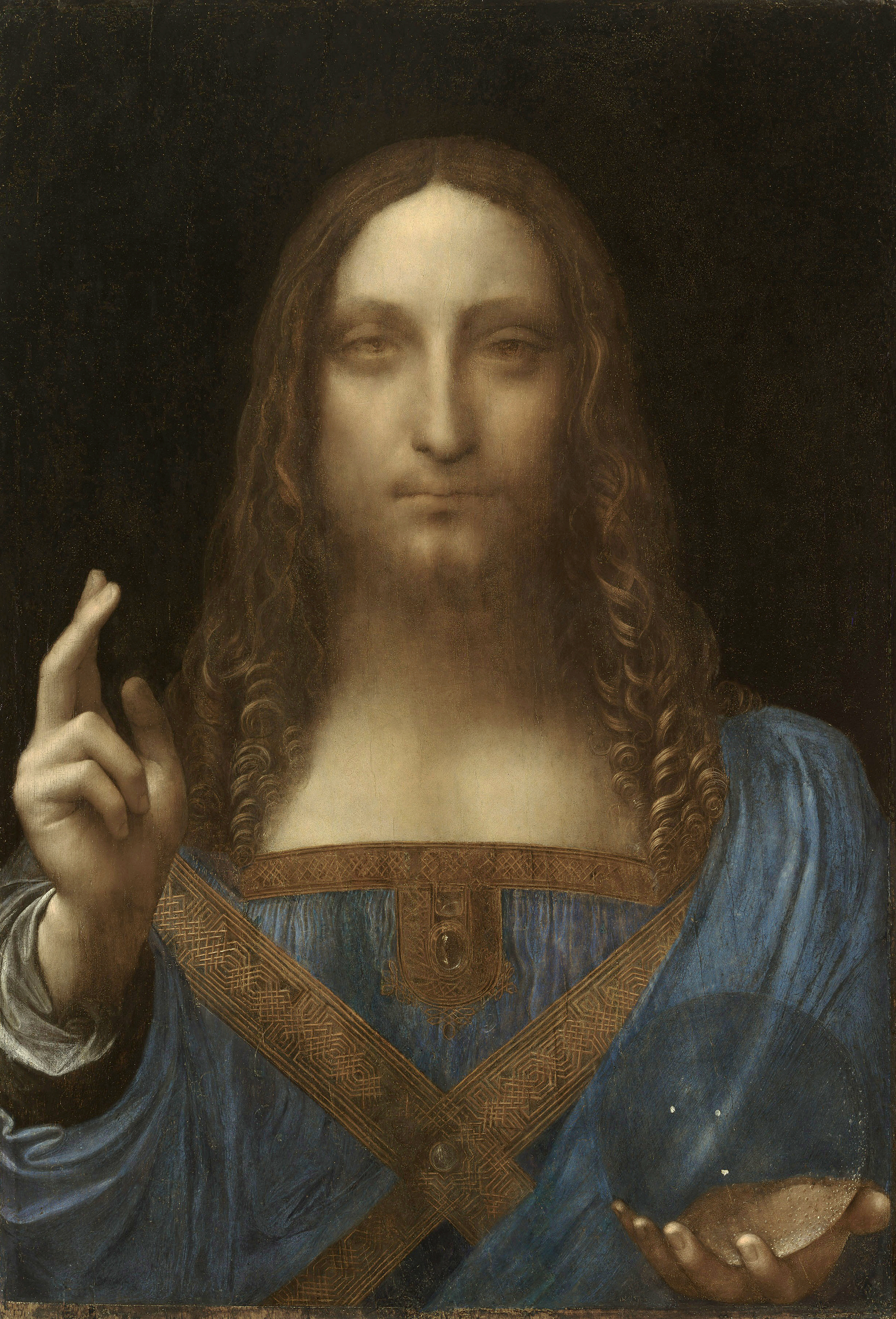
Hard to know without having more information, many deities would look like this. For example, this is apparently Jesus (Christus-Apollo according to a couple of flimsy sources), from the 11th century, with his right hand raised commonly associated to a blessing: There the orb again seems a sky symbol. I'd be tempted to say the eight arms are all the "sabbats" (related to the seasons, which appear on the four corners of that picture), but it's the Wiccans that in modern times put together the partial sabbats different ancients would observe. Still, you can check da Vinci's Salvator Mundi painting, where the crystal orb is taken as the "celestial sphere of the heavens": All this just to show more modern and analysed stuff, and that there could be a continuity in interpretations. After all, the sphere you drew reminded me of the Farnese Atlas sculpture, from the 2nd century, which has the ecliptic among constellations basically where you drew it (in the upper right, apparently by chance? Because the new picture you are posting is not that clear on that): Regarding emperors holding it, the 2026 Encyclopædia Britannica (https://www.britannica.com/art/orb-royal-emblem) states it's a "symbol of the cosmos, or of the universe as a harmonious whole, is derived from the ancient Romans, who associated it with Jupiter and, hence, with the emperor as his earthly representative". I've just found some people online claiming it's the world, but without presenting too much evidence. For all practical purposes, it represents everything, and the dominion over it from the one holding it.
.thumb.jpg.c14c91b6ac9dcccc7baf1208aaf86dbd.jpg)
-
The original of this: Since you said you "believe" that, yet you drew what seems to be the ecliptic, I assumed you got it from somewhere. I haven't seen the original of that globe, I wanted to see its details.
-
But it loses the attested meaning, you imply the goddess chose them, I'm just saying they are picked troops
-
New Atlas helper tool - Mercator
Thalatta replied to Grautvornix's topic in Scenario Design/Map making
Small comment: naming a map editing tool "Mercator" while having nothing to do with the ubiquitous Mercator projection would be like naming a financial tool "Crypto" while having nothing to do with cryptocurrency. But this leads me to a bit of an unrelated question: do you think it's possible to make spherical maps? To map a whole planet. -
Should units from siege towers be able to ungarrison over walls?
Thalatta replied to Obelix's topic in Gameplay Discussion
I see I missed quite some posts from before: Indeed, equalising height was important (same reason ships would use towers), but the gangplank (epibathra) was used as early as the Siege of Motya in 398 BC. Indeed, because of the additional weight (another reason I proposed to change this tech to Raw Hides). I think only helepoleis could handle that (the one built at Rhodes was not the only one), or later towers from Imperial Rome (which could anyway spontaneously collapse, like at the Siege of Jerusalem in 70 AD). I also had helepoleis in mind when proposing champion ships and engines, since it would be a powerful siege tower unique to the Macedonians. -
Should units from siege towers be able to ungarrison over walls?
Thalatta replied to Obelix's topic in Gameplay Discussion
Undermining/countermining seems somewhat represented by direct infantry attacks on walls already (I see @Grautvornix just beat me to it). Adding it would be worth it only if tunnels/terraforming are somehow added to the game, but this doesn't seem a big priority to me, all things considered. What really needs to be added/improved first is the ladder/siege tower unloading on walls, and the fighting on top of them, without making walls even more obsolete, and that last bit is the tricky part. For starters, ladders should make units climbing them more vulnerable, and siege towers should be extremely slow, but I think none of this would be properly balanced without wall towers automatically shooting, which is something that was removed in the past already, I guess because spamming them was too OP. My view to balance all this is that walls shouldn't include wall towers, but instead wall segments should be upgradeable to towers (I use this word for both current sentry and stone towers) that shoot automatically (imagining thermals would damage engines), for a more appropriate cost. Spacing limitations between towers would of course be considered. I know it seems this adds micro, but it really doesn't: one has to build towers behind walls anyway since wall towers are useless without a garrison, which is a waste of units and micro, and this should just improve what's already automatic. In conclusion: wall towers should be removed, while walls and towers should be better integrated, with towers and gates automatically doing anti-engine fire damage (additionally having attested catapult towers is something I already proposed), with garrisoning improving all this. Posted ranged infantry on the top of walls would shoot (like now), while melee infantry would fight unloading enemy units better. -
This and @Eilat's Modern warfare mod make my think of my latest general suggestion: That is, for this Galaxy example, could one have many maps "running" in parallel, representing many planets? And another map could connect it all, which instead of water and ships would be space and spaceships, and when arriving to a planet, one arrives to one of the other maps. Seems to me that maybe with quite some tweaking it could be achievable?
-
I'm not sure what you mean by "mini", it wouldn't be actually "smaller", but "lighter". It should be the same as current ramming ships, but faster (thus maybe deal more damage), while taking more time and resources to produce, and have less garrison slots (all aligned with what was an attested Athenian advantage). Surely these things can be changed to something that's champion level but not OP? There's that idea of no garrison slots at all and to categorise such machines as "champion", to give a clear indication that they are full-time combatants, not really transport. Indeed, radius increase and/or healing per second is a good choice, considering how influential that was. Yeah, "City Guard" sounds like a guy lighting up street lamps at night... Chosen Athenian seems the strongest contender, and closer to what's attested.
-
Corrections of what is wrongly done in vanilla should apply to vanilla. Changes of what is not quite accurate in vanilla would also ideally apply to it, after gameplay considerations. Additions of what vanilla doesn't have in the first place could of course be considered, or just left as mod material. I tend to mention interesting or important things I come across, independently of any gameplay considerations (that part I leave to others).
-
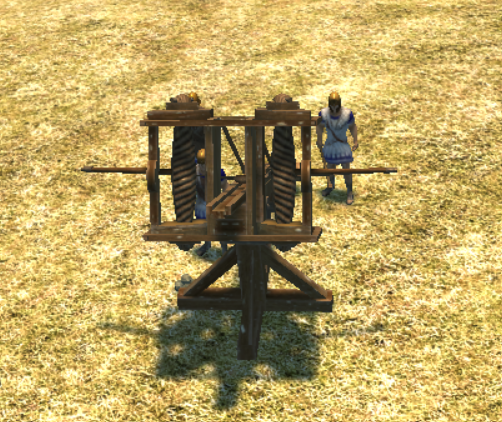
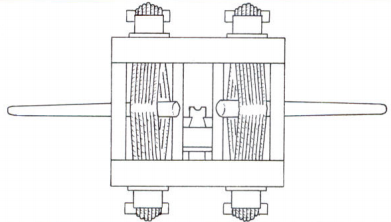
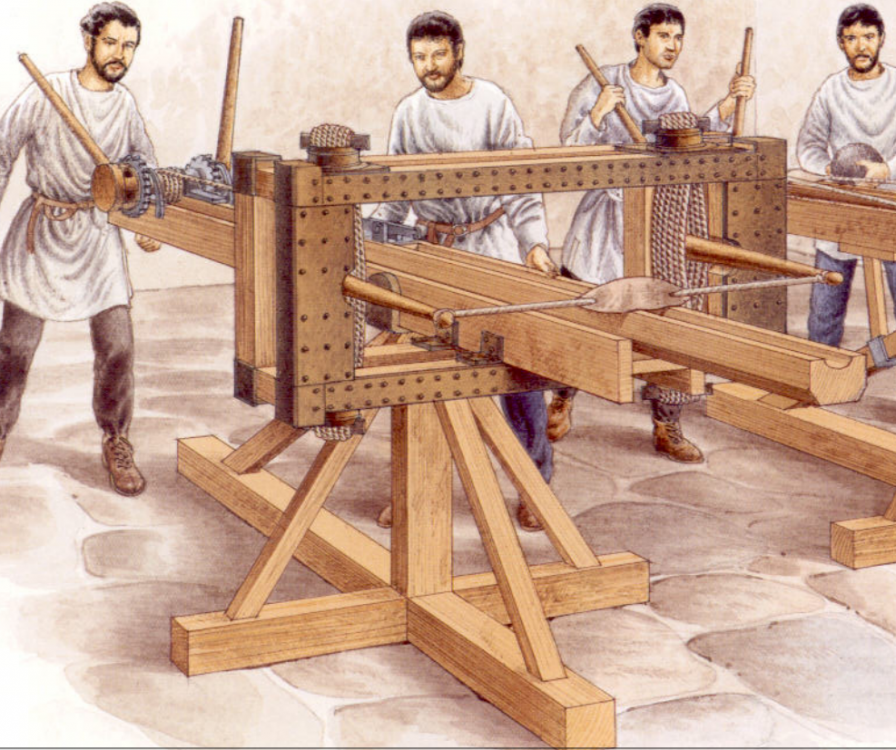
I edited Part I to deal better with sources (first hidden bit now), and renamed the Delian League civ bonus Naucrary instead of Trierarchy, which could be another tech now. In this part I'm refining a few things regarding infantry and cavalry from Part I, but I'll deal mostly with siege engines. Most things are just name changes or design corrections, although for siege techs, compatibility with other civs would need to be checked (for those cases, in the meantime this is just meant as a record of sourced proposals). Part III will be about naval combat. PART II Things that should be: -Lithobólos (Siege Catapult) should be Lithobolos (Stone Thrower): accents should be removed, as per 0 A.D. nomenclature guidelines (most of the time I'll ignore this, but it should be followed). The present name, besides not being the correct translation, is misleading for the period, given that both bolt shooters and stone throwers were katapeltikon (throw against, basically), or catapults. Actually, in this period, "catapult" is even more often used for bolt shooters, being the first to be invented, and "ballista" used for stone throwers. The name inversion more familiar to everyone started after the 2nd c. A.D. -The Lithobolos torsion-springs shouldn't look like spirals: this makes no physical sense. Although there are a few ancient representations that also portray them incorrectly, there are plenty of representations around showing their correct appearance. -The Arsenal should be called Workshop: arsenals were where various equipment was stored, while "workshop" is used in the literature for what this building is supposed to be. Things that could be: -Athenians could charge when closing in on an attack: that is, be faster, louder and more disorderly than Spartans (stance depending), considering how heavy infantry charged at Marathon, and how psiloi "charged" at Sphacteria. I think it's funny that the caricaturesque static posture of the Spartans in the movie 300 and "shock combat" of the Athenians in the sequel could appear in the game in a less exaggerated way, while having some reported merit to it. -Epilektos (City Guard) could be Athēnaios Epilektos (Chosen Athenian, or less literally and keeping the present idea, Athenian Guard): just renaming them to make them more characteristically Athenian (there are units named similarly after all). It's not just about the name: Athens' Hellenistic infantry relied heavily on mercenaries, except for some elite volunteer hoplites, which seems to differentiate them a bit from epilektoi from other city-states. I thought about Epilektos Ethelontis (Chosen Volunteer), but I didn't want to give the impression that that made up term is an attested one (sometimes one has no choice). -Hippeús (Greek Cavalryman) could be Athēnaios Hippeus (Athenian Cavalryman), and be a lancer: gameplay seems to have resulted in too many things being exactly the other way around as they should be. Athenians avoided getting way too close with cavalry (they would have swords anyway, but usually as secondary or tertiary weapons, after javelins and lance), those tactics came later with the Macedonians (possibly after the Thebans), who in turn have no cavalry swordsmen in the game! -Pródromos (Cavalry Javelineer) could be Athēnaios Prodromos (Athenian Scout): I ended deciding for this name instead of Hippakontistēs (Cavalry Javelineer) since that's not actually attested (but for tournament situations, and after all, most cavalry were expected to use javelins). Although to be prodromos is more of a role that goes beyond just literally scouting, this is also how the corps is referred to (like saying that the Boy Scouts are scouts and more), and they are not mentioned that often for others except Macedonians (being later referred as lancers, as I've quoted before). -Tachunautousa Triērēs (Swift Sailing Trireme) could be an early remarkable ramming ship: it could be less literally and more helpfully translated as "Swift Ramming Trireme". The tachunautousai were the top trireme rating, strongly associated with Athens, for which ramming was their preferred tactic, although also rendered somewhat ineffective by the Hellenistic period, as will be explained in Part III. Their garrison should be reduced, or even completely removed while increasing their population cost to account for optimal performance at all times, which is one of the reasons I proposed somewhere else to extend champions to ships and siege engines. -The Oxybelēs is being represented by an early tension design: the oxybelēs would soon use a torsion mechanism mid-4th century B.C., looking like the present Lithobolos, which would completely supersede the tension design by the end of the 3rd century B.C., according to Mardsen. A further advancement would be the Polybolos, which had a magazine to increase shooting rate (could be just a tech). -The Lithobolos is being represented by a dubious design: this is still quite the controversy, but extremely illuminating, and could be used to differentiate units better. Regarding Roman terms, "the Greek bolt-shooting euthytone thus became the catapulta, and the stone-throwing palintone, the Ballista", from Kinard. Campbell and others state similar things, but what palintone exactly means is still debated: initially in his book he takes the conservative position that it had just to do with the orientation of the springs (hard to see in a game), and was a bigger version, necessary to more slowly transfer energy to somewhat equivalently worthy heavier stones. But a few years later (2011), Campbell takes the "French" position (https://www.researchgate.net/publication/307732119_The_inswinging_theory, by Iriarte), stating that "this solution, at once etymologically elegant and strikingly logical, has come to be known as 'the inswinging theory,' in which the catapult arms point forward when at rest, and are drawn inward during the spanning process", even claiming, when later discussing the onager, that "as in the case of the Hellenistic stone-projector, a brilliantly perceptive French design was sidelined by inferior German and English versions". Figures 3 and 4 in https://sciences.gloubik.info/spip.php?article1600 show both configurations clearly. In addition, palintones would eventually shoot heavy bolts (by changing their sliders), being a more powerful, although complicated, configuration. -Advanced Siege could be Lepides Sidērai (Iron Plates): the present name doesn't say anything, and it was really tricky to connect how the Lithobolos and Ram crush damage could even increase with the same tech, but regarding stone-throwers I read "Heron advises iron-plating any points of stress on the machine", from Campbell, and remembered that his other book stated "it is assumed that the vulnerable tip would have been reinforced with iron plating" regarding later rams. I've found critical point iron-plating references on many manuals while searching for something else. -Siegecraft could be Organopoioi (Mechanicians): also doesn't say absolutely anything. For a construction time bonus, "the art of those who construct the siege machines necessary for war (organopoioi), they too are termed mechanicians", from Sherwood. -Armour Plating could be Argai Byrsai (Raw Hides): to differentiate it better from the Iron Plates proposal, and many recommend for protection and fire-proofing for the big engines over iron-cladding because of weight. -Military Engineers could be Aphaireta Merē (Detachable Parts): to facilitate dismantling and transportation, as recommended in many Artillery Manuals (Belopoiika), this being another of my candidate names for this tech. I also wanted to leave more open the possible addition of Mēchanikoi (Engineers) units to build certain big siege engines in the field, as many have proposed in the past. -Bolt Accuracy could be Odontōtai Choinikides (Toothed Washers): again, the present name handwaves how exactly that would even be achieved. Washers are the discs through where the cords are threaded, their stability being important for consistent aim. To lock them, "teeth" were used after some point, and this was further developed with pin-holes (Trypētai Choinikides (Perforated Washers) could be an additional tech for more siege-oriented civs). I made up these names because these details appear only in archaeology, I think. -Naval Oxybeles could be Marine Catapult, but better if just removed: since not only the oxybeles was used, and to use the same terminology used by Morrison, and not just the same name as in Age of Mythology. Actually I disagree with having this tech at all, one should just have catapults mounted on heavier warships (explained in the coming Part III). Things that could also be considered: -Conscription at the Stable could also be Sitos (Fodder Allowance) or Katastasis (Establishment Grant): better alternatives to what was proposed in Part I, since the Hippeia (Cavalry Class) appeared in the early 6th c. B.C. (before the start of the game), while these are part of 5th c. B.C. Athenian cavalry reforms. -Eleusinia Mystēria (Eleusinian Mysteries), could be a civ bonus: this was an important panhellenic religious cult, and under Athenian control. Temples could give a food trickle, have improved healing aura, or produce units faster, for example, whatever makes sense. -An alternative approach to techs: in https://wildfiregames.com/forum/topic/34903-civ-spartans/page/3/#comment-760784 there was some discussion regarding techs unlocking units, and I ran into this "necessity" when trying to make sense of catapult evolution and how the game presently works, given that engines would look quite different after certain developments. An alternative approach would be to have some techs changing units (besides the usual techs improving them and the less common unlocking them). For siege engines, one would start with the Gastraphetēs, and then the Tension Oxybelēs (as they are right now). After researching a Torsion Springs tech, the Tension Oxybelēs would change to the Torsion Oxybelēs (which should look like a small Lithobolos), and the Lithobolos would be unlocked (which should use the French palintone design previously discussed). Later on the Polybolos (with magazine) could appear (either as an Oxybelēs change or unit unlock), and a final Heavy Catapult could later be unlocked (larger but slower) that could change between large stones and arrows. I know it seems too much, but I'm mentioning it for the sake of catapult clarity and completeness (and for whoever wants to implement things like these in their mod). Other information that might be useful: (All quotes from Sekunda). -Torch-Races for infantry speed bonuses: "we have evidence for three ephebic torch-races before the reform of the ephēbeia in 335, connected with the festivals of Prometheus, Hephaistos and Pan". -I think somewhere I mentioned Athenians would use "A" or "ATH" as shield devices, there's also evidence for an eye, a gorgon, a star and a laurel wreath. -Ephippios (Saddlecloth), Af'Hippou Akuntizonti (Mounted Javelin-Throwing) and Aphippolampada (Mounted Torch-Race) techs to improve cavalry: by 500 B.C. Athens didn't have yet a navy, nor proper cavalry, these were developments from the 5th c. BC. I like the idea of having lots of techs, for the player to think what to choose given different situations, otherwise everything devolves into mindless build/research order memorisation, or worse, just clicking what's affordable. Both should be penalised for a more strategic gameplay. These early techs should make Athens cavalry fast and accurate among Greeks early on, the problem is that the game is quite fast and by the mid game the Thebans, and later the Macedonians, should have better cavalry. In any case, this might be useful at some point for some. -"In Athens, a slave society, it was normal for an individual citizen of sufficient wealth to serve as a hoplite and to have his own personal slave. In time of war, the slave would carry the hoplite’s bedding and rations for him. Usually referred to as skeuophoroi, or 'baggage carriers' in our texts, the slaves would participate in the battle only if an unusual opportunity arose. Their essential role was recognized by the Athenian state". -It's good to bear in mind that, after a few decades where heavy armour seemed to be less common, "in the 360s, Athenian funerary reliefs start to show hoplites wearing muscle-cuirasses and 'Phrygian' helmets", "muscle-cuirass is universal, but there is a large diversity in the arrangement of the groin-flaps and the shape of the shoulder-guards", "some type of enabling legislation must have existed to force the adoption of the muscle-cuirass on the Athenian citizenry who served in the infantry". -"I imagine that the Athenian cavalry had adopted the Boeotian helmet by 362, and this was the reason why the Theban horse who opposed them at the battle of Mantineia painted their helmets white to identify themselves". @Arup, as the self proclaimed biggest worshipper of Athena, let us know what do you think is more worth considering regarding gameplay (although most of my proposals are just renames or design corrections, I think). I guess some points would change how the Athenians actually play, but I think they should be a fairly fast civ for Greek standards, with their decent early cavalry skirmishers, other missile support and swift ramming ships, while also having a solid infantry that, according to the stories, would make a sprint for it if needed. Right now I find it confusingly sword heavy, since neither the Marines nor Sword Cavalry correspond to anything realistic for them, while an eventual lack of swords would balance better with their Long Walls (and swords are really needed, maybe the Athenian Guard could switch between spear and sword, or better, the Iphicratean Hoplite proposed in Part I could switch between long-spear/proto-pike and sword).
-
@Stan` solved it for me, I was having the same issue with that same thread yesterday. EDIT: I'm having that issue again right now!
-
Claude sucks at aerodynamics then. The "paddle" sides of the blades have to point backward. I advise you to check sources besides AI (surely there are videos of the MH-60L or similar models spooling up/down). He knows! He's a fan of my apparently inconcise observations. He reads all of them You mean changing the MH-60L name? Since that seems to designate Black Hawks, like in this game, which also shows the correct tail rotor spin, as can be seen at 00:35:
-
Very nice! But I'll have to, according to @Atrik, gigantically troll you (never my intention really, I just happen to be like this ) and point out that the tail rotor is spinning in the wrong way, not just because vectors would be inverted when compared to the main rotor (although maybe some models designed are like that?) but because of the blades themselves, they are rotating backwards (careful when you see them in a video already spinning, as we all know, things that spin fast can seem to spin the other way).
-
I think this is still an issue, which is weird since you have other roofs that don't look like that. Maybe it would be better to modify those to obtain the more "polished" version, than to try to tune down those looking like metal.
-
Implementing forces in Unit Motion (HELP WANTED)
Thalatta replied to Atrik's topic in Game Development & Technical Discussion
I wonder if this could be solved, instead of removing how "solid" units are, by changing something else, like not reacting to repositioning so fast and simultaneously when close by (maybe hard to require), or being more permissive on supposed destinations if an obstacle is there (one can always reform after obstacles are removed if a specific formation is wanted, for which showing and shaping it by dragging the mouse at the destination like Rise of Nations and Total War would be useful, and has been asked). -
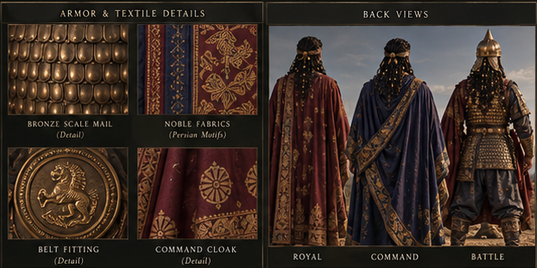
Just in case, it seems the colours are flipped here? On the left, "command" is red (as I guess would be more appropriate), while on the right it's reversed: For a description on this stuff, Xenophon's Cyropaedia is a nice resource. Just a quote for a Xerxes idea: "purple tunic shot with white (no one but the king may wear such a one)". Regarding other preferred colours: "he had had a great many made, with no stint of purple or sable or red or scarlet or crimson cloaks. He apportioned to each one of his officers his proper share of them".


.jpg.497b61bdcd531a72af347125e102ef0a.jpg)