
.png.a9ae33b5e5ddb0eb2b142b612b99c428.png)
Lion.Kanzen
-
Posts
25.684 -
Joined
-
Days Won
302
Everything posted by Lion.Kanzen
-
Indeed. some call Frankhelm or Scola helmet. The Psalterium Aureum was made in the second half of the 9th century in St. Gallen, a monastery in today's Switzerland. Note the peculiar helmet, and also note that a steel helmet was a very valuable piece of equipment, just as expensive as a good sword. It was also an extremely important piece of equipment. With an unprotected head you couldn't last long in battle, especially if attacked by cavalry. Here is another picture from the "Vivian Bible", the Bible of Charles the Bald. It was commissioned by Count Vivien, the lay abbot of St. Martin at Tours, and presented to Charles the Bald in 846. https://www.tf.uni-kiel.de/matwis/amat/iss/kap_b/advanced/tb_4_2.html#_2 A lot of controversy with those. http://www.twcenter.net/forums/showthread.php?225349-The-Great-Conflicts-main-discussion-thread-Please-post-here!/page90
-
The scara of Charlemagne were quartered near the king’s palace; and later in garrisons in key fortresses. The term scara is an imperfectly understood term; but seems to refer both to the elite mounted warriors (caballarii) who were the core of the Frankish army as a whole, and to the formations or regiments of this group. Further, the scara of Charlemagne seem to have been divided into three bodies (or ranks of senority?): the scholares, the scola, and the milites aulae regiae. A tentative explanation is that the scholares were an inner bodyguard of the king (the term obviously derived from the elite guards units of the late Roman Empire, and contemporarily an Imperial Guard regiment of the Byzantine Empire); the scola the guards regiment as a whole; and the last seeming to translate as the “Soldiers of the Royal Court”. In the following century, the term milites came to mean an armored professional mounted warrior; the progenitor of the Medieval knight. So perhaps the milites aulae regiae were all those members of the scara not designated as “Royal Guards”, but quartered in proximity to the palace. Contemporary representations of Carolingian foot may be dismounted caballarii of the Scara Another term sometimes used is “palatina“. This is another late Roman military term, used to designate elite formations of the army that were quartered near the capital. It is possible that in Carolingian parlance, the term may have been used to indicate all three of these categories of scara; who were quartered near the king/emperor’s residence. It is from this term for Charlemagne’s elite palace soldiers that the word paladin derives. In the 11th century chansons (chansons de geste), these paladins were a dozen champions of the Emperor’s court. Its possible that if indeed the Scholares were the Emperor’s bodyguards, that this group numbered a dozen and was the ultimate source of the legends of the Paladins. The caballarii in the armies of Charlemagne and his immediate successors were relatively few in number, though an exact figure cannot definitely be given. The lowest number suggested by scholars is 5,000 for the entire empire (Delbruck); and a high number of 35,000 (Werner). this latter figure seems absurdly inflated, considering the prohibitively high cost of warhorses (up to twelve times the cost of a cow), not to mention the cost of their feed and maintenance. Large warhorses, capable of carrying a minimal of 250lbs of armored man, were in short supply. However, throughout the Carolingian period the kings made every effort to increase the size of their herds. At the Battle of Montfaucon, in 888, the Franks may have had as many as 10,000 mounted men (though, again, this may be exaggeration by the sources). Merovingian kings inherited Roman horse farms in Gaul, and these were maintained and enlarge where possible. Warhorses were large, strong animals; 15-16 hands in height and between 1,300 and 1,500 pounds. Maintenance of the royal herds was under the authority of a court official titled comes stabuli (“Count of the Stables”, or Constable). By the Middle Ages, this officer would become the senior military leader in the realm. Those caballarii in attendance upon Charlemagne and quartered about his palace were likely less than 1,000 in number. There is speculation that all scara units were organized into regiments of 300 caballarii, and further divided into 50-men sub-units called cunei (derived from the Latin cuneus, or “wedge”, in the late Roman army a cavalry detachment). A fully armed caballarius was expected to have a helmet, body armor (called brunia, similar to the Scandinavian term for a mail shirt, byrnie), spatha (sword), and lancea (spear). The latter was 8-10 feet in length, with an extended and sharpened iron head. The caballarius of Charlemagne used the spear overhanded or underhanded, as a thrusting weapon; or threw the spear at close quarters. The technique of couching the lance tightly in the rider’s armpit, the most popular technique for knights throughout the Middle Ages, did not come into use until the late 11th and or early 12th century. Horsemen from the Spanish or Breton Marches were often lighter, and used javelins from horseback in the Roman manner. In battle the caballarii fought in tightly-packed units, each 50 man cunei operating under its own banner. (This is the origin of the later Medieval conroi.) Against lighter cavalry, such as the Magyars, the Franks would use their lighter cavalry to feign flight, drawing the Magyar horsemen into a pursuit to where they could be ambushed by the heavier caballarii waiting in a concealed place. The armored caballarius were encouraged to charge in tight formation, defending against the Magyar’s arrows with their shields and coming to close-quarters as rapidly as possible. https://deadliestblogpage.wordpress.com/2017/05/03/elite-warriors-of-the-dark-ages-caballarii-of-charlemagne/
-
San Vitale in Ravenna.
-
This timeframe the influenced are Germanic with heavy Byzantine https://study.com/academy/lesson/carolingian-architecture-style-characteristics-examples.html Abbey Church of Corvey.
-
Isn't called Roman style is called, Romanesque. https://en.wikipedia.org/wiki/Romanesque_art
-
https://www.youtube.com/watch?v=PwTXPFqdtxk
-
-
.thumb.png.ce58cea22940c255f5b0a735d5abee36.png)
undefined discussion subject
Lion.Kanzen replied to Lion.Kanzen's topic in Introductions & Off-Topic Discussion
Are systematic by traumas and people own fear. "Hannibal at the Gates" The defeats of Allie and the sack of Rome. The Invasions of Cimbri and Teutons and the Defeat of Arausio. The Massacre of Teutoburg Forest The Third Servile War...etc -
undefined discussion subject
Lion.Kanzen replied to Lion.Kanzen's topic in Introductions & Off-Topic Discussion
People many modern termes it doesn't exists. think all Human developing since Martin Luther, then the movement of French revolution. We are think for example Romans enslave their enemies, and their slave revolt , finish in mass executions. The slaves were less than objects , even some less than a horse. -
The wiki don't have that evident point.
-
undefined discussion subject
Lion.Kanzen replied to Lion.Kanzen's topic in Introductions & Off-Topic Discussion
Vae Victis. -
undefined discussion subject
Lion.Kanzen replied to Lion.Kanzen's topic in Introductions & Off-Topic Discussion
Sassanid dynasty commits martyrdom http://www.oxuscom.com/persecution.htm -
undefined discussion subject
Lion.Kanzen replied to Lion.Kanzen's topic in Introductions & Off-Topic Discussion
Romans performs that's vengeances, because the war Carthage was destroyed because the horror of blood war like Punic wars. Carthage was not a innocent peaceful, people. -
undefined discussion subject
Lion.Kanzen replied to Lion.Kanzen's topic in Introductions & Off-Topic Discussion
Not I'm referring to unnecessary genocides , like Mesoamerican rituals. But still happens in the history. But is a modern term. -
They removed as playable around A22 I guess
-
-
undefined discussion subject
Lion.Kanzen replied to Lion.Kanzen's topic in Introductions & Off-Topic Discussion
I'm not sure, the classic civs and medieval civs uses the fear of execution to rule by iron fist large Empires but... But this was necessary?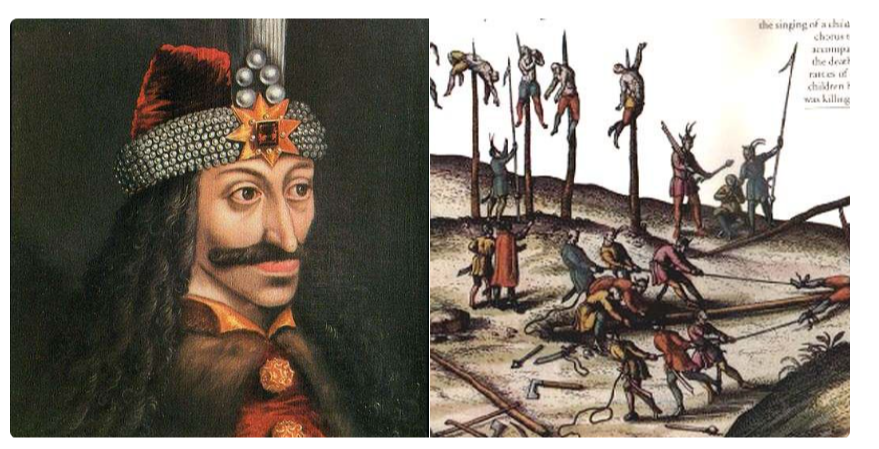
-
The github version?
-
Yes, but don't expect great gameplay.
-
undefined discussion subject
Lion.Kanzen replied to Lion.Kanzen's topic in Introductions & Off-Topic Discussion
The great war... that don't be happen. but here in Latin-American nobody enter to that war. we receive the immigrants. for example the idea to make a new roman is great... but no with weapons, or industrial weapons. -
-
undefined discussion subject
Lion.Kanzen replied to Lion.Kanzen's topic in Introductions & Off-Topic Discussion
Yes... But I love the highways... -
This? https://steamcommunity.com/sharedfiles/filedetails/?l=english&id=1268737660
-
undefined discussion subject
Lion.Kanzen replied to Lion.Kanzen's topic in Introductions & Off-Topic Discussion
our equivalent. a Mayan codex at Copan. -
undefined discussion subject
Lion.Kanzen replied to Lion.Kanzen's topic in Introductions & Off-Topic Discussion
que cosa tan bella. a beautiful piece of history.