-
Who's Online 6 Members, 2 Anonymous, 1575 Guests (See full list)
-
Topics
-
-
Posts
-
By Bravado2020 · Posted
I uploaded my map mod to mod.io 5 days ago and its still pending. -
By wowgetoffyourcellphone · Posted
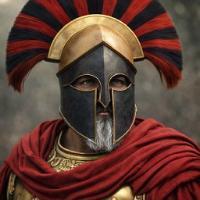
My one and only vote. https://www.wikiwand.com/en/Caryatid The caryatid standing in contrapposto, originally part of the Erechtheion, was removed by Lord Elgin and is now displayed at the British Museum [and should be returned to Greece] Caryatids are added to the game for this release by @nifa -

-
By Ultimate Aurelian · Posted
https://www.perseus.tufts.edu/hopper/text?doc=Perseus:text:1999.02.0137:book=8:chapter=61 -
.thumb.jpeg.67ef5b5dc6d918163efa04cd5336830d.jpeg)
By Nicolaus_von_Kues · Posted
In the military field, we know that Palmyra was famous for having great and very good archers. Its use was very important to protect the caravans on their trade routes. In addition, there is evidence that the Roman armies were nourished by troops native to the city. This is evidenced by the creation of a fixed cohort that was based in the nearby fortress city of Dura Europos. https://www.sergioalejogomez.com/el-reino-de-palmira/ --- Apparently, after the cataphracts, they had a number of very good archers. Camel, horse, and on foot. https://www.livius.org/sources/content/zosimus/zosimus-new-history-1/zosimus-new-history-1.53/ I found something on FB. I'm going to save the article before it disappears. ---- ARROWS FROM DURA-EUROPOS: ANCIENT ROMAN ARCHERY TECHNOLOGY PRESERVED ARROWS AT DURA-EUROPOS At Dura-Europos, in Roman Syria during the 3rd century AD, archaeology preserved something exceptional: arrow fragments complete with their shafts, nocks, and fletching. Organic material that typically vanishes at other sites survived there under extraordinary conditions. The specimens studied by Simon James reveal meticulous craftsmanship: reed shafts, wooden reinforcements at the front end, a reinforced joint to prevent the shaft from splitting, and three feathers attached to the shaft. Some also retain painted decoration in red, black, and, on certain examples, white or pink: the so-called “cresting.” Here, one of the most fascinating details emerges: we do not know for certain what purpose these markings served. They could have been decorative or personal, or used to distinguish specific arrows; a possible symbolic significance has even been suggested. The motifs on some nocks resemble small “eyes.” However, this remains an interpretation rather than a proven fact. The fletching was long and low-profile, and there is no evidence that the feathers were deliberately spiraled to induce arrow spin. The natural twist of the feathers themselves could have caused such rotation during flight. We are not looking at a modern reconstruction. We are looking at the archery technology of Dura-Europos, preserved for nearly two millennia. How much would our understanding of the Roman arrow change if we could always preserve its organic materials? Main sources: Simon James, The Excavations at Dura-Europos 1928–1937, Final Report VII: The Arms and Armor and Other Military Equipment (British Museum Press, 2004); Yale University Art Gallery, Dura-Europos Collection. https://www.facebook.com/groups/arcierideiduemari/posts/4551749171817918/?seo_visit=1
-